 Bitcoin
  Ethereum
  Tether
  XRP
XRP  BNB
BNB  USDC
USDC  Solana
  TRON
TRON  Lido Staked Ether
  Figure Heloc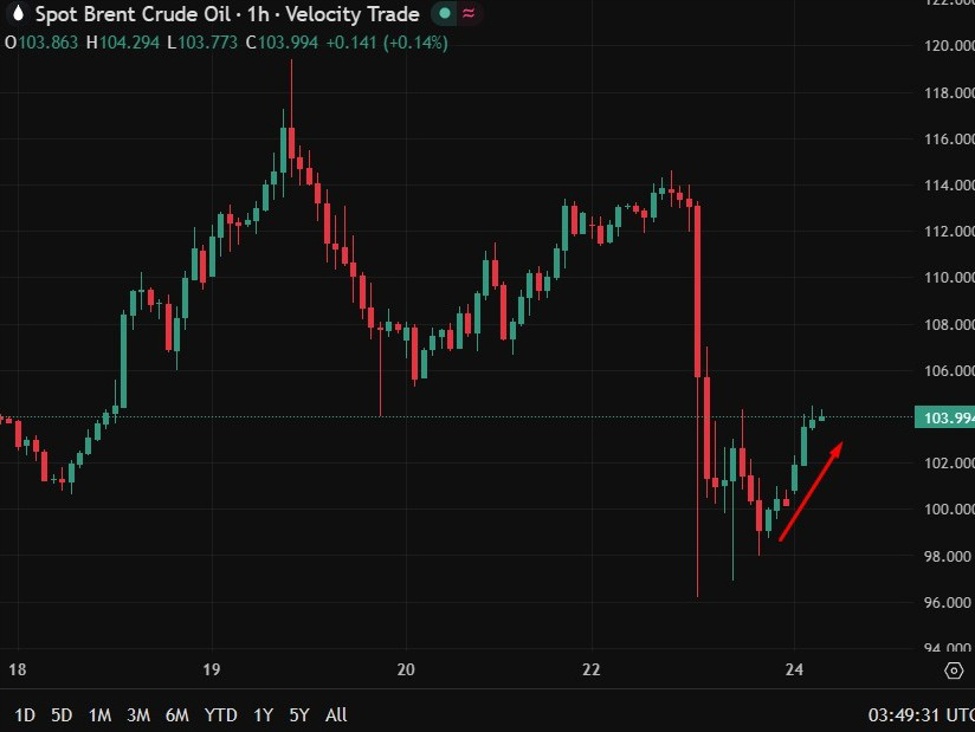
Australian inflation data due Wednesday, March 25, 2026. Preview.WSJ: Gulf states edge toward war with Iran as Saudi signals imminent entryCentral banks seen sustaining gold demand amid geopolitics and dedollarisationJapan core inflation slips below target as subsidies mask underlying price pressuresPBOC sets USD/ CNY reference rate for today at 6.8943Japan March 2026 flash PMI slows as growth momentum cools and cost pressures riseEU and Australia strike trade deal slashing tariffs, boosting exports and tiesIran’s Fars report gas infrastructure hit as conflict broadens to energy assetsJapan core CPI moderates in FebruaryDeutsche Bank sees ECB hiking to 2.5% as energy shock lifts inflationRBNZ’s Breman flags near-term inflation rise, warns on second-round risksUS equity dominance cracks. Tariffs, war & policy risks drive exit, leadership questioned.Australia flash PMI slips into contraction as services slump and cost pressures surgeGold oversold enough to rally, says Renaissance Macro’s DeGraafPrivate credit stress: Apollo cap fund withdrawals at 5%. Redemption requests surge to 11%Fed’s Daly flags two economic paths as Middle East risks cloud policy outlookRBNZ’s Breman signals rate hike risk if energy shock drives persistent inflationIn brief:Oil rebounds after sharp drop despite conflicting US–Iran signals
Reports of strikes on Iranian gas infrastructure add to energy risk premium
Gulf states edging closer to conflict, raising escalation risks
Japan CPI soft headline but firm underlying inflation
Fed’s Daly and RBNZ’s Breman stress conditional policy amid energy shock
Apollo caps redemptions, highlighting private credit stress
Australian consumer confidence plunges, inflation expectations surge
USD firms broadly; FX ranges modest, equities track Wall Street rebound-Oil prices clawed back part of the prior session’s sharp losses, which had followed US President Donald Trump’s decision to delay planned strikes on Iranian energy infrastructure after describing talks with Tehran as “productive.” However, Iran denied any negotiations had taken place, calling the reports false, while the rebound in crude was also supported by fresh headlines of strikes on gas-related facilities in Isfahan.Geopolitical tensions remained elevated throughout the session. Reports ICBS) highlighted the presence of Iranian naval mines in the Strait of Hormuz, while Iran was said to have launched missiles toward Kuwait and Israel. In the US, an explosion and large fire at the Valero refinery in Port Arthur, Texas, one of the country’s largest at around 435k bpd, added to energy market sensitivity.Meanwhile, the broader regional picture continues to deteriorate. Wall Street Journal reporting suggested Gulf states are moving closer to direct involvement in the conflict, with Saudi Arabia signalling a potential shift toward participation and the UAE targeting Iranian-linked financial networks. The developments point to rising risks of a wider conflict and potential disruption to global energy flows.In Japan, February CPI data showed a cooling in headline inflation but resilience in underlying pressures. Core CPI slowed to 1.6% y/y from 2.0%, dipping below the Bank of Japan’s target, while core-core inflation held firm at 2.5%. The data reinforces expectations that policy normalisation remains on track despite near-term softness. USD/JPY edged higher on the session.Central bank commentary from both the Federal Reserve and the Reserve Bank of New Zealand struck a similar tone. Policymakers indicated they would likely look through a temporary energy-driven inflation spike, but warned that a prolonged conflict could result in higher inflation, weaker growth and a softer labour market, complicating the policy outlook.In credit markets, Apollo Global Management capped redemptions in its Apollo Debt Solutions fund after withdrawal requests exceeded limits, highlighting ongoing stress in private credit and liquidity-sensitive vehicles.In Australia, consumer sentiment deteriorated sharply, with confidence falling to a record low amid rising petrol prices, the ongoing conflict and recent RBA tightening. Inflation expectations also surged, with markets now turning to the February CPI release due next.In FX, the US dollar firmed modestly, with EUR, GBP, AUD, NZD and CAD all easing against the greenback in relatively contained ranges. Asia-Pacific equities took their lead from the prior Wall Street rebound, trading with a firmer tone.
This article was written by Eamonn Sheridan at investinglive.com.
💡 DMK Insight
So, Australian inflation data is on deck, and here’s why that matters: traders are bracing for potential volatility. With inflation figures due March 25, 2026, any surprises could shift market sentiment significantly, especially in the forex space where the AUD is sensitive to economic indicators. If inflation comes in higher than expected, it could prompt the RBA to reconsider its monetary policy stance, potentially strengthening the Aussie dollar against its peers. Meanwhile, geopolitical tensions in the Gulf are heating up, with Saudi Arabia signaling a possible military escalation with Iran. This could lead to increased demand for safe-haven assets like gold, which has been resilient amid such uncertainties. Traders should keep an eye on gold prices as they may react sharply to any developments. Additionally, Japan’s core inflation slipping below target could influence the Bank of Japan’s policies, impacting the JPY. Watch for any shifts in USD/CNY as the PBOC sets the reference rate at 6.8943; this could affect broader market dynamics, especially for commodities and emerging markets. In short, keep your eyes on the upcoming Australian inflation data and geopolitical developments, as they could create significant trading opportunities in the forex and commodities markets.
📮 Takeaway
Watch the Australian inflation data on March 25; a surprise could shift AUD significantly, impacting related forex pairs and gold prices.