Bitcoin
  Ethereum
  Tether
  BNB
BNB  XRP
XRP  USDC
USDC  Solana
  TRON
TRON  Lido Staked Ether
  Figure Heloc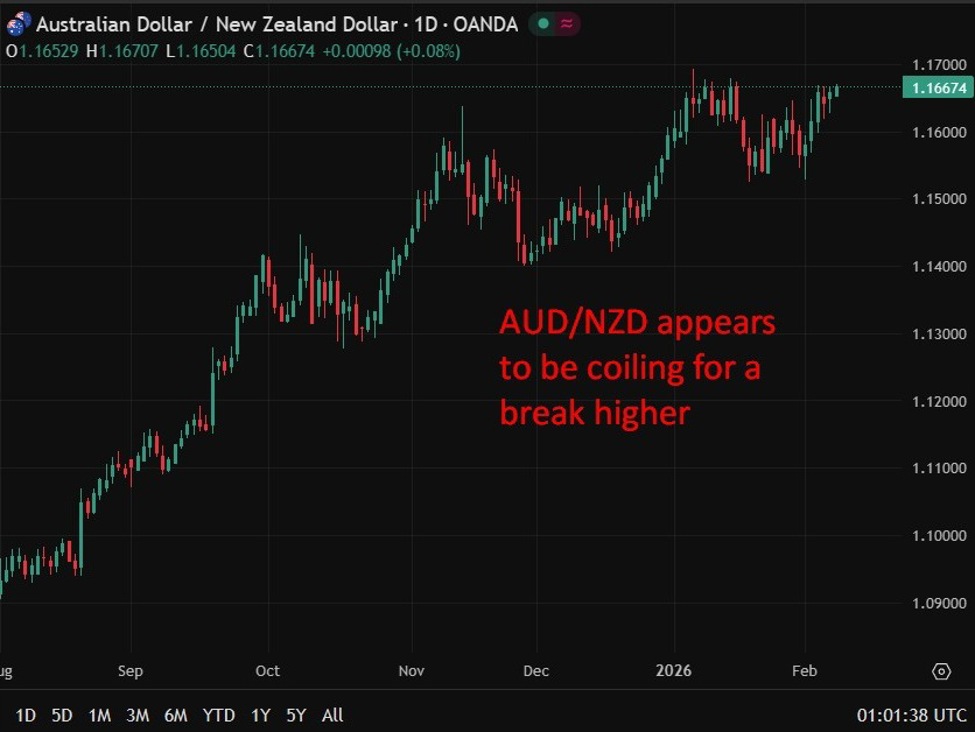
The kiwi stabilised after early losses, but softer NZ data and Australia’s hawkish shift leave NZD consolidating rather than trending higher.Summary:NZD eased last week as softer labour data pushed out expectations for RBNZ tighteningRisk-off tone supported the USD, keeping the kiwi under pressure earlyNZD/USD stabilised above 0.60 as equities rebounded into the weekendNZD/AUD weakened on Australia’s surprise RBA hike and widening rate differentialsAnalysts see near-term consolidation for NZD, with risks still tilted modestly lowerThe New Zealand dollar ended last week on a steadier footing after early pressure from softer domestic data and a broadly firmer US dollar, with markets reassessing the outlook for interest rates and regional policy divergence.According to Kiwibank analysts, a return to more “normal” market transmission saw a global risk-off tone support the US dollar, while New Zealand’s fourth-quarter labour market report dampened expectations for any near-term tightening by the Reserve Bank of New Zealand. That combination weighed on the kiwi, as traders pushed out the expected timing of future policy moves.NZD/USD traded in a relatively wide 0.5928–0.6063 range over the week, before finding some stability late as global equity markets rebounded. The pair opened the new week back above the 0.60 handle, sitting comfortably within last week’s range as investors turned their attention to delayed US payrolls data later in the week. Kiwibank’s FX team characterised the near-term outlook as neutral, noting the currency is consolidating after a recent run higher rather than breaking into a fresh trend.The pressure was more evident on the crosses, particularly against the Australian dollar. NZD/AUD slid back toward its mid-January lows near 0.8550, reflecting a sharp divergence in policy signals between Wellington and Canberra. The Reserve Bank of Australia surprised markets by hiking rates for the first time in more than two years, adopting a distinctly hawkish tone as inflation climbed well above target. In contrast, New Zealand data reinforced the view that the RBNZ has no urgency to follow.Kiwibank’s economists highlighted that New Zealand’s economy continues to operate with meaningful spare capacity. The unemployment rate rose to a decade high of 5.4%, underutilisation remains elevated, and wage growth has cooled sharply. Those dynamics, they argue, sharply reduce domestic inflation pressure and justify a patient policy stance from the RBNZ.In FX markets, that divergence has widened interest rate differentials decisively in Australia’s favour. Speculative positioning has amplified the move: futures data show hedge funds extending Australian dollar longs to their strongest levels since 2017, while trimming New Zealand dollar shorts only modestly. The imbalance underlines how one-sided positioning has become.Even so, Kiwibank notes that NZD/AUD has so far avoided a clean technical break lower. Demand for the kiwi has emerged repeatedly around well-worn support levels, suggesting some investors see value at current levels. While the balance of risks still favours further Australian dollar strength, analysts say the resilience above the mid-0.85 area shows NZD buyers are not capitulating.For now, the kiwi’s outlook hinges on offshore data and risk sentiment rather than domestic policy momentum. With the RBNZ comfortably on hold and global events driving direction, NZD is likely to remain range-bound in the near term, vulnerable to renewed downside if global risk appetite deteriorates again.
This article was written by Eamonn Sheridan at investinglive.com.
💡 DMK Insight
The NZD’s recent stabilization at 0.60 is a sign of cautious optimism, but underlying pressures remain. With softer labor data from New Zealand pushing back expectations for RBNZ tightening, traders should be wary of potential volatility. The hawkish stance from Australia could further complicate the NZD’s trajectory, especially if risk-off sentiment persists in global markets. This dynamic leaves the kiwi vulnerable, particularly if the USD continues to strengthen. Watch for key resistance around 0.6050; a break above could signal a shift in momentum. Conversely, if the NZD/USD slips below 0.5950, it might trigger further selling pressure, leading to a deeper consolidation phase. Keep an eye on upcoming economic releases from both New Zealand and Australia, as they could provide critical insights into the RBNZ’s future policy direction and impact the broader AUD/NZD cross.
📮 Takeaway
Monitor NZD/USD closely; a break below 0.5950 could lead to increased selling pressure, while resistance at 0.6050 is key for potential upside.