
 Bitcoin
  Ethereum
  Tether
  XRP
XRP  BNB
BNB  USDC
USDC  Solana
  TRON
TRON  Lido Staked Ether
  Figure Heloc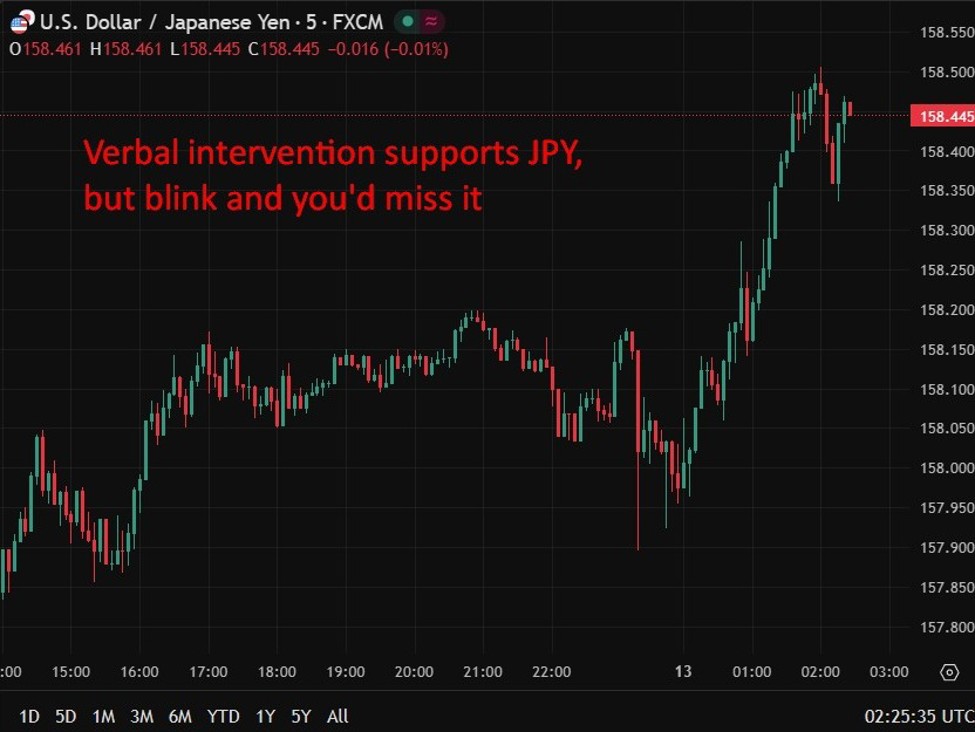
Summary:Japan spokesperson warns of “one-sided” sharp FX movesRepeats readiness to act against excessive volatilityFollows Katayama’s earlier Washington jawboningYen response limited; USD/JPY remains elevatedWeak yen still supports record-high NikkeiJapanese officials renewed verbal warnings over yen weakness late Monday (US time), but the market reaction was limited, with traders largely keeping USD/JPY elevated and risk sentiment anchored by a powerful equity rally that has taken the Nikkei 225 to record highs.Japan’s government spokesperson said authorities have observed “one-sided” and “sharp” foreign-exchange moves recently and stressed that currencies should move in a stable manner that reflects economic fundamentals. The spokesperson added that Japan stands ready to take “appropriate steps” to respond to excessive FX volatility, including speculative moves, reiterating the familiar language that Tokyo typically uses to lean against rapid yen depreciation.The comments followed earlier remarks from Finance Minister Satsuki Katayama, who said she had conveyed concerns about yen weakness and one-sided declines directly to U.S. Treasury Secretary Scott Bessent during meetings in Washington. Despite the stepped-up rhetoric across multiple officials, the near-term impact on FX pricing has so far been modest, with market participants treating the warnings as jawboning rather than a clear signal of imminent intervention.The muted FX response comes as Japanese equities continue to benefit from a weak yen, which boosts the value of overseas earnings for export-heavy corporates. The Nikkei’s record highs have reinforced the view that policymakers face a delicate balance: a softer currency supports equities and corporate profits, but also raises import costs and squeezes household purchasing power.The broader backdrop has also been supportive for USD/JPY, with interest-rate differentials still favouring the dollar, the prospect of renewed fiscal stimulus from the government, and traders reluctant to fade the move without a stronger signal from Tokyo. As a result, the latest comments have served mainly to reintroduce two-way risk at the margin, rather than forcing a meaningful reversal.For now, markets appear to be testing Japan’s tolerance for yen weakness. Unless officials escalate from rhetoric to action, or unless global rates and risk sentiment shift, verbal intervention alone may struggle to deliver sustained yen gains.
This article was written by Eamonn Sheridan at investinglive.com.
💡 DMK Insight
Japan’s latest warnings about yen weakness aren’t shaking the market, and here’s why that matters: Despite officials’ concerns over ‘one-sided’ FX moves, USD/JPY remains elevated, indicating traders are skeptical about intervention effectiveness. The yen’s ongoing weakness is supporting Japan’s record-high Nikkei, which suggests that while officials are vocal, the market isn’t buying into the fear. This could lead to a divergence where the yen continues to weaken, potentially pushing USD/JPY higher. Traders should keep an eye on key resistance levels around 150, as a break could trigger further bullish sentiment in USD/JPY. On the flip side, if Japan does intervene, it could create volatility that traders need to prepare for. Watch for any sudden moves from the Bank of Japan, especially if USD/JPY approaches critical thresholds. In the broader context, this situation highlights the delicate balance between currency strength and equity market performance. If the yen continues to weaken without intervention, it could lead to increased inflationary pressures in Japan, complicating the economic outlook. So, keep your charts ready and monitor USD/JPY closely for any signs of intervention or shifts in sentiment.
📮 Takeaway
Watch USD/JPY closely; a break above 150 could signal further bullish momentum, while any intervention from Japan could create volatility.