Bitcoin
  Ethereum
  Tether
  BNB
BNB  XRP
XRP  USDC
USDC  Solana
  TRON
TRON  Lido Staked Ether
  Figure Heloc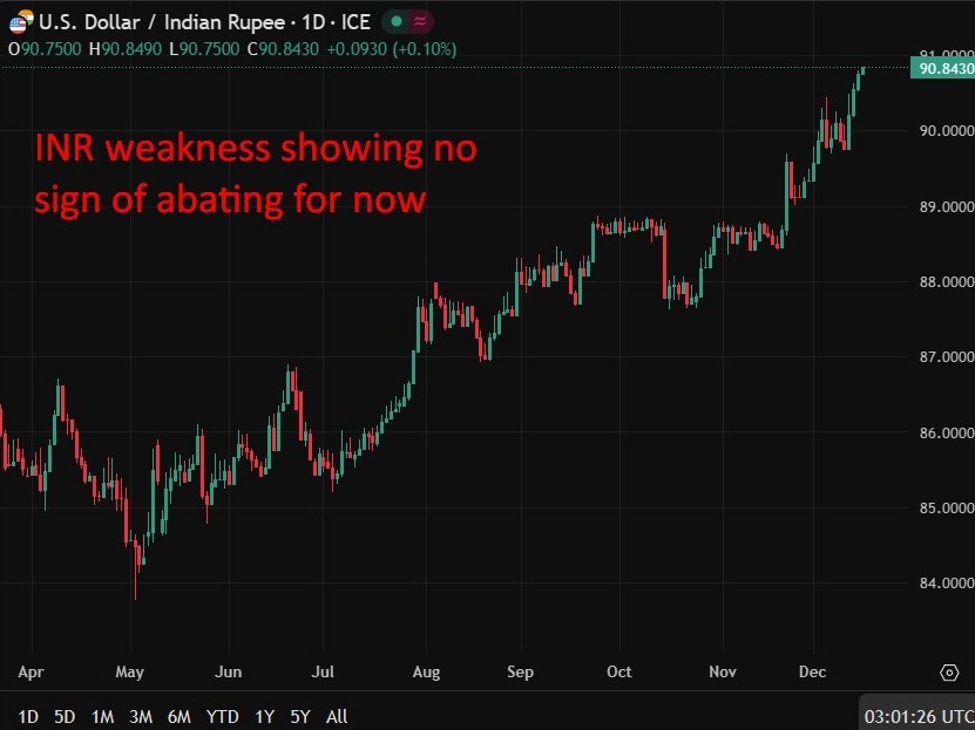
The Indian rupee is set to open at fresh record lows, as a deteriorating global risk backdrop compounds persistent flow imbalances that continue to weigh heavily on the currency. Info via Reuters. One-month non-deliverable forward pricing suggests USD/INR will open in the 90.80–90.85 range, extending losses after the rupee closed at 90.73 on Monday. The currency slipped to a new all-time low of 90.7875 during the previous session, marking a third consecutive day of record weakness.Market participants say the latest leg lower is being driven less by panic and more by entrenched flow dynamics. Bankers point to a sustained mismatch between dollar demand and supply, with fixing-related dollar buying, potentially linked to NDF maturities and portfolio outflows, emerging as a recurring source of pressure. Additional demand from state-owned enterprises has further strained onshore liquidity.At the same time, importer hedging demand has remained consistently strong, reflecting concerns about further rupee depreciation. Exporter selling, by contrast, has been subdued, as many exporters remain reluctant to hedge at current levels, preferring to wait in anticipation of better rates. This imbalance has left the rupee exposed to even modest increases in dollar demand.Portfolio flows have also played a central role. Ongoing foreign outflows from local equity and debt markets have outweighed India’s longer-term structural positives, including solid growth prospects and improving macro fundamentals. In the near term, these strengths have offered limited protection against global risk aversion and a firm U.S. dollar.Crucially, traders note that the current phase of weakness appears orderly and flow-led rather than driven by speculative capitulation. Volatility remains contained, suggesting that while pressure is intense, markets are adjusting incrementally rather than disorderly repricing risk.Until there is a meaningful turnaround in portfolio flows, a shift in global risk sentiment, or a clear positive catalyst on the trade front, the rupee is likely to remain under pressure. In the absence of such triggers, fresh record lows cannot be ruled out in the near term.
This article was written by Eamonn Sheridan at investinglive.com.
💡 DMK Insight
The Indian rupee’s plunge to record lows is a wake-up call for traders: As USD/INR is projected to open between 90.80 and 90.85, the currency’s weakness reflects broader global risk aversion and persistent flow imbalances. This isn’t just a local issue; it signals potential volatility across emerging markets. Traders should consider how this impacts their positions in Indian equities and commodities, especially those priced in rupees. If the rupee continues to weaken, we could see inflationary pressures rise, affecting the Reserve Bank of India’s monetary policy decisions. Look for key levels around 90.50 and 91.00 as psychological barriers. A breach of these could trigger further selling pressure, while a bounce back might indicate a short-term correction. Keep an eye on global risk sentiment and any geopolitical developments that could exacerbate this trend. The real story here is how this currency weakness could ripple through to other asset classes, particularly if institutional investors start reallocating their portfolios in response.
📮 Takeaway
Watch for USD/INR levels around 90.50 and 91.00; a breach could signal further rupee weakness and impact related markets.