
 Bitcoin
  Ethereum
  Tether
  BNB
BNB  USDC
USDC  XRP
XRP  Solana
  TRON
TRON  Lido Staked Ether
  Figure Heloc
Jeffrey Schmid, President of the Federal Reserve (Fed) Bank of Kansas City, said on Thursday that inflation remains the primary threat to the US economy, while raising questions about whether the Fed may need to keep interest rates elevated or even tighten policy further to ensure price stability. 🔗 Source 💡 DMK Insight Inflation concerns are back on the table, and here’s why that matters for ETH: With ETH currently at $1,764.96, traders need to consider how the Fed’s stance on interest rates could impact crypto markets. If the Fed decides to keep rates elevated or tighten further, we could see a stronger dollar, which often pressures crypto prices. Historically, when the Fed signals a hawkish approach, risk assets like ETH tend to react negatively, as higher borrowing costs can dampen investment appetite. Look for ETH to test key support levels around $1,700. If it breaks below this, we might see a cascade effect, pushing it further down. On the flip side, if inflation data shows signs of cooling, it could provide a bullish catalyst for ETH, especially if it can reclaim resistance around $1,800. Keep an eye on upcoming inflation reports and Fed announcements, as they could dictate market sentiment in the coming weeks. 📮 Takeaway Watch for ETH to hold above $1,700; a break could signal further downside, while reclaiming $1,800 could spark a rally.

WTI declines as Israel-Lebanon ceasefire eases tensions in the Middle East
West Texas Intermediate (WTI) Crude Oil slips nearly 3% on Thursday as market sentiment improves following a ceasefire agreement between Israel and Lebanon. At the time of writing, WTI trades around $91 per barrel, snapping a three-day winning streak. 🔗 Source 💡 DMK Insight WTI Crude’s nearly 3% drop signals a shift in market sentiment, and here’s why that matters: The ceasefire agreement between Israel and Lebanon has eased geopolitical tensions, which often drive oil prices higher. With WTI currently around $91 per barrel, this pullback could indicate that traders are reassessing their positions in light of reduced risk. It’s worth noting that oil prices had been on a three-day winning streak, likely fueled by concerns over supply disruptions. Now, as sentiment shifts, traders should watch for key support levels around $90. If WTI breaks below this, it could trigger further selling pressure. Conversely, if it holds, we might see a rebound as traders look to capitalize on potential dips. On the flip side, keep an eye on broader economic indicators, such as U.S. inventory data and OPEC’s production decisions, which could influence oil prices in the coming weeks. The market’s reaction to these events will be crucial, especially for swing traders looking for entry points. Watch for volatility in related assets like energy stocks and ETFs, as they often move in tandem with crude oil prices. 📮 Takeaway Monitor WTI’s support at $90; a break below could signal further declines, while holding could set up a rebound opportunity.
Chinese Yuan: Neutral within defined band against US Dollar – UOB
UOB’s Quek Ser Leang and Lee Sue Ann report a sharp rebound in USD/CNH above 6.78, which invalidated their prior bearish view. They now see the pair as neutral, expecting consolidation between 6.7620 and 6.7980 near term, with 6.7850 and 6.7980 acting as key resistance levels. 🔗 Source 💡 DMK Insight USD/CNH just bounced back above 6.78, and here’s why that matters: This shift signals a potential shift in market sentiment, especially after the previous bearish outlook. With the pair now expected to consolidate between 6.7620 and 6.7980, traders should keep an eye on those levels. If the price can break above 6.7980, it could trigger further bullish momentum, impacting not just USD/CNH but also related pairs like AUD/CNH and EUR/CNH. The broader context here is the ongoing volatility in the forex market, influenced by economic data releases and geopolitical tensions. But don’t ignore the flip side—if the pair fails to hold above 6.78, it could lead to renewed bearish pressure, especially if it dips back below 6.7620. Watch for any economic indicators that could sway sentiment, particularly around U.S. interest rates or Chinese economic data. For now, keep your charts focused on those resistance levels and be ready to adjust your strategies accordingly. 📮 Takeaway Monitor USD/CNH closely around 6.7620 and 6.7980; a break above 6.7980 could signal bullish momentum.

Silver Price Forecast: XAG rebounds, capped below 50-day SMA as bears hold grip
Silver (XAG/USD) price bounces off weekly lows at $72.46 on Thursday, trading near $74.00, up over 1.70% on the day, as market mood is mixed, with investors rotating out of technology stocks and into other sectors, even though tensions around the Middle East conflict remain high. 🔗 Source 💡 DMK Insight Silver’s bounce from $72.46 signals a potential shift in market sentiment. With the price now near $74.00, this uptick comes amid a broader rotation away from tech stocks, suggesting investors might be seeking safer havens. The ongoing geopolitical tensions in the Middle East could further support silver as a hedge against uncertainty. Traders should watch for resistance around $75.00, which could be a critical level to break for a sustained rally. If silver can hold above this level, it might attract more bullish sentiment, especially from institutional players looking for stability in volatile markets. On the flip side, if geopolitical tensions ease or tech stocks stabilize, silver could face downward pressure. Keep an eye on the daily chart for any signs of consolidation around these levels, as a failure to maintain above $74.00 could lead to a retracement back towards the weekly lows. Monitoring volume and market sentiment will be key in determining the next move. 📮 Takeaway Watch for silver to hold above $74.00; a break above $75.00 could signal further upside potential.
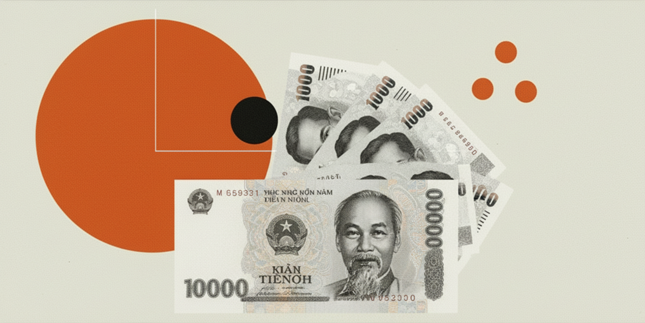
Vietnam Dong: Inflation and trade headwinds build – Commerzbank
Commerzbank highlights that Vietnam’s May Consumer Price Index (CPI) rose to 5.6% year-on-year, the highest since January 2020, driven by food and energy costs, while the trade deficit widened to a record USD 5.2 billion on strong import growth. 🔗 Source 💡 DMK Insight Vietnam’s CPI jump to 5.6% is a wake-up call for traders watching emerging markets. This spike, the highest since January 2020, signals rising inflationary pressures that could affect monetary policy. With food and energy costs driving this increase, traders should keep an eye on commodity prices, especially in the agricultural and energy sectors, as they might see increased volatility. The record trade deficit of USD 5.2 billion also raises concerns about the sustainability of Vietnam’s economic growth, potentially impacting the Vietnamese dong and related forex pairs. If inflation continues to rise, the central bank may be forced to adjust interest rates, which could have ripple effects across regional currencies and equities. Watch for any policy announcements from the State Bank of Vietnam in the coming weeks, as these could provide clues on how they plan to tackle inflation. Additionally, monitor the performance of the VND against major currencies, especially if inflation persists beyond expectations. 📮 Takeaway Keep an eye on Vietnam’s inflation and trade deficit; any central bank policy shifts could impact the VND and related forex pairs significantly.

Indonesian Rupiah: Tight liquidity and policy risks weigh versus US Dollar – MUFG
MUFG’s Lloyd Chan highlights that IDR is under particular pressure as rising US yields intersect with domestic policy uncertainty and higher energy prices. 🔗 Source 💡 DMK Insight IDR’s current struggles stem from a mix of rising US yields and local policy jitters. With US yields climbing, capital is likely flowing back to the dollar, putting additional strain on the Indonesian Rupiah. This is compounded by domestic uncertainties, particularly in policy-making, which can deter foreign investment. Higher energy prices are also a double-edged sword; while they can boost export revenues, they increase import costs, further pressuring the currency. Traders should keep an eye on the IDR’s performance against the USD, especially if it approaches key support levels. If the IDR breaks below these levels, it could trigger further selling. On the flip side, if US yields stabilize or domestic policies show signs of improvement, we might see a rebound. Watch for any statements from the Indonesian central bank that could signal intervention or policy adjustments. The next few weeks will be crucial as traders digest these factors and their implications for the IDR’s trajectory. 📮 Takeaway Monitor the IDR closely against the USD; a break below key support could lead to increased selling pressure.

Forex Today: Investors look ahead to US NFP report
The US Dollar Index (DXY) fell toward 99.18 early Thursday before steadily climbing during the North American session to 99.45 as investors digested comments from a series of Federal Reserve (Fed) officials ahead of the highly anticipated Nonfarm Payrolls report on Friday. 🔗 Source 💡 DMK Insight The DXY’s bounce from 99.18 to 99.45 signals a potential shift in market sentiment ahead of the Nonfarm Payrolls report. Investors are clearly reacting to Fed officials’ comments, which could hint at future monetary policy adjustments. A stronger dollar typically pressures commodities and emerging markets, so keep an eye on correlated assets like gold and emerging market currencies. If the DXY breaks above 99.50, it could trigger further bullish momentum, while a drop back below 99.18 might signal a bearish reversal. Watch for volatility in the forex market as traders position themselves ahead of the payroll data, which could lead to significant price swings across various pairs, especially USD-based ones. 📮 Takeaway Monitor the DXY closely; a break above 99.50 could lead to further dollar strength, impacting commodities and emerging markets.
Singapore Dollar Further losses capped by 1.2855 versus dollar – UOB
UOB’s Quek Ser Leang and Lee Sue Ann note that USD/SGD has broken to a two‑month high near 1.2840, with strong momentum pointing to further Dollar strength against the Singapore Dollar. 🔗 Source 💡 DMK Insight USD/SGD hitting a two-month high at 1.2840 signals potential for further Dollar gains. This breakout is significant as it reflects strong momentum in the USD, likely driven by recent economic data and interest rate expectations. Traders should keep an eye on the broader USD performance, especially against other major currencies, as this could set the tone for the forex market. If the USD continues to strengthen, we might see a ripple effect, impacting commodities and emerging market currencies that are sensitive to Dollar fluctuations. Watch for resistance levels around 1.2900, which could be a key area for profit-taking or reversal. On the flip side, if the USD starts to lose steam, it could lead to a quick pullback in USD/SGD, so be prepared for volatility. Keep an eye on upcoming economic releases that could influence sentiment, particularly around U.S. inflation and employment data. The next few trading sessions will be crucial in determining whether this momentum can be sustained or if a correction is on the horizon. 📮 Takeaway Monitor USD/SGD closely; a break above 1.2900 could signal further Dollar strength, while any signs of weakness may prompt a pullback.

NZD/USD stays muted as markets monitor Iran developments
The NZD/USD pair trades near the 0.5870 level on Friday, as the United States Dollar (USD) remains supported by cautious Federal Reserve (Fed) commentary and safe-haven demand amid ongoing uncertainty surrounding Iran. 🔗 Source 💡 DMK Insight The NZD/USD hovering around 0.5870 highlights a critical juncture for traders right now. With the USD buoyed by cautious Fed commentary, it’s clear that market sentiment is leaning towards safety amid geopolitical tensions, particularly with Iran. This backdrop suggests that any unexpected developments could lead to volatility in the pair. Traders should keep an eye on the Fed’s next moves; if they signal a more hawkish stance, we could see the USD strengthen further, pushing NZD/USD lower. Conversely, if the Fed leans dovish, the NZD might find some support, especially if commodity prices rebound. It’s also worth noting that the 0.5800 level is a key support point; a break below could trigger further selling pressure. On the flip side, if the pair manages to reclaim 0.5900, it could indicate a shift in sentiment. Watch for any news from the Fed or developments in Iran that could sway market dynamics significantly. 📮 Takeaway Monitor the 0.5800 support level closely; a break could lead to further declines in NZD/USD, while a recovery above 0.5900 may signal a bullish reversal.

Indonesian Rupiah: Policy risks and energy shock pressure IDR – BBH
Brown Brothers Harriman’s (BBH) Elias Haddad reports USD/IDR has hit a fresh record high above 18,000, while Indonesian equities have slumped to multi-year lows. 🔗 Source 💡 DMK Insight USD/IDR breaking above 18,000 is a wake-up call for traders watching emerging markets. This surge indicates a significant depreciation of the Indonesian Rupiah, which is now at a record low. Such a drastic move can lead to increased volatility in both the forex and equity markets, particularly affecting Indonesian stocks that are already struggling. Traders should be aware that this depreciation could trigger capital outflows, further pressuring the Rupiah and potentially leading to a broader sell-off in Indonesian equities. On the flip side, this situation may present opportunities for short positions in IDR or long positions in USD. Keep an eye on the 18,000 level as a psychological barrier; if it holds, we could see continued weakness in the Rupiah. Additionally, monitor the Jakarta Composite Index for signs of stabilization or further declines, as this will give clues about investor sentiment and risk appetite in the region. 📮 Takeaway Watch the 18,000 level on USD/IDR closely; a sustained break could lead to further weakness in Indonesian equities and increased volatility.