
 Bitcoin
  Ethereum
  Tether
  BNB
BNB  XRP
XRP  USDC
USDC  Solana
  TRON
TRON  Lido Staked Ether
  Figure Heloc
China NBS Non-Manufacturing PMI came in at 50.1, above forecasts (49.5) in May 🔗 Source 💡 DMK Insight China’s Non-Manufacturing PMI hitting 50.1 is a key indicator for traders: This figure not only beats forecasts but also signals a potential rebound in the services sector, which is crucial for China’s economic recovery. For traders, this could mean increased demand for commodities and currencies linked to Chinese growth, particularly the Australian dollar and various Asian markets. If this trend continues, we might see a shift in market sentiment, pushing investors towards riskier assets. But here’s the flip side: while a PMI above 50 suggests expansion, it’s just above the threshold, indicating that growth isn’t robust. Traders should keep an eye on subsequent data releases for confirmation of a sustained recovery. Watch for any shifts in the USD/CNY pair, as a stronger yuan could impact global trade dynamics. Key levels to monitor are the 50.5 mark for further confirmation of growth and the 49.5 level as a potential support if sentiment shifts. 📮 Takeaway Watch the 50.5 level in China’s PMI for signs of sustained growth; a break above could boost risk assets, especially AUD and Asian equities.

China NBS Manufacturing PMI meets forecasts (50) in May
China NBS Manufacturing PMI meets forecasts (50) in May 🔗 Source 💡 DMK Insight China’s Manufacturing PMI hitting 50 is a double-edged sword for traders right now. On one hand, meeting forecasts suggests stability in the manufacturing sector, which could bolster risk appetite among investors. However, a PMI at 50 indicates stagnation rather than growth, raising concerns about the broader economic recovery. Traders should be cautious; while this number might initially support the yuan and related assets, the lack of expansion could lead to volatility if subsequent data disappoints. Watch for reactions in commodities and equities, especially those tied to Chinese demand. If the PMI trends lower in future reports, it could trigger a sell-off in sectors reliant on Chinese manufacturing. Keep an eye on the daily charts for the yuan and commodities like copper, which often react to Chinese economic indicators. A break below key support levels in these assets could signal deeper issues in the market. The real story is whether this stability can translate into sustained growth, or if it’s just a temporary pause before further declines. 📮 Takeaway Monitor the yuan and commodities closely; a break below key support levels could signal deeper economic concerns if future PMIs trend lower.
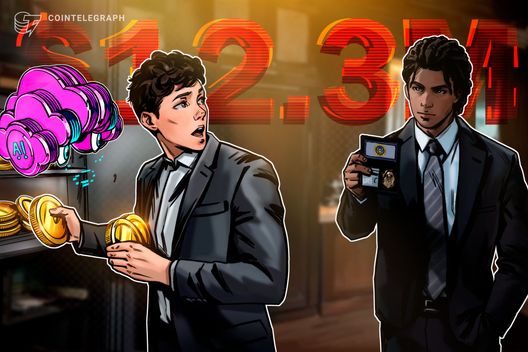
SEC charges Texas man with $12.3M crypto fraud using fake AI trading bots
The SEC charged Texas man Nathan Fuller with raising $12.3 million from 150 investors through a crypto fraud scheme built around fake AI trading bots. 🔗 Source 💡 DMK Insight The SEC’s charge against Nathan Fuller highlights the ongoing scrutiny of crypto schemes, and here’s why that matters: With $12.3 million raised from 150 investors, this case underscores the risks of investing in unregulated crypto products, especially those claiming to leverage AI. As regulators ramp up enforcement, traders should be wary of similar schemes that could lead to market volatility. This incident could trigger a broader sell-off in crypto assets, particularly those associated with AI and trading bots, as investor confidence may wane. Look for potential ripple effects on related assets, especially tokens that market themselves as AI-driven. If this case leads to increased regulatory action, we might see heightened volatility across the crypto market, affecting everything from Bitcoin to smaller altcoins. Keep an eye on the SEC’s next moves and any announcements that could impact market sentiment. A key level to watch is the reaction of major cryptocurrencies to any regulatory news, particularly in the coming weeks as traders digest this information. 📮 Takeaway Watch for increased volatility in AI-related crypto assets as the SEC’s actions could spark broader regulatory scrutiny and impact investor sentiment.

Bitcoin dip buyers curb selling but questionable spot, futures volumes highlight weakness
Bitcoin dip buyers are present near range lows, and new leveraged longs opened in the zone but the volumes lack the size needed to reverse the downtrend. 🔗 Source 💡 DMK Insight Bitcoin’s dip buyers are stepping in, but here’s the catch: volume isn’t backing them up. While new leveraged longs are appearing near range lows, the lack of significant volume suggests that this rally might not have the strength to break the current downtrend. Traders should be cautious; if the volume doesn’t pick up, we could see a quick reversal back to lower levels. Keep an eye on the volume metrics—if we don’t see a surge soon, it could signal a false breakout. This situation is reminiscent of previous dips where buyers rushed in, only to be met with selling pressure. Watch for key resistance levels above the current range. If Bitcoin can’t hold above these levels with strong volume, it might be time to reassess positions. The next few days are crucial; monitor the daily volume closely as it could dictate the short-term direction. If you’re holding longs, set tight stop-losses to manage risk effectively. 📮 Takeaway Watch for volume spikes in Bitcoin; without them, the current dip buying could lead to further downside risks.

What Is an AI Prompt Injection Attack? The Hidden Threat Hijacking Your Chatbots
Hackers can hijack ChatGPT, Claude, and Gemini with nothing but a sentence. OpenAI says the problem may never be fully solved. Here is what it is, how it works, and how to stay safe. 🔗 Source 💡 DMK Insight With SOL currently at $82.62, the recent news about vulnerabilities in AI models like ChatGPT and Claude could shake investor confidence across tech and crypto sectors. If hackers can exploit these systems, it raises serious concerns about the security of blockchain technologies that underpin cryptocurrencies. Traders should be cautious, as this could lead to increased volatility in SOL and similar assets, especially if institutions start pulling back on investments due to security fears. The broader market context is crucial here. As we see heightened scrutiny on AI and tech security, SOL’s price could be influenced by sentiment shifts, particularly if major players in the crypto space begin to reassess their risk exposure. Watch for SOL to hold above key support levels; a drop below $80 could trigger further selling pressure. Conversely, if SOL manages to maintain its position, it could attract buyers looking for a dip. Keep an eye on related assets, especially those in the DeFi space, as they might react similarly to security concerns. The real story is how this news could ripple through the market, affecting not just SOL but the entire crypto ecosystem. Watch for any institutional responses in the coming days, as they could provide clarity on market direction. 📮 Takeaway Traders should monitor SOL closely; a drop below $80 could signal increased selling pressure, while maintaining above this level may attract buyers.

Florida Candidate Liquidates $800K in Bitcoin to Bankroll Congressional Bid
A Republican candidate jockeying to represent Florida’s 22nd Congressional District liquidated Bitcoin to help fuel his political bid. 🔗 Source 💡 DMK Insight A Republican candidate’s liquidation of Bitcoin for campaign funds highlights a critical intersection of politics and crypto liquidity. This move could signal to traders that political candidates are increasingly viewing crypto as a viable asset for fundraising, which may influence market sentiment. If more candidates follow suit, we could see increased volatility in Bitcoin as liquidity is impacted by these transactions. Traders should keep an eye on Bitcoin’s price movements, especially if this trend gains traction in other political races. Additionally, the broader implications for crypto regulation could emerge as candidates leverage these assets, potentially affecting institutional interest and retail sentiment. Watch for Bitcoin’s response in the coming weeks, particularly around key support levels, as political events unfold and more candidates might consider similar strategies. 📮 Takeaway Monitor Bitcoin’s price action closely; political fundraising could introduce volatility and impact liquidity in the coming weeks.

Senator Lummis says China will 'write the rules' of the new financial era if CLARITY fails
The Senate Banking Committee voted to advance the CLARITY Act in May, but it must still pass both chambers of Congress before heading to the president’s desk. 🔗 Source 💡 DMK Insight The Senate Banking Committee’s advancement of the CLARITY Act could reshape crypto regulation significantly. For traders, this is a pivotal moment. If the Act passes, it could provide clearer guidelines for crypto assets, which may reduce regulatory uncertainty and potentially boost institutional investment. This clarity could lead to increased trading volumes and volatility in the crypto markets as participants adjust to new rules. However, the path to the president’s desk is still fraught with challenges, and any delays or amendments could impact market sentiment. Keep an eye on the broader legislative landscape and how it might affect related assets, particularly Bitcoin and Ethereum, which often react to regulatory news. Watch for key developments in the coming weeks as the Act moves through Congress; any significant changes could trigger sharp price movements. Traders should monitor sentiment indicators and volume spikes around legislative updates to gauge market reactions effectively. 📮 Takeaway Watch for updates on the CLARITY Act’s progress in Congress; regulatory clarity could significantly impact crypto volatility and trading strategies.

Week in Focus: 1st – 5th June: Highlights include US ISMs, NFP, EZ HICP & CAD jobs
MON: Global Manufacturing Final PMIs (May), South Korean Balance of Trade (May), German Retail Sales (Apr), Swiss Retail Sales (Apr), GDP (Q1), EZ Unemployment Rate (Apr), US ISM Manufacturing (May)TUE: NBP Policy Announcement (Jun), South Korean CPI (May), EZ HICP (May), JOLTs Job Openings (Apr), RCM/TIPP Economic Optimism, New Zealand Export/Import Prices (Q1)WED: Fed Beige Book, Global Final PMIs (May), Australian GDP (Q1), EZ PPI (Apr), US ADP Employment Change (May), ISM Services PMI (May), Factory Orders (Apr)THU: Australian Balance of Trade (Apr), Swedish CPIF (May), Swiss CPI (May), Spanish Industrial Production (Apr), EZ Construction PMI (May), EZ Retail Sales (Apr), US Challenger Layoffs (May), Jobless Claims (May/30)FRI: RBI Policy Announcement (Jun), Japanese Household Spending (Apr), French Balance of Trade (Apr), BoE DMP (May), EZ Employment Change Final (Q1), GDP 3rd Estimate (Q1), Italian Retail Sales (Apr), Canadian Jobs Report (May), US NFP (May)Week AheadUS ISM Manufacturing PMI (MON): As a proxy, S&P Global’s flash manufacturing PMI rose to 55.3 in May (from 54.5), a 48-month high, with the output index also firming to 56.2, its strongest reading in 49 months. Under the bonnet, however, the picture was somewhat nuanced. The marked influx of new orders was again driven predominantly by precautionary stock-building by clients rather than end-demand, and order book growth was purely domestically driven, with goods exports falling again, S&P said. Supply chains deteriorated sharply, with supplier delivery times lengthening to the greatest degree since August 2022 as war-related shipping disruptions compounded existing tariff-related constraints; input purchases rose at the steepest rate since April 2022, driving inventories higher. Input cost inflation registered its largest monthly increase since June 2022, with selling prices rising at the fastest pace since September 2022. On the labour front, manufacturing payrolls posted their largest increase in 11 months as factories hired to meet the order upturn. Looking ahead, manufacturer sentiment improved to its most optimistic since February 2025, buoyed by the recent order strength and anticipation of tariff-related reshoring, though the reliance on precautionary stocking as a demand driver remains a key caveat.EZ HICP (TUE): April’s HICP was a little hotter-than-expected at a headline level at 3.0% Y/Y, while the Services figure moderated to 3.0% (prev. 3.2%) and the bulk of price pressures remained confined to energy. No real reaction to the data, which didn’t change the narrative into the ECB announcement a few hours later. For May, metrics from France, Germany, Italy and Spain point to a headline figure broadly in-line or slightly cooler than the prior, and pertinently, the transmission of price pressures from energy to broader areas of the economy remains relatively contained. Nonetheless, another 3.0% Y/Y print, or even a slight moderation, will not divert the narrative from an ECB hike in June.US ISM Services PMI (WED): Using the S&P Global data as a guide, flash services business activity index slipped to 50.9 in May (from 51.0), a two-month low, pointing to a services sector that continues to struggle for traction. New business inflows rose only modestly, improving marginally on the slight decline seen in April but remaining consistent with the weakest quarterly performance since late 2023. S&P said export demand deteriorated sharply, with service exports falling at the sharpest rate in six years, while consumer-facing businesses reported particularly subdued conditions amid rising prices and elevated uncertainty linked to the ongoing Middle East conflict. On inflation, services input prices accelerated to the steepest in a year, contributing to a further rise in composite selling prices to their highest since August 2022, which S&P said was a key drag on demand. The labour picture was notably weak: service sector jobs were cut at the second-fastest pace since May 2020, surpassed only by April 2024. Business optimism deteriorated further, with service sector expectations for the year ahead falling to their weakest since April 2025 and second lowest since October 2022, with firms citing surging prices, higher interest rates, and heightened political uncertainty as the principal headwinds.Swedish CPIF (THU): Swedish CPIF is expected to rise 0.6% M/M (and 1.2% Y/Y) in May, whilst the core metrics are expected to rise 0.4% M/M (and 0.2% Y/Y). For the core metrics, the M/M is expected to rise in-line with the Riksbank’s own view, but at a slower pace on a Y/Y basis. Recent surges in energy prices are expected to passthrough into the headline figures, with SEB continuing to expect “some upward pressure on CPIF-XE from the Iran war”. The implication on the Riksbank is expected to muted, as the Bank pointed towards a “wait and see” approach. There are two-sided risks for policymakers, with a material rise in inflation potentially bringing a hike to the table, whilst persistently low inflation (should the conflict resolve), could see policymakers begin to weigh a cut. For the time being, the Riksbank will await further inflation developments, as such, this report is unlikely to have a material impact on near-term policy.Swiss CPI (THU): April’s release was in-line at 0.6% Y/Y, and while the M/M ticked up to 0.3% (prev. 0.2%), it was cooler than the 0.4% consensus. Unsurprisingly, the relative pressures were driven by elevated prices for petrol, diesel and heating oil. For May, the narrative will likely remain the same, and while the SNB will be attentive to any further upside, the inflation level remains in the lower half of the 0-2% target band, and the SNB continues to make clear that inflation meets their medium-term stability objective. As such, policy is expected to remain at the ZLB for the foreseeable.RBI Policy Announcement (FRI): Expected to maintain rates at 5.25%, though there are some outside calls for a hike. The April decision to maintain policy was unanimous, with a neutral stance also maintained; note, we saw external member Singh switch view from accommodative to neutral, falling in-line with the rest of the MPC. During the last address, Governor Malhotra said that global growth faces downside risk and the global economy is facing unprecedented challenges. April’s CPI came in cooler-than-expected but did tick up slightly from