
 Bitcoin
  Ethereum
  Tether
  BNB
BNB  XRP
XRP  USDC
USDC  Solana
  TRON
TRON  Lido Staked Ether
  Figure Heloc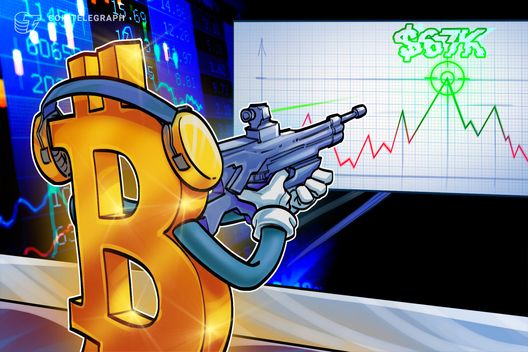
Bitcoin approached the final week of CME futures gaps with several still open, providing potential BTC price targets as low as $67,000. 🔗 Source 💡 DMK Insight Bitcoin’s recent price action is hinting at a potential drop towards $67,000 as CME futures gaps loom. With BTC currently at $73,279, traders should be aware that unfilled gaps often act as magnets for price action. The fact that we’re nearing the end of the week adds urgency; gaps typically get filled within a few weeks. If BTC does retrace to fill these gaps, it could trigger stop-losses and further selling pressure, especially among retail traders who might panic at the sight of a downward trend. On the flip side, if BTC holds above $70,000, it could signal strength and attract buyers looking for a bounce. Keep an eye on the $67,000 level as a potential target, but also watch for resistance around $75,000. The next few days will be crucial for determining whether BTC can maintain its bullish momentum or if it will succumb to the pull of those gaps. 📮 Takeaway Watch for BTC to test the $67,000 level this week; a drop below could trigger further selling pressure.

Bitcoin enters cool-down phase under $75K as ‘active distribution’ rises
Bitcoin’s slide toward $73,000 triggered active distribution signals, but lowered realized losses and weak spot volumes point to easing sell pressure. 🔗 Source 💡 DMK Insight Bitcoin’s dip near $73,000 is raising eyebrows, but here’s the kicker: distribution signals are flashing while sell pressure seems to be easing. The recent price action suggests that while traders are offloading positions, the lowered realized losses indicate that many are still holding on, waiting for a rebound. Weak spot volumes could mean that the selling isn’t as aggressive as it appears, which might give bulls a chance to regroup. If Bitcoin can hold above this $73,000 level, it could attract buyers looking for a bargain, especially if we see a reversal in volume trends. Watch for any signs of accumulation in the coming days—if spot volumes pick up, it could signal a shift in sentiment. On the flip side, if Bitcoin breaks below $73,000 decisively, it might trigger further selling, especially among short-term traders. Keep an eye on the $70,000 support level; a breach there could lead to a more significant downturn. Overall, the market’s reaction to these distribution signals will be crucial in determining the next move. 📮 Takeaway Monitor Bitcoin’s price action around $73,000; a hold could signal a buying opportunity, while a break below $70,000 may trigger further selling.

Buy $72K dip, or jump ship: What will Bitcoin bulls do?
Investors selling across spot, futures and ETF markets pushed Bitcoin into its monthly range lows near $72,000 but data shows retail investors buying the dip and opening longs. 🔗 Source 💡 DMK Insight Bitcoin’s dip to monthly lows around $72,000 is a critical juncture for traders right now. The selling pressure from investors across spot, futures, and ETF markets suggests a bearish sentiment, yet the influx of retail buying indicates a potential reversal. This divergence could signal a short-term bounce if retail momentum continues. Traders should keep an eye on volume levels; a spike in buying could push Bitcoin back towards resistance levels above $75,000. However, if selling resumes, we might see further downside, potentially testing lower support levels. Watch for key indicators like RSI and MACD on the daily chart to gauge momentum shifts. The real story is how retail sentiment might counteract institutional selling—if they can sustain their buying, we could see a significant shift in market dynamics. 📮 Takeaway Monitor Bitcoin’s price action around $72,000; sustained retail buying could signal a reversal, while renewed selling may push it lower.

Bitcoin’s trapped under $74K while $9B options expiry looms: Are bears back in control?
Bears hold the upper hand for Friday’s $9 billion options expiry, keeping Bitcoin under pressure amid heavy ETF outflows and corporate selling 🔗 Source 💡 DMK Insight With bears dominating ahead of the $9 billion options expiry, Bitcoin’s pressure is palpable right now. Heavy ETF outflows and corporate selling are key factors driving this sentiment. Traders should be cautious as this expiry could trigger further volatility, especially if Bitcoin fails to hold critical support levels. If we see a break below recent lows, it could lead to a cascade effect, pushing prices down further. On the flip side, if bulls manage to reclaim some ground, it might signal a short-term reversal, but that seems unlikely given the current bearish momentum. Keep an eye on the $X level as a potential pivot point for any bounce-back attempts. In the broader market context, this bearish trend could spill over into altcoins, particularly those closely tied to Bitcoin’s performance. Monitoring the options expiry closely will be crucial for gauging market sentiment and potential price movements in the coming days. 📮 Takeaway Watch for Bitcoin’s performance around the $X level during the options expiry; a break could signal further downside.
Paxos Secures SEC Registration as Clearing Agency
The approval makes Paxos the “only blockchain-native firm” approved by the SEC to operate as a registered clearing agency in the U.S. 🔗 Source 💡 DMK Insight Paxos just scored a major win with SEC approval, and here’s why it matters: as the only blockchain-native firm recognized as a registered clearing agency, it sets a precedent for institutional adoption of crypto. This could signal a shift in regulatory sentiment, potentially paving the way for other firms to follow suit. Traders should keep an eye on how this impacts liquidity and trading volumes in related assets, particularly stablecoins and tokenized securities, which could see increased institutional interest. But don’t overlook the risks. While this approval is a step forward, it also raises questions about regulatory scrutiny and compliance costs that could affect Paxos’ operational margins. If other firms face similar hurdles, it could slow down the broader market’s growth. Watch for any upcoming announcements from the SEC regarding additional approvals or guidelines, as these could create volatility in the crypto space. Key levels to monitor include Paxos’ trading volume and any shifts in market sentiment towards other blockchain firms in the wake of this news. 📮 Takeaway Keep an eye on Paxos’ trading volume and SEC announcements; this approval could boost institutional interest in crypto assets.
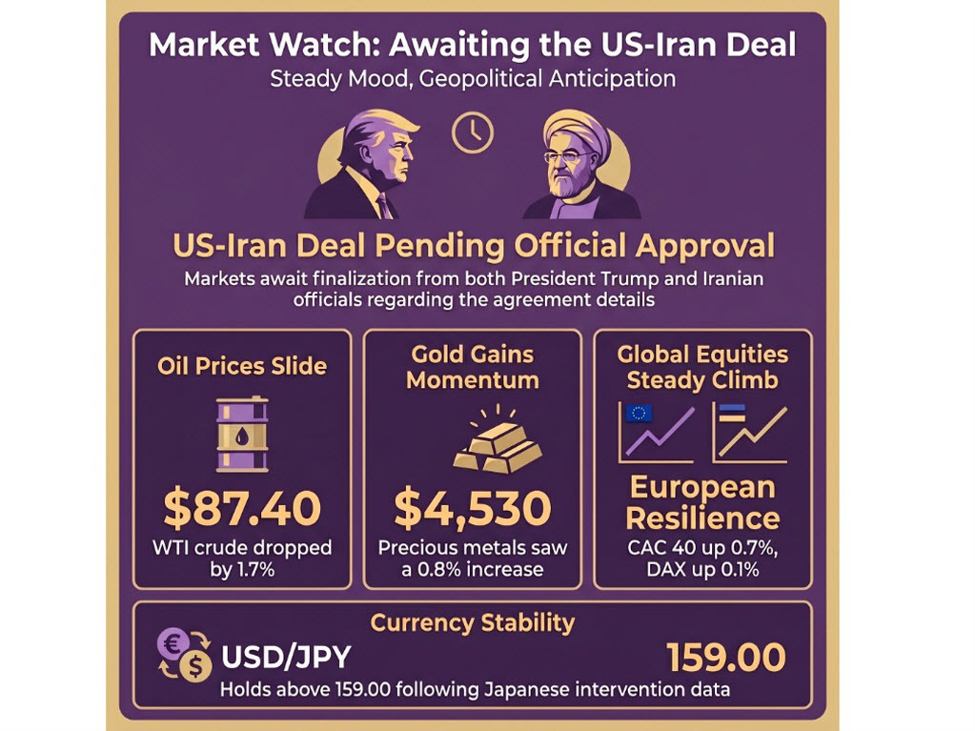
investingLive European markets wrap: A steadier mood as US-Iran deal still awaited
Headlines:Deal or no deal? Markets continue to eye US-Iran headlines ahead of the weekendJapan spent ¥11.7 trillion on foreign exchange interventions in the past monthJapan chief cabinet secretary says extremely concerned about speculative FX movesFed policymaker Schmid: My primary concern is inflation, which is too hotBOE governor Bailey: We have already tightened policy by taking rate cuts off the tableGerman states see slight drop in inflation pressures in MayFrench inflation continues to pick up in May, highest reading since February 2024Inflation pressures continue to hold up in Spain, core prices nudge a little higherItaly inflation continues to push up in May, core prices nudge higher as wellGerman unemployment falls unexpectedly in May, jobless rate down slightly as wellGerman import prices climb further in April as US-Iran conflict continues to reverberateMarkets:WTI crude down 1.7% to $87.40DAX up 0.1% while CAC 40 up 0.7% on the dayS&P 500 futures up 0.1%, Nasdaq futures up 0.1%US dollar lightly changed across the boardUS 10-year yields down 1.4 bps to 4.44%Gold higher by 0.8% to $4,530As we get into the final stretch of the week, the US and Iran are still yet to formalise a deal and sign off on the expected memorandum of understanding. This is one that has been “imminent” since the past weekend already. Yet, here we are.It seems like we are close but come what may, this doesn’t mean the end of the conflict – even if the deal is going to be labelled as such. Just a bit of background:How close are we actually to a US-Iran endgame?US and Iran know what the puzzle pieces are, but can they fit them all together?Still, markets remain hopeful and we’re seeing a steadier mood in European morning trade today.Oil prices are down once again with WTI crude lower by 1.7% to $87.40. That comes as equities are continuing to nudge up, with S&P 500 futures up 0.1% following another round of gains in Wall Street yesterday. In Europe, we’re seeing a steadier mood too with the DAX up 0.1% and CAC 40 up 0.7% today.Even though euro area inflation numbers are seen higher at the balance in May, bond yields are keeping down as US-Iran developments continue to override other elements at the moment. Besides Germany, price pressures were seen pushing up in France, Spain, and Italy.10-year yields in France are down 3 bps to 3.56% while 10-year yields in the US are down 1.4 bps to 4.44% currently.In FX, there wasn’t much action with the dollar holding steadier for the most part. EUR/USD is marginally lower around 1.1640 with large option expiries at 1.1650 keeping price action in check. Meanwhile, USD/JPY continues to keep around 159.20-30 levels even after Japan intervention data revealed a sizable amount spent by Tokyo officials in trying to pin down the currency pair during the past month.Besides that, gold prices are seen higher with the precious metal pushing up by 0.8% to $4,530 in keeping with the recovery since trading yesterday.It’s all now on whether we will see a US-Iran deal finally announced. And when the details come to surface, is it going to be a case of buy the rumour, sell the fact? This article was written by Justin Low at investinglive.com. 🔗 Source 💡 DMK Insight The ongoing US-Iran headlines are creating uncertainty, and here’s why that matters for traders right now: With Japan’s ¥11.7 trillion spent on foreign exchange interventions recently, it’s clear they’re trying to stabilize the yen amid speculative moves. This could lead to increased volatility in the forex markets, especially if traders react to any shifts in sentiment regarding US-Iran relations. If tensions escalate, we might see a flight to safe-haven currencies like the USD or CHF, while riskier assets could take a hit. Additionally, Fed policymaker Schmid’s focus on inflation suggests that the US dollar could strengthen if inflation data continues to surprise to the upside. Traders should keep an eye on the USD/JPY pair, as any significant moves could trigger stop-loss orders or attract new positions. On the flip side, if the situation with Iran de-escalates, we could see a rebound in risk assets, which might lead to a weakening of the dollar. Watch for key economic indicators next week, particularly any inflation reports that could influence Fed policy and market sentiment. 📮 Takeaway Monitor the USD/JPY pair closely; volatility is likely as geopolitical tensions and inflation data unfold next week.

What is AI CapEx and why should investors care?
Dell, AI spending, and the trillion-dollar question investors should understandDell Technologies just gave investors a live example of what the AI infrastructure boom looks like in financial statements.In its Q1 FY27 results, Dell was not rewarded simply because it sold more PCs or delivered a normal earnings beat. The stock exploded because investors increasingly see Dell as one of the companies directly benefiting from the massive AI infrastructure buildout taking place across the economy.This is where the story becomes much bigger than Dell alone.AI is not only a software theme. It is also a physical infrastructure theme. To run large AI models, train them, serve them, and integrate them into businesses, the world needs more servers, chips, networking equipment, storage, cooling, power, data centers, and related services.Dell is one of the companies enjoying that spending wave.But investors should also understand the other side of the story. A huge AI CapEx cycle can create real business growth, while also creating the risk of overbuilding, overvaluation, and circular market logic.That does not mean the AI boom is fake. It means investors need to understand what they are actually buying.What is AI CapEx?CapEx means capital expenditure. In plain English, it is money companies spend on long-term infrastructure, equipment, and assets.In the AI cycle, CapEx includes things like:AI serversGPUs and acceleratorsData centersNetworking equipmentPower infrastructureCooling systemsStorageFiber and connectivityCloud infrastructureWhen hyperscalers and large enterprises spend heavily on AI infrastructure, that spending becomes revenue for companies like Dell, Nvidia, Broadcom, Super Micro, Vertiv, power equipment providers, networking vendors, and many others.That is why investors care so much.AI spending is not only a future story. It is already showing up in revenue, earnings, guidance, order books, and stock prices.Why Dell is a good exampleDell’s latest earnings showed how powerful this cycle can be.The company is no longer being valued only as a traditional PC and enterprise hardware company. It is increasingly being viewed as an AI infrastructure supplier.The key point is simple: customers are ordering the physical equipment needed to build AI capacity.That is why Dell’s AI server revenue and AI order numbers mattered so much. Investors saw evidence that the AI infrastructure buildout is not just a marketing slogan. It is becoming real demand.For Dell, that is an opportunity.If companies, governments, and cloud providers keep spending aggressively on AI infrastructure, Dell can continue to benefit from server demand, enterprise relationships, supply-chain execution, and its ability to package AI infrastructure for large customers.But investors should avoid stopping the analysis there.The circularity problem: one company’s spending is another company’s revenueThe AI CapEx cycle can create a powerful feedback loop.Large technology companies spend billions on AI infrastructure. That spending becomes revenue for infrastructure suppliers. Those suppliers report stronger earnings. Their stocks rise. The market becomes more confident that AI spending is real. That confidence can encourage even more spending assumptions.The loop looks like this:Hyperscaler CapEx rises → AI infrastructure revenue rises → supplier earnings rise → share prices rise → investors price in more AI spending → companies feel pressure to keep investing.This can be bullish for a long time. But it also creates a risk.Part of the earnings growth across the AI supply chain may be driven by an investment cycle, not yet by fully proven end-user profitability.That distinction matters.If AI infrastructure spending keeps growing faster than the economic returns from AI applications, the market may eventually ask a harder question:Are companies spending because the returns are already obvious, or because they fear falling behind?The trillion-dollar AI questionA useful way to think about the current AI boom is this:The first stage was: Is AI real?The second stage was: Will large companies spend aggressively on AI?The third stage is: Will that spending produce enough durable return to justify the market valuation?We are now moving toward the third stage.The market already accepts that AI is real. It also accepts that hyperscalers and large enterprises are spending huge amounts of money. The debate is now shifting toward return on invested capital.In other words:Will the trillions of dollars being spent on AI infrastructure eventually produce enough profit, productivity, automation, customer value, and business transformation to justify the cost?That is the real investor question.AI is real, but it’s damn expensive (for now). More expensive than humans?AI can be powerful, but it is not free. Running advanced models can require expensive compute, electricity, engineering work, data infrastructure, software integration, and ongoing optimization.In some use cases, AI may produce enormous productivity gains. In others, the cost of tokens, infrastructure, implementation, and human oversight may reduce the economic benefit.For investors, the question is not whether AI can do impressive things. It clearly can.The question is whether the economics work at scale.If AI tools help companies reduce costs, increase revenue, improve decision-making, and automate expensive workflows, then the infrastructure spend can be justified.If AI adoption grows but remains too expensive relative to the value created, then some of today’s spending assumptions may eventually need to be revised lower.The opportunity for investorsThe opportunity is still significant.AI infrastructure is one of the largest investment cycles in modern markets. Companies that supply essential parts of that buildout may continue to benefit from strong demand.Potential winners can include:AI server suppliersSemiconductor companiesNetworking equipment providersData center operatorsPower infrastructure companiesCooling and electrical equipment suppliersCloud infrastructure providersSoftware companies that turn AI into practical business valueDell belongs in the first group. It is not the only AI winner, but its latest earnings showed that it is clearly participating in the infrastructure side of the boom.For investors, the most attractive opportunities may come from companies that can show:Real revenue growth from AI demandStrong order visibilityImproving marginsPositive cash flowDurable customer relationshipsAbility to scale supplyClear guidance upgradesEvidence that demand is not just temporary panic buyingThe threat for investorsThe threat is that markets may eventually overprice the cycle.Every major technology infrastructure boom tends to include some overspending. That does not mean the technology is unimportant. It means investors often extrapolate too much too quickly.The internet was real, but the dot-com bubble still happened.Energy demand was real, but expensive oil projects

South Korea Makes First DEX Rug Pull Arrest in Solana CATFI Case
South Korean prosecutors have indicted the group behind CATFI, a meme coin on Solana. This marks the country’s first recorded criminal arrest involving a “rug pull” on a decentralized exchange. The post South Korea Makes First DEX Rug Pull Arrest in Solana CATFI Case appeared first on NFT Evening. 🔗 Source 💡 DMK Insight South Korea’s indictment of the CATFI group is a watershed moment for crypto regulation, especially for Solana-based assets. This case highlights the increasing scrutiny on meme coins and decentralized exchanges (DEXs), which could lead to heightened volatility in the Solana ecosystem. Traders should be aware that regulatory actions can trigger sell-offs or panic, particularly in speculative assets like CATFI. With SOL currently at $81.99, any negative sentiment could push it below key support levels, potentially testing the $75 mark. Conversely, if the market perceives this as a necessary step toward legitimacy, it could stabilize prices in the long run. Watch for reactions from major players in the Solana space, as they might adjust their positions based on this news. Keep an eye on trading volumes and sentiment indicators over the next few days to gauge market reactions effectively. 📮 Takeaway Monitor SOL closely; if it dips below $75, it could signal increased bearish sentiment in the Solana market.
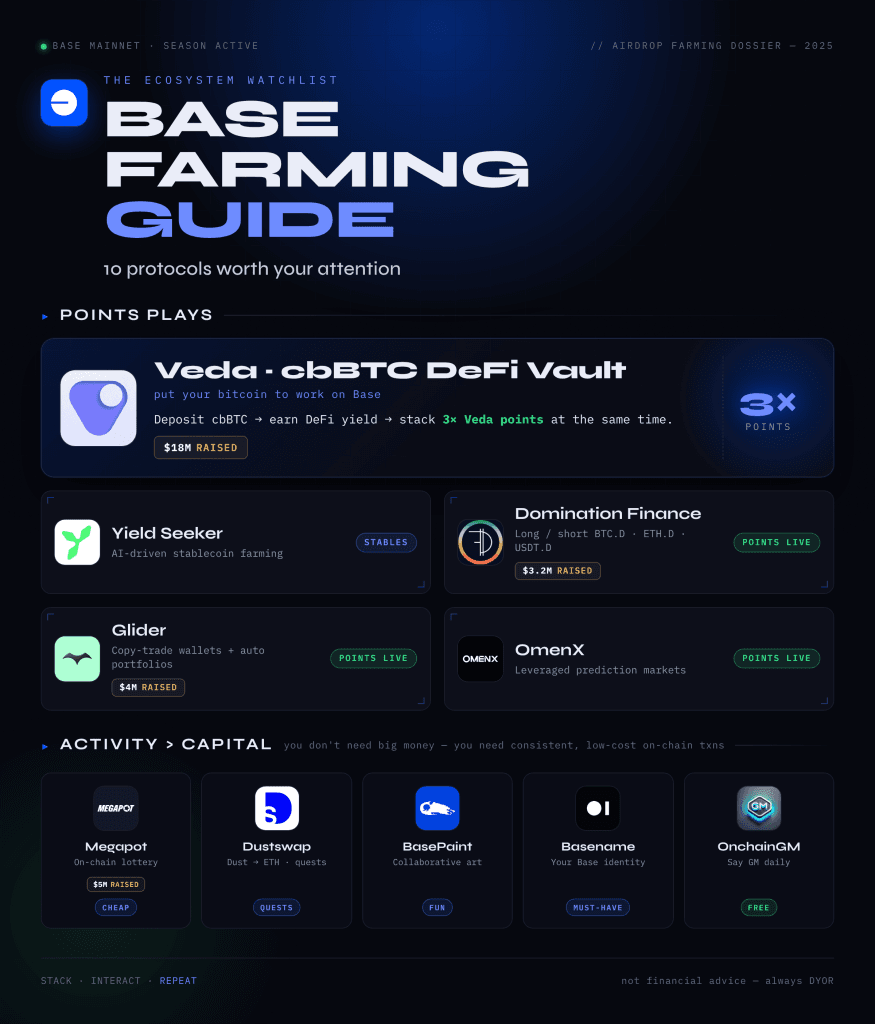
Base airdrop playbook: how to position before the snapshot
The $BASE token hasn’t dropped. That’s the whole opportunity. Base is a Coinbase-backed L2 with more than 10 million users and no token yet, which means the airdrop is still … Read moreBase airdrop playbook: how to position before the snapshot Der Beitrag Base airdrop playbook: how to position before the snapshot erschien zuerst auf airdrops.io. 🔗 Source 💡 DMK Insight The $BASE token’s stability signals a unique opportunity for traders: With over 10 million users and no token yet, the anticipation around airdrops is palpable. This situation creates a fertile ground for speculation, especially as traders position themselves ahead of the snapshot. Given that $BASE hasn’t dropped, it suggests strong underlying support, possibly from early adopters or institutional interest. Traders should keep an eye on the broader sentiment in the crypto market, particularly how it reacts to upcoming regulatory news or macroeconomic indicators. The lack of volatility in $BASE could also indicate that traders are waiting for a significant event, like the airdrop announcement, which could trigger a price surge. Watch for any shifts in trading volume or sentiment on social media platforms, as these can be leading indicators of impending moves. If the token does launch and experiences a typical airdrop rally, it could create a cascading effect on related assets, especially those tied to Coinbase or Layer 2 solutions. Keep an eye on the snapshot date and be ready to act quickly, as the market can shift rapidly once the airdrop details are confirmed. 📮 Takeaway Monitor the $BASE token closely as the airdrop snapshot approaches; a surge in volume could signal a breakout opportunity.

Aave Labs’ Push gains UK FCA crypto registration
Aave Labs’ Push received FCA approval for “certain cryptoasset activities” in the UK, supporting its plans for regulated stablecoin on- and off-ramping. 🔗 Source 💡 DMK Insight Aave Labs getting FCA approval is a game-changer for crypto regulation in the UK. This move not only legitimizes Aave’s operations but also sets a precedent for other crypto firms eyeing compliance. With the FCA’s green light for certain cryptoasset activities, we could see a surge in institutional interest, especially in regulated stablecoins. Traders should keep an eye on how this impacts the broader market, particularly stablecoin liquidity and trading volumes. If Aave successfully launches its stablecoin, it might influence other projects to follow suit, potentially reshaping the competitive landscape. Watch for any price movements in Aave’s token and related stablecoins as this news unfolds, as it could lead to increased volatility in the short term. On the flip side, while this approval is a positive sign, it’s essential to remain cautious about regulatory risks that could arise as the UK government continues to refine its stance on crypto. Keep an eye on upcoming regulatory announcements that could either bolster or hinder this momentum. 📮 Takeaway Monitor Aave’s token price and stablecoin developments closely; FCA approval could drive significant market shifts in the coming weeks.