
 Bitcoin
  Ethereum
  Tether
  BNB
BNB  XRP
XRP  USDC
USDC  Solana
  TRON
TRON  Lido Staked Ether
  Figure Heloc
Looking at the price action, I’m not very inclined to chalk this up to another intervention round. That being said, one can argue that with each intervention play that the effectiveness is slowly being diminished. After all, the signaling from Japan’s ministry of finance last week wasn’t the best considering the low liquidity environment.In any case, the pair just dipped from 157.70 to around 156.75 but is now trading back up to near 157.30 – more than halving the quick drop. From earlier: Japanese yen starting to slip away again, will Tokyo officials step in? This article was written by Justin Low at investinglive.com. 🔗 Source 💡 DMK Insight Japan’s intervention signals are losing their punch, and here’s why that matters: The recent price action suggests traders are becoming skeptical about the effectiveness of Japan’s currency interventions. With each attempt to stabilize the yen, the market seems to shrug it off, indicating a potential shift in sentiment. This could lead to increased volatility in the forex market, particularly for USD/JPY pairs. If traders start to believe that the Bank of Japan’s (BOJ) actions won’t yield results, we might see a stronger dollar as investors flock to perceived safety. It’s worth noting that the broader economic context—rising interest rates in the U.S. and persistent inflation—could further pressure the yen. Traders should keep an eye on key levels, particularly if USD/JPY approaches recent highs. A break above those levels could trigger a wave of buying, while failure to hold could lead to a sharp reversal. Watch for any updates from the BOJ or the Ministry of Finance that might provide clarity on their next steps, as these could be pivotal in shaping market sentiment. 📮 Takeaway Monitor USD/JPY closely; a break above recent highs could signal further dollar strength amid waning intervention effectiveness.
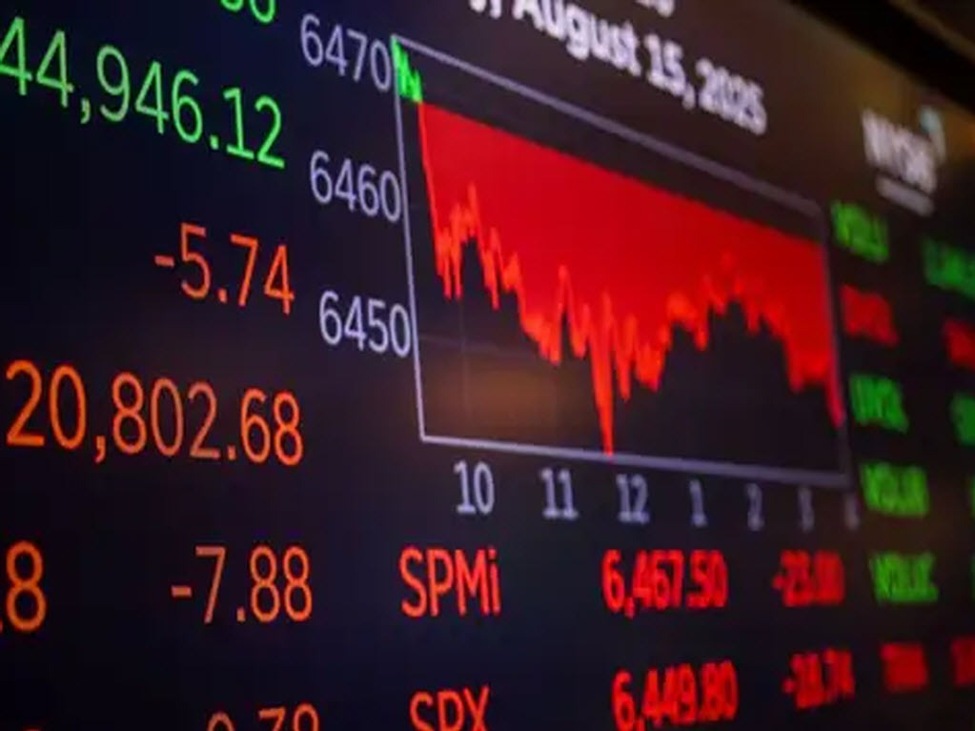
The overall risk mood leans more defensively as we get into European trading today
The US-Iran conflict continues to drag on and at this stage, it looks like nothing will change for at least another week. After keeping somewhat steadier yesterday, markets are starting to run into a bit of nerves today as we see a more defensive risk posture take shape.Oil prices are climbing back up with WTI crude now up near 2% on the day and touching the $100 mark once more. This comes as the bond market continues to signal inflation worries with 30-year Treasury yields clipping the 5% mark again. The latter traded down to around 4.91% at one point last week but have been rather sticky as concerns continue to mount on the global inflation picture.Besides that, we’re starting to see US futures also feel exhausted with S&P 500 futures dropping back by 0.4% on the day. That comes as tech shares lead the drop now, with Nasdaq futures down 0.6% currently.The signal from US futures is starting to reverberate more broadly and that’s prompting risk trades to step back ahead of European trading.In the major currencies space, the dollar is leading gains across the board now as such. EUR/USD is down 0.3% to 1.1750 and GBP/USD down 0.4% to 1.3547 on the day. Meanwhile, AUD/USD is down 0.4% to 0.7215 and USD/JPY is up 0.2% to 157.45 after a brief drop to 156.75 earlier amid some volatile selling.As for precious metals, we’re seeing gold down 0.8% to $4,696 and silver down 2.7% to $83.75 on the day.All signs point to a more risk-off mood amid a lack of fresh progress or optimistic headlines from US-Iran developments. As things stand, traffic along the Strait of Hormuz remains at a standstill with no clear timeline on when things will improve.Looking to the days ahead, US president Trump will be sidelined by his visit to China from tomorrow until Friday. So, that will keep markets on edge as the US-Iran conflict continues to rage on in the background.That being said, I wouldn’t be surprised if Trump used the visit to tee up an opportunity to announce something like “China has agreed to help resolve situation with Iran.. BIG NEWS coming!!!”. It would be very on-brand of Trump to do so and try to gas up the stock market again, even if China didn’t quite give any confirmation.If that were to happen, one can reasonably expect China to just say something along the lines of “we agreed to try and step up mediation efforts to the Middle East situation”. Yet, we will see Trump make a big deal out of it and markets will once again turn in hopes of something better to come. This article was written by Justin Low at investinglive.com. 🔗 Source 💡 DMK Insight The ongoing US-Iran tensions are shifting market sentiment, and here’s why that matters for traders: With the conflict showing no signs of resolution, traders are likely to adopt a more cautious stance, particularly in energy markets. Oil prices, which are already sensitive to geopolitical developments, could see increased volatility as traders react to any news. A defensive risk posture often leads to a flight to safety, impacting not just oil but also correlated assets like gold and the US dollar. If oil prices start to break key support levels, say around recent lows, we could see a cascade effect that influences broader market indices. Keep an eye on the daily charts for oil; a sustained break below those levels could trigger further selling pressure. On the flip side, if any unexpected diplomatic progress occurs, we might see a sharp reversal in sentiment. Traders should monitor news closely and be ready to adjust positions quickly. The next week is crucial, and any developments could lead to significant price swings, so stay alert for updates. 📮 Takeaway Watch for oil prices breaking key support levels; any geopolitical news could trigger significant volatility in the coming week.

US, Japan both believe forex volatility is undesirable – Bessent
In very close contact with Japan’s ministry of financeWe both believe forex volatility is undesirableJapan economic fundamentals are very strong and resilientThat will be reflected in the exchange rateHave great confidence in BOJ governor Ueda in guiding monetary policyMade no request to prime minister Takaichi regarding monetary policyDiscussed Trump’s visit to Beijing with Takaichi as well as importance of US-Japan relationship in that regardThis doesn’t really add much to his earlier comments here. His acknowledgement basically is a nod of approval to Japan’s intervention actions in the past two weeks. However, he doesn’t go as far as to commit to anything in saying that the US will be up for a joint intervention effort to help with the yen currency’s plight.As mentioned before, it is a sensitive topic and one that the US is not likely to get on board with:”Is it about time that Japan tries to seek help from the US for joint intervention? It’s a very touchy subject but given the circumstances and desperation, this might be one alternative.However, this starts to border on politics and it would need the US to acknowledge that the yen is being “mistreated” while also arguing that the dollar is “too strong”. I just don’t see that happening as it would require the US to take more of a dollar policy stance than being able to isolate it as a reaction to the yen and global market situation.” This article was written by Justin Low at investinglive.com. 🔗 Source

ECB policymaker Nagel says data will determine ECB's decision in June
Our mandate requires us to act if inflation expectations de-anchorData will determine ECB’s decision in JuneBaseline included two rate hikesThe ECB has already signalled that a rate hike in June is coming unless the war ends and oil prices fall significantly before then, so I’m not sure why he places weight on the data.The economic data hasn’t been screaming for the aggressive rate hikes the market has been pricing in. Right now, there are three hikes expected by year-end.Headline inflation did rise due to energy prices, but we also got a slowdown in economic activity. The latest ECB’s SAFE survey showed rising inflation expectations in the short-term but no impact on the long-term outlook. Wage growth expectations have also moderated to 2.8% vs 3.1% in the prior quarter.For June, the market is pricing in an 88% probability of a rate hike, so that’s basically a done deal. It’s not 100% because there’s still a chance that the war ends before then and once the Strait of Hormuz is reopened, oil prices will almost surely fall quickly. This article was written by Giuseppe Dellamotta at investinglive.com. 🔗 Source 💡 DMK Insight The ECB’s potential rate hike in June is a pivotal moment for traders: here’s why. With inflation expectations on the rise, the ECB’s commitment to tightening monetary policy could shift market dynamics significantly. If they proceed with the anticipated rate hikes, it could strengthen the euro against other currencies, particularly the USD, which is already facing its own challenges with inflation. Traders should keep an eye on economic data releases leading up to June, as any signs of easing inflation could alter the ECB’s course. The market is currently pricing in two rate hikes, but if geopolitical tensions or oil prices shift unexpectedly, that could lead to volatility across forex pairs. On the flip side, if the ECB hesitates due to external factors, it might create a bearish sentiment for the euro. Watch for key economic indicators, especially inflation data, as they could provide insight into the ECB’s decision-making process. The next few weeks are crucial, so stay alert for any shifts in market sentiment or unexpected news that could impact these forecasts. 📮 Takeaway Monitor inflation data closely; a strong reading could solidify the ECB’s June rate hike, impacting euro pairs significantly.

USD/JPY rebounds into a key resistance as interventions can't stop yen's slide
FUNDAMENTAL OVERVIEWUSD:The US dollar regained some ground at the start of the week as both Trump and Iran rejected the respective war-ending proposals calling them unacceptable and leaving the two sides miles apart on any potential agreement. Moreover, there are some reports pointing to a possible restart of the war, which keeps the geopolitical risk high.This kind of headline noise has been going on for several weeks and kept the price action in rangebound mode as traders continued to wait for new developments before picking a direction. Looking ahead, the Fed is slowly abandoning the easing bias amid resilient US data and elevated energy prices. The reopening of the Strait could weigh on the greenback in the short-term as oil prices will likely crater and rate cut bets will increase. After that though, the focus will quickly turn back to the Fed and the economic data. With the end of the war, the increase in economic activity could keep inflation higher for longer and eventually even require rate hikes to bring it sustainably back to the 2% target that the Fed has been missing since 2021.There’s also another scenario where the Strait remains closed for longer and oil prices stay elevated, with the risk that the Fed turns hawkish anyway and gives the greenback a strong boost given the bearish positioning on the dollar. JPY:On the JPY side, nothing has changed fundamentally. Japanese officials have been intervening in the FX market, but yen sellers have been quick in fading the moves due to the persistently negative macro backdrop. The BoJ recently left interest rates unchanged at 0.75% as widely expected but the highlight of the decision weren’t the three dissenters voting for a rate hike, but Governor Ueda adopting a less hawkish stance. In fact, he noted that they want to take a little bit more time in gauging how the Middle East situation would affect Japan’s economy and acknowledged that underlying inflation is currently a bit below the 2% target.He added that they expect underlying inflation to be around 2% from second half of 2026 but admitted that he doesn’t know how many months it would take to gauge timing of their next rate hike. This is going to keep weighing on the Japanese yen despite the interventions. All in all, the bias for the Japanese Yen remains bearish. USDJPY TECHNICAL ANALYSIS – DAILY TIMEFRAMEOn the daily chart, we can see that USDJPY is now trading around the key 158.00 resistance zone. This is where we can expect the sellers to step in with a defined risk above the resistance to position for a drop back into the major trendline. The buyers, on the other hand, will want to see the price breaking higher to pile in for a rally into the 162.00 handle next.USDJPY TECHNICAL ANALYSIS – 4 HOUR TIMEFRAMEOn the 4 hour chart, there’s not much we can add as the main levels remain the resistance zone around the 158.00 level and the major upward trendline. We might just range here until we get a breakout on either side. USDJPY TECHNICAL ANALYSIS – 1 HOUR TIMEFRAMEOn the 1 hour chart, we have a minor support zone around the 156.50 level. If the price falls into it, we can expect the buyers to step in with a defined risk below the support to keep pushing into new highs. The sellers, on the other hand, will look for a break to increase the bearish bets into the major trendline. The red lines define the average daily range for today. UPCOMING CATALYSTSToday we get the US CPI report. Tomorrow, we have the US PPI data. On Thursday, we get the US Retail Sales report and the latest US Jobless Claims figures. This article was written by Giuseppe Dellamotta at investinglive.com. 🔗 Source 💡 DMK Insight The US dollar’s recent rebound highlights the market’s sensitivity to geopolitical tensions. With both Trump and Iran dismissing peace proposals, traders should brace for volatility. A stronger dollar often correlates with risk-off sentiment, which could impact commodities and emerging markets negatively. Watch for the dollar index to test resistance levels; if it breaks above recent highs, expect further strengthening. Conversely, if tensions escalate, safe-haven assets like gold could see increased demand, creating a potential divergence in asset performance. Keep an eye on economic indicators this week, as they could further influence dollar strength and overall market sentiment. 📮 Takeaway Monitor the dollar index closely; a break above recent highs could signal further strength, impacting risk assets and commodities.

Germany May ZEW survey current conditions -77.8 vs -77.8 expected
Prior -73.7Economic sentiment -10.2 vs -19.8 expectedPrior -17.2The headline reading shows that the read on business conditions are seen worsening further, with it being the worst since December last year. The fallout from the US-Iran conflict has turned around the optimistic rebound in sentiment since the turn of the year. That as Germany’s manufacturing sector is set to be hit hard by the negative impact of rising energy prices and tightening supply chains.The bright side though is that we are seeing an improvement in the outlook reading. While still in negative territory, it is a marked rebound after having fallen to the lowest since December 2022 in April last month.Perhaps it is a signal that financial market experts are keeping more optimistic that there will be a positive news on the US-Iran conflict. That being said, the fact that the Strait of Hormuz remains closed will continue to apply a strain to the overall German economy. So, it might be quick to jump the gun to say that the worst is over already. This article was written by Justin Low at investinglive.com. 🔗 Source 💡 DMK Insight Economic sentiment just hit its lowest since December, and here’s why that matters: With a reading of -10.2 against an expected -19.8, traders should be paying close attention to how this sentiment shift could impact market volatility. The worsening business conditions signal a potential slowdown, which could lead to risk-off behavior among investors. This sentiment drop is particularly concerning given the backdrop of geopolitical tensions, like the US-Iran conflict, which could further destabilize markets. If sentiment continues to decline, we might see a shift in trading strategies, with more traders opting for safe-haven assets or short positions in equities. Watch for key levels in related markets, especially in commodities and currencies that typically react to geopolitical risks. If sentiment remains negative, we could see a significant impact on the USD, as traders might flock to it for safety. Keep an eye on the next sentiment reading; if it worsens further, it could trigger a broader market sell-off, particularly in sectors sensitive to economic conditions. 📮 Takeaway Monitor the next economic sentiment reading closely; a continued decline could lead to increased volatility and a shift towards safe-haven assets.
US April NFIB small business optimism index 95.9 vs 96.1 expected
Prior 95.8Of the 10 Optimism Index components, seven increased and three decreased. Earnings trends improved, but were offset by a deterioration in expected business conditions.Bill Dunkelberg, Chief Economist at NFIB said: “Inflationary pressures continue to be a challenge for Main Street. While small business optimism is currently fragile, the benefits of the Working Families Tax Cut Act should start to feed into the private sector over the next few months.”Since 2025, the two biggest drops in the index have been caused by Trump’s trade war in April 2025 and Trump’s war on Iran in March 2026. So much for being “the President for Main Street and not Wall Street”. This article was written by Giuseppe Dellamotta at investinglive.com. 🔗 Source 💡 DMK Insight The recent uptick in the Optimism Index, with seven out of ten components showing improvement, signals a cautious optimism among small businesses. However, the underlying inflationary pressures remain a significant concern, as highlighted by NFIB’s Chief Economist Bill Dunkelberg. This duality—rising optimism against a backdrop of persistent inflation—could lead to volatility in related markets, particularly in sectors sensitive to consumer spending and business investment. Traders should keep an eye on how these trends play out in the earnings reports of small-cap stocks, which often reflect the health of Main Street. If inflation continues to erode consumer purchasing power, we might see a divergence where optimism doesn’t translate into actual economic growth. Watch for key earnings releases in the coming weeks, as they could provide insight into whether this optimism is sustainable or just a temporary blip. Additionally, monitor the inflation data closely; any unexpected spikes could trigger a sell-off in equities, especially in sectors like retail and consumer discretionary, which are most vulnerable to inflationary pressures. 📮 Takeaway Keep an eye on upcoming earnings reports and inflation data; a divergence between optimism and actual growth could lead to volatility in small-cap stocks.
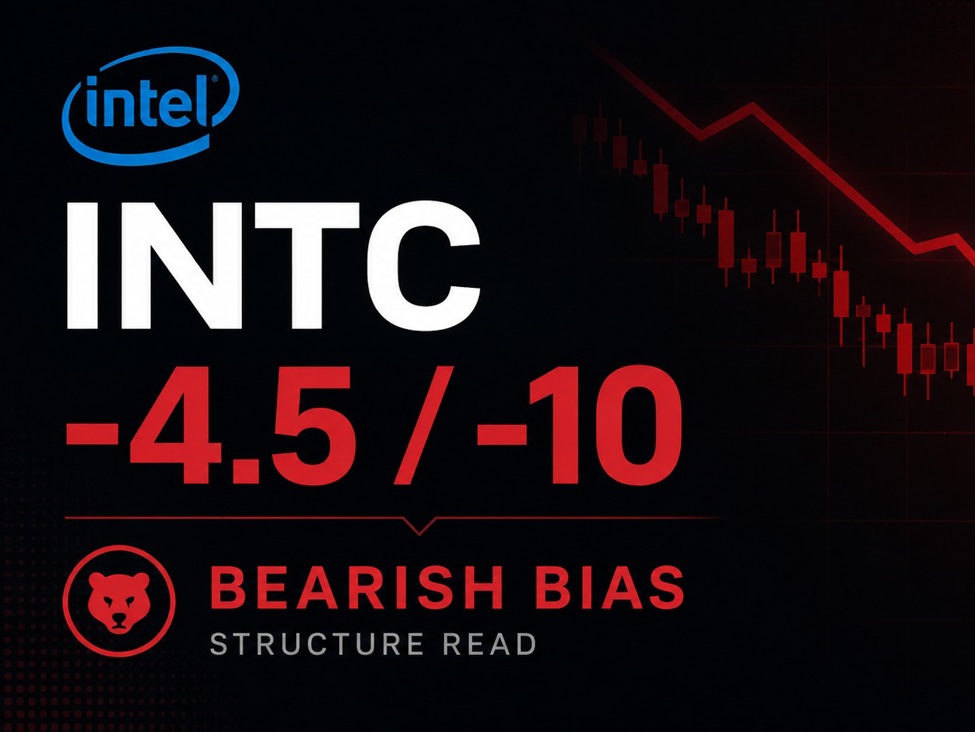
Intel stock analysis today: After a 510% surge, is INTC starting to show topping risk?
Intel stock has been one of the market’s standout momentum stories, with the latest performance snapshot showing gains of roughly 110% over one month, 156% over three months, 240% over six months, 243% year to date, and 510% over one year. But after that extraordinary advance, the latest structure is flashing one of the first meaningful bearish warnings in some time.This does not automatically mean Intel has printed a final top. It may still develop into a broader topping process, possibly with several swings higher and lower before the market decides. But the latest read suggests the easy upside phase may be cooling.Key takeaways for Intel traders and investorsIntel’s trend has been extremely strong, with a 510% one-year performance and a 110% one-month surge. The latest structure shows bearish deterioration, not just normal consolidation. The current score is -4.5 on a -10 to +10 scale, meaning the bias has shifted bearish, but not to an extreme bearish call. The stock is trying to stabilize near 125.10-126.30, but the damaged upper value area near 128.70-129.30 has not yet been repaired. A clean bearish continuation needs confirmation below the lower support zone. A bullish repair needs acceptance back above the upper value zone. Intel stock: the party may not be over, but the risk profile has changedAfter such a dramatic rally, the key question is not whether Intel is still a strong momentum name. It clearly has been. The better question is whether the current move is becoming mature.A stock can top in different ways. Sometimes the final high is made quickly, followed by a sharp reversal. Other times, the market builds a broader topping pattern. That can include several pushes higher, pullbacks, and renewed attempts to make new highs, creating something that looks like an ascending wedge or distribution pattern.Intel may still be in that second category. But the latest structure is no longer as clean for bulls as it was during the strongest part of the rally.What does the current Intel score mean?Current Intel score: -4.5 / +10On our -10 to +10 scale, -10 is extremely bearish, 0 is neutral, and +10 is extremely bullish. A score of -4.5 means the bias has shifted bearish, but it is not yet an aggressive “sell everything” type of signal.The important nuance is tradeability. Intel is showing bearish pressure, but after such a strong downside reaction, shorting directly into the lows carries chase risk. The better setup would be either a failed rebound into resistance or a confirmed break of the lower support zone.Why 128.70-129.30 matters for Intel stockThe most important damaged value area is around 128.70-129.30.This zone matters because earlier selling pressure appeared while price was still operating near higher value. In plain English, sellers did not wait for Intel to break down before becoming active. They appeared near the upper value zone and pushed the stock lower with force.That makes 128.70-129.30 the key repair area.If Intel cannot reclaim and hold above that zone, the recent rebound should be treated with caution. It may be only a lower-zone bounce after aggressive selling, not a full bullish recovery.What is POC and why does it matter here?POC, or point of control, is the price area where the most trading activity took place during a measured period. It helps traders understand where the market accepted value.In Intel’s case, the latest lower-zone POC activity is around 125.10-126.30. That suggests buyers are attempting to defend a lower value area. But this is not enough by itself to call a bullish reversal.For a real bullish repair, Intel would need to shift accepted value back higher, first toward 128.10, then into 128.70-129.30, and ideally above 129.30.Intel support and resistance levels to watchBullish scenario for Intel stockIntel improves toward a more neutral or mildly constructive read if buyers can defend 125.10-126.30 and push price back toward 128.10, followed by acceptance above 128.70-129.30.That would suggest the stock is not simply bouncing from oversold conditions, but actually rebuilding higher value after the bearish shock.A stronger bullish repair would require: Holding above 126.30 Reclaiming 128.10 Accepting above 128.70-129.30 Continued buying interest across more than one short-term bar Until then, the bullish case is still incomplete.Bearish scenario for Intel stockThe bearish case strengthens if Intel loses the 125.10-126.30 zone with expanding selling pressure.That would suggest the lower-zone defense failed and that the recent stabilization attempt was only temporary. In that case, the score could deteriorate toward the -6.5 to -7 area.The bearish continuation trigger is not simply “price is down.” The cleaner bearish setup would be a confirmed break below the lower value zone, ideally with stronger selling activity and lower accepted value.Practical trading read for IntelThe current setup is best described as:Bearish bias, but not a clean fresh short at the lows.For traders, the better short setup would likely come from one of two paths:Failed repair near 128.70-129.30, where Intel rebounds but sellers return. Break below 125.10-126.00, where lower value fails and bearish continuation reactivates. For investors, the key message is different. After a 510% one-year rally, this is a moment to reassess risk. The long-term story may not be over, but the latest structure suggests that momentum is no longer one-sided.INTC Stock has been amazing. Where are the profit takers?Intel has delivered an extraordinary run, but the latest Structure Read shows the first meaningful bearish deterioration in a long time. The stock may still form a broader topping pattern rather than a final top right here, but the risk/reward has clearly changed.As long as Intel remains below 128.70-129.30, the bearish structure remains active. Holding 125.10-126.30 keeps the bounce alive, but losing that zone would put bearish continuation back in control.Trade at your own risk. This is scenario-based market analysis, not financial advice. This article was written by Itai Levitan at investinglive.com. 🔗 Source 💡 DMK Insight Intel’s staggering gains are raising eyebrows, but here’s why traders need to tread carefully: With a 243% year-to-date surge, Intel’s stock is clearly on fire, but such rapid appreciation often invites profit-taking and volatility. The
CLARITY Act Push Returns This Week As Democrats Hold The Key
The Senate Banking Committee is scheduled to consider the CLARITY Act on May 14. The bill would create a federal market-structure framework for digital assets. … 🔗 Source 💡 DMK Insight The upcoming Senate Banking Committee meeting on May 14 is a pivotal moment for digital assets. If the CLARITY Act passes, it could establish a federal framework that brings much-needed regulatory clarity to the crypto market. This would likely attract institutional investors who have been hesitant due to the current regulatory ambiguity. A clear framework could also lead to increased trading volumes and volatility as market participants adjust to new rules. Watch for how this impacts Bitcoin and Ethereum, as they often set the tone for the broader market. If the bill gains traction, we might see a bullish sentiment shift, especially if major exchanges start adapting their operations to comply with new regulations. On the flip side, if the bill faces significant opposition, it could lead to a short-term sell-off as traders react to uncertainty. Keep an eye on the sentiment leading up to May 14, as any leaks or discussions around the bill could influence market movements significantly. 📮 Takeaway Monitor the Senate Banking Committee’s meeting on May 14 for potential regulatory shifts that could impact crypto market sentiment and trading strategies.
MetaMask Employee Threatens To Sue After Crypto Twitter Loses Its Mind Over Strip Club Party
A Consensys employee publicly defended MetaMask’s sponsorship of a Consensus 2026 afterparty at Miami nightclub E11EVEN, sparking backlash across Crypto Twitter. The dispute escalated after … 🔗 Source 💡 DMK Insight MetaMask’s sponsorship of a high-profile afterparty is stirring controversy, and here’s why that matters: The backlash highlights the growing scrutiny on crypto brands and their affiliations, especially as the market grapples with regulatory pressures and public perception. Traders should pay attention to how this sentiment could affect MetaMask’s user base and, by extension, the broader Ethereum ecosystem. If backlash leads to a decline in user engagement or trust, we might see a ripple effect impacting ETH prices and related DeFi projects. This incident also raises questions about brand alignment in a market that’s increasingly sensitive to ethical considerations. On the flip side, if MetaMask manages to navigate this controversy effectively, it could strengthen its position as a leading wallet provider. Watch for any shifts in user metrics or trading volumes in the coming weeks, as these could provide insight into the market’s reaction. Key levels to monitor include ETH’s support and resistance zones, which could be influenced by changes in user sentiment and trading activity. 📮 Takeaway Keep an eye on ETH’s price action and MetaMask’s user engagement metrics over the next few weeks to gauge market sentiment.