
 Bitcoin
  Ethereum
  Tether
  BNB
BNB  XRP
XRP  USDC
USDC  Solana
  TRON
TRON  Lido Staked Ether
  Figure Heloc
Ahead of this week’s expected Senate crypto bill vote, the American Bankers Association warned stablecoin yield provisions could help reduce bank deposits. 🔗 Source 💡 DMK Insight The Senate’s impending vote on the crypto bill could shake up the banking sector significantly. With the American Bankers Association flagging concerns that stablecoin yield provisions might siphon off bank deposits, traders should be wary of how this could impact traditional banking stocks and the broader financial market. If investors start favoring stablecoins for their yield potential, we could see a shift in liquidity away from banks, which might lead to volatility in bank stocks. This situation is particularly relevant for day traders and swing traders looking to capitalize on short-term movements in the financial sector. Keep an eye on key banking stocks and their correlation with stablecoin performance. If the bill passes, watch for a potential uptick in stablecoin adoption, which could create ripple effects across crypto markets and related assets. The real story here is how this legislative move could redefine the competitive landscape between banks and crypto assets. For immediate action, monitor the Senate vote and any market reactions to the news, especially around major banking indices and stablecoin trading volumes. 📮 Takeaway Watch the Senate vote closely; a favorable outcome for stablecoins could lead to significant shifts in bank stock performance and crypto adoption.

Seven Democrats seen as ‘key’ to advancing CLARITY Act: Galaxy
The CLARITY Act, introduced in July 2025, stalled in January after Coinbase withdrew its support for the legislation over concerns about legal protections and stablecoin yields. 🔗 Source 💡 DMK Insight The stalling of the CLARITY Act is a significant development for crypto traders, especially those involved with stablecoins. Coinbase’s withdrawal indicates deeper concerns about regulatory clarity, which could lead to increased volatility in the stablecoin market. Without this legislation, traders might face uncertainty regarding the legal status of their assets, potentially impacting trading strategies that rely on stablecoins for liquidity and hedging. This situation could ripple through related markets, particularly affecting the price stability of major stablecoins like USDC and USDT. If traders perceive a lack of regulatory support, we might see a shift in trading volumes or even a flight to more established assets. Keep an eye on how this unfolds, especially in the coming weeks as market participants reassess their positions in light of regulatory risks. Watch for any new developments or statements from Coinbase or other major players that could signal a change in sentiment. 📮 Takeaway Monitor Coinbase’s next moves closely; any further withdrawal from regulatory support could destabilize stablecoin prices and impact trading strategies.

Augustus gets conditional OCC approval for AI and stablecoin bank
Peter Thiel-backed Augustus has won conditional OCC approval for a US bank charter focused on AI-driven payments and stablecoin settlement infrastructure. 🔗 Source 💡 DMK Insight Augustus getting the OCC’s nod is a game changer for crypto payments. This approval signals a growing acceptance of crypto in traditional finance, especially with AI-driven solutions. Traders should keep an eye on how this affects stablecoin liquidity and payment processing efficiency. If Augustus can successfully integrate AI with stablecoin settlements, we might see increased adoption, which could drive demand for major stablecoins like USDC or USDT. Watch for any price movements in these assets as news develops. But here’s the flip side: regulatory scrutiny could ramp up as more players enter the space, potentially leading to volatility. Keep an eye on the broader regulatory landscape, especially any reactions from the SEC or other financial watchdogs. This could impact not just stablecoins but also the entire crypto market, especially if institutions start to shift their strategies based on these developments. 📮 Takeaway Monitor stablecoin movements and regulatory updates closely, as Augustus’ approval could trigger significant shifts in market dynamics.

Crypto and AI could be dirty words on 2026 midterm campaign trail
Voter attitudes toward the AI and crypto industries aren’t favorable in the US, and a spotlight on how much they’re spending could further alienate them ahead of the 2026 midterms. 🔗 Source 💡 DMK Insight Voter skepticism toward AI and crypto spending could shake market confidence as we approach the 2026 midterms. With the political landscape becoming increasingly hostile to tech industries, traders should keep an eye on how this sentiment might influence regulatory actions or public perception. If voters perceive excessive spending in these sectors as wasteful, it could lead to stricter regulations or even a backlash against major players, impacting stock prices and crypto valuations. This is especially relevant for traders in tech stocks and cryptocurrencies, as negative sentiment can lead to volatility. Watch for any shifts in public opinion polls or legislative proposals that could signal changes in regulatory risk. Here’s the thing: while mainstream narratives might focus on innovation, the real risk lies in the political backlash that could affect market stability. Keep an eye on sentiment indicators and any upcoming political events that could sway voter opinions, as these could create trading opportunities or risks in the tech and crypto spaces. 📮 Takeaway Monitor public sentiment and regulatory developments closely, especially as we approach the 2026 midterms, to gauge potential impacts on tech and crypto markets.

Ethics remain sticking point as crypto market structure bill goes to markup
After months of delays, the Senate Banking Committee has set a Thursday markup for the CLARITY Act, but it would still need some Democrats’ support to pass on the Senate floor. 🔗 Source 💡 DMK Insight The Senate Banking Committee’s markup of the CLARITY Act could be a game changer for crypto regulation. This development is crucial as it signals a potential shift in the regulatory landscape, which has been a significant concern for traders. If the Act gains traction, it could pave the way for clearer guidelines, potentially reducing the uncertainty that has plagued the market. Traders should keep an eye on the Senate floor vote, as bipartisan support will be essential for passage. If this bill passes, it could lead to increased institutional participation in crypto, impacting prices positively. However, the need for Democratic support indicates that the path forward may still be rocky, and any delays or pushbacks could lead to volatility in the market. Watch for reactions from major cryptocurrencies and related assets, as they often respond sharply to regulatory news. Key levels to monitor include recent highs and lows for Bitcoin and Ethereum, as these could serve as indicators of market sentiment following the vote. 📮 Takeaway Watch for the Senate floor vote on the CLARITY Act; a positive outcome could boost crypto prices significantly, while delays may increase volatility.
Bessent heads to Tokyo pressing Japan on yen weakness and intervention
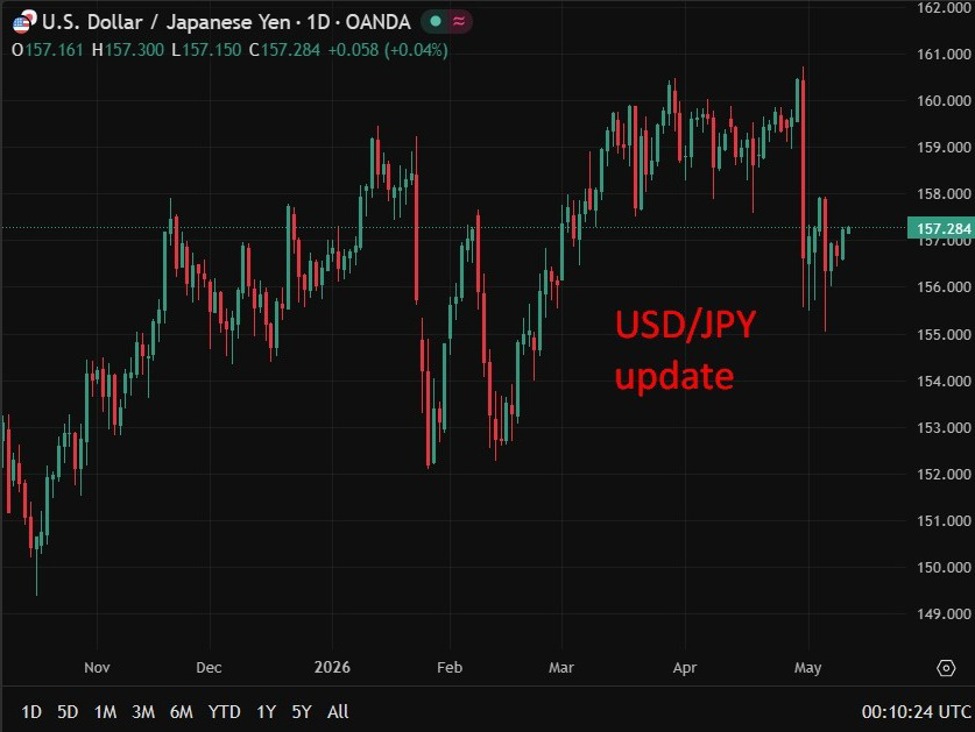
US Treasury Secretary Bessent arrives in Tokyo pressing Japan to favour BOJ rate hikes over yen intervention, as large-scale currency support operations raise concern over spillover into US Treasury markets.Summary:Bessent arrived in Tokyo on Monday for meetings with Finance Minister Katayama and Prime Minister Takaichi on Tuesday, his third visit to Japan in just over a year as Treasury secretaryThe trip follows multiple days of suspected large-scale yen intervention by Tokyo, estimated at up to 10 trillion yen, with Bessent having previously criticised that approach in favour of BOJ rate hikesJapanese 10-year bond yields have risen to their highest level since 1997, with continued increases carrying the potential to push US Treasury yields higher, a key concern for the Trump administrationYen intervention is often financed through the sale of US Treasuries, creating a direct channel through which Japanese currency management can complicate Washington’s borrowing costsBessent has previously stated that the BOJ is behind the curve on rate hikes and called on the Japanese government to give the central bank space to tackle inflation; market speculation is building for a BOJ hike as early as next monthDiscussions are also expected to cover supply-chain resilience and the Iran war, alongside currency and monetary policy US Treasury Secretary Scott Bessent arrived in Tokyo on Monday for his third visit to Japan in little more than a year, with currency markets and monetary policy firmly at the top of the agenda as Washington grows increasingly attentive to the spillover effects of Japanese financial flows on US Treasuries.The visit comes after multiple days of suspected large-scale yen intervention by Tokyo, with Japan estimated to have spent as much as 10 trillion yen propping up the currency in recent weeks. Bessent has been openly critical of that approach, favouring BOJ interest rate hikes as the more appropriate mechanism for stabilising the yen. His preference puts him at odds with an intervention strategy that is often financed through the sale of US Treasuries, a channel that risks pushing American yields higher at a time when the Trump administration is acutely sensitive to borrowing costs.Japanese government bond yields have already been climbing, with 10-year rates hitting their highest level since 1997 last month. Bessent has identified the US 10-year Treasury yield as his most important market metric, and any Japan-driven increase in that rate is seen as directly complicating his administration’s fiscal goals. Those concerns are thought to have underpinned an unusually assertive exchange between Bessent and Finance Minister Satsuki Katayama at the World Economic Forum in Davos earlier this year, described by people familiar with the meeting as more of a reprimand than a routine bilateral discussion.Bessent is scheduled to meet Katayama and Prime Minister Sanae Takaichi on Tuesday before travelling to Seoul on Wednesday for trade talks with Chinese counterpart He Lifeng ahead of the Trump-Xi summit. Discussions in Tokyo are expected to span yen stability, BOJ policy normalisation, supply-chain resilience and the Iran war.Market participants will watch Tuesday’s meetings closely for any signals on the trajectory of BOJ tightening, with speculation building for a rate hike as early as next month. Analysts have noted that Japan has limited room to push back if Bessent steps up pressure, given Washington’s broader strategic and financial leverage over Tokyo.— Bessent’s preference for BOJ rate hikes over yen intervention has direct implications for Japanese government bond yields, which have already pushed 10-year rates to their highest since 1997, and any further rise risks feeding through to US Treasuries, complicating the Trump administration’s own borrowing costs. Tokyo’s recent intervention, estimated at up to 10 trillion yen, has been partly financed through Treasury sales, a channel that adds further upward pressure on US yields and gives Washington a direct financial interest in how Japan manages its currency. Markets will be watching Tuesday’s meetings with Finance Minister Katayama and Prime Minister Takaichi closely for any signals on the pace and direction of BOJ normalisation, with speculation building for a rate hike as early as next month. This article was written by Eamonn Sheridan at investinglive.com. 🔗 Source 💡 DMK Insight Bessent’s push for BOJ rate hikes signals a shift in currency dynamics that traders need to watch closely. The emphasis on rate hikes over direct yen intervention suggests a potential strengthening of the yen, which could impact forex pairs like USD/JPY. If the BOJ responds positively, we might see a shift in market sentiment, leading to volatility in both the yen and US Treasury markets. Traders should keep an eye on key levels in USD/JPY; a break below recent support could trigger further selling pressure. Additionally, the implications for US Treasury yields are significant—any perceived instability in the yen could lead to a flight to safety, affecting bond prices. Here’s the thing: while mainstream narratives focus on immediate currency interventions, the longer-term strategy of rate hikes could reshape market expectations. If the BOJ commits to tightening, it could lead to a stronger yen and a recalibration of risk assets. Watch for any announcements from the BOJ in the coming weeks, as they could provide critical insights into future market movements. 📮 Takeaway Monitor USD/JPY closely; a break below recent support levels could signal further yen strength and impact US Treasury yields.
Trump delays beef tariff cut after rancher and Republican pushback
Via a Wall Street Journal reporter, news that Trump held off on signing a planned suspension of beef tariff-rate quotas, the White House confirmed, offering no explanation. The delay followed pushback from domestic ranchers and Republican lawmakers. The administration said it is finalising potential executive actions on beef imports. This article was written by Eamonn Sheridan at investinglive.com. 🔗 Source 💡 DMK Insight Trump’s delay on beef tariff-rate quotas could shake up agricultural markets significantly. The pushback from ranchers and lawmakers indicates strong domestic pressure, which might lead to tighter supply conditions in the beef market. Traders should watch for how this impacts beef prices, particularly if the administration moves towards executive actions that could alter import dynamics. If tariffs are adjusted, it could ripple through related sectors, affecting not just beef but also feed prices and livestock futures. Keep an eye on technical levels in the beef futures market; a break above recent highs could signal bullish momentum, while a failure to hold current support levels might trigger a sell-off. Here’s the thing: while mainstream coverage focuses on the political implications, the real story is the potential volatility in agricultural commodities. If you’re trading in this space, monitor the USDA reports and any upcoming announcements from the White House closely. 📮 Takeaway Watch for beef futures’ reaction to any executive actions; key levels to monitor are recent highs and support levels for potential trading signals.

PBOC is expected to set the USD/CNY reference rate at 6.7945 – Reuters estimate
The People’s Bank of China is due to set the daily USD/CNY reference rate at around 0115 GMT (2115 US Eastern time), a fixing that remains one of the most closely watched signals in Asian foreign exchange markets. China operates a managed floating exchange rate system, under which the renminbi (yuan) is allowed to trade within a prescribed band around a central reference rate, or midpoint, set each trading day by the PBOC. The current trading band permits the currency to move plus or minus 2% from the official midpoint during onshore trading hours. Each morning, the PBOC determines the midpoint based on a range of inputs. These include the previous day’s closing price, movements in major currencies, particularly the US dollar, broader international FX conditions, and domestic economic considerations such as capital flows, growth momentum and financial stability objectives. The midpoint is not a purely mechanical calculation, allowing policymakers discretion to guide market expectations. Once the midpoint is announced, onshore USD/CNY is free to trade within the allowable band. If market pressures push the yuan toward either edge of that range, the central bank may step in to smooth volatility. Intervention can take the form of direct buying or selling of yuan, adjustments to liquidity conditions, or guidance through state-owned banks. As a result, the daily fixing is often interpreted as a policy signal rather than just a technical reference point. A stronger-than-expected CNY midpoint is typically read as a sign the PBOC is leaning against depreciation pressure, while a weaker fixing for the CNY can indicate tolerance for a softer currency, often in response to dollar strength or domestic economic headwinds.In periods of heightened global volatility, such as shifts in US rate expectations, trade tensions or capital flow pressures, the fixing takes on added significance. For investors, it provides insight into Beijing’s currency priorities, balancing competitiveness, capital stability and financial market confidence. This article was written by Eamonn Sheridan at investinglive.com. 🔗 Source 💡 DMK Insight The upcoming USD/CNY reference rate fixing is crucial for traders navigating Asian forex markets right now. With the People’s Bank of China setting this rate, expect volatility in the yuan, especially if it deviates from market expectations. A stronger yuan could signal confidence in China’s economic recovery, impacting commodities and global trade flows. Conversely, a weaker fixing might reignite concerns over economic stability, pushing traders to reassess their positions in related assets like AUD/USD or commodities linked to Chinese demand. Watch for any significant shifts around the 0115 GMT mark, as this could set the tone for trading throughout the day. Keep an eye on the 7.00 level for USD/CNY; a breach could lead to increased selling pressure on the dollar against the yuan, while holding above could reinforce dollar strength in the short term. 📮 Takeaway Monitor the USD/CNY fixing closely; a significant deviation from expectations could lead to immediate volatility in the forex market.
Trump weighs return to combat as Iran nuclear talks falter, CNN reports
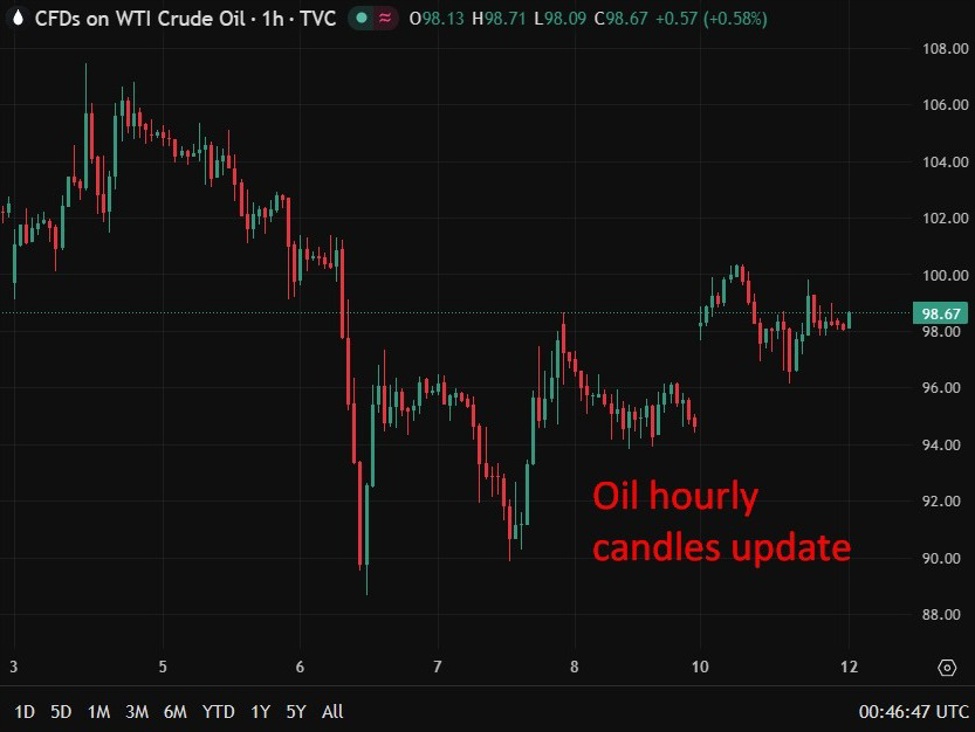
Trump is more seriously weighing a return to major combat operations against Iran, frustrated by the Hormuz closure and stalled nuclear talks, with his national security team reviewing options, CNN reported.Summary:Trump has grown increasingly frustrated with the pace and substance of Iran negotiations and is more seriously considering resuming major combat operations than at any point in recent weeksHis impatience centres on the continued closure of the Strait of Hormuz and what he views as divisions within Iranian leadership blocking meaningful concessions on nuclear talksTrump described Iran’s latest negotiating response as both totally unacceptable and stupid, prompting officials to question whether Tehran is engaging seriouslyThe administration is split between those pushing for targeted strikes to further weaken Iran’s position and those arguing diplomacy should be given more timeTrump and his national security team met at the White House on Monday to discuss options, but a major decision is not expected before the president’s departure for China on Tuesday afternoonSome US officials have questioned whether Pakistani mediators are accurately conveying Trump’s frustration to Tehran, with concerns that Pakistan may be presenting a more favourable version of the Iranian position than the reality President Donald Trump is more seriously weighing a resumption of major combat operations against Iran than at any point in recent weeks, according to sources familiar with internal discussions, as nuclear negotiations stall and the Strait of Hormuz remains closed.Trump has grown sharply impatient with the state of talks, frustrated both by Iran’s continued blockade of the critical shipping waterway and by what he perceives as divisions within the Iranian leadership that are preventing any substantive movement on nuclear concessions. His response to Iran’s latest negotiating position has been blunt, with sources saying he dismissed it as both totally unacceptable and stupid. That reaction has led a number of officials to question whether Tehran is genuinely prepared to take up a serious negotiating stance.The administration is not unified on how to respond. Two distinct camps have emerged. One group is pushing for a more aggressive posture, including targeted military strikes designed to further degrade Iran’s position and force it to the table. The other continues to advocate for diplomacy, arguing that negotiations should be given a genuine opportunity before any return to large-scale hostilities is considered.A separate source of tension within the administration concerns the role of Pakistani mediators. Several Trump officials have long harboured doubts about whether Islamabad is communicating Washington’s displeasure forcefully enough to Tehran. Some now believe Pakistan has been presenting a rosier picture of Iran’s negotiating position to the US than the reality on the ground warrants, a concern that has added another layer of friction to an already fraught process.Trump convened his national security team at the White House on Monday to review the available options. However, sources said a definitive decision on how to proceed is unlikely to be reached before the president departs for China on Tuesday afternoon, where trade talks with Beijing will take centre stage.The combination of stalled diplomacy, a divided administration and an impatient president leaves the Hormuz closure, and the oil market disruption it has caused, without a clear resolution timeline.That screenshot if from yesterday. Opposing views on the issue are that Trump and his advisers are out of touch with Iranian thinking and are incapable of effective analysis and thus action. —Any credible signal of a return to major US combat operations against Iran would immediately reprice oil risk upward, with the Strait of Hormuz closure already the dominant supply disruption in global markets. The reported internal debate between hawks pushing for targeted strikes and those favouring continued diplomacy introduces a binary risk premium: a diplomatic breakthrough would release significant downward pressure on crude prices, while a resumption of strikes could push Brent toward and potentially beyond the $150 level flagged by Citi and JPMorgan. The additional detail that a major decision is unlikely before Trump departs for China on Tuesday afternoon gives markets a narrow window of relative clarity, but the underlying geopolitical risk remains acutely elevated. This article was written by Eamonn Sheridan at investinglive.com. 🔗 Source 💡 DMK Insight Trump’s renewed focus on military options against Iran could shake up oil markets significantly. With tensions rising in the Strait of Hormuz, any hint of military action could lead to immediate spikes in crude oil prices, impacting not just energy stocks but also broader market sentiment. Traders should keep an eye on the price of Brent crude, which has historically reacted sharply to geopolitical tensions in the region. If we see a breach of key support levels, it could trigger a wave of buying as traders hedge against potential supply disruptions. But here’s the flip side: if negotiations suddenly accelerate or de-escalation occurs, we might see a rapid sell-off in oil futures. So, it’s crucial to monitor not just the headlines but also the underlying market reactions. Watch for any significant moves above $80 in Brent, as that could signal a bullish trend driven by fear rather than fundamentals. In the coming days, keep an eye on any updates from the White House or military briefings, as they could provide critical insights into market direction. 📮 Takeaway Watch for Brent crude prices; a move above $80 could indicate rising tensions and potential supply disruptions.
Katayama says two-hour Bessent talks covered forex, critical minerals and AI
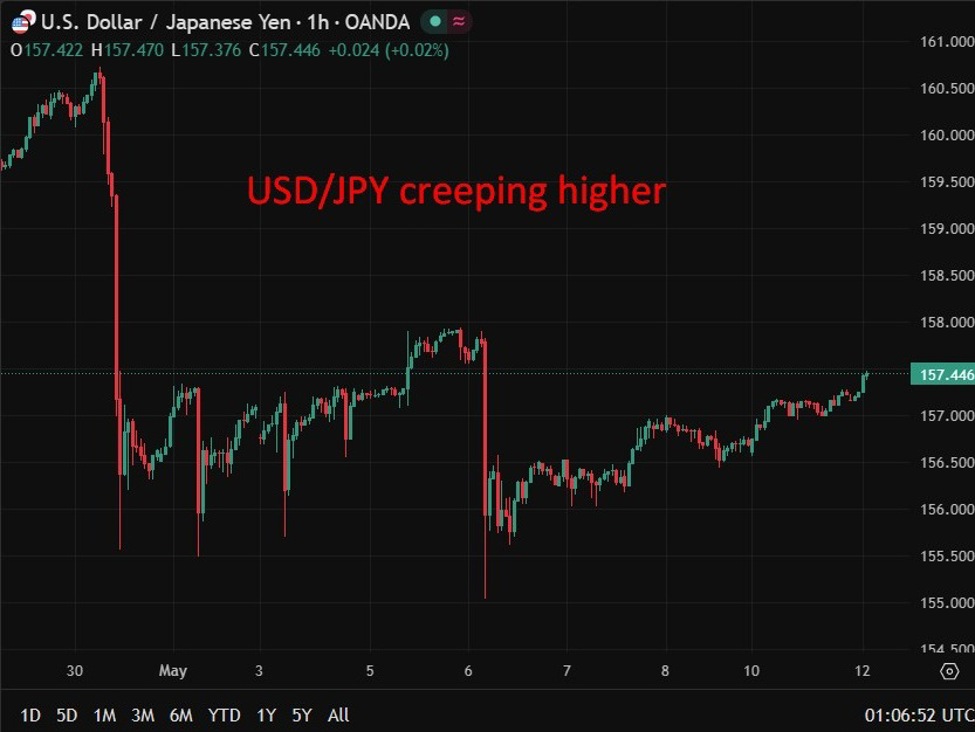
Japan’s Finance Minister Katayama said she held a two-hour meeting with US Treasury Secretary Bessent covering forex markets, financial cooperation, critical minerals and AI supply chains. Summary:Japanese Finance Minister Satsuki Katayama confirmed she met with US Treasury Secretary Scott Bessent for two hours on Monday eveningThe discussions covered financial market conditions, with foreign exchange markets explicitly included on the agendaBoth sides reaffirmed close bilateral cooperation based on a joint statement concluded last yearThe talks also encompassed broader international cooperation on critical mineral supply chains and artificial intelligence Japanese Finance Minister Satsuki Katayama confirmed on Tuesday that she held a two-hour meeting with US Treasury Secretary Scott Bessent the previous evening, covering foreign exchange markets, financial cooperation and a range of strategic economic topics including critical minerals and artificial intelligence.Katayama said the two sides discussed financial market conditions, with forex explicitly forming part of the conversation, a notable confirmation given the market sensitivity surrounding the yen and Japan’s recent large-scale currency intervention. She said both governments reaffirmed their commitment to close cooperation under the framework of a joint statement agreed last year, signalling that the bilateral relationship remains on an institutionalised footing despite the pointed nature of Bessent’s visit.Beyond currency markets, Katayama said the discussions ranged into broader international cooperation on critical mineral supply chains and AI, reflecting the widening scope of the US-Japan economic relationship as both countries seek to reduce dependencies on China and secure access to materials critical for advanced technology and clean energy industries.The confirmation of the meeting’s length and breadth suggests the two sides used the session to cover significant ground. Bessent’s visit to Tokyo, his third in just over a year as Treasury secretary, had been closely watched by markets given the backdrop of suspected large-scale yen intervention by Japan and building speculation over the timing of the next Bank of Japan rate hike. Bessent has previously expressed a preference for BOJ rate increases over currency market intervention as the appropriate mechanism for stabilising the yen, a position that puts him at odds with Tokyo’s recent approach.The reaffirmation of last year’s joint statement indicates both parties are choosing to operate within an established diplomatic framework, maintaining the appearance of alignment even as underlying tensions over yen management and fiscal policy persist. Bessent is scheduled to leave Tokyo for Seoul on Wednesday for trade talks with Chinese counterpart He Lifeng ahead of the Trump-Xi summit.—The confirmation of a two-hour meeting with forex explicitly on the agenda will be read by currency markets as a signal that Washington and Tokyo are actively coordinating on yen stability, adding a degree of implicit warning to yen bears. The reaffirmation of last year’s joint statement suggests both sides are working within an established framework rather than negotiating new terms, which reduces the risk of a disruptive public rupture but leaves the underlying tension over intervention versus rate hikes unresolved. The inclusion of critical mineral supply chains and AI in the discussion points to a broadening of the bilateral economic agenda beyond currency, reflecting shared strategic priorities as both countries navigate the fallout from the Iran war and competition with China. This article was written by Eamonn Sheridan at investinglive.com. 🔗 Source 💡 DMK Insight Japan’s Finance Minister just met with the US Treasury Secretary, and here’s why that matters: The focus on forex markets and financial cooperation signals potential shifts in currency strategies that could impact USD/JPY volatility. Traders should keep an eye on any policy changes or interventions that might arise from these discussions, especially given the current global economic climate. With the US Federal Reserve’s stance on interest rates still uncertain, any hints from this meeting could lead to significant moves in the forex space. Moreover, the mention of critical minerals and AI supply chains suggests that broader economic factors are at play, which could influence commodity prices and tech stocks. If Japan and the US decide to enhance cooperation in these sectors, it could lead to increased demand for certain assets, impacting related markets. Watch for any statements or policy announcements in the coming days that could provide clearer direction, particularly around key levels in USD/JPY, which traders should monitor closely for breakout or reversal signals. 📮 Takeaway Keep an eye on USD/JPY for potential volatility following the Japan-US meeting; any policy hints could trigger significant market moves.