
 Bitcoin
  Ethereum
  Tether
  XRP
XRP  BNB
BNB  USDC
USDC  Solana
  TRON
TRON  Lido Staked Ether
  Figure Heloc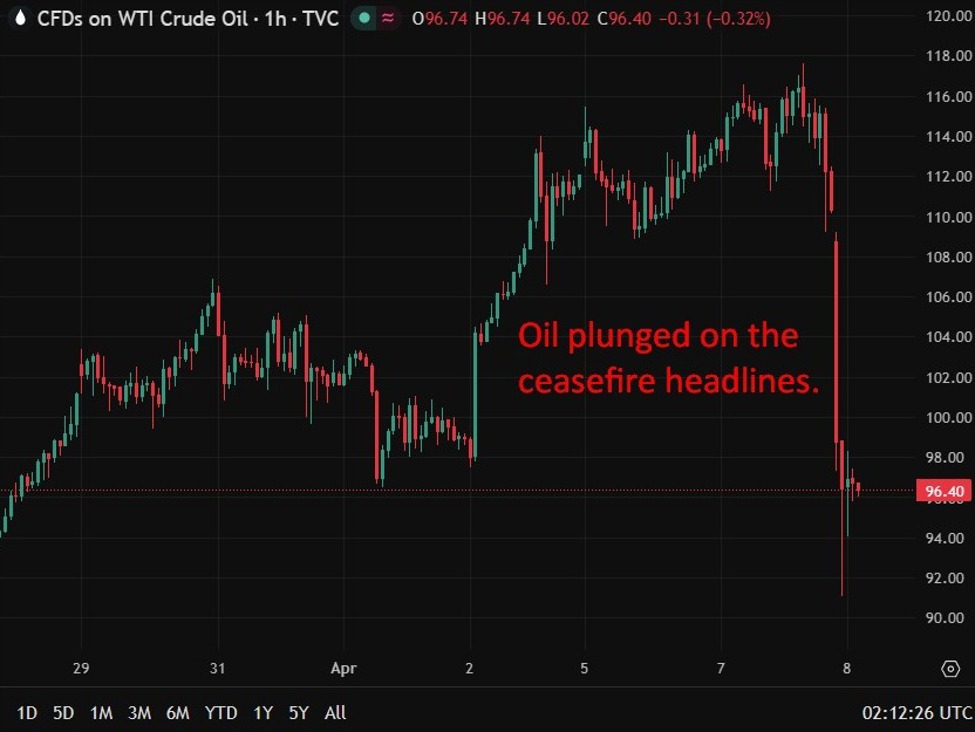
This via Twitter:”During the two-week ceasefire, only about 10 to 15 ships will be permitted to pass through the Strait of Hormuz with Iran’s approval, in coordination with the IRGC Navy and after payment of tolls, and the United States is committed to releasing all of Iran’s frozen assets. The Strait of Hormuz will in no way, even after a final agreement, be “open” as it was before. During this period, negotiations will be held based on Iran’s 10-point plan, the details of which are referenced in the text of the Supreme National Security Council’s statement. In the event of no agreement, the war will resume.”—These new details, if accurate, surrounding the proposed ceasefire between the United States and Iran suggest that any reopening of the Strait of Hormuz may be far more restrictive than initially understood, raising concerns that global energy flows could remain structurally constrained even during a pause in hostilities.According to emerging information tied to Iran’s negotiating position, vessel traffic through the Strait would be tightly controlled during the two-week ceasefire period. Only a limited number of ships, potentially as few as 10 to 15, would be permitted to transit daily, subject to approval from Iranian authorities and coordination with the Islamic Revolutionary Guard Corps (IRGC) Navy. Ships may also be required to pay transit fees, marking a significant shift from the Strait’s traditional status as an open international waterway.Critically, the proposal suggests that even under a final agreement, the Strait may not return to its previous state of unrestricted navigation. This introduces the possibility of a longer-term structural change to one of the world’s most important energy chokepoints, through which roughly a fifth of global oil supply typically flows.The restrictions appear to form part of Iran’s broader 10-point proposal, which is currently under negotiation with the United States and is expected to be discussed in upcoming talks in Islamabad. The framework reportedly includes provisions not only on shipping and security coordination, but also on financial elements such as the release of Iran’s frozen assets.While the ceasefire has been framed as a de-escalation, these conditions highlight that the agreement is highly conditional and operationally complex. The limited flow of vessels raises immediate questions about supply bottlenecks, logistical delays, and the potential for continued upward pressure on energy prices—even in the absence of active conflict.Moreover, the proposal explicitly states that hostilities would resume if negotiations fail to produce a final agreement within the ceasefire window. This creates a binary outcome for markets: either a negotiated framework that reshapes regional energy dynamics, or a rapid return to military escalation.From a broader perspective, the development underscores that the conflict’s economic impact may persist even if fighting pauses. Rather than a clean resolution, the current trajectory points toward a more controlled and politicised energy transit regime, with Iran seeking to exert greater influence over flows through the Strait.For global markets, this represents a shift from a pure “war risk premium” toward a more entrenched structural supply risk, with implications for oil pricing, inflation expectations, and geopolitical stability. This article was written by Eamonn Sheridan at investinglive.com. 🔗 Source 💡 DMK Insight The limited passage of only 10 to 15 ships through the Strait of Hormuz under Iran’s approval signals potential volatility in oil markets. This development could lead to supply constraints, especially if geopolitical tensions escalate or if the U.S. follows through on releasing Iran’s frozen assets, which might empower Iran’s economic position. Traders should keep an eye on oil prices, as any disruption in this critical shipping lane could spike costs. Additionally, watch for reactions in related markets like currencies, particularly the Iranian rial and oil-linked currencies. The situation is fluid, and the next few weeks could see significant price movements, especially if the ceasefire is extended or tensions flare up again. Key levels to monitor include recent highs in crude oil prices, as a breach could trigger further buying pressure. Overall, this is a situation worth watching closely, as the implications could ripple through various asset classes, impacting everything from energy stocks to broader market sentiment. 📮 Takeaway Monitor oil prices closely; any disruption in the Strait of Hormuz could trigger significant volatility, especially if tensions escalate.
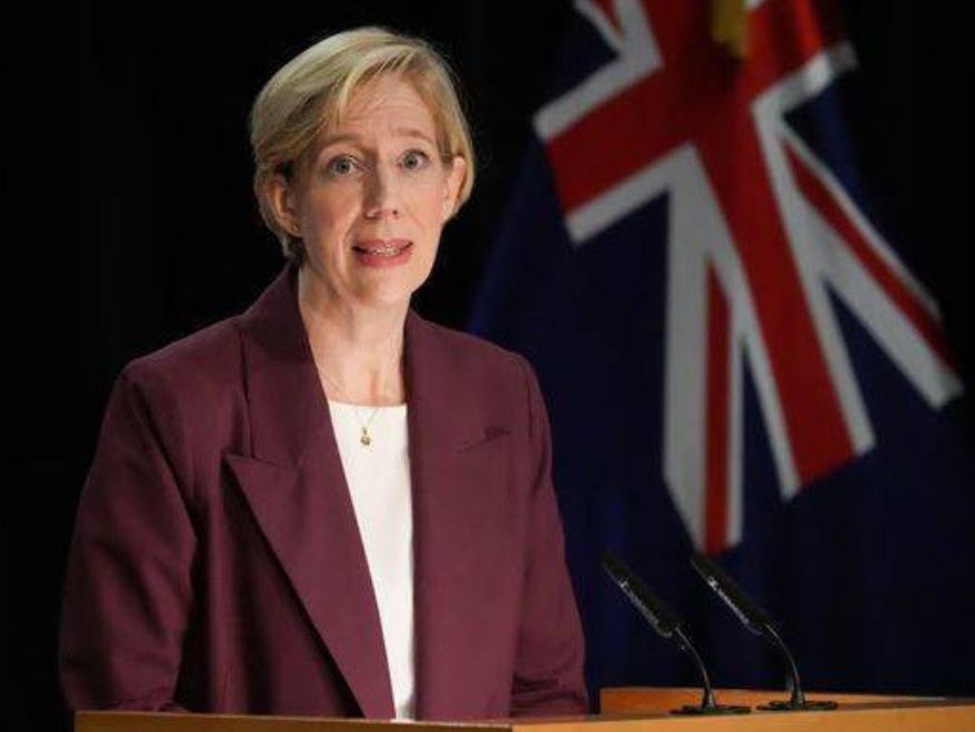
RBNZ expands media outreach after hold decision amid uncertain outlook – Breman schedule
Summary:RBNZ expands post-MPR communication with multiple media appearances Governor Breman scheduled across domestic and global outlets Follows decision to hold OCR at 2.25% amid heightened uncertainty Aims to reinforce policy messaging and manage expectations Reflects need for clarity amid rising inflation and weaker growth Signals broader push toward transparency and engagement RBNZ post-MPR media scheduleThe Reserve Bank of New Zealand is stepping up its post-decision communication strategy following its April 8 Monetary Policy Review, with Governor Anna Breman scheduled for a series of high-profile media appearances in the days after the rate decision.The expanded media schedule comes after the RBNZ opted to hold the Official Cash Rate at 2.25%, while flagging a significantly more uncertain outlook driven by the Middle East conflict and associated energy shock. Against that backdrop, the central bank appears keen to reinforce its policy message and manage market expectations more actively through direct engagement.Governor Breman will begin with a domestic audience on the evening of April 8, speaking with Newstalk ZB shortly after the policy decision. This will be followed by a busy slate of interviews on April 9, including appearances on Radio NZ and Newstalk ZB breakfast programs, before addressing a global financial audience via Bloomberg later that day. The communication push will culminate with a weekend appearance on TVNZ’s Q+A program.The breadth of outlets, spanning local radio, international financial media and weekend political programming, suggests a deliberate effort to reach multiple audiences, including households, businesses, and global investors. This reflects the heightened uncertainty currently facing the economy and the need for clear guidance on how the RBNZ is interpreting the evolving inflation and growth outlook.The timing is notable. With inflation expected to rise in the near term while growth weakens, the RBNZ faces a delicate balancing act. Policymakers must communicate that they are willing to “look through” temporary energy-driven inflation while remaining vigilant to the risk of more persistent price pressures. Any misinterpretation could lead to an unwanted tightening in financial conditions or a drift in inflation expectations.The expanded communication approach also aligns with a broader shift toward transparency, with the introduction of post-MPR press conferences and more frequent engagement with the media. In the current environment, where markets are highly sensitive to geopolitical developments and policy signals, this strategy is likely aimed at anchoring expectations and reducing volatility.Ultimately, the increased visibility of the Governor underscores the importance the RBNZ places on communication as a policy tool in its own right, particularly at a time when the outlook is unusually uncertain and risks are skewed in both directions. This article was written by Eamonn Sheridan at investinglive.com. 🔗 Source 💡 DMK Insight RBNZ’s decision to hold the OCR at 2.25% is a strategic move amidst rising inflation and slowing growth, and here’s why it matters now: By expanding communication efforts, Governor Breman aims to clarify the central bank’s stance, which could influence market sentiment significantly. Traders should note that this transparency push comes at a time when inflationary pressures are mounting, potentially leading to a shift in monetary policy sooner than expected. If inflation continues to rise, the RBNZ may have to reconsider its current stance, which could impact the New Zealand dollar’s value against major currencies. Watch for any shifts in inflation data or growth indicators, as these will be crucial in determining the RBNZ’s next moves. Additionally, the broader implications could ripple through commodity markets, particularly if the NZD weakens, affecting export prices. Keep an eye on the upcoming inflation reports and any comments from Breman that could signal a change in policy direction. The market’s reaction to these communications will be telling, especially if we see volatility in the NZD/USD pair in the coming weeks. 📮 Takeaway Monitor inflation reports closely; any unexpected rise could prompt the RBNZ to adjust its OCR sooner, impacting the NZD significantly.
investingLive Asia-Pacific FX news wrap: Two week pause/ceasefire sends oil plummeting
RBNZ expands media outreach after hold decision amid uncertain outlook – Breman scheduleReports that Iran will allow only 10-15 ships / day to pass through Strait of HormuzReserve Bank of New Zealand leaves its cash rate unchanged at 2.25%, as expectedBank of Korea seen holding rates on April 10 as oil shock lifts inflation risksPBOC sets USD/ CNY central rate at 6.8680 (vs. estimate at 6.8369)Israel wary of ceasefire, raising doubts over US-Iran truce durabilityMarket rejoicing continues: Oil down, gold up. USD down, equities up.Japan real wages jump most in five years, boosting BoJ hike expectationsIran confirms US talks, says ceasefire hinges on finalising 10-point dealAnthropic warns new AI model could accelerate cyberattacks, refuses releaseTrump ceasefire announcement still to be agreed to by Iran. Markets rejoicing though.TRUMP HAS AGREED TO SUSPEND IRAN BOMBING FOR TWO WEEKSMarkets expect an incoming TACO. Oil down, equities up.Fed’s Jefferson flags inflation risks, labour market vulnerability amid oil shockRBNZ to hold. Oil shock lifts inflation outlook but weak growth tempers response (preview)Media: “Some good news is expected from both sides soon” – citing CNNIran’s largest aluminium producer IRALCO has been hit in an airstrikeRBNZ set to hold as it looks through oil shock, watches inflation persistence risksIran military command say its attacks will deprive the world of the region’s oil for yearsinvestingLive Americas market news wrap: Some optimism as we near Trump’s deadlineSummary:Trump announces two-week pause on Iran strikes to allow negotiations US sees Iran’s 10-point proposal as workable framework Iran confirms talks via Pakistan, set for April 10 in Islamabad Oil drops sharply; USD weakens; equities and gold rally Doubts emerge over feasibility of Iran’s demands Unconfirmed reports suggest Hormuz transit may stay heavily restricted Israel signals ceasefire may not apply to Lebanon operations Fed’s Jefferson flags inflation risks and labour market vulnerability RBNZ holds, warns of inflation-growth trade-off amid oil shock Japan real wages surge, supporting further BoJ tighteningThe key development early in the session was U.S. President Donald Trump announcing via a Truth Social post that he would pause military strikes on Iran for two weeks to allow negotiations to proceed. Trump said Washington had received a 10-point proposal from Tehran and viewed it as a workable basis for a broader agreement, adding that many major sticking points had already been resolved. The two-week window is intended to finalise and formalise a longer-term deal.Iran subsequently confirmed it is engaging in negotiations, with state media reporting that its Supreme National Security Council had submitted the proposal via Pakistan. Talks are scheduled to begin on April 10 in Islamabad.Markets reacted immediately. Oil prices fell sharply, the USD weakened, while equities and gold moved higher. Those moves extended through the session and, for now, have largely held.That said, caution is warranted. Several elements of Iran’s reported demands appear difficult to reconcile, including the removal of all sanctions, continued support for regional proxies, and greater control over the Strait of Hormuz, including the possibility of transit fees framed as compensation.Adding to uncertainty, unconfirmed reports later in the session suggested that Hormuz traffic could be capped at just 10–15 vessels per day during the ceasefire period. If accurate, that would represent little improvement on current flow levels and would do little to alleviate the backlog of roughly 800 vessels believed to be stuck in the Gulf. In effect, such a cap would imply that the logistical bottleneck remains largely intact despite the ceasefire.Further complicating the picture, Israel indicated that the ceasefire does not apply to its operations in Lebanon, highlighting the risk that regional tensions could persist even as U.S.-Iran negotiations progress.Despite these caveats, the initial market reaction has held for now, suggesting investors are leaning toward a de-escalation scenario, at least in the near term.Away from geopolitics, central bank messaging reflected the same uncertain backdrop. Federal Reserve Vice Chair Philip Jefferson struck a cautious tone, noting rising inflation risks alongside growing downside risks to the labour market, underscoring the difficult policy trade-off ahead.The Reserve Bank of New Zealand kept its cash rate at 2.25%, acknowledging that the Middle East conflict has materially shifted the outlook, with inflation set to rise sharply even as growth weakens. The Bank reiterated its focus on medium-term inflation and signalled it stands ready to act if needed.In data, Japan’s February wage figures surprised to the upside, with real wages rising at their fastest pace in five years, strengthening the case for further tightening from the Bank of Japan. This article was written by Eamonn Sheridan at investinglive.com. 🔗 Source 💡 DMK Insight The RBNZ’s decision to hold rates at 2.25% signals a cautious approach amid global uncertainties, and here’s why that matters: With the Reserve Bank of New Zealand (RBNZ) opting for a hold, traders should be aware of the implications for the NZD, especially as the market grapples with mixed signals from global economic indicators. The unchanged cash rate reflects a balancing act between supporting economic growth and managing inflation expectations. This decision could lead to increased volatility in the NZD, particularly against the AUD and USD, as traders reassess their positions based on relative interest rate expectations. Additionally, the geopolitical tensions highlighted by the limited passage of ships through the Strait of Hormuz could further complicate market dynamics, potentially affecting commodity prices and risk sentiment. Look for key technical levels in the NZD/USD pair; a break below recent support could trigger further selling pressure. Keep an eye on upcoming economic data releases from both New Zealand and its trading partners, as they could provide further clarity on the RBNZ’s future policy direction. The market’s reaction to these developments will be crucial in shaping trading strategies in the coming weeks. 📮 Takeaway Watch the NZD/USD closely; a break below recent support levels could signal increased selling pressure amid global uncertainties.

Risk-on wave tides over markets as US, Iran agree to a two-week ceasefire
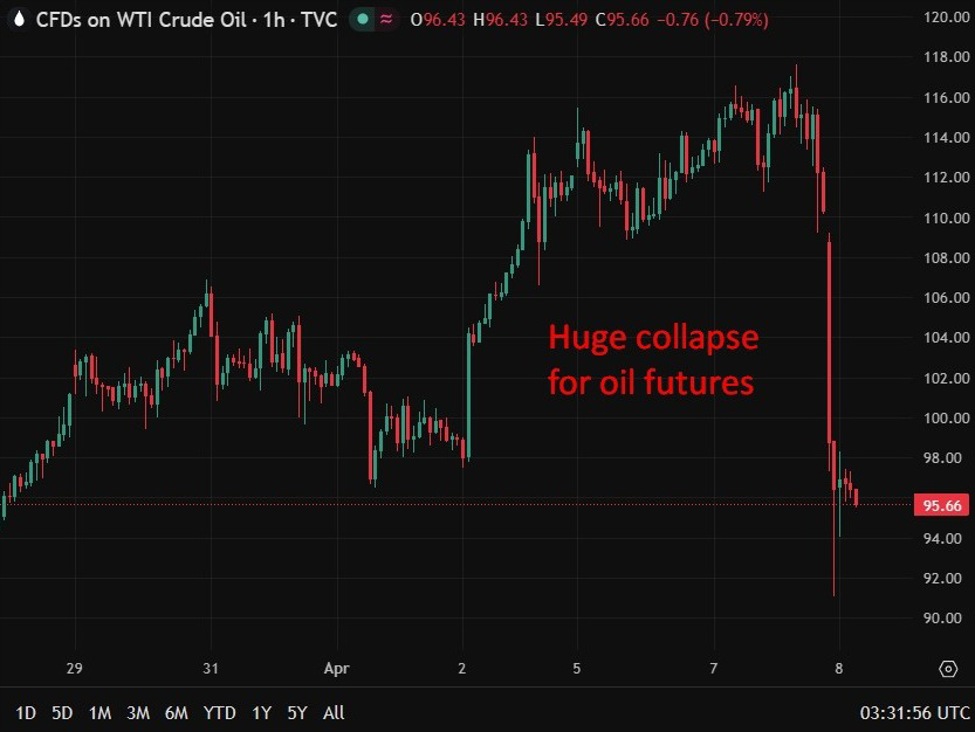
Well, here we go again. Another two-week ceasefire but this time around, it seems like there is a better feeling that the war is slowly winding down. And perhaps more importantly, this time Iran is also agreeing to it and coming to the negotiating table.US president Trump dropped the news overnight and that is seeing markets catch a massive risk-on wave. Oil prices have plummeted while stocks are rallying hard on the headlines, with bond yields falling off alongside the dollar.Here’s a quick catch up of how things went since last night:US president Trump announces “double-sided” ceasefire for two weeksThis is conditional on the Strait of Hormuz “reopening”Iran confirms the ceasefire, with its 10-point proposal being the basis for talks to beginPakistan is the main mediator for negotiations, with likely backchannel support from ChinaFirst round of talks to take place in Islamabad on 10 AprilIran reportedly to allow for better passage through Strait of Hormuz in the meantimeWTI crude is down over 14% on the day now to $96.55. That marks the biggest drop since the Covid pandemic but in dollar terms, this is even greater than that – at least if held for now.And in turn, broader markets are rallying on renewed optimism that things will go back to “normal” soon enough. However, the question will be what exactly is this new “normal”?For now, there is an even bigger question as to how many ships will Iran allow passing through Hormuz and better yet, who are they letting pass?In the past week, there has been a noticeable pick up in activity. That is likely a gesture of goodwill ahead of talks and Iran gives Trump a few “gifts” to appeal to his better nature. Of note, Kpler data shows at least 45 commercial vessels have passed through the strait since Friday.It is very much still a single-digit average per day but better than the supposed 1-3 vessels passing through at one point last month.However, it is not all good news. Iran still maintains control over the strait and gets to decide who they let pass. For now, the pickup in activity seems to be mostly for vessels that are headed towards the likes of India (and China).And it was also reported yesterday that Qatar LNG tankers Al Daayen and Rasheeda had to turn back on 6 April after attempting to cross initially. Those two tankers were supposed to be among those Iran allowed to cross as part of the initial agreement last week, before this latest one.According to Kpler data with verification from Bloomberg and LSEG, no loaded LNG tanker has passed through the Strait of Hormuz since 28 February.While markets might be cheering on optimism on the news and headlines, do be reminded that this all needs to be backed up by ship tracking data at the end of the day. That works for both LNG and crude oil shipments.Otherwise, it is the same kind of thing as we have come to know with any “deal” with this US administration. Remember about the time China was supposed to buy up more US soybeans? Remember the whole Phase One trade deal fiasco? Yes, that “deal” was dead on arrival right from the get go.Markets quickly moved on and were able to sweep that all under the rug. I’m just afraid that with oil and gas being as impactful as it is, markets might not go unpunished in underestimating the reality of this particular situation.If Iran does allow for better passage through the strait, then sure there is scope to be optimistic. Otherwise, whatever is said today doesn’t mean anything in the bigger picture.Actions speak louder than words. Watch for ship tracking data and who Iran is allowing to move through the strait. That is what will determine whether or not this ceasefire rally is justified. This article was written by Justin Low at investinglive.com. 🔗 Source 💡 DMK Insight So, another ceasefire is on the table, and here’s why that matters: traders need to watch for potential shifts in oil prices and geopolitical sentiment. With Iran now involved in negotiations, the dynamics could change significantly, impacting not just oil but also broader market stability. If tensions ease, we might see a drop in volatility across commodities, which could open up opportunities for day traders looking to capitalize on price movements. But don’t get too comfortable—this isn’t a guarantee of lasting peace. Markets often react to news cycles, and if negotiations falter, we could see a quick reversal. Keep an eye on oil prices; a sustained drop below key support levels could signal a bearish trend, while a rebound could lead to bullish plays. Watch for any announcements or developments over the next two weeks, as they could set the tone for trading strategies moving forward. 📮 Takeaway Monitor oil prices closely; a drop below key support could signal bearish trends, while any positive news could create bullish opportunities.

FX option expiries for 8 April 10am New York cut
There is arguably just one to take note of on the day, as highlighted in bold below.That being for EUR/USD at the 1.1700 level. The expiries don’t tie to any technical significance, so I would wager that their relative impact will be minimal to none on a day like this.As things stand, the broader market reaction to the latest US-Iran headlines is the only game in town. A two-week ceasefire looks to be convincing markets that all is well in the world again, with oil prices plummeting and risk trades ramping up. That is seeing the dollar slide across the board with EUR/USD rising to a five-week high.The pair is now running up against the confluence of key resistance from the 100 and 200-day moving averages, seen at 1.1672-85 currently. That for me is the bigger hurdle in terms of limiting upside price action for the time being. Keep below that and sellers are still in a with a shout. But break above the key technical layer, and buyers can start to talk about revisiting the 1.1800 to 1.2000 region again.That sums up what trading sentiment is going to be all about in the coming day or two. It’s all on the risk mood and how broader markets are taking to the ceasefire news and if this bout of optimism can stick.As such, the impact of any major option expiries will be quite muted unless market volatility settles down a bit more in the coming days.For more information on how to use this data, you may refer to this post here.Head on over to investingLive (formerly ForexLive) to get in on the know! This article was written by Justin Low at investinglive.com. 🔗 Source 💡 DMK Insight EUR/USD is hovering around the 1.1700 mark, and here’s why that matters: While the expiries at this level seem to lack technical significance, traders should still keep an eye on this price point. The 1.1700 level could act as a psychological barrier, influencing both retail and institutional traders. If we see a strong move away from this level, it could signal a shift in sentiment, especially with broader market trends leaning towards volatility in the forex space. Given the current economic climate, characterized by fluctuating interest rates and geopolitical tensions, any breach above or below this level could trigger significant trading activity. On the flip side, if the market remains stagnant around 1.1700, it might indicate a consolidation phase, which could lead to a breakout in either direction. Traders should monitor related assets like the DXY index for potential correlations, as shifts there could impact EUR/USD movements. Watch for any news or economic data releases that could influence this pair, particularly in the coming days. 📮 Takeaway Keep an eye on the 1.1700 level for EUR/USD; a breakout could signal a significant shift in market sentiment.

Germany February industrial orders +0.9% vs +2.0% m/m expected
Prior -11.1%The February reading marks a minor bounce after the sharp drop in January, which at the time owed to a steep drop in the orders for the manufacture of metal products (-39.4%). That of course follows up from the sharp jump in December (+29.7%) before that. So, it is essentially some normalisation in the data after months of volatile orders having an effect.If you exclude large orders from the latest data, German factory orders were actually 3.5% in February compared to January. In the less volatile three-month comparison though, new orders in the three months to February were still down 0.8% than in the preceeding three months.Looking at the details, new orders in the automotive industry helped to underpin the bounce in February with 3.8% growth alongside a notable jump in the textile industry (+45.2%). That is however offset by a decline in other vehicle manufacturing (aircraft, ships, trains, military vehicles), which saw a 25.9% drop.Foreign orders were the ones contributing the most, seen up 4.7% on the month. Meanwhile, domestic orders were seen down 4.4% on the month. This article was written by Justin Low at investinglive.com. 🔗 Source 💡 DMK Insight The recent bounce in manufacturing orders, up 11.1% in February, signals potential stabilization in the sector, but traders should remain cautious. This uptick follows a dramatic 39.4% drop in January, which was largely driven by a slump in metal product orders. Such volatility can indicate underlying instability, and while a rebound is welcome, it’s essential to consider the broader economic context. If this trend continues, it could influence related markets, particularly commodities like metals, which are sensitive to manufacturing demand. Traders should keep an eye on key resistance levels in metal prices, as a sustained recovery in orders could lead to upward pressure on these assets. However, it’s worth noting that the sharp fluctuations in previous months—like the 29.7% spike in December—suggest that the market is reacting to short-term factors rather than a solid trend. Watch for upcoming economic indicators and manufacturing data releases that could provide further clarity on this situation. 📮 Takeaway Monitor February’s manufacturing orders closely; a sustained trend could impact metal prices and related markets significantly.

UK March Halifax house prices -0.5% vs +0.1% m/m expected
Prior +0.3%UK house prices dipped a little in March, with the average property price now seen at £299,677. That also sees the annual house price growth slow to 0.8%, down from 1.2% in February. That shows the market has long some bounce going into the spring season but perhaps relative economic uncertainty from the events in the Middle East is also weighing.Halifax notes that:”Concerns about higher energy prices have pushed up inflation expectations, which in turn led to a rise in mortgage rates, reducing confidence that interest rates will be cut this year and dampening the initial momentum in the market seen at the start of the year.”Adding that:“The effect on house prices will largely depend on how long‑lasting these pressures prove to be and the wider implications for the economy and unemployment. Mortgage rates are a key factor for buyers, particularly those getting on the ladder for the first time, who are already balancing the challenge of saving a deposit, with the cost of borrowing. As a result, many are likely to watch movements in mortgage rates closely, before making a decision on any home purchase. In this environment, professional advice can play an important role in helping people understand their options and make informed decisions that are right for their individual circumstances.However, the recent increase in UK mortgage rates has been more modest than the sharp rises seen during the mini budget of 2022. Further, many households will already be on fixed deals, protecting them from the latest rate rises. Taking all this into account, house prices may prove resilient, even if uncertainty weighs on market activity in the near term.” This article was written by Justin Low at investinglive.com. 🔗 Source 💡 DMK Insight UK house prices are losing momentum, and here’s why that matters for traders: With the average property price now at £299,677 and annual growth slowing to 0.8%, down from 1.2%, this dip signals a potential cooling in the housing market. For traders, this could impact related sectors like construction and real estate stocks, which often react to housing data. If this trend continues, we might see a shift in investor sentiment, leading to increased volatility in these stocks. Keep an eye on the broader economic indicators, like interest rates and inflation, as they could further influence housing demand. On the flip side, a slowdown in house prices might prompt the Bank of England to reconsider its monetary policy, potentially leading to lower interest rates. This could create a buying opportunity in the housing market, but it’s essential to monitor how these dynamics play out over the coming months. Watch for any significant shifts in consumer confidence or employment data, as these will be key indicators of future housing market performance. 📮 Takeaway Monitor the UK housing market closely; a continued decline in prices could signal broader economic shifts affecting related sectors and investment opportunities.

French trade deficit widens in February ahead of the Middle East conflict
In February 2026, the French trade balance showed a sharp decline of €3.8 billion to reflect a deficit of €5.8 billion. That owes to a significant increase in imports by €2.6 billion and a decrease in exports of only €1.2 billion.Looking at the details, the increase in imports was driven by higher imports of natural hydrocarbons (€0.8 billion), transport equipment (€0.7 billion), and pharmaceuticals (€0.5 billion), particularly from China.Meanwhile, the drop in exports came from a marked decrease in electricity exports (-€0.4 billion) and aerospace industry products (-€0.3 billion).Overall, energy imports increased by €0.6 billion on the month but are surely going to surge even greater in March amid the Middle East conflict. That will recreate the sort of trend in the trade balance that we saw during the Russia-Ukraine conflict. So, just be wary of that in the months ahead. This article was written by Justin Low at investinglive.com. 🔗 Source 💡 DMK Insight The sharp decline in France’s trade balance to a €5.8 billion deficit is a red flag for traders. This significant shift, driven by a €2.6 billion rise in imports against a €1.2 billion drop in exports, suggests a weakening domestic economy and could impact the euro’s strength. Traders should be wary of how this data might influence the European Central Bank’s monetary policy, especially if inflationary pressures continue to rise alongside a deteriorating trade position. A weaker euro could lead to increased volatility in forex pairs, particularly against the USD and GBP. Moreover, this trade imbalance could ripple through related markets, affecting commodities and stocks tied to export-driven sectors. Keep an eye on the euro’s performance against key support levels; if it breaks below recent lows, it could trigger further selling pressure. Watch for upcoming economic indicators that might provide additional context, particularly any shifts in consumer sentiment or manufacturing output that could either exacerbate or alleviate these trends. 📮 Takeaway Monitor the euro’s support levels closely; a break below recent lows could signal further declines amid this trade deficit.

The US Dollar sinks on the US-Iran ceasefire agreement; USDJPY approaches a key support
FUNDAMENTAL OVERVIEWUSD:The US dollar sold off across the board today after Trump announced on Truth Social a two-sided ceasefire agreement for two weeks while the US and Iran negotiate a lasting peace deal. The discussions will begin on Friday in Islamabad and may be extended if both parties agree. Given the de-escalation, the risk sentiment in the markets turned around quickly and risk assets got heavily bid. As you would expect, traders went back to price in rate cuts for the Fed with now 14 bps of easing expected by year-end compared to basically zero before the ceasefire announcement. There’s still a risk that the war could restart any time as the US and Iran haven’t officially ended the hostilities. Nonetheless, the bias has now turned bearish for the dollar as traders look forward to a lasting peace deal.JPY:On the JPY side, the currency strengthened just because of dollar weakness as the Japanese macro conditions haven’t really changed that much. The drop in oil prices and the expected resumption of traffic in the Strait of Hormuz might ease growth concerns since Japan is heavily reliant on imported energy. This should support the stock market and lift business sentiment. Looking ahead, the market is pricing in a 50% chance of a BoJ hike in April. The central bank is more likely to hold interest rates steady and let things settle after the conclusion of the US-Iran war (that’s if it really ends in the next two weeks). The BoJ could signal a rate hike in June though if they think they have the right conditions in place. USDJPY TECHNICAL ANALYSIS – DAILY TIMEFRAMEOn the daily chart, we can see that USDJPY is approaching the key 157.65 support. That’s where we can expect the buyers to step in with a defined risk below the support to position for a rally into the 162.00 handle. The sellers, on the other hand, will look for a break lower to increase the bearish bets into the major trendline around the 155.00 level. USDJPY TECHNICAL ANALYSIS – 4 HOUR TIMEFRAMEOn the 4 hour chart, there’s not much we can add here given the strong move to the downside. At the moment, the natural target for the sellers is the support around the 157.65 level. That’s where we either get a bounce or a break. USDJPY TECHNICAL ANALYSIS – 1 HOUR TIMEFRAMEOn the 1 hour chart, we can see that the price is trading way below the lower bound of the average daily range for today. In such instances, we can generally see some consolidation or a pullback before the next move, although given the strength of today’s catalyst, we might see the price fall further into the support before a pullback. UPCOMING CATALYSTSToday we have the FOMC meeting minutes. Tomorrow, we get the US PCE price index and the latest US Jobless Claims figures. On Friday, we conclude the week with the US CPI report and the University of Michigan Consumer Sentiment survey. As a reminder, we have also the US-Iran negotiations in Islamabad on Friday. This article was written by Giuseppe Dellamotta at investinglive.com. 🔗 Source 💡 DMK Insight The US dollar’s sell-off today is significant, especially with SOL trading at $84.59. A ceasefire agreement between the US and Iran could lead to increased market volatility, impacting risk assets like cryptocurrencies. Traders should keep an eye on how this geopolitical development influences investor sentiment. If the ceasefire holds, we might see a shift towards higher-risk assets, potentially boosting SOL and similar cryptocurrencies. However, if negotiations falter, expect a flight to safety, which could pressure crypto prices. Watch for SOL’s reaction around key support levels; a drop below $80 could signal bearish momentum, while a push above $90 might attract bullish traders. The next few days will be crucial as the negotiations unfold, so stay alert for any news that could sway market sentiment. 📮 Takeaway Monitor SOL closely; a drop below $80 could trigger bearish sentiment, while a rise above $90 may attract bullish interest.

Germany March construction PMI 48.0 vs 43.7 prior
While overall business activity picked up in March, it belies the underlying mood in the sector as input cost inflation posts a record rise on the month. The pick up is helped by an improved mood in housing activity, posting its shallowest decline so far this year. In turn, that makes commercial activity the weakest-performing segment in March.That being said, the latest survey showed a sharp deterioration in constructors’ expectations for activity over the coming year. And that comes after having hit a six-year high in February. Of note, panellists reported concerns about demand and steep cost increases. That isn’t a surprise considering the latest Middle East developments.On the latter, the rate of input price inflation faced by German construction companies rose sharply in March, recording its most marked one-month jump in the series history. This took it to its highest level since October 2022 and well above its long-run average. Trouble, trouble.HCOB notes that:”Whilst there were signs of improvement on the activity front in March, with housing work showing a much slower rate of decline and civil engineering enjoying stronger growth, several of the survey’s other indicators flashed warning signals about the sector’s prospects in the coming months. For a start, inflows of new orders continued falling at an accelerating rate, with existing headwinds to demand from economic uncertainty and already-high price levels being exacerbated by the outbreak of war in the Middle East. “The construction sector has followed manufacturing in seeing a record month-on-month rise in its input prices index, underscoring the immediate spike in cost pressures that’s rippled through the economy from the Middle East war. “The dual concerns over weaker demand and sharply rising prices have hit business confidence and put paid to the green shoots of optimism seen at the start of the year.” This article was written by Justin Low at investinglive.com. 🔗 Source 💡 DMK Insight So, business activity is up, but don’t let that fool you—input cost inflation is hitting record highs. This mixed signal is crucial for traders, especially those in sectors sensitive to cost pressures like construction and manufacturing. The uptick in housing activity might seem like a silver lining, but if input costs keep rising, profit margins could take a hit, leading to potential sell-offs in related stocks. Watch for how companies report their earnings in the coming weeks; if they cite rising costs without corresponding price increases, it could trigger bearish sentiment. On the flip side, if housing continues to show resilience, it might support commodities like lumber or even influence interest rates. Keep an eye on key levels in the housing market and inflation indicators; any significant shifts could impact broader market sentiment and trading strategies. The next few weeks will be pivotal, so monitor the economic reports closely for any signs of a shift in this delicate balance. 📮 Takeaway Watch for earnings reports in the coming weeks; rising input costs could trigger sell-offs if companies can’t maintain margins.