
 Bitcoin
  Ethereum
  Tether
  XRP
XRP  BNB
BNB  USDC
USDC  Solana
  TRON
TRON  Lido Staked Ether
  Figure Heloc
An inspection found slow reconciliation cycles and weak trade-halting systems across major crypto exchanges. 🔗 Source 💡 DMK Insight Crypto exchanges are struggling with slow reconciliation cycles, and here’s why that matters: These inefficiencies can lead to increased volatility and potential liquidity issues, especially during high-stress market conditions. Traders relying on these platforms for quick entries and exits might find themselves at a disadvantage, particularly if trade-halting systems fail to respond promptly. This could amplify price swings, making it crucial for day traders and swing traders to monitor exchange performance closely. Moreover, if these weaknesses persist, we could see a shift in trading volume towards platforms that demonstrate better reliability. Keep an eye on how major exchanges respond to these findings—if they implement improvements, it could stabilize trading conditions. Conversely, if issues linger, we might see a broader market impact, affecting not just crypto but also correlated assets like Bitcoin futures and altcoins. Watch for any announcements from exchanges regarding upgrades or changes in their systems, as this could signal shifts in market sentiment. 📮 Takeaway Monitor exchange announcements on system upgrades; persistent issues could lead to increased volatility and impact trading strategies significantly.

US prosecutors reject Tornado Cash co-founder’s argument for dismissal
Roman Storm, the co-founder of the crypto mixing service, still faces a possible retrial on two charges after a jury failed to reach a verdict in 2025. 🔗 Source 💡 DMK Insight So Roman Storm’s retrial is looming, and here’s why that matters: uncertainty in the legal landscape can shake investor confidence. A retrial could reignite scrutiny on crypto mixing services, which are already under the microscope due to regulatory pressures. If the jury remains deadlocked or if a conviction occurs, it could set a precedent that impacts how these services operate, potentially leading to stricter regulations or even bans in certain jurisdictions. Traders should keep an eye on the broader implications for privacy coins and related assets like Monero or Dash, which could face heightened volatility. If Storm’s case results in a negative outcome, we might see a sell-off in these assets as traders react to increased regulatory risk. Conversely, if he’s acquitted, it could provide a short-term boost to the sector, as it would signal a more favorable legal environment for mixing services. Watch for any updates on the trial dates and jury decisions, as these could create significant price movements in the crypto market. 📮 Takeaway Monitor Roman Storm’s retrial closely; a negative outcome could trigger volatility in privacy coins like Monero and Dash.

Americans lost $11B to crypto scams in 2025, says FBI
According to the bureau, a large number of minors aged 17 and younger were included in complaints related to crypto or crypto ATMs, resulting in more than $5 million in losses. 🔗 Source 💡 DMK Insight The reported $5 million loss involving minors in crypto transactions raises serious red flags for the market. This situation could lead to increased regulatory scrutiny, especially around crypto ATMs and their accessibility to younger users. Traders should be aware that if regulators step in, it could impact the operational landscape for crypto exchanges and ATMs, potentially leading to tighter compliance requirements. This might also trigger a sell-off in related assets, particularly those heavily involved in retail crypto services. Keep an eye on how major players in the crypto space respond to this news, as their stock prices could be affected in the short term. On the flip side, this could create opportunities for companies that pivot towards more secure and compliant frameworks, potentially attracting cautious investors looking for safer bets in the crypto market. Watch for any announcements from regulators or major exchanges regarding new policies or guidelines, as these could significantly influence market sentiment and trading strategies in the coming weeks. 📮 Takeaway Monitor regulatory developments closely; any new compliance measures could impact crypto ATM operations and related asset prices significantly.

Democrats question CFTC chair on insider trading in prediction markets
The seven House members may have affirmed the commission’s authority over prediction markets, but they questioned its inaction on insider trading. 🔗 Source 💡 DMK Insight The House members’ scrutiny of the commission’s stance on insider trading is a big deal for traders in prediction markets. This could signal a shift in regulatory focus, potentially impacting how prediction markets operate. If the commission starts enforcing stricter rules, it might deter participation or alter market dynamics significantly. Traders should keep an eye on how this develops, especially if new regulations emerge that could affect liquidity or the types of trades available. Additionally, if insider trading becomes a hot-button issue, it could lead to increased volatility in related assets, particularly those tied to speculative trading. Watch for any announcements from the commission in the coming weeks that could provide clarity on their future actions regarding prediction markets and insider trading enforcement. 📮 Takeaway Keep an eye on regulatory developments from the commission regarding insider trading, as they could impact prediction market liquidity and volatility in the near term.

FDIC moves to regulate stablecoin issuers under the GENIUS Act
FDIC’s proposed rules providing insurance for corporate deposits of stablecoin issuers will not extend to the stablecoin holders, as it would conflict with the GENIUS Act’s text, the FDIC said. 🔗 Source 💡 DMK Insight The FDIC’s stance on stablecoin insurance is a game-changer for institutional players. By clarifying that corporate deposits won’t cover individual stablecoin holders, the FDIC is signaling a cautious approach to crypto regulation. This could lead to increased volatility in stablecoin markets as investors reassess their risk exposure. If institutions can’t guarantee protection for retail users, we might see a shift in how stablecoins are utilized, potentially impacting liquidity across crypto exchanges. Traders should keep an eye on related assets, especially those tied to stablecoin liquidity like Bitcoin and Ethereum, as shifts in stablecoin confidence could ripple through these markets. Watch for any upcoming regulatory announcements or changes in the GENIUS Act, as these could create new trading opportunities or risks. The immediate focus should be on how this news affects stablecoin prices and their adoption in trading pairs, particularly in the next few weeks. 📮 Takeaway Monitor stablecoin market reactions closely; any significant price shifts could indicate broader market volatility, especially in Bitcoin and Ethereum over the next few weeks.

SEC admits certain crypto enforcement cases delivered no investor benefit
Under SEC Chair Paul Atkins, the number of SEC enforcement actions against public companies has decreased by about 30%. 🔗 Source 💡 DMK Insight A 30% drop in SEC enforcement actions could signal a more lenient regulatory environment, and here’s why that matters for traders right now. With fewer enforcement actions, companies might feel emboldened to take risks, potentially leading to increased volatility in stock prices. This could create opportunities for day traders looking to capitalize on price swings. However, it’s also worth considering that a relaxed regulatory stance might lead to longer-term risks if companies engage in questionable practices without fear of repercussions. Keep an eye on sectors that are typically under scrutiny, like tech and finance, as they could see increased activity. For swing traders, monitoring earnings reports and news releases will be crucial, especially if companies start to push the envelope in their disclosures. Watch for any shifts in sentiment around regulatory changes, as this could impact market confidence and trading strategies significantly. 📮 Takeaway Traders should monitor sectors like tech and finance for volatility as fewer SEC actions could lead to riskier corporate behavior.
Israel wary of ceasefire, raising doubts over US-Iran truce durability
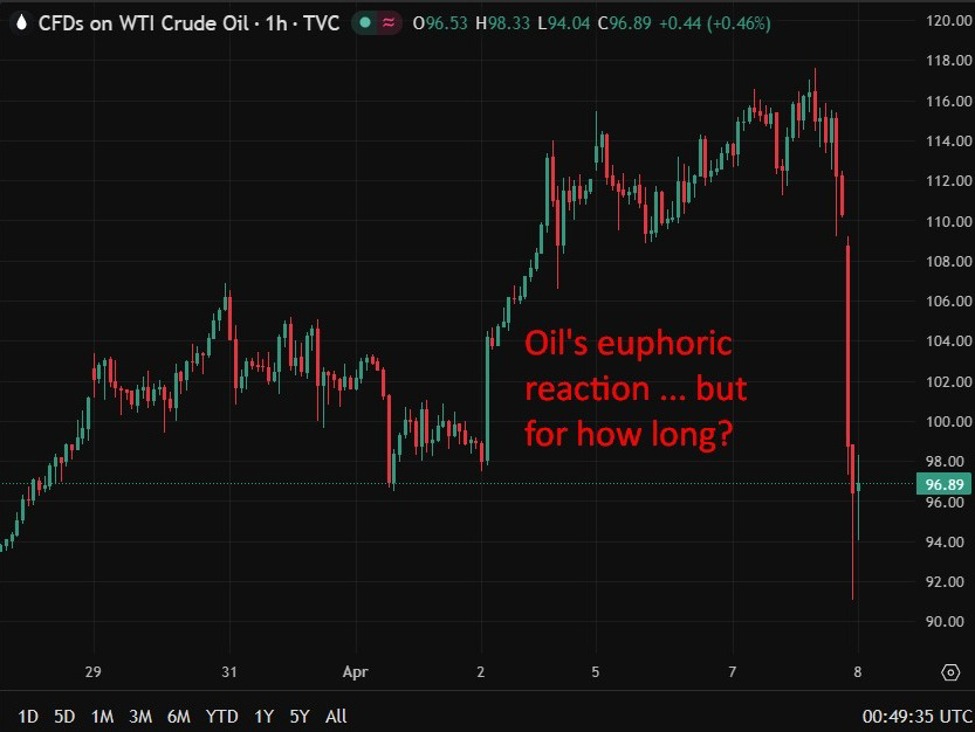
Israel’s reluctance casts doubt on ceasefire durability despite US-Iran progress.Summary:Israel signals reluctance to fully embrace US-Iran ceasefire, according to CNN Will follow US lead but still has additional military targets Iran demands include limits on Israeli operations against proxies Ceasefire described as tactical, not a final peace deal Talks to continue in Islamabad within tight timeline Historical precedent suggests ceasefires may not hold Israel seen as key swing factor in whether truce enduresIsraeli officials are signalling unease with the newly announced ceasefire between the United States and Iran, raising fresh doubts over whether the fragile truce will hold despite apparent diplomatic progress.According to sources cited in a CNN report , Israel is expected to follow Washington’s lead and adhere to the ceasefire, but is doing so reluctantly. Officials reportedly remain concerned that the agreement could constrain ongoing military operations, particularly as Israel still has additional targets it intends to pursue.This hesitation introduces a critical fault line in the ceasefire framework. While the agreement is being presented as a “double-sided” pause in hostilities, Israeli reluctance highlights the risk that alignment between key actors may be incomplete. Historically, similar ceasefires in conflict zones such as Gaza and Ukraine have proven difficult to sustain, often breaking down amid competing strategic objectives and mistrust between parties.A central sticking point appears to be Iran’s demands around regional dynamics, particularly calls for an end to Israeli operations against groups such as Hezbollah and other Iran-aligned actors. These provisions strike at the core of Israel’s security strategy, raising questions over whether it would fully commit to restrictions that limit its operational freedom.At the same time, the ceasefire is explicitly described as a tactical pause rather than a definitive peace agreement. Negotiations are expected to continue in Islamabad, with both sides working toward a broader settlement within a compressed timeframe. However, the conditions attached to the deal, including the reopening of the Strait of Hormuz and unresolved disagreements over regional security arrangements, underscore the complexity of the negotiations.There are also broader concerns that the underlying drivers of the conflict remain unresolved. Analysts note that significant damage has already been inflicted on regional energy infrastructure, and that economic and geopolitical tensions remain elevated. In this context, the ceasefire may serve more as a temporary de-escalation than a durable turning point.Ultimately, the key question for markets and policymakers alike is whether Israel’s cautious participation evolves into full compliance—or whether its strategic priorities lead to renewed military action. With multiple parties involved and trust in short supply, the ceasefire’s durability remains highly uncertain, leaving the risk of escalation firmly in play. —-I think there are a number of issues that are going to give wider concerns:removal of sanctionssupport for proxies to be kepyIran to control of Hormuz and charge a $2mn transit feeI can’t see those terms being acceptable. —Trump has already taken aim at CNN for this report. But he would, wouldn’t he? This article was written by Eamonn Sheridan at investinglive.com. 🔗 Source 💡 DMK Insight Israel’s hesitance on the US-Iran ceasefire could shake market confidence in regional stability. For traders, this uncertainty might lead to increased volatility in oil prices and Middle Eastern equities. If Israel continues military operations, we could see a spike in crude oil prices, especially if tensions escalate. Keep an eye on the $80 per barrel mark for crude; a breach could signal a more significant rally. Additionally, defense stocks might see upward pressure as geopolitical risks rise. On the flip side, if a more stable ceasefire emerges, we could see a pullback in oil prices and a boost in risk-on assets. Traders should monitor developments closely, particularly any statements from Israeli officials or changes in US policy. The next few days will be crucial for gauging market sentiment and potential trading opportunities. 📮 Takeaway Watch for crude oil prices around $80; any escalation in Israel’s military actions could drive prices higher.
PBOC sets USD/ CNY central rate at 6.8680 (vs. estimate at 6.8369)
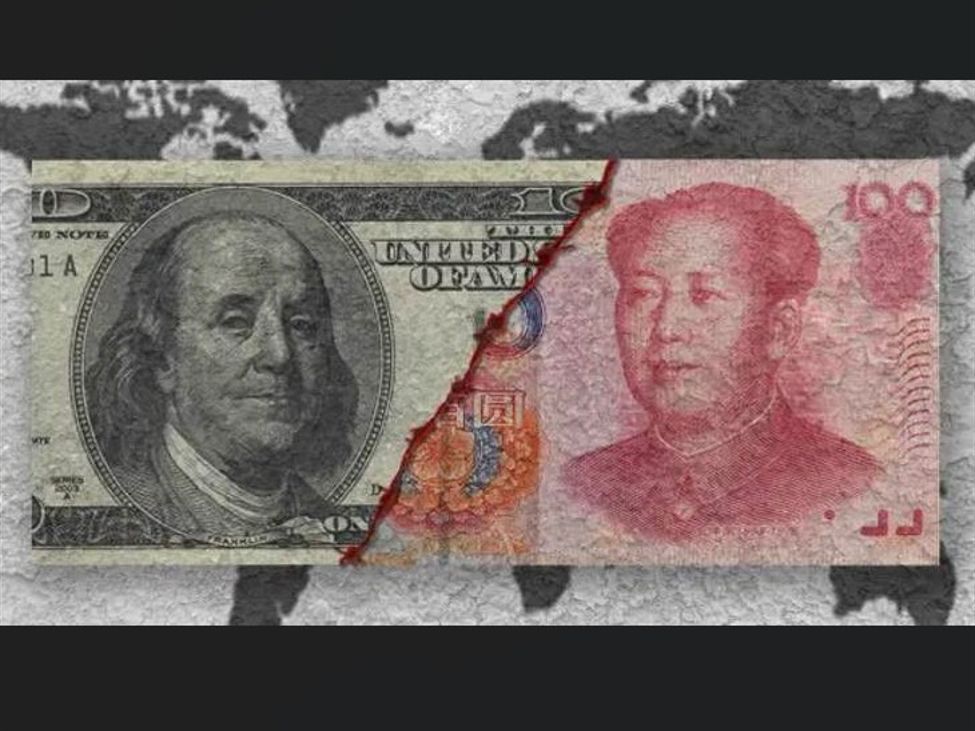
The PBOC allows the yuan to fluctuate within a +/- 2% range, around this reference rate. The rate today at 6.8680 is the strongest for CNY since 17 April 2023.PBOC injects 500mn yuan via 78pday reverse repos in open market operates today. Unchanged rate of 1.4%. This article was written by Eamonn Sheridan at investinglive.com. 🔗 Source 💡 DMK Insight The yuan’s recent strength at 6.8680 signals potential shifts in forex dynamics. With the PBOC maintaining a stable reference rate and injecting liquidity through reverse repos, traders should watch for how these moves impact market sentiment. The 2% fluctuation range indicates a controlled approach, but it also suggests the PBOC is keen on stabilizing the yuan amid global uncertainties. This could affect not just the yuan but also related currencies, especially those tied to trade with China. If the yuan continues to strengthen, it might pressure other Asian currencies, leading to broader implications in forex markets. However, there’s a flip side: if the PBOC’s interventions fail to stabilize the yuan, we could see increased volatility. Traders should monitor the 6.85 and 6.90 levels closely, as breaking these could lead to significant moves. Keep an eye on upcoming economic data releases from China, as they could provide further context for the yuan’s trajectory. 📮 Takeaway Watch the 6.85 and 6.90 levels for the yuan; breaking these could signal increased volatility in forex markets.

Bank of Korea seen holding rates on April 10 as oil shock lifts inflation risks
Bank of Korea set to hold on April 10 as oil shock clouds inflation and growth outlook.Summary:Bank of Korea expected to hold rates at 2.50% on April 10 Reuters poll shows unanimous no-change expectation Rates seen on hold through 2026 amid uncertainty Oil prices surge over 50%, lifting inflation risks Korea highly exposed to energy imports from Gulf Inflation trending above target, forecasts revised higher Growth outlook clouded by energy shock and weaker wonThe Bank of Korea is widely expected to keep its base rate unchanged at 2.50% at its April 10 policy meeting, as policymakers grapple with heightened uncertainty stemming from the Iran war and its impact on inflation and growth.A Reuters poll of 31 economists showed unanimous expectations for no change at the upcoming decision, with the policy rate also seen remaining on hold through the rest of 2026. The outlook reflects a cautious stance from the central bank as it assesses the economic fallout from surging energy prices and broader geopolitical instability.Since the escalation of the conflict, oil prices have risen sharply—by more than 50%—posing a significant challenge for South Korea, which is heavily reliant on energy imports, with roughly 70% sourced from the Gulf region. This leaves the economy particularly exposed to sustained energy price shocks, with implications for both inflation and domestic demand.Recent inflation data has already shown some upward pressure. Consumer prices rose 2.2% year-on-year in March, slightly above the Bank of Korea’s 2% target, while forecasts now point to inflation averaging around 2.4% in 2026—higher than earlier projections. The near-term outlook suggests inflation could accelerate further, with expectations for 2.6% this quarter.At the same time, growth risks are building. The central bank had previously upgraded its 2026 growth forecast to 2.0%, but that was based on significantly lower oil price assumptions. With energy costs now elevated and the Korean won weakening—down around 4% since the conflict began—there is increasing concern that imported inflation could rise while economic activity softens.The Bank of Korea is therefore expected to emphasise a balanced and flexible policy approach. Policymakers are likely to signal that they are monitoring both downside risks to growth and upside risks to inflation, rather than committing to a clear tightening or easing path. Updated forecasts are not expected at this meeting, but forward guidance may provide clues on how the Bank is reassessing the outlook.For now, the consensus view is that the central bank will remain on hold, waiting for greater clarity on how persistent the energy-driven inflation shock proves to be. However, the risks appear skewed, with a prolonged conflict potentially forcing policymakers to confront a more difficult trade-off between stabilising prices and supporting growth. This article was written by Eamonn Sheridan at investinglive.com. 🔗 Source 💡 DMK Insight The Bank of Korea’s decision to hold rates at 2.50% is a critical move amid rising oil prices, and here’s why that matters: With oil prices surging over 50%, inflation risks are escalating, which could pressure the central bank to reconsider its stance sooner than expected. Traders should keep an eye on how this decision impacts the Korean won and related assets, especially if inflation data starts to reflect these oil price increases. The consensus to maintain rates through 2026 suggests a long-term view, but any shifts in inflation could prompt a reevaluation of this outlook. If inflation continues to rise, it could lead to volatility in the forex market, particularly for the won against major currencies like the USD. Watch for key inflation indicators and any comments from the Bank of Korea that might signal a shift in policy. On the flip side, if oil prices stabilize or decline, the central bank might maintain its current course, providing a more predictable environment for traders. The immediate focus should be on inflation metrics and how they correlate with oil prices, as these will be pivotal in shaping future monetary policy. 📮 Takeaway Monitor inflation data closely; a significant rise could force the Bank of Korea to reconsider its 2.50% rate hold sooner than expected.
Reserve Bank of New Zealand leaves its cash rate unchanged at 2.25%, as expected
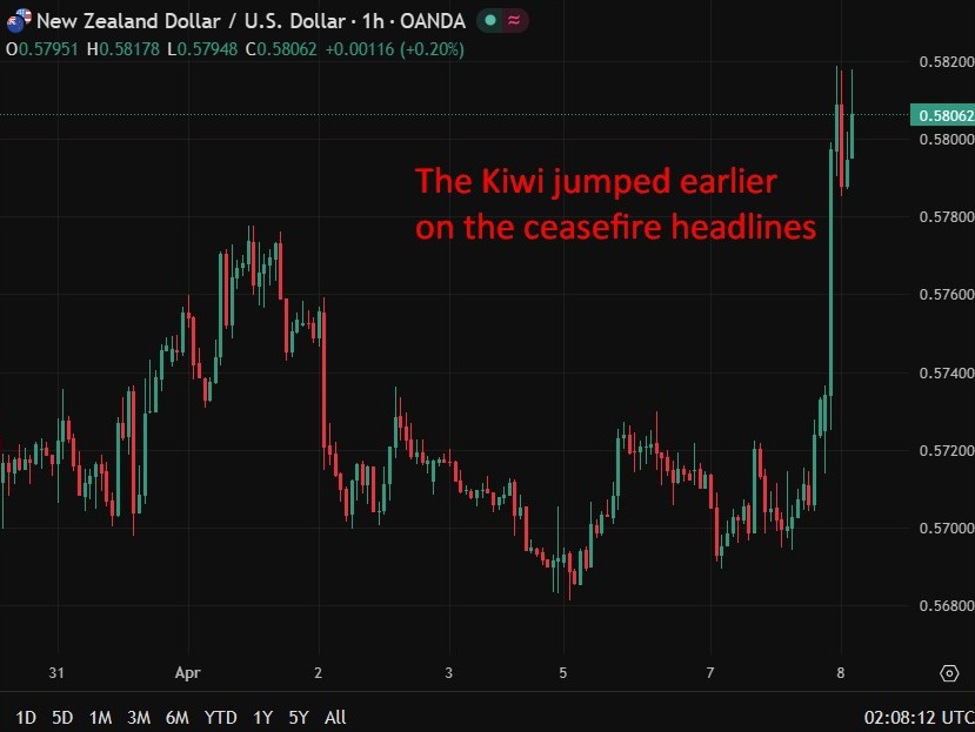
more to come- Full statement etc. here. Summery:RBNZ holds OCR at 2.25% amid Middle East-driven shock Inflation set to rise sharply, peaking around 4.2% near term Growth outlook weakens as energy costs hit demand Policy focused on medium-term inflation and expectations Financial conditions already tightening domestically Risks skewed to stagflation: higher inflation, weaker growth RBNZ signals readiness to hike if inflation persistsIn brief:Policy decision and contextThe Reserve Bank of New Zealand Monetary Policy Committee agreed to hold the Official Cash Rate at 2.25%, as escalating geopolitical developments have materially shifted the economic outlook. Since the February Monetary Policy Statement, the conflict in the Middle East has significantly altered the balance of risks, with policymakers now facing a more complex trade-off: near-term inflation is expected to rise sharply, while economic activity is set to weaken. The Committee emphasised it remains vigilant to broader inflation pressures and stands ready to act if needed to ensure inflation returns to target over the medium term.Global backdrop: supply shock and financial volatilityThe conflict has triggered a major global supply shock, disrupting energy flows through the Strait of Hormuz and pushing up oil and refined product prices. These developments are feeding through into global supply chains, lifting inflation while weighing on growth across many economies.Financial markets have reacted with heightened volatility. Equity markets have declined in several regions, bond yields have risen, and the US dollar has strengthened, reflecting expectations of weaker global growth and tighter financial conditions.Despite these pressures, most major central banks have so far opted to keep policy rates unchanged, mirroring the uncertainty surrounding the duration and impact of the shock.Global inflation and growth outlookGlobal inflation, which had been trending lower, is now expected to reaccelerate in the near term due to higher energy costs, while growth momentum weakens. The impact is particularly acute for energy-importing economies, including many of New Zealand’s key trading partners in Asia.However, outcomes are expected to vary across countries depending on starting conditions, fiscal responses, and economic resilience, suggesting divergent monetary policy paths ahead.Domestic inflation outlookIn New Zealand, inflation is already above target and set to rise further. Annual CPI stood at 3.1% in Q4 2025, and the RBNZ now expects inflation to increase to around 3.0% in Q1 2026 and 4.2% in Q2, driven largely by higher fuel costs and spillovers into transport, food and other energy-sensitive components. The outlook remains highly uncertain, hinging on the evolution of the conflict and the persistence of supply disruptions. While futures markets imply some easing in oil prices later this year, the Committee sees risks skewed to higher prices.Domestic economic activityEconomic growth was already fragile prior to the shock, with GDP rising just 0.2% in Q4 2025. Although early indicators suggested a modest recovery, the conflict is now expected to dampen activity in the near term.Higher fuel costs are eroding household purchasing power and compressing business margins, while uncertainty is weighing on investment decisions. Recent data and business feedback indicate slowing activity and declining confidence, with some firms already passing on higher costs through surcharges, while others struggle to do so.Inflation dynamics and policy focusThe Committee reiterated that its focus remains firmly on medium-term inflation. The key issue is whether higher energy costs feed into broader wage- and price-setting behaviour, potentially leading to persistent inflation.Short-term inflation expectations are rising, but the RBNZ expects second-round effects to be limited by weak demand and spare capacity in the economy. This contrasts with 2022, when strong demand amplified inflation pressures following earlier global shocks.Maintaining anchored inflation expectations near 2% is critical. If core inflation or wage growth accelerates materially, the Bank signalled it would respond decisively.Financial conditionsDomestic financial conditions have already tightened since February. Wholesale interest rates have risen, mortgage rates have increased modestly, and the New Zealand dollar has weakened, adding to imported inflation pressures while providing some support to exporters.Liquidity conditions in local markets have also contributed to upward pressure on yields, reinforcing the tightening impulse.Risk assessmentThe Committee highlighted significant uncertainty and a wide range of possible outcomes.On the inflation side, risks include more persistent supply disruptions and a broader shift in pricing behaviour, which could lift core inflation and inflation expectations.On the growth side, risks include a sharper downturn in household spending, rising unemployment, and constrained business activity, particularly if access to key inputs such as fuel or fertiliser is disrupted.The balance of risks is asymmetric, with the potential for both higher inflation and weaker growth—effectively a stagflationary mix.Policy outlook and forward guidanceThe Committee debated the timing and magnitude of any future policy response. A pre-emptive tightening could help anchor expectations and limit second-round effects, potentially reducing the need for more aggressive hikes later.However, acting too early risks exacerbating the downturn in activity and employment, particularly if the inflation shock proves temporary.Ultimately, the Committee judged that holding the OCR steady best balances these competing risks at this stage. It will continue to monitor incoming data closely and stands ready to act decisively if inflation expectations begin to drift. This article was written by Eamonn Sheridan at investinglive.com. 🔗 Source 💡 DMK Insight RBNZ’s decision to hold the OCR at 2.25% signals a cautious approach amid rising inflation pressures, particularly from Middle East tensions. With inflation expected to peak around 4.2%, traders should brace for potential volatility in the NZD as the central bank navigates a weakening growth outlook. Energy costs are likely to dampen demand, which could lead to stagflation risks. This scenario could pressure the RBNZ to adjust its policy sooner than anticipated, especially if inflation expectations continue to rise. Watch for key support levels in the NZD/USD pair; a break below recent lows could trigger further selling. Conversely, if inflation data surprises to the upside, expect a hawkish shift that could bolster the NZD. Keep an eye on upcoming economic indicators, particularly energy prices and inflation reports, as they’ll be crucial in shaping RBNZ’s future decisions and market sentiment. 📮 Takeaway Monitor NZD/USD closely; a break below recent support could signal further downside amid rising inflation and