
 Bitcoin
  Ethereum
  Tether
  XRP
XRP  BNB
BNB  USDC
USDC  Solana
  TRON
TRON  Lido Staked Ether
  Figure Heloc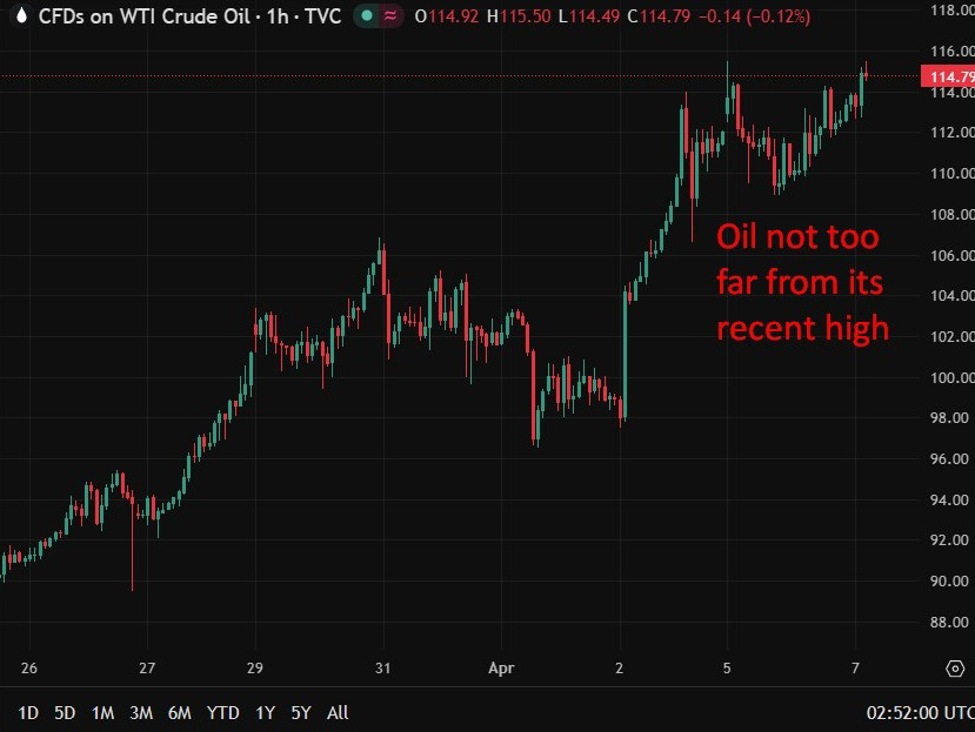
US signals fading patience on Iran deadline but keeps door open to last-minute deal.Summary:US doubts another deadline extension Iran’s response seen as tough but tactical White House views stance as negotiating posture Trump open to any deal outcome Military action may still be delayed if talks progress Situation remains finely balanced between escalation and diplomacyFresh commentary from US officials, cited by Axios, suggests rising uncertainty around the next phase of the US-Iran standoff, with the window for diplomacy narrowing but not yet closed.According to a US official, Washington has doubts about extending the current deadline again, signalling that patience within the administration may be wearing thin after repeated delays. This raises the risk that previously postponed military action could move back into focus if diplomatic progress stalls.At the same time, while the Iranian response to recent US proposals has been characterised as “tough”, the White House is interpreting this not as an outright rejection, but rather as a negotiating tactic aimed at extracting concessions. This distinction is important, as it suggests that backchannel engagement remains active and that both sides may still be probing for a workable compromise.US officials also indicated that President Trump is willing to accept a deal that can be reached, underscoring a pragmatic approach to negotiations. That said, there is lingering uncertainty over whether Tehran is prepared to finalise an agreement, particularly given the mixed signals seen in recent weeks, with Iran alternating between denying talks and acknowledging indirect communication through intermediaries.Crucially, the US is keeping optionality around military action. Officials noted that Trump could still delay any planned operation against Iran if there is a credible pathway toward an agreement. This reinforces the now-familiar dual-track strategy of maintaining pressure while leaving the door open for diplomacy.Overall, the latest messaging points to a finely balanced situation. While the tone suggests increasing urgency and some erosion of willingness to extend timelines, the presence of ongoing negotiations and conditional flexibility on military action indicates that a deal remains possible, albeit far from guaranteed. This article was written by Eamonn Sheridan at investinglive.com. 🔗 Source 💡 DMK Insight The US’s wavering stance on Iran’s deadline is a critical moment for traders: it could shift oil prices dramatically. As tensions rise, traders should keep an eye on crude oil futures, especially if military action becomes a real possibility. The market’s reaction to geopolitical events can be swift, and any escalation could push prices above key resistance levels. Currently, oil is sensitive to news; a spike in volatility is likely if negotiations break down. On the flip side, if a last-minute deal emerges, we could see a significant pullback in oil prices, potentially testing support levels. Watch for any updates from the White House, as they could trigger rapid market movements. In the broader context, this situation could also affect currencies tied to oil exports, like the Canadian dollar. If oil prices surge, CAD could strengthen against the USD. So, keep an eye on the CAD/USD pair as well. The next few days are crucial—monitor news closely for any shifts in the negotiation landscape. 📮 Takeaway Watch for updates on US-Iran negotiations; a breakdown could spike oil prices above resistance, while a deal may lead to a pullback.

Apple foldable iPhone faces delays as engineering issues hit test production phase
Engineering hurdles threaten to delay Apple’s foldable iPhone rollout as EVT issues emerge.Summary:Apple’s foldable iPhone facing engineering delays Issues arise during EVT (test production phase) Suppliers warned of possible schedule shifts April–May key window to resolve challenges Initial production targeted at 7–8M units Premium positioning limits early volumeApple’s long-anticipated entry into the foldable smartphone market is facing engineering hurdles that could delay its production timeline, according to sources cited by Nikkei Asia. The issues have surfaced during the engineering verification testing (EVT) phase, a critical stage in Apple’s multi-step product development process where design and manufacturability are rigorously validated before scaling up production.The challenges are described as more complex than initially expected, with suppliers reportedly alerted to the possibility of schedule adjustments. While the company continues to progress through its standard production pipeline, unresolved engineering constraints—not component shortages, are emerging as the primary bottleneck.The April to early May period is now viewed as a key window for Apple to resolve these issues. Failure to do so could push back mass production timelines and, in turn, delay shipments of what is expected to be one of the company’s most significant product innovations in recent years.Apple had been planning an initial production run of approximately 7–8 million foldable units, representing less than 10% of its broader new iPhone lineup for the 2026 cycle. This relatively modest volume reflects a deliberate strategy to position the foldable device as a premium offering, rather than a mass-market product at launch.The limited scale also suggests Apple is taking a cautious approach to entering the foldable segment, prioritising product quality and user experience over aggressive early adoption. However, the current engineering setbacks highlight the technical complexity of foldable hardware, particularly in areas such as durability, hinge design, and display reliability.Overall, while delays at this stage are not uncommon in Apple’s tightly controlled development process, the situation underscores the execution risks associated with bringing new form factors to market, especially in a segment where competitors have already established a foothold. This article was written by Eamonn Sheridan at investinglive.com. 🔗 Source 💡 DMK Insight Apple’s foldable iPhone delays could ripple through tech stocks and supply chains. The engineering issues during the EVT phase are a red flag, especially with a key production window approaching in April-May. If Apple can’t resolve these hurdles, it might impact not just their stock but also suppliers like Foxconn and component manufacturers. Traders should keep an eye on how this affects Apple’s stock price, currently at $79.40, and related tech stocks that could be influenced by this news. A delay could lead to a bearish sentiment in the tech sector, especially if investors start to question Apple’s ability to innovate. On the flip side, if Apple manages to overcome these challenges, it could lead to a surge in demand, especially given the premium positioning of the foldable iPhone. Watch for any updates from Apple or its suppliers, as these could be pivotal in shaping market sentiment. Key levels to monitor would be around $75 for support and $85 for resistance in Apple’s stock, which could indicate broader market reactions. 📮 Takeaway Watch for updates on Apple’s foldable iPhone production; key price levels are $75 support and $85 resistance for potential trading signals.

Iran's Kharg Island targeted with several strikes, Iran's Kashan railway bridge hit too
Iran’s Kharg Island targeted with several strikesStrike hits railway bridge in Iran’s Kashan killing twoIsrael: Completed a wave of attacks on Iran a short while ago This article was written by Giuseppe Dellamotta at investinglive.com. 🔗 Source 💡 DMK Insight Iran’s recent strikes could shake up oil markets, and here’s why: geopolitical tensions are rising. With Kharg Island being a crucial oil export hub, any disruption here can lead to immediate supply concerns. Traders should keep an eye on Brent crude prices, which often react sharply to Middle Eastern conflicts. If tensions escalate, we could see a spike in volatility, especially if prices breach key resistance levels. Additionally, the ripple effects might impact currencies tied to oil exports, like the Russian ruble or the Canadian dollar. Look for any news on retaliatory actions or further military engagements, as these could signal a shift in market sentiment. Also, keep an eye on the daily chart for Brent; a close above a certain threshold could trigger bullish momentum, while a failure to hold could lead to a sell-off. The real story is how quickly these events can change market dynamics, so stay alert for updates. 📮 Takeaway Watch Brent crude closely; any escalation in Iran could push prices above key resistance levels, triggering significant market reactions.
investingLive Asia-Pacific FX news wrap: Oil ticked higher
Apple foldable iPhone faces delays as engineering issues hit test production phaseUS doubts Iran deadline extension as tough response seen as negotiating tactic (Axios)New Zealand Commodity prices jump. Middle East conflict drives near-record ANZ index surgeAustralia spending holds firm as inflation jumps and job ads fallYuan seen strengthening to 6.8 as China resilience offsets seasonal weaknessSpaceX targets record IPO with huge retail allocation and June roadshowWSJ: Hopes fade for deal with Iran ahead of Tuesday-night deadlinePBOC sets USD/ CNY reference rate for today at 6.8854 (vs. estimate at 6.8773)Anthropic plans $200m AI venture with private equity to drive adoptionExplosion & fire near Panama Canal entrance sparks scrutiny. Shipping routes stay on edgeJapanese Household Spending February 2026 softens m/m and falls y/yAustralia services PMI falls into contraction as costs surge, demand weakensSaudi defence ministry says it has intercepted and destroyed 7 ballistic missiles. Oil up.Blue Owl slump deepens as redemption pressures expose cracks in private credit.HSBC sees equity buy signal but warns 4.5% yields pose broad market riskICYMI: Fed’s Goolsbee, Hammack warn inflation risks rising as energy shock bitesVia CNN: Israel prepares Iran energy strike plans as Trump decision looms on next stepsinvestingLive Americas FX news wrap 6 Apr:Trump’s ultimatum to Iran sparks market turmoilMorgan Stanley says US stock correction largely done. Rates the final hurdle before higherMajor US stock indices close today with gains to start the new trading weekAt a glance:Oil pushes higher toward USD 115/bbl as Trump deadline looms • Middle East escalation intensifies with strikes across Iran, Saudi, Israel • Missile activity hits key Saudi industrial hub at Jubail • US signals limited appetite for further deadline extensions • Iran response seen as “tough” but still a negotiating tactic • Pentagon briefing cancelled, adding to uncertainty • USD firms modestly; FX ranges relatively containedOil extended its gains, with WTI crude futures pushing above USD 115/bbl as markets moved closer to President Trump’s Tuesday evening deadline on Iran, while geopolitical tensions continued to escalate across the region.Overnight developments pointed to a broadening conflict footprint. Explosions were reported in Bahrain, while sirens sounded in Saudi Arabia’s eastern province. Iranian sources flagged renewed attacks on infrastructure, including an airport in Kashan, while Israel reportedly approved an updated list of Iranian energy and infrastructure targets as contingency planning should diplomacy fail.The most significant development appeared to be strikes on Saudi Arabia’s Jubail industrial hub, a critical centre for petrochemicals and energy production that accounts for roughly 7% of the Kingdom’s GDP. While Saudi authorities said they intercepted seven ballistic missiles targeting the eastern region, debris reportedly fell near energy facilities and damage assessments remain ongoing. Videos suggest it was more than debris, with strikes visible. The strike underscores a notable escalation, given the relative scarcity of successful attacks on core Saudi infrastructure compared with other Gulf states.Elsewhere, regional spillover risks continued to build. Reports indicated US-linked targets were struck in Kuwait and Iraq, including a drone strike on a US base in Baghdad, while Israel activated air raid sirens across multiple southern locations following warnings of further Iranian missile launches.On the policy front, the cancellation of a scheduled Pentagon briefing featuring Defense Secretary Pete Hegseth and Joint Chiefs Chairman Dan Caine added to the sense of uncertainty around next steps. Meanwhile, Axios reported that US officials are increasingly doubtful about extending the current deadline again, suggesting patience within the administration is fading. However, Axios continued, the US continues to interpret Iran’s “tough” response as a negotiating tactic rather than a rejection, indicating that backchannel discussions remain active. Importantly, Washington retains flexibility, with the potential to delay military action if a credible path to a deal emerges.Away from geopolitics, Japan’s household spending data disappointed on an annual basis, while China’s yuan strengthened to its firmest level in nearly three years. Broader FX moves were relatively contained, with the USD edging higher against major peers. Asia-Pacific equites edged slightly positive (Nikkei down, KOSPI up, China up).Overall, markets remain tightly anchored to geopolitical developments, with oil leading the price action as the deadline approaches.History is on the side of the TACO. Will this time be different? This article was written by Eamonn Sheridan at investinglive.com. 🔗 Source 💡 DMK Insight Apple’s foldable iPhone delays could shake up tech stocks and supply chains. Engineering issues in production might not just impact Apple; they could ripple through suppliers and competitors, affecting stock prices across the tech sector. Traders should keep an eye on how this news influences Apple’s stock performance in the coming weeks, especially if it breaks below key support levels. Additionally, the broader market context, including inflation concerns and commodity price surges, could create volatility. If inflation continues to rise alongside job ads falling, consumer spending could take a hit, impacting tech demand. Watch for how these dynamics play out in tech earnings reports next month, as they could provide insights into consumer sentiment and spending trends. On the flip side, if Apple manages to resolve these issues quickly, it could lead to a buying opportunity, especially if the stock rebounds from any dips. Keep an eye on the $150 level for potential support or resistance, as that could dictate short-term trading strategies. 📮 Takeaway Monitor Apple’s stock around the $150 level for potential trading opportunities as foldable iPhone delays unfold.
Oil prices continue to ramp higher as market optimism fades again
It’s been the case for a few weeks now. We start the week with some sense of renewed optimism only for it to be dashed through the coming days and then markets choosing to de-risk into the weekend. Will this week be the same? There’s certainly an air of familiarity to it.US president Trump gave Iran a deadline to later today before all hell breaks loose. However, is this all just another empty threat though? We shall see. From overnight and earlier:Trump: Tuesday Iran deadline is ‘final deadline’Trump press conference: The entire country can be taken out in one nightIran rejects ceasefire in reply to US via Pakistan, wants permanent end to warIsrael prepares Iran energy strike plans as Trump decision looms on next stepsAs the deadline draws closer to an end, markets are getting anxious and angsty again now. That especially as Iran remains defiant, at least on official channels, that they won’t be conceding to Trump’s ceasefire proposal.Heading into European trading, oil prices are pushing fresh one-month highs while risk trades are slipping on the day. WTI crude is up over 3% to above $116 now, its highest since the spike on 9 March. Meanwhile, S&P 500 futures are down 0.5% as the bounce in the past week might start to come undone.As we look to the day ahead, nothing matters more than what will come next on the US-Iran conflict.But the way I see things going, it will be tough for markets to really feel optimistic in the big picture. If Trump really escalates the geopolitical conflict, it will increase the uncertainty and timeline on the war coming to an end. That is unless somehow he incapacitates Iran to the point where the war is over, by some way or miracle.So unless that happens, it’s a negative for risk and it doesn’t do anything to alleviate the situation around the Strait of Hormuz.And even if whatever military intervention he is planning mainly reaffirms the current status quo, kicking the can down the road is not a solution either. This article was written by Justin Low at investinglive.com. 🔗 Source 💡 DMK Insight Traders are feeling déjà vu as optimism fades into the weekend—here’s what to watch. The pattern of starting the week with hope only to see it evaporate is becoming a trend. This week, keep an eye on key economic indicators and sentiment shifts that could either reinforce or challenge this cycle. If the market continues to de-risk, it could signal a broader bearish trend, especially if we see significant sell-offs in major assets. Watch for any changes in trading volume or volatility, as these could hint at whether this week will break the cycle or follow suit. On the flip side, if there’s a surprise positive catalyst—like unexpected economic data or a shift in central bank policy—it could provide a jolt to the market. Traders should monitor the upcoming economic releases closely, particularly those related to inflation or employment, as they could sway sentiment dramatically. The real story is whether this week will finally break the cycle of disappointment or simply reinforce it. 📮 Takeaway Watch for economic indicators this week; a shift in sentiment could either break the cycle of de-risking or reinforce it, impacting major asset prices.
ECB policymaker Radev: It is too early to say if a rate hike is needed for this month
The likelihood of adverse inflation scenario is increasingInflation expectations may shift faster due to memory of price surge after the Russia-Ukraine conflictECB must be ready to act if signs of inflation persistence emergeBut it is too early to say if a rate hike is needed on 30 April for nowInflation expectations are well anchored for the time being, second-round impact not yet visibleThe comments lean on the more dovish side as they point towards favouring optionality and flexibility, rather than needing to be proactive about the situation. As things stand, traders are still pricing in ~53% odds of the ECB raising key policy rates at the end of this month.The mood certainly isn’t helped as oil prices continue to ramp higher, with little optimism that the US-Iran conflict will thaw in the coming week(s). This article was written by Justin Low at investinglive.com. 🔗 Source 💡 DMK Insight Inflation fears are creeping back, and here’s why that matters for traders right now: The recent uptick in inflation expectations, fueled by memories of the price surges post-Russia-Ukraine conflict, could lead to volatility in both the forex and crypto markets. Traders should be on high alert for any signals from the ECB regarding rate hikes, especially with the next meeting on April 30. If the ECB hints at a more aggressive stance, we could see significant movements in the euro and related assets. For instance, a rate hike could strengthen the euro against the dollar, impacting forex pairs like EUR/USD. Conversely, if inflation persists without action, it might lead to a risk-off sentiment, pushing traders towards safe-haven assets. But here’s the flip side: if the ECB remains dovish, it could fuel further bullish sentiment in risk assets, including cryptocurrencies. Watch for key inflation data releases leading up to the ECB meeting, as they could provide clues on market direction. Keep an eye on the 1.10 level for EUR/USD; a break below could signal bearish sentiment, while a bounce could indicate a bullish reversal. 📮 Takeaway Monitor inflation data closely ahead of the April 30 ECB meeting; a shift in policy could impact EUR/USD significantly, especially around the 1.10 level.

FX option expiries for 7 April 10am New York cut
There are just a couple of expiries to take note of on the day, as highlighted in bold below.They are for EUR/USD at the 1.1500 and 1.1525 levels. They don’t tie to any technical significance but could play some role in terms of limiting price action in the session ahead, depending on the market mood.For now, risk optimism is starting to fade once again as we near the deadline of US president Trump’s ultimatum towards Iran. He threatened that all hell will break loose if Iran fails to agree to ceasefire terms and reopen the Strait of Hormuz. And for now, Tehran remains defiant in holding their ground and not ceding any position.So, the clock continues to tick away.Circling back to the expiries, the market mood might keep the dollar slightly underpinned especially if broader markets react more nervously and anxiously in the day ahead. The expiries could help to hold downside price action a little, with more of a focus on the 1.1500 mark in my view. We’ve ventured lower towards the figure level since Thursday last week but didn’t reach a point of testing it. So, the expiries might offer some added defensive layer in European morning trade.But again, it all hinges on risk sentiment first and foremost. And perhaps more importantly, if we do hear any major headlines crossing that will drive market optimism/pessimism on the US-Iran conflict. That is still the key focus as we get into the new week.For more information on how to use this data, you may refer to this post here.Head on over to investingLive (formerly ForexLive) to get in on the know! This article was written by Justin Low at investinglive.com. 🔗 Source 💡 DMK Insight With EUR/USD expiries at 1.1500 and 1.1525, traders should brace for potential price constraints today. While these levels lack technical significance, they can still influence market behavior, especially as traders position themselves ahead of these expirations. Watch for volatility around these points, as they could act as psychological barriers. If the pair approaches these levels, expect some hesitation or consolidation, which could lead to breakout opportunities if either level is decisively breached. Keep an eye on broader market sentiment and economic indicators that could push EUR/USD beyond these expiries, particularly any news from the ECB or US economic data releases that might shift trader focus. The flip side is that if the market remains stagnant, these expiries could lead to a lack of momentum, making it harder for traders to find clear entry points. So, monitor these levels closely and be ready to react if price action starts to show signs of breaking out or reversing around them. 📮 Takeaway Watch EUR/USD closely around the 1.1500 and 1.1525 levels today; they could limit price action or trigger volatility if breached.
Gold tracks more sideways awaiting further US-Iran developments
The market mood might be a tad bit more pessimistic today but we’re not quite in a full risk-off wave. US futures are down but major currencies aren’t really doing much while precious metals and the bond market are seeing light changes for the most part. Of note, gold is down just 0.1% as it currently keeps around $4,640 levels on the day.That fits with the range around $4,600 to $4,700 still, since the drop on Thursday last week. As US-Iran tensions remain, it is keeping traders on edge but buyers look to be trying to hold near-term control in the precious metal.They defended the 100-hour moving average (red line) on a few occasions already since last week. But so far today, we are seeing a bit of a crack in the armor. That as price action now drops a little below the key technical level, seen near $4,660 currently. Keep below that and the near-term bias holds more neutral instead.For now, sellers are also looking to try and stay in the game to push their own agenda. And that not only on the near-term chart above, but also on the daily chart seen below:The steep drop in gold at the end of last month saw a defense put up at the 200-day moving average (blue line). That led to a solid bounce back to test the 100-day moving average (red line), in which buyers momentarily claimed a break. But as all hell looks to break loose tomorrow, traders are nervous and we’re seeing gold fall back slightly towards the key level.That is seen around $4,658 now and holding below that will keep buyers in check at least. That as sellers have a key technical level to lean on in trying to make any further moves this week.All eyes are now on the headlines and what comes next on the US-Iran conflict. A lot of questions still remain.Is there going to be a ceasefire of sorts or a further extension to try and keep the peace?If not, will US president Trump really follow through on his threats and blast Iran?If so, how will Iran respond and will Tehran still be able to fight back?More importantly, what happens next to the Strait of Hormuz? Is it going to stay in de facto closure? For how long? This article was written by Justin Low at investinglive.com. 🔗 Source 💡 DMK Insight Market sentiment is shifting, but it’s not panic time yet. US futures are showing a slight downturn, hinting at a cautious mood among investors. However, major currencies are holding steady, indicating that traders might be waiting for clearer signals before making significant moves. Precious metals like gold are experiencing minor fluctuations, which could suggest that safe-haven assets are still in play but not in high demand. This mixed sentiment could lead to a consolidation phase in the forex market, where traders might want to watch for breakouts or reversals. If you’re trading currencies, keep an eye on key levels—especially if gold starts to show stronger movement. A breakout above recent highs could signal a shift in risk appetite, while a drop could reinforce the current cautious stance. Watch for any economic data releases that could sway sentiment, as they might provide the catalyst needed for a more decisive market direction. 📮 Takeaway Monitor gold’s price action closely; a breakout above recent highs could signal a shift in market sentiment and trading opportunities.
Spain March services PMI 53.3 vs 50.5 expected
Prior 51.9Well, don’t let the headline estimate fool you. Spain’s services sector increased solidly last month owing to a further rise in new business received by companies. However, new order growth softened to its lowest level in nine months as the latest Middle East developments start to give rise to uncertainty. Of note, new export sales declined again, whilst confidence in the outlook was the lowest since September 2023.Besides that, higher energy prices are also starting to be a factor as overall operating expenses rose at a rate not seen since April 2023. That comes as input price inflation surges and is going to become more and more of a problem in the months ahead.HCOB notes that:“Spain’s service sector expanded at a solid rate in March, with growth picking up on February’s low. However, despite this improvement, when combined with a downturn in manufacturing output in March, Spain’s economy has experienced a weaker growth profile overall in the first quarter of 2026. Expect therefore official data on GDP for early 2026 to show a slower rate of expansion than the 0.8% quarterly gain reported for the fourth quarter of 2025. “How growth will develop in the coming months will be very much dependent on the duration of the war in the Middle East. The conflict has already led to a huge degree of business and consumer uncertainty, with panellists noting that services new business growth has softened, and export business, already under strain before the start of the war, has deteriorated sharply. “Moreover, services firms are seeing big spikes in their energy and fuel bills, leading to the strongest increase in overall input costs for nearly three years. With output charges also rising markedly, firms are understandably worried about the impact that high prices will have on spending in the near-term – and therefore their business performance over the coming months.” This article was written by Justin Low at investinglive.com. 🔗 Source 💡 DMK Insight Spain’s services sector growth is slowing, and here’s why that matters for traders: While the headline figure shows solid growth, the dip in new order growth to a nine-month low signals potential headwinds. This could impact the broader European economic outlook, which is crucial for traders in forex and equities. If Spain’s services struggle, it might lead to a ripple effect across the Eurozone, affecting currencies like the euro and assets tied to European economic performance. Traders should keep an eye on the EUR/USD pair, especially if it approaches key support levels. The market’s reaction to geopolitical tensions, particularly in the Middle East, could also influence risk sentiment, leading to volatility in related assets like commodities and safe-haven currencies. Here’s the thing: while the immediate impact might seem contained, the underlying weakness could signal a broader economic slowdown. If traders see further declines in service sector metrics, it could prompt a reassessment of positions in European equities and currencies. Watch for upcoming economic data releases for more clues on this trend. 📮 Takeaway Monitor the EUR/USD pair closely; a break below key support levels could signal broader economic concerns stemming from Spain’s slowing services sector.

Italy March services PMI 48.8 vs 50.9 expected
Prior 52.3Composite PMI 49.2 vs 52.1 priorKey findings:Fresh declines in output and new business Highest rate of cost inflation in over three years, driving a steeper hike in charges Confidence among weakest in more than five yearsComment:Eleanor Dennison, Economist at S&P Global Market Intelligence: “The Italian services economy showed signs of fragility in March, as challenging external conditions due to war in the Middle East weighed on demand and activity. The sector contracted at the strongest pace in nearly two and-a-half years, marking just the fourth monthly fall in output seen over this period. “Hikes to fuel, energy, raw material as well as wage costs placed additional pressure on operating expenses, with the rate of input price inflation soaring to its highest in over three years. With companies pushed to raise their own charges to protect margins, the outlook for future demand appears more difficult to navigate. “Although at the top level, March appeared to be a challenging month for Italian service sector firms, there were some glimmers of resilience beneath the surface. Even against a backdrop of uncertainty, growth was recorded across two of the five monitored sectors.” This article was written by Giuseppe Dellamotta at investinglive.com. 🔗 Source 💡 DMK Insight The latest Composite PMI reading of 49.2 signals contraction in the Italian economy, and here’s why that’s crucial for traders: With output and new business both declining, the economic landscape is shifting, and the highest cost inflation in over three years is likely to squeeze margins further. This could lead to a tightening of monetary policy, impacting the euro and related assets. Traders should keep an eye on the euro against the dollar, especially if it approaches key support levels. If the euro breaks below these levels, we could see increased volatility across forex pairs. Additionally, the weak confidence reading suggests that consumer sentiment may decline, which could ripple through to the broader European markets, affecting equities and commodities as well. But here’s the flip side: if the ECB decides to maintain a dovish stance despite these indicators, it could provide a temporary boost to risk assets. Watch for any statements from ECB officials in the coming weeks, as they could shift market sentiment significantly. Overall, the immediate focus should be on the euro’s performance against the dollar, particularly around key technical levels that traders should monitor closely. 📮 Takeaway Keep an eye on the euro against the dollar; a break below key support could trigger increased volatility in forex markets.