
 Bitcoin
  Ethereum
  Tether
  BNB
BNB  XRP
XRP  USDC
USDC  Solana
  TRON
TRON  Lido Staked Ether
  Figure Heloc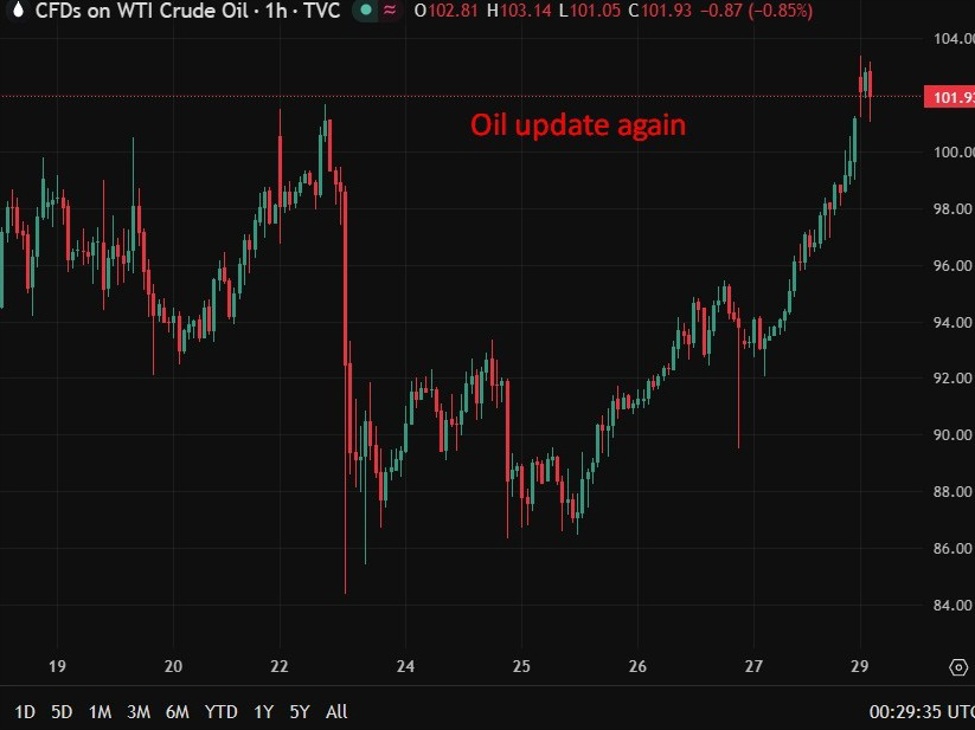
I posted the news from the FT here:Trump says US could take the oil in Iran (via Financial Times)In summary:U.S. President Donald Trump signalled a mix of escalation risk and cautious optimism on diplomacy in comments reported by the Financial Times. He suggested the United States could seize Iranian oil assets, including the key export hub at Kharg Island, describing it as an operation that could be carried out “very easily” and claiming Iran has limited defences there. Trump framed control of Iran’s oil as a preferred strategic outcome, though acknowledged domestic pushback against such a move.At the same time, he indicated that indirect negotiations with Iran—conducted via intermediaries—are progressing, adding that a deal could be reached relatively quickly. This highlights the ongoing dual-track approach of military pressure alongside diplomacy.Trump also noted that Iran has allowed a greater number of Pakistan-flagged oil tankers to transit the Strait of Hormuz, with the figure doubling to 20. This suggests some limited easing in maritime flows, even as broader tensions persist.Overall, the comments underscore a highly fluid situation, where aggressive military options remain on the table, but are being weighed alongside diplomatic efforts that could potentially deliver a faster resolution.-At the same time the Wall Street Journal reported on Trump weighing a direct military operation to seize Iran’s enriched uranium, according to U.S. officials.Trump is considering a high-risk military operation to seize Iran’s enriched uranium, a move that could significantly escalate the conflict. The mission would target key nuclear sites such as Isfahan and Natanz and could require U.S. forces on the ground for several days, exposing them to retaliation and extending the war timeline.While no decision has been made, the uranium remains central to Washington’s objective of preventing Iran from developing nuclear weapons. The U.S. is simultaneously pursuing a diplomatic route, urging Iran to hand over the material via intermediaries, though Tehran has resisted.The situation presents a clear trade-off: a forced seizure could decisively neutralise nuclear risks but at high operational and escalation cost, while a negotiated solution would avoid conflict expansion but remains uncertain. -This all comes after another tense weekend, Via Reuters: Electricity has been cut in parts of the Iranian capital Tehran and in Alborz province after attacks on the area’s infrastructure, Iran’s state media cites the country’s ministry of energy as saying. Shrapnel hit a part of the electricity grid in Alborz province, causing power to be cut in several areas of Tehran and the city of Karaj. Authorities are working on reinstating it, state media adds.-I am thinking that talk on Kharg Island is a distraction from the real goal, controlling the Strait of Hormuz. Kharg Island is basically storage and shipping. By taking it Trump would get the oil currently there, but thats about it. And of course make it much difficult for Iran to export oil (which may be a goal, sure). This article was written by Eamonn Sheridan at investinglive.com. 🔗 Source 💡 DMK Insight Trump’s comments on potentially seizing Iranian oil could shake up energy markets significantly. Escalation risks in the Middle East often lead to volatility in oil prices, and traders should be on high alert. If the U.S. moves forward with such actions, we could see a spike in crude oil prices, impacting not just oil futures but also related assets like energy stocks and ETFs. Keep an eye on the $80 per barrel level for Brent crude; a break above could trigger a wave of buying. On the flip side, if diplomatic efforts succeed, we might see a pullback in oil prices, which could create a buying opportunity for those looking to enter long positions. Watch for any official announcements or developments in the coming days, as these could provide clearer signals on market direction. Also, monitor the geopolitical sentiment as it can shift rapidly, affecting not just oil but broader market indices as well. 📮 Takeaway Keep an eye on Brent crude around $80; any escalation could push prices higher, while successful diplomacy might create buying opportunities.
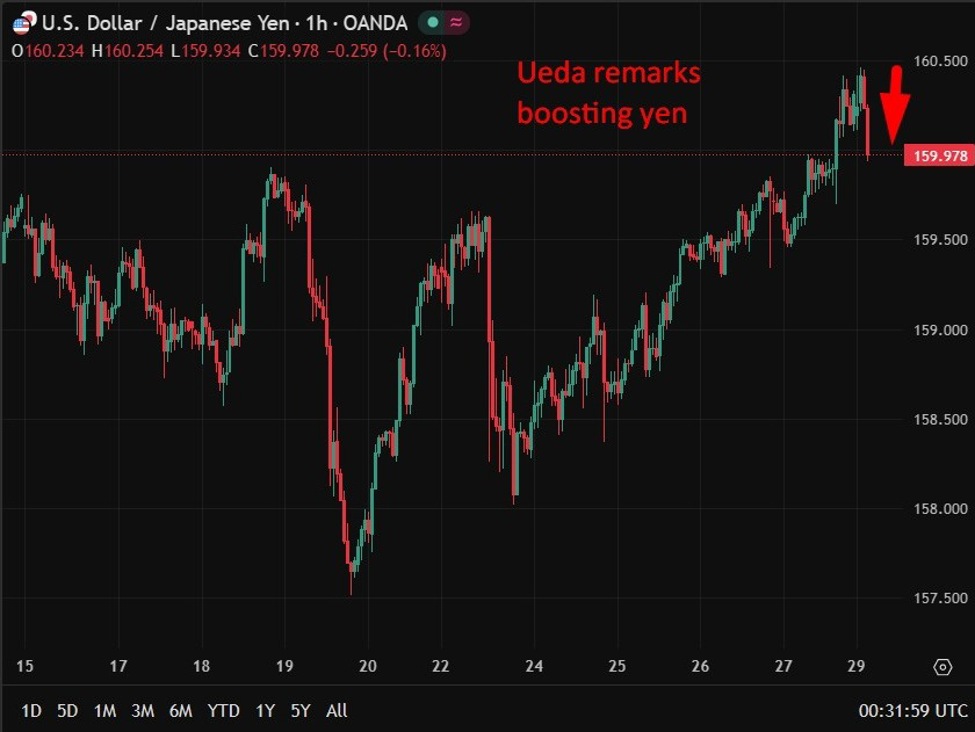
Bank of Japan Governor Ueda says will closely watch FX moves (USD/JPY drops)
BoJ Governor Ueda emphasised the growing impact of FX on inflation and policy, reinforcing that currency moves are now a key input into decision-making. While not verbal intervention, the comments supported the yen by signalling increased sensitivity to FX-driven inflation.Summary:Bank of Japan Governor Kazuo Ueda highlighted FX as a key driver of inflation and economic outcomes. Stressed the BoJ will closely monitor currency moves and factor them into policy decisions. Noted FX impact is rising as firms become more willing to raise prices and wages. Comments helped strengthen the yen, despite no explicit intervention warning. Reinforces view FX is now part of the BoJ reaction function, not just a background variable.Bank of Japan Governor Kazuo Ueda underscored the growing importance of currency movements in shaping Japan’s inflation outlook, with remarks that appear to have supported the yen despite stopping short of explicit verbal intervention.Ueda said foreign exchange moves are among the factors that have a “huge impact” on Japan’s economy and prices, adding that the central bank will closely monitor developments in currency markets. While such comments are broadly consistent with previous communication, the emphasis on FX comes at a time when exchange rate volatility is increasingly feeding into domestic inflation dynamics.A key shift highlighted by Ueda is the changing behaviour of firms. As companies become more willing to raise wages and pass on higher costs, fluctuations in the yen are having a more direct and amplified impact on prices. This suggests that FX is no longer just influencing import costs at the margin, but is increasingly shaping underlying inflation through expectations and pricing behaviour.Ueda also noted that currency movements can affect inflation expectations, reinforcing the idea that exchange rates are becoming embedded in the Bank of Japan’s policy framework. The central bank will assess how FX developments influence the likelihood of achieving its growth and inflation forecasts, as well as the balance of risks around its 2% target.Importantly, the governor stopped short of issuing any direct warning about excessive currency moves or signalling concern about specific levels, meaning the remarks do not constitute formal verbal intervention. However, the tone suggests a subtle shift toward greater sensitivity to yen weakness, particularly given its inflationary implications.Ueda added that long-term interest rates are moving in line with market expectations for growth, inflation and policy, and indicated that a gradual and appropriate pace of short-term rate hikes should help maintain stability across the yield curve.For markets, the takeaway is nuanced. While not an explicit attempt to influence the currency, the comments reinforce that FX is now firmly part of the BoJ’s reaction function. That alone can have a stabilising effect on the yen, particularly in an environment where investors are testing central bank tolerance for currency-driven inflation pressures. This article was written by Eamonn Sheridan at investinglive.com. 🔗 Source 💡 DMK Insight Ueda’s comments on FX impact are a game changer for yen traders right now. By acknowledging the influence of currency fluctuations on inflation, the Bank of Japan is signaling a shift in its policy framework. This could lead to increased volatility in the yen as traders reassess their positions. If the yen strengthens, we might see a ripple effect on related assets, particularly Japanese equities and commodities priced in yen. Watch for key levels around recent highs and lows, as these will likely dictate short-term trading strategies. The market’s reaction to Ueda’s remarks could also set the stage for upcoming economic data releases, making this a pivotal moment for both day and swing traders. On the flip side, if the yen fails to gain traction despite these comments, it could indicate deeper issues within the Japanese economy that traders need to consider. Keep an eye on the USD/JPY pair, particularly if it approaches resistance levels that could trigger profit-taking or further selling pressure. Immediate focus should be on how the market reacts in the next few sessions, as this could shape sentiment heading into the next BoJ meeting. 📮 Takeaway Monitor USD/JPY closely; a break above recent resistance could signal further yen weakness, while a failure to strengthen may reveal deeper economic concerns.
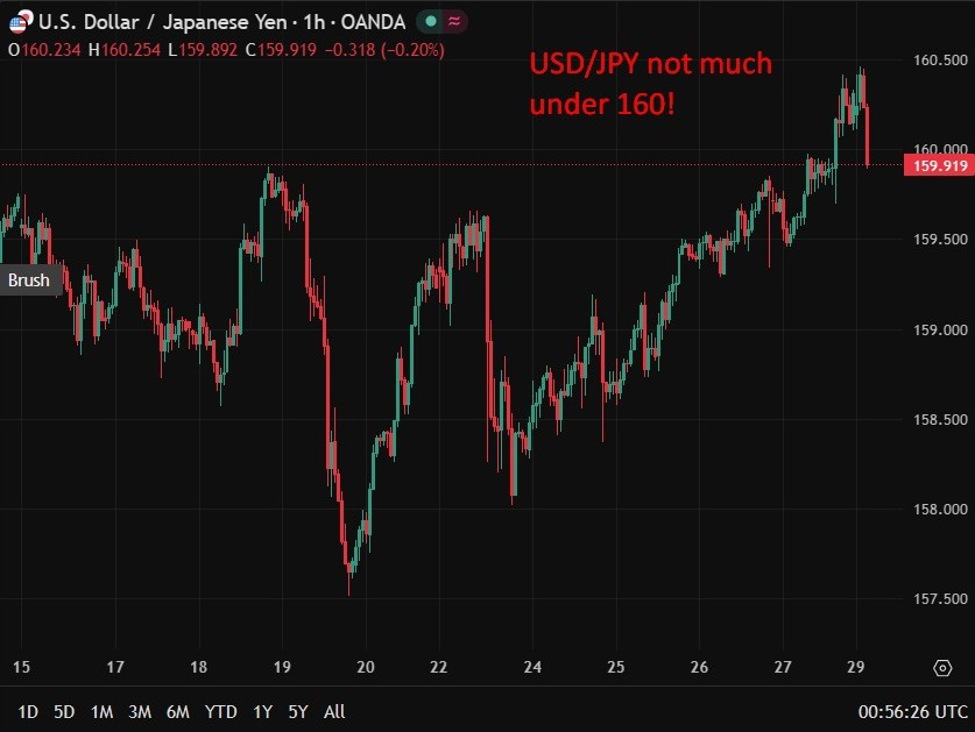
Japan signals readiness for FX intervention. Yen weakened past 160, has since had a bounce
Japan has signalled a higher likelihood of FX intervention, with Mimura’s use of “decisive” marking a clear escalation in rhetoric. Combined with Ueda’s earlier comments, authorities are showing increasing sensitivity to yen weakness.Summary:Japan’s FX chief Atsushi Mimura warns authorities are ready to take “decisive” action if speculative moves persist. Language seen as the strongest intervention signal since July 2024 yen-buying operations. Comments come after USD/JPY pushed through 160, triggering renewed concern. Follows earlier remarks from Kazuo Ueda that helped push USD/JPY lower. Combined messaging suggests policy + intervention sensitivity to yen weakness is rising.Japanese authorities have issued their strongest signal yet that they are prepared to intervene in currency markets, with Vice Finance Minister for International Affairs Atsushi Mimura warning that “decisive” action may be taken if speculative moves in the yen continue.Mimura’s remarks came after the yen weakened beyond the 160 level against the U.S. dollar, its softest since mid-2024 when authorities last stepped in to support the currency. He noted that speculative activity appears to be increasing not only in foreign exchange markets but also in crude oil futures, raising concerns about disorderly price action.The use of the word “decisive” is particularly significant. While Finance Minister Satsuki Katayama had used similar language in recent weeks, markets had been waiting for confirmation from Mimura, who is traditionally more cautious. His adoption of the term is widely interpreted by traders as a clear signal that intervention, most likely yen-buying, is actively being considered.Messaging from Bank of Japan Governor Kazuo Ueda today emphasised the growing importance of exchange rate movements for inflation and policy. While Ueda stopped short of verbal intervention, his remarks contributed to a pullback in USD/JPY, highlighting the market’s sensitivity to any shift in tone from Japanese officials.Taken together, the messaging from both fiscal and monetary authorities suggests a coordinated increase in vigilance toward currency weakness. The focus is not necessarily on specific levels, but rather on the pace and nature of moves—particularly those driven by speculative positioning.For policymakers, the concern is that excessive yen depreciation could amplify inflation through higher import costs, especially energy, and destabilise expectations. This is particularly relevant in the current environment, where rising global oil prices are already feeding into domestic price pressures.For markets, the implications are clear. The probability of intervention has risen meaningfully, and the threshold for action appears lower if volatility accelerates. While no immediate move is guaranteed, the shift in language suggests that authorities are increasingly uncomfortable with current currency dynamics. This article was written by Eamonn Sheridan at investinglive.com. 🔗 Source 💡 DMK Insight Japan’s FX intervention talk just got serious, and here’s why that matters: The use of the term “decisive” by FX chief Atsushi Mimura signals a shift in the Bank of Japan’s (BoJ) approach to the yen’s weakness. This heightened rhetoric suggests that if the yen continues to weaken against the dollar, we could see immediate market reactions. Traders need to keep an eye on the USD/JPY pair, especially if it approaches key psychological levels. A breach of recent highs could trigger intervention, leading to volatility in both forex and related markets. But it’s not just about the yen. If Japan intervenes, it could ripple through global markets, affecting risk sentiment and potentially impacting commodities and equities. Traders should also monitor Ueda’s comments for any hints on monetary policy shifts that could accompany intervention. Watch for USD/JPY to test levels around 150; a decisive move above could prompt swift action from the BoJ, while a reversal could signal a buying opportunity for the yen. Stay alert for any updates from the BoJ in the coming days, as they could dictate short-term trading strategies. 📮 Takeaway Watch USD/JPY closely; a move above 150 could trigger BoJ intervention, impacting forex and broader markets.
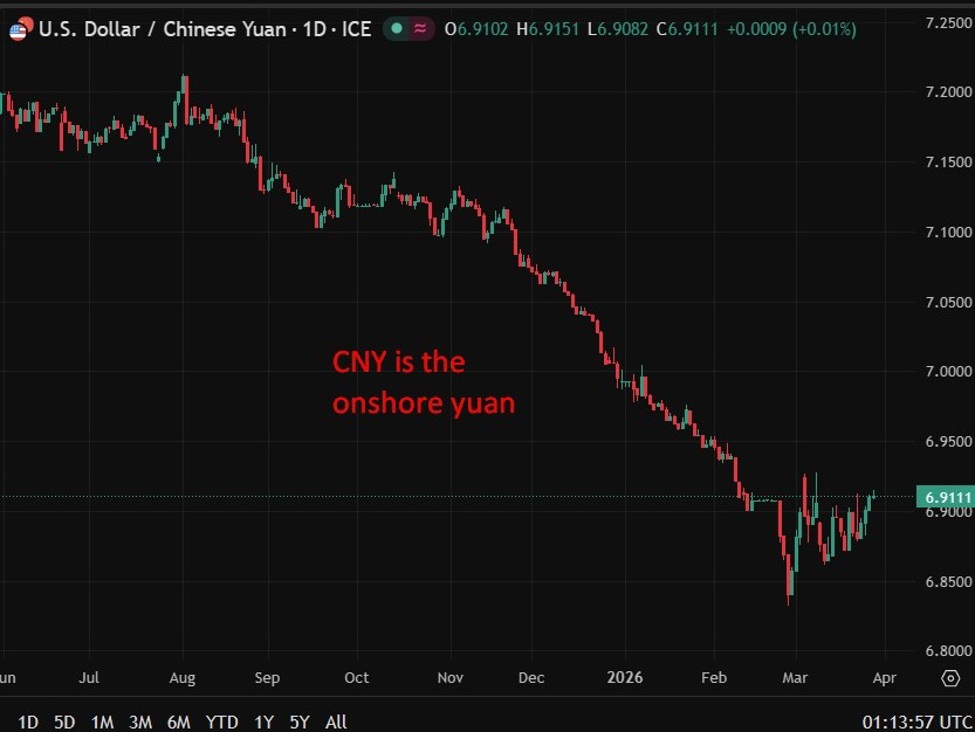
PBOC sets USD/ CNY reference rate for today at 6.9223 (expected was 6.9205)
China operates a managed floating exchange rate system, under which the renminbi (yuan) is allowed to trade within a prescribed band around a central reference rate, or midpoint, set each trading day by the PBOC. The current trading band permits the currency to move plus or minus 2% from the official midpoint during onshore trading hours. Each morning, the PBOC determines the midpoint based on a range of inputs. These include the previous day’s closing price, movements in major currencies, particularly the US dollar, broader international FX conditions, and domestic economic considerations such as capital flows, growth momentum and financial stability objectives. The midpoint is not a purely mechanical calculation, allowing policymakers discretion to guide market expectations. Once the midpoint is announced, onshore USD/CNY is free to trade within the allowable band. If market pressures push the yuan toward either edge of that range, the central bank may step in to smooth volatility. Intervention can take the form of direct buying or selling of yuan, adjustments to liquidity conditions, or guidance through state-owned banks. As a result, the daily fixing is often interpreted as a policy signal rather than just a technical reference point. A stronger-than-expected CNY midpoint is typically read as a sign the PBOC is leaning against depreciation pressure, while a weaker fixing for the CNY can indicate tolerance for a softer currency, often in response to dollar strength or domestic economic headwinds.In periods of heightened global volatility, such as shifts in US rate expectations, trade tensions or capital flow pressures, the fixing takes on added significance. For investors, it provides insight into Beijing’s currency priorities, balancing competitiveness, capital stability and financial market confidence.PBOC injects 269.5bn yuan in 7-day reverse repos at 1.4% (unchanged rate) in open market operations This article was written by Eamonn Sheridan at investinglive.com. 🔗 Source 💡 DMK Insight China’s managed floating exchange rate system is crucial for traders to understand, especially with the yuan’s current volatility. The People’s Bank of China (PBOC) sets a daily midpoint, allowing the yuan to fluctuate within a 2% band. This mechanism can lead to sudden shifts in currency value, impacting not just forex traders but also commodities and equities linked to Chinese economic performance. For instance, if the yuan weakens significantly, it could make Chinese exports cheaper, potentially boosting demand but also raising inflation concerns domestically. Traders should keep an eye on the PBOC’s daily midpoint adjustments and any economic indicators that might influence these rates, such as trade balances or inflation data. If the yuan approaches the upper or lower limits of its band, it could signal intervention from the PBOC, which might create trading opportunities or risks. Watch for any geopolitical tensions that could further affect the yuan’s stability, as these could lead to increased volatility in related markets like commodities or emerging market currencies. 📮 Takeaway Monitor the PBOC’s daily midpoint for the yuan; a breach of the 2% band could trigger significant market reactions.
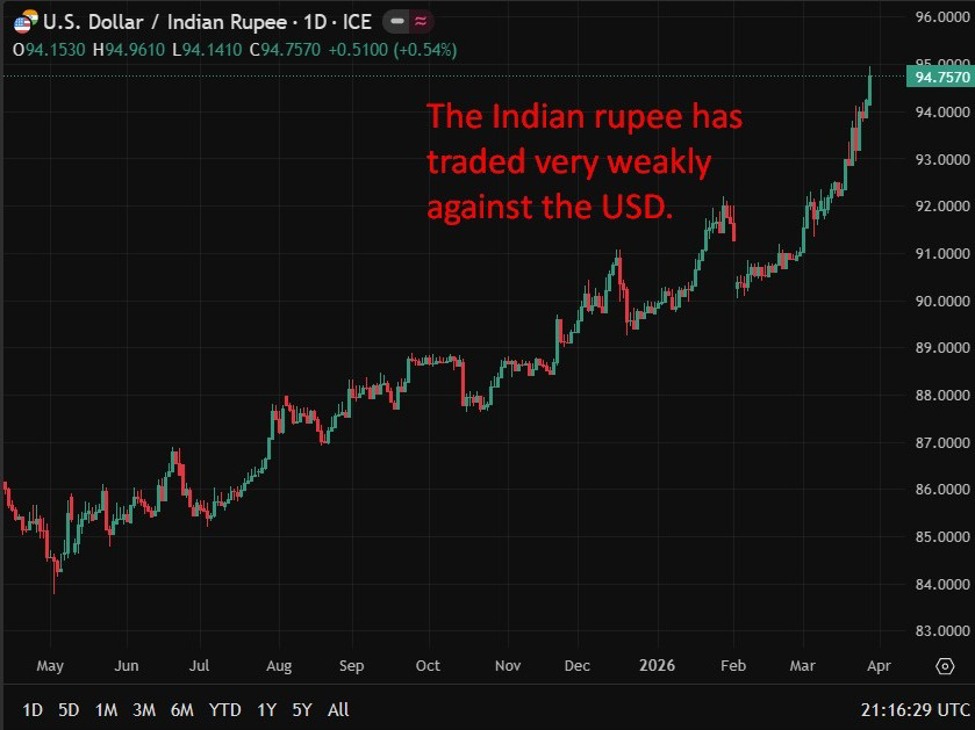
Reserve Bank of India FX intervention move after hours on Friday. INR chaos day ahead?
The RBI’s after-hours announcement of FX position caps is being viewed as a form of indirect intervention to support the rupee. While the policy forces short covering and limits speculative pressure, banks warn that rapid implementation could trigger disorderly unwinds and near-term volatility.Summary:The Reserve Bank of India announced new FX position caps after Friday’s market close, signalling a reactive, intervention-style move to stabilise the rupee. Banks must cut net open rupee positions to $100m by April 10, effectively forcing short INR reduction and USD selling. The rupee hit a record low (94.84/USD), pressured by oil and foreign outflows tied to the Iran war. Banks are requesting a three-month transition, warning a rapid unwind could trigger disorderly flows and losses. Policy is INR supportive but execution-sensitive, with risk of short-term disruption as positions are adjusted.Indian banks are pushing back against newly announced foreign exchange restrictions from the Reserve Bank of India, framing the move as a de facto intervention in currency markets that could trigger short-term disruption if implemented too quickly.The RBI announced after the market close on Friday that banks must cap their net open rupee positions in the onshore deliverable market at $100 million by the end of each business day starting April 10. The timing of the announcement, outside trading hours,s ignals urgency and aligns with a broader effort to stabilise the rupee following its slide to a record low of 94.84 per U.S. dollar.The currency has come under sustained pressure amid a surge in oil prices and heavy foreign portfolio outflows linked to the Iran war. As a major oil importer, India faces structurally higher U.S. dollar demand when energy prices rise, while capital outflows further amplify depreciation pressure.Against this backdrop, the RBI’s move is being interpreted by market participants as a form of indirect FX intervention. By imposing strict limits on net open positions, the central bank is effectively forcing banks to reduce short rupee exposure. This creates mechanical demand for the rupee, particularly into daily closes, and constrains the ability of institutions to build large bearish positions. In practical terms, it acts as a cap on USD/INR upside by compelling banks to square positions and supply dollars back into the market.However, banks warn that the speed of implementation could prove destabilising. Treasury officials from both domestic and foreign lenders have raised concerns that the short compliance window may trigger a disorderly unwinding of existing trades, particularly arbitrage strategies between the offshore non-deliverable forward (NDF) market and the onshore market. These positions are heavily concentrated in the one- to three-month tenor, meaning forced early exits could generate one-sided flows and mark-to-market losses.Lenders have asked for a three-month transition period or permission to hold existing positions to maturity, arguing that a more gradual adjustment would allow exposures to roll off naturally and reduce the risk of abrupt market dislocation.The situation underscores the RBI’s balancing act. While the policy is clearly aimed at defending the rupee and restoring orderly conditions, it introduces near-term execution risk. In essence, the central bank is tightening control over positioning rather than deploying reserves directly, but the effect is similar: limiting downside pressure on the currency.For markets, the takeaway is twofold. The move signals a clear shift into defensive mode from the RBI, but also raises the likelihood of short-term volatility as positions are recalibrated. The policy may slow depreciation and compress speculative pressure, but the underlying drivers—oil prices and capital flows—remain firmly in place.—The RBI’s cap on net open positions effectively forces banks to reduce short INR exposure, creating consistent end-of-day demand for the currency as positions are squared. By limiting how large bearish bets can be, it dampens speculative pressure and curbs momentum-driven depreciation, particularly into the close. The move also indirectly increases USD supply in the onshore market, helping cap USD/INR upside. However, while this supports the rupee in the short term and smooths volatility, it does not address underlying pressures such as higher oil import costs and ongoing foreign outflows. This article was written by Eamonn Sheridan at investinglive.com. 🔗 Source 💡 DMK Insight The RBI’s FX position caps could shake up the forex market, and here’s why: By limiting speculative positions, the central bank aims to stabilize the rupee, but this move could backfire if implemented too quickly. Traders should be cautious as banks are already signaling potential volatility from rapid unwinds. If speculators rush to cover short positions, we might see a spike in rupee volatility, which could affect correlated assets like Indian equities or even commodities priced in rupees. Look for key levels in USD/INR; if it breaks above recent highs, it could indicate a stronger dollar against the rupee, prompting further intervention from the RBI. On the flip side, if the rupee holds its ground, it might attract more foreign investment, providing a bullish signal for the broader market. Keep an eye on the RBI’s communication for any hints on future policy adjustments, as these could be pivotal in shaping market sentiment in the coming weeks. 📮 Takeaway Watch USD/INR closely; a break above recent highs could signal increased volatility and intervention risks from the RBI.

Australia to cut taxes on petrol and diesel use as part of National 'Fuel Security' plan
Australian Prime Minister Albanese has announced that the National Cabinet meeting today adopted a National Fuel Security Plan.Among the measures:Government will halve the fuel excise on petrol and diesel for three monthsWill reduce the heavy vehicle road user charge to zero for three monthsI am probably going to be the most hated person in Australia for pointing this out, but here goes:A reduction in taxes on a good will, all else equal, tend to increase demand for that good by lowering the price consumers pay. Taxes effectively act as a wedge between what producers receive and what consumers pay. When that wedge is reduced, the final price typically falls, encouraging higher consumption.In economic terms, this results in a movement along the demand curve rather than a shift of the curve itself. As prices decline, consumers are willing and able to purchase more of the good, leading to an increase in quantity demanded. The magnitude of this response depends on price elasticity. Goods with elastic demand, where consumers are sensitive to price changes, tend to see a larger increase in consumption, while inelastic goods experience a more muted response.However, the real-world impact can vary. Producers may absorb part of the tax cut, limiting how much prices fall. Supply constraints can also cap how much consumption increases, even if prices decline. Additionally, if the tax cut is seen as temporary, consumers may not significantly change their behaviour.A common example is fuel: cutting fuel taxes reduces pump prices, which can lead to increased driving and higher fuel consumption, reinforcing the link between tax policy and demand. Some are going to argue that demand for petrol/diesel is inelastic and this is somewhat true. For people having to drive for work etc. sure, but for those heading out for a weekend trip, no. —Cutting the heavy vehicle toll is more defensible, moving goods requires trucks and offsetting the high fuel price this way makes more sense. ps. An Australian National Cabinet meeting is a forum where the Prime Minister and state and territory leaders (premiers and chief ministers) come together to coordinate policy and decision-making on issues that affect the whole country. It replaced the former Council of Australian Governments (COAG) in 2020 to allow for faster, more flexible collaboration—initially during the COVID-19 pandemic. While it is not a legislative body and cannot make binding laws on its own, it plays a key role in aligning federal and state responses on areas such as health, the economy, energy, and infrastructure, helping ensure a more unified national approach. This article was written by Eamonn Sheridan at investinglive.com. 🔗 Source 💡 DMK Insight The Australian government’s decision to halve fuel excise and eliminate heavy vehicle charges is a game changer for traders in energy markets. This move is likely to boost consumer spending by lowering fuel costs, which could lead to increased demand for oil and gas. Traders should keep an eye on crude oil prices, as a surge in demand could push prices higher in the short term. Additionally, the broader economic implications could ripple through related sectors, including transportation and logistics, impacting stocks in those areas. Watch for any immediate reactions in the energy sector, especially if crude oil prices break key resistance levels. The three-month timeframe for these measures means traders should position themselves for potential volatility as the market reacts to these changes. However, it’s worth noting that while this may provide short-term relief, it doesn’t address long-term fuel security issues. If global oil prices rise due to geopolitical tensions or supply chain disruptions, the benefits of these measures could be short-lived. Keep an eye on how the market responds in the coming weeks, especially around key economic indicators and crude oil inventory reports. 📮 Takeaway Watch for potential spikes in crude oil prices as the Australian fuel excise cuts take effect, particularly over the next three months.
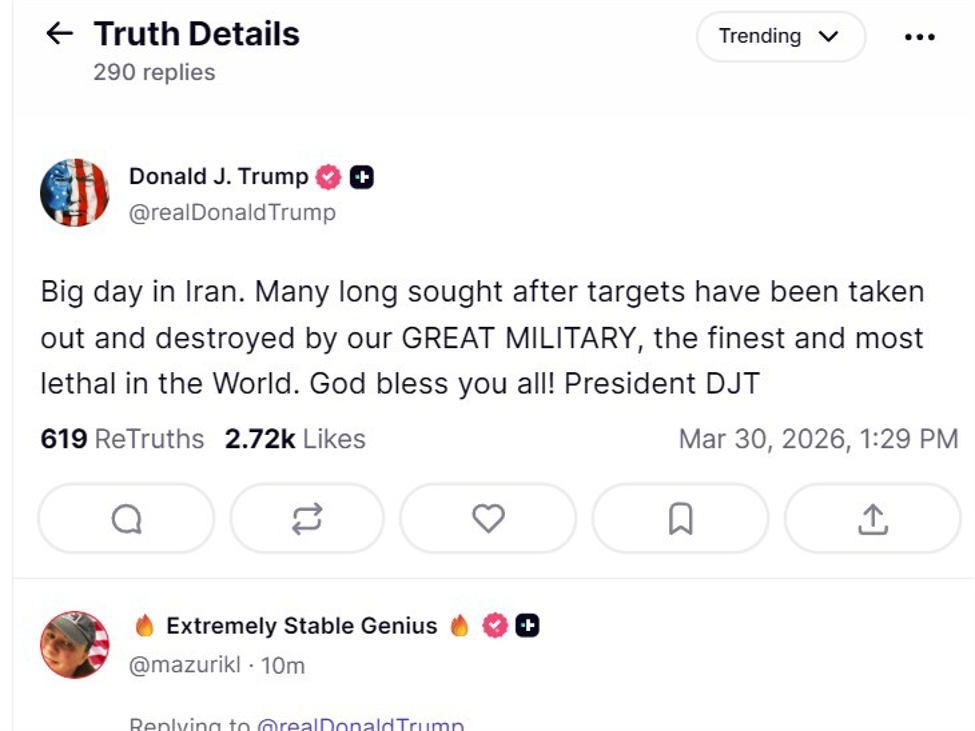
Trump touts destruction in Iran, Ackman looks forward to a whopping victory dividend
Summary:Donald Trump claims major military success in Iran, but provides no verifiable detail on targets or impact. Bill Ackman frames the war as one-sided and bullish for equities, urging investors to “buy quality.” Both messages lean heavily on confidence and narrative, not confirmed data. History suggests early war claims are often overstated or incomplete. Markets typically demand independent verification and sustained de-escalation before repricing risk.Two near-simultaneous messages from Donald Trump and Bill Ackman offer a strikingly optimistic framing of the Iran conflict, but both warrant a cautious reading from a market perspective.Trump declared that “many long sought after targets” in Iran had been destroyed, praising U.S. military effectiveness. However, the statement lacks specificity, no detail on which targets were hit, the strategic significance of those strikes, or any independent confirmation of their success. In past conflicts, initial claims of decisive gains have often been revised as more information becomes available. Without corroboration from defence officials, satellite imagery, or third-party reporting, such statements should be treated as provisional.Ackman’s remarks extend the optimism into markets, arguing that the conflict is highly one-sided and likely to deliver a “peace dividend,” making it an attractive entry point for equities. While this reflects a classic contrarian or pro-risk stance, it assumes a relatively quick and favourable resolution to the conflict, an outcome that remains uncertain. Wars involving multiple regional actors, asymmetric responses, and critical infrastructure risks rarely follow linear paths.There is also a timing question. Markets are currently grappling with elevated oil prices, disrupted shipping flows, and tightening financial conditions. These are typically headwinds for growth and risk assets in the near term, even if a longer-term resolution eventually proves supportive.The key issue is not whether either view is ultimately correct, but whether there is sufficient evidence at this stage to justify such conviction. For now, the balance of information remains incomplete. Military developments are fluid, diplomatic signals are mixed, and the risk of escalation—including broader regional involvement—remains present.In that context, both statements can be seen as narrative-setting rather than data-confirming. Markets tend to be more cautious, requiring confirmation through sustained changes in energy flows, geopolitical stability, and policy responses before fully embracing a bullish “peace dividend” scenario.Ack. This article was written by Eamonn Sheridan at investinglive.com. 🔗 Source 💡 DMK Insight Trump’s unverified military claims and Ackman’s bullish stance could stir market volatility. While narratives like these can temporarily boost investor sentiment, they often lack the substance needed for sustained market movements. Traders should be cautious; historical patterns show that initial war claims can lead to knee-jerk reactions rather than long-term bullish trends. The focus on ‘buying quality’ might resonate, but without concrete data, it’s risky to chase equities based solely on confidence. Keep an eye on how the market reacts in the coming days, especially if geopolitical tensions escalate or if more concrete information emerges. Watch for key resistance levels in major indices, as a failure to break through could signal a pullback. In this environment, it’s wise to monitor volatility indicators and sentiment metrics closely. If the narrative shifts or if any verifiable military outcomes arise, it could change the trading landscape significantly. 📮 Takeaway Watch for market reactions to any verifiable military developments; key resistance levels could signal potential pullbacks if confidence wanes.

Israel may invite U.S. to relocate Middle East bases after war
Israel is reportedly considering inviting the U.S. to relocate and expand military bases in the country after the war, signalling a potential long-term shift in regional military positioning, though the plan remains unconfirmed.Summary:Israel is reportedly planning to invite the U.S. to relocate regional bases and build new ones post-war, per Channel 12. Proposal aims to reshape U.S. military positioning across the Middle East. Israeli officials argue expanded U.S. presence would deliver operational and intelligence advantages. Would mark a significant strategic shift in U.S. basing, concentrating assets in Israel. Report is based on unnamed sources and remains unconfirmed by Washington.Israel is reportedly preparing to propose a major realignment of U.S. military positioning in the Middle East, with plans to invite Washington to relocate some of its regional bases to Israeli territory and establish additional permanent facilities after the current conflict ends.According to Israeli broadcaster Channel 12, citing unnamed security sources, the proposal is being framed internally as an opportunity to “reshape the map” of U.S. military deployment in West Asia. The move would reflect both the evolving regional security environment and Israel’s assessment of its own strategic value as a key U.S. ally during the ongoing conflict.Israeli officials cited in the report argue that the war has reinforced the country’s role as a central operational and intelligence partner for the United States. Expanding the U.S. military footprint in Israel, they suggest, would enhance both deterrence and responsiveness, while providing logistical and intelligence advantages in a region facing heightened instability.Such a shift, if pursued, would represent a notable change in U.S. basing strategy. American forces are currently distributed across multiple locations in the Gulf and broader Middle East, allowing for geographic flexibility and risk diversification. A greater concentration of assets in Israel could signal a recalibration toward a more centralised posture, potentially reflecting both operational efficiencies and shifting alliance dynamics.However, the proposal remains at an early stage and has not been confirmed by U.S. officials. Any decision to relocate or expand bases would carry significant political and strategic considerations, including regional sensitivities, host-nation agreements, and the broader implications for U.S. relationships with Gulf partners.From a market and geopolitical perspective, the report underscores how the current conflict may have longer-term structural consequences beyond immediate military developments. While still speculative, it points to the possibility of a more entrenched U.S. presence in Israel and a reconfiguration of regional security architecture.For now, the key takeaway is that the war is not only reshaping near-term risk dynamics but may also be laying the groundwork for longer-term strategic shifts in how the U.S. projects power in the region. This article was written by Eamonn Sheridan at investinglive.com. 🔗 Source 💡 DMK Insight Israel’s potential invitation for U.S. military expansion could reshape regional dynamics significantly. For traders, this news matters because it hints at a long-term shift in geopolitical stability, which often impacts oil prices and defense stocks. If the U.S. increases its military footprint, we might see heightened tensions in the Middle East, potentially driving crude oil prices up due to supply concerns. Keep an eye on oil futures and related ETFs, as they could react sharply to any developments. Additionally, defense contractors like Lockheed Martin or Raytheon could see increased investor interest, especially if military spending in the region ramps up. On the flip side, if this military expansion is perceived as a provocation, it could lead to escalated conflicts, which might create volatility in broader markets. Traders should monitor key geopolitical indicators and sentiment, especially around oil prices and defense sector performance. Watch for any announcements or movements in military assets over the next few weeks, as they could provide actionable insights into market direction. 📮 Takeaway Monitor oil prices and defense stocks closely; any confirmed U.S. military expansion in Israel could trigger significant market reactions.
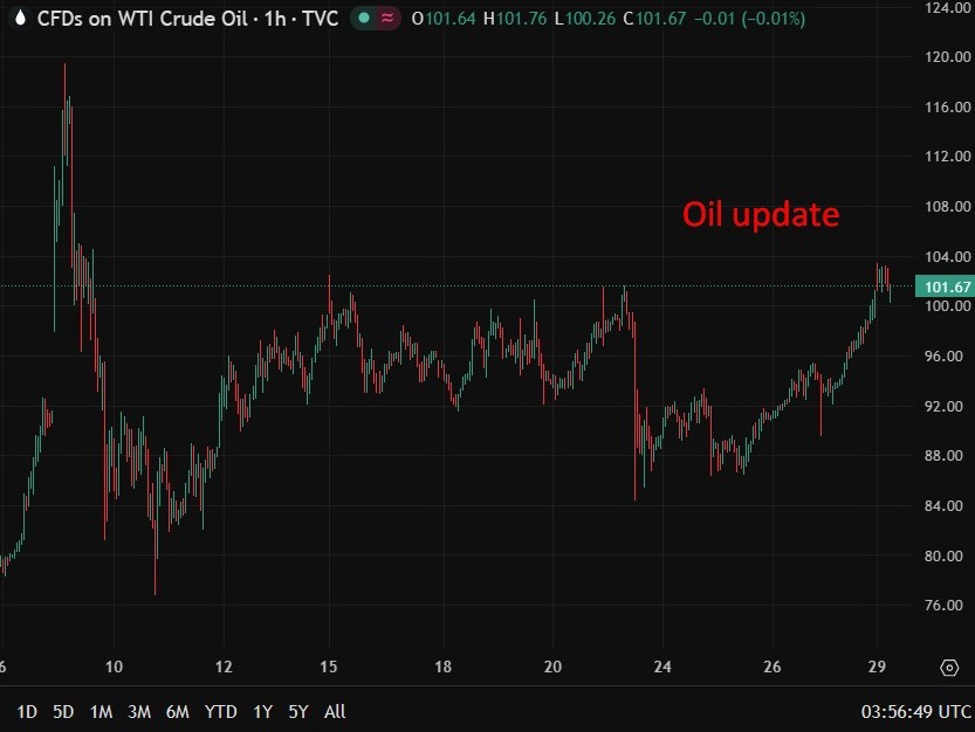
investingLive Asia-Pacific FX news wrap: Mid East tensions, and oil price, remain elevated
Israel may invite U.S. to relocate Middle East bases after warTrump touts destruction in Iran, Ackman looks forward to a whopping victory dividendAustralia to cut taxes on petrol and diesel use as part of National ‘Fuel Security’ planReserve Bank of India FX intervention move after hours on Friday. INR chaos day ahead?PBOC sets USD/ CNY reference rate for today at 6.9223 (expected was 6.9205)Japan signals readiness for FX intervention. Yen weakened past 160, has since had a bounceBank of Japan Governor Ueda says will closely watch FX moves (USD/JPY drops)After Tehran had weekend blackouts (strike hits) Trump ups the ante: wants Iran’s oilTrump says negotiations with Iran going extremely well, might get a deal soon, or notBoJ leans toward further hikes but flags oil-driven stagflation risksTrump says US could take the oil in Iran (via Financial Times)Bond managers warn markets underestimate growth risks from Iran warVilleroy says ECB ready to act, but too early to discuss timing of any rate hikeUSD is higher at the start of the new weekIsrael intercepts Yemen drones as Houthis expand role in warOil trade has begun for the week – prices higherU.S. allows Russian oil shipment to Cuba amid global energy disruptionsMorgan Stanley warns Australia faces diesel supply shock and growth risksWhere the warmakers are at: US-Iran talks uncertain, military buildup and mistrust deepenNewsquawk Week In Focus: US NFP, ISMs and Retail Sales, EZ CPI, RBA Mins, and BoJ TankanPakistan says it will host US-Iran talks in coming days as more US Marines head to regionMonday open indicative forex prices, 30 March 2026US sends more signals that troop deployments coming. Rubio hints at endgamePrediction markets are no longer just getting faster than traditional coverageTrump jokes about Hormuz as war drags on, markets slide and NATO doubts resurfaceIn brief:Middle East tensions remain elevated with Houthi missile/drone attacks on Israel and Israeli strikes causing temporary blackouts in Tehran U.S. continues military build-up, including Special Forces, as planning for potential ground operations progresses Pakistan to host U.S.-Iran talks, while Trump signals mixed messaging: progress in negotiations but escalation options remain Oil opened higher but pared gains, reflecting ongoing uncertainty around Hormuz flows BoJ maintains tightening bias, while Japan ramps up FX intervention rhetoric, helping push USD/JPY lower RBI FX caps provide modest INR support via forced positioning adjustment Australia cuts fuel taxes despite growing supply shortage risks, raising policy questionsGeopolitical developments continue to dominate the macro backdrop to start the week, with the Middle East conflict showing further signs of regional expansion.Over the weekend, Iranian-backed Houthis launched missile and drone attacks toward Israel, marking a widening of the conflict footprint. At the same time, Israeli strikes reportedly caused temporary power outages across Tehran and surrounding areas, highlighting the ongoing intensity of the campaign.On the U.S. side, the military build-up in the region continued. Several hundred Special Operations Forces, including Army Rangers and Navy SEALs, have been deployed alongside thousands of Marines and 82nd Airborne troops. According to U.S. officials, this positioning is aimed at providing President Trump with additional optionality, including the potential for ground operations.Diplomatically, Pakistan said it will host U.S.-Iran talks in the coming days. However, messaging from Washington remains mixed. President Trump said negotiations are progressing through both direct and indirect channels and could yield a deal soon, while also cautioning that no agreement is guaranteed. He added that Iran has allowed 20 oil tankers to transit the Strait of Hormuz, suggesting some limited easing in flows. At the same time, Trump reiterated that the U.S. could seize Iranian oil infrastructure, including Kharg Island, underscoring that escalation risks remain firmly in play.Oil prices opened higher but have since edged lower, reflecting this push-pull between de-escalation hopes and ongoing risks.In Asia, the Bank of Japan Summary of Opinions reinforced a gradual tightening bias, with policymakers open to further rate hikes if conditions allow. However, caution remains due to Middle East uncertainty and rising oil prices, with some members flagging stagflation risks.Japan also stepped up FX rhetoric. Vice Finance Minister Atsushi Mimura warned that “decisive” action could be taken against speculative currency moves, marking a clear escalation in intervention signalling. This was reinforced by Governor Kazuo Ueda, who emphasised the growing importance of FX in shaping inflation. While not explicit intervention, the tone shift from Ueda helped push USD/JPY lower from near 160.50 to below 160, trading around 159.75 at the time of writing.Elsewhere, the Indian rupee firmed slightly after the Reserve Bank of India imposed new FX position caps after Friday’s close. The move forces banks to reduce short INR positions, providing near-term currency support and signalling a more active defensive stance from policymakers.In Australia, the government announced a cut to fuel taxes in response to rising prices. However, the policy raises questions given the growing risk of diesel shortages. While lower taxes may reduce prices and boost consumption, they do little to address supply constraints and may, at the margin, exacerbate the imbalance between demand and available fuel. This article was written by Eamonn Sheridan at investinglive.com. 🔗 Source 💡 DMK Insight The geopolitical shifts in the Middle East and India’s FX intervention are crucial for traders right now. The potential relocation of U.S. bases could signal a change in military strategy, impacting oil prices and regional stability. Traders should keep an eye on crude oil futures, as any escalation could lead to price spikes. Additionally, India’s intervention in the forex market suggests volatility in the INR, which could affect currency pairs like USD/INR. If the INR continues to weaken, it might prompt further interventions, creating trading opportunities for forex traders. Watch for key levels in oil and INR as these developments unfold, especially in the coming weeks as the situation evolves. 📮 Takeaway Monitor crude oil prices and USD/INR levels closely; geopolitical tensions could trigger significant market moves.
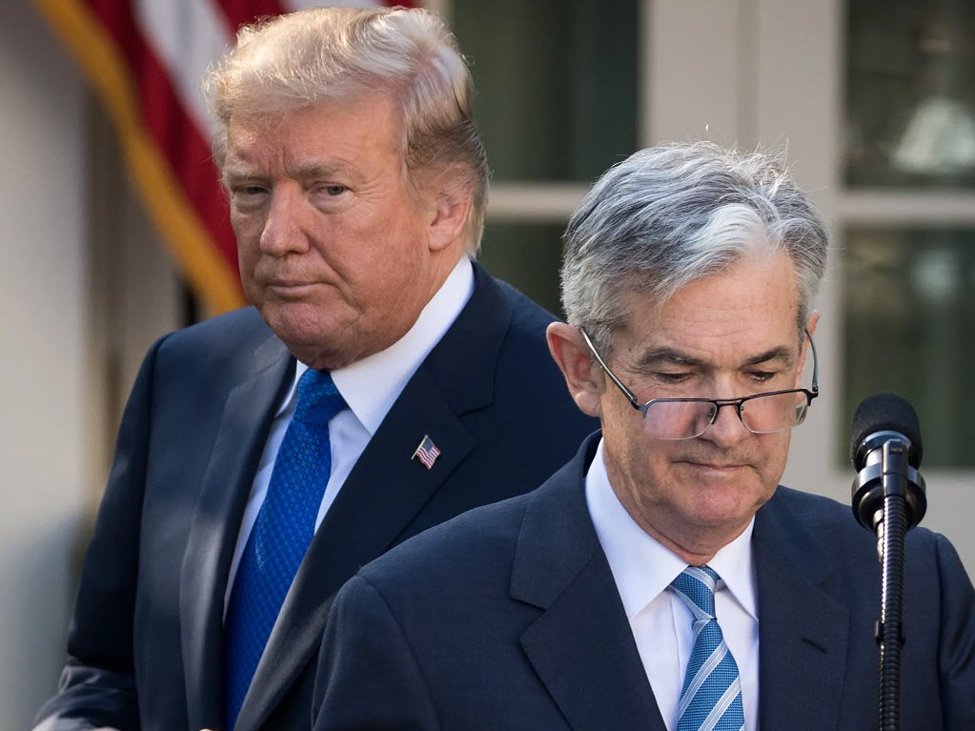
Heads up: Fed chair Powell to speak later in the day
US markets will offer some pretty interesting stuff on the calendar this week. As we transition from March to April, the labour market data will come back into the picture this week. That will keep markets on edge, having already to watch for the happenings in the Middle East still.But to start things off, Fed chair Powell will also be making an appearance later today. And that will be the most notable item on the agenda, besides keeping an eye out for US-Iran headline risks.Powell is set to participate in a moderated discussions at the Harvard University principles of economics class. The session is one that is typically part of the university’s introductory economics curriculum. While there isn’t a clear topic, one can expect Powell to cover a wide range of things from the economy to inflation and monetary policy.I’m quite sure that he will sidestep any questions involving the politicisation of the Fed and what not. That being said, one can reasonably expect US president Trump to snap at Powell again after this engagement. That especially if we hear comments about the Fed wanting to pause on rates and keep their options open amid the situation in the Middle East.The funny thing is that it will be Trump’s own doing that is leading to this scenario. Yet, you can be assured that he will still lay blame to Powell for not cutting interest rates.The Fed chair is scheduled to speak at 1430 GMT. So, that will be the highlight of the agenda today. That as it will be a quiet one in Europe as well as a holiday-shortened one. The Easter holidays are coming soon and that markets in Europe will be closed by the end of the week in observance of Good Friday and then Easter Monday the following week. This article was written by Justin Low at investinglive.com. 🔗 Source 💡 DMK Insight Labor market data is back in focus, and here’s why that matters: traders are bracing for volatility as we shift from March to April. With key indicators like jobless claims and non-farm payrolls on the horizon, expect market reactions that could ripple through equities and forex alike. The labor market’s health is a critical gauge for economic strength, influencing Fed policy and interest rates. If the data shows stronger-than-expected job growth, it could bolster the dollar, while a weaker report might trigger a sell-off in risk assets. Keep an eye on the S&P 500 and major currency pairs like EUR/USD, as they often react sharply to labor data. Additionally, geopolitical tensions in the Middle East could further complicate market dynamics, adding another layer of uncertainty. Here’s the thing: while the mainstream narrative might focus solely on the labor data, don’t overlook the potential for unexpected moves based on geopolitical developments. Traders should monitor the upcoming data releases closely, particularly any surprises that could shift sentiment dramatically in either direction. 📮 Takeaway Watch for labor market data this week; stronger numbers could strengthen the dollar and impact risk assets like the S&P 500.