
 Bitcoin
  Ethereum
  Tether
  BNB
BNB  XRP
XRP  USDC
USDC  Solana
  TRON
TRON  Lido Staked Ether
  Figure Heloc
The major European stock indices close the day lower led by France’s CAC with a decline of -0.91%. A look at the closing levels for the day shows: German DAX -0.65%France’s CAC -0.91%UK’s FTSE 100 -0.43%Spain’s Ibex -0.47%Italy’s FTSE MIB -0.31% For the trading week, the results were mixed. Looking at the weekly changes German DAX fell -0.66%France’s CAC fell -1.03%. UK’s FTSE 100 fell -0.23%.Spain’s Ibex fell -0.09%Italy’s FTSE MIB eked out a 0.37% gain. This article was written by Greg Michalowski at investinglive.com. 🔗 Source 💡 DMK Insight European indices are feeling the heat, and here’s why that matters for traders: The CAC’s drop of 0.91% signals a broader risk-off sentiment that could ripple through global markets. With the DAX and FTSE also in the red, traders should be cautious about potential volatility in related assets, especially in sectors sensitive to economic shifts like commodities and financials. This decline could indicate underlying economic concerns, particularly as investors weigh inflation data and central bank policies. Watch for key support levels on these indices; if the CAC breaks below its recent lows, it could trigger further selling pressure. But don’t overlook the mixed results for the week. While some indices faltered, others held steady, suggesting divergence in sector performance. This could present opportunities for swing traders looking to capitalize on sector rotation. Keep an eye on the upcoming economic indicators and earnings reports that might influence market sentiment in the short term. The next few days could be crucial for determining whether this bearish trend continues or if a rebound is on the horizon. 📮 Takeaway Watch the CAC’s support levels closely; a break could lead to increased selling pressure across European markets.

Soft jobs report weighs on the Canadian dollar. What to look for next
Canada just posted its worst jobs report since the pandemic.The 83,900 jobs losses were the worst in a month since 2022 and — worse yet, there were 108K full-time jobs lost. That’s led to a slump in the Canadian dollar and boosted USD/CAD by 90 pips to 1.3728. That’s the highest for the pair since March 7.The report led to the unemployment rate rising to 6.7% from 6.5% but that metric is worth some perspective as it had been above 7% in the middle of last year.Looking at the chart, it’s not clear if this is the start of a renewed rise or a blip. It’s the same on the headline number as Canadian jobs reports tend to be very volatile and that’s particularly true lately as estimates of the country’s population have bounced around due to a boom-and-bust in immigration.A better look at jobs often comes via the three-month moving average, as it smooths out some of the volatility. It had been running at +50K into November but the past three months have all been soft, and at -32.8K, the average is now at the lowest since 2021.Worse yet, if you exclude the pandemic, you need to go all the way back to the financial crisis to get a worse three-month period.That’s not encouraging and the news for the Canadian dollar would be worse if not for surging oil prices. That’s going to offer a material lift to Canadian terms of trade in March and perhaps going forward. But if the oil surge reverses, beware of a break above 1.3750 for USD/CAD and even a test of the highs of the year near 1.3925.On net though, I think the news is better than it looks. Canada’s economy is adjusting to falling population and a drop in housing prices. There is also the uncertainty around USMCA. I expect all of that to look brighter in the second half of the year.Oil is elevated and will eventually come down but another energy crisis underscores Canada’s enviable position in energy markets and that should lead to some inbound investment.Looking ahead, eyes will stay on the Iran war and oil prices but will also turn to next week’s Canadian inflation report. Despite today’s jobs miss, the market still sees the Bank of Canada remaining on the sidelines. Pricing shows only a fractional chance of a rate cut in March/April before pricing in 41 bps of hikes by year end.Here’s RBC today:we do not expect the BoC to make changes to the policy rate at Wednesday’s meeting. Our base case forecast also assumes the policy rate remains unchanged for the remainder of 2026 as inflation continues to trend lower toward target.The Canadian CPI report is coming up on Monday, followed by the Bank of Canada on Wednesday. This article was written by Adam Button at investinglive.com. 🔗 Source

The whole market moves based on fresh assessments of the length of the war
In markets there is often a ‘risk-off/risk-on’ dynamic around economic news.At the moment, that’s shifted to more of a war-on/war-off footing, or at least a shift in how long the war might take.This view is winning out at the moment:1) The US tried to talk to Iran but Iran refused and is determined to make the US feel the pain of $200 oil via closing the Strait for a couple months2) The US is going to Plan B, which involves using navy escorts to allow passage through the StraitThe main evidence for the second part is that Pentagon is moving a Marine expeditionary unit to the Middle East. Hegseth has reported approved a request from Central Command for the expeditionary unit, typically consisting of up to 2,500 Marines but it will take 12-16 days to get there. That timeline lines up with the ‘month-end’ talk on escorts we’ve heard from the US and France.It also shows why the US and others ordered the release of emergency crude supplies, as this is now going beyond the 4-5 week timeline that Trump laid out (and then shortened).On the tape today, WTI crude has gone from $92 in early European trade to $97.80 last. That’s going to ensure a painful weekend at the pump.Trump notably today that he would end the war when he “felt it in his bones” so we’re all basically trading on his whims. We will see if $120 or $150 oil presses that timeline forward. Today’s price of just +0.7% GDP growth (annualized) in Q4 won’t make the White House feel any better about the situation it’s in.As for the market, the Nasdaq is down 1% and perilously close to testing the war low from Monday. If that breaks, we could very quickly be back to September levels. This article was written by Adam Button at investinglive.com. 🔗 Source 💡 DMK Insight The current shift to a ‘war-on/war-off’ sentiment is crucial for traders navigating volatility. With the US’s failed attempts to engage Iran, geopolitical tensions are likely to escalate, impacting oil prices and broader market sentiment. Traders should watch for how this affects risk appetite, particularly in energy stocks and commodities. If tensions rise, we could see a spike in crude oil prices, which historically correlates with increased market volatility. Keep an eye on key levels in oil futures; a break above recent highs could signal a sustained rally. Conversely, if diplomatic efforts resume, we might see a pullback in energy prices, creating potential buying opportunities for those looking to capitalize on short-term fluctuations. This environment demands a keen focus on news cycles and geopolitical developments, as they can shift market dynamics rapidly. 📮 Takeaway Monitor crude oil prices closely; a breakout above recent highs could signal increased volatility and trading opportunities.

Trump approval slips to 44% — markets should be watching the midterm risk
The latest NBC poll shows Trump’s approval among registered voters down 3 points to 44% from 47% in March 2025, with disapproval climbing to 54%. The DDHQ polling average paints a similar picture at 43.1/54.4.What matters for markets here is the midterm setup. Trump himself is flagging the risk, noting the historical pattern of the White House party getting punished in midterms. If Republicans lose ground in Congress, that reshapes the legislative landscape for tax policy, tariffs, and deregulation — all of which are priced into current equity valuations to some degree.The issue-by-issue numbers are telling: border security polls at 53% approval, but immigration broadly sits at just 44% and Iran policy at 41%. The Epstein file handling and immigration backlash are creating drag.The broader read is that political capital is eroding, and that has implications for how much of the pro-growth agenda can actually get pushed through before November, especially with Iran and Epstein dominating the agenda. The next big question is whether he starts to face some internal pressure to end the war quickly. Republicans surely already conceed the House will be lost but the Senate is increasingly in play as a Middle East war will disillusion part of his voting coalition.Polymarket now Republicans at 53% to hold the Senate, with Democrats at 48%. It’s a very tough map for Democrats but aside from Maine and North Carolina, the pickings are slim. If Trump loses control of the Senate agenda, it will be a miserable final two years in office and would prevent any of his picks for the Supreme Court, should a vacancy become available. It would also mean relentless investigations of his administration and cabinet.That kind of thing could be a powerful motivation to get oil prices back down into the $60s as soon as possible. But does Iran want to negotiate? This article was written by Adam Button at investinglive.com. 🔗 Source 💡 DMK Insight Trump’s declining approval ratings could shake market sentiment as midterms approach. With his approval dropping to 44% and disapproval rising to 54%, traders should be wary of potential volatility in sectors sensitive to political shifts. Historically, political uncertainty can lead to risk-off behavior, impacting equities and possibly driving investors towards safe havens like gold or US Treasuries. If the trend continues, expect increased hedging activity and a potential shift in capital flows, especially in sectors like healthcare and infrastructure that could be affected by policy changes. Keep an eye on the 43% approval threshold; a breach could trigger further bearish sentiment across markets. On the flip side, if Trump’s approval stabilizes or rebounds, it could bolster confidence in risk assets. Watch for any significant news or debates leading up to the midterms that could sway public opinion and, by extension, market dynamics. 📮 Takeaway Monitor Trump’s approval ratings closely; a drop below 43% could lead to increased market volatility ahead of the midterms.
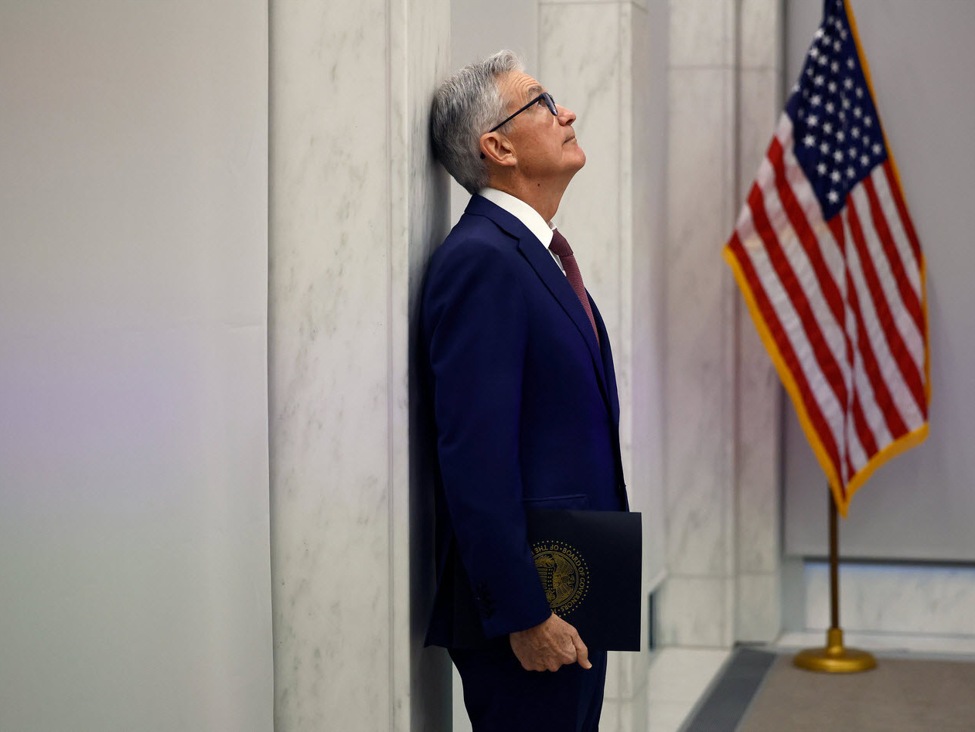
Federal Judge quashes subpoenas sent to Fed and Chairman Jerome Powell
One of the most-unbelievable moments this year (and there have been many already) was a Sunday-night video from Fed Chairman Jerome Powell where he fought back after he was handed a subpoena due to cost overruns in Fed renovations.It was a clear politicization of the Fed and meant to pressure Powell to lower rates, resign or not stay on as a Governor.A Federal judge killed the subpoena and hopefully that’s the end of it. “There is abundant evidence that the subpoenas’ dominant (if not sole) purpose is to harass and pressure Powell either to yield to the President or to resign and make way for a Fed Chair who will” and no evidence to the contrary. Republican Senator Thom Tillis has threatened to hold up Warsh’s confirmation until this is settled and wrote:This ruling confirms just how weak and frivolous the criminal investigation of Chairman Powell is and it is nothing more than a failed attack on Fed independence. We all know how this is going to end and the D.C. U.S. Attorney’s Office should save itself further embarrassment and move on. Appealing the ruling will only delay the confirmation of Kevin Warsh as the next Fed Chair.I imagine this is the end of it. This article was written by Adam Button at investinglive.com. 🔗 Source 💡 DMK Insight Jerome Powell’s recent video response to a subpoena is a stark reminder of the growing politicization of the Federal Reserve, and here’s why that matters right now: it could shake investor confidence in the Fed’s independence. As Powell defends the Fed’s renovations amidst scrutiny, traders should be wary of potential shifts in monetary policy that could arise from increased political pressure. This situation may lead to heightened volatility in both the forex and crypto markets, particularly if the Fed’s credibility comes into question. Look at the broader context: if the Fed’s decisions are perceived as influenced by political agendas, we might see a shift in market sentiment, impacting interest rates and inflation expectations. Traders should keep an eye on the USD’s strength, as any sign of instability could lead to a sell-off. Watch for key economic indicators like inflation data and employment reports in the coming weeks, as these will be crucial in gauging how the Fed might respond. In the short term, monitor the USD index and any shifts in Treasury yields, as these could signal how the market is digesting Powell’s statements and the implications of the Fed’s politicization. 📮 Takeaway Keep an eye on the USD index and upcoming economic indicators; Powell’s situation could lead to increased volatility in forex and crypto markets.
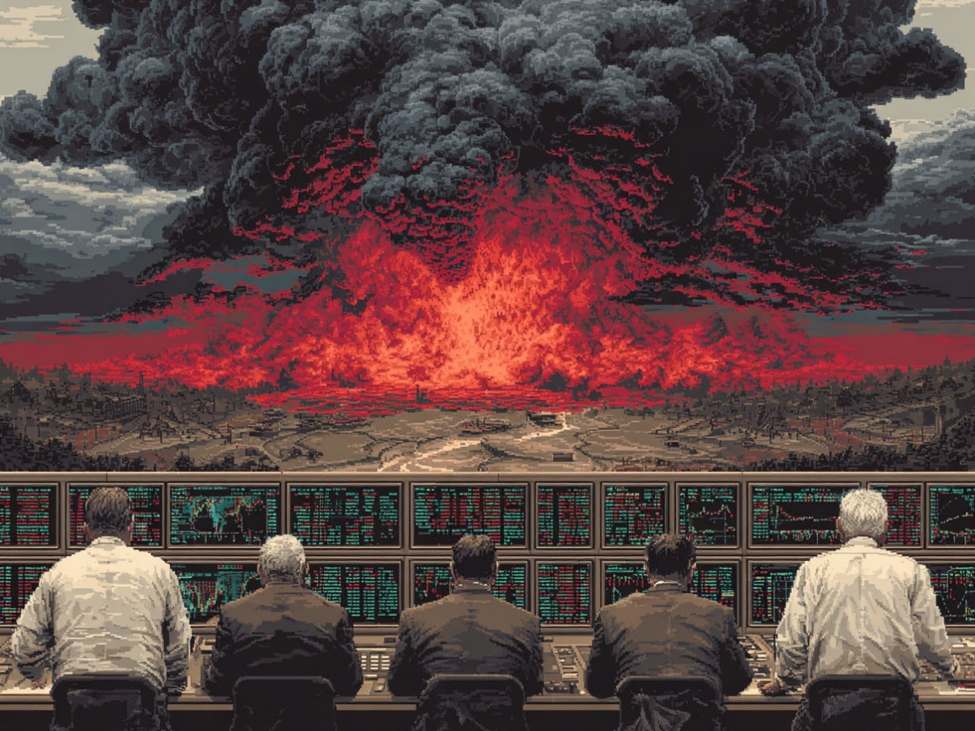
investingLive Americas market news wrap: Market loses faith that an Iran solution is near
The Pentagon is moving additional warships to the Middle EastTrump says war will end when he feels it “in my bones”US GDP for Q4 (2nd revision) 0.7% vs 1.4% estimate and priorUS PCE inflation +2.8% y/y vs +2.9% expectedJOLTs job openings for January 6.946M vs 6.700M estimateUniversity of Michigan sentiment (preliminary) for March 55.5 versus 55.0 estimateCanada February employment change -83.9K vs +10K expectedFederal Judge quashes subpoenas sent to Fed and Chairman Jerome PowellTrump approval slips to 44% — markets should be watching the midterm riskBad news for housing. The average rate on 30 year fixed mortgage rises to 6.41%.Barclays pushes back expectations for Fed rate cutsThe US and Cuba are talkingMarkets:WTI crude oil up $2.23 to $97.96Gold down $53 to $5025US 10-year yields flat at 4.28%S&P 500 down 48 points to 6625Bitcoin up 1.3%USD leads, NZD lagsThere was some sense of the war doves throwing in the towel today, at least in the short term. News that the US was sending over a Marine Expeditionary Unit that won’t arrive for 12-16 days stretches the timeline to the end of the month and the full 4-5 weeks Trump touted, at minimum.There is a sense that Iran isn’t ready to end the war even if Trump wants to and that means there could be a battle to control the Strait of Hormuz or persistent naval escorts. If that’s where this is headed that it’s going to be a long spring and oil prices will stay high.We saw that today with crude falling to $92 in Asian but rising all the way to $99.32 and finishing near the highs of the day. At the same time, US equities started with a 50 point gain that turned into a 45 point loss as the de-risking continues.The FX market had been taking the fighting in stride but is increasingly shifting into dollars. That’s pushed the euro to the lowest since July after a break of 1.1500 and a continued run lower.The Australian dollar had been immune to the war trade up until now but it cracked on Friday and fell 83 pips to 0.6995.The Canadian dollar stands to benefit from the higher oil prices but fresh worries about the domestic economy hit after a poor jobs report — the second one in a row and the worst headline since 2022. So even with oil up $40 in a month, USD/CAD is flat at 1.3729.Much of the final hours of trading was speculation about what could happen over the weekend. There is a huge range of possibilities from peace to sunken US ships and that will ensure another intense opening on Sunday night. Until then, have a nice weekend. This article was written by Adam Button at investinglive.com. 🔗 Source 💡 DMK Insight The Pentagon’s military moves and mixed economic data are shaking up market sentiment right now. With warships heading to the Middle East, geopolitical tensions could spike volatility in oil and related assets. Traders should keep an eye on crude oil prices, which often react sharply to such developments. The recent US GDP revision to 0.7% from an expected 1.4% signals a slowing economy, which could lead to shifts in monetary policy expectations. Inflation data showing PCE at 2.8% y/y, slightly below expectations, adds another layer of complexity. This could influence the Fed’s stance on interest rates, impacting forex pairs like USD/EUR. Watch for how these factors interplay over the coming weeks, especially with JOLTs job openings exceeding estimates, which might suggest a tight labor market despite economic slowdown. A potential breakout in oil prices could occur if tensions escalate, so keep an eye on key levels around $80 per barrel for immediate trading strategies. 📮 Takeaway Monitor crude oil prices closely; a breakout above $80 could signal increased volatility due to geopolitical tensions.
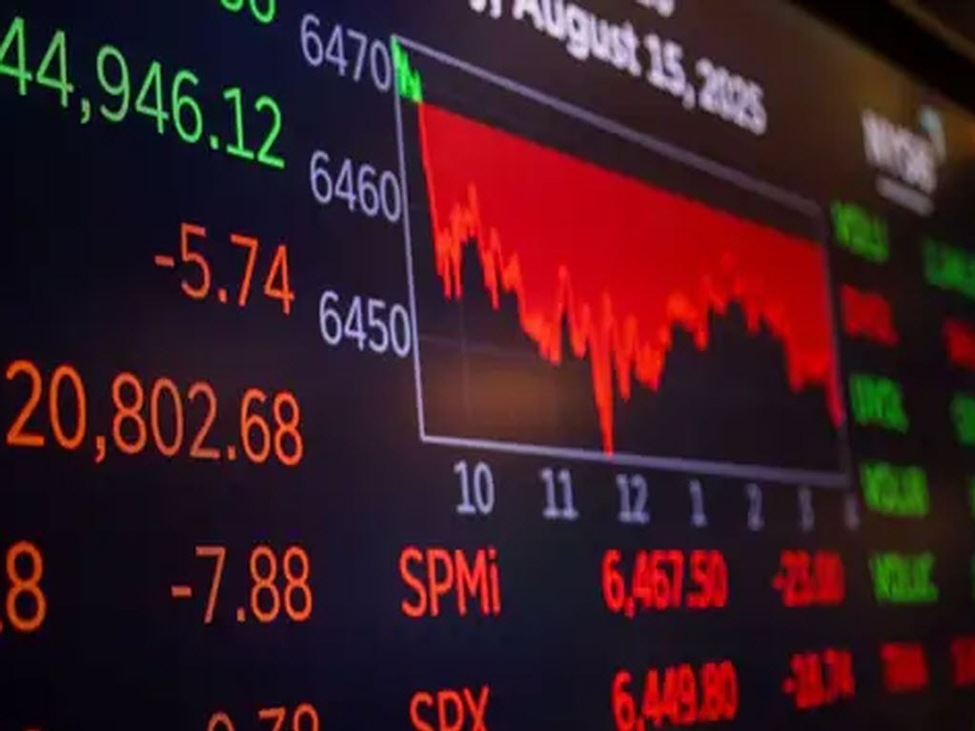
US stocks close lower as geopolitical risks weigh on sentiment
Stocks fall as geopolitical risks remain elevatedThe major US stock indices closed lower on the day and also finished the week in negative territory as geopolitical tensions in the Middle East continue to weigh on market sentiment. With the conflict involving Iran showing few signs of easing, investors remain cautious about the potential for a broader and more prolonged regional confrontation.Beyond the immediate conflict zone, markets are also factoring in the global risk of retaliatory actions and potential terrorist threats, which adds another layer of uncertainty to the outlook. At this point, hopes for a quick resolution to the conflict appear increasingly unlikely, leaving investors concerned about the potential economic fallout—particularly if energy prices remain elevated.Against that backdrop, all three major US indices ended the session lower and also closed at new lows for the year, highlighting the growing risk-off tone in the market.Closing levels for the major indicesThe Dow Jones Industrial Average fell 119.38 points (-0.26%) to close at 46,558.47.The S&P 500 declined 40.43 points (-0.61%) to finish at 6,632.19.The NASDAQ Composite dropped 206.62 points (-0.93%) to close at 22,105.36, leading the declines among the major benchmarks.Weekly declines add to downside pressureFor the week, the selling pressure was broad-based across the major indices:The Dow Jones Industrial Average fell -1.99%. The S&P 500 declined -1.60%. The NASDAQ Composite dropped -1.26%.These weekly losses have pushed the year-to-date performance into negative territory for all three indices.The Dow Jones Industrial Average is now down -3.13% on the year. The S&P 500 is lower by -3.12% year-to-date. The NASDAQ Composite has fallen -4.89% so far in 2026.NASDAQ breaks below its 200-day moving averageFrom a technical perspective, the NASDAQ index also delivered an important signal at the close. The index finished below its 200-day moving average for the first time since May 12, a development that may attract increased attention from technical traders.The 200-day moving average currently comes in at 22,175.38, compared with the closing level of 22,105.36. Sustained trading below that long-term technical indicator could encourage additional selling momentum in the near term.Looking ahead, the next downside target comes in near the November low at 21,898.29.If bearish momentum accelerates, traders will begin to focus on the 38.2% retracement of the rally from the April 2025 low, which comes in near 20,491.86. A move to that level would represent roughly a 14.7% correction from the all-time high.For context, the decline from the December 2024 high to the April 2025 low resulted in a much deeper drop of approximately 26.7%.Should geopolitical tensions intensify and oil prices continue to surge, the resulting economic pressure could act as a catalyst for a deeper equity market correction.S&P 500 approaches key long-term support at the 200-day moving averageLooking at the S&P 500, the index is approaching an important long-term technical level but remains just above its 200-day moving average, which currently comes in at 6604.06. The index closed today at 6632.19, after reaching a session low of 6623.92, bringing the market within striking distance of that key support level.The significance of the 200-day moving average should not be understated. The S&P 500 has remained above this level since May 12, meaning a sustained move below it would represent a meaningful shift in the longer-term technical picture. Many institutional investors and technical traders view the 200-day moving average as a dividing line between a bullish and bearish market environment.For now, the index continues to hold above that level, but the proximity to the average means traders will be watching closely in the coming sessions.Key downside targets if the 200-day moving average breaksIf the S&P 500 does break and hold below the 200-day moving average at 6604.06, the next key downside target comes in near the November swing low at 6521.92. That level represents the next major support area on the chart and would likely become a focal point for traders assessing whether the current decline is a correction or the start of a deeper move lower.Should the selling pressure extend beyond that level, traders would begin to shift their focus toward the 38.2% Fibonacci retracement of the rally from the April 2025 low, which comes in at 6174.39.A move down to that retracement level would represent roughly an 11.7% decline from the all-time high, putting the current pullback firmly into correction territory.Putting the current decline into perspectiveFor context, the S&P 500 has experienced sharper corrections in the recent past. The decline from the February 2025 high to the April 2025 low resulted in a drop of approximately 21.35%.Compared to that move, a decline toward the 38.2% retracement level near 6174 would represent a much more moderate correction. However, whether the market stabilizes above current levels or extends the downside will likely depend on how price reacts around the 200-day moving average, which now stands as a critical technical battleground for traders.With one of the major U.S. indices now trading below its 200-day moving average and another hovering just above it, the equity market heads into the weekend at a technically delicate moment. The 200-day moving average is widely viewed as a key dividing line between longer-term bullish and bearish sentiment, and markets are now sitting right on that fault line.If the weekend brings constructive news, such as signs of de-escalation in the conflict or progress toward a diplomatic solution, markets could respond positively when trading resumes. That scenario would likely see oil prices move lower, bond yields ease, and equity markets rebound, particularly as traders who reduced risk ahead of the weekend look to re-enter positions.On the other hand, negative developments over the weekend—such as an escalation of hostilities or broader regional involvement—could have the opposite effect. In that case, investors would likely see oil prices push higher, yields move up, and stocks come under renewed selling pressure as markets price in greater geopolitical risk.With the major indices sitting near critical technical levels, the market is effectively at an inflection point. The tone of the next move may depend less on technicals and more on the headlines that emerge over

TRUMP price jumps 52% as top holders compete for Mar-a-Lago luncheon invite
The Official Trump token surged on heavy trading after news spread that large holders could receive invitations to a private event at Mar-a-Lago. At press time, The Official Trump (TRUMP) traded at $4.28, up about 52% in the past 24… 🔗 Source 💡 DMK Insight The Trump token’s 52% surge is a classic case of speculative trading driven by hype. Traders should be cautious; while the allure of exclusive events can fuel short-term price spikes, the underlying fundamentals of such tokens often remain weak. This rally might attract day traders looking to capitalize on volatility, but it’s essential to remember that these price movements can reverse just as quickly. Watch for resistance around $4.50, as a failure to break through could lead to profit-taking and a pullback. Additionally, keep an eye on trading volumes—if they start to dwindle, it could signal waning interest and a potential downturn. On the flip side, if the token maintains momentum, it could draw in retail investors hoping to ride the wave. However, the risk of a sharp correction looms large, especially if broader market sentiment shifts. For now, monitor the $4.00 support level closely; a breach could trigger a cascade of selling pressure. 📮 Takeaway Watch the $4.50 resistance level closely; a failure to break through could lead to a pullback, while $4.00 is key support to monitor.
Eurozone CFTC EUR NC Net Positions declined to €105.1K from previous €136.5K
Eurozone CFTC EUR NC Net Positions declined to €105.1K from previous €136.5K 🔗 Source 💡 DMK Insight The drop in Eurozone CFTC EUR NC Net Positions signals a shift in trader sentiment that could impact the euro’s strength. A decline from €136.5K to €105.1K indicates that traders are reducing their bullish bets on the euro, which could lead to increased volatility in the forex market. This shift may be a reaction to broader economic concerns, such as inflation or interest rate changes from the ECB. If this trend continues, we might see the euro struggle against the dollar, especially if it breaks below key support levels. Traders should keep an eye on the upcoming economic data releases that could further influence these positions. On the flip side, if the euro manages to hold above recent support levels, it could attract buyers looking for value. The real story here is whether this decline in net positions is a temporary pullback or a sign of a more significant trend reversal. Watch for any changes in sentiment reflected in the next CFTC report and how it correlates with euro price action in the coming weeks. 📮 Takeaway Monitor the euro’s performance closely; a break below key support could trigger further declines, while a rebound may attract buyers.

United States CFTC S&P 500 NC Net Positions climbed from previous $-168.2K to $-134.5K
United States CFTC S&P 500 NC Net Positions climbed from previous $-168.2K to $-134.5K 🔗 Source 💡 DMK Insight CFTC data shows a notable shift in S&P 500 net positions, and here’s why that matters right now: The increase from -$168.2K to -$134.5K indicates a reduction in bearish sentiment among traders. This could suggest that some market participants are starting to position themselves for a potential rebound in the S&P 500. Given the current volatility in equities, this shift might signal a turning point, especially if the index can hold above key support levels. Traders should keep an eye on the 4,300 level as a critical threshold; a sustained move above this could attract more buying interest. But don’t get too comfortable. The broader economic context, including inflation concerns and interest rate decisions, could still weigh heavily on market sentiment. If the S&P 500 fails to break through resistance levels, we might see a quick reversal back to bearish positioning. Watch for any shifts in economic indicators or earnings reports that could influence trader sentiment further. 📮 Takeaway Monitor the S&P 500 closely; a move above 4,300 could signal a bullish shift, while failure to hold may prompt renewed bearish positioning.