
 Bitcoin
  Ethereum
  Tether
  BNB
BNB  XRP
XRP  USDC
USDC  Solana
  TRON
TRON  Lido Staked Ether
  Figure Heloc
EUR/USD1.1700 – €2.3bn1.1670 – €1.8bn1.1600 – €1.4bnUSD/JPY156.00 – $1.01bnAUD/USD0.7100 – A$896m0.7000 – A$853m0.7130 – A$839mGBP/USD1.3300 – £450m1.3350 – £409mUSD/CAD1.3835 – $471m1.3840 – $300mNZD/USD0.5790 – NZ$310m0.6200 – NZ$300mMarket context:EUR/USD 1.1670–1.1700 and AUD/USD 0.71 could act as short-term magnets if spot trades nearby into the New York cut. This article was written by Eamonn Sheridan at investinglive.com. 🔗 Source 💡 DMK Insight EUR/USD and AUD/USD are at critical levels right now, and here’s why that matters: With EUR/USD hovering around 1.1670–1.1700, traders should keep an eye on these levels as potential short-term magnets. The significant order flow at these points—€2.3 billion at 1.1700 and €1.8 billion at 1.1670—suggests that we could see volatility as the market approaches the New York cut. If we break below 1.1670, it could trigger stop-loss orders and push the pair lower, possibly testing the next support at 1.1600. On the flip side, a bounce off 1.1700 could lead to a short-term rally, making it crucial for traders to monitor these levels closely. Similarly, AUD/USD is trading around 0.7100, with A$896 million in orders at this level. A breach here could lead to a quick move towards 0.7000, while a rebound could see it retest 0.7130. Given the current market sentiment, these levels are pivotal for both pairs, and traders should be prepared for rapid shifts in momentum. Keep an eye on the New York session for potential breakout or reversal signals. 📮 Takeaway Watch EUR/USD at 1.1670 and 1.1700, and AUD/USD at 0.7100 for potential volatility during the New York cut.
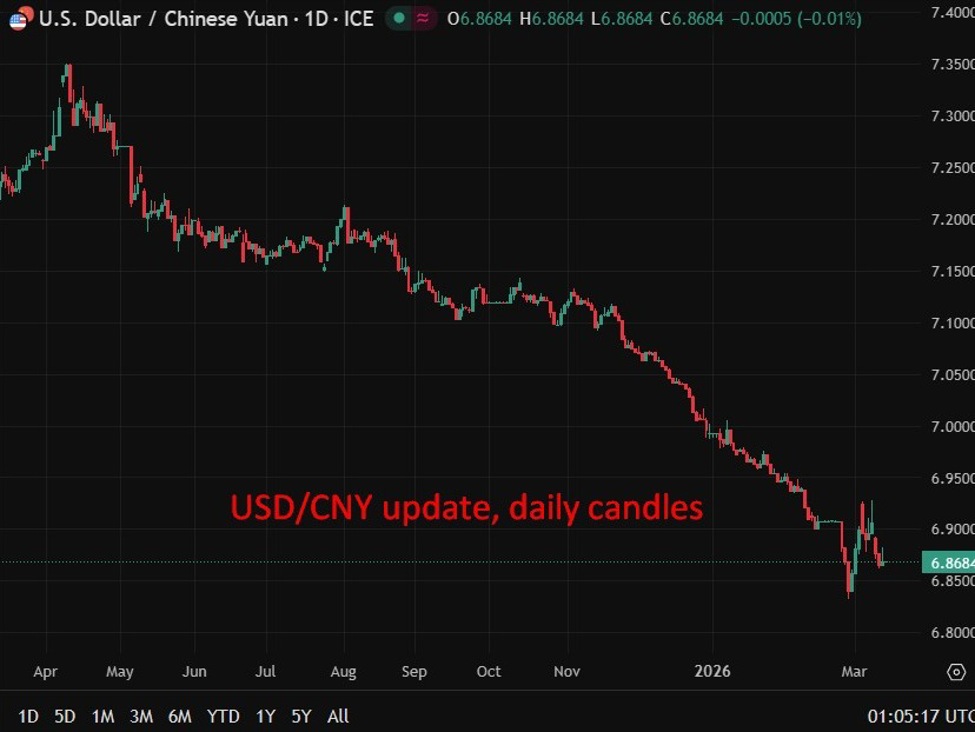
PBOC sets USD/ CNY reference rate for today at 6.9007 (vs. estimate at 6.8888)
The PBOC allows the yuan to fluctuate within a +/- 2% range, around this reference rate.Injects 37.5bn yuan in 7-day reverse repos at 1.4% (unchanged) in open market operations This article was written by Eamonn Sheridan at investinglive.com. 🔗 Source 💡 DMK Insight The PBOC’s recent move to inject 37.5bn yuan through reverse repos signals a proactive stance amid economic pressures. By maintaining the 1.4% rate, they’re trying to stabilize the yuan while allowing for a 2% fluctuation. This could impact forex traders, especially those holding positions in USD/CNY, as it suggests the central bank is wary of excessive volatility. If the yuan weakens significantly, we might see a ripple effect on commodities priced in yuan, like oil and gold, as well as on emerging market currencies. Traders should keep an eye on the 7-day repo rate and any shifts in the yuan’s value, particularly if it approaches the upper or lower bounds of its fluctuation range. A breach could trigger significant market reactions, especially from institutional players. Watch for upcoming economic data releases from China that could influence the PBOC’s next steps, as well as any geopolitical developments that might affect trade dynamics. 📮 Takeaway Monitor the USD/CNY pair closely; a breach of the yuan’s +/- 2% range could lead to increased volatility and trading opportunities.
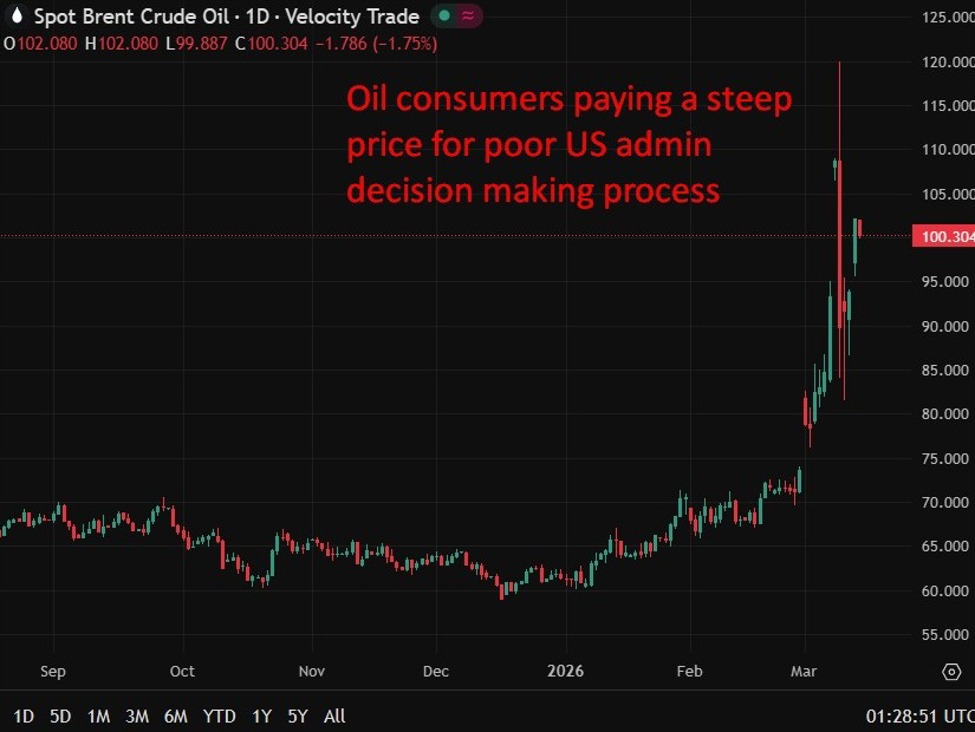
Poor US decision-making process underestimated Iran’s willingness to disrupt Hormuz
Officials say U.S. planning underestimated Iran’s willingness to disrupt the Strait of Hormuz, exposing weaknesses in the administration’s decision-making process. CNN with the info. Summary:Officials say the Trump administration underestimated the risk of Iran disrupting the Strait of Hormuz.Interagency economic and energy analysis was reportedly not central to planning discussions.Decision-making relied heavily on a smaller circle of yes-men advisers around the president.Disruptions to tanker traffic have triggered volatility in global oil markets.Naval escorts for tankers are being considered but are currently deemed too dangerous.The Trump administration significantly underestimated the potential consequences of military action against Iran, particularly the risk that Tehran would respond by disrupting traffic through the Strait of Hormuz, according to officials familiar with the planning process.Sources say officials involved in the operation did not fully account for the possibility that Iran might move to effectively shut down or severely disrupt the strategic waterway, despite the strait’s longstanding role as a critical chokepoint for global energy supplies.The Strait of Hormuz carries roughly one-fifth of global oil consumption, making it one of the most strategically important maritime routes in the world. Any disruption to tanker traffic can quickly ripple through global energy markets.Multiple sources said the administration’s planning process did not fully incorporate the kind of detailed economic and energy impact analysis that typically accompanies major national security decisions. While representatives from the Departments of Energy and Treasury attended some of the discussions leading up to the military operation, officials said their agencies’ modelling and forecasts were not central to the decision-making process.In past administrations, interagency planning for a potential conflict involving Iran would normally include extensive scenario analysis examining the economic, energy and shipping consequences of potential Iranian retaliation. Those processes often involve coordination across defence, intelligence, economic and energy agencies.However, several officials said the Trump administration’s decision-making relied heavily on a smaller circle of senior sycophantic advisers around the president, limiting broader interagency debate about the possible fallout if Iran were to target or disrupt oil shipping through Hormuz.Treasury Secretary Scott Bessent and Energy Secretary Chris Wright have played key roles in managing the economic and energy implications of the conflict since the operation began, sources said. However, critics argue that their input may have come too late to shape the initial strategic planning.The situation in the Strait of Hormuz has since evolved into what some officials describe as a worst-case scenario. Attacks on tankers and broader shipping disruptions have raised the risk of a sustained energy shock, sending volatility through global oil markets.Efforts are now underway to stabilise the situation, including discussions around organising naval escorts for oil tankers moving through the strait. But officials say those operations are currently considered too dangerous to implement immediately.Meanwhile, President Trump has publicly downplayed the turmoil in energy markets even as the administration works behind the scenes to mitigate the economic fallout.The developments have left some former officials and industry figures questioning the planning process that preceded the military operation. One former U.S. official who served in both Republican and Democratic administrations said preparing for a disruption in the Strait of Hormuz has long been a central principle of U.S. national security strategy.“Planning around preventing this exact scenario, impossible as it has long seemed, has been a bedrock principle of U.S. national security policy for decades,” the former official said.The current disruption has therefore surprised many observers who expected such risks to have been more thoroughly considered in the run-up to the conflict. This article was written by Eamonn Sheridan at investinglive.com. 🔗 Source 💡 DMK Insight Look, the U.S. underestimating Iran’s potential to disrupt the Strait of Hormuz is a big deal for traders right now. This chokepoint is crucial for global oil supply, and any hint of instability can send crude prices soaring. With tensions rising, traders should keep a close eye on oil futures and related assets like energy stocks. If Iran does decide to flex its muscles, we could see a spike in volatility, especially in the Brent and WTI crude markets. Historically, disruptions in this region have led to price surges, so it’s worth monitoring key resistance levels in crude oil—like $90 for Brent and $85 for WTI. A breach above these could trigger a wave of buying. On the flip side, if the situation de-escalates, we might see a pullback, so having stop-loss orders in place is crucial. Keep an eye on geopolitical news and any military movements in the region. The next few weeks could be pivotal, especially with OPEC’s production decisions looming. Traders should be prepared for rapid shifts in sentiment and price action. 📮 Takeaway Watch for crude oil prices around $90 for Brent and $85 for WTI; geopolitical developments in the Strait of Hormuz could trigger significant volatility.

US, EU and Japan advance critical minerals trade deal with price floor plan
The U.S., EU and Japan are preparing a coordinated critical minerals trade framework that could include price floors and tariffs aimed at countering China’s dominance in key supply chains.Japan Times with the info. Summary:The U.S., EU and Japan are preparing a framework for a critical minerals trade agreement.The proposal may include price floors and tariffs to counter Chinese market influence.Talks are being led by the U.S. Trade Representative with negotiations expected to begin in April.The push follows Chinese export controls on rare earths and key minerals.The deal could include stockpiling, investment coordination and research collaboration.The United States, Japan and the European Union are moving toward a coordinated strategy to reshape global critical minerals markets, as Western governments seek to reduce reliance on Chinese supply chains.Officials involved in the discussions say the three partners are preparing to announce plans in the coming weeks to establish the framework for a critical minerals trade agreement, which could include mechanisms such as minimum price floors and tariffs designed to counter what they view as market distortions caused by Chinese export practices.The initiative is being coordinated by the Office of the U.S. Trade Representative (USTR), which has led discussions with both Brussels and Tokyo. According to people familiar with the preparations, the negotiations aim to develop a structured trade framework covering materials essential to technologies such as electric vehicles, renewable energy systems and advanced electronics.The push to diversify supply chains intensified after China imposed sweeping export controls on rare earth elements and other critical minerals last year, a move widely viewed as retaliation against new U.S. tariffs introduced by the Trump administration. Beijing has warned it would respond to any effort by Western economies to form a coordinated bloc aimed at restricting or reshaping Chinese exports.While the most severe shortages seen last year have eased somewhat, many companies across manufacturing, technology and defence sectors say they are still struggling to secure sufficient supplies of key minerals from Chinese producers.U.S. Trade Representative Jamieson Greer is expected to begin formal negotiations with the EU and Japan in April, shortly after a public consultation period with industry stakeholders concludes on March 19. The announcement of initial plans may coincide with a visit to Washington by Japanese Prime Minister Sanae Takaichi on the same date, according to people familiar with the timing.One of the central ideas under consideration is the creation of a price floor for certain critical minerals. Such a mechanism would set a minimum price level intended to support producers in allied countries and encourage new investment in mining and processing capacity. By preventing prices from falling below that threshold, policymakers hope to reduce the risk of cheaper Chinese exports undercutting Western producers.To help design the mechanism, the Defense Advanced Research Projects Agency (DARPA) is reportedly providing technical expertise on pricing models and market structure.In addition to pricing tools, the proposed framework could include coordinated tariffs, regulatory cooperation, investment screening, research collaboration and strategic stockpiling of minerals.Mexico has already signed a preliminary action plan with Washington earlier this year, outlining similar discussions on coordinated trade policies and border-adjusted price mechanisms for critical minerals imports. Officials say the arrangements currently being discussed with the EU and Japan are expected to closely resemble that framework.The initiative could eventually expand to include additional countries and cover a broader range of minerals. Officials are currently assessing which materials should be prioritised first before widening the scope of the agreement.The issue is also expected to feature prominently at this year’s Group of Seven (G7) summit, where Western governments are increasingly focused on building more resilient supply chains for strategically important resources. This article was written by Eamonn Sheridan at investinglive.com. 🔗 Source 💡 DMK Insight The U.S., EU, and Japan’s move to establish a critical minerals trade framework is a game changer for traders in commodities and tech sectors. This initiative aims to set price floors and tariffs, directly challenging China’s grip on essential supply chains. For traders, this could mean increased volatility in critical minerals like lithium and cobalt, which are pivotal for electric vehicle batteries and renewable energy technologies. If implemented, watch for price adjustments and potential supply shortages that could ripple through related markets, including tech stocks and energy commodities. Keep an eye on the geopolitical landscape; any escalation could lead to sudden price spikes or drops. The real story here is how this framework might shift the balance of power in global supply chains, impacting everything from production costs to consumer prices. As this develops, traders should monitor key price levels in critical minerals and related equities, especially if tariffs are enacted. The next few months will be crucial for gauging the framework’s impact on market dynamics. 📮 Takeaway Watch for price movements in critical minerals as the U.S., EU, and Japan finalize their trade framework—this could reshape supply chains and market volatility.

ICYMI – Tesla wins UK licence to supply electricity to households
ICYMI – Tesla receives UK licence to supply electricity to homes, expanding its push into retail energy.Summary:Tesla Energy Ventures has been granted a UK electricity supply licence by regulator Ofgem.The move allows Tesla to sell electricity directly to British households.Tesla aims to combine solar generation, battery storage and energy retail services.The company will compete with suppliers such as Octopus Energy, British Gas and EDF.The development comes amid rising energy price concerns linked to the Iran conflict.Tesla is preparing to enter Britain’s retail electricity market after receiving regulatory approval to supply power directly to households, marking a new step in the company’s push into energy services.Britain’s energy regulator Ofgem confirmed that Tesla Energy Ventures, a subsidiary of Elon Musk’s Tesla, has been granted a licence to operate as an electricity supplier in the UK. The approval follows an application process that began in July last year.The licence allows Tesla to begin supplying electricity to British homes, positioning the company to compete with established providers such as Octopus Energy, British Gas and EDF.Tesla has already been active in Britain’s energy sector through another subsidiary, Tesla Motors Limited, which holds a licence to generate electricity. The new approval extends the company’s role from generation and storage into the retail supply market.The move aligns with Tesla’s broader strategy of integrating its renewable energy technologies with electricity supply. The company produces solar panels and Powerwall home batteries, which allow households to store energy generated from solar installations. In some cases, excess electricity stored in these batteries can be sold back into the grid.By becoming a licensed electricity supplier, Tesla could combine these technologies with retail energy offerings, potentially allowing customers to purchase electricity, generate their own power through solar panels and store surplus energy in home batteries within a single ecosystem.The development also comes at a time of heightened sensitivity around energy costs in Britain. Energy prices have surged globally following disruptions linked to the conflict involving Iran, raising concerns about rising household bills.At present, many UK households remain shielded from immediate price spikes due to the government’s regulated energy price cap, which limits the amount suppliers can charge consumers. The cap currently provides protection until July, but policymakers could face growing pressure to introduce further support if energy costs remain elevated beyond that point.Tesla’s entry into the market introduces a new competitor into Britain’s energy retail sector, potentially increasing competition at a time when consumers are seeking alternatives to traditional suppliers.The expansion also comes as Tesla faces challenges in another part of its UK business. Sales of Tesla vehicles in Britain declined 8.9% in 2025, reflecting growing competition from lower-priced Chinese electric vehicle manufacturers as well as consumer backlash linked to Musk’s political positions.Even so, the company appears to be expanding its presence in the UK energy sector as part of a longer-term strategy focused on distributed energy generation, battery storage and grid integration. This article was written by Eamonn Sheridan at investinglive.com. 🔗 Source 💡 DMK Insight Tesla’s new UK electricity supply license could reshape energy trading dynamics. This move isn’t just about selling power; it’s a strategic play that could influence energy prices and demand patterns. With SOL currently at $90.22, traders should consider how Tesla’s entry into the energy market might affect the broader renewable energy sector, including solar stocks and battery manufacturers. If Tesla successfully integrates solar generation with battery storage, it could create a competitive edge, potentially driving up demand for SOL as a clean energy asset. Watch for price movements in related sectors, especially if Tesla’s retail energy model gains traction. On the flip side, this could also lead to increased competition in the energy market, which might pressure prices in the short term. Keep an eye on regulatory responses and market reactions over the next few weeks, as these could provide critical insights into Tesla’s impact on energy trading and related assets. 📮 Takeaway Monitor SOL’s performance closely as Tesla’s energy expansion could influence both its price and the broader renewable energy market in the coming weeks.
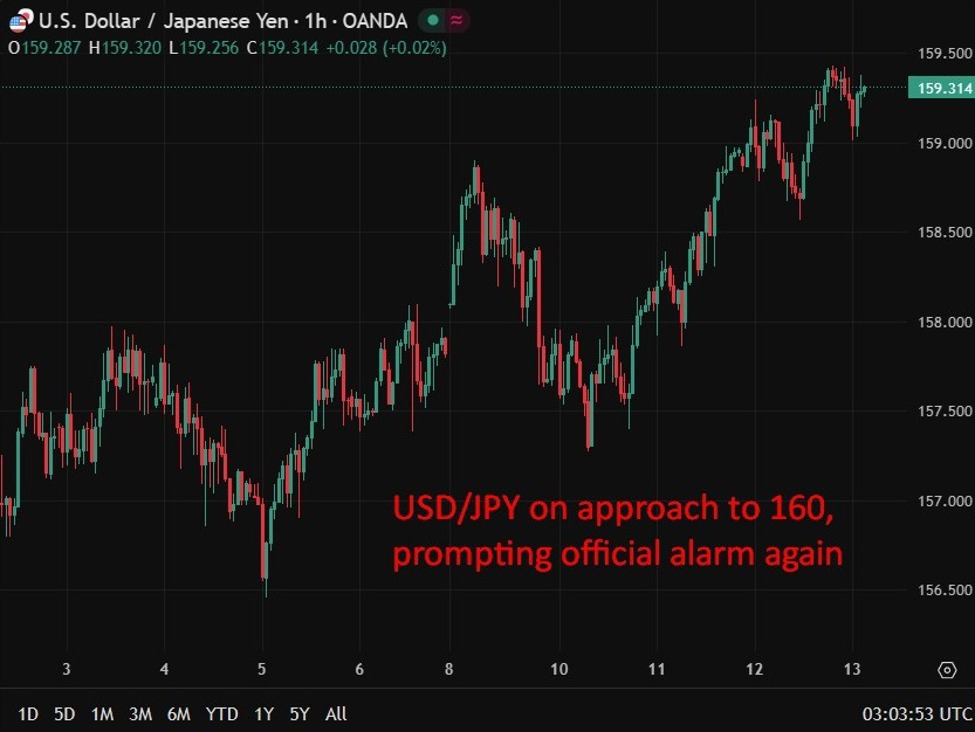
Japan warns on oil price impact, signals FX action as USD/JPY nears 160
Japan’s finance minister warns high oil prices are hitting markets and signals readiness to act in FX as USD/JPY nears intervention levels.Summary:Japan Finance Minister Seiko Katayama warned high oil prices are impacting financial markets.She said the government will take all possible measures to mitigate the impact.Katayama signalled readiness to act in foreign exchange markets if necessary.Japan is in close contact with U.S. authorities on FX developments.USD/JPY nearing 160, a level widely viewed as intervention risk territory.Japan’s Finance Minister Seiko Katayama warned that rising oil prices are increasingly affecting financial markets and household costs, signalling that authorities are prepared to act if the situation threatens economic stability.Speaking to reporters, Katayama said elevated crude prices are having a significant impact on global financial markets, adding that policymakers must remain vigilant as energy costs rise amid the ongoing Middle East conflict.Katayama stressed that the government will seek to mitigate the economic impact of higher oil prices as much as possible, noting that energy costs directly affect daily life through fuel, electricity and transportation expenses.“Oil prices remain high, and caution is warranted,” she said, adding that the government stands ready to take all possible measures to limit the impact on the economy.Her remarks also carried a clear signal on foreign exchange policy. Katayama said the government is prepared to take all possible steps in currency markets if necessary, highlighting the link between higher oil prices and Japan’s exchange rate.Japan imports nearly all of its energy, making the country particularly sensitive to spikes in crude prices. A weaker yen can compound those pressures by raising the cost of imported fuel and raw materials.The comments come as USD/JPY approaches the 160 level, a threshold widely viewed by traders as a potential danger zone for Japanese currency intervention. The Ministry of Finance last intervened in the foreign exchange market in 2024 when the yen weakened sharply.Katayama also said Tokyo is in close contact with U.S. authorities on foreign exchange matters, reinforcing the government’s readiness to coordinate with international partners if market conditions become disorderly. I bolded that, Japanese authorities like to wield the “US” as a big stick, hinting at coordinated intervention. Officials in Japan have repeatedly emphasised that excessive or speculative currency movements are undesirable, particularly when they threaten to amplify inflation pressures through higher import costs.With energy markets under strain and the yen weakening, the government’s latest remarks appear aimed at signalling a stronger willingness to act if volatility intensifies.While Katayama did not specify a particular exchange-rate level that would trigger intervention, the comments underline rising concern within Japanese authorities that higher oil prices and currency weakness could combine to increase pressure on the domestic economy.For markets, the message is clear: Tokyo is watching developments closely and stands ready to respond if the combination of rising energy prices and yen depreciation begins to disrupt economic stability. This article was written by Eamonn Sheridan at investinglive.com. 🔗 Source
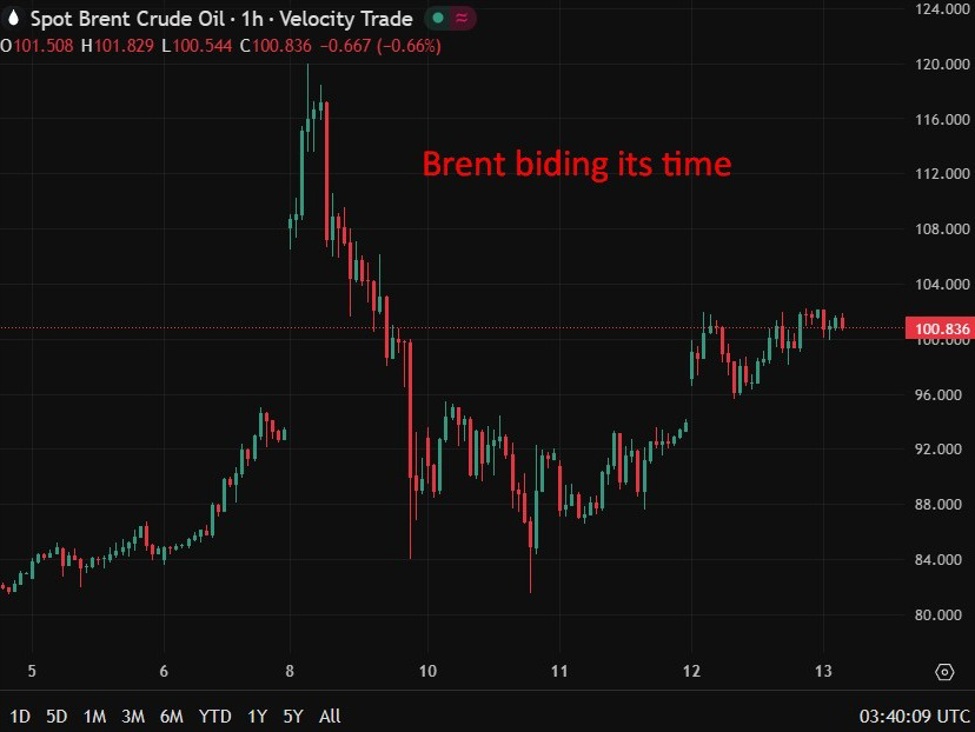
investingLive Asia-Pacific FX news wrap: Russia gets some oil sanctions relief from Trump
Japan warns on oil price impact, signals FX action as USD/JPY nears 160ICYMI – Tesla wins UK licence to supply electricity to householdsUS, EU and Japan advance critical minerals trade deal with price floor planPoor US decision-making process underestimated Iran’s willingness to disrupt HormuzPBOC sets USD/ CNY reference rate for today at 6.9007 (vs. estimate at 6.8888)FX option expiries 13 March 2026 New York cut (10:00 ET)Australia to release 762 million litres of fuel after easing stockpile rulesReuters poll: RBA seen raising cash rate to 4.10% on March 17, then 4.35% by end-2026US grants temporary license allowing sale of Russian oil cargoes already loaded (oil TACO)Five pipelines that can bypass the Strait of Hormuz. But not replace it.Asia’s refineries built for Gulf crude, making Hormuz disruption hard to replaceIran says it will not close Strait of Hormuz but asserts right to secure waterwayNew Zealand manufacturing PMI holds at 55 in February, strongest run since 2021More from Bessent, says we know Iran has not mined the Strait of HormuzIsraeli officials say Iran’s regime unlikely to fall soon despite war pressureStocks tumble as oil surges 8%, pressure spreads across sectorsIran says its not going close Strait of HormuzinvestingLive Americas market news wrap: Risk rout intensifies with oil near $100At a glance:Oil gains were contained after the U.S. issued a temporary licence allowing sales of Russian oil already at sea.The Trump administration framed the move as a short-term measure to stabilise global energy markets amid the Iran conflict.Japan and other Asia-Pacific nations are preparing around $30bn in energy and critical minerals deals with U.S. companies.Australia plans to release around 20% of fuel reserves to address supply shortages.FX markets were subdued with USD/JPY drifting toward 159.50, while Asia-Pacific equities were mixed.It was a subdued session across Asia-Pacific markets, with price action largely contained as traders digested developments in energy markets and geopolitics.Oil prices remained elevated but upside momentum was somewhat capped after the United States issued a Russia-related general licence allowing the sale of Russian crude oil and petroleum products that were already loaded onto vessels.Treasury Secretary Scott Bessent said the Trump administration would allow countries to purchase Russian oil currently stranded at sea as a temporary measure aimed at increasing global supply and stabilising energy markets. The licence effectively provides a 30-day sanctions waiver for cargoes already in transit, giving traders and refiners time to complete transactions while avoiding further disruption to supply.The move comes as Washington attempts to contain energy market volatility triggered by the conflict involving Iran and disruptions around key shipping routes.In broader energy news, Japan and several Asia-Pacific partners are expected to unveil at least $30 billion in agreements with U.S. companies during a visit by Trump administration officials to Tokyo this weekend. The deals are expected to include purchase commitments and investment across sectors such as coal, oil, liquefied natural gas and nuclear power, as Washington promotes deeper regional cooperation on energy security and critical minerals supply chains.Meanwhile, Australia announced it will release roughly 20% of its fuel reserves, a measure aimed primarily at addressing supply shortages that have already emerged in rural and regional areas.In currency markets, activity was relatively muted. The U.S. dollar traded in narrow ranges across major pairs, with USD/JPY edging back toward the 159.50 level as traders remained alert to the risk of potential intervention should the pair approach 160 and above.Equity markets across the region were mixed. Japan’s Nikkei underperformed, while broader regional indices saw modest movement. U.S. equity index futures were slightly firmer, pointing to a steadier tone heading into the next global trading session. This article was written by Eamonn Sheridan at investinglive.com. 🔗 Source 💡 DMK Insight Japan’s warning on oil prices is a big deal for traders right now. With USD/JPY nearing 160, the Bank of Japan might have to step in to stabilize the yen. This could lead to increased volatility in the forex market, especially for pairs involving the yen. Traders should keep an eye on oil prices, as rising costs can impact Japan’s trade balance and economic outlook. If oil continues to climb, we might see a shift in monetary policy, which could trigger sharp moves in USD/JPY. Additionally, the ongoing discussions around critical minerals and the geopolitical tensions in the Middle East could create ripple effects across commodities and related currencies. Watch for key resistance levels in USD/JPY around 160, as a break could signal a more aggressive intervention from the BoJ. On the flip side, if oil prices stabilize or decline, it could ease pressure on the yen and provide a short-term relief rally. Traders should monitor the upcoming economic data releases and geopolitical developments closely, as these could influence market sentiment significantly. 📮 Takeaway Keep an eye on USD/JPY near 160; any intervention from the BoJ could lead to significant volatility in the forex market.
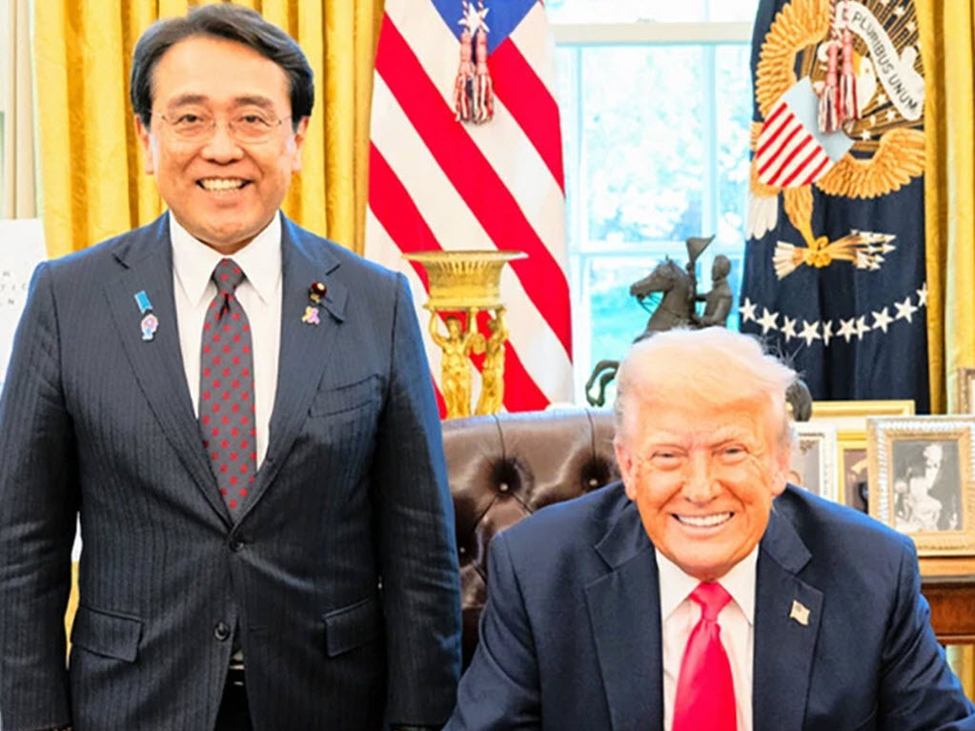
Japan Akazawa: Japan will make utmost efforts in securing alternative sources of crude oil
Japan trade minister Akazawa:Will continue to discuss Japan’s allocation and timing of IEA-led coordinated oil reserves releaseJapanese government, together with private sector operators, will make utmost efforts in securing alternative sources of crude oil.Japanese companies are exploring alternative sources for crude oil procurement, including U.S., Central Asia, and South America This article was written by Eamonn Sheridan at investinglive.com. 🔗 Source 💡 DMK Insight Japan’s push for alternative crude oil sources could shake up global supply dynamics. With ETH currently at $2,124.01, this news could impact energy-related assets and commodities, especially if Japan successfully diversifies its imports. Traders should keep an eye on how this affects oil prices, as any significant shifts could ripple through the crypto market, particularly for energy-intensive assets like Ethereum. If oil prices drop due to increased supply, it might lead to lower energy costs for mining, potentially boosting ETH’s price in the medium term. Watch for any announcements from Japanese companies regarding new procurement deals, as these could serve as catalysts for price movements in both oil and crypto markets. 📮 Takeaway Monitor Japan’s oil procurement developments closely; any significant changes could impact ETH’s price and energy costs for mining.

FX option expiries for 13 March 10am New York cut
EUR/USD1.1700 (EUR 2.89 bn)1.1600 (EUR 1.00 bn)1.1500 (EUR 866.36 mn)1.1400 (EUR 580.00 mn)USD/JPY160.00 (US$ 464.89 mn)159.00 (US$ 495.28 mn)158.50 (US$ 406.68 mn)GBP/USD1.3450 (GBP 299.62 mn)1.3300 (GBP 150.00 mn)USD/CHF0.7780 (US$ 299.10 mn)0.7700 (US$ 534.13 mn)USD/CAD1.3835 (US$ 470.70 mn)1.3700 (US$ 292.22 mn)1.3550 (US$ 230.00 mn)AUD/USD0.7100 (AUD 816.97 mn)0.7000 (AUD 962.99 mn)NZD/USD0.5790 (NZD 310.00 mn)EUR/GBP0.8650 (EUR 214.00 mn)0.8550 (EUR 350.00 mn)WHAT ARE OPTION EXPIRIES?The FX option expiration price levels refer to the strike prices where option contracts are set to expire. These levels include both calls and puts.When you see “EUR/USD at 1.1600 for €4 billion” it means there is a total of €4 billion worth of options (calls + puts combined) that have a strike price of 1.1600 and are expiring at that specific time (the “New York Cut” at 10:00 AM ET).Traders watch these levels because they often act as a “magnet” for the price. For example, if there’s nothing happening in the market and the price is close to the expiry level, let’s say 30-50 pips away, what you will usually see is the price moving into the expiry level. This happens due to the hedging activity of the market makers (banks, dealers and so on).As the price gets closer to the strike price near expiration, these market makers must aggressively buy or sell the currency to hedge their risk. This hedging activity tends to suppress volatility and keep the price “pinned” close to the strike price until the expiration time passes.RELATED ARTICLES:For more information on how to use this data, you may refer to this post here. This article was written by Giuseppe Dellamotta at investinglive.com. 🔗 Source

UK January monthly GDP +0.0% vs +0.2% m/m expected
Prior +0.1%GDP +0.8% vs +0.9% y/y expectedPrior +0.7%The more detailed breakdown as per the following:Services +0.0% vs +0.2% m/m expectedPrior +0.3% (revised to +0.2%)Industrial output -0.1% vs +0.2% m/m expectedPrior -0.9%Manufacturing output +0.1% vs +0.2% m/m expectedPrior -0.5%Construction output +0.2% vs 0.0% m/m expectedPrior -0.5%This is lower than expected and it doesn’t bode well for the UK economy if we start to see more weakness going forward. We’ve seen some downside in the pound as weakening growth coupled with higher inflation expectations and rate hike bets is an awful recipe.The Director of Economic Statistics, Liz McKeown, said: “Growth ticked up slightly in the latest three months, partly reflecting the recovery of car manufacturing, following the cyber incident in the Autumn. Within services, which also increased, wholesale continued to rebound from a weak summer. However, the overall picture remains subdued, with no growth in the latest month. There was another large fall in the construction industry in the latest three months, with continued contraction in housebuilding.” This article was written by Giuseppe Dellamotta at investinglive.com. 🔗 Source 💡 DMK Insight Economic data just missed the mark, and here’s why that matters: weaker industrial output could signal a slowdown. The latest figures show GDP growth at +0.1%, falling short of the +0.8% expected, with industrial output dipping -0.1% against a forecast of +0.2%. This is a red flag for traders, especially those in sectors sensitive to economic cycles. A slowdown in manufacturing and services could lead to reduced demand for commodities and currencies tied to economic growth, like AUD and CAD. Watch how this data impacts market sentiment in the coming days, particularly in forex pairs where these currencies are involved. But don’t overlook the construction output, which surprisingly rose +0.2%—this could indicate some resilience in the housing sector. Still, the overall trend is concerning. Traders should keep an eye on the upcoming economic indicators and any shifts in central bank policies that might respond to this data. Key levels to monitor are the support and resistance zones in related currency pairs, as volatility may increase as the market digests this news. 📮 Takeaway Watch for reactions in AUD/USD and CAD/USD as traders digest this weaker economic data, especially if support levels break.