
 Bitcoin
  Ethereum
  Tether
  BNB
BNB  XRP
XRP  USDC
USDC  Solana
  TRON
TRON  Lido Staked Ether
  Figure Heloc
The situation in the Middle East remains the main story, as it has been in markets all week long. The optimists are looking for signs of de-escalation but so far, the actions on the ground continue to tell the story that the military conflict is carrying on.The latest developments since overnight trading did at least reveal a couple of things. The main one being that Trump doesn’t seem like he has the appetite for much higher oil prices. That as the US administration might even look to intervene in oil market futures just to keep prices down.For now though, the oil market remains anxious. Despite the mix of headlines all through the week, we’re seeing traders slowly grow more worried about the US-Iran conflict and its impact on energy security in the region. Right now, WTI crude oil is bordering on finding that firm break above $80:We may be down slightly from the highs overnight of over $82. However, it is not to say that the balance of the overall risk mood has improved that much to side with de-escalation talks just yet.The $80 mark is a key line in the sand now. A push above that suggests that traders are growing ever more nervous about the Middle East conflict. Keep below and it leans more towards simmering tensions with hopes that things will settle down soon enough.If traders get around the idea of holding above $80, I’m afraid we might get a rush to much higher levels and even see talks about triple digits quite quickly. But again, the overall situation remains fluid and we are subject to the headline developments at this stage.As we look to the weekend, there are some thing to be wary about. The first being that Gulf nations might be hitting a bit of a pain threshold soon enough. And that could see them pressure the US into taking a step back on the conflict. Yes, Iran is the common enemy in all of this. However, the chaos and constant energy disruptions might be too difficult to keep ignoring if it carries on for weeks on end.Adding to that is Trump also putting it out there that Iran wants to talk. It might be something or it might be nothing. But the point is, he has put the conversation out for the world to see. For now, he’s saying that it is “too little too late”. However, we all know Trump and when you combine the things he detest the most i.e. high oil prices, falling stock market, and Fed rate cut odds diminishing, he could also be nearing the infamous TACO threshold. This article was written by Justin Low at investinglive.com. 🔗 Source 💡 DMK Insight The ongoing military conflict in the Middle East is weighing heavily on market sentiment, and here’s why that matters: geopolitical tensions often lead to volatility in commodities and currencies. Traders should be particularly mindful of oil prices, which typically react sharply to such developments. If the situation escalates further, we could see crude oil spike, impacting inflation expectations and potentially leading to tighter monetary policies from central banks. Look at the correlation between oil and the broader market; a sustained rise in oil could pressure equities and strengthen safe-haven assets like gold and the US dollar. On the flip side, if any signs of de-escalation emerge, we might see a quick rebound in risk assets. Keep an eye on key levels—$80 per barrel for crude could be a pivotal point. If it breaks above that, expect increased volatility across the board. For now, traders should monitor news closely and consider adjusting positions based on the evolving situation, especially in energy stocks and currencies sensitive to oil prices. 📮 Takeaway Watch for oil prices around $80 per barrel; a breakout could signal increased market volatility and impact related assets.
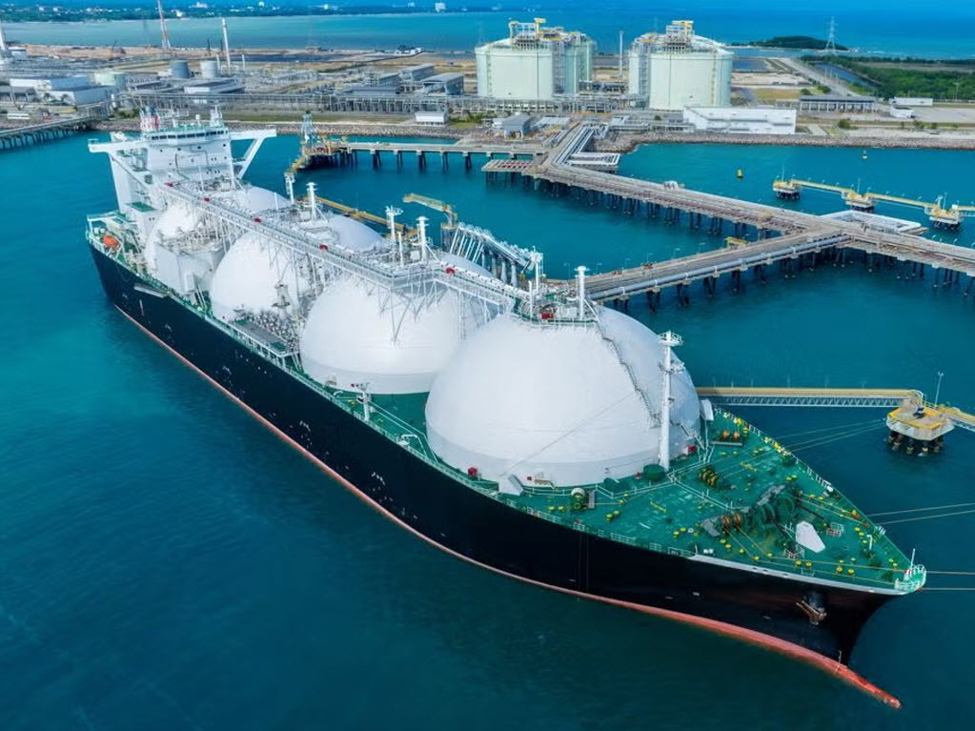
Qatar reportedly offers to lease LNG tankers as Ras Laffan plant stays shut
The Ras Laffan plant was already shut down earlier this week, after it was targeted by Iranian drone attacks. The plant covers about a fifth of the world’s LNG supply and is the world’s largest export facility in that regard.The latest report from Bloomberg states that as the plant remains shut down, Qatar is said to be offering two of its LNG tankers up for leasing. The two charters, namely the Al Thumama and Mesaieed, both belong to state-owned QatarEnergy and are being offered to the market.According to ship-tracking data, these vessels are currently off the west coast of Africa.This is quite the interesting development I would say. If anything, it speaks to the likelihood that the chaos in the region might extend for much longer. Otherwise, I don’t see why Qatar would want to so hastily come to such a decision.If anything, this won’t help calm the nerves for European gas prices – which are still up nearly 60% since last week. This article was written by Justin Low at investinglive.com. 🔗 Source 💡 DMK Insight The shutdown of the Ras Laffan plant due to Iranian drone attacks is a game-changer for LNG markets. With this facility accounting for about 20% of global LNG supply, traders need to brace for potential price spikes as supply tightens. The immediate impact could push LNG prices higher, especially if alternative sources can’t fill the gap quickly. Keep an eye on the broader energy sector, as this disruption might ripple through oil and gas markets, affecting correlated assets like crude oil futures. If prices break above recent resistance levels, it could signal a longer-term bullish trend. On the flip side, if diplomatic efforts lead to a swift resolution, we might see a quick retracement. Watch for updates on the plant’s status and any geopolitical developments that could influence market sentiment in the coming days. 📮 Takeaway Monitor LNG prices closely; a sustained breakout above recent highs could indicate a bullish trend driven by supply constraints.

Japan finance minister says will respond nimbly to latest market movements
Japan has not fully exited from deflationCompiling extra budget would of course be an option as said beforeGovernment ready to take steps in a timely manner to combat economic impact from US-Iran conflictMarkets are making big moves so we will respond nimbly while closely communicating with peersWith all the focus on the Middle East, we may get some added volatility from Japan before the week comes to a close. USD/JPY is bordering at the week’s highs near the 158.00 level, threatening its highest levels since the ‘rate check’ at the end of January.The main issue plaguing the currency is still the Takaichi trade for the most part. But amid the US-Iran conflict, higher oil prices are also weighing heavily on the economic outlook. And that in turn also makes it tough for the BOJ to transition to the next rate hike, even with a strong result from the spring wage negotiations lined up.A weakening economy and cost-push inflation, something that the BOJ wants to avoid, are both an direct result of higher oil prices considering Japan’s status as an energy importer.Piecing all that together, the fundamental drivers are pushing down the yen currency. And in turn, it is also making it tough for the finance ministry to step in with outright intervention. Nobody likes to be burning cash against a backdrop that is working counter to your intentions. This article was written by Justin Low at investinglive.com. 🔗 Source 💡 DMK Insight Japan’s struggle with deflation is a critical issue that traders need to keep an eye on, especially with the potential for government intervention. The mention of an extra budget signals a readiness to stimulate the economy, which could lead to increased volatility in the yen and related markets. If Japan decides to take decisive action, such as monetary easing, it could weaken the yen further, impacting forex pairs like USD/JPY. Traders should watch for any announcements or shifts in policy, particularly in the context of rising global tensions like the US-Iran conflict, which could exacerbate market reactions. It’s worth noting that while some may see this as a straightforward path to recovery, the historical context suggests that government interventions can sometimes lead to unintended consequences, such as prolonged market instability. Keep an eye on key economic indicators from Japan and any comments from the Bank of Japan, as these will provide insight into future moves. In the coming weeks, monitor the USD/JPY for potential breakout levels, especially if the government signals a shift in fiscal policy. 📮 Takeaway Watch for Japan’s fiscal policy announcements and monitor USD/JPY for breakout levels, as government intervention could lead to significant market shifts.

BOJ policymaker Himino: Underlying inflation gradually accelerating to 2% target
BOJ keeping monetary conditions accommodativeGradually adjusting degree of monetary accommodationJapan is seeing inflation in the sense that consumer prices are risingBut it is up to the government to decide whether Japan is out of deflationBOJ does not directly target exchange rateWill continue to scrutinise market moves, impact on the economy and pricesHard for BOJ to directly influence wagesWage dynamics are driven by various factors including those that monetary policy cannot controlThe comments go in line with Katayama’s remarks around the same time here. And Katayama herself already gave the answer that “Japan has not fully exited deflation”. That’s a bit of a jibe at the BOJ as the central bank is still trying to work out how they want to angle their next rate hike.Besides that, Katayama did also chime in to say that the BOJ’s task is to achieve price stability and not to target the exchange rate. And that is something that Himino also reaffirmed above. But I reckon, Katayama’s comment has a double meaning in that she doesn’t want policymakers at the central bank to overstep in raising interest rates to defend the yen currency. This article was written by Justin Low at investinglive.com. 🔗 Source 💡 DMK Insight The BOJ’s commitment to accommodative monetary policy is a double-edged sword for traders: it supports risk assets but raises concerns about currency stability. With ETH currently at $2,059.25, the implications of Japan’s inflation and the BOJ’s stance could influence crypto markets, particularly if the yen weakens. A weaker yen often drives investors towards alternative assets like Ethereum, potentially boosting demand. Traders should keep an eye on how this monetary policy impacts the broader market sentiment, especially in the context of rising inflation. If ETH can maintain above the $2,000 level, it may signal bullish momentum, but any signs of a significant yen depreciation could lead to increased volatility. On the flip side, if the BOJ shifts its stance unexpectedly, it could create turbulence not just in forex but also in crypto markets. Watch for any comments from BOJ officials and monitor the USD/JPY pair for clues on market direction. Immediate attention should be on ETH’s price action around $2,000, as a breach could lead to further upside or downside depending on market reactions. 📮 Takeaway Keep an eye on ETH’s support at $2,000; a decisive move could signal broader market trends influenced by BOJ’s monetary policy.
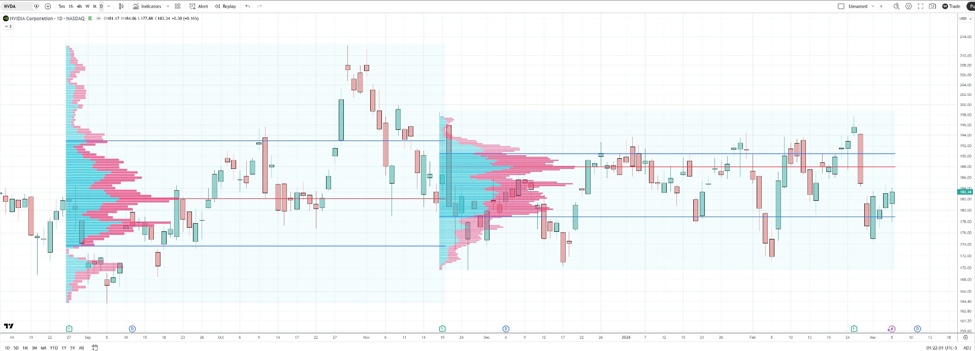
NVDA Technical Analysis
Prediction Score: +2 / +10Primary bias right now: neutral to slightly bullish repair, but still inside a decision zone.I would change that view if price close below the Value Area Low. What’s that? You will learn about that here.Looking only at this daily chart for NVDA, the biggest message from the two quarterly anchored volume profiles is that value migrated higher from one earnings quarter to the next, but price has not yet fully re-accepted that higher value.The older anchored profile appears to center around a POC near $182, with its broader value area roughly stretching from the mid-$173s up into the low-$193s. The newer anchored profile appears to center higher, around a POC near $188, with value roughly between $179 and $190-$191. That shift upward matters. It says the market, on a quarter-to-quarter basis, was willing to do more business at higher prices. Structurally, that is constructive.But the current price action is the nuance.NVDA is trading around $183.34, which puts it above the older quarter’s POC area, but below the newer quarter’s POC and below the upper part of the newer value area. In plain English, the stock is sitting between the old fair-value zone and the new fair-value zone. That usually means rotation and negotiation, not clean trend control.What I find constructive is the recent reaction from the lower area. The selloff pushed down toward the $179 zone and briefly into the mid-$170s, then buyers stepped in and lifted price back. That tells me the lower edge of the newer quarter’s value area, plus the older quarter’s lower acceptance zone, still attracted demand. So this does not look like a clean bearish acceptance below value. It looks more like a failed downside auction attempt, at least for now.Still, bulls have unfinished work.To shift this from “repair bounce” into something more bullish, NVDA needs to reclaim the newer quarter’s POC near $188, then show acceptance above the $190-$191 area. If that happens, the path opens toward the overlapping higher references around $193-$194, and then potentially back toward the upper swing area in the high-$190s.On the bearish side, the key warning is simple. If this rebound stalls and price loses $182, then especially $179, that would suggest the bounce failed inside balance. In that case, the market likely rotates back toward the older lower acceptance area around $173-$174. A real acceptance below that zone would be much more damaging because it would mean both quarterly structures are losing support.So, Value Area what…? How traders use anchored volume profile in technical analysisAnchored volume profile is a way to measure where the market has done the most business from a specific starting point. Instead of looking at volume by time, it shows volume by price, which helps traders see where buyers and sellers were most active within a chosen period. The anchor point matters a lot. Many traders anchor the profile from an important event such as earnings, a major swing high or low, a breakout, or a sharp reversal. That turns the tool into a map of how the market has accepted or rejected price since that event.One of the most important levels inside an anchored volume profile is the Point of Control, or POC. This is the price where the highest amount of volume traded during that anchored period. In simple terms, it often represents the market’s fairest price for that phase. Around it, traders also watch the value area, which is the zone where most of the volume was transacted. When price is trading inside that area, the market is often in balance. When price moves outside it, the market may be testing whether it can build acceptance at a new level.This is where anchored volume profile becomes useful in real trading. If price is above the anchored POC and continues holding higher value, that can suggest improving demand and stronger bullish control. If price falls back below the POC after failing to hold higher levels, it may signal rejection and a return to prior balance. In other words, the tool helps traders judge whether a move is being accepted or whether it is likely to fade.Another strength of anchored volume profile is context. A moving average can show trend, but it does not show where the market actually agreed on price. Anchored volume profile does. That is why many traders combine it with price action, candlestick structure, and support or resistance. If several important references line up near the same area, that price zone often becomes more important.Used well, anchored volume profile is not about predicting the future with certainty. It is about improving market location. It helps traders identify where value sits now, where value used to sit, and whether price is moving into acceptance, rejection, or a potential transition between the two.Back to my NVDA daily chart with those volume profilesSo the chart is not saying “strong bullish continuation” yet, but it is also not confirming a fresh bearish breakdown. It is saying:Quarter-over-quarter structure is still constructive, but near-term price is trapped in a re-acceptance test.Key levels I would respect:$182-$183: older quarter POC / immediate pivot$179: newer quarter lower value support$188: newer quarter POC$190-$191: higher value acceptance trigger$193-$194: next upside rotation zone$173-$174: deeper support / failure zoneMy bottom line: this looks more like a market trying to repair after a downside flush, not a clean trend leg yet. The chart becomes meaningfully stronger only if NVDA can hold above $182-$183 and reclaim $188-$191. Until then, expect chop and two-sided trade inside overlapping quarterly value. I’m deliberately framing this as scenario-based decision support rather than a certainty call. Last but not least, what may working for the bulls is the latest earnings from NVDA peer, MRVL, which was up apx 15% after its recent earnings. Stay tuned for more at investingLive.com This article was written by Itai Levitan at investinglive.com. 🔗 Source 💡 DMK Insight NVIDIA’s price action is teetering on a critical decision zone, and here’s why that’s key for traders: With a current neutral
FX option expiries for 6 March 10am New York cut
There is arguably just one to take note of on the day, as highlighted in bold below.That being for EUR/USD at the 1.1600 level once more. It’s the same approach as it has been all week with the expiries once again sitting at the figure level. The key driver of trading sentiment in FX right now is more of the general dollar mood. And that ties to the US-Iran conflict for the most part, as well as the broader risk environment.So, that will still override everything else and be the bigger influence of price action for the session ahead. However, the expiries could play a minor role in keeping price action more tight and cagey around the 1.1600 mark. That being said, the impact of the expiries on a week like this is typically more muted. So, just keep that in mind.For more information on how to use this data, you may refer to this post here.Head on over to investingLive (formerly ForexLive) to get in on the know! This article was written by Justin Low at investinglive.com. 🔗 Source 💡 DMK Insight EUR/USD is hovering around the 1.1600 level, and here’s why that matters right now: This level has become a focal point for traders, with expiries clustering around it throughout the week. Such concentration often leads to increased volatility as market participants react to options expirations. If the pair breaks above or below this level, it could trigger significant moves, especially if combined with broader market sentiment or economic data releases. Keep an eye on the daily chart for any signs of momentum; a sustained move above 1.1620 could signal bullish intent, while a drop below 1.1580 might invite bearish pressure. But don’t overlook the potential for whipsaws around this level. With the current market sentiment being cautious, any unexpected news could lead to rapid reversals. Traders should also monitor correlated assets like the DXY (U.S. Dollar Index) for additional context on dollar strength or weakness, as it can influence the EUR/USD dynamics. Watch for the expiration impact today, as it could set the tone for the upcoming sessions. 📮 Takeaway Watch the EUR/USD closely at the 1.1600 level; a break above 1.1620 or below 1.1580 could lead to significant volatility.

UK February Halifax house prices +0.3% vs +0.3% m/m expected
Prior +0.7%Slight delay in the release by the source. UK house prices continue to edge up in February, with the average property price now touching £301,151 – marking a new record high. The annual growth for house prices also accelerated further to 1.3%, its strongest in four months.Halifax notes that:”The housing market built on its steady start to the year in February, with average prices rising by +0.3%, following an increase of +0.8% in January. Annual growth also picked up to +1.3%, its strongest rate for four months. Since the start of the year, average prices have increased by around £3,000, with a typical property now costing £301,151.These latest figures suggest the market has regained some momentum after a softer end to 2025. While industry data for January show a slight easing in new mortgage approvals, overall activity has continued to prove resilient.There’s no doubt that affordability remains stretched, supply is constrained, and regional disparities persist. For those without family support, the path to home ownership feels particularly challenging.However, conditions have been gradually improving, with easing interest rates and real wage growth helping to support buyer confidence. As ever, timely and expert advice remains key to helping more people achieve their goal of stepping onto the property ladder.Looking ahead, geopolitical uncertainties seem set to influence the outlook for inflation and the wider economy. Against that backdrop, markets are now anticipating a more gradual path for interest‑rate reductions. If realised, the speed at which borrowing costs ease may be tempered.” This article was written by Justin Low at investinglive.com. 🔗 Source 💡 DMK Insight UK house prices hitting a record high of £301,151 is a big deal for traders: This uptick in property values, with an annual growth rate of 1.3%, signals a resilient housing market that could influence broader economic sentiment. For forex traders, this could mean a stronger GBP as positive economic indicators often lead to currency appreciation. Keep an eye on how this impacts the Bank of England’s monetary policy; if they perceive the housing market as stable, we might see less urgency in rate hikes, which could affect GBP pairs. But here’s the flip side: rising house prices can also lead to affordability issues, potentially cooling demand in the long run. If buyers start pulling back, it could create downward pressure on prices, which would be a significant shift. For now, watch the £300,000 level closely; a sustained break above could attract more bullish sentiment. Also, monitor the upcoming economic data releases for any shifts in consumer confidence or spending that could correlate with housing trends. 📮 Takeaway Traders should watch the £300,000 level in UK house prices; a sustained break above could strengthen GBP, impacting related forex pairs.
ECB policymaker Sleijpen: We can tolerate a small inflation overshoot
Just like the case of undershooting, we can also tolerate a small inflation overshootI haven’t dramatically changed my view on policy outlookWe are still in a good placeWe have learnt lessons from 2021/22 but comparisons with the current situation are not entirely validComfortable holding gold reserves at the Fed, confident in the Fed’s swap linesThe first point is arguably the most notable. If anything, it reaffirms that the central bank won’t be rushing to take steps in addressing the impact from the US-Iran conflict. And I would say rightfully so. As a reminder, it’s still just less than a week since the conflict started.These days with the social media revolution, the echo chamber runs so quickly that everyone wants a response or an answer almost immediately. It’s the same thing like in football too. Your team might go on a 5-game win streak then lose a game after, then suddenly everyone will start piling in and talk about how the club is in “crisis”. Geez.All that being said, complacency is a killer. And that is something the ECB needs to be well aware of in trying to play down any major effect from higher energy prices in the region, even if temporary. So, Sleijpen playing down their response to the Russia-Ukraine aftermath isn’t exactly good form. After all, we all can still remember how the whole ‘transitory’ episode went. This article was written by Justin Low at investinglive.com. 🔗 Source 💡 DMK Insight Inflation overshooting might not be as alarming as it seems, but here’s why traders should care: The Fed’s confidence in holding gold reserves signals a strategic pivot amidst inflationary pressures. While the central bank’s stance appears stable, the lessons learned from 2021/22 could lead to more aggressive policy adjustments if inflation continues to rise unexpectedly. Traders should keep an eye on gold prices, as a sustained inflation overshoot could bolster gold’s appeal as a hedge, potentially pushing prices higher. If inflation metrics start to deviate significantly from the Fed’s targets, expect volatility across risk assets, particularly in equities and commodities. Watch for key inflation reports in the coming weeks; any significant surprises could trigger shifts in market sentiment and trading strategies. The real story is how the Fed balances its confidence with the need to maintain credibility in its inflation targets. A breakout in gold above recent resistance levels could signal a broader risk-off sentiment, impacting correlated assets like silver and even cryptocurrencies. 📮 Takeaway Keep an eye on upcoming inflation reports; a significant overshoot could push gold prices higher and trigger volatility in equities.

Gold consolidates around key levels ahead of NFP as we enter the 7th day of US-Iran war
FUNDAMENTAL OVERVIEWGold got stuck in a consolidation after the selloff experienced at the beginning of the week. We saw mixed and confusing moves across different markets with crude oil being the only one making sense. The focus is of course on the US-Iran war and especially on the Strait of Hormuz, which remains virtually closed. This conflict is pushing energy prices higher, which is feeding into rising inflation expectations. That triggered a hawkish repricing in interest rates expectations, which might have weighed on gold.Today, we have the US NFP report, and although the data might not matter much right now, it might trigger another hawkish repricing if we get strong data and weigh on the market.GOLD TECHNICAL ANALYSIS – DAILY TIMEFRAMEOn the daily chart, we can see that gold is consolidating around the 5,100 level with traders awaiting new catalysts for the next direction. There’s not much we can glean from this timeframe, so we need to zoom in to see some more details. GOLD TECHNICAL ANALYSIS – 4 HOUR TIMEFRAMEOn the 4 hour chart, we can see the price probed below the key support zone around the 5,100 level again yesterday but failed to sustain the breakout. This consolidation is leading to many false moves. The sellers will want to wait for the price to break below the weekly low around the 4,995 level before piling in with more conviction to target the 4,600 level next. The buyers, on the other hand, will look for a break above the 5,200 level to open the door for a rally into the all-time high.GOLD TECHNICAL ANALYSIS – 1 HOUR TIMEFRAMEOn the 1 hour chart, we can see that we have a downward trendline defining the recent pullback into the 5,100 support. We can expect the sellers to lean on the trendline with a defined risk above it to keep pushing into new lows. The buyers, on the other hand, will look for a break to pile in for a rally into the all-time highs. The red lines define the average daily range for today. UPCOMING CATALYSTSToday we conclude the week with the US NFP report but continue to keep an eye on US-Iran headlines as that’s what the market is focused on. This article was written by Giuseppe Dellamotta at investinglive.com. 🔗 Source 💡 DMK Insight Gold’s consolidation phase signals indecision, but SOL’s current price could be a buying opportunity. With SOL at $87.67, traders should watch for potential breakout levels around $90. A sustained move above this level could attract bullish momentum, especially if gold continues to struggle. The mixed signals in the broader market, particularly with crude oil showing strength, suggest that traders might be looking for safe havens. SOL’s correlation with gold could mean that if gold stabilizes, SOL might follow suit. However, if geopolitical tensions escalate, we could see increased volatility across the board. Keep an eye on the daily charts for SOL; a close above $90 could trigger further buying interest, while a drop below $85 might signal a shift in sentiment. Here’s the thing: while SOL seems to be in a favorable position, the overall market’s uncertainty could lead to unexpected swings, so manage your risk accordingly. 📮 Takeaway Watch for SOL to break above $90 for bullish momentum, but stay alert for volatility due to broader market uncertainties.

Oil prices resume climb to start European morning trade
We’re starting to see oil prices approach the highs from yesterday and most notably, WTI crude oil is wanting to hold above the crucial $80 mark. Despite all the volatility and a couple of downside spikes here and there, it’s been an otherwise one-sided push higher mostly for oil prices all through this week.Right now, we’re seeing WTI crude oil be up 0.7% on the day to $81.70 while Brent crude oil is up 0.6% near the $86 mark. All of this will just continue to reinvigorate talks of prices potentially hitting triple digits next.The way I see it, the oil market is basically a translation of the vote of confidence from broader market participants towards the US-Iran conflict. And with weekend positioning risks to consider, traders appear to be erring to the side of caution.From earlier:”The $80 mark is a key line in the sand now. A push above that suggests that traders are growing ever more nervous about the Middle East conflict. Keep below and it leans more towards simmering tensions with hopes that things will settle down soon enough.If traders get around the idea of holding above $80, I’m afraid we might get a rush to much higher levels and even see talks about triple digits quite quickly. But again, the overall situation remains fluid and we are subject to the headline developments at this stage.As we look to the weekend, there are some thing to be wary about. The first being that Gulf nations might be hitting a bit of a pain threshold soon enough. And that could see them pressure the US into taking a step back on the conflict. Yes, Iran is the common enemy in all of this. However, the chaos and constant energy disruptions might be too difficult to keep ignoring if it carries on for weeks on end.Adding to that is Trump also putting it out there that Iran wants to talk. It might be something or it might be nothing. But the point is, he has put the conversation out for the world to see. For now, he’s saying that it is “too little too late”. However, we all know Trump and when you combine the things he detest the most i.e. high oil prices, falling stock market, and Fed rate cut odds diminishing, he could also be nearing the infamous TACO threshold.” This article was written by Justin Low at investinglive.com. 🔗 Source 💡 DMK Insight Oil prices are flirting with the $80 mark, and here’s why that matters right now: WTI crude’s ability to hold above $80 is significant for traders, as this level has historically acted as a psychological barrier. A sustained break above could trigger further buying momentum, potentially pushing prices towards recent highs. This bullish trend comes amid ongoing geopolitical tensions and supply concerns, which have kept the market on edge. Traders should watch for any news that could disrupt supply chains or impact OPEC’s production decisions, as these factors could lead to increased volatility. On the flip side, if WTI fails to maintain this level, we could see a sharp correction. A drop below $78 might signal a shift in sentiment, prompting profit-taking or increased short positions. Keep an eye on the daily chart for any bearish patterns forming. The real story is how traders react to these levels—monitoring volume and open interest could provide insights into whether this rally has legs or if it’s just a temporary spike. 📮 Takeaway Watch for WTI crude to hold above $80; a failure to do so could trigger a sell-off below $78.