
 Bitcoin
  Ethereum
  Tether
  BNB
BNB  XRP
XRP  USDC
USDC  Solana
  TRON
TRON  Lido Staked Ether
  Figure Heloc
The regulator warned investors that promotions tied to the exchange are not approved in Dubai and urged residents to verify licensed virtual asset providers. 🔗 Source 💡 DMK Insight Regulatory warnings like this can shake investor confidence, especially in volatile markets. With Dubai positioning itself as a crypto hub, any news about unapproved promotions can lead to heightened scrutiny. Traders should be aware that this could trigger a sell-off in local assets or exchanges linked to the unlicensed promotions. If you’re trading in this space, keep an eye on the sentiment around regulatory compliance—it’s a key factor that could influence price movements. Also, consider the broader implications: if investors pull back due to fear of regulatory crackdowns, it could affect liquidity across related markets, including forex pairs that are sensitive to crypto sentiment. Watch for any price reactions in major cryptocurrencies and related assets, particularly if they dip below key support levels. Immediate vigilance is essential as this situation unfolds. 📮 Takeaway Monitor crypto sentiment closely; a sell-off could occur if investors react negatively to regulatory warnings in Dubai.
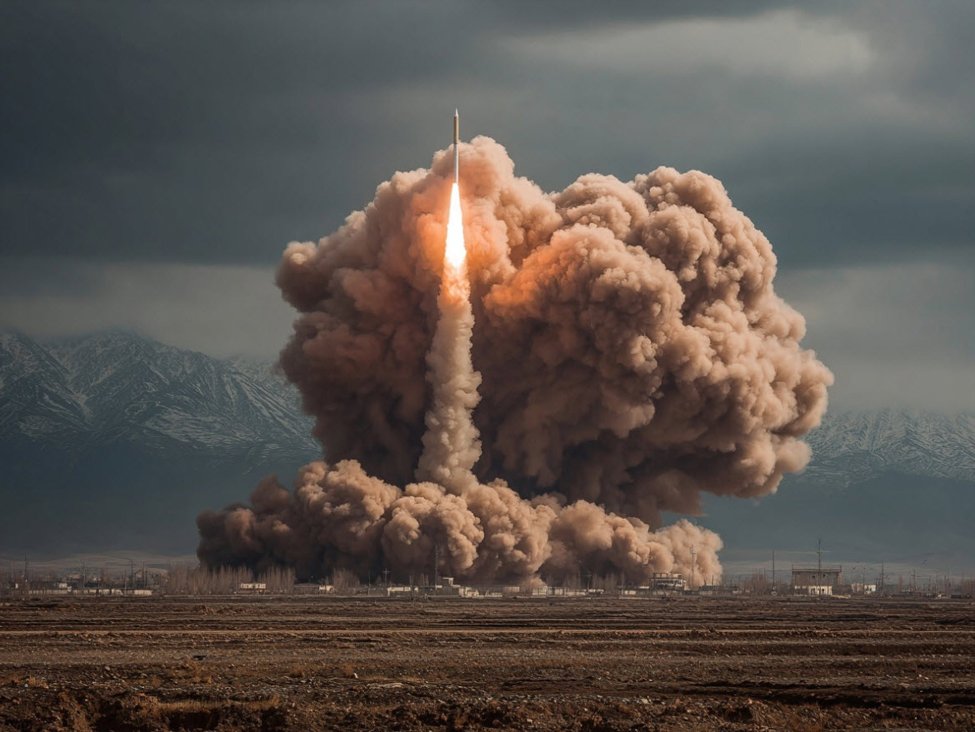
US admiral: Iran's ballistic missile attacks have decreased by 90%
CENTCOM Commander Admiral Brad Cooper is highlighting something that markets should keep in mind: “If I just look back over the last 24 hours of the operation compared to the where we were to start, ballistic missile attacks have decreased by 90%… Drone attacks have decreased by 83%… we’re now up over 30 ships [destroyed].”He also highlighted one of the goals of the operation:”[Trump] gave us another task — to raze or level Iran’s ballistic missile industrial base. We’re not just hitting what they have, were destroying their ability to rebuild…we will systemically dismantle Iran’s missile production capability for the future, and that’s absolutely in progress.”How hard are they hitting? “In just the last 72 hours, America’s bomber force has struck nearly 200 targets deep inside of Iran… In just the last hour, U.S. B-2 bombers dropped dozen of 2,000lb Penetrator bombs targeting deeply buried ballistic missile launchers.”My guess (and it’s truly a guess) is that Trump really has a 4-5 week target in mind where they will relentlessly bomb Iran and then he will declare that Iran’s ability to wage war is basically toast and he will declare victory.At some point Iran will regroup but perhaps not during Trump’s term. And if so, they will send in the drones or bombs here and there. Finally, there is some sense of panic about rising oil prices and there is a report that the Treasury could even short oil futures to bring down energy prices. Expect some announcements on oil price action today or tomorrow.Trump absolutely hates high oil prices and gasoline prices are how higher than at any point in his first term or this one. This article was written by Adam Button at investinglive.com. 🔗 Source 💡 DMK Insight The significant drop in missile and drone attacks could stabilize geopolitical tensions, impacting crypto markets like ETH. With ETH currently at $2,060.74, traders should consider how easing military conflicts often leads to increased investor confidence. If this trend continues, we might see a bullish sentiment in crypto, particularly if ETH can break above recent resistance levels. Keep an eye on the $2,100 mark as a potential trigger for upward momentum. Conversely, if tensions escalate unexpectedly, it could lead to a sharp sell-off, so monitoring news from conflict zones is crucial. The real story is how these geopolitical shifts can ripple through markets, affecting everything from risk appetite to liquidity in crypto assets. 📮 Takeaway Watch for ETH to break above $2,100 for potential bullish momentum, while staying alert to geopolitical developments that could shift market sentiment.
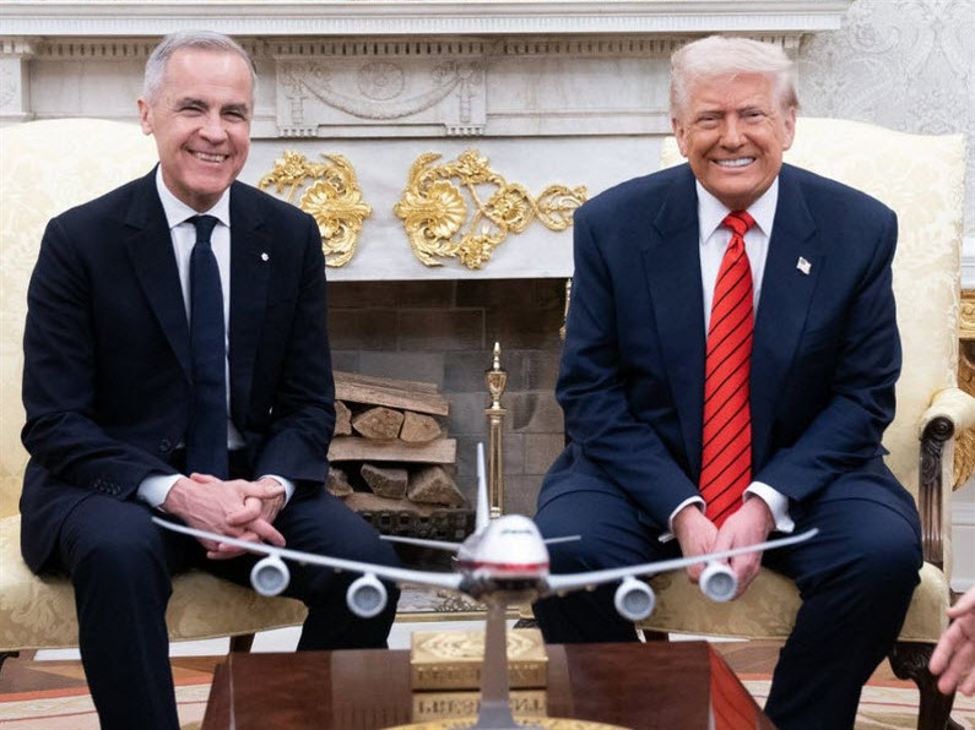
Scotiabank's base case is USMCA renewal — but the tail risks are worth pricing
The clock is ticking on the USMCA joint review and Scotiabank just released a comprehensive report that’s worth a read.”The future of [USMCA] is the single most consequential macro uncertainty facing the Canadian economy this year,” the report says.The good news first: Scotiabank’s baseline is that USMCA gets ratified or extended with limited adjustments that don’t materially change the macro trajectory. They’re explicit about this — the agreement is mutually beneficial and much of the recent US rhetoric looks like bargaining posture rather than a genuine signal to blow the deal up.But “low probability” isn’t “no probability,” and the report’s scenario analysis shows why even a small chance of a bad outcome demands attention. Their probability breakdown: a 10% chance of renewal by the July 1 review date, 42.5% chance of renewal before the US mid-terms, 37.5% chance the parties fall into annual reviews (prolonged uncertainty but the deal stays alive), and a 10% chance of outright withdrawal. The most likely outcome is a deal gets done — it’s just a question of when and how bumpy the road gets.The GDP hitSo what happens if the base case doesn’t hold? Using their integrated US-Canada macro model, Scotiabank Economics stress-tested two post-USMCA failure scenarios. These aren’t forecasts — they’re “break glass in case of emergency” numbers — but they illustrate the asymmetry that makes this review so important.Scenario 1 is the “disruptive but contained” outcome — a 10% tariff slapped on currently exempt USMCA goods. Canadian GDP falls 0.6%, unemployment peaks at 6.5%. Painful but manageable. Growth slows without going negative.Scenario 2 is the one that matters. A 35% tariff on Canadian goods (energy and potash stay at 10%) sends the effective tariff rate on total Canadian exports to roughly 15%. GDP drops 1.9%. Canada goes into recession. Unemployment hits 7.1%. That’s the scenario where the Bank of Canada cuts 50 basis points and it still isn’t enough to fully offset the damage.For the US, even the severe scenario only clips GDP by 0.3% — but PCE inflation rises 0.3 percentage points, which would force the Fed to hike 25 basis points at exactly the wrong time. Nobody wins here, but Canada loses far more.Note that this isn’t what they think will happen, as they’re optimistic:Our baseline assumption aligns with a benign scenario whereby is ultimately ratified or extended with limited adjustments that do not materially shift the macroeconomic trajectory. This view reflects the fundamental reality: the agreement is mutually beneficial, and much of the recent U.S. rhetoric appears aimed at strengthening its bargaining position rather than signaling an intention to dismantle the deal.Where the vulnerability isThe most useful part of this report is the sectoral exposure analysis. Scotiabank mapped out which Canadian industries are most and least vulnerable by looking at two things: how much the US relies on Canadian imports in each sector, and how dependent Canadian exporters are on the US market.The “most vulnerable” corner is ugly. Electrical equipment, transportation, and manufacturing are all sectors where Canadian exports to the US dwarf the sector’s domestic GDP contribution while the US has plenty of alternative suppliers. Computers, chemicals, machinery, and plastics are all in that danger zone too.For TSX investors, Scotiabank’s GICS sector analysis shows Health Care, Information Technology, and Real Estate with the highest US revenue exposure (50-70%), while Communication Services and Consumer Discretionary are more domestically insulated. .The Canada-China wildcardThe report’s timeline is a reminder of how much has happened in just over a year. Canada forging a strategic partnership with China on energy, agri-food, EVs, and trade prompted Trump to threaten 100% tariffs if a formal trade deal gets signed. Canada says it has no such intention, but the mere optics of it gave the US administration another lever to pull.The SCOTUS ruling against IEEPA tariffs adds another layer of legal complexity. The administration pivoted to Section 122 with 10% global tariffs — USMCA exempt — but that reprieve could evaporate if the review goes sideways. The thing is, by the time that might happen, the timeline on the 150 day US tariffs will have expired, leaving Trump with limited recourse to put tariffs on Canada.What to watchThe path from here to resolution is going to be volatile. PM Carney’s Davos speech calling this a “rupture, not a transition” set the tone. Trump’s response — that Canada “lives because of the United States” — tells you about the negotiating dynamic.Key dates: the first joint review hits July 1. The Section 122 temporary global tariffs expire July 24. And the 2026 US mid-term primaries loom large — economic pain for American voters could be the thing that ultimately forces a deal.For CAD traders: the Scotiabank model shows the loonie depreciating about 1% in Scenario 1 and 1.5% in the severe case, with a caveat that disorderly markets could push it further. A sharper depreciation would actually cushion the blow to exporters, acting as an automatic shock absorber.For equity positioning: if you believe in an eventual renewal — and the probabilities suggest you should — the volatility ahead could create opportunities in beaten-down trade-exposed names. This article was written by Adam Button at investinglive.com. 🔗 Source 💡 DMK Insight The USMCA review deadline is looming, and this could shake up Canadian markets significantly. Scotiabank’s report highlights the USMCA as a major macro uncertainty for Canada, which means traders should be on high alert. If the agreement gets ratified, expect a boost in Canadian equities and the CAD, especially against the USD. However, if negotiations stall or fail, we could see a sharp downturn in the Canadian dollar and related assets. Keep an eye on the CAD/USD pair; a break below recent support levels could signal a bearish trend. Also, watch for any comments from key stakeholders in the negotiations, as they could move markets quickly. Here’s the flip side: while the mainstream narrative focuses on the potential for ratification, the risks of a breakdown in talks are often downplayed. If you’re holding positions in Canadian assets, consider
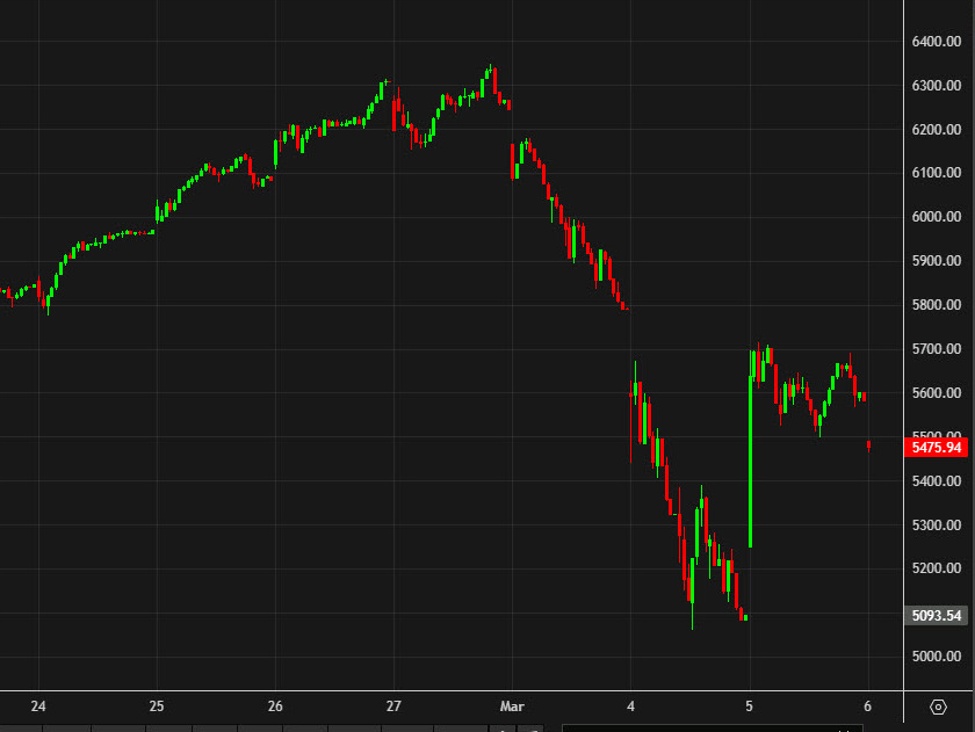
Nikkei and Kospi both open more than 1% lower
The Kospi opened down just over 1% after some utterly crazy moves this week. The Korean index had been swinging upwards of 10% daily, and this looks like a much more ‘normal’ day.Note though that the open breaks yesterday’s low, which isn’t a good sign.In Japan, the Nikkei opened down 1.1%. Asia stocks have shown less resilience than US markets this week on fears about energy price spikes and resulting inflation in Japan and Korea. Also, both markets have been much more frothy in the past year so there could be more of an incentive to take profits quickly.Looking ahead, even if we can hold these loses and drop volatility, we could see dip buyers step in next week.Update: There have been some nice bids since the open, trimming these losses to minimal levels. This article was written by Adam Button at investinglive.com. 🔗 Source 💡 DMK Insight The Kospi’s 1% drop signals a potential shift after wild swings, and here’s why that matters: Breaking yesterday’s low indicates bearish sentiment, which could lead to further selling pressure. Traders should watch for a confirmation of this trend, especially if the index fails to recover above recent highs. The volatility seen this week, with daily swings of up to 10%, suggests that market participants are reacting to broader economic concerns, possibly tied to global inflation and interest rate expectations. If the Kospi continues to trend downward, it could drag down related markets like the Nikkei, which also opened lower. This correlation means that traders should keep an eye on both indices for signs of a broader market correction. For those looking to position themselves, monitoring the Kospi’s performance around key support levels will be crucial. If it breaks below significant support, it could trigger stop-loss orders and exacerbate the downward momentum. Watch for the next few trading sessions to gauge whether this is a temporary pullback or the start of a more sustained decline. 📮 Takeaway Keep an eye on the Kospi’s support levels; a break could lead to increased selling pressure across Asian markets.

Fed's Goolsbee: Institutions are facing a crisis of trust
At some point we will all regret the “I did my own research” and “don’t trust the media” stances.We certainly need more-professional media but something about social media broke everything to do with the consumption of information and we are headed towards a dark place because of it. The algo amplifies the worst stuff and leaves us grasping for verifiable hard news. That’s particularly true now as everyone tries to figure out what’s actually happening in Iran.Aside from the headline, Goolsbee’s speech focuses on themes like central bank independence, which he says is critically important. He also said that everyone on the Fed takes the job very seriously and that the Federated structure of the central bank has worked well. All that said, those assumptions will be put to a stern test in the months ahead. US inflation is sure to rise if oil stays up here and that should really rule out Fed rate cuts. Of course, some of the Fed will argue that’s a one-off factor but with tariffs, it’s now a two-off and then you add in healthcare inflation and it’s a three-off. At some point, that argument just doesn’t work as the public continues to pay 3% more than they did last year.The Fed has missed its inflation target in every year this decade and oil alone at these levels will mean that it will do so again in 2026.So while Goolsbee laments declining trust in institutions, he voted for rate cuts and has contributed to the failure of the Fed to meet its inflation mandate. Ultimately, the ‘trust in institutions’ argument goes back to whether or not people did their jobs. Whether it was lying about weapons of mass destruction or transitory inflation, you can’t really cry about a wake-up call for institutions. Unfortunately, the response seems to be more propaganda rather than higher standards and more-professional leadership. This article was written by Adam Button at investinglive.com. 🔗 Source 💡 DMK Insight With ETH trading at $2,060.74, the current sentiment around crypto information consumption is critical for traders. The rise of social media as a primary news source has led to misinformation, which can cause volatility in asset prices. Traders need to be wary of how narratives can shift market sentiment, especially around key events like regulatory announcements or technological upgrades. The skepticism towards traditional media may lead to a herd mentality, where traders react to unverified information, amplifying price swings. For ETH, keep an eye on support around $2,000; a breach could trigger further selling pressure, while a bounce could signal a potential rally back towards $2,200. On the flip side, this environment could create opportunities for savvy traders who can differentiate between noise and actionable insights. Monitoring social media sentiment alongside price action could provide an edge in anticipating market moves. Watch for any significant shifts in trading volume or sentiment indicators that could signal a change in trend. 📮 Takeaway Watch ETH closely around the $2,000 support level; a break could lead to increased volatility, while a bounce might signal a recovery towards $2,200.
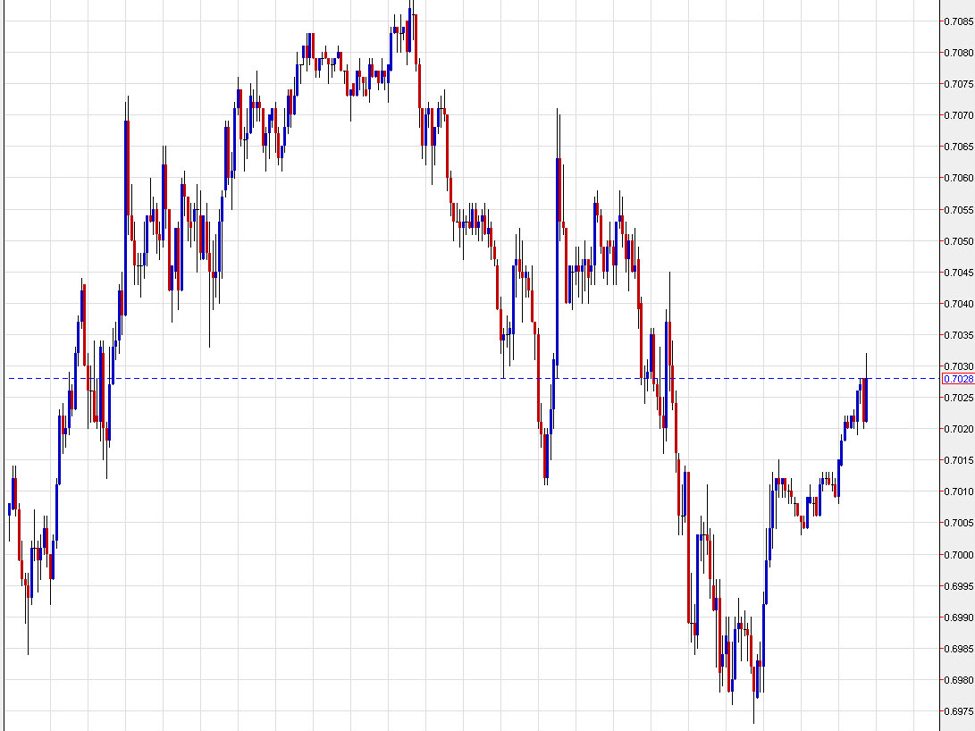
Australian dollar climbs as a positive risk mood leads to US dollar selling
The mood is improving in Asia.The steady selling of risk assets and flight to the US dollar has given way to some optimism in Asia and that’s reflected in decent bids in the Australian dollar and broad USD weakness. That’s come with some oil selling as the US floats more measures to stop the runaway rise in crude prices.Notably, gold remains strongly bid as it has all week in Asia-Pacific hours. It just hit a session high, up $31 to $51.06. S&P 500 futures are fractionally higher but the Nikkei’s early bounce has given way to selling and it’s down 1.3%, falling below the initial opening levels. As for the Australian dollar, it’s been a challenging week to trade as it’s mostly been bounced around by war and oil sentiment. Early this week, the GDP numbers were strong and combined with oil prices, that should boost the odds of a rate hike but that hasn’t been reflected in the currency.Technically, AUD is showing some resilience near the best levels of the year. The lows from the early spike lower due to the war have held.That’s a good sign for AUD/USD going forward as it continues to benefit from being on the periphery of the war and the tariff war. It will also benefit from China stimulus, which the NPC hinted at this week. The biggest tailwind is probably in commodity markets, where Australian has much of what the world wants, including gold.Canada’s Mark Carney is visiting and helped to forge a critical minerals partnership that should clear the way for more investment. Australia has largely managed to play all sides including China and the US while avoiding turmoil in the property market. That could set up a steady bid once some of the war clouds clear. This article was written by Adam Button at investinglive.com. 🔗 Source 💡 DMK Insight Optimism in Asia is shifting the sentiment, and here’s why that matters: The recent selling pressure on risk assets has eased, leading to a rebound in the Australian dollar and a broader weakness in the US dollar. This shift could signal a potential reversal in risk appetite, especially if traders start to favor commodities again. With oil prices under pressure as the US increases supply, it’s worth watching how this affects correlated assets like AUD/USD. If the Aussie dollar can break above recent resistance levels, it could attract more buying interest, especially from institutional players looking to capitalize on a potential trend reversal. However, keep an eye on the broader economic indicators, like US inflation data, which could reignite dollar strength if they come in hotter than expected. The real story here is whether this optimism can sustain itself; if not, we might see a quick return to risk-off sentiment. For now, monitor the AUD/USD pair closely, particularly any movements around key psychological levels, as they could dictate the next trading opportunities. 📮 Takeaway Watch the AUD/USD closely; a break above recent resistance could signal a shift in risk sentiment, while US inflation data may reignite dollar strength.
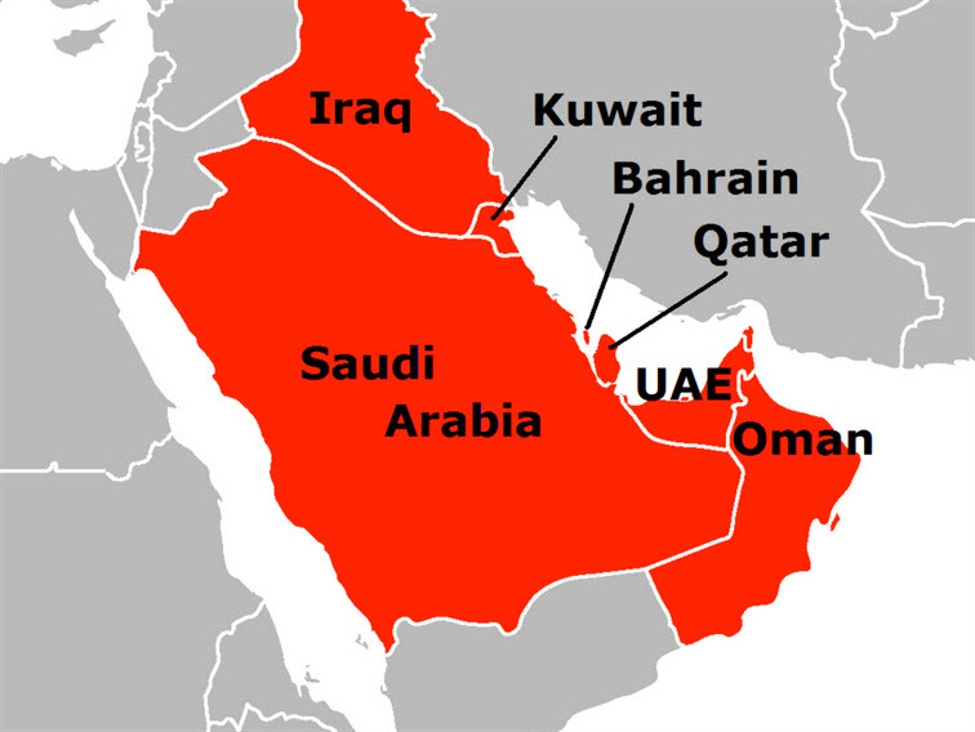
Gulf states could review overseas investments – report
The FT reports that pressure on the Arab Gulf states’ finances could cause them to review their overseas investments and commitments. The cost of the war is beginning to mount as Iran strikes at US allies and US bases in the region.This report is undoubtedly aimed at putting pressure on the US to either subsidize their defense or seek peace in Iran. The countries have evidently held joint discussions about pressure on budges and may reassess how they manage the economic pain, including pulling overseas investment commitments.Those commitments have been a signature achievement of Donald Trump’s Presidency and this report was likely floated to get his attention.Any move to pull back Gulf investment from the US and Western assets could put serious pressure on the Trump administration to pursue a diplomatic resolution. These sovereign wealth funds are massive players in global capital markets, and even the threat of a reassessment sends a signal. Watch for any follow-through on this — if Gulf states start actually invoking force majeure or redirecting capital flows, that’s a risk-off trigger across multiple asset classes.All this said, there are some real mixed signals from Gulf states. Iran is their major rival and some are surely supporting the US and Israel but they also demand stability at home and that’s not exactly happening at the moment. I also question some of the budget crunch given that rising oil prices will surely benefit them. Yes, Qatar has seen LNG and other flows blocked but that should only be temporary.The leaks could also be at Iran’s behest as they threaten further drone strikes and attempt to negotiate with Trump, something he conceded earlier today. I would imagine a big turn in risk assets could come if/when Trump begins to negotiate. There are no signs of that now.Notably, Bahrain’s ambassador to the US wrote this today:The Iranian regime claims it targets U.S. interests,yet its missiles strike Bahrain’s airport,residential buildings,hotels & now our oil facility,the backbone of our economy! Civilians & critical infrastructure are not targets,and neither are our partners This article was written by Adam Button at investinglive.com. 🔗 Source 💡 DMK Insight Gulf states are feeling financial strain, and here’s why that matters for traders: As the cost of conflict in the region rises, Gulf nations may reassess their overseas investments, which could lead to volatility in markets tied to these economies. If these states pull back on foreign commitments, we could see a ripple effect impacting commodities, particularly oil, as Gulf states are major players in the energy sector. Traders should keep an eye on oil prices, which are already sensitive to geopolitical tensions. A decline in investment could also affect currencies tied to these economies, like the UAE Dirham or the Saudi Riyal, leading to potential trading opportunities or risks. But here’s the flip side: if Gulf states decide to double down on investments to stabilize their economies, we might see a short-term boost in asset prices. Watch for key announcements or shifts in policy from these nations in the coming weeks, as they could signal where the market is headed. The immediate focus should be on oil price movements and any changes in currency stability as these geopolitical tensions evolve. 📮 Takeaway Monitor oil prices closely; any significant drop could indicate Gulf states pulling back on investments, impacting related currencies and commodities.
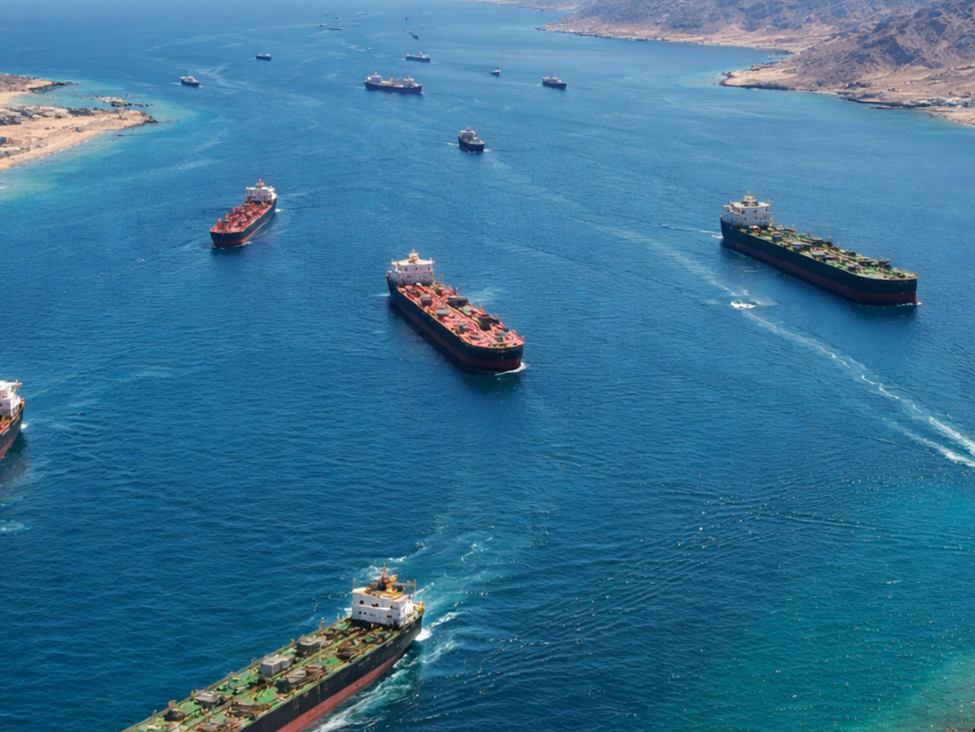
China hopes to convince Iran to allow LNG to pass through Hormuz
Reuters is reporting that China is in direct talks with Iran to secure safe passage through the Strait of Hormuz for crude and Qatari LNG vessels. They cited three three diplomatic sources who are unnamed.We’re on day six of the US-Israeli conflict with Iran and the Strait is effectively closed for business, with about a fifth of global oil and LNG supply bottlenecked. Crude tanker transits collapsed from an average of 24 per day to just four on March 1. Around 300 tankers are sitting inside the Strait right now with nowhere to go and others can’t get in to load once those ones leave.Crude is up 15%+ since this kicked off and it’s wildly bullish if the straight stays closed.China gets roughly 45% of its oil through the Strait so Beijing has every incentive to push hard here. There’s an interesting data point overnight — a vessel called the Iron Maiden switched its signalling to “China-owner” and transited through. Reports suggest only Chinese or Iranian-owned ships are currently getting waved through.The key question for markets: does this become an actual framework for reopening traffic, or is it just Beijing carving out a special lane for itself while everyone else stays locked out? Because if it’s the latter, that’s not going to do much for Brent.There do appear to be some positive signals today on energy as WTI crude is down $1.57 to $79.40. Earlier US Treasury Secretary Scott Bessent posted:To enable oil to keep flowing into the global market, the Treasury Department is issuing a temporary 30-day waiver to allow Indian refiners to purchase Russian oil. This deliberately short-term measure will not provide significant financial benefit to the Russian government as it only authorizes transactions involving oil already stranded at sea. India is an essential partner of the United States, and we fully anticipate that New Delhi will ramp up purchases of U.S. oil. This stop-gap measure will alleviate pressure caused by Iran’s attempt to take global energy hostage.Trump brushed off rising oil prices today but he’s always been worried about gasoline prices so we will see how long he can tolerate them. You have to wonder if $80 WTI is a line they don’t want to cross. This article was written by Adam Button at investinglive.com. 🔗 Source 💡 DMK Insight The Strait of Hormuz is a critical chokepoint for global oil supply, and China’s negotiations with Iran could shift market dynamics significantly. With the Strait currently closed due to escalating tensions in the US-Israeli conflict, traders should be on high alert. If China secures safe passage for crude and LNG vessels, it could stabilize supply chains and potentially ease upward pressure on oil prices. However, if the situation escalates further, we could see volatility spike, impacting not just crude but also related markets like natural gas and even equities tied to energy sectors. Watch for any announcements from China or Iran in the coming days, as they could provide clarity on this situation. The flip side here is that if negotiations fail or tensions escalate, we might see a sharp spike in oil prices, which could trigger a broader market sell-off. Keep an eye on key technical levels in crude oil; a break above recent highs could signal a bullish trend, while a failure to stabilize could lead to a bearish reversal. Traders should monitor the situation closely, especially over the next week. 📮 Takeaway Watch for developments in China’s negotiations with Iran; a resolution could stabilize oil prices, while further conflict may trigger volatility in energy markets.
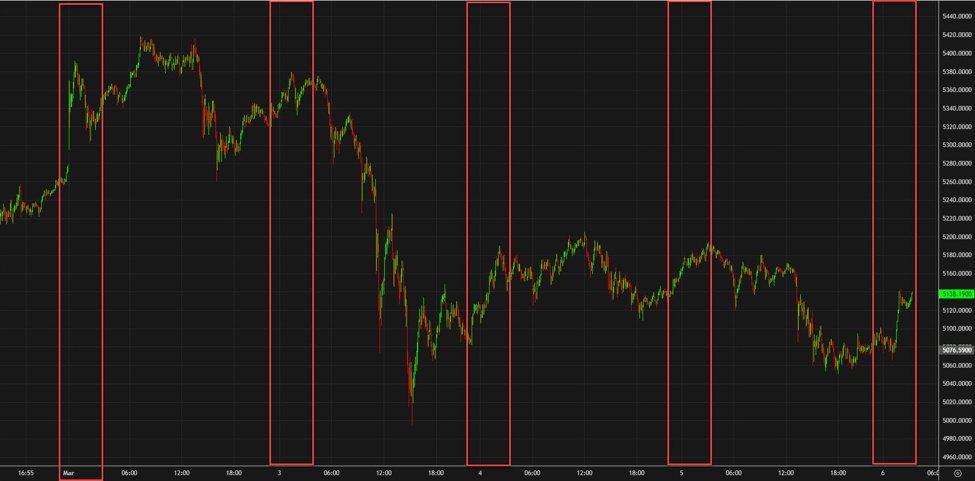
The bid for gold in Asia has been relentless this week
Gold is on track to finish the week about $45 lower but you wouldn’t know it from Asia-Pacific trading this week. Every day since the start of the war we’ve seen significant gains in Asian trading, often fading later in the day.That strength is a hint at where the bids are coming from: China. The attack on Iran is seen in China as a further breakdown of the rules based order but also an effort to box in China and disrupt a friendly country that supplies it energy. That will surely hasten their resolve to diversify away from US dollars, particularly if there are any medium-term plans for a military confrontation with Taiwan.Surely China has seen the US quickly establish air superiority in Iran and launch a brutal military assault. That should frighten China and the rest of Americans adversaries.In terms of the price action, look at this chart.It shows bids in Asia every day this week, including a $60 gain so far today. That’s a nearly-systematic, programattic bid in gold and it’s hard to ignore. The weak hands have been shaken out in Europe and the US but Asia is a steady buyer and that likely points to official bids rather than retail. This article was written by Adam Button at investinglive.com. 🔗 Source 💡 DMK Insight Gold’s recent price drop of about $45 this week is masking a bullish trend in Asia-Pacific trading, which could signal underlying demand. Despite the overall decline, the consistent gains during Asian hours suggest that traders are positioning themselves for potential upward momentum. This behavior often indicates that buyers are stepping in, possibly anticipating a rebound or reacting to geopolitical tensions. If this trend continues, it could lead to a short squeeze, especially if gold breaks through key resistance levels. Watch for the $1,900 mark; a sustained move above this could trigger further buying and shift sentiment. However, there’s a flip side. If the gains fade as they have been, it might signal a lack of conviction among buyers, leading to a potential sell-off later in the day. Traders should monitor the daily closing prices closely to gauge whether this Asian strength translates into a more sustained rally or if it’s merely a temporary blip in a bearish trend. 📮 Takeaway Keep an eye on gold’s $1,900 resistance level; a breakout could signal a shift in momentum, while fading gains might indicate weakness.

investingLive Asia-Pacific market news wrap: The mood improves modestly
China hopes to convince Iran to allow LNG to pass through HormuzGulf states could review overseas investments – reportFed’s Goolsbee: Institutions are facing a crisis of trustUS admiral: Iran’s ballistic missile attacks have decreased by 90%Trump says Iran is contacting them seeking guidance on negotiating a dealCostco beats on earnings but little reaction from sharesMarkets:Gold up $57 to $5133WTI crude oil down 96-cents to $80.04AUD leads, USD lagsNikkei up 0.5%US 10-year yields down 1.2 bps to 4.14%The US gave Iran a 30-day sanctions waiver to buy Russia crude in a move that’s seen as an indication that the US has a limited appetite to continue to push oil prices higher. China is also pressuring Iran to allow ships carrying its energy imports to pass through the Strait of Hormuz. Those headlines helped to push oil down but notably, it hasn’t stayed down. Brent fell as low as $83.16 but has steadily bounced to $84.47.Despite that, the overall mood is improved. Stock markets in Korea and Japan opened more than 1% lower but are now trading solidly higher. In FX, that’s translated into broad but modest US dollar selling. Trump also indicated that Iran is looking to negotiate. He said it wasn’t the time for that but it’s a sign that Iran doesn’t want to fight, and if that’s the case then something will be negotiated in the 4-5 week timeframe that Trump set out. Gold has been bid up every day this week in Asia and that continued today. It’s up more than 1% and silver is up nearly 3% as precious metals shine in the session. Note though that gold is down on the week as Europe and the US have overwhelmed Asian buying with sales.Expect a tentative finish to what has been a dramatic week. This article was written by Adam Button at investinglive.com. 🔗 Source 💡 DMK Insight China’s push for LNG passage through the Strait of Hormuz could shake up energy markets significantly. With Iran’s missile attacks reportedly down by 90%, the geopolitical landscape is shifting, potentially easing tensions that have long plagued oil and gas supply routes. If Iran agrees to this LNG transit, it could boost supply and lower prices, impacting not just energy stocks but also broader market sentiment. Traders should keep an eye on crude oil prices, especially if they start to break below key support levels. The Fed’s Goolsbee mentioning a crisis of trust among institutions adds another layer of uncertainty, which could lead to increased volatility in both forex and crypto markets. Watch for reactions from major oil producers and any shifts in U.S. policy regarding Iran, as these could create ripple effects across commodities. Here’s the thing: while optimism around LNG could drive prices down, be wary of overexposure to energy stocks if geopolitical tensions flare up again. Monitor the $70 level in crude oil for potential support or resistance in the coming weeks. 📮 Takeaway Watch for any developments on LNG transit through Hormuz; a break below $70 in crude could signal a shift in energy market dynamics.