
 Bitcoin
  Ethereum
  Tether
  BNB
BNB  XRP
XRP  USDC
USDC  Solana
  TRON
TRON  Lido Staked Ether
  Figure Heloc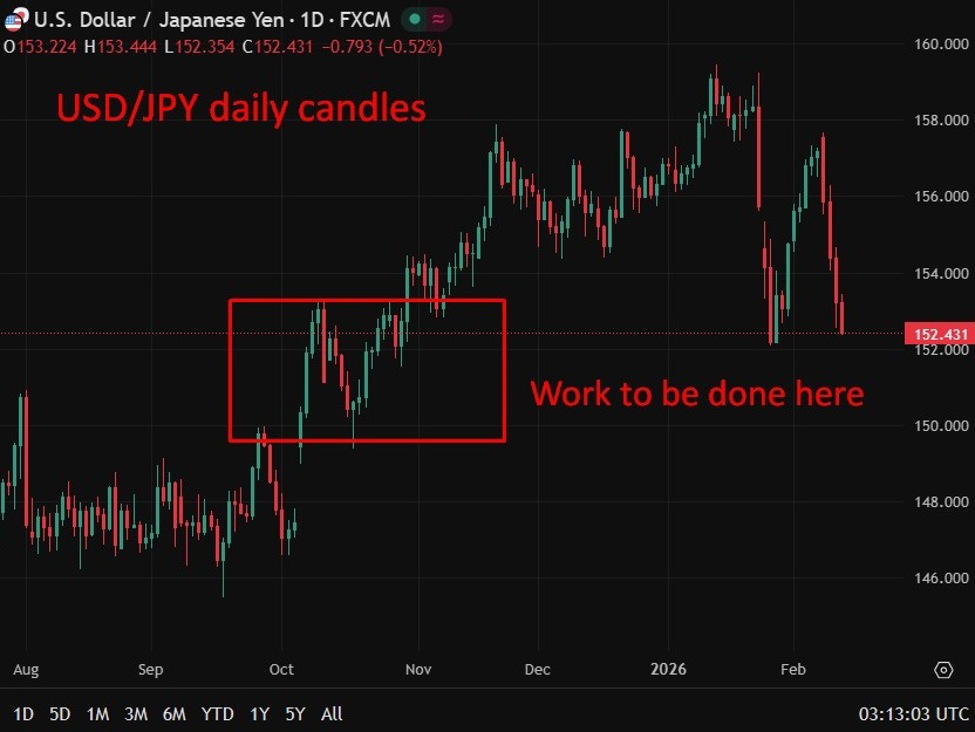
Funds flip long yen as “buy Japan” momentum builds.Summary:Hedge funds are rebuilding bullish yen positions, per Bloomberg.USD/JPY falls for a third straight session despite strong US jobs data.Options markets show rising demand for downside dollar-yen protection.“Buy Japan” narrative seen supporting yen alongside equities.Election clarity and intervention rhetoric add to stability themeHedge funds are reversing course and rebuilding bets on a stronger yen as the “buy Japan” theme gathers traction, even after robust US jobs data tempered expectations for near-term Federal Reserve rate cuts, according to traders cited by Bloomberg (gated). The yen rose for a third consecutive session against the dollar on Wednesday, shrugging off broader dollar strength following the US employment report. The resilience marks a notable shift in positioning. As recently as last week, macro funds had been rebuilding short yen exposure ahead of Japan’s national election, anticipating renewed currency weakness if Prime Minister Sanae Takaichi secured a mandate to pursue expansionary fiscal policies.Instead, investor sentiment appears to have flipped.Options market activity underscores the change. Trading volume in large dollar-yen put contracts, which gain value if USD/JPY declines, ran roughly 50% higher than comparable call options on Wednesday, according to Depository Trust & Clearing Corporation data cited by Bloomberg. The premium to hedge or speculate on a fall in the pair over the next month climbed to its highest level since early February, signalling growing demand for yen upside exposure.Market participants say hedge fund appetite for dollar-yen downside has increased markedly. Traders also report demand for the yen against currencies such as the Australian dollar and Swiss franc, suggesting the shift is not limited to USD crosses.The repositioning aligns with a broader “buy Japan” narrative that has seen renewed interest in Japanese equities and perceptions of greater political stability following the Liberal Democratic Party’s decisive election victory. The currency initially weakened after the vote but rebounded after Finance Minister Satsuki Katayama signalled that authorities would respond to excessive FX moves in line with US-Japan understandings.Traders note that both hedge funds and asset managers unwound short-term bullish dollar-yen positions ahead of the US payrolls release. Options positioning has also turned more negative on USD/JPY, with downside risk reversals strongly bid.For now, the yen’s ability to strengthen alongside firmer US data suggests positioning — rather than macro divergence alone — is driving the move. This article was written by Eamonn Sheridan at investinglive.com. 🔗 Source 💡 DMK Insight Hedge funds are shifting to bullish yen positions, and here’s why that matters: The recent trend of USD/JPY declining for three consecutive sessions signals a growing confidence in the yen, driven by a ‘buy Japan’ momentum. This shift comes despite robust US jobs data, suggesting that traders are looking beyond immediate US economic indicators. The options market’s increased demand for downside protection indicates that investors are hedging against further dollar weakness, which could lead to volatility in currency pairs. With upcoming elections and potential government interventions, the yen’s stability is likely to attract more attention from both retail and institutional investors. But don’t overlook the risks; if the dollar rebounds due to unexpected economic data or geopolitical tensions, these long positions could quickly turn sour. Watch for key levels around 145.00 in USD/JPY, as a break below could trigger further yen strength. Keep an eye on the broader equity markets too, as a strong yen often correlates with rising Japanese stocks, which could amplify the bullish sentiment. 📮 Takeaway Monitor USD/JPY around the 145.00 level; a break could signal further yen strength amid rising bullish sentiment.
Rupee firms after suspected RBI FX intervention
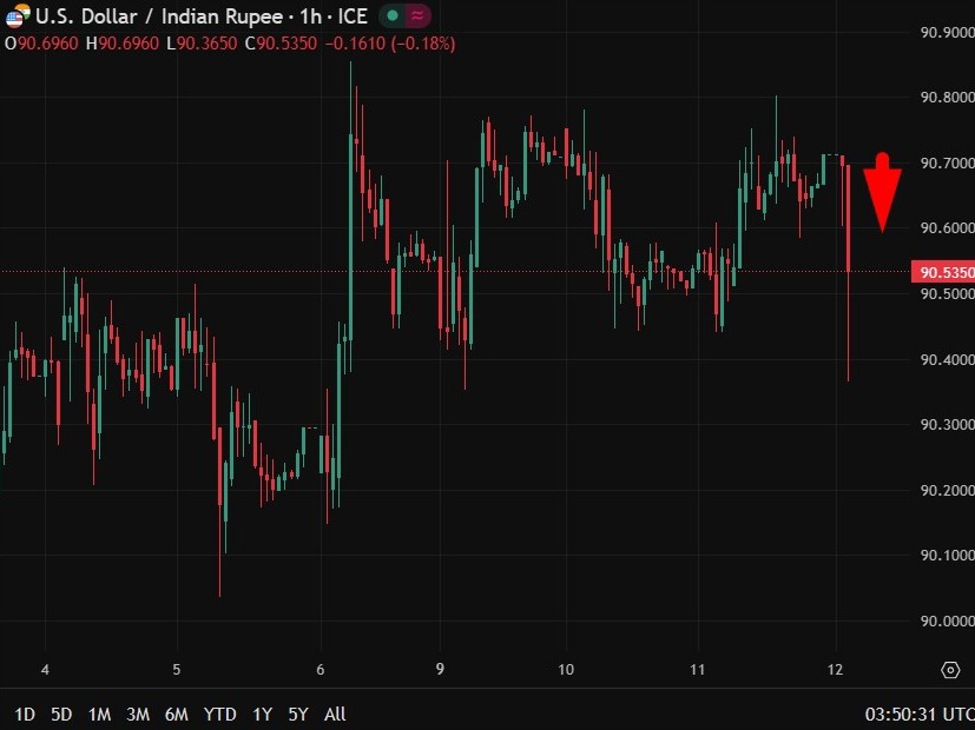
Summary:Traders say RBI likely sold US dollars before local market open.Rupee strengthened.Intervention reportedly conducted via large state-run bank.Move surprised market participants.Action occurred just before 9:00 a.m. IST spot openIndia’s central bank is believed to have stepped into currency markets ahead of Thursday’s local trading session, helping the rupee open stronger than expected, according to traders cited by Reuters.Six market participants said the Reserve Bank of India likely sold U.S. dollars before the domestic spot market opened at 9:00 a.m. IST. The intervention appeared to catch traders off guard and contributed to a firmer start for the rupee.The currency was initially expected to open little changed around 90.70 per dollar. Instead, it began the session near 90.4550 and was last quoted at 90.46, up roughly 0.26% on the day.One trader said a large state-run bank aggressively sold dollars, most likely acting on behalf of the RBI. Such indirect intervention via public-sector banks is a common operational method used by the central bank to manage currency volatility without making overt market appearances.The timing, just before the local spot market opened, suggests authorities may have sought to influence early price discovery and stabilise sentiment before liquidity deepened.The rupee has faced intermittent pressure amid global dollar strength and shifting expectations around U.S. interest rates. Emerging-market currencies broadly remain sensitive to U.S. data surprises and Federal Reserve policy signals.India’s central bank has historically adopted a “lean against the wind” approach, aiming to smooth excessive volatility rather than target a specific exchange rate level. Traders will be watching whether follow-through selling emerges in coming sessions or whether the move was a tactical adjustment to prevent a disorderly open.For now, the episode reinforces the RBI’s readiness to step in swiftly when market conditions warrant. This article was written by Eamonn Sheridan at investinglive.com. 🔗 Source 💡 DMK Insight The RBI’s intervention in the forex market is a game-changer for traders right now. With the rupee strengthening against the dollar, this move indicates the central bank’s commitment to stabilizing the currency, especially ahead of critical economic data releases. Traders should be aware that such interventions can lead to increased volatility, particularly in pairs involving the INR. The timing of the intervention—just before the local market opened—suggests a strategic effort to manage market sentiment and prevent excessive depreciation. This could affect not only the USD/INR pair but also impact broader market dynamics, including equities and commodities linked to the rupee’s strength. Watch for how the rupee performs in the coming sessions; if it holds above key levels, it could signal a shift in market sentiment. On the flip side, if the rupee starts to weaken again, it might prompt further interventions, creating a cycle of volatility. Keep an eye on the USD/INR pair around the 82.00 level; a break below could lead to a stronger rupee, while a failure to hold could trigger a sell-off. Traders should also monitor upcoming economic indicators that could influence RBI’s future actions. 📮 Takeaway Watch the USD/INR pair closely; a sustained hold below 82.00 could signal further rupee strength, while a failure to maintain this level may prompt additional RBI interventions.
investingLive Asia-Pacific FX news wrap: Yen continued to strengthen
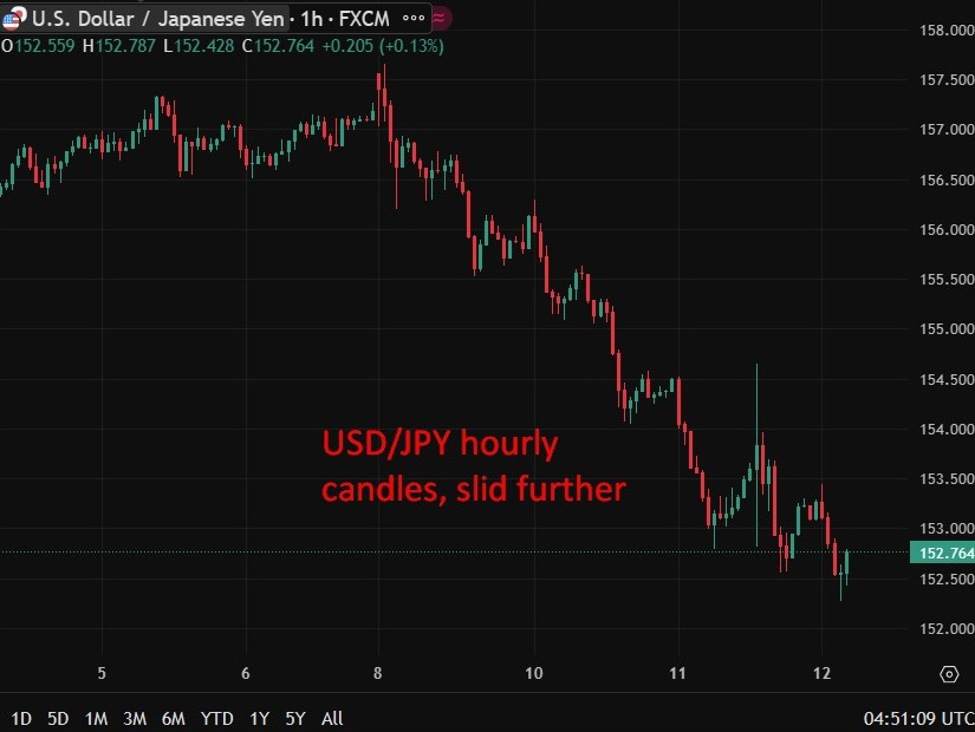
Rupee firms after suspected RBI FX interventionHedge funds boost yen bets as buy Japan trade strengthens — BloombergTokyo keeps intervention risk alive as yen swings. Mimura recap.Precious metals retreat after US payroll surpriseLunar New Year 2026: Mainland China markets are scheduled to be closed February 16–23PBOC sets USD/ CNY reference rate for today at 6.9457 (vs. estimate at 6.9153)Japan January wholesale inflation slows to 2.3% as import prices riseJapan’s Mimura says watching FX with urgency, flags close US contactUK January RICS house price balance improves to -10, beating forecastsJapan January 2026 wholesale inflation. PPI 2.3% y/y (vs. expected 2.3%)US House passes 219–211 resolution to end Trump’s Canada tariffs (there is a but …)Bullock: higher AUD and rates will cool demand, RBA open to more hikes if neededSCMP: Trump and Xi to extend trade truce at April Beijing summitFed’s Hammack says rates near neutral, backs hold stance and flags US debt risksReserve Bank of Australia Governor Bullock speaking in parliamentJ.P. Morgan sees silver at $81/oz in 2026 after 130% surgeFed’s Hammack says unemployment stabilising but inflation still too highFurther news of US readying second aircraft carrier as Iran nuclear talks face pressureinvestingLive Americas market news wrap: Non-farm payrolls blasts through expectationsAt a glance:SCMP reports Trump and Xi may extend trade truce by up to a year at April Beijing summit.US House passes resolution against Trump’s Canada tariffs, but Senate/veto hurdles loom.Japan reiterates FX vigilance as yen strengthens below 152.50.RBA’s Bullock keeps hike option open, flags productivity constraint.RBI seen intervening to support rupee before open.Nikkei hits record highs before trimming gains on yen strength.The South China Morning Post reported that US President Donald Trump and Chinese President Xi Jinping are poised to extend their trade truce by up to a year at an April meeting in Beijing, citing people familiar with discussions. The prospect of a longer ceasefire in tariff tensions offered a stabilising backdrop for risk sentiment.In Washington, the U.S. House passed a resolution disapproving of Trump’s tariffs on Canada in a 219–211 vote. Several Republicans crossed the aisle in a rare rebuke of the president’s trade policy, while one Democrat opposed the measure. The resolution must clear the Senate and overcome a likely presidential veto before taking effect, meaning the practical impact is limited, well zero, for now.In FX, Japan’s top currency diplomat Mimura reiterated that authorities are watching markets with a “high sense of urgency” and have not lowered their guard. He declined to comment on specific levels but stressed close coordination with US officials, keeping intervention risk in the background. The yen extended gains, with USD/JPY dipping under 152.50. The dollar was otherwise marginally firmer in tight ranges.Data showed Japan’s January wholesale inflation eased to 2.3% y/y, while yen-based import prices rose 0.5%, underscoring ongoing currency-driven cost pressures.In Australia, RBA Governor Bullock said higher rates and a stronger AUD should help cool demand. She warned growth above 2% would be difficult without productivity gains and left the door open to further tightening if inflation proves entrenched.India’s central bank was seen selling dollars ahead of the open, lifting the rupee to 90.46.Equities were volatile. The Nikkei briefly traded above 58,000 for the first time before paring gains as yen strength persisted. Asia-Pac stocks: Japan (Nikkei 225) +0.25%Hong Kong (Hang Seng) -0.89% Shanghai Composite +0.12%Australia (S&P/ASX 200) +0.20% This article was written by Eamonn Sheridan at investinglive.com. 🔗 Source 💡 DMK Insight The rupee’s recent strength hints at RBI’s active role in currency stabilization, and here’s why that matters: When the Reserve Bank of India (RBI) steps in to support the rupee, it can signal a broader strategy to manage inflation and economic stability. This intervention can affect forex traders’ strategies, especially those holding long positions in USD/INR. If the rupee continues to firm, traders might want to reassess their dollar exposure. Meanwhile, the yen’s volatility, driven by hedge fund bets, reflects a growing confidence in Japan’s economic recovery, but it also raises the stakes for those trading JPY pairs. The potential for intervention from the Bank of Japan adds another layer of complexity, as traders need to stay alert to sudden market shifts. Precious metals retreating post-US payroll data suggests a risk-off sentiment, which could lead to further declines if economic indicators continue to surprise. Watch for USD/CNY reference rates from the PBOC, as they could influence broader market sentiment and trading strategies in both forex and commodities. Keep an eye on the USD/INR level; a break below recent support could trigger further rupee strength, while any signs of RBI intervention could lead to increased volatility. 📮 Takeaway Monitor USD/INR closely; a break below key support levels could signal further rupee strength and impact your forex positions.
RBA’s Sarah Hunter says labour market tight, inflation to stay above target
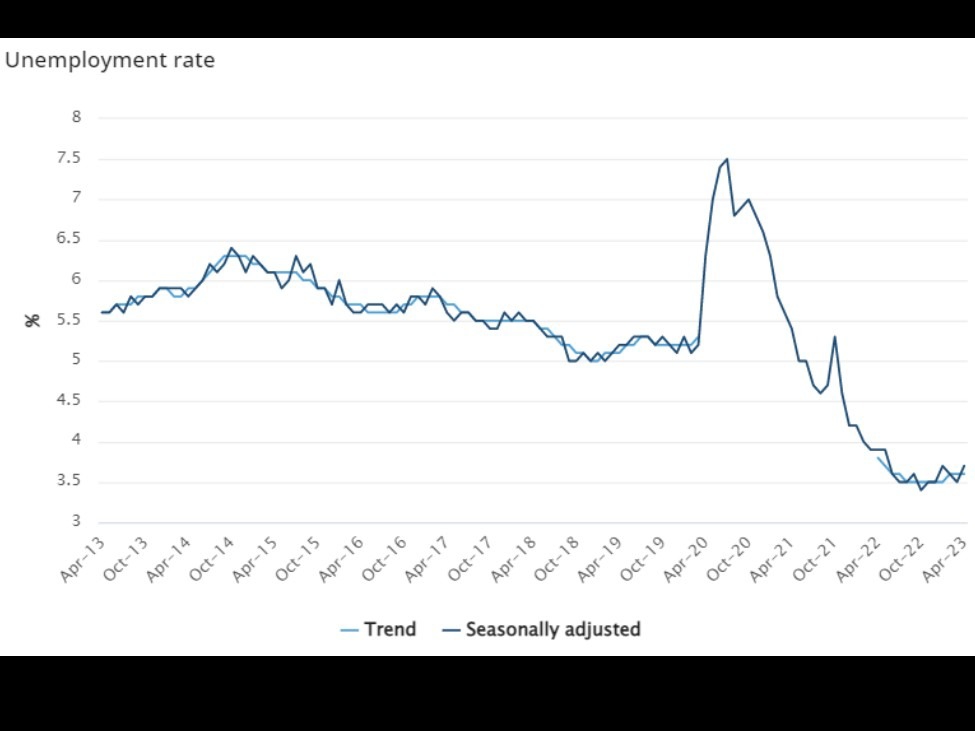
Summary:RBA Assistant Governor Sarah Hunter says labour market has stabilised but remains tight.Bank closely assessing capacity pressures and inflation persistence.Inflation expected to remain above 2–3% target for some time.Recent slowdown driven by fewer vacancies and hiring, not higher unemployment.Remarks reinforce Governor Bullock’s warning that further hikes remain possibleReserve Bank of Australia Assistant Governor Sarah Hunter said the labour market has stabilised from its earlier slowdown but remains tight, a backdrop consistent with ongoing inflation pressures in the economy.Speaking in Perth, Hunter said the RBA’s full-employment and NAIRU frameworks suggest the labour market has recently steadied and is “a bit tight,” underscoring the importance of closely monitoring capacity constraints. She emphasised that the central bank would be carefully assessing whether the recent rise in inflation proves temporary or more persistent.Hunter described the economy’s dynamics as having evolved in recent months, but argued the overall picture still points to limited spare capacity. She likened the interaction between labour tightness and inflation pressures to an “entwined double helix,” signalling that wage dynamics and price pressures remain closely linked.The comments follow the RBA’s decision last week to raise the cash rate by 25 basis points to 3.85%, reversing one of the cuts delivered last year. Underlying inflation accelerated to 3.4% in the most recent quarter, the fastest pace in more than a year, and is forecast by the RBA to rise to 3.7% over 2026, remaining above the 2–3% target band for some time.Recent data have reinforced the narrative of a capacity-constrained economy. The unemployment rate unexpectedly fell to 4.1% in December, a seven-month low, suggesting conditions may have tightened again.Hunter noted that much of the earlier moderation in labour conditions occurred through declining job vacancies, fewer job switchers and softer hiring intentions rather than a rise in unemployment — indicating adjustment has been relatively shallow.Her remarks align closely with Governor Michele Bullock’s message that further rate increases remain possible if inflation becomes entrenched. This article was written by Eamonn Sheridan at investinglive.com. 🔗 Source
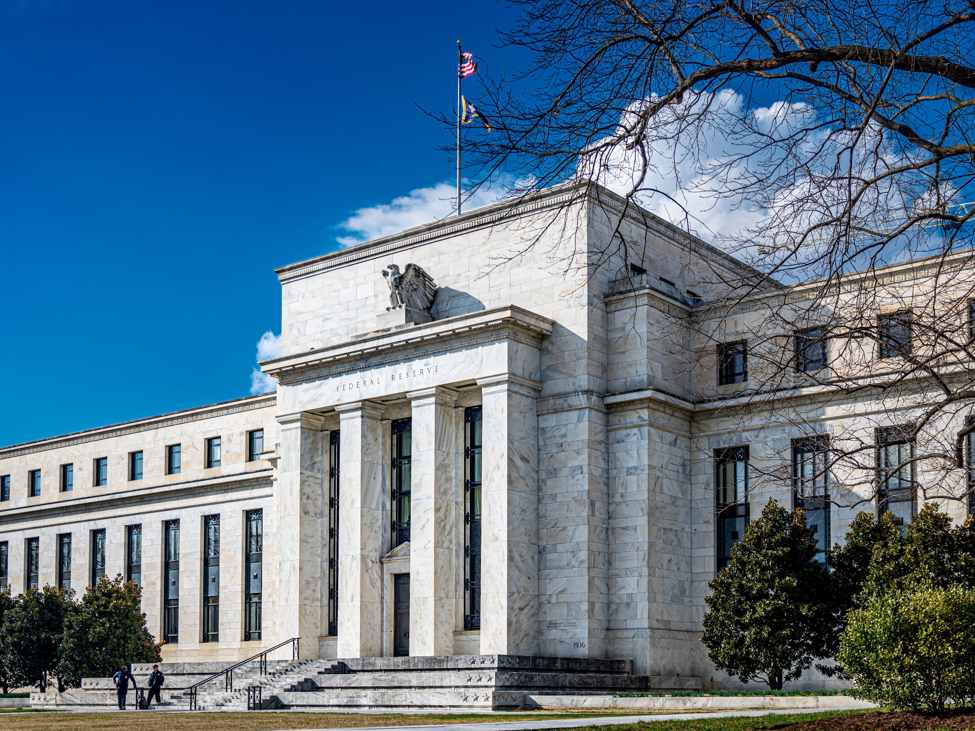
How has the Fed outlook changed after the hot US jobs report yesterday?
There were a lot of positive takeaways from the US jobs report yesterday here. That at least if you’re a dollar bull, with the numbers offering plenty in terms of reaffirming steadier labour market conditions to start the new year. That being said, I would be remiss not to point out that one data point doesn’t make a trend.The US labour market picture is still one that reflects a weakening position, with the overall trend in payrolls clearly highlighting that. Sure, Fed policymakers can take heart in the latest report in reaffirming a more neutral stance. However, what happens if the February figures are softer than expected? We will pretty much reverse course and run all of this back in its entirety.Heading into the report yesterday, Fed funds futures were pointing to ~60 bps of rate cuts for this year with the first full 25 bps rate cut priced in for June. Now, we’re seeing ~53 bps of rate cuts priced in for the year with the first full 25 bps rate cut marked for July instead.That being said, the odds of a June rate cut remain elevated at ~73% at the moment. So, that is not to say that it will be a sure thing to not see a rate cut in the first half of the year.The market pricing above can easily shift and swing on coming data releases, that especially since there is still quite some time before we even get to the June meeting. But at least for now, it will put off any debate of the Fed needing to act much earlier than that.If the labour market continues to follow the trend from last year, the report this week will be largely inconsequential down the road. It’s all about the larger trend at the end of the day. So, we’ll have to see if there is any further evidence that the weakness in jobs is easing.As for the week itself, we’re not quite done yet. Today will be a bit less vibrant as we will only have the weekly initial jobless claims report. But come tomorrow, it will be the big one as we have the consumer price inflation report to deal with. This article was written by Justin Low at investinglive.com. 🔗 Source 💡 DMK Insight The recent US jobs report is a mixed bag for traders, especially dollar bulls. While the data suggests a steady labor market, which typically supports the dollar, the broader implications might not be as straightforward. A stronger labor market often leads to speculation about tighter monetary policy from the Fed, which could boost the dollar in the short term. However, if wage growth accelerates too quickly, it could spark inflation concerns, leading to volatility in both the forex and equity markets. Traders should keep an eye on the dollar index and key levels around 105.00, as a sustained break above this could signal further strength. Conversely, if the market perceives the Fed’s actions as too aggressive, we might see a pullback in the dollar, impacting correlated assets like gold and equities. Watch for upcoming inflation data and Fed commentary, as these will be critical in shaping market sentiment. In the short term, the dollar’s trajectory will depend heavily on how the market interprets these labor figures in conjunction with inflation expectations. A cautious approach is warranted, as the potential for sudden shifts in sentiment could lead to increased volatility. 📮 Takeaway Monitor the dollar index around 105.00; a break above could indicate further strength, while inflation data will be key for future direction.

FX option expiries for 12 February 10am New York cut
There aren’t any major expiries to take note of on the day, with the full list seen below.There are some largish ones for EUR/USD at the 1.1750-60 levels but they aren’t likely to feature into play. The dollar is firmer after the stronger US jobs report yesterday but not really enough to set off a material course correction in price action just yet.In the case of EUR/USD specifically, the overnight decline was arrested by the 200-hour moving average and that is seen at 1.1841 currently. So, that will be the key near-term level to watch in putting a floor on price action today. A break of that though will free up space towards 1.1800 next at least, testing bids layered at the figure level.Amid a lack of key catalysts and more waiting until the US CPI report tomorrow, there won’t be too much to drive trading sentiment otherwise in the day ahead.So, market players will be left to their own devices barring any major surprises from the US weekly initial jobless claims data today.For more information on how to use this data, you may refer to this post here.Head on over to investingLive (formerly ForexLive) to get in on the know! This article was written by Justin Low at investinglive.com. 🔗 Source 💡 DMK Insight The dollar’s strength post-jobs report is shifting sentiment, but watch for EUR/USD’s key levels. With no major expiries today, traders might overlook the significance of the 1.1750-60 range for EUR/USD. This area could act as a psychological barrier, especially with the dollar gaining traction. If the pair approaches this level, it could trigger profit-taking or stop-loss orders, amplifying volatility. The stronger jobs report suggests the Fed might maintain a hawkish stance, which could further support the dollar. However, if EUR/USD breaks above 1.1760, it could signal a bullish reversal, enticing buyers. Keep an eye on the dollar index as well; a sustained move above recent highs could reinforce the dollar’s strength, impacting other pairs and commodities. The real story is how traders react to these levels—watch for volume spikes around 1.1750-60, as they could indicate the next move in the market. 📮 Takeaway Monitor EUR/USD around the 1.1750-60 levels for potential volatility; a break above 1.1760 could signal a bullish reversal.

UK Q4 preliminary GDP +0.1% vs +0.2% q/q expected
Prior +0.1%GDP +1.0% vs +1.2% y/y expectedPrior +1.3%; revised to +1.2%The headline figure might point to marginal growth on the quarter, but UK real GDP per capita is now down for two consecutive quarters. So, that is something to take note of.That being said, real GDP per capita is still estimated to have increased by 1.0% annually in 2025. That follows no growth in the year before that.As a whole in 2025, UK GDP is estimated to grow by 1.5% annually last year. That compares with the 1.1% growth in 2024.The release here comes alongside the December monthly report as seen below:December monthly GDP +0.1% vs +0.1% m/m expectedPrior +0.3%The details of the December economic snapshot:Services +0.3% vs +0.1% m/m expectedIndustrial output -0.9% vs 0.0% m/m expectedManufacturing output -0.5% vs 0.0% m/m expectedConstruction output -0.5% vs +0.5% m/m expectedIn the three months to December i.e. Q4 2025, the UK economy barely grew as services output was largely flattish on the quarter. The breakdown shows that services (+0.02%) had a marginal contribution, while production output (+0.16%) climbed slightly. That is offset by a slight decline in construction output (-0.13%). This article was written by Justin Low at investinglive.com. 🔗 Source 💡 DMK Insight UK’s GDP growth is tepid, and here’s why that matters for traders: With ETH currently at $1,989.94, the marginal growth in GDP could signal a cautious market sentiment. The revision of GDP figures from +1.3% to +1.2% indicates that the economy isn’t as robust as initially thought. For crypto traders, this could mean a flight to safety, impacting risk assets like Ethereum. If the UK economy continues to show weakness, we might see increased volatility in crypto markets as investors reassess their risk exposure. Watch for ETH’s reaction around the $2,000 psychological level; a break below could trigger further selling pressure. Conversely, if the market perceives this GDP data as a reason for potential easing measures from the Bank of England, it could lead to a short-term rally. Keep an eye on correlated assets like Bitcoin, as they often move in tandem with Ethereum, especially during periods of economic uncertainty. The next few days will be crucial for gauging market sentiment and potential reversals in both crypto and traditional markets. 📮 Takeaway Monitor ETH closely around the $2,000 level; a break could signal increased volatility as traders react to UK GDP data.

Precious metals hold more rangebound again after the US jobs report
There were some encouraging signs for precious metals in the run up to the US jobs report yesterday. However, buyers didn’t quite get the right kind of trigger to solidify their conviction and we’re seeing things reset in the aftermath.Gold had nudged above $5,100 briefly while silver also pushed above its 200-hour moving average to claim a more bullish near-term bias. But amid the stronger US non-farm payrolls, that is keeping any optimism in check on the week.Looking at the near-term charts:Gold continues to hold more rangebound in between $5,000 and $5,1000 for the most part this week. The precious metal is down 0.4% today but is keeping within a more narrow band. That as buyers continue to hold price action above the key hourly moving averages but are unable to firmly break the $5,100 level.The stronger jobs report yesterday pared back some Fed rate cut pricing and helped to underpin the dollar slightly in reaction. But as mentioned earlier, one data point doesn’t make a trend and that could see traders look to fade the overnight move down the road. However, a lot will rest on the US CPI report tomorrow in following this up.As such, we could see gold keep in a tighter range as defined above until we get the inflation numbers in wrapping up the week.As for silver, we did see a slow climb to above $86 just before the US jobs report yesterday. However, the momentum is fizzling slightly after the data although buyers are still trying to hang in there. So far, they are putting up a defense closer to the 200-hour moving average (blue line) in helping to keep the near-term bias more bullish.But overall this week, the precious metal is still largely rangebound and awaiting the next key catalyst for a stronger breakout move.It’s on to the US CPI report next I guess. This article was written by Justin Low at investinglive.com. 🔗 Source 💡 DMK Insight Gold’s brief push above $5,100 didn’t hold, and here’s why that matters: The recent volatility in precious metals, particularly with gold and silver, reflects a broader uncertainty in the market. With SOL currently at $82.01, traders should be cautious as the jobs report’s impact could ripple through correlated assets. If gold can’t maintain its levels, we might see a shift in sentiment that could affect SOL and other altcoins, especially if investors seek safety in traditional assets. Watch for gold to hold above $5,100 as a key level; failure to do so could trigger further sell-offs across the board. On the flip side, if the jobs report leads to a stronger dollar, precious metals could face additional pressure, which might also affect crypto markets. Keep an eye on the next few days for any shifts in trading volume or sentiment that could signal a change in trend. The immediate focus should be on how these assets respond to economic indicators, particularly if gold fails to reclaim its recent highs. 📮 Takeaway Watch gold’s ability to hold above $5,100; a failure could signal broader market sell-offs affecting SOL and other assets.

China now tries to play nice with the EU with latest trade rulings
The two sides are having to rely on one another in trying to make the best out of a tough situation brought about by US tariffs. France did stir the pot a little with some controversial headlines below but as a reminder, that isn’t the official stance by the French government but mere advice for the most part. China did respond but surely France and the EU are not going to pursue something so dramatic, at least not at this point in time.France lands in hot water with China’s media after strategy report floats blanket tariffsChina hits back at France, says might launch investigations into French wineAs that blows over social media, China’s commerce ministry is out with some notable rulings with regards to ties with the EU today.For one, they are now welcoming the idea of Chinese EV makers negotiating agreements with the EU individually. That marks a softening of their previous stance in being critical of firms trying to negotiate deals with the EU on their own terms.The change in stance comes as the EU approved a request by Volkswagen in exempting its China-made Tavascan SUV coupe from import tariffs. That in exchange for an agreed minimum sales price and quota for the vehicle.For some context, that marks the first exemption of its kind since the EU introduced tariffs against China-based EV makers since 2024.Besides that, China has also finalised a ruling on its anti-subsidy probe into EU dairy products. That sees Beijing to impose 11.7% tariffs on EU dairy products starting from 13 February.Tariffs sound like a negative thing but this needs to be put into context.The provisional rates for these tariffs were between 21.9% to 42.7% back in December. And this is in part one of the measures that China is taking up in response to EU tariffs on China-based EV makers.But as both sides negotiate to work out some compromises, China is at least agreeing with European dairy industry associations to reduce the proposed tariffs. And that is reflected above, as they bring it down to just 11.7%. This article was written by Justin Low at investinglive.com. 🔗 Source 💡 DMK Insight The ongoing tension between the U.S. and France regarding tariffs is more than just a political spat; it’s a potential flashpoint for market volatility. Traders should be aware that any escalation could impact not only bilateral trade but also broader market sentiment, particularly in sectors heavily reliant on exports. If tariffs increase, we could see a ripple effect on commodities and currencies tied to these economies, especially the euro and U.S. dollar. Look at the correlation between trade tensions and market movements—historically, heightened tariffs have led to increased volatility in equities and commodities. For instance, if the euro weakens against the dollar due to these tensions, it could make European exports cheaper, but it also raises costs for U.S. companies relying on imported goods. Keep an eye on key economic indicators from both sides, particularly any shifts in manufacturing data or trade balances. These will be critical in gauging market reactions. As we move forward, watch for any official statements from the French government that could either escalate or de-escalate tensions. A sudden shift in rhetoric could lead to significant market movements, so stay alert for news updates. 📮 Takeaway Monitor the euro and U.S. dollar closely; any escalation in U.S.-France tariff tensions could lead to increased volatility in these currencies.

USDJPY fades quickly NFP gains and falls to a key trendline; US CPI in focus now
FUNDAMENTAL OVERVIEWUSD:The US Dollar spiked higher yesterday following a strong US NFP report as the market pared back slightly Fed rate cut bets but surprisingly gave back all the gains. Maybe the market is still too convinced of more labour market weakness to come, or it decided to wait for the US CPI. Whatever the reason, the data since the start of the year has been clearly pointing to improving conditions that do not justify further rate cuts. The focus now turns to the US CPI report coming up tomorrow. If we get hot data, I can’t see how the market could brush that off like it did with the NFP. The hawkish repricing will likely be more substantial and trigger a more sustained rally in the greenback. On the other hand, soft data shouldn’t change much in terms of market pricing but could keep the dollar under pressure. JPY:On the JPY side, we’ve seen a big “sell the fact” trade following the widely expected Takaichi’s victory in the lower house elections, but other than that, nothing has changed. In fact, the data hasn’t been supporting urgent rate hikes, and we haven’t got anything new from the central bank either. As a reminder, the BoJ held interest rates steady as expected at the last policy meeting and upgraded slightly growth and inflation forecasts due to the expansionary fiscal policies. Governor Ueda didn’t offer anything new in terms of forward guidance as he just repeated that they will keep raising rates if the economic outlook is realised. He also added that April price behaviour will be a factor to mull over a rate hike. This suggests that April is when they expect to deliver another rate hike if the data supports such a move. USDJPY TECHNICAL ANALYSIS – DAILY TIMEFRAMEOn the daily chart, we can see that USDJPY fell all the way back to the major trendline. We can expect the buyers to step in around these levels with a defined risk below the trendline to position for a rally into the 159.00 handle. The sellers, on the other hand, will look for a break lower to increase the bearish bets into the 145.00 level next.USDJPY TECHNICAL ANALYSIS – 4 HOUR TIMEFRAMEOn the 4 hour chart, we can see more clearly the strong support at the 152.00 handle where we can find the confluence of the January low and the major trendline. Again, this is where we can expect the buyers to step in to position for new highs, while the sellers will look for a break to extend the drop into new lows.USDJPY TECHNICAL ANALYSIS – 1 HOUR TIMEFRAMEOn the 1 hour chart, we can see a minor downward trendline defining the bearish momentum. The sellers will likely continue to lean on the trendline with a defined risk above it to keep pushing into new lows, while the buyers will look for a break higher to increase the bullish bets into the 159.00 level next. The red lines define the average daily range for today. UPCOMING CATALYSTSToday we get the US Jobless Claims figures, while tomorrow we conclude the week with the US CPI report. This article was written by Giuseppe Dellamotta at investinglive.com. 🔗 Source 💡 DMK Insight The US Dollar’s spike post-NFP was short-lived, and here’s why that matters: After a robust NFP report, the initial bullish sentiment quickly faded, suggesting traders are still wary of future labor market weakness. This could indicate that the market is pricing in a more cautious outlook for the Fed’s rate decisions. If the dollar can’t hold its gains, it might signal a shift in sentiment that could impact correlated assets like gold and equities. Watch for the dollar’s performance against key levels; a failure to maintain above recent highs could lead to further selling pressure. On the flip side, if the dollar strengthens again, it could reignite rate hike expectations, affecting risk assets negatively. Keep an eye on the upcoming economic indicators that could sway sentiment further, particularly any signs of labor market deterioration. Traders should monitor the dollar’s movements closely, especially around the 100 level, as a break below could trigger a wave of selling. The next few days will be crucial in determining whether the dollar can regain its footing or if it will continue to slide. 📮 Takeaway Watch the US Dollar closely; a break below the 100 level could signal further weakness and impact risk assets significantly.