
 Bitcoin
  Ethereum
  Tether
  BNB
BNB  XRP
XRP  USDC
USDC  Solana
  TRON
TRON  Lido Staked Ether
  Figure Heloc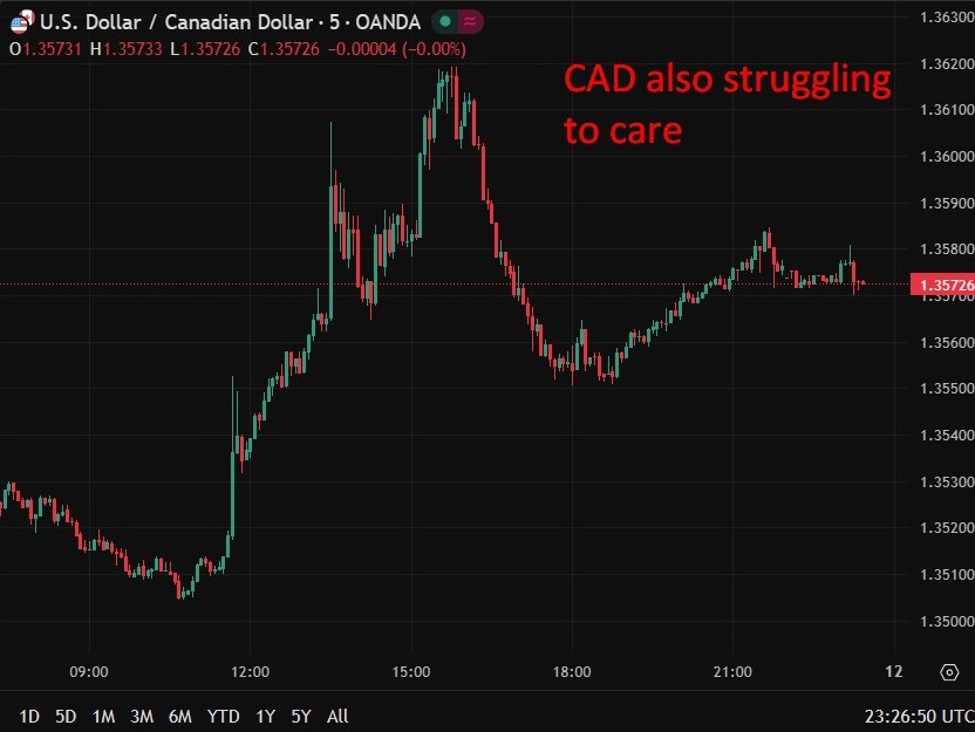
House votes 219–211 to terminate Trump’s Canada tariffsSummary:House passes resolution 219–211 to terminate Trump’s tariffs on Canada.Measure led by Gregory Meeks.Six Republicans joined Democrats; one Democrat voted no.Resolution targets the national emergency underpinning the tariffs.Must pass the Senate and survive a likely presidential veto.The U.S. House of Representatives voted 219–211 to pass a resolution seeking to terminate former President Donald Trump’s tariffs on Canada, marking a rare bipartisan rebuke of executive trade authority.The resolution, introduced by Representative Gregory Meeks, aims to end the national emergency declaration that provides the legal basis for the Canada tariffs. Six Republicans joined Democrats in voting yes, while one Democrat opposed the measure.The tariffs were imposed under emergency powers authorities, a legal pathway that allows a president to restrict trade on national security grounds. Critics argue this approach sidelines Congress’s constitutional authority over trade policy and stretches the definition of national emergency.However, the House vote alone does not immediately lift the tariffs.For the resolution to take effect, it must also pass the U.S. Senate. Even if approved there, it would then require presidential signature, or, if vetoed, a two-thirds majority in both chambers to override. Given Republican support for Trump’s trade strategy and the high bar required for a veto override, the resolution faces significant hurdles.Politically, the vote puts members on record ahead of broader trade debates and signals unease among some Republicans about the economic impact of tariffs, particularly on cross-border supply chains and consumer prices.The move could also increase pressure on the Senate to take up the measure, though its path forward remains uncertain.For markets, the vote is more a political signal than an immediate policy shift — but it underscores that congressional scrutiny of executive tariff powers is intensifying. This article was written by Eamonn Sheridan at investinglive.com. 🔗 Source 💡 DMK Insight The House’s narrow vote to terminate Trump’s Canada tariffs could shake up market sentiment, especially in commodities and trade-sensitive assets. With SOL at $82.05 and ADA at $0.27, traders should keep an eye on how this political maneuvering impacts broader economic indicators like inflation and trade balances. If the Senate follows suit, we might see a shift in investor confidence, particularly in sectors reliant on cross-border trade. Commodities like oil and agricultural products could react sharply, given their ties to Canadian exports. On the flip side, if the resolution fails in the Senate or faces a presidential veto, it could reinforce existing market uncertainties, leading to volatility in both crypto and traditional markets. Watch for any significant price movements in SOL and ADA as traders digest this news and adjust their positions accordingly. 📮 Takeaway Monitor SOL and ADA closely; any Senate action on tariffs could trigger volatility in these assets, especially if trade sentiment shifts.

Japan January 2026 wholesale inflation. PPI 2.3% y/y (vs. expected 2.3%)
I’ll have more to come on this separately, details, BoJ implications etc. ADDED, here we go, more:Japan January wholesale inflation slows to 2.3% as import prices rise This article was written by Eamonn Sheridan at investinglive.com. 🔗 Source 💡 DMK Insight Japan’s January wholesale inflation slowing to 2.3% is a key indicator for traders: it suggests potential shifts in monetary policy. With import prices rising, this could signal increased costs for businesses, impacting profit margins. Traders should keep an eye on the Bank of Japan’s response, as any hints of tightening could affect the yen’s strength. If the BoJ decides to act, it might create volatility in forex pairs involving the yen, particularly against the USD. Watch for key levels around recent highs and lows in USD/JPY, as they could provide entry or exit points. Also, consider how this inflation data might ripple through commodities, especially if import prices continue to climb, affecting overall market sentiment. 📮 Takeaway Monitor the USD/JPY pair closely; any BoJ policy shifts could lead to significant volatility in the coming weeks.
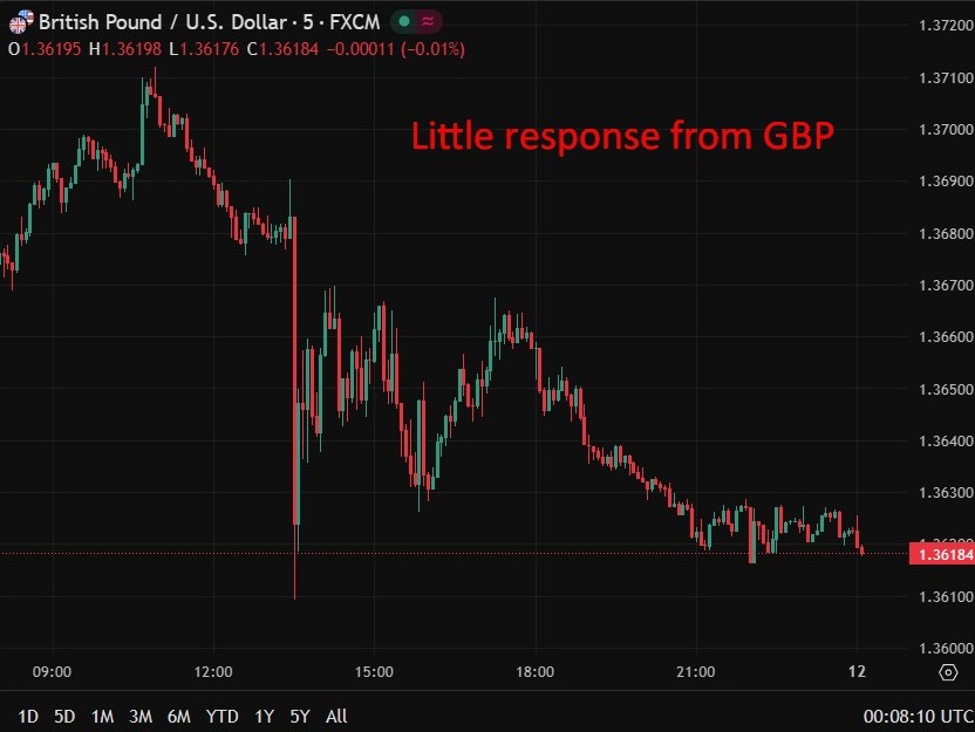
UK January RICS house price balance improves to -10, beating forecasts
UK housing downturn eases as January RICS balance improves Summary:UK January RICS house price balance rises to -10 from revised -13.Beat Reuters poll expectation of -11.New buyer enquiries improve to highest since July.12-month sales expectations jump to strongest since Dec 2024.Early signs of stabilisation, though activity remains subdued.Britain’s housing market showed further signs of stabilising in January, with the latest survey from the Royal Institution of Chartered Surveyors suggesting the downturn is gradually easing.The RICS house price balance — which measures the net percentage of surveyors reporting price increases rather than declines — improved to -10% in January, up from a revised -13% in December. The reading was slightly stronger than the -11% expected in a Reuters poll and marked the least negative result since June. Although the index remains below zero, indicating that more surveyors still report falling prices than rising ones, the improvement points to a moderation in the pace of declines.Demand indicators also firmed. The gauge of new buyer enquiries rose to -15% from -21%, the highest level since July. While activity remains subdued in absolute terms, the direction of travel suggests buyer interest is beginning to recover after a prolonged period of weakness driven by higher mortgage rates and affordability pressures.Forward-looking measures were more encouraging. RICS’ indicator for sales expectations over the next 12 months climbed to its strongest level since December 2024, signalling improving sentiment among property professionals about the year ahead.The survey follows recent reports from mortgage lenders including Nationwide Building Society and Halifax, which both recorded modest monthly house price gains. Analysts have attributed the tentative improvement to easing fiscal uncertainty following Chancellor Rachel Reeves’ late-November budget, alongside broader signs of economic stabilisation in early 2026.Even so, RICS cautioned that activity levels remain relatively low and that any recovery is likely to be gradual rather than sharp, with affordability constraints and interest rate expectations continuing to shape the outlook. This article was written by Eamonn Sheridan at investinglive.com. 🔗 Source 💡 DMK Insight The UK housing market is showing early signs of recovery, and here’s why that matters for traders: The January RICS house price balance improved to -10, beating expectations and indicating a potential stabilization in the market. This uptick in buyer inquiries, the highest since July, suggests that sentiment may be shifting positively. For traders, this could signal a bottoming out in housing prices, which may impact related sectors like construction and retail. If the trend continues, we could see increased activity in real estate stocks and ETFs, particularly those tied to UK markets. However, caution is warranted—while the data is promising, the overall activity remains subdued, and any volatility in economic indicators could quickly reverse gains. Keep an eye on the 12-month sales expectations, which have jumped to their strongest since December 2024; if this trend holds, it could lead to a more robust recovery. Watch for further data releases and market reactions in the coming weeks, especially around key economic indicators that could influence buyer confidence and lending rates. 📮 Takeaway Monitor the UK housing market closely; a sustained improvement in buyer inquiries could boost related stocks, particularly if sales expectations continue to rise.

PBOC is expected to set the USD/CNY reference rate at 6.9153 – Reuters estimate
The People’s Bank of China is due to set the daily USD/CNY reference rate at around 0115 GMT (2115 US Eastern time), a fixing that remains one of the most closely watched signals in Asian foreign exchange markets. China operates a managed floating exchange rate system, under which the renminbi (yuan) is allowed to trade within a prescribed band around a central reference rate, or midpoint, set each trading day by the PBOC. The current trading band permits the currency to move plus or minus 2% from the official midpoint during onshore trading hours. Each morning, the PBOC determines the midpoint based on a range of inputs. These include the previous day’s closing price, movements in major currencies, particularly the US dollar, broader international FX conditions, and domestic economic considerations such as capital flows, growth momentum and financial stability objectives. The midpoint is not a purely mechanical calculation, allowing policymakers discretion to guide market expectations. Once the midpoint is announced, onshore USD/CNY is free to trade within the allowable band. If market pressures push the yuan toward either edge of that range, the central bank may step in to smooth volatility. Intervention can take the form of direct buying or selling of yuan, adjustments to liquidity conditions, or guidance through state-owned banks. As a result, the daily fixing is often interpreted as a policy signal rather than just a technical reference point. A stronger-than-expected CNY midpoint is typically read as a sign the PBOC is leaning against depreciation pressure, while a weaker fixing for the CNY can indicate tolerance for a softer currency, often in response to dollar strength or domestic economic headwinds.In periods of heightened global volatility, such as shifts in US rate expectations, trade tensions or capital flow pressures, the fixing takes on added significance. For investors, it provides insight into Beijing’s currency priorities, balancing competitiveness, capital stability and financial market confidence. This article was written by Eamonn Sheridan at investinglive.com. 🔗 Source 💡 DMK Insight The upcoming USD/CNY reference rate fixing is crucial for traders, especially in the context of recent volatility in the forex markets. With the People’s Bank of China setting the rate, any deviation from market expectations could trigger significant moves in the USD/CNY pair. Traders should be on high alert for this fixing, as it can influence not just the yuan but also related currencies in the Asian market. If the rate comes in stronger than anticipated, it might bolster the yuan, potentially impacting commodities priced in dollars. Conversely, a weaker fixing could lead to a sell-off in the yuan, affecting risk sentiment across the board. Pay attention to the market’s reaction post-fixing, as it often sets the tone for trading in the following days, particularly for those holding positions in Asian equities or commodities. Look for key levels around recent highs and lows in the USD/CNY pair, as these will provide insight into market sentiment and potential breakout points. The immediate focus should be on the fixing itself, but also keep an eye on broader economic indicators coming from China that could influence future rate settings. 📮 Takeaway Watch the USD/CNY reference rate fixing closely; deviations from expectations could lead to sharp moves in the yuan and related markets.
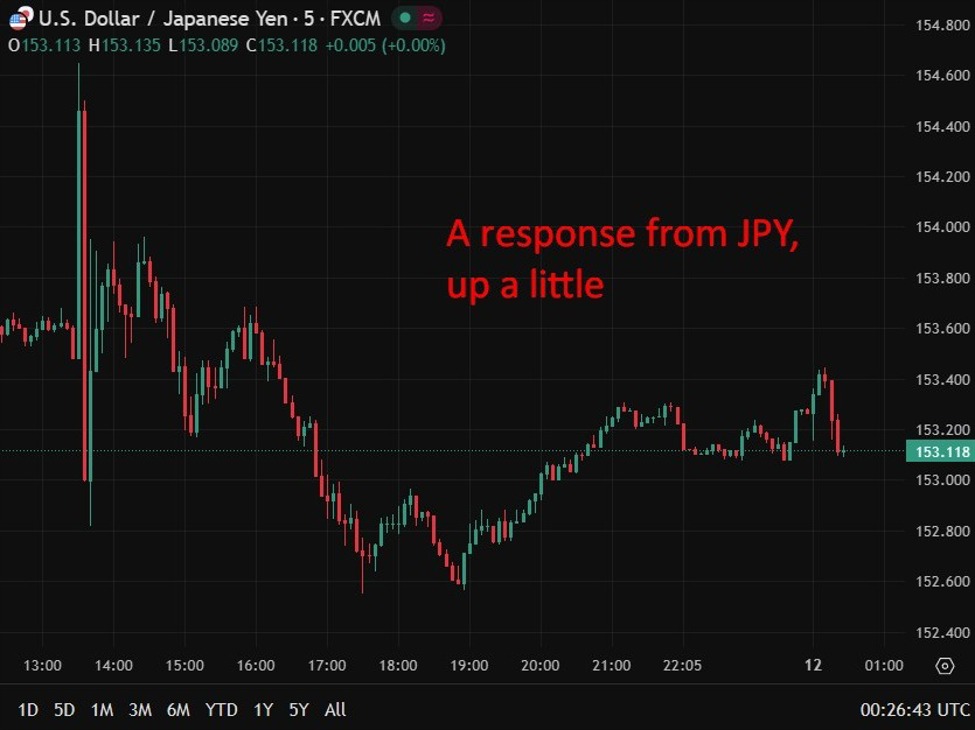
Japan’s Mimura says watching FX with urgency, flags close US contact
Japan signals vigilance on FX as Mimura issues low-key verbal warning Summary:Japan’s top currency official says authorities are watching FX “with high urgency.”Refuses to comment on specific exchange-rate levels.Says Tokyo is in close contact with US authorities.Emphasises Japan is “not lowering its guard.”Tone measured but US reference notable.Japan’s top currency diplomat issued a familiar but pointed warning to foreign exchange markets, saying authorities are watching developments “with a high sense of urgency” and are not lowering their guard amid renewed yen volatility.Atsushi Mimura, Japan’s Vice Finance Minister for International Affairs, made the remarks without referencing specific exchange-rate levels. The role is widely described in markets as Japan’s “top currency diplomat” because it oversees foreign exchange policy and coordinates any potential intervention operations.Mimura reiterated that he would not comment on particular currency levels, a standard formulation designed to avoid signalling trigger points. However, he added that Japanese authorities remain in close contact with their US counterparts, a line that typically attracts attention in markets.While the overall tone was relatively low-key and consistent with past episodes of verbal intervention, the explicit mention of communication with Washington may be interpreted as an effort to signal policy alignment. Given that large-scale FX intervention by Japan historically involves at least tacit US acquiescence, highlighting bilateral contact serves as a subtle reinforcement of credibility.Japanese officials have stepped up rhetoric in recent weeks as yen weakness re-emerged, particularly if moves are seen as speculative or disorderly. Markets generally view such language as a precursor stage before more forceful warnings or, in extreme cases, direct market operations.At this stage, the messaging appears precautionary rather than escalatory. The absence of language condemning “excessive” or “one-sided” moves suggests officials are seeking to stabilise sentiment rather than signal imminent action.Still, the reminder that Tokyo remains vigilant, and coordinated with Washington, keeps intervention risk firmly in the background.— As a ps., Japan’s Nikkei is above 58,000 for the first time This article was written by Eamonn Sheridan at investinglive.com. 🔗 Source 💡 DMK Insight Japan’s FX vigilance is a big deal for traders, especially with the US in the mix. When a top currency official emphasizes ‘high urgency,’ it signals potential intervention or policy shifts that could impact USD/JPY and broader forex markets. Traders should be wary of volatility, particularly if the yen weakens further, which could prompt a more aggressive response from Tokyo. The lack of specific exchange-rate levels mentioned might suggest that authorities are keeping their options open, making it crucial to monitor USD/JPY closely for any sudden moves. Look for key resistance around recent highs and support levels that could trigger intervention signals. On the flip side, this cautious tone might also reflect Japan’s desire to maintain stability without alarming the markets. If traders overreact, we could see a short-term spike in volatility, but that might present buying opportunities for those looking to capitalize on price swings. Keep an eye on economic indicators from both Japan and the US, as they could provide context for any shifts in sentiment or policy adjustments. 📮 Takeaway Watch USD/JPY closely; any signs of intervention could lead to significant volatility, especially if the yen weakens further.
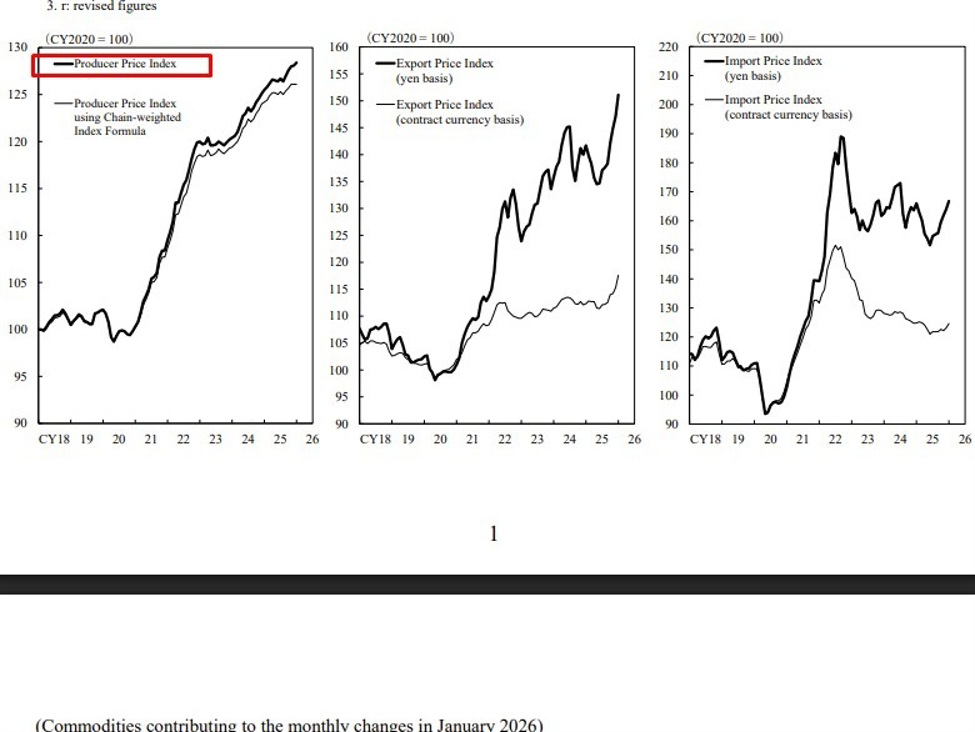
Japan January wholesale inflation slows to 2.3% as import prices rise
Japan’s PPI is also known as the Corporate Goods Price Index. Its an indicator to ‘wholesale’ inflation. Data post earlier is here ICYMI:Japan January 2026 wholesale inflation. PPI 2.3% y/y (vs. expected 2.3%)Japan wholesale inflation slows, but yen import prices edge higherJapan’s January CGPI rises 2.3% y/y, slowing from 2.4%.In line with market expectations.Yen-based import price index up 0.5% y/y.Weak yen continues to feed cost pressures.Data feeds into BOJ inflation assessment after December rate hike.Japan’s wholesale inflation slowed for a second consecutive month in January, though rising yen-denominated import costs highlight ongoing price pressures linked to currency weakness.Data from the Bank of Japan showed the corporate goods price index (CGPI) rose 2.3% year-on-year in January, easing from 2.4% in December and matching market expectations. The CGPI tracks the prices companies charge one another for goods and services and is viewed as a leading indicator of pipeline inflation.While the moderation suggests producer-level price momentum is gradually cooling, the currency channel remains active. An index measuring yen-based import prices increased 0.5% from a year earlier, following a revised 0.2% rise in December. That uptick underscores how a weaker yen continues to lift the cost of imported raw materials and energy, even as global commodity pressures stabilise.For policymakers, the mixed signals complicate the inflation narrative. The Bank of Japan has been assessing whether underlying price growth is sustainably anchored around its 2% target. In December, the BOJ raised its policy rate to 0.75%, a 30-year high, marking another step away from decades of ultra-loose monetary policy and near-zero borrowing costs.The central bank has indicated it will continue to evaluate whether cost-push pressures are translating into more durable demand-driven inflation. A sustained rise in import prices due to yen weakness could delay the full cooling of producer costs, while the gradual slowdown in headline wholesale inflation suggests that peak pressures may be behind.Markets will likely interpret the data as broadly consistent with the BOJ’s cautious normalisation path, neither forcing immediate tightening nor derailing the case for gradual policy adjustment if inflation dynamics remain firm. This article was written by Eamonn Sheridan at investinglive.com. 🔗 Source 💡 DMK Insight Japan’s PPI holding steady at 2.3% y/y is a mixed bag for traders right now. While it matches expectations, the slight slowdown from 2.4% signals a potential easing in wholesale inflation pressures. This could influence the Bank of Japan’s monetary policy, especially as the yen’s import prices are on the rise. A stronger yen could impact exporters negatively, which is something to watch if you’re trading Japanese equities or related forex pairs. Look for reactions in USD/JPY, particularly if it approaches key support levels around 140. If the yen strengthens further, it might trigger a shift in market sentiment, leading to increased volatility in both forex and equities. Keep an eye on upcoming economic data releases that could provide more context on inflation trends and the BOJ’s next moves. Here’s the thing: while the PPI data is stable, the rising import prices could lead to a squeeze on margins for Japanese companies, potentially impacting their stock prices. So, if you’re holding positions in Japanese equities, consider how these inflation dynamics might play out in the coming weeks. 📮 Takeaway Watch USD/JPY closely; a break below 140 could signal a stronger yen and impact Japanese equities.
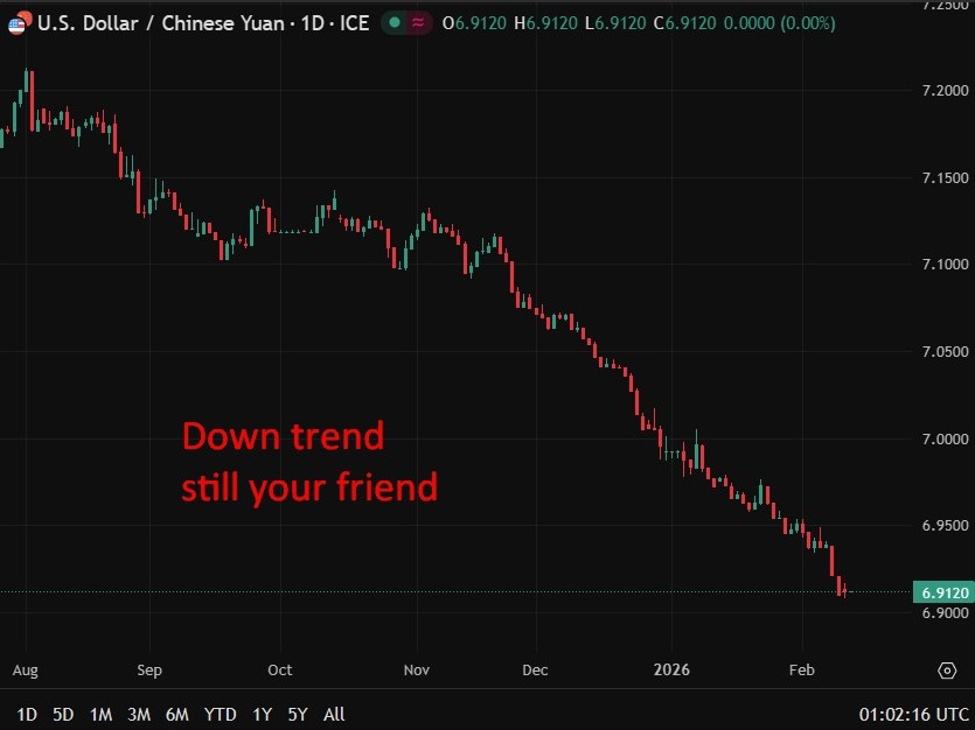
PBOC sets USD/ CNY reference rate for today at 6.9457 (vs. estimate at 6.9153)
The PBOC allows the yuan to fluctuate within a +/- 2% range, around this reference rate.Previous close 6.9106PBOC inject 166.5bn yuan via 7-day RRs @1.4% This article was written by Eamonn Sheridan at investinglive.com. 🔗 Source 💡 DMK Insight The PBOC’s recent move to inject 166.5 billion yuan into the market signals a proactive stance to stabilize the yuan, which closed at 6.9106. This liquidity boost comes as the yuan is allowed to fluctuate within a +/- 2% range, a strategy that aims to manage volatility amid ongoing economic pressures. Traders should pay attention to how this injection impacts the yuan’s performance against major currencies, especially the USD, as it could influence forex trading strategies. If the yuan strengthens, we might see a corresponding impact on commodities priced in yuan, like gold and oil. However, there’s a flip side: if the yuan continues to weaken despite these measures, it could raise concerns about the overall health of China’s economy, leading to increased volatility in related markets. Watch for any significant moves outside the established range, as that could trigger broader market reactions. 📮 Takeaway Keep an eye on the yuan’s performance against the USD; a move beyond the +/- 2% range could signal increased volatility and trading opportunities.

Lunar New Year 2026: Mainland China markets are scheduled to be closed February 16–23
Lunar New Year (LNY) 2026 brings thin liquidity and China-offshore price discovery, with travel/consumption the key narrative.Summary:Lunar New Year 2026 (Year of the Horse) falls on Tuesday 17 Feb. Mainland China markets are scheduled to be closed Feb 16–23, reopening Tue Feb 24. Hong Kong has half-day trading on Mon Feb 16, is closed Feb 17–19, and reopens Fri Feb 20. Singapore (SGX) has half-day trading on Mon Feb 16 and is closed Feb 17–18. China is running an extended nine-day Spring Festival holiday (Feb 15–23) with officials expecting a record travel surge, supportive for consumption narratives, but liquidity will be thin.Lunar New Year 2026 lands on Tuesday 17 February and, as usual, it will reshape trading conditions across mainland China, Hong Kong and Singapore, with liquidity effects often as important as the headlines. Onshore, China’s equity market enters its biggest scheduled trading interruption of the year. The Shenzhen Stock Exchange calendar shows the market closed from Monday 16 February through Monday 23 February, resuming Tuesday 24 February. The Shanghai Stock Exchange (SSE) will be closed for the 2026 Lunar New Year (Spring Festival) from Monday, February 16, 2026, to Monday 23 Feb 2026 (inclusive) Reopens: Tuesday 24 Feb 2026 With A-shares shut, price discovery shifts offshore (CNH, H-shares, ADRs, commodities proxies), while onshore macro/credit headlines can “bottle up” and reprice quickly when domestic trading resumes.This year the macro overlay is the extended nine-day public holiday (Feb 15–23) and a policy push to encourage spending and travel, with officials projecting a record travel rush. That tends to support short-term themes in consumer, travel, catering, duty-free and tourism names, while also lifting scrutiny on high-frequency indicators (mobility, domestic flight bookings, hotel occupancy, box office, and retail receipts) as a real-time read on confidence.Hong Kong becomes the key regional venue for China beta during the A-share closure. HKEX lists half-day trading on Monday 16 February (Lunar New Year’s Eve) and full market holidays Tuesday 17 through Thursday 19 February, with normal trade resuming Friday 20 February. Expect thinner depth, wider spreads and a higher sensitivity to CN headlines.Singapore also sees disrupted liquidity. SGX notes half-day trading on 16 February, with the market closed 17–18 February. Regionally, the practical market impact is a short window where positioning gets lighter, volatility can be jumpy on small flows, and “reopen gaps” become a feature, especially if FX or commodities move sharply while China is closed. This article was written by Eamonn Sheridan at investinglive.com. 🔗 Source 💡 DMK Insight Lunar New Year is approaching, and here’s why that matters for traders: thin liquidity could lead to increased volatility. With mainland China markets closed from February 16 to 23, traders should brace for potential price swings in offshore markets. The focus will shift to travel and consumption narratives, which could impact sectors like tourism and retail. If you’re trading related assets, keep an eye on how these narratives play out, especially in the days leading up to the holiday. Look for key indicators in consumer spending reports or travel data that could signal shifts in market sentiment. Also, watch for any unusual price movements in Hong Kong’s half-day trading on February 16, as that could set the tone for the week ahead. Remember, the Year of the Horse could symbolize a gallop towards volatility, so stay alert for sudden changes in momentum. 📮 Takeaway Monitor offshore price movements and consumer spending indicators leading up to Lunar New Year for potential volatility in related markets.
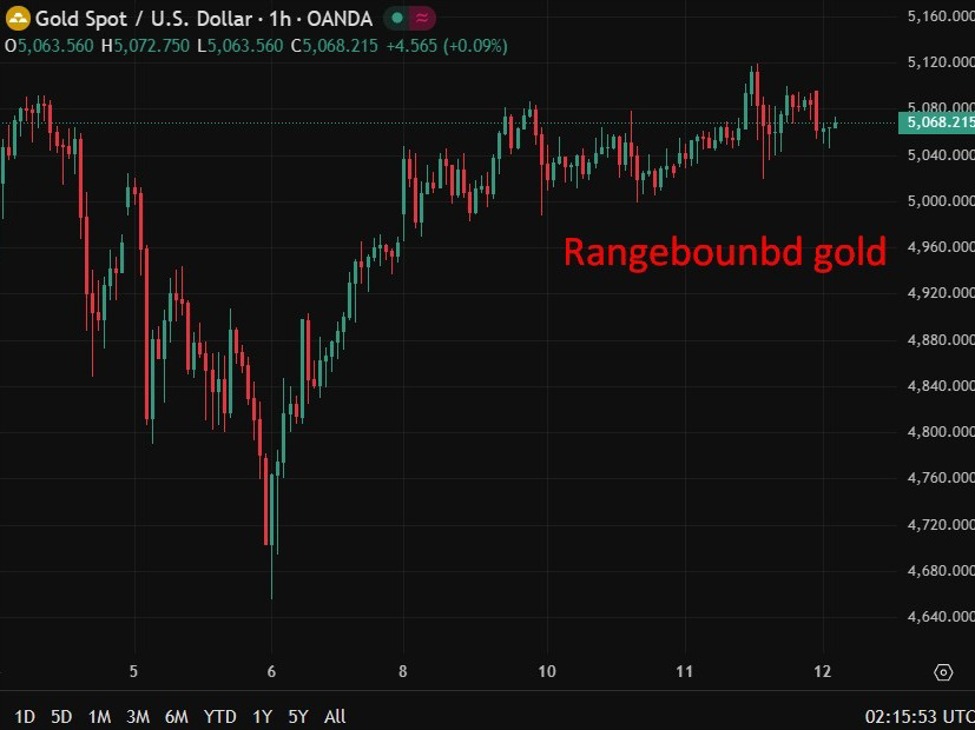
Precious metals retreat after US payroll surprise
Summary:Gold and silver dip.Strong January US jobs data dents near-term rate cut hopes.Spot gold near $5,060; silver slips after sharp prior rally.Markets eye jobless claims and US inflation data next.Iran diplomacy headlines linger in background.Gold prices are rangebound in early Asia trade, as a firmer U.S. dollar capped momentum following stronger-than-expected U.S. employment data that reduced expectations for imminent Federal Reserve rate cuts.Spot gold eased after gaining more than 1% in the prior session. Silver saw sharper moves, falling to about $82.50 per ounce after a 4% surge on Wednesday.The pullback comes as the U.S. dollar index extended its rally after data showed job growth unexpectedly accelerated in January, while the unemployment rate fell to 4.3%. The resilience of the labour market suggests the Federal Reserve has scope to keep interest rates steady as it continues to monitor inflation dynamics.However, some of the headline strength may be overstated. Revisions indicated that the economy added 181,000 jobs in 2025 rather than the previously reported 584,000, tempering perceptions of underlying labour market momentum.Markets are now focused on upcoming U.S. weekly jobless claims and, more importantly, inflation data due Friday for further clues on the Fed’s policy path. A Reuters poll indicated economists expect the Fed to hold rates steady through Chair Jerome Powell’s term, which ends in May, before potentially cutting in June. Debate remains over the future direction of policy under a likely successor, Kevin Warsh.Geopolitical developments also remain in view. Following talks with Israeli Prime Minister Benjamin Netanyahu, President Donald Trump said no definitive agreement had been reached regarding Iran, though negotiations would continue.For now, the dollar’s strength and shifting rate expectations appear to be the dominant drivers for precious metals. This article was written by Eamonn Sheridan at investinglive.com. 🔗 Source 💡 DMK Insight Gold and silver are feeling the heat from strong U.S. jobs data, and here’s why that’s crucial: With spot gold hovering around $5,060 and silver pulling back after a recent rally, traders need to be aware of how the labor market impacts Federal Reserve policy. The robust jobs report diminishes the likelihood of near-term rate cuts, which typically supports gold prices. A stronger dollar is also capping gold’s upward momentum, making it essential for traders to watch the interplay between these factors. If the dollar continues to strengthen, gold could face further pressure, especially if it breaks below key support levels. On the flip side, if upcoming jobless claims and inflation data show signs of weakness, we could see a reversal in sentiment. Keep an eye on the $5,000 level for gold; a breach could signal a deeper correction. Meanwhile, silver’s recent rally might be vulnerable to profit-taking, so traders should monitor for signs of exhaustion in buying. The next few days will be pivotal, especially with geopolitical tensions from Iran adding an unpredictable element to the mix. 📮 Takeaway Watch for gold’s reaction around the $5,000 level; a break could signal further downside, while upcoming jobless claims and inflation data will be key indicators.
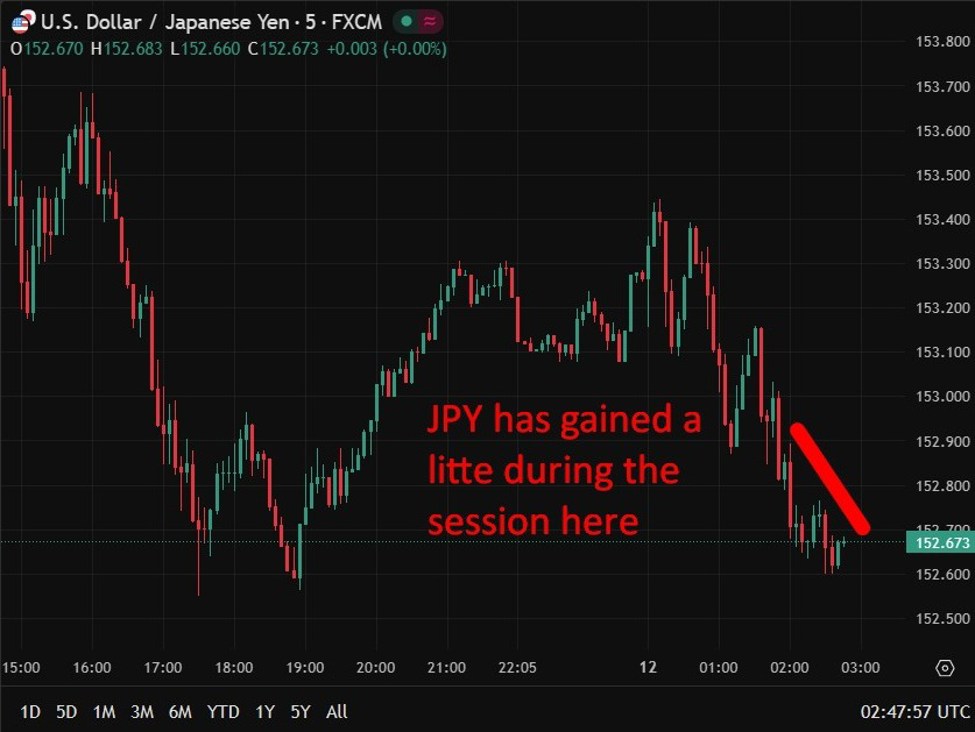
Tokyo keeps intervention risk alive as yen swings. Mimura recap.
Summary:Japan says it has not lowered its guard against FX volatility.Atsushi Mimura reiterates high-urgency monitoring stance.Refuses to comment on speculation of rate checks.Yen rebounds sharply from near 160 per dollar.Close contact with US authorities emphasised.Japan’s top currency official reiterated that authorities remain on high alert over foreign exchange volatility, pushing back against speculation that Tokyo may have already stepped up activity behind the scenes as the yen staged a sharp rebound.Atsushi Mimura, Japan’s Vice Finance Minister for International Affairs, widely known in markets as the country’s “top currency diplomat”, spoke earlier. Recapping now. He said policymakers have “not lowered our guard at all” and will continue to monitor markets with a “high sense of urgency.”Mimura declined to comment on market chatter that officials may have conducted rate checks following the latest U.S. employment data, a step often viewed as a precursor to direct currency intervention. “Our policy remains unchanged,” he told reporters, adding that authorities would maintain close communication with markets and remain in contact with U.S. counterparts.The yen has gained nearly 3% since Prime Minister Sanae Takaichi’s election victory, as investors speculate her mandate could support fiscal discipline and policy clarity.For Japanese policymakers, currency moves carry inflation implications. A weaker yen raises import costs and feeds into domestic price pressures, complicating monetary policy calibration.While Mimura’s tone was measured and broadly consistent with past verbal interventions, the explicit emphasis on continued vigilance, and coordination with Washington, keeps intervention risk in the background should volatility re-intensify.Atsushi Mimura is Japan’s vice finance minister for international affairs, the country’s top currency diplomat, and the official with day-to-day responsibility for overseeing foreign-exchange policy. In practice, Mimura is the key decision-maker on whether Japan intervenes in the FX market, acting under the authority of the finance minister and in coordination with the Bank of Japan, which executes intervention operations on his instruction. He monitors market conditions closely, assesses whether yen moves are excessive, disorderly or driven by speculation, and delivers the government’s verbal warnings that often precede action. When intervention is authorised, Mimura formally directs the BOJ to enter the market, typically through yen-buying operations aimed at stabilising sharp or one-sided moves rather than targeting specific exchange-rate levels. This article was written by Eamonn Sheridan at investinglive.com. 🔗 Source 💡 DMK Insight Japan’s vigilance on FX volatility is a crucial signal for traders right now. With the yen rebounding sharply from near 160 per dollar, this indicates a potential shift in market sentiment. Traders should note that Japan’s top currency official, Atsushi Mimura, has emphasized a high-urgency monitoring stance, which suggests that any sudden moves in the yen could prompt intervention. This is particularly relevant given the close contact with US authorities, hinting at coordinated efforts to stabilize the currency. For those trading USD/JPY, keep an eye on the 160 level; a sustained break below could trigger further yen strength. Conversely, if volatility spikes, it could lead to a quick reversal, impacting related assets like Japanese equities. Here’s the thing: while mainstream coverage might focus on the yen’s immediate rebound, the real story is the potential for intervention if volatility escalates. Traders should watch for any comments from Japanese officials and monitor the USD/JPY pair closely for signs of intervention or policy shifts. 📮 Takeaway Watch the 160 level in USD/JPY; a sustained break below could signal further yen strength and potential intervention risks.