
 Bitcoin
  Ethereum
  Tether
  XRP
XRP  BNB
BNB  USDC
USDC  Solana
  JUSD
JUSD  TRON
TRON  Lido Staked Ether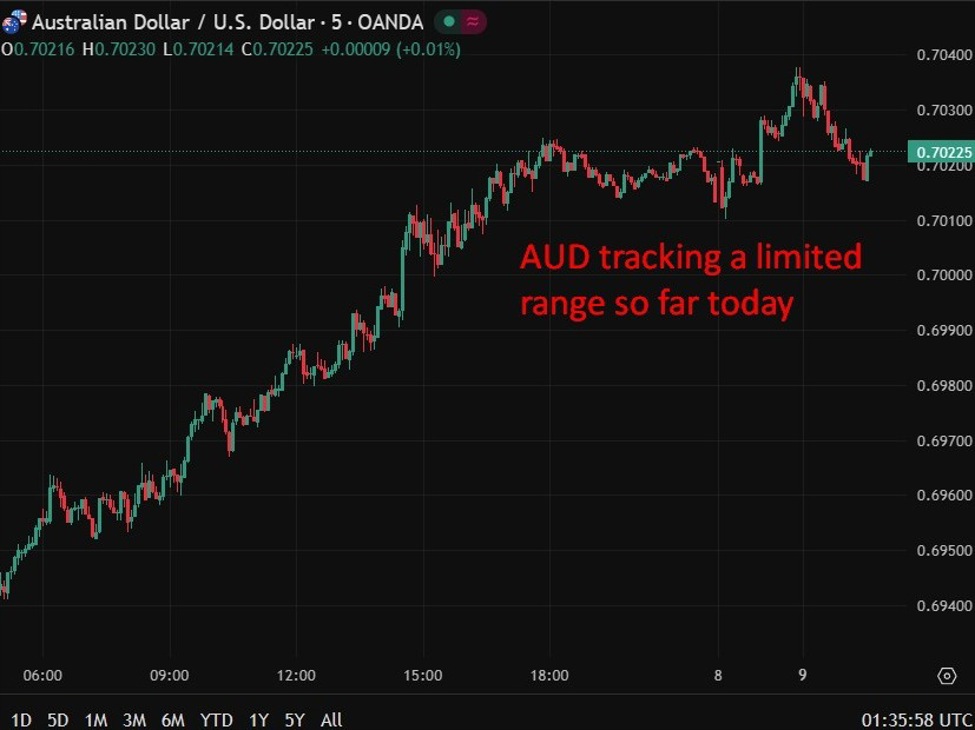
Australian household spending eased in December after strong sales-driven gains, but solid quarterly volumes underline why the RBA has turned hawkish on inflation.Summary:Australian household spending fell 0.4% m/m in December, after strong gains in October–NovemberAnnual spending growth slowed to 5.0%, from 6.3% previouslyQuarterly sales volumes rose 0.9%, adding an estimated 0.3ppt to GDPData supports the Reserve Bank of Australia’s decision to hike rates last weekMarkets now price a 74% chance of another RBA hike in MayAustralian household spending eased in December as consumers pulled back after heavy outlays during major year-end sales events, though underlying volumes remained firm, reinforcing the Reserve Bank of Australia’s decision to tighten policy last week.Data released Monday by the Australian Bureau of Statistics showed its monthly household spending indicator fell 0.4% in December to A$78.86 billion, following a 1.0% rise in November and a 1.4% increase in October. The annual pace of spending growth slowed to 5.0%, down from 6.3% previously.The ABS said the December pullback reflected a timing effect rather than a sharp deterioration in demand. via ABS:saw high spending in October and November, which had major sales and cultural events boost spendingfall in December indicates that households brought forward purchases during sales events in October and NovemberDespite the softer monthly outcome, the broader picture remained resilient. Sales volumes rose 0.9% over the December quarter, a solid gain that is estimated to add around 0.3 percentage points to GDP, highlighting that consumer demand remains a meaningful driver of growth.The data lands just days after the RBA lifted the cash rate by 25 basis points to 3.85%, its first rate hike in more than two years, citing renewed inflation pressures. Headline inflation stood at 3.6% last quarter and is forecast to climb to 4.2% by June, well above the central bank’s 2–3% target band.Robust consumer spending, record-high house prices and relatively easy credit conditions have all fed into concerns that financial conditions may not be sufficiently restrictive. Markets have responded by pushing rate expectations higher, with interest-rate swaps now implying a 74% probability of another hike in May and roughly 37bp of additional tightening priced for 2026.A breakdown of December spending showed goods purchases fell 0.5%, led by weaker demand for clothing, footwear, appliances and tools. Services spending slipped 0.3%, reflecting lower transport and health outlays.Looking ahead, economists expect higher borrowing costs to weigh on activity, but not derail consumption entirely. “The RBA’s rate hike last week will weigh on spending growth in 2026,” said Ben Udy, lead economist at Oxford Economics Australia, cited by Reuters. However, he added that easing inflation and solid wage growth should help prevent a sharper pullback in household demand. This article was written by Eamonn Sheridan at investinglive.com. 🔗 Source 💡 DMK Insight Household spending in Australia dipped 0.4% in December, and here’s why that matters for traders: This decline, following robust gains in the previous months, signals a potential shift in consumer sentiment that could impact the Australian dollar and related assets. The Reserve Bank of Australia (RBA) is likely to remain hawkish on inflation, which could lead to tighter monetary policy. For traders, this means keeping an eye on the AUD/USD pair, especially if the RBA’s stance influences interest rate expectations. The recent quarterly sales volume increase of 0.9% suggests some resilience, but the slowdown in annual spending growth from 6.3% to 5.0% raises concerns about sustainability. If this trend continues, we might see increased volatility in the forex markets, particularly for AUD. Look for key technical levels around AUD/USD 0.6800 and 0.6750, as these could act as support or resistance. Also, watch for any comments from RBA officials that might hint at future policy moves, as these could trigger significant market reactions. 📮 Takeaway Monitor AUD/USD closely, especially around 0.6800 and 0.6750, as shifts in RBA policy could create trading opportunities.
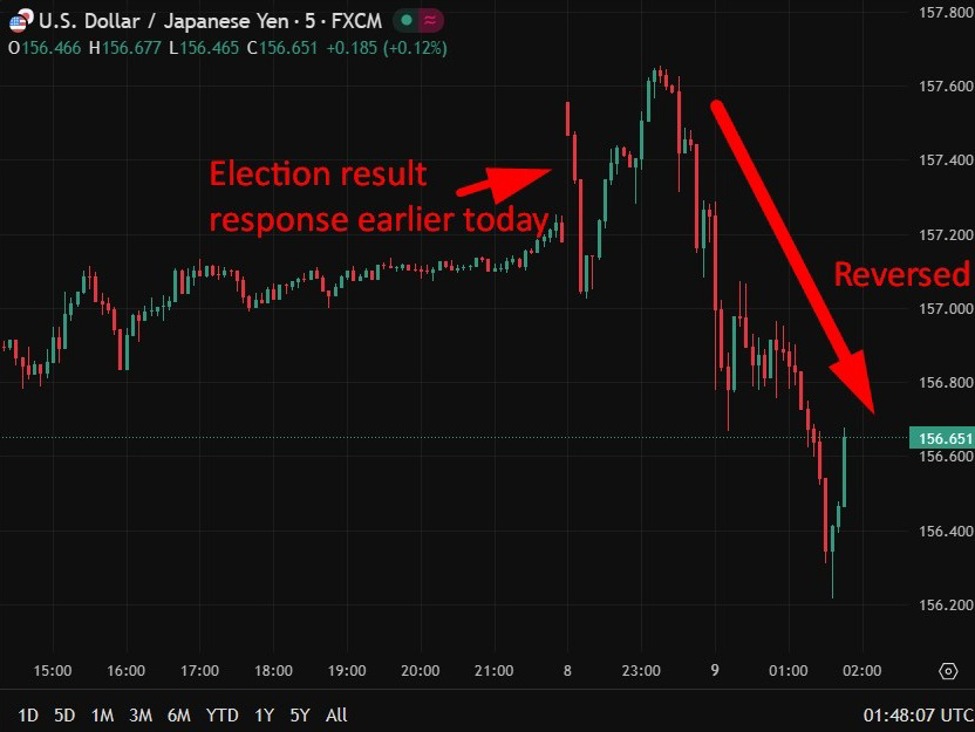
Yen has surged after verbal intervention warnings. Early moves fake out.
The yen dropped early:Yen weaker early trade. Japan markets brace for renewed Takaichi trade after landslide winWeak yen update: Japan election landslide Takaichi super-majority, revives yen pressureBut intervention comments from the finance minister, and then her deputy, has seen it rocket higher (USD/JPY lower):Japan steps up yen intervention warnings as officials signal readinessSatsuki Katayama, Japan’s Minister of Finance This article was written by Eamonn Sheridan at investinglive.com. 🔗 Source 💡 DMK Insight The yen’s early drop signals a volatile trading environment, especially with Takaichi’s election win. Japan’s recent election results have reignited concerns about the yen’s stability, particularly as the new leadership hints at potential intervention. Traders should note that the USD/JPY pair is reacting sharply, with the yen gaining strength following intervention comments from finance officials. This could indicate a strategic pivot from Japan’s monetary policy, which has been heavily focused on maintaining a weak yen to support exports. If the USD/JPY continues to trend lower, it might suggest that the market is pricing in a more aggressive stance from Japan’s new administration. However, there’s a flip side: if the yen strengthens too quickly, it could lead to backlash against Takaichi’s government, complicating their economic agenda. Watch for key resistance levels around recent highs in the USD/JPY pair, as breaking through these could signal a stronger yen trend. Keep an eye on upcoming economic indicators from Japan and the U.S. that could further influence this pair’s volatility. 📮 Takeaway Monitor the USD/JPY closely; a break below recent support levels could indicate a stronger yen trend amid intervention signals.
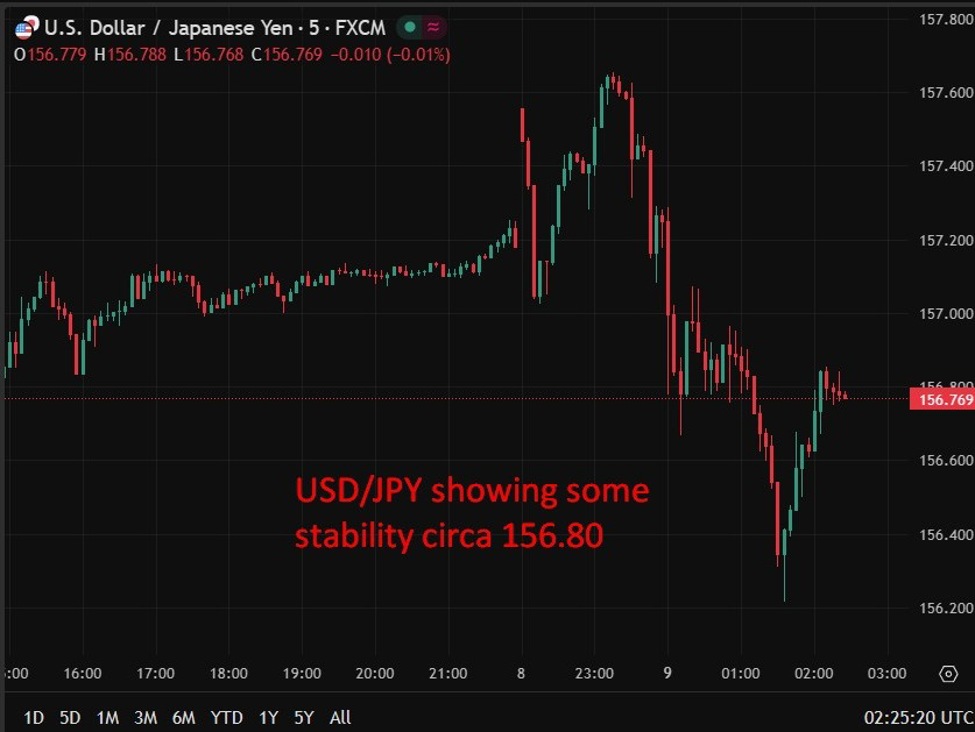
Japan escalates yen warnings as Kihara joins Katayama and Mimura. Supportive for JPY.
Japan’s top officials have stepped up coordinated yen warnings, signalling rising intervention risk as authorities push back against rapid and one-sided FX moves.SummaryJapan’s intervention rhetoric has intensified across senior officialsChief Cabinet Secretary Minoru Kihara flagged concern over one-sided FX movesFinance Minister Satsuki Katayama warned over the weekend she may engage markets and intervene if neededTop currency diplomat Atsushi Mimura reinforced the message Monday with “high urgency” languageAuthorities are drawing a clear line against disorderly yen weakness after the electionJapan’s government has stepped up its defence of the yen, with senior officials delivering layered and coordinated warnings that intervention remains firmly on the table as currency volatility persists following the country’s election.The latest signal came from Chief Cabinet Secretary Minoru Kihara, who said authorities were concerned about one-sided and rapid moves in the foreign exchange market. Kihara added that the government was watching FX developments with a high sense of urgency and would continue to remain in dialogue with markets, language typically reserved for periods when officials are seeking to deter speculative momentum.Kihara’s remarks follow a weekend warning from Finance Minister Satsuki Katayama, who said she stood ready to communicate with markets on Monday if needed to stabilise sentiment. Katayama stressed that Japan remains closely coordinated with the United States on currency matters, noting her ongoing contact with US Treasury Secretary Scott Bessent and reaffirming that authorities retain the right to act against moves that deviate from fundamentals.She also addressed speculation around the use of Japan’s foreign exchange reserves, cautioning that any decision to tap reserves must be handled with a “professional” approach given their central role in intervention operations. While acknowledging reserves could be an option amid sharp yen moves, Katayama underscored the government’s commitment to fiscal sustainability and market stability.That message was reinforced earlier on Monday by Atsushi Mimura, Japan’s vice finance minister for international affairs and the country’s top currency diplomat. Mimura said authorities were closely watching FX movements with a high sense of urgency and were always in dialogue with markets, remarks widely interpreted as explicit verbal intervention. As head of the relevant bureau at the finance ministry, Mimura is the official who would direct the Bank of Japan to conduct yen-buying operations if intervention were authorised.Together, the comments from Katayama, Mimura and now Kihara form a clear escalation ladder: political oversight from the cabinet, operational authority from the finance ministry, and tactical readiness through the BoJ. The stepped-up rhetoric comes after Sanae Takaichi’s landslide election win revived expectations of expansionary fiscal policy, a backdrop that has added to downward pressure on the yen.For markets, the coordinated messaging suggests Japanese authorities are increasingly uncomfortable with speculative or disorderly moves near recent extremes in USD/JPY. While officials have stopped short of signalling imminent action, the breadth and consistency of the language point to a low tolerance for further sharp depreciation, particularly if moves accelerate.Katayama is Japan finance minister This article was written by Eamonn Sheridan at investinglive.com. 🔗 Source 💡 DMK Insight Japan’s officials are sounding alarm bells on the yen, and here’s why that matters: With the recent uptick in intervention rhetoric, traders need to be on high alert. The coordinated warnings from key figures like Chief Cabinet Secretary Minoru Kihara and Finance Minister Satsuki Katayama indicate a serious concern over rapid, one-sided FX moves. This isn’t just noise; it suggests that the Bank of Japan might be gearing up for direct market intervention if the yen continues to weaken. Traders should watch for any specific thresholds that might trigger action, as these could lead to sharp reversals in USD/JPY. If the yen breaches key support levels, expect volatility to spike as market participants react to potential intervention. But let’s not forget the flip side: if the yen strengthens unexpectedly, it could catch many off guard, especially those heavily positioned in dollar longs. Keep an eye on sentiment indicators and any shifts in the broader economic landscape, as these could influence the timing and effectiveness of any intervention. Watch for USD/JPY levels around 150, as a break above could prompt immediate action from Japanese authorities. 📮 Takeaway Monitor USD/JPY closely, especially around the 150 level, as intervention risks rise with Japan’s intensified rhetoric.

Jimmy Lai 20 year prison sentence raises new tensions between China and the West
Jimmy Lai’s 20-year sentence risks becoming a new diplomatic flashpoint, sharpening tensions between China and Western governments ahead of key US–China talks.Summary:Jimmy Lai sentenced to 20 years in prison in Hong KongCase risks becoming a flashpoint in US–China relations ahead of expected Trump–Xi talksDonald Trump has publicly pressed Xi Jinping to consider Lai’s releaseThe US, UK and EU have condemned the ruling, sharpening China–West tensionsRights, rule-of-law and Hong Kong autonomy issues return to centre stageThe sentencing of Hong Kong media tycoon Jimmy Lai to 20 years in prison is set to deepen diplomatic frictions between China and Western governments, adding a politically sensitive human-rights dimension to already strained US–China relations.Lai, a 78-year-old outspoken critic of the Chinese Communist Party and founder of the now-shuttered Apple Daily newspaper, was handed the lengthy sentence by a Hong Kong court. The ruling will be widely seen by Western officials as further evidence of Beijing’s tightening grip over Hong Kong under the national security framework imposed in recent years.In the United States, the case threatens to complicate the diplomatic agenda ahead of a potential meeting between President Donald Trump and Chinese leader Xi Jinping, expected to take place in China in April. Trump has said he raised Lai’s case directly with Xi last year and has pledged to do “everything possible” to secure his release, citing Lai’s age and poor health.“I spoke to President Xi about it, and I asked to consider his release,” Trump said after Lai’s conviction in December, adding that the issue would remain on his agenda. While Trump did not specify when the request was made, his comments signal that the case could resurface during upcoming bilateral talks, alongside trade, technology restrictions and geopolitical flashpoints in the Asia-Pacific.The issue also risks escalating tensions between China and the United Kingdom. Lai holds British citizenship, and Prime Minister Keir Starmer confirmed he raised the case during a recent visit to Beijing. Lai’s family has since urged the UK government to step up diplomatic efforts, arguing that London has both a moral and legal responsibility to act.European leaders have echoed those concerns. The European Union has criticised the sentence and renewed calls for Lai’s release, framing the case as emblematic of the erosion of judicial independence and civil liberties in Hong Kong, a stance that Beijing has repeatedly rejected as foreign interference.Chinese authorities have so far refused to engage publicly on the matter. Xi has not commented on Lai’s sentencing, while other Chinese officials have dismissed Western criticism, insisting the case is a domestic legal issue and warning against external pressure.For markets and policymakers, the risk is that Lai’s case becomes another entrenched point of friction, reinforcing a broader deterioration in China’s relations with advanced economies. If elevated into high-level diplomacy, it could harden negotiating positions on trade, investment and technology, further complicating an already fragile geopolitical backdrop. This article was written by Eamonn Sheridan at investinglive.com. 🔗 Source 💡 DMK Insight Jimmy Lai’s 20-year sentence is more than just a legal issue; it’s a potential catalyst for market volatility. As tensions rise between China and the West, particularly with the upcoming Trump-Xi talks, traders should brace for potential geopolitical fallout that could impact global markets. The situation could lead to increased scrutiny on Chinese assets and sectors, particularly those linked to technology and finance, as investors weigh the risks of sanctions or retaliatory measures. Look for shifts in market sentiment, especially in Hong Kong stocks and Chinese ADRs, as these could react sharply to any news related to diplomatic developments. If the situation escalates, we might see a flight to safety, impacting currencies like the USD and JPY. Keep an eye on key support and resistance levels in these markets, as well as any statements from government officials that could signal further escalation or de-escalation. 📮 Takeaway Watch for volatility in Hong Kong stocks and Chinese ADRs as Lai’s sentencing could trigger geopolitical tensions impacting market sentiment.
China’s RWA tokenisation rules lift related stocks as compliance race begins
China’s RWA tokenisation framework is sparking a compliance-driven rush into select names, while keeping onshore token activity banned and offshore issuance tightly vetted.China’s new stance on real-world asset (RWA) tokenisation lifted related stocks in China and Hong Kong on Monday Onshore RWA token business remains not allowed, but regulators will vet offshore issuance backed by onshore Chinese assets The guidelines shift the sector from a grey area toward a regulated, filing-based pathway for compliant offshore structures Broker commentary frames the move as a “race for compliance,” creating opportunities for banks and tech providers with cross-border and blockchain capability Markets read the policy as a controlled opening for regulated tokenised ABS/RWA activity, while keeping a tight lid on broader crypto activityChina’s push to formalise oversight of real-world asset (RWA) tokenisation is rippling through markets, with investors bidding up RWA-linked names in China and Hong Kong on Monday on expectations that compliant issuers and infrastructure providers could gain from a newly defined rulebook. The key nuance is that Beijing is not opening the door to onshore tokenisation in the way some headline readers might assume. Under the framework flagged on Friday, tokenisation business that converts traditional assets such as securities or real estate into digital tokens is not permitted on the mainland, but authorities will screen and vet offshore issuance of tokens backed by Chinese onshore assets. Reuters reporting indicates the new approach is tied to tighter oversight of overseas issuance of tokenised, asset-backed securities (ABS) linked to domestic assets, including requirements for domestic entities controlling the underlying assets to file with regulators and provide documentation on the offshore offering materials and token structures. Separate coverage also framed the move as part of a broader tightening posture toward “virtual currency” activity, while still carving out a regulated lane for approved, risk-managed offshore RWA structures. Broker commentary captured the market’s core takeaway: where the sector previously operated in a grey zone, the guidance is seen as a milestone that converts “unregulated growth” into a compliance-driven competition. That, in turn, could generate new fee pools and mandates for investment banks with blockchain capability and cross-border securitisation experience, and create opportunities for technology firms offering compliant data management, reporting and operational tooling for tokenised finance. The implications are double-edged. On one side, clearer rules can legitimise select activity, likely boosting Hong Kong’s role as a gateway for regulated tokenised products tied to onshore assets. On the other, the compliance filter is designed to weed out non-conforming projects, potentially pressuring speculative “concept” names while rewarding credible platforms, custodians and structured-finance specialists. For markets, the early stock pop reflects a familiar pattern: a regulatory framework often reads as permission with conditions — bullish for leaders who can comply, less so for the rest. This article was written by Eamonn Sheridan at investinglive.com. 🔗 Source 💡 DMK Insight China’s RWA tokenisation framework is a game-changer for compliance-focused traders. While onshore token activity remains banned, the regulatory shift is pushing select stocks in China and Hong Kong higher, indicating a potential bull run for compliant assets. Traders should keep an eye on how this affects liquidity and investor sentiment in the region. The focus on compliance could lead to increased scrutiny on offshore issuances, creating volatility in related markets. Stocks that align with this framework may see significant price movements, so identifying key players in the RWA space is crucial. Watch for any announcements from regulators that could further clarify the rules, as these could serve as catalysts for price action in the coming weeks. The real story here is how this compliance-driven environment could reshape trading strategies, especially for those looking to capitalize on the evolving landscape of tokenised assets. 📮 Takeaway Monitor regulatory updates on RWA tokenisation in China, as they could significantly impact stock prices and trading strategies in the coming weeks.
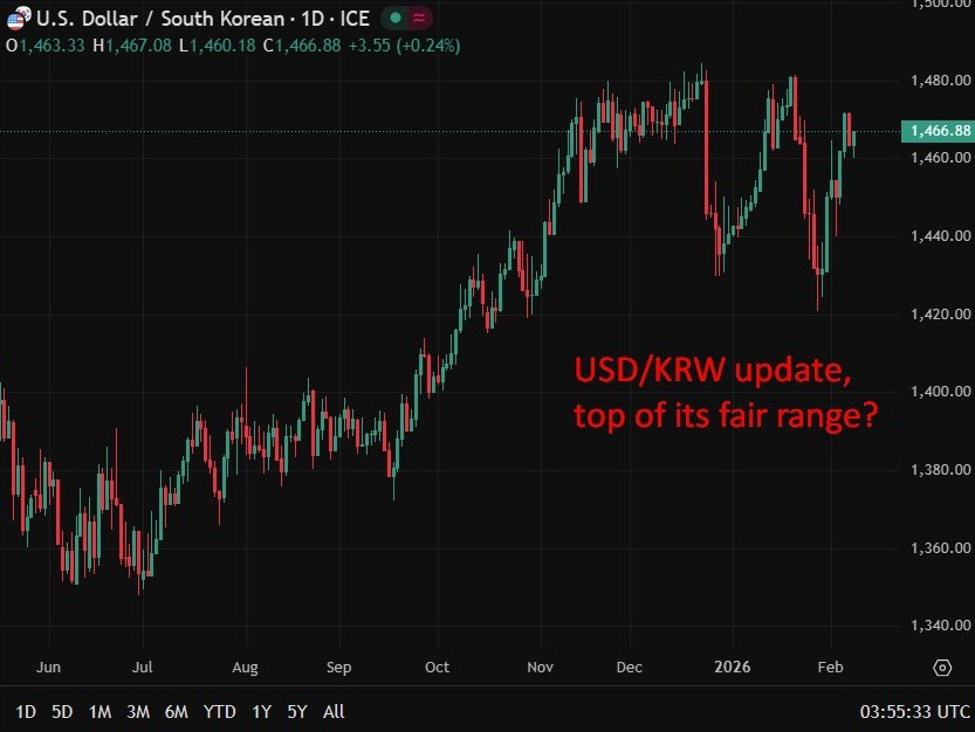
BoK governor contender Lee says too early for tightening, backs higher property taxes
BoK governor contender Lee says it’s too early to talk tightening, urging tougher housing taxes while calling USD/KRW’s current range broadly appropriate.Summary:Former Bank of Korea board member Lee Seung-heon, a leading governor contender, says it’s too early to signal policy tighteningHe argues Korea should lean more on tougher property ownership taxes to cool housing-driven inflation risksLee says USD/KRW 1,400–1,470 looks like a reasonable “natural range” for nowBoK has held rates at 2.50% after multiple cuts, with policymakers now emphasising financial stabilityImplication: macroprudential/fiscal housing tools may do more of the heavy lifting than rate hikes in the near termA leading contender to become South Korea’s next central bank governor is pushing back on the idea that the Bank of Korea should pivot quickly toward tighter monetary policy, arguing it is premature to signal rate increases even as financial markets price less easing and housing concerns simmer.Lee Seung-heon, a former Bank of Korea board member who previously served as a senior deputy governor, said growth remains soft enough that officials should avoid rushing toward a tightening narrative. Lee suggested markets have moved “too quickly” in repricing the front end of the curve, pointing to the recent jump in three-year government bond yields as investors pared expectations for further policy easing.Instead, Lee’s preferred inflation-fighting lever sits outside monetary policy: housing. He argued that stabilising the property market will be difficult unless the cost of owning homes rises, explicitly backing higher property ownership taxes as a way to curb speculation, damp price momentum and reduce the risk that shelter costs re-ignite inflation. The message aligns with the broader policy direction in Seoul, where the government has been sharpening rhetoric on housing speculation and signalling tougher real-estate settings.On the currency, Lee struck a notably relaxed tone. With the won trading around the mid-1,460s per dollar, he said 1,400 to 1,470 looks like a fair range for now, implying the exchange rate is broadly consistent with fundamentals. He added that moves weaker than roughly 1,450 would reflect external anxiety more than domestic conditions, and while the won could briefly breach 1,500, he doubts such levels would be sustainable.For markets, the implication is twofold. First, Lee’s stance reinforces an “on hold” BoK bias rather than a near-term pivot back to hikes: policy may remain neutral at 2.50% while officials monitor FX volatility and financial stability risks. Second, his emphasis on property taxes points to a policy mix where fiscal and regulatory tools are increasingly used to contain housing-driven inflation and leverage, potentially reducing the need for rate tightening, though at the cost of greater political and implementation risk.The won angle is also important: if officials judge current levels as “appropriate,” there may be less urgency for aggressive currency-defence measures unless volatility becomes disorderly or externally driven stress intensifies. This article was written by Eamonn Sheridan at investinglive.com. 🔗 Source 💡 DMK Insight Lee Seung-heon’s comments on policy tightening are a signal for traders to reassess their positions in USD/KRW. His stance suggests that the Bank of Korea may maintain a dovish approach for now, which could keep the Korean won under pressure against the dollar. If the USD/KRW remains in its current range, traders should watch for any shifts in sentiment, particularly as housing taxes could influence consumer spending and economic growth. A failure to tighten could lead to increased volatility in the forex market, especially if inflationary pressures mount. On the flip side, if the market perceives a delay in tightening as a sign of weakness, we might see a bearish trend for the won. Keep an eye on key levels in USD/KRW; a breakout above recent highs could trigger further dollar strength, while a drop below support levels might indicate a shift in sentiment. Monitor economic indicators related to housing and inflation closely, as these could provide clues on the BoK’s future policy direction. 📮 Takeaway Watch USD/KRW closely; a breakout above recent highs could signal further dollar strength amid dovish BoK signals.
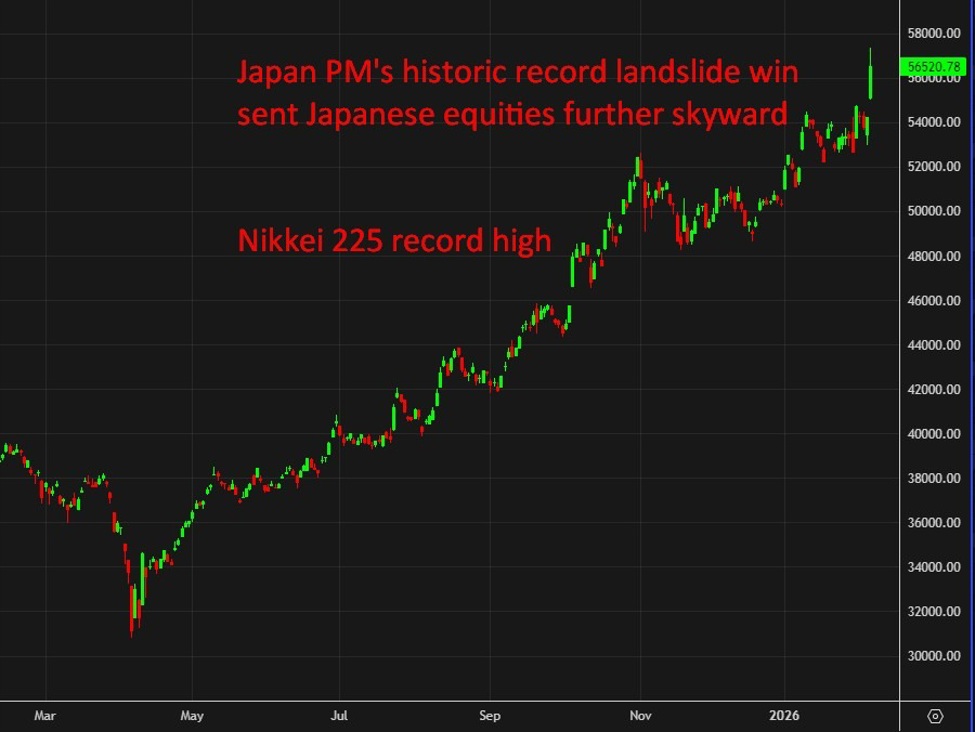
investingLive Asia-Pacific FX news wrap: Nikkei new high. Verbal intervention yen support.
BoK governor contender Lee says too early for tightening, backs higher property taxesChina’s RWA tokenisation rules lift related stocks as compliance race beginsJimmy Lai 20 year prison sentence raises new tensions between China and the WestJapan escalates yen warnings as Kihara joins Katayama and Mimura. Supportive for JPY.Yen has surged after verbal intervention warnings. Early moves fake out.Australian household spending dips in December after sales surgePBOC sets USD/ CNY reference rate for today at 6.9523 (vs. estimate at 6.9334)Kiwi dollar steadies as softer NZ data clashes with hawkish RBAJapan steps up yen intervention warnings as officials signal readinessGold is back above US$5,000 as China continues to scoop it upJapan’s Nikkei above 56K, first time ever. Intervention warning issued on yen.Japan real wages fall again in December, clouding BoJ policy outlookWarsh’s Fed–Treasury accord idea sparks debate over independence and marketsUS Globex is open for the new week. US equities up while oil has opened lowerBank of England Governor Bailey’s Sunday speech follows BoE hold, keeps policy cautiousUK PM Starmer resignation rumours put Monday in focus as Mandelson scandal deepensWeak yen update: Japan election landslide Takaichi super-majority, revives yen pressureYen weaker early trade. Japan markets brace for renewed Takaichi trade after landslide winWeekendNewsquawk Week Ahead: US NFP and CPI, Japanese Election, UK GDP and China InflationA look at the US earnings calendar for Feb 9-13China gold reserves climb further, buying continues for a 15th straight monthAt a glance:Japanese equities surged to record highs after PM Sanae Takaichi’s landslide election winLDP secured a lower-house supermajority, clearing the path for fiscal expansion and tax reliefJGB yields rose on expectations of heavier issuance and reflationYen initially weakened but later found support on intervention warnings from senior officialsFX elsewhere was range-bound; gold and silver rose, oil softenedJapanese equities surged to fresh record highs, bonds sold off and the yen initially weakened after Prime Minister Sanae Takaichi scored a landslide victory in Sunday’s snap election, the largest post-war win for any ruling party.Takaichi’s Liberal Democratic Party captured 316 of the 465 seats in the lower house, with projections at one stage suggesting the tally could reach as high as 328 seats. Together with coalition partner Ishin, the ruling bloc has secured a two-thirds supermajority, allowing it to override the upper house and push legislation through without opposition support.Markets read the emphatic result as providing a stable political base for Takaichi’s ambitious fiscal agenda, including higher public spending and promised tax relief. Japanese equities responded sharply. The Nikkei 225 jumped to a record above 57,300, while the broader Topix surged to an all-time high above 3,825. Japanese government bonds sold off, with yields rising on expectations of increased issuance and reflationary policy momentum.The yen reaction was more nuanced. The initial response in early trade was renewed weakness, with the currency sliding to an all-time low against the Swiss franc and USD/JPY briefly probing above 157.70. However, intervention rhetoric quickly tempered the move.Over the weekend, Finance Minister Satsuki Katayama warned markets against excessive currency moves, saying she stood ready to communicate with markets and remained in close contact with US Treasury Secretary Scott Bessent on dollar-yen stability. On Monday, Japan’s top currency diplomat Atsushi Mimura reinforced the message, saying authorities were watching FX developments “with a high sense of urgency” and remained in constant dialogue with markets. Further backing came from Chief Cabinet Secretary Minoru Kihara, who flagged concern over one-sided and rapid moves, language typically reserved for periods of heightened intervention risk.That sequence helped as the yen stabilised. USD/JPY pulled back to around 156.20 before settling near 156.80 as the session progressed.Elsewhere in FX, the US dollar was largely range-bound. EUR/USD edged slightly higher, while GBP remained under political pressure amid unconfirmed chatter around a potential resignation by UK Prime Minister Keir Starmer.In commodities, gold and silver pushed higher, while oil traded on the softer side as US–Iran tensions eased modestly. Trading conditions were somewhat thinner than usual, with attention divided by the US Super Bowl, where the Seattle Seahawks defeated the New England Patriots 29–13. Asia-Pac stocks: Japan (Nikkei 225) +4.15%, huge leap higherHong Kong (Hang Seng) +1.45% Shanghai Composite +1.12%Australia (S&P/ASX 200) +1.89%Takaichi is a Japanese political superwoman. She has led her party to a landslide win in Sunday’s snap election, and the largest post-war victory for any party. This article was written by Eamonn Sheridan at investinglive.com. 🔗 Source 💡 DMK Insight The BoK’s stance against tightening could signal a prolonged period of accommodative policy, impacting both forex and crypto markets. With the yen surging amid Japan’s warnings, traders should keep an eye on JPY pairs, especially against the USD. The recent rise in property taxes in China, coupled with the RWA tokenization rules, is likely to create volatility in related stocks and crypto assets. This could lead to a compliance-driven rally in tokenized assets, but also raises questions about the sustainability of such moves. As the geopolitical landscape shifts with Jimmy Lai’s sentencing, tensions between China and the West could further complicate market dynamics, potentially leading to risk-off sentiment that favors the yen. Watch for key resistance levels in JPY pairs and monitor how compliance developments in China affect crypto sentiment. The next few weeks will be crucial as these narratives unfold, especially with potential ripple effects on global markets. 📮 Takeaway Keep an eye on JPY pairs for volatility as Japan escalates warnings, and watch how China’s compliance rules impact related stocks and crypto assets.
Japan in the spotlight to start the new week
The ruling Liberal Democratic Party (LDP) punched above their weight and the results were one-sided, with the opposition losing roughly half of their pre-election standing. The LDP claimed 316 seats with their coalition partner Nippon Ishin claiming 36 seats, far exceeding the two-thirds (310+) needed for a ‘supermajority’.It’s a landslide victory for Japan prime minister Takaichi, as her gambit to consolidate power and strengthen her position pays off.That just reinforces the Takaichi trade that has been running since October last year, with concerns now that national debt will explode. She wants to push for a consumption tax cuts, particularly on food, with focus on defense spending as well. And now with such a powerful mandate, it’ll be impossible to stop her fiscal dovishness.Fast forward to today, we’re now seeing Tokyo authorities switch to damage control mode. That as long-term yields nudge up while the yen currency looked like it was about to take another dive. Quite frankly, it’s a bit baffling that they waited until today to try and do that when the writing was on the wall since last week.In any case, some verbal intervention has helped to limit the damage towards the yen currency at least. USD/JPY is down 0.4% to 156.63 after touching a high of 157.72 earlier in the day. The 100-hour moving average is being held right now around 156.56, as buyers remain cautious.Meanwhile, 10-year Japanese government bond yields are up some 5 bps to 2.27% while 30-year yields are flattish around 3.56% after climbing to 3.59% earlier. The Bank of Japan (BOJ) did warn in their latest meeting that they will be taking action in the bond market, so perhaps that is limiting the selloff here.The big winner is the Nikkei as it soared to over 57,000 earlier and is still up over 4% after the lunch break now at 56,541.Now that we’re definitely going to be sticking with the Takaichi trade, the question of actual intervention in the FX market looks to be a matter of when rather than if. But amid a lack of change in fundamental drivers, just be wary that any intervention may only be temporary as we’ve seen with previous episodes.The most recent was back in July 2024 when intervention brought USD/JPY down from over 160 to the 140 mark. But within six months, the currency pair rebounded strongly back to 159 amid the unchanged macro backdrop at the time. This article was written by Justin Low at investinglive.com. 🔗 Source 💡 DMK Insight The LDP’s supermajority in Japan’s recent elections could shake up market sentiment significantly. With the LDP securing 316 seats, this landslide victory not only solidifies their power but also raises expectations for pro-business policies and potential economic reforms. Traders should be aware that such political stability often leads to a stronger yen and could impact Japanese equities positively. Look for potential shifts in the Nikkei 225 index as institutional investors react to this newfound stability. However, there’s a flip side: if the LDP pushes through controversial reforms too aggressively, it could spark public dissent, leading to volatility in the markets. Keep an eye on the USD/JPY pair, especially if it approaches key resistance levels. A strong yen could pressure export-driven companies, so monitoring earnings reports from major exporters will be crucial in the coming weeks. Watch for any statements from the Bank of Japan regarding monetary policy adjustments as well, as they might respond to the political landscape with changes in interest rates or quantitative easing measures. 📮 Takeaway Watch the USD/JPY pair closely; a strong yen could impact export stocks and trigger volatility in Japanese markets.

A testing moment for the precious metals recovery on the charts
Amid all the volatility in markets, precious metals continue to be among those being closely watched still. Both gold and silver are showing lively signs of a better recovery to start the new week, trading higher so far today. But after a setback last week, it’s best to be reminded that we’re still caught in the phase of some heavy volatility spikes/swings for precious metals.Silver is the standout today, trading roughly 5% higher to above $81 currently. The near-term chart points to quite a critical test as we approach the key near-term level that halted the bounce last week and triggered the heavy selling.The flush last week saw silver dive to near its 100-day moving average before bouncing. That’s a solid support line if any, allowing for dip buyers to come in. And now, they continue to try and push the agenda in contesting back the 100-hour moving average (red line) on the near-term chart above.That was the key level that coincided with the trigger for another round of heavy selling last week. But for now, we’re not seeing as volatile and as dicey price action as what we saw last week.That will give dip buyers some confidence if they can hold above the key near-term level, seen at $81.36 currently. A break of that frees up scope to try and negotiate a continued recovery towards the $92 level – where the 200-hour moving average (blue line) holds nearby.It’s baby steps for precious metals at this point, so it is all about taking things one technical point at a time in gauging the recovery mood.As for gold, it is pretty much setting up for a repeat of last week’s price action.Dip buyers are looking to establish a more bullish near-term foothold, now testing waters above the $5,000 mark and the 200-hour moving average (blue line) as well. But as seen last week, there are offers layered closer to $5,100 and that will again be a key spot to watch on any push higher this week.The gold bulls will have to clear that and also establish a firm daily break above the 50.0 Fib retracement level of $5,002 to really convince of a more solid bounce.But as mentioned before, all of this doesn’t mean that we are set up and poised to return to fresh record highs immediately after. It could still happen, with the right trigger points of course. However, I reckon we are likely to be stuck in a more volatile and wider consolidative phase for precious metals after the sharp pullback and profit-taking activity. At least just for a little bit. This article was written by Justin Low at investinglive.com. 🔗 Source 💡 DMK Insight Gold and silver are bouncing back, but traders need to tread carefully. After last week’s dip, the current uptick in precious metals could signal a recovery, yet the volatility in broader markets remains a concern. Traders should monitor key resistance levels—if gold can hold above its recent highs, it might attract more buying interest. Look for silver to maintain momentum above its support levels as well. However, with economic indicators fluctuating, including inflation data and interest rate expectations, these metals could be sensitive to any shifts in sentiment. The real story is whether this recovery can sustain itself or if it’s just a short-term bounce before another downturn. Keep an eye on the daily charts for any reversal patterns that could indicate a shift in trend. For now, watch the $1,900 level for gold and $24 for silver as critical points. If they break through these levels, it could lead to further gains, but a failure to hold could trigger selling pressure. 📮 Takeaway Monitor gold at $1,900 and silver at $24—breaking these levels could signal further gains or a reversal.

China calls on banks to reduce US Treasuries exposure amid "market volatility" – report
The report notes that Beijing officials have advised financial institutions to pare down their holdings of US Treasuries, citing worries about “concentration risks” and “market volatility”. The Chinese regulators are said to urge banks to limit purchases of US government bonds while also commanding those with high exposure to cut down on their positions.Naturally, this of course doesn’t involve China’s state holdings of US Treasuries. However, it is a directive that is said to be communicated to some of the nation’s biggest banks in recent weeks.Beijing’s reasoning for the call is that they are sharing similar concerns to market players and other central banks/governments in that US assets have lost their appeal and status as a haven asset amid the recent market turbulence. That especially considering the Trump administration’s incoherent and erratic policy approach.Of note though, the sources in the report mention that the directive came before last week’s call between Trump and Xi. As a reminder, the two leaders held talks in the past week with Trump laying out plans to visit China in April.However, I’m guessing that regardless of the matter that the order above will hold. And that will be the new market convention that Chinese banks will have to follow, or should I say keep following.As a reminder, China has continued to systematically withdraw their support for US Treasuries over the years. No, they’re not exactly dumping them per se but they are being more of a “stealth seller” so to speak.The data speaks for itself with China’s direct holdings of US Treasuries falling to $682 billion as of January this year. That marks a 17-year low and well down from the peak of $1.3 trillion roughly a decade ago.10-year Treasury yields have nudged up slightly on the report here, moving up to 4.24% on the day – up from around 4.22% earlier. This article was written by Justin Low at investinglive.com. 🔗 Source 💡 DMK Insight China’s push to reduce US Treasury holdings could shake up global markets significantly. This move reflects broader concerns about market volatility and concentration risks, which could lead to increased selling pressure on Treasuries. For traders, this is a critical moment to monitor the yield curve, especially if yields start to rise as demand wanes. A spike in yields could impact not just US bonds but also equities and commodities, as higher borrowing costs ripple through the economy. Keep an eye on the 10-year Treasury yield; if it breaks above recent resistance levels, it could signal a broader risk-off sentiment. Conversely, if the market absorbs this news without significant yield spikes, it might indicate underlying strength in the bond market. On the flip side, this could present a buying opportunity for those looking at US assets, especially if the market overreacts to the news. Watch for institutional reactions, as they might adjust their positions based on these developments, which could create volatility in related markets like forex and commodities. 📮 Takeaway Traders should monitor the 10-year Treasury yield closely; a break above key resistance could signal increased market volatility and impact related assets.