
 Bitcoin
  Ethereum
  Tether
  BNB
BNB  XRP
XRP  USDC
USDC  Solana
  TRON
TRON  Lido Staked Ether
  Figure Heloc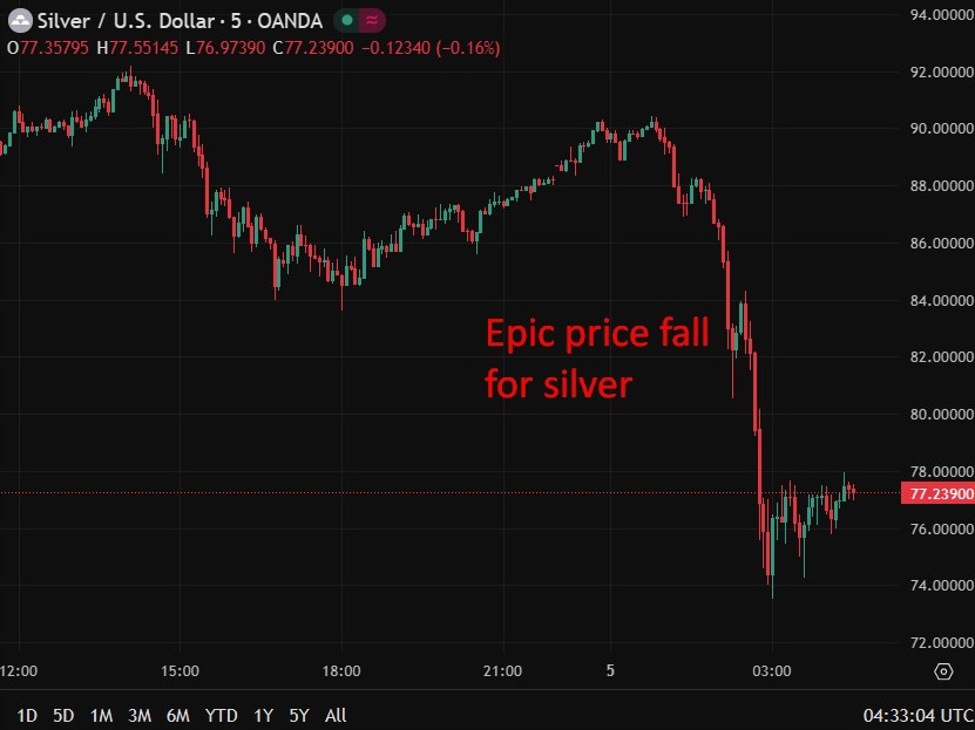
Crypto ICYMI – Standard Chartered cuts Solana 2026 target but keeps bullish long viewWhy Is Bitcoin Crashing? Technical Analysis Shows Sellers Still in ControlPrecious metals slammed, silver plummeted. Was it this news out of China?Silver takes a nosedive as dip buyers are dealt a setbackIndia shares seen higher on trade deal optimism, IT stocks in focusJapan 30-year yields ease before auction as election risk lingersWestpac flags risk of back-to-back RBA tightening if data surprises to upsidePBoC uses 14-day reverse repos today ahead of Lunar New YearHow China’s “national team” shapes stock market movesPBOC sets USD/ CNY reference rate for today at 6.9570 (vs. estimate at 6.9468)Sterling firms ahead of BoE as markets push back rate-cut timing – preview of today’s meetAustralian data: December 2025 imports down m/m, while exports rose m/mMore from Fed’s Cook: Urges patience as inflation remains above targetFed’s Cook warns inflation risks remain tilted higherPreview ECB on hold today, Thursday, February 5, 2026.Deutsche Bank sees next move in 2027Barclays sees rising risk premium weighing on US dollarHolding breath for this: Nvidia China AI chip sales hinge on Trump licensing conditionsOil jumps, dumps as Iran and US play phone tagChina targets unified domestic market to boost consumption and services demandAlphabet beats Q4 revenue but shocks markets with massive 2026 capex outlookinvestingLive Americas market news wrap: Software stocks beaten up, Oil chops on Iran riskAt a glance:Precious metals were smashed in thin liquidity, with silver collapsing sharplyGold slipped amid weak China demand data and broader risk aversionCrypto sold off again, with Bitcoin breaking below US$71kUS equities fell on renewed AI disruption fears; oil whipsawed on Iran headlinesAlphabet earnings beat on revenue but heavy capex capped enthusiasmFed’s Cook reinforced a hawkish bias, pushing back against near-term rate cutsAUD weakened with the USD bid; JPY softer on Japan election/fiscal fearsPrecious metals were the standout movers during the session, and violently so, with prices plunging in what looked like a classic thin-liquidity air pocket. Silver was hit hardest, dropping around 15% in a matter of minutes. While there was some fundamental news around gold, the scale and speed of the move suggested positioning, fear and poor liquidity were the dominant drivers rather than a single data point.On the news front, China’s gold consumption fell 3.57% in 2025 to just over 950 tonnes, according to the China Gold Association. At the same time, domestic gold output rose 1.09% year-on-year to 381.3 tonnes. The data added a mildly negative tone for gold, but did not fully explain the sharp sell-off.Crypto assets also came under renewed pressure. Bitcoin slid back below US$71,000, extending a downtrend that has so far rewarded trend-followers, with little evidence yet of capitulation or a stabilising bid.The lead into the Asia session was already fragile. US equities fell as investors fretted, again, that artificial intelligence could pose an existential threat to parts of the traditional software and services model. Oil prices were highly volatile, surging initially on reports that US–Iran talks might collapse, before giving back gains just as quickly after confirmation that talks will take place on Friday in Oman.In earnings, Alphabet delivered a solid top-line performance for the December quarter. Revenue beat expectations on strength in Search, advertising and Cloud, although YouTube Ads slightly missed. Operating income fell marginally short as costs stayed elevated, and investors focused heavily on guidance showing 2026 capex jumping to US$175–185bn, well above consensus 9around $115bn). Shares swung after hours but ended net higher, with Piper Sandler and Oppenheimer both lifting price targets.From central banks, Federal Reserve Board Governor Lisa Cook struck a firm tone, signalling little appetite for near-term rate cuts. She said inflation risks remain tilted to the upside, with progress back to the 2% target having stalled, reinforcing a cautious Fed stance.In FX, the Australian dollar traded lower, largely reflecting broader US dollar strength rather than domestic data, Australia’s goods trade surplus widening in December. The New Zealand dollar, Canadian dollar, Swiss franc, pound and euro also weakened. The yen lost ground again, briefly trading above 157, as markets brace for a decisive election win by Prime Minister Sanae Takaichi and the prospect of looser fiscal policy.In corporate news, the Financial Times reported that Nvidia’s planned sales of H200 AI chips to China remain under US national security review, nearly two months after exports were initially approved in principle. Asia-Pac stocks: Japan (Nikkei 225) -0.97%Hong Kong (Hang Seng) -1.27% Shanghai Composite -1.03%Australia (S&P/ASX 200) -0.47% This article was written by Eamonn Sheridan at investinglive.com. 🔗 Source 💡 DMK Insight Standard Chartered’s downgrade of Solana’s 2026 target to $90.33 raises eyebrows, especially with Bitcoin’s current bearish sentiment. Traders should note that the crypto market is still reeling from a lack of bullish momentum, with sellers firmly in control. This could lead to further volatility in Solana and related assets. If Solana fails to hold above the $90 mark, we might see a deeper correction, potentially dragging down other altcoins as well. It’s worth considering how this downgrade might affect institutional sentiment towards Solana, especially given the broader trend of risk aversion in the market. With Bitcoin’s struggles, traders should keep an eye on correlation patterns—if Bitcoin continues to falter, Solana could follow suit. Watch for key support levels around $85, as a breach could trigger panic selling. On the flip side, if Solana can reclaim momentum above $95, it might attract dip buyers looking for a rebound. Keep an eye on upcoming market news that could shift sentiment quickly. 📮 Takeaway Watch Solana closely; if it dips below $85, it could signal further downside risk, especially with Bitcoin’s bearish trend.

The central bank bonanza returns in European trading today
That will at least keep things interesting on the economic calendar in the session ahead. The BOE decision will be up first at 1200 GMT with a 7-2 vote in favour of keeping the bank rate unchanged at 3.75% expected. That will be followed up by BOE governor Bailey’s press conference at 1230 GMT.The ECB will then step up to the plate shortly after at 1315 GMT before Lagarde’s press conference at 1345 GMT today. Similarly, no fireworks are expected from the ECB this time around. The central bank is well expected to keep monetary policy unchanged for the foreseeable future, awaiting material changes to the economic outlook.As such, don’t expect too much to work with when it comes to the central bank headlines today.At the balance, traders are still leaning towards more rate cuts by the BOE down the road. The next 25 bps rate cut is only priced in for August with just ~39 bps of rate cuts priced in for the year.As for the ECB, traders are not expecting any rate changes whatsoever from the central bank in 2026 for the time being. That as policymakers continue to struggle to balance out economic pressures and inflation developments.Looking to the day ahead, the central bank bonanza won’t be the only game in town. Precious metals will continue to be a key focus, particularly after gold and silver saw their recoveries thwarted yesterday.Gold failed to hold a firm break above $5,000 on the daily close while silver has capitulated after briefly clipping the $90 mark yesterday. That’s a major setback and it shows how much tougher it will be to regain the buying momentum after the sharp pullback since last week. Profit-taking will now be a considerable factor on any bump higher, which might make for more of a consolidative range for precious metals in the short-term.Then, there’s also going to be key US data releases to watch out for in the day ahead. The government shutdown delayed the US jobs report to next week and the JOLTS job openings data is also pushed back to later today. That will be come alongside the weekly initial jobless claims report, so that will at least offer something to markets.And lastly, there will be watchful eyes on the continued rotational play in Wall Street. Tech shares had their backs against the wall yesterday already and after a slightly better start, risk sentiment fizzled and turned more negative instead. That sees the Nasdaq break below its 100-day moving average for the first time since May last year.The technical drag could be the start of a material pullback in tech shares, especially now that the AI trade is coming under intense scrutiny. Investors are starting to poke at valuations and are asking firms to “show me the money”.And speaking of broader risk sentiment, keep a close watch on cryptocurrencies as well. Bitcoin was hammered lower in US trading yesterday in falling to its lowest since November 2024 after breaking below the April 2025 lows around $74,420. The cryptocurrency is now under pressure amid a testing break below the $72,000 mark.A further selloff and capitulation will continue to weigh on risk appetite and the broader market mood in general. So, watch out for that. This article was written by Justin Low at investinglive.com. 🔗 Source 💡 DMK Insight The BOE’s decision to maintain the bank rate at 3.75% is crucial for traders right now. With a 7-2 vote expected, this indicates a divided committee, which could signal future volatility in GBP pairs. If the decision aligns with expectations, we might see a short-term stabilization in GBP/USD, but any hints from Governor Bailey during the press conference could shift sentiment dramatically. Traders should be on the lookout for comments regarding inflation and economic growth, as these could influence the market’s outlook on future rate hikes. A surprise shift in tone could lead to significant moves, especially if the market perceives a more hawkish or dovish stance than anticipated. Keep an eye on the 1.25 level in GBP/USD; a break below could trigger further selling pressure. Also, consider how this decision might ripple through related markets, like EUR/GBP, where shifts in GBP strength could impact cross-currency flows. The immediate impact is likely to be felt in the forex market, but longer-term implications could affect equities and commodities tied to the UK economy. 📮 Takeaway Watch for Governor Bailey’s comments post-decision; any unexpected remarks could shift GBP significantly, especially around the 1.25 level in GBP/USD.

Bitcoin teeters towards $70,000 mark as the selloff intensifies
It’s rough out there for cryptocurrencies as the drop this week is made to look worse on the charts. Bitcoin already broke below its 100-week moving average last week, the first time that has happened since 2023. And adding insult to injury yesterday is when the selloff also took out key support from the March and April 2025 lows.That now gives sellers the platform to take aim at the next key level, that being the $70,000 big figure.What is really concerning is that it will be tough to pick at support levels even with the pace of the decline we’re seeing above. A firm break below $70,000 frees up plenty of room for a further drop towards $60,000 next. And the 200-week moving average (blue line) is rather far away, only seen around $58,085 currently.And compounding on that, it seems like we’re forming a bit of a head-and-shoulders pattern too with a rough neckline near $80,000. If you flip that over, there’s scope for bigger losses to come for Bitcoin. And that spells much danger for cryptocurrencies in general.But for now, let’s not get too carried away. The latest decline has the makings of a much steeper drop, that especially as risk appetite all around markets are being punished.The selloff in tech shares and mounting worries surrounding the AI trade is in itself a major concern for market players. And when you pair that with other drivers such as what we’re seeing with cryptocurrencies and perhaps some forced leveraged selling in precious metals, it’s a toxic concoction for risk trades.So, that could stir up a negative feedback loop in keeping pressure all around as we digest the broader market developments that are in play at the moment. This article was written by Justin Low at investinglive.com. 🔗 Source 💡 DMK Insight Bitcoin’s drop below its 100-week moving average is a serious red flag for traders. This marks a critical technical level that hasn’t been breached since 2023, indicating potential further downside. The selloff could trigger stop-loss orders and panic selling, leading to a cascading effect across the crypto market. Traders should keep an eye on the $25,000 support level; if that breaks, we could see a rapid decline toward $20,000. Additionally, this bearish momentum might spill over into altcoins, which often follow Bitcoin’s lead. Look for correlations with Ethereum and other major assets, as they could experience similar pressure. On the flip side, if Bitcoin manages to reclaim the 100-week moving average, it could signal a buying opportunity for those looking to capitalize on a potential rebound. But for now, the focus should be on managing risk and watching for further breakdowns in price action. 📮 Takeaway Watch the $25,000 support level closely; a break could lead to significant declines in Bitcoin and altcoins.
What to expect from the ECB later today?
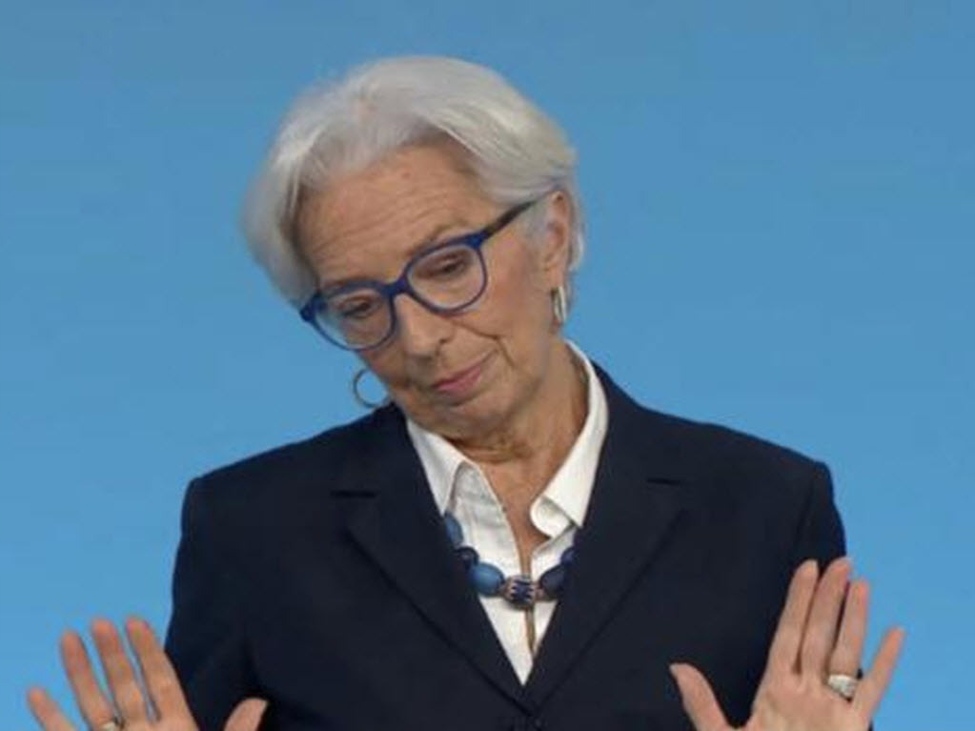
The meeting decision today is widely expected to be an uneventful one. So if the ECB plays their cards right, that is precisely what is going to happen. And that can be viewed as a successful outcome in terms of managing market expectations and any reactions for today.The bottom line is that the central bank is in no position to be making moves on monetary policy currently. Economic growth in the euro area has been resilient and inflation pressures have remained fairly stubborn since the second half of last year. That makes for a tough backdrop to do anything, at least in 1H 2026.In terms of price developments, core annual inflation is at least continuing to slowly nudge towards the desired 2% level. We can start to see that from the latest consumer price inflation report here. However, policymakers are likely to only feel more comfortable about that if services inflation also shows a more material drop. Currently, that continues to hold above the 3% mark.Taking that into account, the statement language and forward guidance is expected to be rather unspectacular today. In essence, the ECB will reaffirm that it is still on a data-dependent approach with likely no change whatsoever to their take on inflation developments.So, what else can we expect from the ECB in this case?As always, Lagarde’s press conference is going to be the more interesting bit. Given the fact that we did see EUR/USD clip the 1.20 mark recently, she will surely face questions on the exchange rate. However, I’d expect her to brush that aside with a neutral response and continue emphasising that the euro strengthening is not a concern for the ECB at this stage.The key risk factor to watch will be for any potential comments about a change in policy stance if inflation pressures continue to undershoot in the months ahead. The current “goldilocks” situation fits with market pricing and the ECB communication for now, but will Lagarde offer any clues on what could trigger a change?At this stage, I’m sure they would want to keep the door open to more rate cuts – perhaps in 2H 2026. So, we’ll see if Lagarde wants to play it safe or offer up a bit of a teaser to markets today.I’ll be back with commentary from key analysts later in the day. This article was written by Justin Low at investinglive.com. 🔗 Source 💡 DMK Insight The ECB’s upcoming meeting is likely to be a non-event, and here’s why that’s crucial for traders: Market participants are bracing for a steady stance from the ECB, which could stabilize the euro and reduce volatility in forex pairs. If they manage to keep expectations in check, it could prevent any knee-jerk reactions that often follow central bank announcements. This is particularly important as traders are currently navigating a landscape of mixed economic signals across Europe. A calm meeting could reinforce the euro’s recent strength against the dollar, especially if the ECB hints at future tightening without committing to immediate action. However, there’s a flip side: if the ECB surprises the market with any unexpected commentary or guidance, it could lead to sharp moves in both the euro and related assets like European equities. Traders should keep an eye on the euro’s performance against the dollar, particularly around key levels that have shown support or resistance in recent weeks. Watch for any shifts in sentiment post-meeting that could signal broader market trends. 📮 Takeaway Keep an eye on the euro’s reaction post-ECB meeting; unexpected comments could trigger volatility, especially against the dollar.

FX option expiries for 5 February 10am New York cut
There is just one to take note of on the day, as highlighted in bold below.That being for EUR/USD at the 1.1800 level. The pair continues to weave in and out of the figure level, so the expiries will provide some interest to keep price action close by once again. That being said, the dollar remains underpinned so far this week and even more so on a day like this when we’re seeing more shaky risk sentiment and precious metals facing a setback to the bounce in the past few days.The latter in particular is one thing to note in markets today with silver down by over 10% to $78.63 currently. Meanwhile, gold is also down 0.8% to $4,924 as the volatile swings in precious metals continue to play out.Other than that, just keep a watchful eye on USD/JPY as well with the pair continuing to keep near 157.00 now. That might invite actual intervention from Tokyo as the rebound continues and we’re roughly just 200 pips away from the 159.00 mark, where the line was drawn and ‘rate checks’ were performed.For more information on how to use this data, you may refer to this post here.Head on over to investingLive (formerly ForexLive) to get in on the know! This article was written by Justin Low at investinglive.com. 🔗 Source 💡 DMK Insight EUR/USD is flirting with the 1.1800 level, and here’s why that matters right now: This level is pivotal as it acts like a magnet for price action, especially with expiries looming. Traders should be aware that options expirations can lead to increased volatility, particularly if the pair hovers around this psychological barrier. If we see a strong close above 1.1800, it could signal a bullish breakout, potentially targeting higher resistance levels. Conversely, a failure to maintain above this mark might trigger a sell-off, leading to a test of lower support levels. Keep an eye on the daily charts for any candlestick patterns that could indicate a shift in momentum. But don’t ignore the broader context—economic indicators from the Eurozone and U.S. could influence this pair significantly. If upcoming data releases show stronger-than-expected growth in the U.S., it might pressure EUR/USD lower. Watch for any shifts in sentiment from institutional players, as their positioning could dictate the next move. The real story is how this level interacts with market sentiment and economic news in the coming days. 📮 Takeaway Watch the 1.1800 level closely; a break above could lead to bullish momentum, while a drop below may trigger selling pressure.

Germany December industrial orders +7.8% vs -2.2% m/m expected
Prior +5.6%; revised to +5.7%That’s a huge beat on estimates as German manufacturing orders surged once again in December, after a big jump in November last year as well. A lot of that is to do with a massive increase in large orders though. If you strip that out of the report, new orders were only 0.9% higher than in the previous month.The less volatile three-month comparison shows new orders in Q4 being up 9.5% than in Q3. Excluding large orders, that figure is a 2.5% increase.Looking at the details, the surge in industrial orders in December owes much to significant increases in the production of metal products (+30.2%) and in the important mechanical engineering sector (+11.5%). Besides that, there were also growth in orders for the manufacture of electrical equipment (+9.8%) and in the manufacture of data processing equipment, electronic and optical products (+5.7%).Overall, the preliminary figures show that industrial sales in 2025 were 1.3% lower than in the previous year, adjusted for calendar effects. This article was written by Justin Low at investinglive.com. 🔗 Source 💡 DMK Insight German manufacturing orders just jumped 5.7%, and here’s why that matters: This unexpected surge indicates robust demand, particularly driven by large orders, which can skew the overall picture. Traders should keep an eye on how this affects the Euro, especially if it leads to a stronger economic outlook for Germany. A stronger Euro could impact forex pairs like EUR/USD, where resistance levels around 1.10 might come into play. If the trend continues, we could see a shift in sentiment that favors the Euro against the dollar, especially if U.S. economic data doesn’t keep pace. But there’s a flip side: if these large orders are one-off events, the sustainability of this growth could be questionable. Traders should monitor subsequent data releases for confirmation of a trend. Watch for any shifts in the manufacturing PMI or other economic indicators in the coming weeks, as they could provide clearer insights into whether this is a blip or the start of a more significant recovery. 📮 Takeaway Keep an eye on EUR/USD around 1.10; strong German orders could push the Euro higher if confirmed by upcoming data.

German construction activity posts renewed contraction in January
The German construction PMI records 44.7 in January, significantly lower from the 50.3 print in December last year. The fall marks a solid drop in activity, which follows the first growth in almost four years in the month before. As such, that’s a major setback to the hopeful showing in December.A further decrease in new orders was observed in January as accelerated downturns in both housing and commercial activity weighed on overall activity. That offset the sustained growth in civil engineering activity, even if cooling slightly after the strong showing in the month before.HCOB notes that:“This is a very rocky start to the new year for the residential and commercial construction sectors. Residential construction has experienced a veritable crash in January after the situation appeared to have stabilised in December. Commercial construction also saw an accelerated, albeit somewhat less dramatic, decline. As a result, activity in the construction sector as a whole declined significantly and would have been even worse if the strong growth in the civil engineering sector had not continued. The unusual chilly weather could perhaps be blamed for it, but overall the survey results are not encouraging. “The sharp rise in natural gas and oil prices in January is likely to have contributed to higher construction costs during the month and to another sharp rise in subcontractor prices. As the higher natural gas and oil prices are likely to be largely attributable to the cold weather conditions, the pressure on the cost side should normalize again in the coming months. However, attention must also be paid to industrial metals, which have also risen relatively sharply recently. “Growth in civil engineering, which primarily benefits from government contracts for infrastructure projects, is becoming entrenched. For the third month in a row, an expansion in activity can be observed here. As demand for labour will remain high on this side – employment in the construction sector has risen again – it is unlikely to become any easier for building construction to reduce construction costs. This makes a recovery in residential and commercial construction more difficult.” This article was written by Justin Low at investinglive.com. 🔗 Source 💡 DMK Insight The sharp decline in Germany’s construction PMI to 44.7 is a red flag for traders: This drop indicates a contraction in the sector, which could ripple through the broader European economy and impact asset classes tied to economic growth, including cryptocurrencies like SOL. With SOL currently at $90.33, traders should be wary of potential volatility as market sentiment shifts. If the construction sector continues to struggle, it could lead to reduced investor confidence, particularly in riskier assets. Moreover, this PMI reading suggests that the anticipated recovery might be more fragile than previously thought. Traders should keep an eye on related economic indicators, such as the Eurozone manufacturing PMI and consumer sentiment, as these will provide further context on the economic landscape. A sustained downturn could push SOL below key support levels, making it crucial to monitor price action closely in the coming weeks. 📮 Takeaway Watch for SOL’s reaction around $90.33; a sustained drop could signal broader market weakness, especially if economic indicators continue to disappoint.

BoE preview: central bank to remain on hold; agents' pay survey in focus
The Bank of England (BoE) is widely expected to hold the Bank Rate steady at 3.75% with a 7-2 vote split (Dhingra and Taylor to dissent in favour of a 25 bps cut). The guidance is expected to remain mostly unchanged and the focus will be mainly on individual members’ views and the agents’ pay survey. The BoE will also release the updated macro forecasts at this meeting.The central bank is expected to keep the “gradual downward path” guidance and the newly added “judgements around further policy easing will become a closer call”. There’s also a high consensus for a 6-3 vote split with Ramsden joining Dhingra and Taylor, but analysts expect him to do so only if wage growth in the Agents’ Pay Survey surprises to the downside (expected at 3.5%). In fact, in December Ramsden said that elevated forward-looking surveys of wage growth gave him pause for thought and that he was focused on the Agents’ Pay Survey data. The data in January hasn’t been pointing to urgent actions on monetary policy. We got a fairly good jobs report and slightly higher than expected services inflation. The most notable release that triggered a slightly hawkish repricing in interest rate expectations was the UK PMI data which showed strongest upturn in UK private sector business activity since April 2024. The agency also noted that high staffing costs were again widely reported as a key cause of higher selling prices, hinting at an intensification of price pressures at a level above the Bank of England target.Overall, it should be a fairly straightforward decision with no major surprises. The only potential surprise could come from the Agents’ Pay Survey which is expected to show wage growth at 3.5%. An upside surprise could trigger a hawkish repricing and give the GBP a boost, while weighing on the FTSE 100. On the other hand, if we get a downside surprise, we should see traders increasing probabilities for a second cut by year-end and adding pressure on the pound while supporting the stock market. This article was written by Giuseppe Dellamotta at investinglive.com. 🔗 Source 💡 DMK Insight The BoE’s decision to keep rates at 3.75% is a clear signal of cautious optimism amid economic uncertainty. With a 7-2 vote split, the dissenting opinions from Dhingra and Taylor hint at underlying tensions within the committee regarding future monetary policy. Traders should pay attention to how this decision impacts the GBP/USD pair, especially if the market reacts to any hints of future cuts. If the dissenters gain traction, we could see volatility in the forex markets, particularly around key support and resistance levels for the pound. Additionally, the unchanged guidance suggests that the BoE is not ready to pivot aggressively, which could keep the pound relatively stable in the short term. However, if inflation data or economic indicators shift, those dissenting voices could become more influential, leading to potential rate cuts sooner than expected. Watch for the upcoming economic data releases, as they could provide clues on whether the BoE will maintain its current stance or shift gears. The next inflation report will be crucial, especially if it shows signs of easing, which might embolden the dissenters. 📮 Takeaway Keep an eye on GBP/USD for volatility; any shift in inflation data could influence the BoE’s future rate decisions.

VT Markets Powers Reliable Gold Trading Amid Extreme Market Volatility
Sydney, Australia, 5 February 2026 —Amid heightened volatility in global precious metals markets ,VT Markets has proven the strength of its trading infrastructure, maintaining stable execution and uninterrupted access during periods of intense market stress.During the recent market volatility, VT Markets recorded USD1.5 trillion in gold trading volume in January, underscoring strong client engagement and sustained confidence in its trading environment. Notably, 20% of gold traders were new to the platform, highlighting VT Markets’ ability to attract new traders eager to seize opportunities amid heightened market fluctuations.The platform experienced its highest gold trading volume on 29 January 2026, a day when global gold markets saw dramatic price swings-gold futures surging past $5,500 per ounce and then exhibiting sharp intraday volatility amid geopolitical and macroeconomic pressures. Crucially, VT Markets’ deep and diversified liquidity pool enabled the platform to maintain consistent pricing and high order fill rates, even during peak volatility. Average spreads on gold and silver remained competitive, while execution stability was preserved during fast-market conditions that challenged liquidity across the industry.Ross Maxwell, Global Strategy Operation at VT Markets shares: “Volatile conditions inevitably test market infrastructure. While some platforms pulled back to manage their own risk, our systems performed exactly as designed- keeping gold and silver trading open and accessible for clients. That ability to stay operational during extreme conditions is what sets us apart from other brokers.” This performance underscores VT Markets’ commitment to providing traders with dependable market access when it matters most. In volatile conditions where execution speed, liquidity depth, and platform resilience are critical, VT Markets has demonstrated its capability to perform under pressure- turning market uncertainty into opportunity for its global trading community. This article was written by IL Contributors at investinglive.com. 🔗 Source 💡 DMK Insight VT Markets just hit USD1.5 trillion in gold trading volume last month, and here’s why that matters: This surge in trading activity reflects not just the volatility in precious metals but also a growing interest among traders seeking safe havens amid economic uncertainty. With global markets fluctuating, gold often becomes a go-to asset, and this spike indicates that traders are positioning themselves for potential price movements. If you’re trading gold, keep an eye on key resistance levels that could emerge from this volume surge. The heightened activity could lead to significant breakouts or reversals, especially if geopolitical tensions or inflation fears escalate further. But don’t overlook the flip side: while increased volume can signal strong interest, it can also lead to erratic price swings. Traders should be cautious of potential whipsaws as market sentiment shifts. Watch for technical indicators like RSI or MACD for overbought or oversold conditions. As we move through February, monitor how this trading volume translates into price action—key levels to watch will be the recent highs and lows established during this volatility. 📮 Takeaway Keep an eye on gold’s resistance levels as trading volume spikes; monitor for potential breakouts or reversals in February.

UK January construction PMI 46.4 vs 42.0 expected
Prior 40.1That’s a modest uptick in UK construction activity, with this being the slowest reduction in seven months. All three sub-sectors recorded weaker rates of contraction than those seen in December, helped by a more stable demand environment and reports of a gradual turnaround in sales pipelines.House building (39.3) was the weakest-performing segment to start the year while civil engineering (40.6) also decreased at a sharp pace in January. Meanwhile, the contraction in commercial work (48.4) was the slowest since May last year at least.S&P Global notes that:”January data provided encouraging signs that the UK construction sector has exited its tailspin, and firms are becoming more hopeful that new projects will get back on track in 2026. “The latest reduction in total industry activity was the slowest since last June. Commercial work outperformed, with activity moving close to stabilisation amid a postBudget boost to contract awards. House building weakness persisted, although even here the rate of decline eased considerably since December and was the least marked for three months. “Construction companies noted subdued underlying demand due to fragile client confidence and elevated risk aversion, but there were some reports of improving investment sentiment and greater sales enquiries at the start of the year. As a result, business activity expectations rebounded to an eight-month high, while the pace of job losses moderated. “Supply conditions improved again in January. Lead times for the delivery of construction items shortened for the sixth month in a row and subcontractor availability increased at a solid pace. However, margins were under pressure as higher wages and raw material prices led to the sharpest rise in purchasing costs since September 2025.” This article was written by Justin Low at investinglive.com. 🔗 Source 💡 DMK Insight UK construction activity is showing signs of life, and here’s why that matters: a modest uptick in the index to 40.1 indicates a slowing contraction, which could signal a broader economic recovery. The construction sector’s performance is crucial for traders, especially those in related markets like commodities and real estate. A more stable demand environment and improved sales pipelines suggest that we might see increased investment and spending in the coming months. This could lead to a rise in demand for materials, impacting prices in the commodities market. Keep an eye on the housing sector, which remains a weak point at 39.3; any further improvement here could provide a significant boost to overall economic sentiment. However, it’s worth noting that while this uptick is positive, the sector is still in contraction territory. Traders should remain cautious and monitor for any signs of reversal or sustained growth. Watch for upcoming economic indicators and reports that could either reinforce or challenge this trend, particularly in the next monthly readings. 📮 Takeaway Watch for further improvements in UK construction data; a sustained rise above 40 could signal a broader economic recovery, impacting related markets.