
 Bitcoin
  Ethereum
  Tether
  BNB
BNB  XRP
XRP  USDC
USDC  Solana
  TRON
TRON  Lido Staked Ether
  Figure Heloc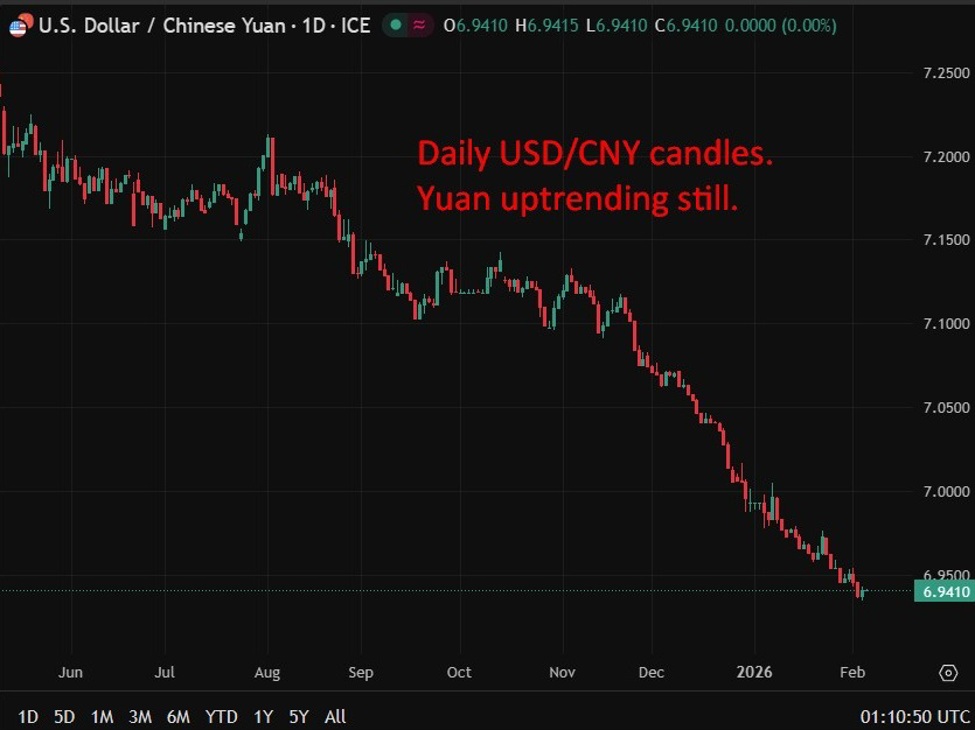
Earlier:China targets unified domestic market to boost consumption and services demandThe PBOC allows the yuan to fluctuate within a +/- 2% range, around this reference rate.Previous close 6.9450Injects 118.5bn yuan in 7day RRs @ 1.4% and also 300 bn yuan via 14day (Lunar New Year holidays begin February 15) This article was written by Eamonn Sheridan at investinglive.com. 🔗 Source 💡 DMK Insight China’s move to unify its domestic market and the PBOC’s yuan adjustments are crucial right now. The People’s Bank of China (PBOC) allowing the yuan to fluctuate within a +/- 2% range around a reference rate of 6.9450 signals a more flexible monetary policy aimed at boosting consumption and services demand. This is particularly relevant as the Lunar New Year approaches, with the PBOC injecting 118.5 billion yuan in 7-day reverse repos at 1.4% and an additional 300 billion yuan via 14-day repos. Traders should watch for how these liquidity measures impact the yuan’s volatility and overall market sentiment. If the yuan strengthens, it could affect export competitiveness, while a weaker yuan might lead to inflationary pressures. But here’s the flip side: while these measures aim to stimulate the economy, they could also lead to increased capital outflows if investors perceive instability. Keep an eye on the 6.9 level for the yuan; a break below could signal further depreciation, while a bounce back could indicate renewed confidence. Watch for market reactions leading up to the Lunar New Year, as consumer spending patterns will be critical indicators of the effectiveness of these policies. 📮 Takeaway Monitor the yuan around the 6.9 level; a break could signal further depreciation, impacting trade and inflation ahead of the Lunar New Year.
How China’s “national team” shapes stock market moves
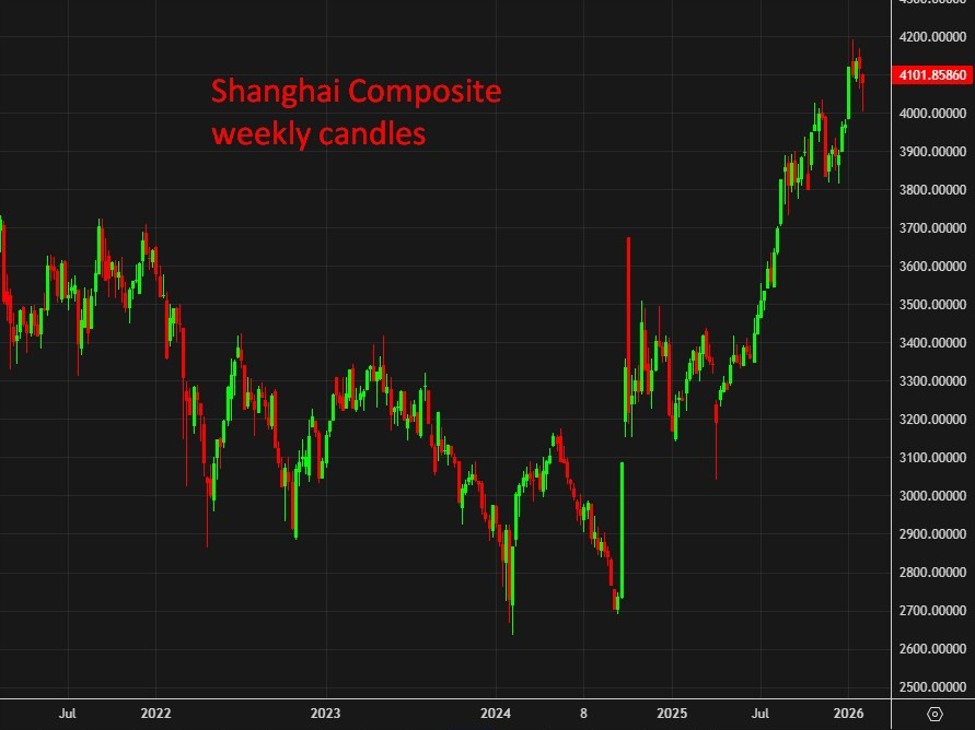
Bloomberg says China’s “national team” is increasingly used to manage equity volatility as Beijing leans on stocks to support confidence, fund tech and offset property weakness.Bloomberg outlined how China’s “national team” is used to smooth equity swingsBeijing wants a steadier “slow bull” to support confidence and fund techThe state can lean on institutions that trade ETFs to cap rallies or arrest sell-offsThe approach can curb volatility short term, but policy drives long-run directionChina’s intervention stands out globally for scale and frequencyThis appeared in Bloomberg (gated) yesterday and is an interesting read — I’ve summarised the key points below.China’s authorities increasingly treat the stock market as an instrument of economic policy, not just a venue for price discovery. As Beijing tries to rebalance growth away from property and debt and toward technology and innovation, equities are expected to play a bigger role in funding companies, supporting household balance sheets and reinforcing confidence in a period of mounting economic pressure and strategic rivalry with the United States.That helps explain why officials lean on a state-backed “national team” during periods of volatility, including to cool rallies as well as to cushion sell-offs. The objective is to foster a more stable, steadily rising “slow bull” market that can deliver multiple goals at once: improve returns for state-linked stakeholders, broaden non-bank financing for priority sectors, and generate a wealth effect as property weakness pushes investors toward alternative assets.The term “national team” refers to a loosely defined network of state-linked institutions that can be mobilised to buy or sell stocks, most visibly via exchange-traded funds (ETFs). Intervention is typically most evident during market stress or politically sensitive moments, and its footprint can show up through unusually large turnover and synchronised flows across major index ETFs, including blue-chip and tech-heavy benchmarks.The effectiveness depends on timeframe. These trades can have an immediate impact by reversing sharp moves or capping gains, but the effect can fade quickly unless activity is sustained. Over longer horizons, the market’s direction is still determined primarily by policy choices rather than trading operations. In practice, the national team functions as a stabiliser and signalling tool — reinforcing official intent and buying time while broader policy measures take effect.Other countries have intervened in equity markets, but Bloomberg argues China’s approach is notable for its scale and the growing centrality of equities to the state’s broader economic strategy. This article was written by Eamonn Sheridan at investinglive.com. 🔗 Source 💡 DMK Insight China’s ‘national team’ intervention in equities is a game changer for traders right now. With Beijing actively managing stock volatility, this could signal a shift in market dynamics, especially for tech stocks that are crucial for economic recovery. Traders should keep an eye on how this impacts sentiment—if the ‘slow bull’ strategy stabilizes the market, we might see a renewed interest in tech investments. However, this also raises questions about the sustainability of such interventions. If the market becomes too reliant on state support, any withdrawal could lead to sharp corrections. Watch for key resistance levels in major indices; if they hold, it could indicate a stronger bullish trend. Conversely, if volatility spikes, it might be a sign to reassess positions. Pay attention to how retail and institutional investors react to these developments, as their sentiment will be crucial in the coming weeks. 📮 Takeaway Monitor major indices for resistance levels; a sustained rally could signal renewed confidence in tech stocks amid state support.

PBoC uses 14-day reverse repos today ahead of Lunar New Year
China’s central bank leaned on longer-dated liquidity tools to smooth funding conditions ahead of the Lunar New Year holiday.Summary:PBoC injected liquidity via both 7-day and 14-day reverse reposUse of 14-day RRs is unusual (not too unusual though!) and notableMove likely linked to upcoming Lunar New Year holiday cash demandSignals focus on smoothing funding conditions, not policy easingShort-term supportive for sentiment, neutral for CNY policy signalThe People’s Bank of China stepped up liquidity support on Thursday, injecting funds through a combination of standard 7-day reverse repos (at the usual 1.4%) and a less common 14-day operation (at 1.65%), a move that markets read as pre-emptive holiday liquidity management rather than a shift in policy stance.While the PBoC routinely uses 7-day reverse repos as its primary day-to-day liquidity tool, the inclusion of 14-day reverse repos is more unusual and has drawn attention. The timing strongly suggests the operation is linked to preparations for the Lunar New Year holiday period, which runs from February 15 to 23, when cash demand typically rises and interbank liquidity can tighten.Ahead of long public holidays, banks tend to hoard liquidity to meet seasonal cash withdrawals, settlement needs and regulatory requirements, often pushing up short-term funding rates. By injecting funds at a longer tenor, the PBoC appears to be aiming to smooth liquidity conditions across the holiday window, reducing the risk of funding stress once markets thin out.Importantly, the move does not signal a change in the broader monetary policy outlook. Officials have consistently emphasised a preference for targeted, flexible liquidity operations rather than aggressive easing, and the use of reverse repos fits squarely within that framework. The operation helps stabilise money markets without altering the policy rate corridor or sending a strong directional signal on growth or inflation.For markets, the takeaway is operational rather than strategic. The PBoC is ensuring that liquidity remains ample through a seasonally sensitive period, supporting financial stability while avoiding the optics of stimulus. That approach is consistent with Beijing’s broader aim of maintaining steady credit conditions while keeping leverage and currency pressures in check.Explainer: why the 14-day reverse repo matters:The PBoC overwhelmingly favours 7-day reverse repos for routine liquidity management. A 14-day operation is typically reserved for periods when officials want to bridge a specific timing gap, such as long holidays, rather than signal a policy shift.By extending the maturity, the central bank ensures liquidity remains in the system after the holiday, reducing rollover risk and volatility in short-term funding rates. In that sense, it is best read as calendar-driven liquidity smoothing, not easing.The coming new year is Year of the Fire Horse! This article was written by Eamonn Sheridan at investinglive.com. 🔗 Source 💡 DMK Insight China’s central bank is injecting liquidity ahead of the Lunar New Year, and here’s why that matters: The People’s Bank of China (PBoC) is using 7-day and 14-day reverse repos to manage funding conditions, which is a strategic move to ensure cash flow during the holiday. This isn’t just a routine action; the use of 14-day reverse repos is somewhat atypical and indicates a proactive stance to address potential cash demand spikes. Traders should note that this liquidity injection could lead to short-term easing in interest rates, impacting the yuan and related assets like commodities or equities tied to Chinese consumption. However, there’s a flip side. While this move might temporarily stabilize markets, it could also signal underlying economic concerns that necessitate such intervention. If traders see a sustained pattern of liquidity injections, it may suggest that the PBoC is worried about economic growth, which could lead to volatility in the forex market. Keep an eye on the yuan’s performance against major currencies, especially as we approach the holiday period, and watch for any shifts in sentiment that could arise from this liquidity strategy. 📮 Takeaway Monitor the yuan’s reaction to the PBoC’s liquidity injections, especially as we approach the Lunar New Year; any significant shifts could indicate broader economic concerns.
Westpac flags risk of back-to-back RBA tightening if data surprises to upside
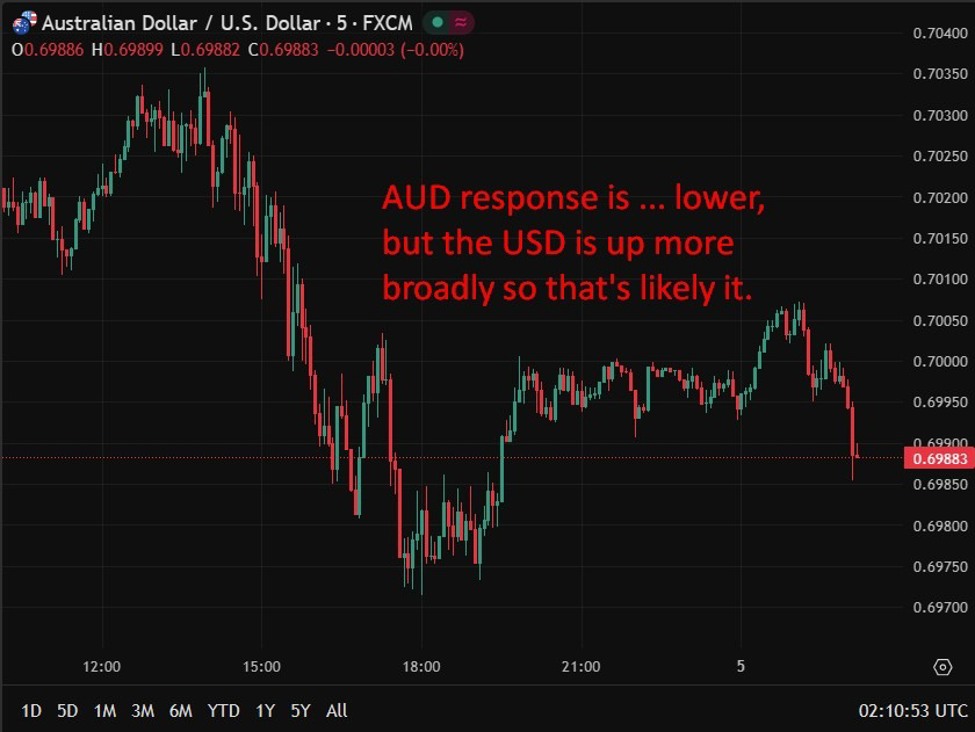
Westpac’s Ellis says a second RBA rate hike in March is possible if data momentum builds, though May remains the central case.Summary:Westpac’s Ellis says a second RBA hike as early as March cannot be ruled outMay remains the central case, but data momentum is keyRBA seen unhappy with current inflation trajectoryQuarterly inflation data remains the primary triggerMarket focus turns to January data and Q4 wages, GDPVia a Bloomberg interview published Wednesday, summarised here.The Reserve Bank of Australia could be forced into a rare back-to-back rate hike as early as March if incoming data continues to surprise on the upside, according to Luci Ellis, underscoring how uncomfortable policymakers have become with the current inflation outlook.Ellis said that while her central forecast remains for a follow-up move in May, a March hike cannot be ruled out if economic momentum builds further ahead of the next meeting. The warning comes after the RBA this week became the first major central bank globally to lift rates in 2026, marking a sharp pivot after months of struggling to rein in resurgent inflation pressures.Markets and economists have largely converged on May as the most likely timing for a second hike, reflecting the RBA’s preference to lean more heavily on quarterly inflation data. Governor Michele Bullock has signalled that the bank’s new monthly CPI series has yet to become a decisive policy input, reinforcing expectations that first-quarter inflation data will be critical.However, Ellis said the tone of the governor’s post-meeting press conference made it clear that the RBA is dissatisfied with the inflation path embedded in its forecasts. Policymakers want inflation to fall more quickly, raising the risk that patience could wear thin if near-term data continues to point to persistent price pressures.Before the March meeting, the RBA will receive January inflation and labour market reports, alongside key fourth-quarter releases on wages and GDP. If those data confirm stronger-than-expected momentum, Ellis said the hurdle for a March move could be cleared.For now, May remains the base case. But the balance of risks has shifted, with the RBA signalling it is prepared to act again if inflation progress fails to accelerate.—The next Reserve Bank of Australia (RBA) monetary policy meeting in 2026 is scheduled for 16–17 March. This article was written by Eamonn Sheridan at investinglive.com. 🔗 Source 💡 DMK Insight Westpac’s commentary on a potential RBA rate hike is a big deal for traders right now. If the RBA moves in March, it could signal a shift in monetary policy that affects not just the Aussie dollar but also global risk sentiment. Traders should keep an eye on upcoming economic data releases, as any signs of inflationary pressure could accelerate this timeline. The market’s current pricing may not fully reflect the possibility of a March hike, which could lead to volatility in AUD pairs. If inflation data comes in stronger than expected, it might push the AUD higher against major currencies. Conversely, if the RBA holds off until May, we could see a pullback in the AUD as traders recalibrate their expectations. Watch for key levels around recent highs and lows in AUD/USD, as these will be crucial indicators of market sentiment in response to RBA signals. 📮 Takeaway Monitor upcoming inflation data closely; a surprise March rate hike could boost the AUD significantly against major currencies.
Japan 30-year yields ease before auction as election risk lingers
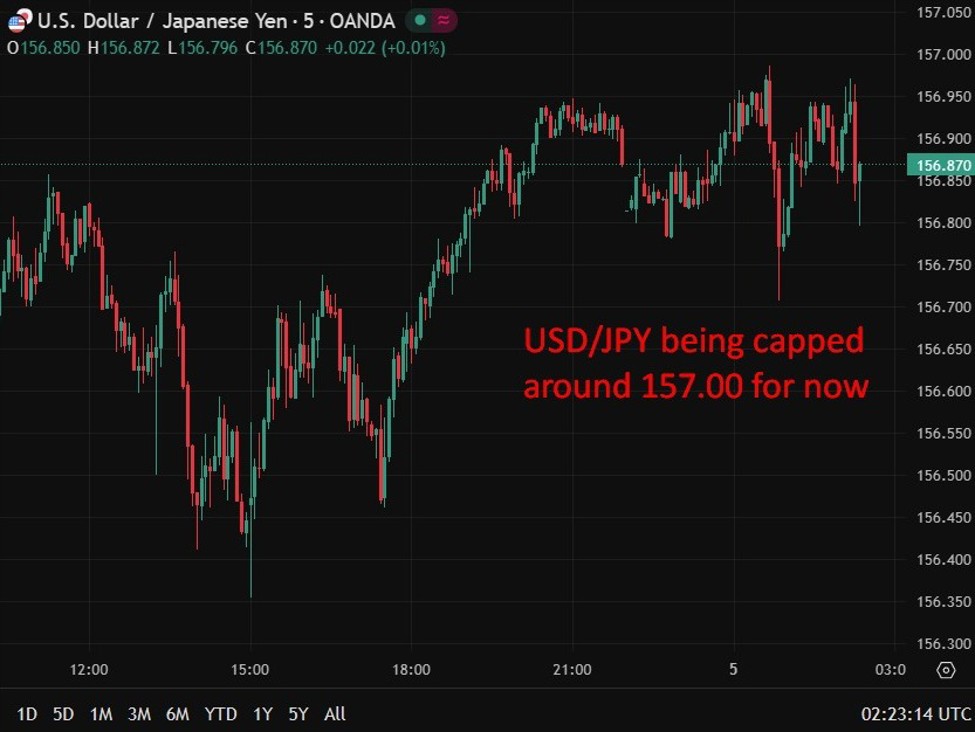
Japan’s 30-year bond yields eased ahead of an auction, but fiscal uncertainty linked to Sunday’s snap election continues to cap any sustained rally.Summary:Japan’s 30-year JGB yield edged lower ahead of Thursday’s auctionSuper-long bonds remain sensitive to fiscal election riskSnap election keeps focus on potential tax cuts and stimulusElevated yields may improve auction demand despite uncertaintyMarket calm returns after January’s sharp bond routJapan’s super-long government bonds steadied on Thursday, with 30-year yields easing slightly ahead of a key auction later in the session, even as political uncertainty remains elevated ahead of Sunday’s snap election.The 30-year JGB yield fell 1.5 basis points to around 3.62%, remaining within a relatively narrow trading range seen over the past two weeks. The move comes after sharp volatility in mid-January, when yields surged to record highs following election-related fiscal concerns.That sell-off was triggered after Prime Minister Sanae Takaichi called a snap election while pledging to waive Japan’s sales tax on food for two years — a proposal that reignited fears of looser fiscal discipline. At the peak of the rout on January 19–20, the 30-year yield touched an all-time high of 3.88%.Super-long JGBs have been particularly sensitive to perceived fiscal slippage, reflecting investor caution toward expanded stimulus in a country that already carries the highest public debt burden in the developed world. Takaichi, a long-time advocate of policies associated with former prime minister Shinzo Abe’s Abenomics framework, has kept those concerns firmly in play.Polling suggests Takaichi’s Liberal Democratic Party could secure as many as 300 seats in the 465-member lower house, a result that would give the government a strong mandate but leave bond investors waiting for clarity on fiscal details.Analysts at Mizuho Securities said uncertainty around fiscal policy is likely to persist well beyond the election, limiting the scope for a sharp rally in long-dated bonds in the near term. However, they noted that the significantly higher yield levels compared with the previous 30-year auction earlier this month should help attract buyers.Elsewhere on the curve, moves were modest. The 20-year yield was unchanged, while 10-year, five-year and two-year yields all edged slightly lower, signalling a degree of stabilisation after January’s turbulence. Polls are showing a solid win for Takaichi this weekend. Election February 8. This article was written by Eamonn Sheridan at investinglive.com. 🔗 Source 💡 DMK Insight Japan’s 30-year bond yields are easing, but don’t get too comfortable—fiscal uncertainty looms large. With the snap election on Sunday, traders are on edge about potential tax cuts and stimulus measures that could impact yields. The recent dip in yields ahead of Thursday’s auction suggests some short-term relief, but the underlying fiscal risks could quickly reverse this trend. If the election results hint at aggressive fiscal policies, we might see yields spike again, especially in the super-long bond segment. Keep an eye on the auction results; a weak demand could signal a shift in sentiment, pushing yields higher. Here’s the kicker: while many are focused on the immediate yield movements, the broader implications for the forex market could be significant. If yields rise due to fiscal expansion, the yen might weaken against major currencies, affecting forex positions. Watch for the 30-year yield to break above recent highs—if it does, it could trigger a wave of selling in bonds and a flight to safety in equities. 📮 Takeaway Monitor the 30-year JGB yield closely; a break above recent highs could signal rising yields and impact forex positions significantly.
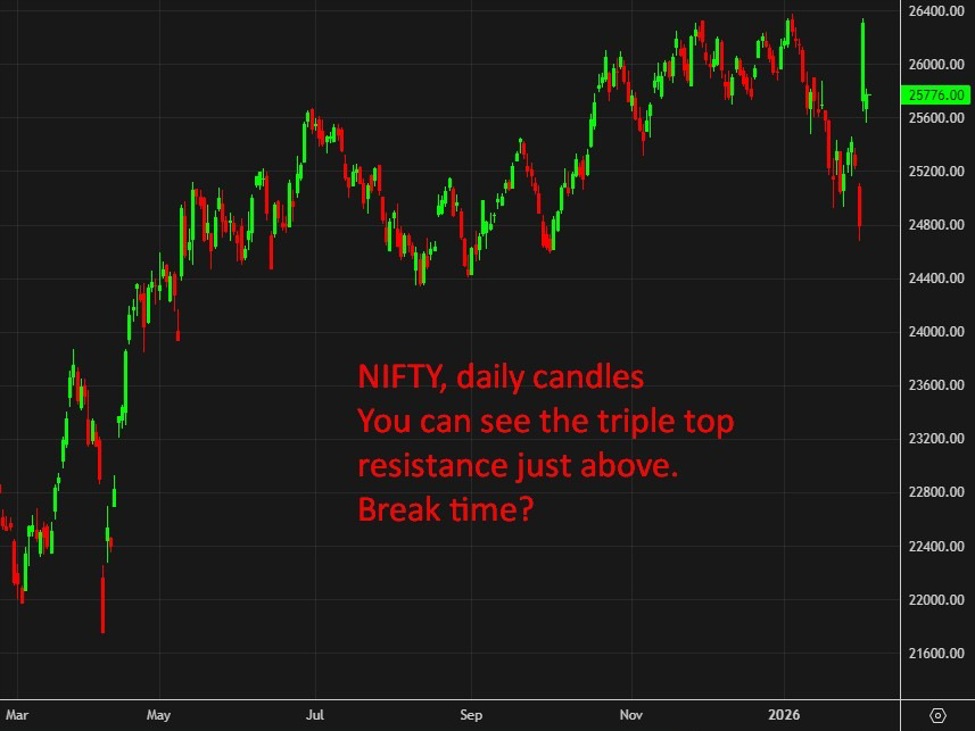
India shares seen higher on trade deal optimism, IT stocks in focus
Indian shares are poised for a firmer open on trade deal optimism, though IT sector weakness and earnings risk may temper gains.Summary:Indian equities seen opening modestly higher on trade deal optimismRecent US–India agreement lifts hopes of renewed foreign inflowsIT stocks remain a key downside risk after global tech sell-offRBI decision on Friday expected to keep policy unchangedHeavy earnings slate keeps single-stock volatility elevatedIndian equity markets are set to open slightly firmer on Thursday, supported by improving sentiment around foreign inflows after a recent trade deal with the United States, even as investors remain cautious amid global weakness in technology stocks and a busy earnings calendar.Early indicators pointed to a positive start, with Gift Nifty futures suggesting the benchmark Nifty 50 would open above its previous close. The upbeat tone follows a strong three-session rally across domestic equities, with both the Nifty 50 and the Sensex gaining close to 4% over the period.The recent advance has been partly underpinned by optimism around a US–India trade agreement that reduced tariffs on Indian exports, reinforcing expectations that foreign portfolio investors could return after an extended period of heavy selling. Provisional data showed overseas investors were modest net buyers on Wednesday, marking a second consecutive session of inflows following a record sell-off through much of 2025 and into January.Despite the improved tone, risks remain. Global equity markets have been rattled by a sharp sell-off in software and data services stocks, driven by concerns that rapid advances in artificial intelligence could disrupt traditional business models. Those worries spilled into Indian markets on Wednesday, when the Nifty IT Index slumped around 6% in its steepest one-day decline in nearly six years.The weakness in IT shares has injected a note of caution into an otherwise improving market backdrop, with investors wary that further downside in global tech could weigh on sentiment. As a result, traders are likely to remain selective, favouring sectors tied to domestic demand while closely monitoring technology names.Attention is also turning to monetary policy, with the Reserve Bank of India set to announce its policy decision on Friday. The central bank is widely expected to leave interest rates unchanged, keeping the focus on guidance around inflation and growth rather than immediate policy action.Earnings will remain a major driver of stock-specific moves, with several high-profile companies due to report results, including Bharti Airtel, Hero MotoCorp, Tata Motors’ passenger vehicle unit, Life Insurance Corporation of India, and Nykaa.(via Reuters, summarised) This article was written by Eamonn Sheridan at investinglive.com. 🔗 Source 💡 DMK Insight Indian shares are set to open higher, but don’t get too excited just yet. The recent US-India trade deal is a positive catalyst, potentially boosting foreign inflows into Indian equities. However, the IT sector remains a significant concern after a global tech sell-off, which could dampen overall market sentiment. Traders should keep an eye on key earnings reports in the tech space, as any disappointments could trigger a sharper pullback. The Reserve Bank of India’s upcoming decision will also be crucial; if they signal a hawkish stance, it could further pressure equities, especially in the tech sector. Here’s the thing: while optimism from the trade deal is palpable, the underlying risks in the IT sector could lead to volatility. Watch for the Nifty 50 index to hold above its recent support levels; a break below could indicate a shift in momentum. Pay attention to how major IT stocks react in the early trading hours, as they could set the tone for the day. 📮 Takeaway Monitor the Nifty 50 for support levels; a break below could signal deeper IT sector weakness amid trade deal optimism.

Silver takes a nosedive as dip buyers are dealt a setback
The precious metal has plunged by over 12% on the day and well off the highs from the bounce in the past two days of around $92. The drop now sees silver drop back to around $76 and the technicals highlight the move rather well.After the sharp pullback from last week, it was always going to prove to be tough to regain momentum again. That especially now that the profit-taking mindset has set in and investors will be increasingly cautious. And the near-term chart shows exactly that, with silver failing to break some key technical levels on the dip buying this week:The bounce stalled around the 38.2 Fib retracement level around $90.55, which also clearly indicated how much softer the bounce was compared to what we saw with gold here. Evidently, gold is also now taking a knock after failure to secure a firm break above $5,000 yesterday with price also dropping back below the key hourly moving averages now.Coming back to silver, the bounce also failed to contest a push of the 100-hour moving average (red line) today. And that saw technical sellers come back in to reject the move and send price lower on the day.Despite the lack of major headlines in markets, just be wary that the latest volatility snapshot for precious metals does not need any news to kick around. The sharp pullback since last week has already sent volatility shockwaves and they will take time to work its way out through the system.As such, one can reasonably expect a larger consolidative phase for both gold and silver at this point. The correction will end when it ends and in the meantime, dip buyers will have to be wary not to overextend. That especially since profit-taking is still part and parcel of the game currently. This article was written by Justin Low at investinglive.com. 🔗 Source 💡 DMK Insight Silver’s 12% plunge today is a wake-up call for traders: volatility is back. Dropping to around $76, silver’s recent highs near $92 now feel distant, and this sharp pullback could signal a shift in market sentiment. Traders need to watch for potential support levels around $75, as breaking below this could lead to further declines. The broader market context, including rising interest rates and a stronger dollar, is putting pressure on precious metals, making this a critical moment for positioning. If you’re holding long positions, consider tightening your stops to manage risk, especially with the potential for cascading effects on related assets like gold, which often moves in tandem with silver. On the flip side, this drop could present a buying opportunity if silver finds support. Keep an eye on the daily chart for any signs of a reversal, particularly if it can reclaim the $80 level in the coming sessions. 📮 Takeaway Watch for silver to hold above $75; a break could lead to further declines, while a reclaim of $80 might signal a buying opportunity.

Precious metals slammed, silver plummeted. Was it this news out of China?
I think the moves were just the new volatility in fearful, thin markets. But, if you want some news, this earlier:China’s gold consumption in 2025 fell 3.57% to 950.096 metric tons, the state-backed gold association said on Thursday. Gold output using domestic raw materials climbed 1.09% year on year to 381.339 metric tons, the association said. This article was written by Eamonn Sheridan at investinglive.com. 🔗 Source 💡 DMK Insight China’s gold consumption drop signals potential shifts in demand dynamics, and here’s why that matters: A 3.57% decline to 950.096 metric tons in 2025 could reflect broader economic concerns, especially in a market already jittery from geopolitical tensions and inflation fears. For traders, this isn’t just a number; it indicates a potential weakening in one of the largest gold markets, which could lead to price corrections in gold and related assets. If gold prices start to falter, we might see a ripple effect on ETFs and mining stocks, particularly those heavily reliant on Chinese demand. Keep an eye on the $1,800 support level for gold; a breach could trigger further selling. On the flip side, if gold output rises by 1.09%, it could suggest that producers are gearing up for future demand, possibly anticipating a rebound. Traders should monitor how these dynamics play out in the coming weeks, especially with the upcoming economic data releases that could influence market sentiment. Watch for any shifts in retail or institutional buying patterns as well, as they could provide clues about future price movements. 📮 Takeaway Watch gold closely; a drop below $1,800 could signal deeper corrections, while rising output might indicate future demand recovery.

Why Is Bitcoin Crashing? Technical Analysis Shows Sellers Still in Control
11.5x More Interest in ‘Why Is Bitcoin Crashing?’Search interest around ‘why is Bitcoin crashing’ has surged by 11.5x in just a week, again as crypto market continues to slide and those that have tried to buy the dip, get stopped out again, or worse – liquadated. Why is bitcoin crashing then? While headlines often rush to pin each move on a single catalyst, the reality is far more complex – and far less certain.Bitcoin is not falling because of one definitive reason. In trending markets, especially bearish ones, there are always many possible explanations, and we rarely know the true weight of each factor. Instead of chasing narratives, the more reliable approach is to study price behavior, buyer and seller activity, and market structure.Bitcoin crash in context: the bigger pictureBitcoin futures reached an all-time high of $127,240 on October 6, 2025. Since then, the market has undergone a sustained bearish phase. As of today, Bitcoin has traded as low as $70,755, marking a decline of more than 44% over 171 days.That magnitude matters. When an asset is already deep into a bearish cycle, the question is no longer “what single event caused today’s drop?” but rather whether the broader downtrend is weakening or still intact.So far, the data continues to show that downside pressure remains dominant.Why Bitcoin is dropping: structure over storiesIt is tempting to explain every dip with a fresh headline – macro fears, regulation rumors, ETF flows, geopolitics, or risk-off sentiment. Some of these explanations may be partially true. Others may not matter at all.The problem is that we never know which factors actually matter most at any given moment.What we can observe is this:Sellers continue to show follow-through on ralliesUpside attempts fail quickly rather than attracting sustained demandLower prices are being accepted rather than rejectedThis behavior is consistent with a market that remains in a bearish structural phase, not one forming a confirmed bottom.What bitcoin options (IBIT) activity is telling usOne way to gauge market sentiment is by looking at options trading. While we cannot know what traders are thinking or what information they have, we can observe how they are positioning.By comparing the volume of options that benefit from price going up versus price going down, we get a sense of whether traders are leaning more bullish or bearish on the day. If more option volume is positioned for downside, it suggests traders are protecting against or betting on lower prices. If more volume is positioned for upside, it suggests growing optimism.In this case, the balance of options activity leans bearish. Apx 55% is bearish and 45% bullish.A larger share of option volume is tied to downside outcomes, indicating that more traders are positioning for further weakness rather than a near-term recovery. This does not predict price by itself, but it adds context to the broader bearish tone already visible in price action.Is Bitcoin nearing the end of its crash and into a potential buy zone?From a technical perspective, Bitcoin is approaching an area where buyers may begin to show interest. That zone roughly spans from $65,000 to $71,000. Yes, it is wide area, I know, but it is a very relevant zone to watch for a possible change in the phase of the market. That may also take days and weeks for BTC to build its base, since V recoveries are possible, but a little more rare. It is a relevant zone to watch and stay patient. We don’t need to be the first ones hopping on the move, dreaming about being the first in line since that typically does not work out well.Today’s session has already started to probe the upper part of this zone, which makes the next phase especially important to monitor.Bitcoin futures analysis – medium-term structure remains under pressure Recent trading activity points to sellers being more effective than buyers on rebounds. Attempts to push higher have met supply, while downside moves have shown more acceptance than upside probes. This tells us that demand is present, but not strong enough yet to overpower selling pressure.Key areas to watch for bitcoin today! Price for bitcoin futuresThe 71,500-72,000 zone remains a critical reference. Holding below this area keeps pressure on the market.A sustained move back above 73,500-74,000 would suggest sellers are losing control and the market is moving back toward balance.Below 70,000, acceptance would increase downside risk and likely shift sentiment more decisively bearish.ScenariosBearish scenario If price continues to be accepted below recent resistance and selling pressure shows follow-through, downside continuation toward lower support zones becomes more likely.Bullish scenario If sellers fail to press lower and price reclaims and holds above the 73,500-74,000 area, it would signal renewed demand and a potential transition back into a range or recovery phase.Market bias score for bitcoin at the time of this analysis: -3 (moderately bearish) This score reflects a clear but not extreme seller advantage. The bias is not deeply negative because downside momentum is controlled rather than aggressive. A sustained reclaim of resistance would quickly neutralize this view.What would change the viewSustained acceptance above 74,000Clear loss of downside follow-through on sell attemptsStrong relative strength versus the broader crypto marketRisk note This analysis is intended for educational and decision-support purposes only. It is not financial advice. Markets are uncertain, and all trading or investing decisions carry risk.For real-time trade ideas, follow-ups, and market insights across stocks, indices, commodities, and crypto, check out the investingLive Stocks Telegram channel. Trade ideas are shared for educational purposes only and at your own risk.What to watch instead of guessing the bottomFor traders and investors asking whether the Bitcoin crash is ending, the focus should shift from prediction to observation:Do sellers lose momentum as price trades deeper into this zone?Does price begin to reject lower levels instead of accepting them?Is there evidence of buyers stepping in with follow-through, not just short-lived bounces?At the moment, there are no clear signs of meaningful buyer control or a bullish reversal attempt. Until that changes, upside moves should be treated cautiously.Bottom line for
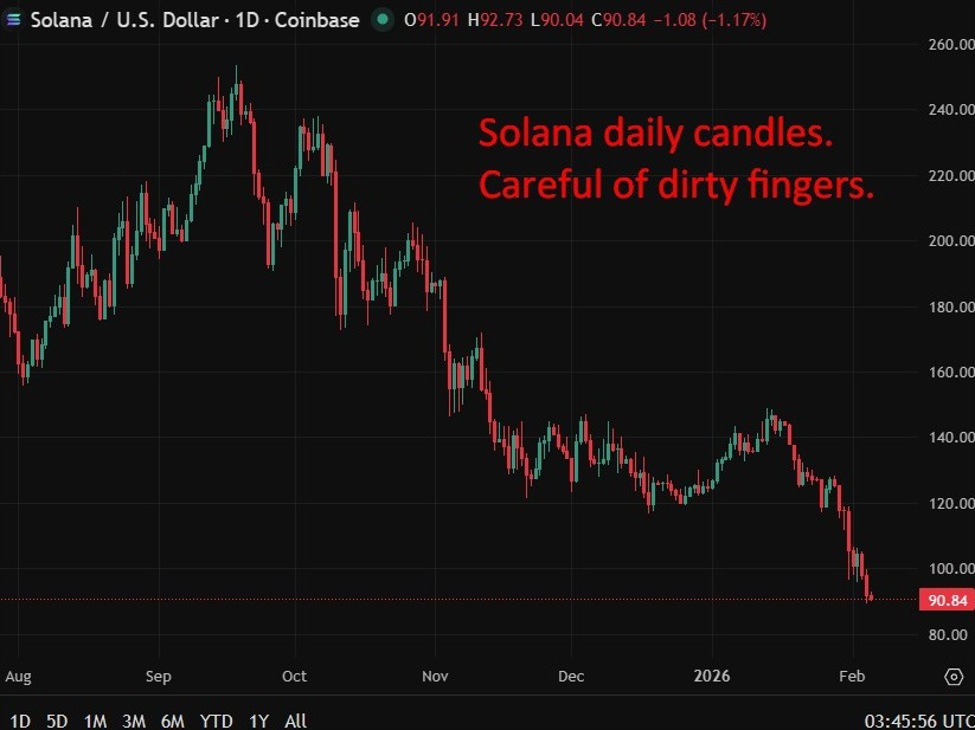
Crypto ICYMI – Standard Chartered cuts Solana 2026 target but keeps bullish long view
Standard Chartered trimmed its 2026 Solana target but kept a bullish long-term view, arguing the network is shifting from memecoin speculation toward stablecoin-driven micropayments. The BTC plunge may mess with this forecasts:Bitcoin wipes out all the gains from the Trump election win, falls below $75,000It’s the worst day of the year in the Nasdaq (but at least it’s not bitcoin)Bitcoin with a big bounce after hitting the lowest in 14 months—Summary:Standard Chartered cuts its end-2026 Solana target to $250 from $310Long-term roadmap unchanged, with $2,000 still pencilled in for 2030Bank sees Solana transitioning away from memecoin-driven activityStablecoin and micropayment use cases viewed as key long-run driversNear-term lag vs Ethereum expected as the narrative shift takes holdStandard Chartered has lowered its end-2026 price target for Solana, trimming its forecast to $250 from $310, while leaving its longer-term outlook unchanged as the bank argues the network is undergoing a structural shift rather than a cyclical collapse.The downgrade reflects a more cautious view on how quickly Solana can convert its technical advantages — notably low transaction costs and high throughput — into durable, fee-generating economic activity. Standard Chartered’s digital assets research team framed the current drawdown as a phase where “performance differentiation” across cryptoassets should become more visible, instead of markets trading as a single risk-on or risk-off block.At the heart of the revision is a changing activity mix on the Solana network. According to Geoffrey Kendrick, decentralised exchange activity is rotating away from memecoin-led speculation toward stablecoin-based trading pairs. When the bank initiated coverage in mid-2025, Solana’s on-chain activity was heavily skewed toward memecoin trading. Since then, flows have increasingly shifted toward SOL–stablecoin pairs as speculative intensity cooled.Standard Chartered argues that this transition is strategically positive but slower to monetise in market terms. While memecoin trading can generate sharp bursts of volume, it is unstable and cyclical. Stablecoin-based flows, by contrast, are more consistent but take longer to scale into meaningful revenue.The bank highlighted Solana’s ultra-low fees as a key advantage for emerging micropayment use cases, including AI-driven transactions, where even small costs can undermine viability. One metric cited in the report shows stablecoin turnover on Solana already running at two to three times the velocity seen on Ethereum, suggesting the chain may be carving out a niche in high-frequency, low-value transfers.That potential is tied to the emergence of internet-native payment protocols, including Coinbase-backed x402, though Standard Chartered cautioned that adoption will take time to translate into market leadership.As a result, the bank expects Solana to lag Ethereum through 2026–2027, even as it becomes more constructive on Solana’s longer-run upside if micropayment demand compounds. Despite the near-term trim, Standard Chartered reiterated its aggressive long-term path, projecting $400 in 2027, $700 in 2028, $1,200 in 2029 and $2,000 by end-2030, with Solana expected to outperform Bitcoin later in the cycle. —Solana is a high-throughput blockchain designed for fast, low-cost transactions. Its architecture allows thousands of transactions per second at minimal fees, making it attractive for decentralised trading, stablecoin transfers and emerging micropayment use cases. This article was written by Eamonn Sheridan at investinglive.com. 🔗 Source