
 Bitcoin
  Ethereum
  Tether
  XRP
XRP  BNB
BNB  USDC
USDC  Solana
  TRON
TRON  Lido Staked Ether
  Figure Heloc
The meeting came more than two weeks after the Senate Banking Committee postponed a markup on the CLARITY Act, with stablecoin yield among several unresolved issues. 🔗 Source 💡 DMK Insight The Senate Banking Committee’s delay on the CLARITY Act is a big deal for stablecoins and crypto assets like SOL. With SOL currently at $102.77, traders should be wary of potential volatility as regulatory uncertainty looms. The unresolved issues around stablecoin yield could impact liquidity and trading strategies, especially for those using SOL in DeFi applications. If the Senate moves forward with stricter regulations, we might see a shift in market sentiment, leading to a sell-off or a reallocation of capital into more compliant assets. Keep an eye on how SOL reacts to news around the CLARITY Act; a break below $100 could trigger further selling pressure, while a bounce back above $105 might signal renewed bullish sentiment. The real story here is the potential ripple effect on related assets—if stablecoins face stricter regulations, altcoins like SOL could see decreased demand as traders pivot to safer options. Watch for any updates from the Senate that could shift the market dynamics significantly. 📮 Takeaway Monitor SOL closely; a drop below $100 could indicate increased selling pressure, while a rise above $105 might signal a bullish reversal.

Altman calls Nvidia chip speculation “insanity”, backs partnership
OpenAI CEO Sam Altman pushed back on reports questioning Nvidia’s role, saying the company “loves working with Nvidia” and expects to remain a major customer long term, dismissing speculation around chip dissatisfaction as overblown. This article was written by Eamonn Sheridan at investinglive.com. 🔗 Source 💡 DMK Insight Nvidia’s strong ties with OpenAI could stabilize its stock amid market volatility. Altman’s reassurance about their partnership suggests that Nvidia’s chip demand remains robust, which is crucial as tech stocks face pressure from rising interest rates and inflation concerns. This sentiment could bolster Nvidia’s stock, especially if it holds above key support levels. Traders should keep an eye on Nvidia’s price action, particularly around its recent highs, as any break above those could signal renewed bullish momentum. Conversely, if the stock dips below critical support, it might trigger a wave of selling. But here’s the flip side: if broader market conditions worsen, even strong partnerships might not shield Nvidia from a downturn. Watch for earnings reports and guidance from Nvidia, as these could provide clearer insights into future demand and market positioning. Also, keep an eye on related tech stocks, as they often move in tandem with Nvidia’s performance. 📮 Takeaway Monitor Nvidia’s price action closely; a break above recent highs could signal bullish momentum, while a drop below support may trigger selling.
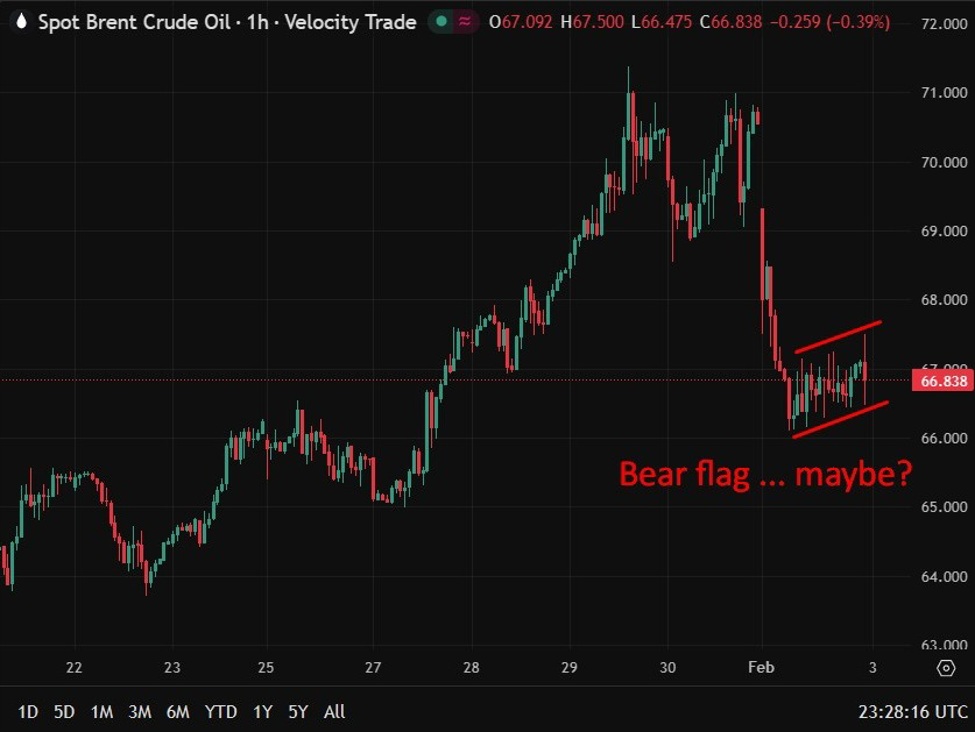
ICYMI – Iran signals readiness for US nuclear talks as military tensions rise
Iran signalled readiness for nuclear talks with the US as envoys prepare to meet in Istanbul, even as military tensions and strike risks remain elevated.Summary:Iran signalled readiness for nuclear talks with the US amid rising military pressureSenior US and Iranian envoys are expected to meet in Istanbul later this weekTalks come as US forces mass in the region and strike risks remain elevatedWashington is pushing for limits on uranium enrichment and missile activityRegional allies are engaged as fears grow of escalation or renewed unrest in IranIran has indicated it is prepared to enter negotiations with the United States over its nuclear programme, as diplomatic activity intensifies against a backdrop of heightened military tensions across the Middle East.Iran’s foreign minister, Abbas Araghchi, said Tehran remains open to diplomacy, provided talks are conducted with mutual respect and recognition of national interests. His comments come as both sides are reportedly preparing to dispatch senior envoys to Istanbul for high-level discussions later this week, potentially marking the first direct engagement between US and Iranian officials since last year.The diplomatic push coincides with a significant US military build-up in the region. Donald Trump has ordered warships and aircraft into position amid warnings that Washington could strike Iranian targets if negotiations fail. Trump has suggested that talks are already under way and that a deal could avert military action, while also reiterating demands that Iran halt production of highly enriched uranium and curb its ballistic missile programme.According to regional and US media reports, Araghchi is expected to meet Trump’s envoy, Steve Witkoff, in Istanbul alongside representatives from several Arab and Muslim countries, including Qatar, Saudi Arabia, the United Arab Emirates and Egypt. No formal timetable has been announced, but Iranian officials said discussions are being finalised and could conclude within days.The talks would follow a turbulent period marked by direct military confrontation. Last year, Israeli and US forces struck Iranian nuclear and missile facilities after Iran launched hundreds of ballistic missiles toward Israel during a brief but intense conflict. Satellite imagery released recently suggests Iran has since moved to repair damage at key nuclear sites, including Isfahan and Natanz.Behind the diplomatic push lies mounting concern in Tehran that even a limited US strike could destabilise the regime. Iranian officials have reportedly warned that renewed military action could reignite widespread protests, which have already exposed deep domestic discontent following economic deterioration, high inflation and currency weakness.Regional allies are also bracing for potential fallout. Saudi and Israeli officials have held discussions with US defence officials, while Israel has warned it is prepared for all scenarios and threatened severe retaliation if attacked. With tensions high and diplomacy fragile, markets are watching closely for any signal that talks could ease the risk of a broader regional conflict. This article was written by Eamonn Sheridan at investinglive.com. 🔗 Source 💡 DMK Insight Iran’s willingness to engage in nuclear talks with the US could shift market dynamics significantly. With military tensions still high, traders should keep an eye on how this affects oil prices and geopolitical risk premiums. If talks progress, we might see a decrease in oil volatility, which has been a major concern for traders. Conversely, any breakdown in negotiations could lead to a spike in crude prices as fears of conflict resurface. Watch for key price levels in oil markets, particularly around recent highs, as these could signal shifts in sentiment. Additionally, the broader implications for currencies tied to oil exports, like the Russian ruble or the Canadian dollar, could be significant depending on the outcome of these discussions. The real story here is how traders react to the uncertainty—are they pricing in a potential easing of tensions or bracing for more conflict? Keep an eye on the upcoming meeting in Istanbul; it could be a pivotal moment for market sentiment. 📮 Takeaway Monitor oil prices closely as the Iran-US talks unfold; any positive developments could ease volatility, while setbacks might spike prices.

Japan’s Katayama: Tokyo coordinates regularly with US on FX, declines comment intervention
Japan kept intervention ambiguity intact while leaning on US coordination language and downplaying any suggestion the government is cheerleading a weaker yen.Summary:Japan’s finance minister avoided confirming or denying any FX intervention activityShe pushed back on the idea that PM Takaichi was “talking up” a weak yenOfficials again refused to discuss specific FX levelsJapan stressed it coordinates regularly with US authorities on FX at multiple levelsMessaging aims to cool intervention speculation without closing policy optionsSays closely communicating with Bessent Japan’s finance minister Katayama sought to dampen speculation around foreign-exchange intervention while keeping official options open, declining to comment on whether Tokyo had been in the market and refusing to discuss specific currency levels. The careful language is consistent with Japan’s long-running approach of maintaining “constructive ambiguity” in FX, particularly when volatility picks up or when markets become focused on intervention risk.A key part of the remarks addressed recent political headlines around currency policy. Katayama said comments by Prime Minister Sanae Takaichi about foreign-exchange “benefits” were intended as a general observation rather than a policy signal, and he pushed back against the notion that she was emphasising the advantages of a weaker yen. The clarification appears designed to reassure markets that the government is not explicitly endorsing yen weakness, even as exporters can benefit from a softer currency and import-heavy sectors feel the pain through higher costs.The minister’s refusal to comment on specific levels reinforces the idea that Tokyo wants to avoid being boxed into defending any particular line in the sand. Historically, officials have preferred to focus on the pace and disorderliness of moves rather than a single number, leaving flexibility to respond if conditions worsen.The most market-sensitive element of Katayama’s comments was her emphasis that Japan coordinates regularly with United States authorities at various levels, mentioning Bessent specifically. That line matters because coordinated messaging can be as important as direct action: the perception of US engagement tends to raise the bar for one-way speculative positioning and can increase the deterrence effect of any potential intervention.For markets, the take-away is twofold. First, Tokyo is actively managing the narrative around the yen and political messaging. Second, it is reinforcing the framework of ongoing communication with the US—without making any operational commitment. Net-net, it reads as an attempt to cool volatility and curb intervention rumours while preserving maximum optionality if currency moves become disorderly. This article was written by Eamonn Sheridan at investinglive.com. 🔗 Source 💡 DMK Insight Japan’s latest stance on currency intervention is a game-changer for forex traders right now. By keeping intervention strategies vague while emphasizing coordination with the US, Japan is signaling a cautious approach that could lead to increased volatility in the yen. Traders should be on high alert, especially if the yen continues to weaken against the dollar. The lack of clear intervention could mean that any sudden moves in the yen could catch many off guard, leading to sharp price swings. This ambiguity also opens the door for speculative trading strategies, particularly for those looking to capitalize on potential reversals or breakouts. Watch for key levels around recent lows; if the yen breaches those, it could trigger further selling pressure. On the flip side, if the US dollar weakens due to domestic economic data or shifts in Fed policy, we might see a rebound in the yen. Keep an eye on upcoming US economic reports, as they could significantly impact the USD/JPY pair. The real story is how traders react to this uncertainty—monitor sentiment closely and adjust your strategies accordingly. 📮 Takeaway Watch for USD/JPY levels; if the yen breaks recent lows, volatility could spike, creating trading opportunities.

PBOC is expected to set the USD/CNY reference rate at 6.9598 – Reuters estimate
The People’s Bank of China is due to set the daily USD/CNY reference rate at around 0115 GMT (2115 US Eastern time), a fixing that remains one of the most closely watched signals in Asian foreign exchange markets. China operates a managed floating exchange rate system, under which the renminbi (yuan) is allowed to trade within a prescribed band around a central reference rate, or midpoint, set each trading day by the PBOC. The current trading band permits the currency to move plus or minus 2% from the official midpoint during onshore trading hours. Each morning, the PBOC determines the midpoint based on a range of inputs. These include the previous day’s closing price, movements in major currencies, particularly the US dollar, broader international FX conditions, and domestic economic considerations such as capital flows, growth momentum and financial stability objectives. The midpoint is not a purely mechanical calculation, allowing policymakers discretion to guide market expectations. Once the midpoint is announced, onshore USD/CNY is free to trade within the allowable band. If market pressures push the yuan toward either edge of that range, the central bank may step in to smooth volatility. Intervention can take the form of direct buying or selling of yuan, adjustments to liquidity conditions, or guidance through state-owned banks. As a result, the daily fixing is often interpreted as a policy signal rather than just a technical reference point. A stronger-than-expected CNY midpoint is typically read as a sign the PBOC is leaning against depreciation pressure, while a weaker fixing for the CNY can indicate tolerance for a softer currency, often in response to dollar strength or domestic economic headwinds.In periods of heightened global volatility, such as shifts in US rate expectations, trade tensions or capital flow pressures, the fixing takes on added significance. For investors, it provides insight into Beijing’s currency priorities, balancing competitiveness, capital stability and financial market confidence. This article was written by Eamonn Sheridan at investinglive.com. 🔗 Source 💡 DMK Insight The upcoming USD/CNY reference rate fixing is crucial for traders, especially given the current volatility in Asian markets. China’s managed floating exchange rate system means that any deviation from expectations can lead to significant market reactions. If the PBOC sets the rate stronger than anticipated, it could bolster the renminbi and impact commodities priced in dollars, like oil and gold. Conversely, a weaker fix might trigger capital outflows and further pressure on the yuan, affecting related markets. Traders should keep an eye on the fixing at 0115 GMT, as it could set the tone for the day, especially for those holding positions in CNY pairs or commodities. Watch for any commentary from the PBOC following the fixing, as it could provide insights into their monetary policy stance and future interventions. 📮 Takeaway Monitor the USD/CNY reference rate fixing at 0115 GMT for potential volatility in CNY pairs and related commodities.
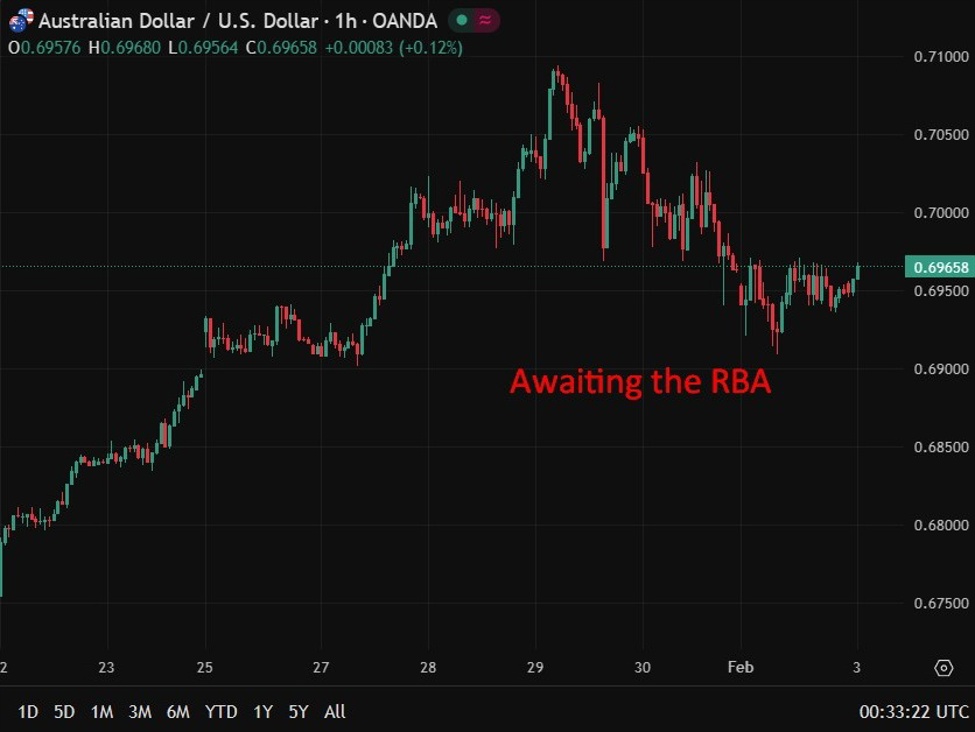
Australian December 2025 building permits -14.9% m/m (expected -5.7%)
Australian December 2025 building permits:The Reserve Bank of Australia decision today, due at 0330 GMT / 2230 US Eastern time:Australian dollar chops, await pivotal RBA decisionRBA preview: Focus on the forward guidanceRBA tipped to hike – pollGoldman Sachs and Deutsche Bank forecast RBA hold This article was written by Eamonn Sheridan at investinglive.com. 🔗 Source 💡 DMK Insight The RBA’s upcoming decision is a major pivot point for the Australian dollar and broader markets. With expectations split between a rate hike and a hold, traders should brace for volatility. Goldman Sachs and Deutsche Bank’s forecasts suggest a hold, which could lead to a bearish reaction in the AUD if the RBA surprises with a hike. The market’s current chop indicates uncertainty, and this decision could set the tone for the AUD in the coming weeks. Watch for key levels around recent highs and lows, as a decisive move could trigger momentum trades. If the RBA leans dovish, expect a potential drop towards support levels, while a hawkish surprise might push the AUD higher against major pairs. Keep an eye on the forward guidance, as it will shape expectations for future monetary policy and influence related assets like commodities and equities tied to Australian economic performance. 📮 Takeaway Watch the RBA decision closely; a surprise hike could strengthen the AUD, while a hold might trigger a sell-off, especially if guidance leans dovish.
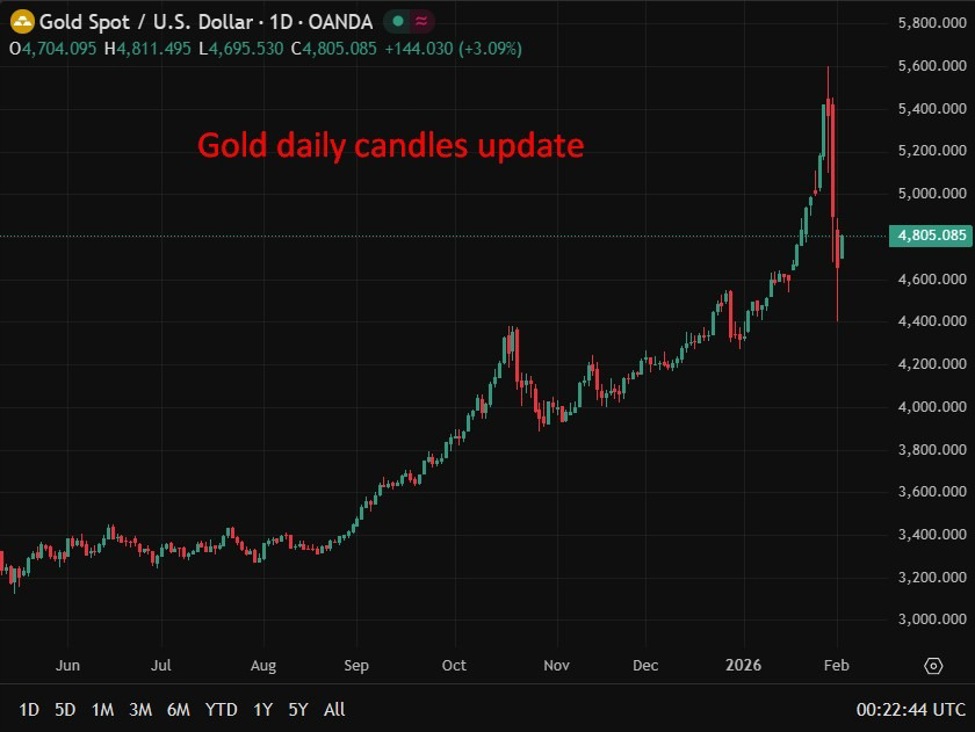
Gold’s surge reflects structural demand, Goldman says. Favours gold-equity barbell.
Goldman Sachs says gold’s rally is structurally driven by central bank dollar diversification, not speculative excess, supporting a long-term role for the metal in portfolios.Summary:Goldman Sachs sees gold’s surge as structurally driven, not speculative excessCentral bank diversification away from the US dollar is the key catalystGold markets are small, amplifying the price impact of incremental demandSpeculative positioning remains limited relative to historical episodesGoldman favours a barbell approach pairing equities with gold, not bondsGoldman Sachs says gold’s powerful rally through 2025 and its strong start to 2026 reflect deep structural forces rather than speculative excess, with central bank reserve diversification emerging as the dominant driver of price action.The bank argues that the shift by global central banks away from the US dollar and toward precious metals has materially altered gold’s demand profile. Unlike equities or fixed income, the gold market is relatively small, meaning even modest changes in official-sector demand can have outsized effects on prices. Goldman notes that this dynamic helps explain the speed and scale of gold’s recent gains.According to the firm, speculative participation in gold remains limited. Only a small share of the global gold stock is held by financial speculators, suggesting the rally has not been fuelled by the type of leveraged positioning typically associated with market manias. Instead, the price response has been driven by long-term, balance-sheet decisions by central banks seeking to reduce reliance on dollar-denominated assets.Goldman also frames the recent surge as a partial catch-up after a prolonged period of underperformance. Between 2010 and 2020, gold prices were broadly range-bound while growth-oriented equities delivered outsized returns. The firm argues that the current cycle reflects a rebalancing of asset preferences rather than a late-stage bubble.While Goldman does not expect gold to continue appreciating at the same exponential pace seen over the past year, it remains comfortable with the broader trajectory. The bank sees scope for further gains as reserve diversification continues, even if returns moderate and volatility increases along the way. Importantly, it does not see signs of widespread froth across the precious metals complex.From an asset-allocation perspective, Goldman is advocating a refreshed version of the traditional barbell strategy. Rather than pairing equities with fixed income, the bank sees a stronger case for combining equities with gold, arguing that precious metals offer diversification benefits in an environment marked by geopolitical uncertainty, fiscal slippage and shifting currency regimes.In this framework, gold functions less as a tactical trade and more as a strategic hedge against structural change in the global monetary system. As central banks reassess reserve composition and investors adapt to a less dollar-centric world, Goldman believes gold’s role in portfolios is likely to remain elevated well beyond the current cycle. —A barbell strategy means holding two contrasting assets at opposite ends of the risk spectrum, in this case equities for growth and gold for protection, while minimising exposure to the middle (traditionally bonds). This article was written by Eamonn Sheridan at investinglive.com. 🔗 Source 💡 DMK Insight Gold’s recent rally isn’t just a flash in the pan—it’s rooted in central bank strategies. Goldman Sachs highlights that central banks are diversifying away from the US dollar, which is a significant shift that could solidify gold’s long-term role in investment portfolios. This isn’t merely speculative; it’s a reaction to global economic uncertainties and inflation concerns. With gold markets being relatively small, even modest shifts in demand can lead to substantial price movements. Traders should keep an eye on how central bank policies evolve, especially in emerging markets where dollar dependency has been high. On the flip side, while this structural demand is promising, it’s crucial to remain cautious. If the dollar strengthens or if interest rates rise unexpectedly, gold could face headwinds. Watch for key technical levels around recent highs, as breaking through these could signal further bullish momentum. Conversely, a failure to hold these levels might trigger profit-taking or a pullback. Keeping tabs on central bank announcements and economic indicators will be vital in navigating this landscape. 📮 Takeaway Monitor gold’s performance around key resistance levels; a break could signal sustained bullish momentum driven by central bank diversification.

PBOC sets USD/ CNY central rate at 6.9608 (vs. estimate at 6.9598).
The PBOC follows a managed floating exchange rate system. Allows the yuan to fluctuate within a +/- 2% range, around a central reference rate, or “midpoint.”Previous close 6.9444Injects 105.5bn yuan in 7day RRs @ 1.4% This article was written by Eamonn Sheridan at investinglive.com. 🔗 Source 💡 DMK Insight The PBOC’s recent injection of 105.5 billion yuan signals a proactive stance in managing liquidity, and here’s why that matters right now: With the yuan’s previous close at 6.9444, the central bank is clearly aiming to stabilize the currency amidst ongoing global economic uncertainties. This liquidity boost, coupled with the managed floating exchange rate system, suggests that the PBOC is prepared to intervene to maintain the yuan within its +/- 2% fluctuation range. Traders should monitor how this impacts the yuan’s performance against major currencies, especially the USD, as any significant deviation could trigger volatility. Additionally, the 1.4% rate on the 7-day reverse repos indicates a commitment to keeping borrowing costs attractive, which could influence risk appetite in both forex and equity markets. However, there’s a flip side to consider: if the yuan weakens beyond the 6.9444 mark, it could spark concerns about capital outflows and prompt further interventions. Watch for any shifts in sentiment around the yuan, especially if it approaches key levels like 7.0. The immediate focus should be on how market participants react to this liquidity injection and any subsequent moves by the PBOC in the coming weeks. 📮 Takeaway Keep an eye on the yuan’s movement around 6.9444; a breach could signal increased volatility and potential intervention from the PBOC.
ANZ sees RBA 25bp rate hike today, but no commitment to further tightening
ANZ expects the RBA to lift rates by 25bp in February, while stressing the move would be framed as cautious and data dependent rather than the start of a tightening cycle.Summary:ANZ expects the RBA to hike rates by 25bp at its February meetingSticky trimmed mean inflation and a tight labour market underpin the callANZ sees the RBA keeping policy guidance flexible and data dependentA February hike is not viewed as the start of a sustained tightening cycleUpdated forecasts are likely to show higher near-term inflation but easing laterANZ expects the Reserve Bank of Australia to raise the cash rate by 25 basis points at its February policy meeting, citing persistent underlying inflation pressures and a labour market that remains tight despite signs of modest cooling.The bank points to trimmed mean inflation running at around 3.35% year-on-year in the December quarter, above the RBA’s most recent forecast, as a key factor supporting a rate increase. ANZ also notes that the unemployment rate dipped back to 4.1% late last year, reinforcing the view that labour market conditions continue to exert upward pressure on prices.However, ANZ does not expect the central bank to signal a committed tightening cycle. Instead, post-meeting communications, including the policy statement, updated forecasts and Governor Michele Bullock’s press conference, are likely to emphasise that the Board remains flexible and is not locked into a predetermined path for interest rates. The February move, in ANZ’s view, would be framed as a risk-management decision rather than the start of a series of hikes.The bank argues that policymakers will find it difficult to ignore trimmed mean inflation running close to a 4% annualised pace over the second half of 2025, even if updated forecasts show inflation returning to the midpoint of the 2–3% target band over time. ANZ expects those forecasts to reflect a higher assumed path for interest rates and a stronger Australian dollar, both of which would weigh on activity later in the projection horizon.On growth, ANZ anticipates the RBA will acknowledge improving momentum heading into 2026, supported by a recovery in private demand. Further out, tighter financial conditions and a firmer currency are expected to moderate growth, with unemployment drifting modestly higher from late-2025 levels.Overall, ANZ expects the RBA to characterise the labour market as still “a little tight” and to justify a February rate increase as a prudent step to ensure inflation returns sustainably to target, while keeping future decisions firmly dependent on incoming data. —Earlier:The Reserve Bank of Australia decision today, due at 0330 GMT / 2230 US Eastern time:Australian dollar chops, await pivotal RBA decisionRBA preview: Focus on the forward guidanceRBA tipped to hike – pollGoldman Sachs and Deutsche Bank forecast RBA hold This article was written by Eamonn Sheridan at investinglive.com. 🔗 Source 💡 DMK Insight ANZ’s prediction of a 25bp rate hike from the RBA in February is significant for traders navigating the forex market. This anticipated increase, framed as cautious and data-dependent, suggests the RBA is responding to persistent inflation pressures, particularly in the labor market. Traders should keep an eye on the Australian dollar (AUD), as a rate hike could strengthen it against major currencies, especially if it signals a shift in the RBA’s monetary policy stance. The broader context includes sticky inflation metrics, which could lead to volatility in both forex and equities. If the RBA’s decision aligns with ANZ’s forecast, expect immediate reactions in AUD pairs, particularly against the USD. Watch for resistance levels around recent highs, as traders might look to capitalize on any bullish momentum. However, it’s worth noting that if the hike is perceived as a one-off rather than the start of a tightening cycle, we could see a quick reversal in sentiment. Keep an eye on inflation data leading up to the February meeting, as any surprises could shift market expectations dramatically. 📮 Takeaway Monitor AUD pairs closely ahead of the February RBA meeting; a 25bp hike could strengthen the AUD significantly if framed as a shift in policy.
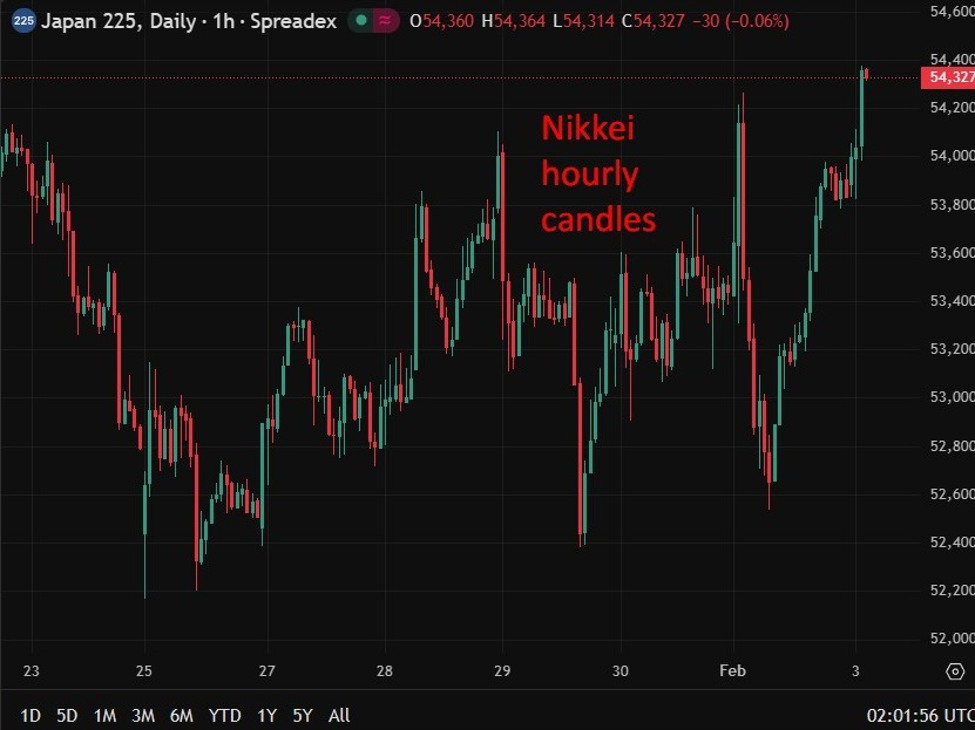
Japanese stocks surge as tech rebounds, banks boost risk appetite. KOSPI rockets.
Japanese and South Korean equities rebounded sharply as tech stocks and bank earnings lifted risk appetite across the region.Summary:Japanese equities rebounded sharply, led by tech and bank stocksNikkei jumped over 3% as risk appetite improved and AI names ralliedStrong bank earnings, including Mizuho, added to upside momentumSouth Korea’s KOSPI surged nearly 5% in a broad turnaroundImproved global sentiment and political optimism supported the moveJapanese equities staged a strong rebound on Tuesday, with stocks rallying across the board as technology shares advanced, bank earnings surprised to the upside, and global risk sentiment improved following recent market volatility.The benchmark Nikkei 225 rose around 3.1%, while the broader Topix gained roughly 2.5%. Technology and AI-linked stocks led the advance, tracking gains in global peers, while financials also provided a strong tailwind after upbeat earnings releases.Bank shares were among the standout performers. Mizuho Financial Group jumped more than 5% after reporting profits above expectations and announcing a share buyback, reinforcing confidence in the sector’s earnings outlook amid higher domestic interest rates. Other major lenders also moved higher, benefiting from the prospect of improving margins and resilient credit conditions.Analysts said the rebound was supported by a combination of dip-buying after recent heavy losses, stabilisation in gold prices, and improved sentiment following solid US manufacturing data. The pullback in safe-haven demand helped revive appetite for risk assets across Asia, particularly in cyclical and growth-oriented sectors.Political factors also played a role, with some investors pointing to expectations that Japan’s ruling party could secure a win in elections scheduled for early February, reducing near-term policy uncertainty and supporting domestic equities.The positive tone extended across the region. In South Korea, the KOSPI surged by almost 5%, marking the strongest performance in Asia and a sharp reversal from the previous session’s steep sell-off. The move reflected broad-based buying across technology, industrials and financials as investors reassessed valuations following Monday’s rout.Overall, the session marked a decisive shift in mood after a turbulent start to the week, with investors rotating back into equities as volatility eased. While markets remain sensitive to global data and policy signals, Tuesday’s rally highlighted the willingness of investors to re-engage when macro conditions and earnings momentum align. This article was written by Eamonn Sheridan at investinglive.com. 🔗 Source 💡 DMK Insight Japanese and South Korean equities are on fire, and here’s why that matters for traders: The Nikkei’s over 3% jump signals a robust risk appetite, driven by strong earnings from banks like Mizuho and a rally in tech stocks. This uptick isn’t just a local phenomenon; it reflects broader market sentiment that could influence global equities. Traders should keep an eye on correlated sectors, especially tech, as they often lead market movements. If this momentum continues, we might see a spillover effect into U.S. markets, particularly in tech-heavy indices like the Nasdaq. But don’t ignore the flip side—if this rally is based solely on earnings beats without sustainable growth indicators, we could see a sharp correction. Watch for key resistance levels in the Nikkei and KOSPI; a failure to hold gains could trigger profit-taking. For now, monitor the daily charts for breakout patterns and the upcoming earnings reports, as they could dictate the next moves in these markets. 📮 Takeaway Keep an eye on the Nikkei and KOSPI for potential breakout levels; a sustained rally could influence U.S. tech stocks significantly.