
 Bitcoin
  Ethereum
  Tether
  XRP
XRP  BNB
BNB  USDC
USDC  Solana
  TRON
TRON  Lido Staked Ether
  Figure Heloc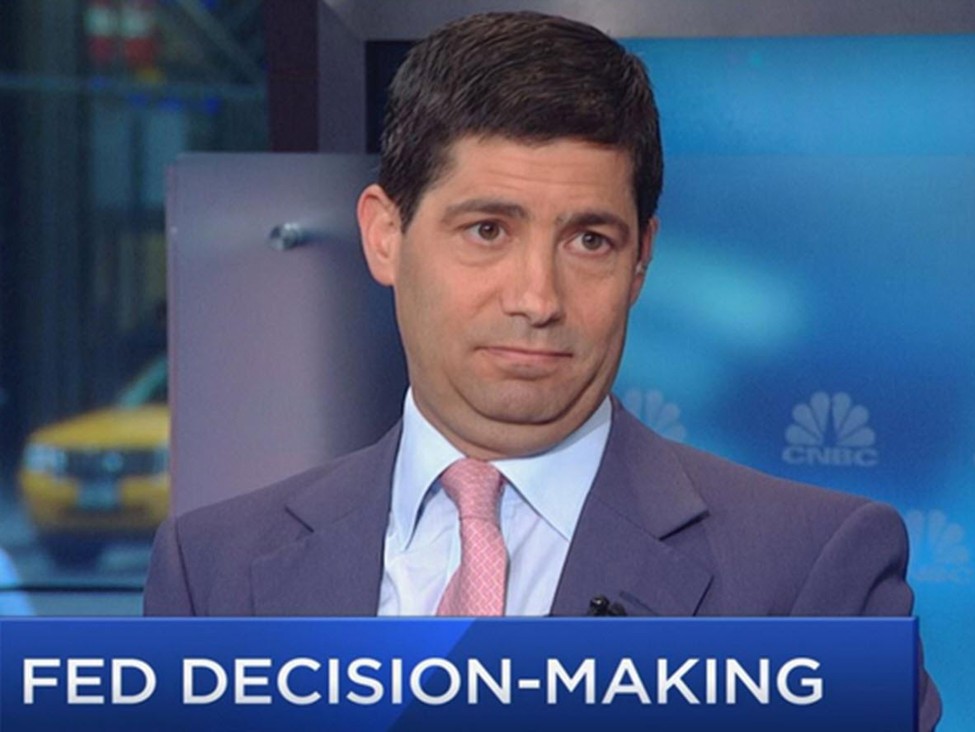
Kevin Warsh was a Fed Governor during the financials crisis and thanks to rules that release transcripts six years after the meetings, we can see exactly what he argued for and why.They highlight an overly-hawkish plicymaker that was flat-out wrong about the inflation risks. It’s also in stark contrast to his recent turn towards being an unabashed dove, something that seems politically expedient given that he has lobbied for the Fed Chair job for at least 9 years.Warsh was an FOMC governor from 2006 to 2011. Here are some revealing comments.FOMC transcript, Jan 30–31, 2007:“The trends appeared supportive of strong, balanced economic growth for 2007… although inflation expectations are well anchored… I remain much more concerned about inflation prospects than about growth.”Inflation receded that year and it ended in recession.Same meeting:“If the housing situation is beginning to stabilize, I find it hard to believe that broader anxiety about it will affect business spending or the consumer as some of these scenarios contemplate.”Housing wasn’t beginning to stabilize, at all.FOMC transcript, Mar 20–21, 2007“Let me say at the outset that I believe the moderate-growth scenario is the most likely for 2007.”Three months later even as cracks were more-noticible in the financial system, Warsh was still off the mark.FOMC transcript, Apr 29–30, 2008“I worry that we may be resting too much on our laurels…unwilling to take the actions necessary to support and sustain [our] credibility. As I have said before in this group, we must not wait until [inflation] expectations have broken out because by then it will be too late.”There was a lively debate around this time because commodity prices were rising but the real economy was stumbling and the Fed cut by 25 bps to 2.00%. Dallas Fed President Richard Fisher and Philly Fed President Charles Plosser dissented at this meeting to hold but Warsh fell in line and voted to cut. He argued at the time that he wasn’t optimistic about the economy by that time but he also argued for statement language that would indicate a pause at the subsequent meeting.”I take comfort in believing that the language in the minutes and the remarks that we all offer between now and the next time we meet will suggest not that this is a cut with a dovish pause but that this is a cut with an expectation of holding after our actions today,” he said.FOMC transcript, Jun 24–25, 2008“What I think most likely is that…before we have to begin a posture of removing policy accommodation. …Policy remains more accommodative than we can allow it to be for too long, I will support [option] B and think that we have to remain very open-minded, very nimble, in our task of removing policy accommodation.” Context: By mid-2008, as headline inflation spiked (oil was $140/barrel), Warsh leaned toward tightening policy “soon”. In this quote he endorses holding rates unchanged (option B) with an eye toward starting to hike rates relatively soon, arguing the Fed’s 2% federal funds rate was too stimulative.FOMC transcript, Oct 28-29, 2008″We don’t want to find ourselves in a corner come December or come a couple of brutal days in the markets where we feel compelled to continue to act and make 50 basis point moves unless and until we know where we want to end up on this. So I’m sympathetic to that point of view.”In October 2008, in the teeth of the financial crisis, he was very pessimistic about the economy but still argued against easing below 1.00% because it would hurt Fed crdibility.FOMC transcript, Dec 15–16, 2008“On balance I’m inclined to believe that the macroeconomic benefits of pushing the envelope to get to zero may be outweighed, particularly now, by additional financial market problems… I take very seriously the risk that reducing the fed funds rate to zero could further degrade the functioning of financial markets and do so at a very inauspicious moment.”At the height of the crisis, as the Fed debated cutting the policy rate from 1% to effectively 0%, Warsh voiced caution. He worried that rushing to a zero rate could “degrade” market functioning. The Fed cut to 0.00-0.25% and his fears proved overblownIn November 2010, Warsh wrote in an op-ed that fiscal and monetary policy were too easy. Ironically, he also argumed that “the creep of trade protectionism is anathema to pro-growth policies”.FOMC transcript, Jan 25–26, 2011“Second, as I will discuss in more detail, inflation – it’s getting hard and harder, in my view, to deny inflation risks, if not real inflation problems, among many of our trading partners, and that’s likely to lessen the flexibility that monetary policy has…”Ultimately, this was the argument that broke Warsh, along with QE2. He said the Fed was out of options but later that year we got Operation Twist and in 2012, QE3. Inflation ran below the Fed’s target for the remainder of the decade. If anything, the pandemic proved that the Fed would have been wise to embark in stronger QE sooner, it also showed the fiscal policy was far from overly stretched.Warsh resigned in February. This article was written by Adam Button at investinglive.com. 🔗 Source 💡 DMK Insight Kevin Warsh’s past arguments against inflation risks reveal a critical lesson for today’s traders: central bank narratives can shift dramatically. His overly-hawkish stance during the financial crisis serves as a reminder that policymakers can misjudge economic conditions, leading to unexpected market reactions. With inflation still a hot topic, traders should be wary of how current Fed communications might evolve. If the Fed’s tone shifts towards a more dovish approach, we could see significant volatility in both equities and commodities, particularly in sectors sensitive to interest rates like tech and real estate. Look for key indicators such as inflation data releases and Fed meeting minutes, as these could signal shifts in monetary policy. If inflation numbers come in lower than expected, it might prompt a rethink of interest rate hikes, potentially pushing markets higher. Conversely, if inflation remains stubbornly high, expect continued hawkishness, which

Eyes on Iran this weekend as Trump talks about ships heading there once again
Oil prices are marginally higher today as we watch and wait on Iran.Trump is out once again reminding everyone that an ‘armada’ is heading towards Iran and it’s even bigger than the one that went to Venezuela. That’s obviously a threat and will hang over any negotiation.This is the kind of thing that can get ugly fast and that’s why oil has rallied steadily from $59 on Jan 22 to $65.73 last. We’re at the point where there are two-way risks because this could also de-escalate or US attacks could avoid hitting oil infrastructure. Iran could also refrain from closing the Strait of Hormuz.It’s all a bit of a mess but I get the sense that it’s too early to be betting on conflict. Negotiations tend to drag for a little while and a US attack on the weekend would be seen negatively internationally without at least a token effort at negotiations. There’s room to disagree on that because the US looked like it might launch strikes two weeks ago.Again though, it’s going to matter what the US hits and how hard. Trump hates higher oil prices and for that reason, I just don’t think that oil is that big of a card to be played in this conflict. The old adage is to never chase a geopolitical move in oil and I think that’s where we are. Earlier in the week, I wrote that risks were underpriced but after a $3 move higher, I don’t think that’s the case anymore. The precious metals market is also a reminder that corrections can happen in a hurry (as if energy traders needed that reminder). Another spot to watch on the weekend is OPEC, which has a meeting scheduled on Feb 1. No big moves are expected but keep an eye on signaling around supplies and pricing. They’ve been a tough group to predict.Update:Trump says Iran does want to make a dealOnly they know the deadline for sureUpdate 2: Now oil is lower on the Trump comments. This article was written by Adam Button at investinglive.com. 🔗 Source 💡 DMK Insight Oil prices nudging higher amidst geopolitical tensions is a classic setup for volatility. With ADA currently at $0.31, traders should keep an eye on how oil price movements could influence broader market sentiment, especially in risk assets like cryptocurrencies. If tensions escalate, we could see a flight to safety, impacting not just oil but also crypto prices. The correlation between oil and market risk appetite is worth noting; if oil spikes due to conflict fears, expect a potential dip in ADA as traders pull back on riskier assets. Watch for key resistance levels in oil, as a breakout could further shake up market dynamics. On the flip side, if negotiations ease tensions, we might see a rebound in risk assets, including ADA. Keep an eye on the daily charts for ADA; a break above $0.33 could signal a bullish reversal, while a drop below $0.30 might trigger further selling pressure. 📮 Takeaway Monitor ADA closely; a break above $0.33 could signal a bullish reversal, while geopolitical tensions in oil could impact risk appetite.

Gold extends decline to 10%, silver heads for its worst day ever
These are some breathtaking moves in precious metals today.Gold is now at the session low, down 10.0%, or $837, to $4855. It’s an incredible reversal on the daily chart and a textbook three-candle top.As amazing as that is, silver is something else. It’s down 26%, or $29 to $86.57. Note that less than a year ago, an ounce of silver traded for $27 so this is equal to its entire value at the time. However just yesterday it traded at $121 and a 26.5% decline would be the worst percentage drop ever, worse than the post-Hunt brothers bust.This certainly looks like a bubble bursting.This is a real reckoning but gold at $4862 is still an unthinkably-high number compared to a year or two ago, similarly with silver. But this is the correction and if we get a year of consolidation around these levels, it’s still ultimately healthy.Some events I’m circling in the shorter term:What Trump does on Iran/CubaThe Supreme Court tariff decisionWarsh’s first speech after he’s confirmedWhether Powell stays as a Fed GovernorFor now, the party is over and it was one for the ages. In gold, I have a hard time imagining it will trade sub-$4000. If it gets down there, I think there will be some strong hands buying but I wouldn’t be weighing in before that. For holders? It’s a tough call. This can turn around or bounce quickly and it’s never a good idea to panic on a Friday afternoon. Could we get a ‘Black Monday’ kind of further selloff? I tend to think there would need to be some kind of trigger to make that happen beyond an Iran deal. This article was written by Adam Button at investinglive.com. 🔗 Source 💡 DMK Insight Gold’s 10% drop and silver’s staggering 26% decline are shaking up the market right now. For traders, this dramatic reversal signals a potential shift in sentiment. Gold’s fall to $4855, forming a three-candle top, suggests a bearish trend that could lead to further selling pressure. Silver’s plunge to $86.57 raises concerns about over-leverage in the market, especially among retail traders who might be caught off guard. These moves could trigger cascading effects across related assets, including cryptocurrencies like ETH, which often correlate with precious metals in times of uncertainty. Keep an eye on the daily charts for both gold and silver; if they break below these levels, it could signal more downside. But here’s the flip side: if these assets find support soon, we might see a sharp rebound, especially if institutions step in to buy the dip. Watch for key levels around $4800 for gold and $85 for silver. If they hold, it could set up a buying opportunity, but if they break, expect volatility to increase across the board. 📮 Takeaway Monitor gold at $4800 and silver at $85; a break below these levels could lead to increased market volatility.

Fed's Musalem: Further interest rate cuts not advisable
Rates are now at neutral rateEconomy doesn’t need stimulusExpects economy to continue growing above trend, boosted by fiscal policyExpects inflation to decline to 2% but sees risk it could remain aboveFurther cuts only needed if jobs market were to decay or inflation fallsHawkish stuff from Musalem and the market thinks Warsh is a hawk deep down. Are we slowly going to price out the Fed easing that’s in the market this year?The market is pricing in 52 bps in easing through year end, which is a touch more than at the start of the week. We saw the GDP trackers fall after trade balance numbers but some other economic data has been a bit better, we’ve also seen oil prices rise substantially this week. At the end of the day, it’s worth focusing back on the data as Warsh, Waller, Bowman and all the other newly-christened Fed doves are going to go where the numbers take them. Yes, they can continue to forecast falling inflation but if prices don’t fall or they start to rise then they can’t hold that position for long. Next week, we get non-farm payrolls and some other top-tier data and that’s going to be telling. Also keep an eye on the US dollar. It’s rebounded today after what had been a rough week. It’s still near the lowest levels in years and Trump this week basically endorsed US dollar weakness. The recent pain in the AI trade might also start to chase away some investment from US equity markets. This article was written by Adam Button at investinglive.com. 🔗 Source 💡 DMK Insight The Fed’s stance on rates signals a pivotal moment for traders: they’re holding steady, but the implications are far-reaching. With the economy expected to grow above trend and inflation projected to decline to 2%, traders should be wary of potential volatility in both equities and fixed income. The mention of a neutral rate suggests that any further cuts are contingent on a weakening job market or unexpected inflation spikes. This hawkish tone from Musalem could lead to a stronger dollar, impacting forex pairs and commodities. Watch for how the market reacts to these signals, especially around key economic indicators like employment data and inflation reports. If inflation remains stubbornly high, we might see a shift in sentiment that could catch many off guard. Keep an eye on the S&P 500 and USD pairs, as they could be sensitive to these developments. The next few weeks will be crucial, especially with upcoming economic releases that could sway market sentiment significantly. 📮 Takeaway Monitor the S&P 500 and USD pairs closely; a shift in inflation or jobs data could trigger significant market reactions.

Keep a close eye on the silver ETFs — AGQ down 66%
Thankfully, there’s no triple-levered silver ETF, or at least one with any trading volume. With silver down 33% today, that would be an extinction-level event.We saw something similar in the VIX ETF implosion a few years ago as it was liquidated. This time, there’s only a twice-levered ETF to worry about. That’s the AGQ product from ProShares.Going into the day, it held about $5 billion in assets tied to silver and — needless to say — it’s going to be much less tomorrow. It’s trading down 66%, which should wipe out about $3 billion of that.This chart is actually telling in hindsight as it shows a diminishing AUM this week, even as silver made new highs. That was a red flag that retail enthusiasm was waning and now here we are.’At the moment, it looks like this ETF is behaving as it’s supposed to but when markets move 33%, bad things tend to happen so it’s worth keeping an eye on the headlines after the close. Whether it’s in this ETF or in the derivatives market, there are likely to be some bodies piled up somewhere or some margin calls unmet.When that happens, there is often even more forced liquidation and further pain. We also haven’t seen how these moves will affect foreign markets where margin lines were certainly be ringing over the weekend.It’s an ugly picture all around and so far the indications are that the market is functioning, but whenever a market has its worst day ever — particularly one as big as silver — there are some real risks in market plumbing. This article was written by Adam Button at investinglive.com. 🔗 Source 💡 DMK Insight Silver’s 33% drop today is a stark reminder of volatility in leveraged ETFs. Traders should be cautious, especially with the twice-levered silver ETF, as it could amplify losses in a market already shaken by uncertainty. The parallels to the VIX ETF implosion highlight the risks of excessive leverage in turbulent times. With ETH currently at $2,641.81, traders should monitor how this silver plunge impacts broader market sentiment, particularly in precious metals and related assets. If silver continues to slide, it could trigger a sell-off in correlated markets, including cryptocurrencies, as risk-off sentiment takes hold. Keep an eye on support levels in silver and related ETFs, as breaches could lead to cascading effects across asset classes. Watch for any significant rebounds or further declines in silver, as these will dictate trading strategies in both the silver and crypto markets. 📮 Takeaway Monitor silver’s price action closely; a continued decline could impact ETH and other correlated assets significantly.

Canadian dollar completely shrugs off the latest tariff threat
The Canadian dollar is down against the US dollar but it’s actually outperforming every currency aside from the dollar. That’s a better read on how the loonie has reacted to the latest Trump tariff threats than USD/CAD alone, which is up 105 pips to 1.3594.Even with that pair, if you zoom out over a couple weeks, today’s climb is modest.To recap, Trump threw a fit about Canadian certifications of some Gufstream jets and said he was decertifying Bombardier jets. The thing is, Bombardier jets are flown all over the United States and immediately grounding them would be disastrous for air travel.The market immediately took it as a laughable threat rather than a real action.This is what Trump said:Based on the fact that Canada has wrongfully, illegally, and steadfastly refused to certify the Gulfstream 500, 600, 700, and 800 Jets, one of the greatest, most technologically advanced airplanes ever made, we are hereby decertifying their Bombardier Global Expresses, and all Aircraft made in Canada, until such time as Gulfstream, a Great American Company, is fully certified, as it should have been many years ago. Further, Canada is effectively prohibiting the sale of Gulfstream products in Canada through this very same certification process. If, for any reason, this situation is not immediately corrected, I am going to charge Canada a 50% Tariff on any and all Aircraft sold into the United States of America. Thank you for your attention to this matter!The heart of the matter is that Canada is now taking steps to check and certify planes after the 737 MAX fiasco and some Trump donor didn’t like it that his private jet was delayed.So what’s the lesson here? We’ve seen this before but the market just doesn’t take tariff threats seriously anymore. Even Bombardier shares are down only 6%, which isn’t even as bad as it was on Monday when shares caught a downgrade and fell 10%. This article was written by Adam Button at investinglive.com. 🔗 Source 💡 DMK Insight The Canadian dollar’s resilience against global currencies, despite a dip against the US dollar, signals underlying strength amidst tariff threats. With USD/CAD climbing to 1.3594, traders should note that the loonie’s performance against other currencies suggests a robust economic backdrop. This could indicate that Canadian fundamentals are holding up better than anticipated, even as geopolitical tensions rise. For day traders, this might present a short-term opportunity to capitalize on potential pullbacks in USD/CAD, especially if it tests key support levels around 1.3550. Watch for any shifts in market sentiment regarding tariffs, as they could trigger volatility in both CAD and related commodities like oil, which often correlate with the loonie’s strength. However, it’s worth considering that the loonie’s current outperformance might not last if the tariff situation escalates further. If USD/CAD breaks above 1.3600 decisively, it could signal a shift in momentum, prompting a reevaluation of long positions in CAD pairs. Keep an eye on economic data releases from Canada that could impact the loonie’s trajectory in the coming days. 📮 Takeaway Watch for USD/CAD around 1.3550 for potential pullbacks; a break above 1.3600 could shift momentum back to the US dollar.

investingLive Americas market news wrap: Gold down 10%, silver falls 30%
Trump nominates Kevin Warsh to be the next chairman of the Federal ReserveFed’s Musalem: Further interest rate cuts not advisableEyes on Iran this weekend as Trump talks about ships heading there once againFed’s Waller: Dissented in favour of rate cut because policy remains too much restrictiveFed’s Bostic: I want clear evidence of a return to 2% inflationCanada GDP for November +0.0% vs +0.1% expectedUS December PPI final demand Y/Y +3.0% vs +2.7% expectedGermany January preliminary CPI +2.1% vs +2.0% y/y expectedMarkets:Gold down $530 to $4860Silver down $33 to $82.70WTI crude oil up 47-cents to $65.90S&P 500 down 0.4%Nasdaq down 0.9%US 10-year yields up 1.8 bps to 4.24%USD leads, AUD lagsIt was a day for the ages in the precious metals market as gold fell 10% and silver fell 30% in its worst-ever percentage drop. It’s been a parabolic run higher — particularly in silver — and the air came out of it today in a crushing decline. The selling started in Asia but silver was still at $104 early in US trade; it eventually fell as low as $77.80. Similarly, gold had steadied around $5170 before tanking to $4697 at the lows. Both had modest bounces late.The nomination of Warsh got some of the credit for both moves but I think that’s dubious, or fitting the narrative to the price action. Volatility picked up yesterday and it was an old-fashioned stampede to the exits. If anything, I’d say that yesterday’s fall in MSFT shares showed that nothing is safe and that reverberated. The take from the market so far is that Warsh is secretly hawkish, despite his public comments otherwise. Time will tell but no one really knows how we will react once in the role and the data starts rolling in. Moreover, he’s part of a committee, not a dictator so rates will go where the data leads us.On that front, the PPI numbers were hot and oil prices rose again today. Eyes are on Iran this weekend with persistent talk about potential US strikes. Trump brought down the temperature briefly (leading to a quick $1 drop in oil) when he said Iran wants to negotiate. Later though, crude recouped those losses.Overall it was a crazy week that ended with some intense drama. Next week features another flush earnings calendar that starts with Disney and Palantir on Monday. The week will end with non-farm payrolls.Until then, have a great weekend. This article was written by Adam Button at investinglive.com. 🔗 Source 💡 DMK Insight Trump’s nomination of Kevin Warsh could shift Fed policy, and here’s why that matters: With Warsh’s potential leadership, traders should brace for a more hawkish stance on interest rates. His views on monetary policy could lead to tighter conditions, especially as Fed officials like Waller and Bostic express concerns over current restrictive measures. This could impact not just U.S. equities but also forex markets, particularly USD pairs, as traders adjust their expectations for future rate hikes. If Warsh’s nomination gains traction, watch for volatility in the dollar and related assets, as market participants recalibrate their positions ahead of any policy shifts. But here’s the flip side: if the market perceives Warsh as too aggressive, we might see a flight to safety in bonds and gold, pushing yields lower and potentially strengthening these assets. Keep an eye on the 10-year Treasury yield as a key indicator of market sentiment. For immediate action, monitor any statements from the Fed this week, as they could provide clues on how the nomination might influence upcoming rate decisions. 📮 Takeaway Watch the 10-year Treasury yield closely; a shift in sentiment could signal volatility in USD pairs and related markets.

Vitalik Buterin earmarks $45M in ETH for privacy and open-source infrastructure
The move comes as the Ethereum Foundation enters a period of “mild austerity” while sticking to its core technical roadmap, Buterin said. 🔗 Source 💡 DMK Insight Ethereum’s shift to ‘mild austerity’ could signal a pivotal moment for traders. With ETH currently at $2,700.58, this strategy might affect development timelines and investor sentiment. The Ethereum Foundation’s commitment to its technical roadmap suggests a focus on long-term growth, but austerity measures could lead to slower updates or reduced innovation in the short term. Traders should keep an eye on how this impacts transaction fees and network activity, as reduced funding could slow down enhancements that improve scalability and reduce costs. On the flip side, this austerity could also create buying opportunities if ETH dips in response to market reactions. Watch for key support levels around $2,600; a break below that could trigger further selling pressure. Conversely, if ETH holds above this level, it might indicate resilience and potential for a rebound. Overall, keep an eye on upcoming updates from the Ethereum Foundation and how they align with market sentiment, especially in the next few weeks. 📮 Takeaway Monitor ETH’s support at $2,600; a break below could signal further downside, while holding above may indicate resilience.

USD/INR: Key budget announcement ahead – MUFG
The Indian Rupee remains under pressure as USD/INR approaches the 92.00 level. The upcoming FY2026/27 Budget announcement is crucial for assessing fiscal consolidation amidst rising capital outflows. 🔗 Source 💡 DMK Insight The Indian Rupee’s struggle near 92.00 against the USD is a red flag for traders. With the FY2026/27 Budget on the horizon, fiscal policies will be scrutinized closely. If the government fails to address rising capital outflows effectively, we could see further depreciation of the Rupee, impacting forex traders significantly. This situation also has implications for Indian equities and commodities, as a weaker Rupee could inflate import costs, affecting margins. Traders should keep an eye on the USD/INR pair, particularly if it breaks above 92.00, which could trigger a wave of selling pressure on the Rupee. On the flip side, if the budget announcement includes measures that bolster investor confidence, we might see a temporary rally in the Rupee. Watch for any comments from the Reserve Bank of India, as their stance could also influence market sentiment. The next few days are critical, and traders should prepare for volatility as the budget announcement approaches. 📮 Takeaway Monitor the USD/INR pair closely; a break above 92.00 could signal further Rupee weakness, impacting related markets.

Pound Sterling Price News and Forecast: Slips below 1.3800 as Warsh nomination, hot PPI boosts USD
The Pound Sterling retreats on Friday, remaining below 1.3800 after the Trump administration revealed that Kevin Warsh to lead the Federal Reserve. Additionally, a red-hot inflation report on the producer front boosted the Greenback’s appeal. Read More… 🔗 Source 💡 DMK Insight The Pound Sterling’s dip below 1.3800 signals a critical moment for traders: With Kevin Warsh set to lead the Federal Reserve, expectations around monetary policy are shifting. Warsh’s potential hawkish stance could tighten the Fed’s grip on interest rates, making the Greenback more attractive, especially in light of the recent inflation report. This backdrop suggests that traders should keep a close eye on the 1.3750 support level for the Pound. A break below could trigger further selling pressure, while a bounce might indicate a short-term recovery opportunity. The inflation data is also a key factor; if it continues to rise, it could lead to more aggressive Fed actions, impacting not just the Dollar but also commodities and equities. So, while the market reacts to Warsh’s appointment, the broader implications on inflation and interest rates could create volatility across multiple asset classes. Watch for any updates from the Fed and how they might influence the Pound’s trajectory in the coming days. 📮 Takeaway Monitor the 1.3750 support level for the Pound; a break could signal further declines amid Fed policy shifts.