
 Bitcoin
  Ethereum
  Tether
  BNB
BNB  XRP
XRP  USDC
USDC  Solana
  TRON
TRON  Lido Staked Ether
  Figure Heloc
Prior +0.6%As has been the case for quite some time now, Spain continues to be one of the bright spots in the euro area economy. Quarterly growth outperformed estimates at the end of last year, reaffirming more robust growth overall. As a whole, Spain’s full year 2025 GDP is seen growing by 2.8% based on the initial reading. Solid stuff.The only downside now is that inflation is still on the higher side but at least it is being accompanied by a stronger economic showing. That unlike *coughs* Germany *coughs*, which remains the biggest problem for the ECB to solve. This article was written by Justin Low at investinglive.com. 🔗 Source 💡 DMK Insight Spain’s economic resilience is a key factor for traders to watch, especially as it outperformed GDP growth estimates. This positive trend could influence the euro’s strength against other currencies, particularly if Spain continues to lead the eurozone. With the European Central Bank’s policies closely tied to member states’ performance, Spain’s growth could bolster the euro, impacting forex trading strategies. Traders should keep an eye on how this growth narrative plays out in upcoming economic reports and ECB meetings, as it could shift sentiment in the forex market. However, there’s a flip side to consider: if Spain’s growth leads to tighter monetary policy from the ECB, it could also trigger volatility in the eurozone, particularly if other member states lag behind. This divergence could create trading opportunities in currency pairs like EUR/USD or EUR/GBP. Watch for key economic indicators from Spain and the broader eurozone, especially any shifts in inflation or employment data, as these will be crucial in shaping market expectations moving forward. 📮 Takeaway Monitor Spain’s economic indicators closely; stronger growth could strengthen the euro, impacting EUR/USD trading strategies.

Spain January preliminary CPI +2.4% vs +2.3% y/y expected
Prior +2.9%HICP +2.5% vs +2.4% y/y expectedPrior +3.0%Headline annual inflation shows some added volatility, with it reflecting a marked drop in January. That said, core annual inflation is what remains the more important statistic and that is seen steady at 2.6%. As such, this continues the narrative from the end of last year in that Germany and Spain are the two notable economies with higher and more stubborn price pressures at the moment in the euro area. This article was written by Justin Low at investinglive.com. 🔗 Source

When Volatility Exposes the Difference Between Brokers
Gold experienced sharp intraday fluctuations following the Federal Reserve’s latest policy decision, trimming earlier losses on Thursday after peaking near $5,600. XAUUSD was trading around $5,315, down 1.83%, underscoring just how quickly price action can accelerate and reverse in volatile conditions. In markets like these, the difference between brokers is no longer theoretical. When prices move this fast, infrastructure decides outcomes.Such movements serve as a reminder that in today’s markets, volatility is no longer an exception — it is a defining feature. When price action moves this rapidly, a broker’s technical stability becomes the primary driver of the trading outcomes. In environments where some platforms retreat to protect their own interests, VT Markets remains committed to maintaining a robust environment by leveraging deep, multi-bank liquidity pools and institutional-grade execution infrastructure. This is part of a dedicated effort to ensure traders stay connected to the market and actively manage risk exactly when it matters most, rather than being forced to absorb it.When Markets Move Fast, Some Brokers Pull BackDuring volatile XAU/USD sessions, many traders face order rejections and frozen platforms. While labeled as “risk controls,” these are often liquidity gates used by under-capitalised brokers to shield their own balance sheets.From a trader’s perspective, the result is catastrophic: Stop-losses fail to trigger at the intended levels, positions cannot be managed, and execution latency spikes. When a broker limits execution during volatility, market risk does not disappear; it is unilaterally shifted from the broker’s balance sheet directly onto the trader. Liquidity Access Under Stress is the Real DifferentiatorAt the core of these disruptions is a factor rarely discussed in marketing materials: liquidity access under stress.In stable markets, many trading platforms appear comparable. However, the true test of a broker occurs during high-impact news events — such as Fed pivots or geopolitical shifts — when market depth typically evaporates. In these moments, pricing gaps widen, order books thin, and brokers are forced to filter or reject trades to protect their own exposure, often leading to massive slippage or the total disabling of trade buttons.This is where the liquidity engine proves its value. By consolidating real-time feeds from Tier-1 investment banks and non-bank market makers, a trustworthy broker should be capable of maintaining an order book that remains resilient even during extreme price gaps. This institutional-grade setup ensures that if one provider pulls back, others in the pool absorb the flow. For the trader, this translates into superior fill rates and reduced asymmetric slippage when it matters most. By investing in this architecture, VT Markets ensures its clients are tapped into a global network designed for performance under pressure. In essence, stability is not merely a marketing claim; it is a promise to keep traders connected to the market regardless of how fast it moves. This article was written by IL Contributors at investinglive.com. 🔗 Source 💡 DMK Insight Gold’s recent volatility highlights the need for traders to stay agile and responsive. With XAUUSD dipping to around $5,315 after a peak near $5,600, this sharp movement reflects the market’s sensitivity to the Federal Reserve’s policy shifts. Such intraday fluctuations can create opportunities for day traders looking to capitalize on quick reversals. But here’s the catch: the broader economic context, including inflation rates and interest rate expectations, could further influence gold’s trajectory. If traders are watching for a rebound, key resistance levels near $5,600 will be crucial. Conversely, if the Fed’s stance tightens, we might see further downside pressure. Keep an eye on the 50-day moving average as a potential support level. Also, consider how this volatility in gold might ripple into correlated assets like silver or even cryptocurrencies, which often react to shifts in traditional markets. The real story is that in times of uncertainty, the safest bet might be to stay nimble and ready to adjust positions quickly. 📮 Takeaway Watch for XAUUSD to test resistance at $5,600; a break could signal further upside, while support around $5,315 is critical for downside protection.

Have we reached a short-term top in gold after the sharp swing lower?
FUNDAMENTAL OVERVIEWThe strong bullish momentum seems to have waned for the time being as we enter a potential pivotal month for gold. It’s not clear what caused yesterday’s drop as pretty much all markets went down at the same time. There were only talks of multiple US warships arriving in the Middle East but given that oil prices dropped too, I wouldn’t bet on that reason. Overnight, we got reports that Trump was going to announce his Fed chair pick today and everything suggested that it was going to be Kevin Warsh. We got a hawkish reaction across markets as Warsh was a hawk during his last term at the Fed, although the historical stance is never a guarantee. The narratives underpinning gold in the past several months have been the same, that is de-dollarisation, geopolitical tensions, and so on. Given the lack of bearish catalysts, the price continued to rise just by inertia. We reached a point where it looks like just FOMO rather than something fundamental because these prices are not justified in the short-term. Since last week, I’ve been turning more bearish in the short-term as I feel like we are reaching an inflection point and February could be the first major negative month for precious metals if the right conditions fall in place. The most important catalyst next week could be the US NFP report. We’ve been seeing improvements in the US Jobless Claims data that seem to suggest a pickup in labour market activity. A strong report would trigger a hawkish repricing in interest rate expectations and put pressure on gold. The other top tier data could also start to weigh on gold if they come out strong, but the NFP report should be the main event of the week. In case we don’t get the bearish catalysts, gold could keep on rising just by inertia. GOLD TECHNICAL ANALYSIS – DAILY TIMEFRAMEOn the daily chart, we can see gold sold off back to the upper bound of the channel which is now acting as support. This is where we can expect the buyers to step in with a defined risk below the trendline to position for a rally into new record highs. The sellers, on the other hand, will want to see the price breaking lower to pile in for a drop into the bottom trendline around the 4600 level next.GOLD TECHNICAL ANALYSIS – 4 HOUR TIMEFRAMEOn the 4 hour chart, we can see more clearly the rejections at the upper bound of the channel as the dip-buyers started to step in. There’s not much we can add here as the buyers will continue to pile in to target new highs, while the sellers will look for a break lower to extend the drop into the next trendline around the 4800 level.GOLD TECHNICAL ANALYSIS – 1 HOUR TIMEFRAMEOn the 1 hour chart, we can see that we have a minor downward trendline that could define a potential future triangle as the price consolidates here. If the price gets there, we can expect the sellers to lean on the trendline with a defined risk above the trendline to keep pushing into new lows, while the buyers will look for a break higher to increase the bullish bets into new record highs. The red lines define the average daily range for today. UPCOMING CATALYSTSToday we conclude the week with the US PPI report and Trump’s announcement of his Fed chair pick. This article was written by Giuseppe Dellamotta at investinglive.com. 🔗 Source 💡 DMK Insight Gold’s bullish momentum is stalling, and here’s why that matters: traders need to be cautious. With the arrival of US warships, geopolitical tensions could be influencing market sentiment, leading to a broader sell-off across assets. This drop in gold prices might signal a shift in investor confidence, especially as we enter a pivotal month where economic indicators and potential interest rate decisions loom large. Traders should keep an eye on key support levels; a break below these could trigger further declines. Additionally, watch for correlations with other safe-haven assets like the US dollar and Treasury yields, which could provide clues about market direction. If the geopolitical situation escalates, gold might see renewed interest, but for now, the risk of a deeper correction is real, especially if the market sentiment remains bearish in the coming weeks. 📮 Takeaway Monitor gold’s support levels closely; a break could lead to further declines, especially with rising geopolitical tensions.
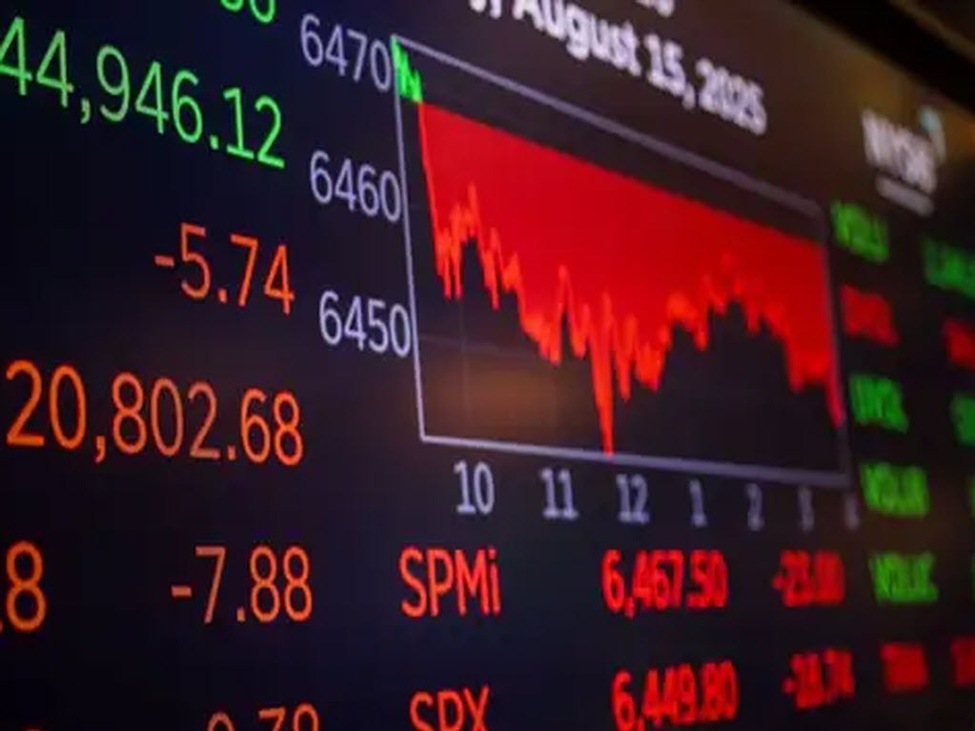
US futures push lower as the risk mood holds more mixed today
S&P 500 futures are now down 0.9% on the day as losses continue to build to start European morning trade. Tech shares are leading declines once more with Nasdaq futures down 1.1% currently. Meanwhile in Europe, major indices are holding slight gains after the more sluggish showing late yesterday. Germany’s benchmark DAX index is at least looking to recover some poise after three straight days of declines, sitting up 0.7% currently.There is plenty to digest in terms of market happenings in the last 24 hours. For one, the heavy selling in precious metals is causing a stir as volatility spikes look to be more frequent in ending the week/month. That especially as correction risks are starting to build for both gold and silver, so that’s unsettling investors somewhat.Then, there was the volatile swings in Wall Street yesterday too with the S&P 500 briefly flirting with record highs early in the day before falling by 1.5% and then recovering to close just 0.1% lower. The tumultuous action was not helped by Microsoft posting a roughly 10% drop post-earnings, its worst one-day decline since March 2020.Sticking with earnings, Apple posted a blockbuster result in after hours but that isn’t enough to lift sentiment today. The tech giant topped Q1 earnings estimates on record-breaking iPhone sales. However, Apple CEO, Tim Cook, warned that the global memory crunch is going to hit the company’s margins going forward.Besides that, we also have Trump’s pick of Fed chair in anticipation as Kevin Warsh looks to be the favourite now. It’s a mixed stance as Warsh has been previously critical of loose monetary policy in labelling that “inflation is a choice”. However, he has recently aligned himself with Trump’s vision for lower interest rates so I guess that should be the more important thing to keep in mind. One has to do some politicking to get the job and to stay in it, he has to play the part in keeping Trump happy.And then, there’s also the prospect of a US government shutdown after a dramatic late-night session where the Democrats blocked major funding package that would have funded roughly 96% of the government through September.But shortly after the vote failed, Trump and Senate majority leader Schumer reportedly struck a tentative agreement to prevent a total collapse. That being said, we could still be facing a “technical” shutdown come what may.Even if the Senate passes the deal today, the House cannot vote on it until Monday – when it is scheduled to return to session. As such, some government functions may be technically closed for the next 48 to 72 hours as a result. So, we’ll see.And adding to all this, there’s also month-end flows that could be causing some shenanigans in the flows we’re seeing. It’s a mix of everything and that is keeping markets on edge somewhat in just wanting to get through the weekend to get some clarity when we get into February trading next week. This article was written by Justin Low at investinglive.com. 🔗 Source 💡 DMK Insight S&P 500 futures are down 0.9%, and here’s why that matters: tech stocks are dragging the market lower, indicating a potential shift in investor sentiment. The 1.1% drop in Nasdaq futures suggests that tech-heavy portfolios are under pressure, which could lead to broader market implications. If this trend continues, traders should be cautious about overexposure to tech stocks, especially as we approach key earnings reports. The divergence between U.S. futures and European indices, which are holding slight gains, highlights a potential disconnect that could create volatility. Watch for a break below recent support levels in the S&P 500, as this could trigger further selling. On the flip side, if European markets maintain their gains, it could provide a temporary cushion for U.S. equities. Keep an eye on the correlation between tech stocks and broader indices; a sustained decline in tech could lead to a broader market correction. Monitor the 4,200 level on the S&P 500 for potential support or resistance in the coming sessions. 📮 Takeaway Watch the 4,200 level on the S&P 500; a break below could signal further declines, especially in tech stocks.

Germany January unemployment change 0k vs 4k expected
Prior 3kUnemployment rate 6.3% vs 6.3% expectedPrior 6.3%German unemployment was unchanged in January with the jobless rate keeping steadier to start the new year. The overall unemployment figure remained the same as in December, at 2.976 million, but the labour office warns that the outlook remains challenging with there being “little momentum” in the labour market currently. This article was written by Justin Low at investinglive.com. 🔗 Source 💡 DMK Insight German unemployment holding steady at 6.3% might seem stable, but here’s why it matters: This unchanged rate, while in line with expectations, signals underlying economic challenges that traders should watch closely. The labor office’s warning about a challenging outlook suggests potential volatility in the Eurozone, especially if economic indicators shift. For forex traders, this could impact the EUR/USD pair, particularly if upcoming data releases show signs of weakening economic performance. If the unemployment rate begins to rise, it could lead to a bearish sentiment around the euro, especially as the European Central Bank navigates its monetary policy. Keep an eye on the next economic releases, particularly any shifts in GDP growth or inflation rates, as these could provide clearer signals for market direction. The 6.3% level is crucial; a breach above could trigger a sell-off in the euro, while stability might encourage a cautious bullish stance. Watch for reactions from institutional traders who often lead the charge in such scenarios. 📮 Takeaway Monitor the 6.3% unemployment rate closely; any rise could signal bearish trends for the euro, especially against the USD.

Germany Q4 preliminary GDP +0.3% vs +0.2% q/q expected
Prior 0.0%As a whole, the German economy also posted 0.3% growth in GDP for the year 2025. That as private and government consumption expenditures, in particular, increased. Meanwhile, it was a very turbulent year for foreign trade – not least due to Trump’s tariffs surely. So, that definitely presented a more challenging environment for the German economy to navigate through.The bright side is that higher and more stubborn price pressures are not quite eating too much into overall demand, with the services sector at least keeping firmer. The manufacturing side of things remain in struggling territory, so that will continue to be a bit of a pain as we get into the new year.For now, Europe’s largest economy is keeping somewhat resilient and the hope is that overall conditions can hang in there all the way through until we see the fiscal tailwind kick into gear. However, a softening labour market picture could pose some concerns in the months ahead. So, that will be something to be wary about.That as stagflation risks remain a potential point of worry for Germany and perhaps the euro area as we get into 2026. This article was written by Justin Low at investinglive.com. 🔗 Source 💡 DMK Insight Germany’s GDP growth of 0.3% for 2025 might seem modest, but it highlights key shifts in consumer behavior and trade dynamics. With private and government consumption on the rise, traders should consider how this could impact the Euro and related assets. The turbulence in foreign trade, exacerbated by tariffs, suggests potential volatility ahead. If consumption continues to grow, we might see upward pressure on the Euro, especially if the ECB responds with more hawkish policies. But here’s the flip side: if trade tensions escalate further, we could see a downturn in export-driven sectors, which might weigh on the Euro. Traders should keep an eye on economic indicators like consumer confidence and trade balance figures in the coming months. Watch for key resistance levels in the Euro against the USD; a break above could signal a bullish trend. Overall, the interplay between domestic consumption and external trade pressures will be crucial for positioning in the Eurozone markets. 📮 Takeaway Monitor Euro’s performance against the USD closely; a break above key resistance levels could indicate a bullish trend influenced by domestic consumption growth.

Bavaria January CPI +2.1% vs +1.7% y/y prior
The other German state releases around the same time as per the following:Hesse CPI +% vs +2.2% y/y priorNorth Rhine Westphalia CPI +2.0% vs +1.9% y/y priorSaxony CPI +2.1% vs +1.9% y/y priorBaden Wuerttemberg CPI +2.1% vs +1.9% y/y priorThe annual figures here are all higher than seen in December, which fits with estimates for the national reading later. German headline annual inflation is expected to rise to 2.0% to start the year, up from 1.8% previously. Based on the state figures, we should expect that estimate to come in around 2.0% to 2.1% at the balance.But as always is the case, the key statistic to watch will be the core annual inflation estimate once again. Overall, that was seen at 2.8% in 2025 and the more stubborn price pressures in Europe’s largest economy here is still posing some trouble for the ECB.Services inflation is the main culprit, seen at 3.5% for the year and that is preventing the central bank from fully pursuing a push towards their desired 2% inflation target level.As such, this will continue to be a key spot to watch in terms of inflation developments for the euro area as it remains the major issue for the ECB in trying to manage policy setting. This article was written by Justin Low at investinglive.com. 🔗 Source 💡 DMK Insight Rising CPI figures across German states signal inflationary pressures that traders can’t ignore. With Hesse, North Rhine Westphalia, Saxony, and Baden Wuerttemberg all reporting higher annual CPI than last December, this trend could influence the ECB’s monetary policy decisions. If inflation continues to rise, we might see a shift in interest rates, impacting the euro and related forex pairs. Traders should keep an eye on the euro’s performance against the dollar, especially if it breaks key resistance levels. The current inflation data suggests that the market might be underestimating the ECB’s potential hawkish stance, which could lead to volatility in both the forex and crypto markets. Look for potential reactions from institutional players who might adjust their positions based on these inflationary signals. As inflation expectations rise, watch for the euro to test resistance around recent highs, and consider how this might affect correlated assets like commodities or even crypto, which often react to fiat currency fluctuations. 📮 Takeaway Monitor the euro’s resistance levels closely; rising inflation could trigger significant moves in the forex market.

Italy Q4 preliminary GDP +0.3% vs +0.2% q/q expected
Prior +0.1%The Italian economy continues to hold up modestly and reaffirm more resilience to end the final quarter of last year. Overall, the economy expanded by 0.7% in 2025 and that’s a positive showing in keeping with the tone of more solid growth conditions in the periphery nations.Italian inflation pressures are also kept well under control, being one of the brighter and less troubling spots for the euro area last year.The tables have certainly turned with France now being the bad egg of the region, not least also plagued by political and fiscal worries – the two things that have placed Italy at the bottom of the ladder previously. This article was written by Justin Low at investinglive.com. 🔗 Source 💡 DMK Insight Italy’s economy growing 0.7% is a mixed bag for traders focused on SOL at $115.76. While the modest growth suggests resilience, inflation pressures could impact consumer spending and investment. For crypto traders, this means SOL’s performance might be influenced by broader European economic sentiment. If inflation continues to rise, it could lead to tighter monetary policy, affecting risk assets like SOL. Watch for key resistance around $120 and support near $110. If SOL breaks above $120, it could signal bullish momentum, but if it dips below $110, it might trigger sell-offs. Keep an eye on European economic indicators and inflation data, as these will likely sway market sentiment and SOL’s trajectory in the coming weeks. 📮 Takeaway Monitor SOL closely; a break above $120 could signal bullish momentum, while a dip below $110 might trigger sell-offs.

Eurozone consumer inflation expectations rise to the highest level since the survey began
Inflation expectations:1-year ahead 2.8% vs 2.8% prior3-year ahead 2.6% vs 2.5% prior5-year ahead 2.4% vs 2.2% prior – the highest since the survey beganFull report here”Respondents in lower income quintiles continued to report on average slightly higher inflation perceptions and short-horizon expectations than those in higher income quintiles, a trend observed since 2023. However, the broad evolution of inflation perceptions and expectations remained relatively closely aligned across income groups.”Actual inflation data eased recently which prompted the market to pare back the slightly hawkish bets it started to take in December. Having said that, growth has been surprising to the upside and the labour market continues to remain resilient with the unemployment rate hovering around record lows.The German fiscal boost, the ECB rate cuts and the easing in uncertainty seen in 2025 could all be positive drivers for growth and eventually for inflation. That’s why the ECB members have been keeping all options on the table and giving the same odds to both a rate cut or a rate hike as the next move. This article was written by Giuseppe Dellamotta at investinglive.com. 🔗 Source 💡 DMK Insight Inflation expectations are creeping up, and here’s why that matters: traders need to adjust their strategies. The latest data shows 1-year inflation expectations holding steady at 2.8%, while 3-year and 5-year expectations have risen to 2.6% and 2.4%, respectively. This uptick, especially the 5-year figure being the highest since the survey began, signals a shift in market sentiment that could influence the Federal Reserve’s monetary policy. If inflation persists, we might see interest rates remain elevated longer than anticipated, impacting everything from equities to forex pairs. Traders should keep an eye on how these expectations affect the USD, particularly against safe-haven currencies like the JPY and CHF. But here’s the flip side: while higher inflation expectations can lead to volatility, they also present opportunities for those willing to take calculated risks. Watch for any significant moves in the bond market, as shifts in yields could provide clues about future Fed actions. Key levels to monitor include the USD index around 105 and the 10-year Treasury yield, which could signal broader market trends. 📮 Takeaway Watch for shifts in the USD and bond yields as inflation expectations rise; key levels to monitor are the USD index around 105 and the 10-year Treasury yield.