
 Bitcoin
  Ethereum
  Tether
  XRP
XRP  BNB
BNB  USDC
USDC  Solana
  TRON
TRON  Lido Staked Ether
  Figure Heloc
FUNDAMENTAL OVERVIEWUSD:The US Dollar remains on the backfoot as the bearish momentum set by the USD/JPY intervention risks kept weighing on the greenback. US Treasury Secretary Bessent yesterday said that they are not intervening in dollar-yen now and that gave the dollar a bit of a boost although it didn’t last long.The Fed kept interest rates unchanged as expected and upgraded a bit its current economic outlook in the statement to reflect the recent economic data. There was no surprise other than Fed’s Waller voting for a cut. That might have been just his last attempt to secure the nomination for the Fed chair job. Time will tell. Fed Chair Powell didn’t offer much in terms of forward guidance and just stuck to the script by reiterating the neutral stance and data-dependency. Today, we get the latest US Jobless Claims figures which could give the dollar some support if they come out strong. Otherwise, the greenback might remain on the backfoot until further notice. JPY:On the JPY side, nothing has changed. As a reminder, the BoJ left interest rates unchanged as expected last week and upgraded slightly growth and inflation forecasts due to the expansionary fiscal policies. Governor Ueda didn’t offer anything new in terms of forward guidance as he just repeated that they will keep raising rates if the economic outlook is realised. He also added that April price behaviour will be a factor to mull over a rate hike. This suggests that April is when they expect to deliver another rate hike if the data supports such a move. The Japanese Yen strengthened across the board solely because of talks of “rate checks” as market participants feared an imminent intervention, which eventually never came. Interventions don’t fix the fundamental problems, so the JPY should continue to weaken until the BoJ turns more hawkish.USDJPY TECHNICAL ANALYSIS – DAILY TIMEFRAMEOn the daily chart, we can see that USDJPY is consolidating below the key 154.50 support now turned resistance. The sellers will likely step in around the resistance with a defined risk above it to position for a drop into the major trendline. The buyers, on the other hand, will look for a break higher to pile in for a rally back into the 159.00 handle.USDJPY TECHNICAL ANALYSIS – 4 HOUR TIMEFRAMEOn the 4 hour chart, we can see that the strong bearish momentum has faded recently. There’s not much else we can add here as the sellers would have a better risk to reward setup around the resistance, while the buyers will look for a break higher to pile in for new highs.USDJPY TECHNICAL ANALYSIS – 1 HOUR TIMEFRAMEOn the 1 hour chart, we can see that we have a minor upward trendline defining the current price action. If we get a pullback into the trendline, we can expect the buyers to lean on it to keep pushing into new highs, while the sellers will look for a break lower to increase the bearish bets into the major trendline. The red lines define the average daily range for today. UPCOMING CATALYSTSToday we get the latest US Jobless Claims figures. Tomorrow, we conclude the week with the Tokyo CPI and the US PPI report. This article was written by Giuseppe Dellamotta at investinglive.com. 🔗 Source 💡 DMK Insight The US Dollar’s bearish trend against the Yen is a key signal for traders right now. With the USD/JPY intervention risks looming, the recent comments from Treasury Secretary Bessent about not intervening have provided a temporary lift to the dollar. However, this bounce seems weak and could be short-lived. Traders should be cautious, as the underlying bearish momentum remains intact. If the USD/JPY pair continues to struggle, it could trigger further selling pressure on the dollar, especially if economic data releases this week show weakness in US fundamentals. Keep an eye on the 145 level in USD/JPY; a break below could accelerate the downtrend. Additionally, watch for any shifts in sentiment from institutional players, as their positioning could amplify volatility in both the dollar and related currency pairs like EUR/USD and GBP/USD. Here’s the thing: while the dollar might get a temporary boost, the broader trend suggests that traders should prepare for potential downside risks. Monitor the upcoming economic indicators closely, as they could provide the catalyst for the next move in the dollar’s trajectory. 📮 Takeaway Watch the 145 level in USD/JPY; a break below could signal further downside for the dollar, impacting related currency pairs.

S&P 500 Today
S&P 500 Trader Update. Grinding Higher, But Momentum Is SelectiveThe S&P 500 continues to trade constructively, but recent price action suggests the market is grinding rather than accelerating. Earlier buying pressure has cooled, and order flow now reflects more two-sided trade near recent highs. This is typical behavior when markets approach important reference levels and liquidity pockets.From a short-term perspective, upside attempts are still present, but follow-through has become more selective. Volume remains healthy, yet price progress has slowed, signaling that buyers are active but increasingly meeting supply. This does not imply a bearish reversal, but it does raise the importance of patience and confirmation.Why NASDAQ Matters HereAt the same time, NASDAQ futures are trading close to their all-time high at 26,399, with price currently near 26,237 at the time of this analysis. Markets often gravitate toward such widely watched levels to test liquidity sitting just above and below them. A continued grind higher in NASDAQ to probe that area would be consistent with the broader theme of slow, methodical upside rather than impulsive breakout behavior.If NASDAQ does push into that all-time-high zone, it would support the idea that the S&P 500 can continue to edge higher as well, even if the move remains uneven.What Traders Should WatchUpside: Continued higher highs with steady participation would keep the bullish structure intact, but acceleration is needed to improve confidence.Pullbacks: Shallow pullbacks that stabilize quickly would suggest consolidation rather than distribution.Risk signals: Increased selling pressure without quick recovery would indicate that the grind higher is losing sponsorship.Markets do not always move higher through strong rallies. Often, especially near key highs, they advance through grinding price action, where liquidity is absorbed gradually. This environment tends to punish late entries and rewards traders who wait for clearer confirmation or better locations.orderFlow Intel Snapshot – Why the Market Is Grinding, Not BreakingFrom an orderFlow Intel perspective, the S&P 500 continues to show constructive but increasingly selective behavior. Earlier in the session, buying pressure was clearly dominant, with multiple higher-timeframe bars printing positive delta on expanding volume, confirming initiative buyers were still willing to transact at higher prices. However, as price moved closer to recent highs, that dynamic shifted. Volume remained elevated, but delta efficiency deteriorated, meaning more contracts were traded for less net price progress. This transition from expansion to two-sided trade is a common signal that the market is entering a late-phase or rotational environment, rather than an early-stage breakout.More recently, order flow data showed a notable burst of selling pressure, with one higher-volume bar printing a meaningfully negative delta, followed by only modest positive responses. Importantly, buyers did not immediately regain control with the same intensity seen earlier in the move. That does not point to a bearish reversal, but it does indicate that upside continuation now requires additional proof, rather than being assumed. In practical terms, the market is still supported, but upside progress has become harder and more conditional.orderFlow Intel Score and InterpretationorderFlow Intel score (near-term): +1This score reflects a market that is still biased higher, but only mildly so. A score in this range signals that longs are not invalidated, yet the environment favors tactical positioning and patience rather than aggressive momentum chasing. The score is capped by signs of buying fatigue and rising two-way trade near key reference levels. To move the score higher, the market would need to show renewed upside acceptance, with stronger participation and cleaner follow-through. Conversely, a further increase in selling pressure without quick recovery would pull the score back toward neutral.Why This Matters for TradersOrder flow is particularly valuable in environments like this, where price alone can be misleading. A grinding market can continue higher, but it often does so while absorbing liquidity and punishing late entries. The current orderFlow Intel read suggests that risk is asymmetric for traders who chase strength, while better opportunities are likely to emerge either after clearer acceptance higher or following a controlled pullback that resets participation.Earnings Crosscurrents Add to the Selective TapeIndividual stock reactions to earnings continue to underline how selective this market has become. META shares surged +7.7% following its latest earnings release, while IBM jumped +7.4%, highlighting pockets of strong investor conviction. LRCX also traded sharply higher, up +6.2% in extended hours after beating expectations. TSLA gained a more modest +2.4% after its Q4 results, reflecting a more balanced reception.On the other side of the ledger, not all earnings were rewarded. MSFT shares tumbled −6.6%, marking their worst post-earnings reaction in more than three years, while NOW fell −5.6% in extended trading despite reporting strong results. These sharply diverging outcomes reinforce a key theme for index traders: headline index strength can mask significant dispersion underneath, with winners and losers reacting very differently to similar macro conditions.This kind of dispersion often coincides with late-cycle or high-level index trading, where capital rotates rapidly rather than moving uniformly across the market.Broader Market Context and What’s Still AheadBeyond earnings, markets are navigating a dense and evolving backdrop. Traders are tracking the main events shaping today’s session, while also keeping an eye on what remains ahead as January wraps up (plenty still to come!), including macro releases and policy developments that could influence near-term risk appetite. Political headlines are also back in focus, with reports that Trump and Schumer may be approaching a possible deal to avert a shutdown, a factor that could temporarily ease uncertainty.Globally, risk sentiment received an additional boost after China property shares jumped on reports of easing the “three red lines” rules, adding to the broader narrative of selective risk-on behavior rather than broad-based enthusiasm.For another walkthrough of today’s market setup and key themes, traders can also reference this Nasdaq video update covering the evolving landscape and major catalysts. This article was written by Itai Levitan at investinglive.com. 🔗 Source 💡 DMK Insight The S&P 500’s grinding higher suggests a cautious market, and here’s why that matters for traders right now: With ETH currently at $2,935.91, the correlation between equities and crypto is worth noting. As the

European stocks rebound but DAX dragged down by SAP, Deutsche
European equities had a poor showing yesterday with France’s benchmark CAC 40 index leading the drop. Luxury stocks were the main culprits after LVMH disappointed on earnings with a reported 13.3% drop in profit last year. Things are looking better today with most major indices recovering a chunk of the declines already. The only exception being Germany’s benchmark DAX index, which is keeping lower once again.Here’s a snapshot before we dive into the drag in Germany:Eurostoxx +0.3%Germany DAX -1.0%France CAC 40 +0.6%UK FTSE +0.5%Spain IBEX +0.3%Italy FTSE MIB +0.6%In terms of top performers, shares of miners are once again outperforming amid another surge higher in precious metals today. The Eurostoxx basic resources index has been on a one-way climb since last year, in mirroring the run in gold and silver prices. Things have also gone parabolic to start the year as seen below:While big tech results in Wall Street were mixed, German software maker SAP is enduring a rough morning with shares down over 11%. That will mark its biggest daily drop since 2020, even as Q4 revenue was in-line with mark estimates.However, there were several concerns for investors. The company signaled that cloud backlog growth would slightly decelerate in 2026, instead of investor hopes that it would point to an acceleration instead. And touching on cloud backlog, SAP’s current cloud backlog only grew by 25% – missing on analyst estimates of at least 26% or higher.To cushion the blow at least, SAP did announce a massive €10 billion share buyback program for February but it’s not enough to lift sentiment it would seem. That especially with concerns and massive scrutiny on AI-related companies to “show me the money” now instead of waiting for longer, which was the phase last year.Besides that, Deutsche Bank is also seeing shares down over 2% despite posting its largest annual profit since 2007. That as German prosecutors raided the bank’s offices in Frankfurt and Berlin amid an inquiry into money laundering. That brought the shares of Germany’s largest bank down yesterday and is again proving to be a drag again today. This article was written by Justin Low at investinglive.com. 🔗 Source 💡 DMK Insight Luxury stocks are in the spotlight after LVMH’s earnings miss, and here’s why that matters: The 13.3% profit drop reported by LVMH is a significant red flag for traders, especially those in the luxury sector. This could indicate broader consumer spending issues, particularly in Europe, where economic uncertainty is already a concern. If luxury brands continue to underperform, it could lead to a ripple effect across related sectors, impacting not just equities but also luxury goods suppliers and even luxury-focused ETFs. Traders should keep an eye on the CAC 40 index, as its performance may reflect the health of the luxury market. A sustained downturn below key support levels could signal further weakness. But don’t overlook the potential for a bounce-back. If major indices recover today, it might suggest that the market is pricing in a short-term correction rather than a long-term downturn. Watch for resistance levels around yesterday’s highs; a break above could signal renewed bullish sentiment. Keep an eye on upcoming earnings reports from other luxury brands, as they could either confirm or contradict LVMH’s disappointing results. 📮 Takeaway Monitor the CAC 40 index for key support levels; a sustained drop could signal broader consumer spending issues in luxury markets.

It's not just Trump's hawkish rhetoric against Iran pushing up oil prices
FUNDAMENTAL OVERVIEWOil prices are now at the highest levels since September 2025 as Trump’s hawkish rhetoric against Iran continues to underpin the market. Yesterday, Trump said on his Truth Social account that time was running out for Iran and that the next attack would be far worse “that last year’s). Trump has been threatening Iran with military strikes unless they negotiate a deal over Iran’s nuclear programme. The New York Times reported that negotiations have made no progress and there are no indications that the Iranians are preparing to give in to Trump’s demands.This geopolitical risk has been a tailwind for the market but there are also signs that demand is rising. In fact, US breakevens have been going up in a straight line since December and that generally happens when the market expects economic conditions to improve. Therefore, it’s not just a supply side story due to the geopolitical risk premium but there’s also demand doing its part.In fact, US growth has been surprising to the upside and US jobless claims have been pointing to an improvement in the labour market conditions. If this continues, oil prices will remain supported even without Iran’s risk. CRUDE OIL TECHNICAL ANALYSIS – DAILY TIMEFRAMEOn the daily chart, we can see that crude oil broke above the swing high around the 62.37 level and extended the gains into new highs as the buyers piled in to target the 66.44 level next. If the price gets there, we can expect the sellers to step in with a defined risk above the level to position for a drop back into the 62.37 level. The buyers, on the other hand, will look for a break higher to increase the bullish bets into the 70.00 handle next.CRUDE OIL TECHNICAL ANALYSIS – 1 HOUR TIMEFRAMEOn the 1 hour chart, we can see that we have an upward trendline defining the bullish momentum on this timeframe. The buyers will likely continue to lean on the trendline to keep pushing into new highs, while the sellers will look for a break lower to target a pullback into the 62.37 level next. The red lines define the average daily range for today. This article was written by Giuseppe Dellamotta at investinglive.com. 🔗 Source 💡 DMK Insight Oil prices are hitting highs not seen since September 2025, and here’s why that matters: Trump’s aggressive stance towards Iran is creating significant geopolitical tension, which often leads to supply concerns in the oil market. Traders should be aware that rising prices can attract both speculative buying and hedging activity. If prices continue to climb, we could see a shift in trading strategies, with more participants looking to capitalize on potential volatility. Keep an eye on key resistance levels; a break above recent highs could trigger further bullish momentum. Conversely, if tensions ease or if there’s a diplomatic breakthrough, we might see a sharp correction. It’s also worth noting that this situation could ripple through related markets, like energy stocks and ETFs. Institutions might start reallocating assets based on oil price forecasts, impacting sectors tied to energy production. Watch for any news updates from the Middle East, as they could lead to immediate price swings. For now, traders should monitor the $80 per barrel mark closely, as it could serve as a psychological barrier for both buyers and sellers. 📮 Takeaway Watch for oil prices around $80 per barrel; a breakout could signal further bullish momentum, while easing tensions might trigger a correction.

Dollar recovers some poise on the day, some light profit-taking in precious metals
The dollar started the day relatively poorly but is now bouncing back modestly in European morning trade. The greenback has pared declines across the board and is keeping near unchanged levels on the day now. EUR/USD traded to as high as 1.1996 earlier but is now back down to 1.1950 levels while AUD/USD is back down to 0.7047 after having been up as high as 0.7094 earlier in the day.Besides that, USD/JPY is keeping back above the 153.00 mark to 153.30 with the pair having started the session near the figure level. And USD/CHF is also just off lows around 0.7650 to 0.7677 at the moment.For the euro, the 1.2000 line is a crucial one to watch with ECB policymakers starting to step in with some verbal interjections on the currency. Meanwhile, yen-tervention risks remain heightened with Tokyo officials still waiting in the wings to step in and push back against any notable pressures on the currency. They were already not too happy about USD/JPY holding the line at the 100-day moving average on Tuesday and made sure to break that resolve shortly after. The key level is seen at 153.71 currently.Despite the slight recovery here, the dollar is not quite out of the woods yet. As mentioned earlier today, the same drivers dragging down the dollar are still very much in play. And that will keep the dollar in a struggling spot barring a sharp correction in the precious metals space.There is some light profit-taking there with gold backing down after a trip to test waters just above $5,600 earlier today. A second push in the early hours of Europe saw price come close again to test the big figure before some selling came about to send the precious metal down to a low of $5,473 in the past hour.It’s the same story for silver as well with price there easing to $116.96 after a brief run to clip above the $120 mark in touching a fresh record high of $120.47 – which came at the same time as gold’s second run up in the early hours of Europe. This article was written by Justin Low at investinglive.com. 🔗 Source 💡 DMK Insight The dollar’s modest recovery today signals potential volatility ahead for forex traders. After starting weak, the greenback’s bounce back could indicate a shift in sentiment, especially as EUR/USD retreated from its earlier high of 1.1996 to 1.1950. This fluctuation suggests traders are weighing economic indicators and geopolitical factors that could impact the dollar’s strength. If the dollar continues to stabilize, we might see a test of key resistance levels, particularly around 1.2000 for EUR/USD. Conversely, if the dollar falters again, it could trigger further selling pressure, leading to a retest of support levels. It’s worth noting that the dollar’s performance today could be influenced by upcoming economic data releases, which traders should monitor closely. Pay attention to any shifts in market sentiment, as they can lead to rapid changes in currency pairs. Keep an eye on the daily chart for EUR/USD; a break below 1.1950 could signal further downside, while a reclaim of 1.2000 might set the stage for a bullish reversal. 📮 Takeaway Watch EUR/USD closely; a break below 1.1950 could lead to further declines, while reclaiming 1.2000 may signal a bullish reversal.

BoC´s Macklem: The era of open, rules-based trade with the US is over
Governor Tiff Macklem took questions from reporters, offering markets a clearer sense of how the central bank was thinking. His remarks followed the widely expected decision to keep the policy rate on hold at 2.25%. 🔗 Source 💡 DMK Insight Macklem’s decision to maintain the policy rate at 2.25% signals a cautious approach, and here’s why that matters for traders right now: Keeping rates steady suggests the Bank of Canada is balancing inflation concerns with economic growth. For forex traders, this could mean a stable Canadian dollar in the short term, but watch for volatility if inflation data shifts. If inflation rises unexpectedly, it could force the BoC’s hand, leading to rate hikes that would strengthen the CAD against other currencies. Conversely, if economic indicators show weakness, the CAD might weaken as traders price in potential cuts. Look for key economic releases over the next few weeks, particularly inflation and employment data, as they could provide clues on the BoC’s next move. Also, keep an eye on the USD/CAD pair; a break above recent resistance levels could indicate a shift in sentiment. In the broader context, this decision aligns with global central bank trends, where many are adopting a wait-and-see approach. But here’s the flip side: if other central banks move aggressively while Canada holds steady, the CAD could face downward pressure. So, monitor the global economic landscape closely for potential ripple effects. 📮 Takeaway Watch for upcoming inflation and employment data; a surprise could shift CAD volatility and impact USD/CAD trading strategies.

USD/CAD trades flat after BoC keeps rates unchanged, Fed decision in focus
The Canadian Dollar (CAD) holds firm against the US Dollar (USD) on Wednesday, as traders digest a largely uneventful Bank of Canada (BoC) interest decision. 🔗 Source 💡 DMK Insight The CAD’s stability against the USD at $0.36 is noteworthy, especially after the BoC’s recent interest rate decision. With no major changes from the BoC, traders might be looking for cues in economic indicators like inflation or employment data to gauge future moves. The CAD’s resilience could signal confidence in the Canadian economy, but it also raises questions about potential overvaluation if global economic conditions shift. Watch for any volatility in oil prices, as Canada is a major exporter; a dip in oil could impact CAD negatively. Additionally, if the USD strengthens due to upcoming economic reports, the CAD might face downward pressure. Keep an eye on the $0.35 support level for CAD/USD; a break below could trigger further selling. Conversely, if CAD strengthens, look for resistance around $0.37. The next few days will be crucial as traders assess the implications of the BoC’s decision and broader market sentiment. 📮 Takeaway Monitor the CAD/USD pair closely, especially around the $0.35 support level, as upcoming economic data could trigger significant moves.

US Treasury Bessent: Rates up to the Fed, Chair race still wide open
US Treasury Secretary Scott Bessent said on Wednesday that rate decisions remain firmly in the Federal Reserve’s (Fed) domain and expressed hope that policymakers would keep an open mind. 🔗 Source 💡 DMK Insight Fed rate decisions are still on the table, and here’s why that matters now: With Treasury Secretary Scott Bessent emphasizing the Fed’s control over rate decisions, traders should brace for potential volatility in both the forex and crypto markets. If the Fed signals a shift in policy, it could impact the dollar’s strength and, consequently, crypto valuations. For instance, a hawkish stance could strengthen the dollar, leading to a sell-off in risk assets like Bitcoin and Ethereum. Conversely, if the Fed leans dovish, we might see a rally in these assets as traders seek higher returns elsewhere. Keep an eye on economic indicators like inflation data and employment figures, as these will likely influence the Fed’s next moves. Also, consider the broader implications: if the Fed maintains an open mind, it could signal a willingness to adapt to changing economic conditions, which might lead to more unpredictable market reactions. Watch for key levels in the dollar index and major crypto assets to gauge market sentiment. The next FOMC meeting will be crucial, so prepare for potential price swings leading up to that event. 📮 Takeaway Monitor the dollar index and major crypto levels closely as the Fed’s next moves could trigger significant market shifts.
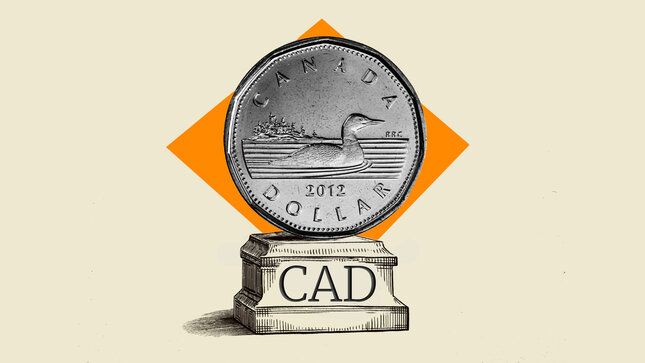
BoC: Rates unchanged, focus shifts to trade and global risks
This is a summary of the main highlights following the BoC’s interest rate decision earlier on Wednesday. 🔗 Source 💡 DMK Insight The Bank of Canada’s recent interest rate decision is a pivotal moment for traders, especially with inflation pressures still looming. As the central bank navigates its monetary policy, the implications for the Canadian dollar and related assets are significant. If rates hold steady or increase, expect a bullish sentiment in CAD pairs, particularly against the USD. Traders should keep an eye on economic indicators like employment rates and GDP growth, as these will influence future rate decisions and market reactions. But here’s the flip side: if the BoC signals a dovish stance or hints at potential cuts, we could see a sharp sell-off in CAD. This could also ripple through commodities like oil, given Canada’s heavy reliance on energy exports. Watch for key resistance levels around recent highs in CAD/USD and monitor the 1.35 mark closely. A break above could signal further strength, while a drop below 1.32 might indicate bearish momentum. Overall, the next few weeks will be crucial for positioning ahead of the BoC’s next meeting. 📮 Takeaway Monitor CAD/USD closely; a break above 1.35 could signal bullish momentum, while a drop below 1.32 may indicate bearish trends.

USD/JPY rebounds ahead of Fed decision, BoJ tightening prospects limit upside
USD/JPY trades around 153.60 on Wednesday at the time of writing, up 0.80% on the day, as the US Dollar (USD) attempts to stabilize after hitting a four-year low earlier in the week. 🔗 Source 💡 DMK Insight USD/JPY’s rise to 153.60 signals a potential reversal, but traders should tread carefully. The US Dollar’s recent bounce from a four-year low suggests a momentary stabilization, but underlying economic indicators, like inflation and interest rate expectations, remain critical. If the USD can maintain momentum above 153.00, it could attract more buyers, especially with the Bank of Japan’s ongoing dovish stance. However, watch for resistance around 154.00, which could trigger profit-taking or a reversal. Conversely, if the USD falters, a drop below 152.50 might reignite bearish sentiment, pushing the pair back toward its recent lows. Keep an eye on upcoming economic data releases that could impact USD sentiment, particularly any shifts in Federal Reserve policy. The flip side here is that while the USD is stabilizing, broader market sentiment remains fragile. If geopolitical tensions or economic data disappoint, the USD/JPY could quickly reverse course. So, it’s crucial to monitor both technical levels and macroeconomic news closely. 📮 Takeaway Watch for USD/JPY to hold above 153.00 for bullish momentum, but be cautious of resistance at 154.00 and potential drops below 152.50.