
 Bitcoin
  Ethereum
  Tether
  BNB
BNB  XRP
XRP  USDC
USDC  Solana
  TRON
TRON  Lido Staked Ether
  Figure Heloc
China’s approval of Nvidia’s H200 AI chip imports signals a pragmatic shift as Beijing prioritises domestic AI development.Summary:China approved first imports of Nvidia’s H200 AI chipsInitial allocation covers several hundred thousand unitsChips reportedly earmarked for three major tech firmsMove aligns with China’s push to accelerate AI developmentApproval seen as targeted, not a full policy reversalNvidia has received approval from Chinese authorities to export its H200 artificial intelligence chips into China for the first time, according to sources familiar with the matter, signalling a notable shift in Beijing’s approach to advanced AI hardware imports.The approvals reportedly cover several hundred thousand H200 chips and were granted during a visit to China this week by Nvidia’s chief executive, Jensen Huang. The initial allocation is said to be concentrated among three of China’s largest internet and technology firms, with other domestic companies lining up for future access as capacity and policy conditions allow.While Chinese authorities have not publicly commented, the decision appears aligned with Beijing’s broader push to accelerate domestic AI development and deployment. Analysts see the move as an effort to balance national technology ambitions against ongoing external constraints, particularly U.S. export controls that have limited access to cutting-edge semiconductors in recent years.The H200 chip is viewed as a critical input for training and deploying large-scale AI models, offering performance improvements over earlier, restricted products. Granting approval for its import suggests a degree of regulatory flexibility, potentially reflecting the urgency China places on maintaining competitiveness in artificial intelligence infrastructure.For Nvidia, the approvals mark a significant opening into a market that has faced tightening restrictions and regulatory uncertainty. China remains one of the world’s largest consumers of AI compute, and renewed access — even if initially limited — could support revenue growth and reinforce Nvidia’s dominant position in high-end AI hardware.From a market perspective, the development may be interpreted as incrementally positive for global AI supply chains, easing some downside risk linked to geopolitical fragmentation. However, analysts caution that the approvals are targeted rather than broad-based and do not necessarily indicate a wider rollback of technology controls.Overall, the move underscores how strategic priorities around artificial intelligence are increasingly shaping trade and industrial policy, with selective approvals emerging as a pragmatic tool for managing technological dependence amid persistent geopolitical tension. This article was written by Eamonn Sheridan at investinglive.com. 🔗 Source
investingLive Asia-Pac FX news wrap: Still rising Australian CPI boosts RBA rate hike bets
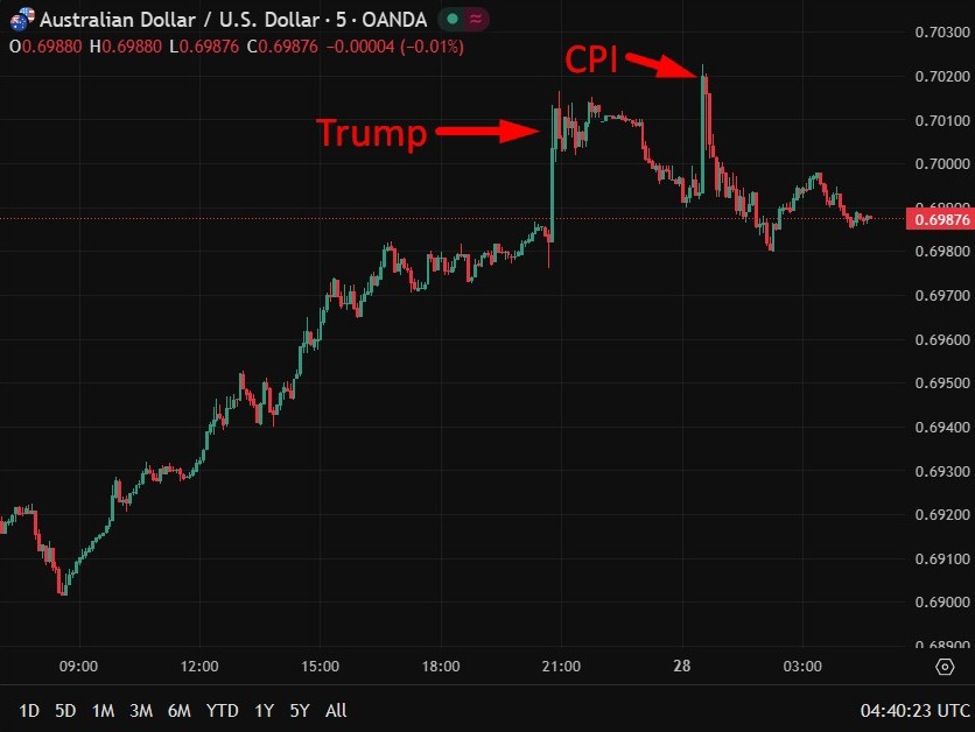
China approves first imports of Nvidia’s H200 AI chipsGoldman Sachs: investor risk appetite remains elevated despite geopolitical risksBoJ minutes recap: weak yen and labour crunch shape rate hike debateTrump may time Fed chair pick with ‘on hold’ January FOMC policy meetingWestpac: inflation delivers casting vote for February RBA hikeECB’s Cipollone warns geopolitical risks could weigh on euro-area growthThree of Australias four biggest banks are forecasting an RBA 25bp rate hike on February 3PBOC sets USD/ CNY central rate at 6.9755 (vs. estimate at 6.9231)Australian CPI upside surprise boosts case for February 25bp RBA rate hikeAUD/USD rose to highest since February 2023 after stronger than expected inflation dataAustralian Trimmed Mean CPI quarterly 3.8% y/y (expected 3.6)BoJ December minutes signal gradual normalisation as inflation dynamics strengthenBank of England’s Bailey warns against complacency as financial risks evolveTrump vows fast signature for year-round E15 gasoline billICYMI – How Trump trashed the US dollar to a four year lowI shouldn’t have ignored this: “IMF prepares for global run on US dollar”Oil: Private survey of inventory shows a headline crude oil draw vs. build expectedEconomic & event calendar Asia Wednesday, Jan 28, 2026. BoJ minutes. Australian inflation.investingLive Americas market news wrap: US consumer confidence falls to 11-year lowAt a glance:US dollar retraced most of Tuesday’s Trump-driven sell-offBoJ minutes showed continued focus on yen weakness and labour-driven inflationAustralian CPI surprised sharply higher, cementing expectations of an RBA hikeAUD jumped back above US70¢ as rate pricing firmedChina approved first imports of Nvidia’s H200 AI chipsThe Asia–Pacific session revolved around three main themes.First was how the US dollar would respond following President Trump’s punching down on the currency during the US session on Tuesday. While the dollar initially extended lower, a scan across major FX pairs shows that much of that move was retraced during the Asia session, suggesting limited follow-through selling once the initial shock faded. Gold, however, continued to rise.Second were the December policy board minutes from the Bank of Japan. As a reminder, the BoJ ended 2025 much as it began, by delivering a 25bp rate hike, lifting the policy rate to 0.75%, the highest level since the mid-1990s. The minutes contained few major surprises. Policymakers reiterated concerns about the impact of a weak yen and persistent labour shortages on inflation dynamics. Several members highlighted the extent to which currency depreciation is feeding into underlying inflation, reinforcing the Bank’s readiness to tighten further if conditions warrant, while keeping the timing of any follow-up move firmly data-dependent.The third, and most market-moving, development was Australian inflation data. Both Q4 2025 CPI and December monthly CPI came in hotter than expected. Headline CPI rose 3.8% y/y in December, up from 3.4% previously, while the trimmed mean, the RBA’s preferred core measure, climbed 0.9% q/q, above forecasts and the Bank’s own expectations. Annual core inflation lifted to 3.4%, well above the Reserve Bank of Australia’s 2–3% target band, with domestically generated inflation again the main culprit.The Australian dollar responded positively, pushing back above US70¢, while market pricing for a 25bp RBA hike on February 3 rose to above 70%, from around 60% previously. Notably, all four major Australian banks now expect a February hike, with ANZ and Westpac joining earlier calls from CBA and NAB.Elsewhere, China approved its first imports of Nvidia’s H200 AI chips, allocating several hundred thousand units to major domestic tech firms, a selective but notable shift as Beijing prioritises AI development. Asia-Pac stocks: Japan (Nikkei 225) -0.54%Hong Kong (Hang Seng) +2.21% Shanghai Composite +0.49%Australia (S&P/ASX 200) -0.20% This article was written by Eamonn Sheridan at investinglive.com. 🔗 Source 💡 DMK Insight China’s approval of Nvidia’s H200 AI chips could signal a shift in tech investment dynamics. This move not only highlights China’s growing focus on AI but also suggests a potential easing of trade tensions, which could boost investor confidence. With Goldman Sachs noting that risk appetite remains elevated, traders might want to consider tech stocks that could benefit from this development. The weak yen and ongoing labor issues in Japan, as discussed in the BoJ minutes, add another layer of complexity, potentially influencing forex pairs like USD/JPY. Keep an eye on how these geopolitical factors play out, as they could lead to increased volatility in both equity and currency markets. The upcoming January FOMC meeting is also a critical watchpoint, especially if Trump’s Fed chair pick aligns with market expectations. Overall, this situation could create opportunities in tech and forex, but traders should remain cautious of sudden shifts in sentiment due to geopolitical developments. 📮 Takeaway Watch for tech stocks influenced by Nvidia’s chip approval and monitor USD/JPY for volatility around the January FOMC meeting.

Has the SNB pain threshold on the Swiss franc shifted?
With all else that is happening in the major currencies space with regards to the US dollar and Japanese yen, the Swiss franc is quietly making waves since the start of the year. As the safe haven status of the dollar and yen both crumble, traders are finding safety and comfort in the franc amid the more tumultuous and volatile landscape.For the last two years, the SNB seems to be drawing a line for EUR/CHF at 0.9200. That’s a signal in which they are letting markets know that they have a certain pain threshold and trigger point for potential intervention.However, the latest drop this week starts to challenge that and it seems like that particular pain threshold might be shifting. That especially since the allure for the dollar and yen have weakened significantly, making the franc very much desirable.If the lines have truly shifted, it is something worth taking note. And not just with regards to the Swiss currency and SNB policy setting.Sure, allowing the franc to strengthen further means risking deflationary pressures and that means we could see the Swiss central bank dip back into more unconventional monetary policy sooner rather than later.However, further strength in the franc also acts as an indirect tailwind for the euro currency especially. That amid a broader dollar retreat as well. But with the SNB not putting as tight a leash on the franc as before, it does free up the opportunity for the euro to also take advantage against the dollar; outside of what is happening with EUR/CHF that is.In other words, the chart above should be taken as a signal from the SNB more than anything else. As a reminder, the euro can still fall against the franc but also strengthen against the dollar especially when the conditions are lining up as they are now in the macro environment. This article was written by Justin Low at investinglive.com. 🔗 Source 💡 DMK Insight The Swiss franc’s rise signals a shift in safe-haven dynamics—here’s why that’s crucial for traders right now. As the US dollar and Japanese yen lose their luster amid economic uncertainty, the Swiss franc is emerging as a preferred refuge. This trend could reshape trading strategies, especially for those who typically rely on the dollar or yen for stability. Traders should monitor the CHF/USD and CHF/JPY pairs closely, as a continued influx into the franc could push these pairs to new levels. If the franc strengthens further, it might trigger a broader risk-off sentiment, impacting equities and commodities as well. But don’t overlook the potential for volatility. If the dollar rebounds or if geopolitical tensions escalate, the franc could face sudden shifts. Keeping an eye on key economic indicators from Switzerland and the US will be vital. Watch for any signs of intervention from the Swiss National Bank, especially if the franc appreciates too quickly. The next few weeks will be critical for assessing how this trend develops and what it means for your positions. 📮 Takeaway Monitor CHF/USD and CHF/JPY closely; a sustained rise in the Swiss franc could signal broader market shifts and impact risk assets.
How have the RBA rate hike odds change after the hot Australian CPI data earlier?
Prior to the hot Australian CPI data earlier here, the odds of a 25 bps rate hike next week were ~61%. And now after the dust has settled, they have increased to a ~72% probability. It’s not a slam dunk as market players are still reserving some caution just in case the RBA continues to decide to “play it safe”.That being said, Australia’s “big four” banks are all anticipating a rate hike next week with ANZ and Westpac the latest two to join in on the call after the data today. The ANZ revision can be seen here alongside the views from CBA and NAB. Meanwhile, Westpac is the last to revise their outlook but argues that it might just be a one-off move for now:”December quarter inflation had the casting vote and voted ‘Yes, hike’. A cash rate increase next week might not necessarily be followed up with a sequence of moves. If inflation remains uncomfortably high in coming quarters, the board will act again. However, further moderation over coming quarterly inflation prints, together with benign reads on the labor market, might see the board wait for some time before moving the cash rate again.”So far, the RBA hasn’t been explicit that they would outright pivot to a rate hike. In their December meeting, they said that further easing is not likely in the near-term and the next move could very well be a rate hike instead. So, at least in that sense they have kept the door open for a move next week.If the Australian central bank does deliver on a rate hike next week, they would be the first major central bank this year to do so. And also the first to complete the pivot from an easing cycle to readjusting policy in what has been a stubborn and tough battle against inflation. The ECB and BOE will be watched closely to see if they might be the next ones to follow suit. This article was written by Justin Low at investinglive.com. 🔗 Source 💡 DMK Insight The spike in rate hike odds to 72% following the Australian CPI data is a game changer for traders. This shift indicates that inflation pressures are more persistent than previously thought, which could lead to tighter monetary policy. For day traders and swing traders, this means keeping a close eye on AUD pairs, especially AUD/USD, as volatility is likely to increase. If the RBA does raise rates, expect a bullish reaction in the Aussie dollar, potentially breaking key resistance levels. Conversely, if they hold off, we might see a sharp pullback, creating a trading opportunity on the downside. But here’s the flip side: the market’s caution suggests that traders are wary of overreacting to one data point. If upcoming economic indicators show a slowdown, the RBA might reconsider its stance. So, watch for any shifts in sentiment around the next CPI release or employment figures, as these could influence the RBA’s decision-making process significantly. 📮 Takeaway Monitor AUD/USD closely; a rate hike could push it above key resistance, while a hold may trigger a sell-off.

Could Europe trigger a debt crisis in the U.S.?
Former European Commission President José Manuel Barroso recently claimed that relations between Europe and the United States are at their lowest point since NATO’s founding. It’s hard to disagree, especially in light of former President Donald Trump’s recent remarks, such as that “Europe was created to harm the United States” and that the U.S. has “never needed” its NATO allies. Add to that last year’s 15% tariffs on EU goods and the recent U.S. interest in claiming parts, if not all, of Greenland.Against this backdrop, theories have begun to emerge about how Europe might respond.The tool often mentioned is the Anti-Coercion Instrument, also known as the “trade bazooka.” In its most aggressive form, it could severely restrict U.S. companies’ access to the EU’s 450-million-consumer market — a move that could cost them billions of dollars, with inevitable repercussions for the S&P 500, Treasury yields, and the EUR/USD pair, while potentially benefiting gold.That said, the instrument is far from a quick trigger. Activating it would take up to six months, making it more of a strategic threat than an immediate weapon. More importantly, its purpose is deterrence, not escalation. If actually deployed, U.S. retaliation would be likely — for example, through restrictions on LNG exports to Europe, which could reignite an energy crisis and hit European industry and growth hard.Another theory is that Europe could begin selling its U.S. asset holdings.Europe does hold trillions of dollars in U.S. Treasuries, corporate bonds, and stocks. In theory, a coordinated sell-off could push up U.S. borrowing costs, weaken markets, and stir more volatility in the dollar — even sending EUR/USD higher. The problem is that most of these assets are in private hands, so forcing a sale would hurt Europe just as much. Capital controls or restrictions would only make that damage worse.In short, Europe has the tools to cause pain to the U.S., thereby putting pressure on the U.S. debt and stock markets. But using them would be costly for Europe itself. That’s why Brussels is far more likely to try every diplomatic option before turning economic leverage into open confrontation.On the other hand, Europe might not need to do anything. Markets could react on their own to worsening U.S.–Europe relations and to countries moving away from dollar assets, potentially forcing the president into another “TACO”. This article was written by IL Contributors at investinglive.com. 🔗 Source 💡 DMK Insight Barroso’s comments signal a potential shift in geopolitical sentiment that could impact market stability. With U.S.-Europe relations deteriorating, traders should brace for volatility in both forex and equity markets. The euro could weaken against the dollar as tensions rise, especially if political rhetoric escalates. This situation might also affect commodities, particularly oil and gas, as Europe navigates energy dependencies. Keep an eye on key levels; if the euro dips below recent support, it could trigger further selling pressure. On the flip side, this tension might create opportunities for traders who can capitalize on short-term fluctuations. Watch for any economic indicators or statements from central banks that could provide clues on how these geopolitical tensions are influencing monetary policy. The next few weeks will be critical as markets react to any developments in this narrative. 📮 Takeaway Monitor the euro’s performance against the dollar closely; a drop below key support levels could signal increased volatility and trading opportunities.

FX option expiries for 28 January 10am New York cut
Once again, there aren’t any major expiries to take note of on the day with the full list seen below.There are some large ones for EUR/USD but they are too far away to be of any impact. The central bank bonanza is back in town with the Bank of Canada and Federal Reserve decisions coming up later today. So, those will be the more important drivers of trading sentiment in the day ahead – especially the latter.As an aside, just be wary that we could get to hear from Trump on his pick of Fed chair after the central bank decides on policy today. It would be quite timely for him to make such an announcement, so just be wary of that.So far today, the dollar is bouncing back a little but the gains are nothing to shout about after the heavy declines yesterday. Trump piled on more pressure on the greenback after saying that “the dollar is doing great” and that “I don’t think the dollar has declined too much”. Amid his push for tariffs and what not, a weak dollar is something he favours a lot to boost the US’ export capabilities and competitiveness.As such, making such an endorsement is only going to keep piling on the pressure on the dollar in the medium-term. That unless the erratic nature of the US administration and uncertain policy handling changes. Not to mention the pressure from Trump himself towards the Fed in wanting lower interest rates.For more information on how to use this data, you may refer to this post here.Head on over to investingLive (formerly ForexLive) to get in on the know! This article was written by Justin Low at investinglive.com. 🔗 Source 💡 DMK Insight With ADA hovering at $0.36, traders should keep an eye on central bank movements, especially from the Bank of Canada. While there aren’t any immediate expiries affecting ADA, the broader forex landscape could influence crypto sentiment. The lack of major expiries today means volatility might be muted, but any unexpected news from central banks could shift market dynamics quickly. For ADA, watch for key support around $0.35; a break below could trigger further selling pressure. Conversely, if bullish sentiment returns, resistance at $0.40 could be a target. Don’t overlook the potential ripple effects from the EUR/USD expiries, as shifts in this major pair often impact crypto flows. If the Bank of Canada signals a change in monetary policy, it could lead to a broader risk-on or risk-off sentiment that affects ADA and other altcoins. Keeping tabs on central bank communications this week is crucial for anticipating market reactions. 📮 Takeaway Watch ADA closely around the $0.35 support level; a break could lead to further downside, while resistance at $0.40 remains a key target.

Germany February GfK consumer sentiment -24.1 vs -26.0 expected
Prior -26.9That marks a slight improvement in German consumer morale heading into the month ahead, although it comes after the January reading was the lowest since March 2024. So, the slight bounce isn’t all too optimistic as overall conditions continue to point to a struggling consumer climate.For some context, the last time the index was in positive territory was all the way back in late 2021. So, it’s tough to build up much hope for a material turnaround in sentiment based on the latest estimate. The hope is for Germany’s fiscal boost to kick into gear later this year to bolster economic conditions. However, higher and more stubborn price pressures will remain a key area of concern for households and businesses still. This article was written by Justin Low at investinglive.com. 🔗 Source 💡 DMK Insight German consumer morale is showing a slight uptick, but don’t get too excited just yet. While a reading of -26.9 indicates some improvement, it’s crucial to remember that this follows the lowest reading since March 2024. This suggests that consumers are still feeling the pinch, and any optimism might be short-lived. Traders should keep an eye on how this affects the Euro, especially against the USD, as weak consumer sentiment can lead to lower spending and impact GDP growth. If the Euro starts to weaken further, it could create opportunities for short positions. Watch for key resistance levels around 1.10 against the USD; a break below that could signal further downside. On the flip side, if consumer sentiment continues to improve, it might bolster the Euro, but the broader economic indicators will be more telling. Keep an eye on upcoming economic data releases that could shift sentiment quickly. 📮 Takeaway Monitor the Euro against the USD closely; a break below 1.10 could signal further downside based on consumer sentiment trends.

ECB policymaker says central bank would have to take action if euro gains continue
Kocher is arguing his standpoint based on the impact of a stronger euro on inflation pressures. He says that:”If the euro appreciates further and further, at some stage this might create of course a certain necessity to react in terms of monetary policy. But not because of the exchange rate itself, but because the exchange rate translates into less inflation, and then this is of course a monetary policy issue.”The single currency has hit a four-and-a-half year high against the dollar this week, with EUR/USD clipping above the 1.2000 mark for the first time since June 2021. And the pressure on the dollar continues to grow amid a myriad of factors, with added pressure coming from potential intervention from Tokyo.In describing the recent gains in the euro, Kocher said that they were “modest” and doesn’t need any responding just yet. But he reaffirmed that at some point, the ECB might have to take action and that they will retain “full optionality” on how to go about that.As a reminder, ECB vice president Luis de Guindos last year hinted that EUR/USD hitting 1.2000 would make things “complicated” for the central bank. And now, here we are. This article was written by Justin Low at investinglive.com. 🔗 Source 💡 DMK Insight A stronger euro could force the ECB to rethink its monetary policy approach, and here’s why that’s crucial for traders right now: If the euro continues to appreciate, it could dampen inflation by making imports cheaper, which might lead to a more dovish stance from the European Central Bank. This is significant because a shift in policy could impact interest rates and, consequently, the euro’s value against other currencies like the dollar. Traders should be on the lookout for key economic indicators, such as inflation data and GDP growth, which could signal whether the ECB feels pressured to adjust rates. If inflation starts to cool, the euro might stabilize or even weaken, presenting potential entry points for short positions against the dollar or other currencies. But here’s the flip side: if the euro’s strength is perceived as a threat to economic growth, the ECB might maintain a hawkish stance, which could lead to volatility in forex markets. Keep an eye on the 1.10 level against the dollar; a break above that could signal further euro strength, while a drop below 1.08 might indicate a reversal. Watch for upcoming ECB meetings and economic reports for actionable insights. 📮 Takeaway Monitor the euro’s movement around the 1.10 level; a break could signal a shift in ECB policy impacting forex trades.

US futures on the up as tech shares lead the way
The S&P 500 posted a record high close yesterday and is looking to build on that in the day ahead. Tech shares are the ones leading the charge, helping to keep sentiment buoyed. S&P 500 futures are up 0.4% with Nasdaq futures up 1.0% on the day currently. Dow futures are only seen up 0.1% thus far.In terms of positive headlines, we have Dutch tech giant ASML posting bumper profits with record AI orders of €13.2 billion. That continues to keep the AI trade momentum in full spin with added positive news to Nvidia with regards to their China situation here.With their composition being less tech heavy, major indices in Europe are slated for a more mixed open in just a bit. But with US futures keeping on the up, that will maintain a more positive risk sentiment at least in trading today.The main focus on the economic calendar will be the Fed policy decision. In that regard, Powell’s press conference will be the main thing to watch but just be mindful that we could also get Trump’s decision on the next Fed chair too. It would be quite timely for him to announce that as the Fed is set to keep interest rates unchanged today.And that’s not the only game in town, as we will have big tech earnings to follow as well.”On Wednesday, we’ll get Microsoft, Meta, and Tesla all after the close. And on Thursday, Apple will be the one reporting after the close. Big tech aside, there are also other notable names reporting this week with it being the second busiest week in terms of the Q4 earnings schedule. The likes of Boeing, UnitedHealth, ASML, Visa, Mastercard, and Exxon Mobil are all also set to report.”It’s going to be a busy day ahead for equities. This article was written by Justin Low at investinglive.com. 🔗 Source 💡 DMK Insight The S&P 500’s record high close signals bullish momentum, but here’s why traders need to be cautious. Tech stocks are driving this rally, with Nasdaq futures up 1.0%. However, this concentration in tech could lead to volatility if profit-taking occurs. Traders should watch for key support levels around the previous highs; a pullback could test these areas. Additionally, the broader market sentiment is fragile, influenced by upcoming economic data releases. If these reports disappoint, we could see a sharp reversal. Keep an eye on the S&P 500’s performance relative to its 50-day moving average for signs of trend strength or weakness. The real story is whether this rally can sustain itself beyond tech, as broader participation is crucial for a healthy market. Watch for the S&P 500 to hold above its recent highs; failure to do so could trigger a wave of selling, especially among retail investors who might panic at the first sign of weakness. 📮 Takeaway Monitor the S&P 500’s ability to maintain its record highs; a drop below recent support could signal a significant pullback.

Gold surges into new record highs as Trump endorses weak dollar. What's next?
FUNDAMENTAL OVERVIEWGold broke through a key technical level yesterday and extended the gains into new record highs. We had a weak US Consumer Confidence report that provided support to the market, but the momentum increased when talking to the press Trump suggested that he wasn’t concerned with the decline in the dollar at all. The narratives underpinning gold continue to be de-dollarisation, geopolitical tensions, and so on. Given the lack of bearish catalysts, the price continues to rise just by inertia. I personally think that this is now more about FOMO rather than something fundamental. I’m not saying that the long-term trend is over, but the current levels are not justified in the short-term. I think we are at an inflection point and February could be the first major negative month for precious metals if the right conditions fall in place. Today, the focus will be on the FOMC decision where the central bank is expected to keep everything unchanged. The focus will be on Powell’s press conference during which he could pull out a surprise by announcing that he intends to remain on the board of governors until his term ends in 2028. That could be taken as a strong fight for Fed independence, and we could see some downside in gold in the short-term. We could also get the new Fed chair announcement. Betting markets now see BlackRock’s Rieder as the favourite. Rieder or Waller could ease Fed independence risks and could weigh on precious metals. The other major catalyst could be the US NFP report next week. We’ve been seeing improvements in the US Jobless Claims data that seem to suggest a pickup in labour market activity. A strong report would trigger a hawkish repricing in interest rate expectations and put pressure on gold. In case we don’t get the bearish catalysts, gold could keep on rising just by inertia. GOLD TECHNICAL ANALYSIS – DAILY TIMEFRAMEOn the daily chart, we can see gold broke above the top trendline and extended the gains into new record highs. From a risk management perspective, the buyers will have a better risk to reward setup around the broken trendline to keep pushing into new highs, while the sellers will want to see the price falling back below the trendline to position for a drop into the bottom trendline next.GOLD TECHNICAL ANALYSIS – 4 HOUR TIMEFRAMEOn the 4 hour chart, we can see that we have a minor upward trendline defining the bullish momentum on this timeframe. The buyers will likely continue to lean on the trendline to keep pushing into new highs, while the sellers will look for a break lower to pile in for a drop into the next trendline around the 4800 level.GOLD TECHNICAL ANALYSIS – 1 HOUR TIMEFRAMEOn the 1 hour chart, there’s not much we can add here as piling in at these levels looks awful from a risk to reward perspective. The buyers should wait for a pullback into the trendline to position for new highs with a defined risk below the trendline. The sellers, on the other hand, will need the price to break below the trendlines to open the door for a correction into the 4800 level. The red lines define the average daily range for today. UPCOMING CATALYSTSToday we have the FOMC policy announcement and a potential new Fed chair pick. Tomorrow, we get the latest US Jobless Claims figures. On Friday, we conclude the week with the US PPI report. This article was written by Giuseppe Dellamotta at investinglive.com. 🔗 Source 💡 DMK Insight Gold’s recent surge past key technical levels is a game changer for traders right now. The weak US Consumer Confidence report has added fuel to the fire, pushing investors towards safe-haven assets like gold. With Trump downplaying concerns over economic decline, market sentiment is leaning towards uncertainty, which typically drives gold prices higher. Traders should be on the lookout for how this momentum plays out in the coming days, especially if gold continues to break resistance levels. If it holds above these new highs, it could signal a strong bullish trend, attracting more institutional interest. However, there’s a flip side—if gold’s rally is purely reactionary to short-term data, we could see a pullback if economic indicators improve or if the Fed signals a shift in policy. Watch for key support levels around the recent breakout point; a failure to hold could lead to a quick retracement. Keep an eye on the daily charts for any signs of reversal or consolidation patterns that could indicate where gold is headed next. 📮 Takeaway Watch for gold to hold above its recent highs; a failure to do so could trigger a pullback, impacting related assets like silver.