
 Bitcoin
  Ethereum
  Tether
  BNB
BNB  XRP
XRP  USDC
USDC  Solana
  TRON
TRON  Lido Staked Ether
  Figure Heloc
South Korea’s president warned that US chip tariffs would mainly drive up American prices, as Asia’s semiconductor dominance limits Washington’s leverage. Summary:Lee says US chip tariffs would raise US prices, not hurt Asian producers.Proposed duties could reach 100% without new US manufacturing commitments.Korea and Taiwan dominate global chip supply, limiting tariff effectiveness.South Korea’s exports hit a record in 2025, led by semiconductors.Lee briefly reiterated expectations for a stronger won later this year.South Korean President Lee Jae-myung played down the threat posed by proposed US tariffs on semiconductor imports, arguing that any move by Washington to impose steep duties would ultimately raise prices for American consumers rather than undermine Asian chipmakers.Lee was responding to comments from Howard Lutnick, who said South Korean and Taiwanese semiconductor firms could face tariffs of up to 100% unless they significantly expand manufacturing capacity in the United States. Lee said such a policy would be difficult to enforce without major economic consequences, given the dominant position held by Asian producers in the global chip supply chain.He noted that South Korean and Taiwanese companies account for an estimated 80–90% of key segments of the semiconductor market, meaning the bulk of any tariff burden would likely be passed directly on to US prices. “Most of it is likely to be reflected in higher prices in the United States,” Lee said, adding that tariffs at that scale would function more as an inflationary tax than an effective industrial policy tool.Lee also stressed that South Korea has safeguards embedded in its trade agreement with the US designed to prevent its chipmakers from being placed at a competitive disadvantage relative to peers in Taiwan or elsewhere. Those mechanisms, he said, would help shield Korean firms from discriminatory treatment even if US trade policy turns more aggressive.The comments come against the backdrop of a strong export performance for South Korea. Total exports reached a record $709.4bn in 2025, up 3.8% from the previous year, driven largely by a surge in semiconductor demand linked to artificial intelligence investment. Semiconductor shipments jumped 22% last year, with total chip exports reaching $173.4bn.While the US remains an important destination, chip exports to the American market accounted for just 8% of the total, with China the largest buyer, followed by Taiwan and Vietnam. The export mix highlights South Korea’s diversified demand base and limits the direct exposure of the sector to potential US tariff action.At the end of his remarks, Lee also touched briefly on currency moves, reiterating official expectations that the won could strengthen toward the 1,400 per dollar level in the coming months, while acknowledging that FX dynamics remain closely tied to broader regional moves — a point discussed in more detail in earlier comments. This article was written by Eamonn Sheridan at investinglive.com. 🔗 Source 💡 DMK Insight South Korea’s president just dropped a bombshell on US chip tariffs, and here’s why it matters: rising prices in the US could shift demand dynamics. If the proposed tariffs hit 100%, it won’t just hurt American consumers; it could also backfire on US tech companies reliant on Asian semiconductors. With Korea and Taiwan holding a tight grip on global chip supply, the US might find itself in a vulnerable position. Traders should keep an eye on tech stocks, especially those heavily dependent on chip imports, as they could face margin pressures. This situation could also ripple through related markets like consumer electronics and automotive sectors, where chips are critical. Watch for any announcements regarding US manufacturing commitments—if they don’t materialize, expect volatility in tech stocks. The real kicker? If US prices rise significantly, it could dampen consumer spending, leading to broader economic implications. Keep an eye on key tech indices and any shifts in consumer sentiment as these tariffs unfold. 📮 Takeaway Monitor US tech stocks closely; if tariffs reach 100% without new manufacturing, expect price hikes and potential volatility in the sector.
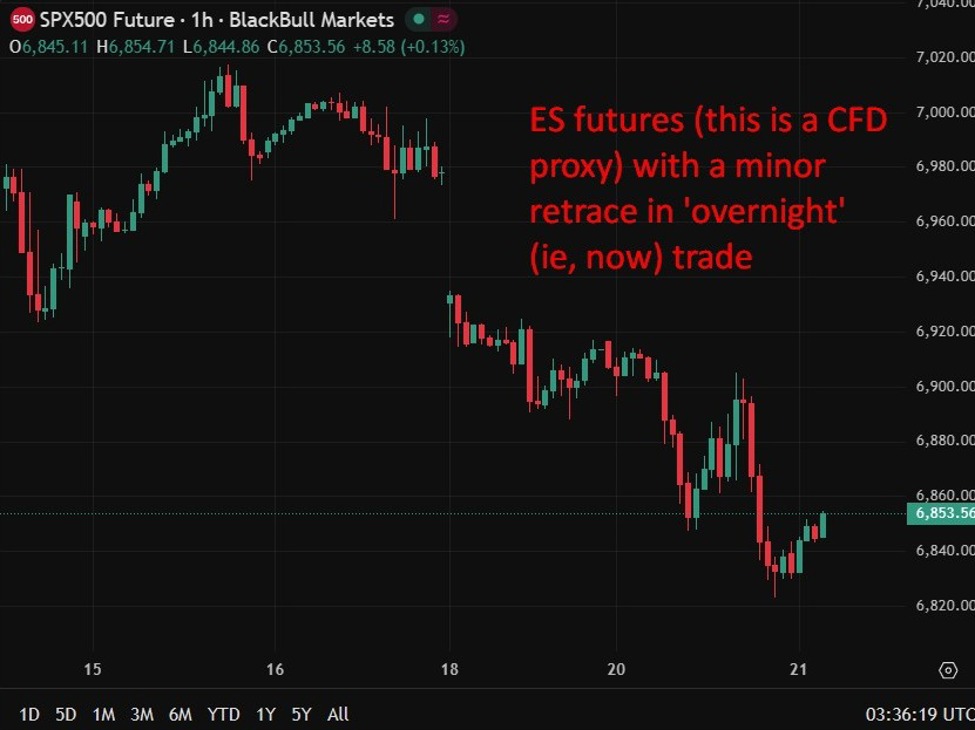
Risk-off Tuesday hit US assets, raising Trump Davos de-escalation probability (TACO, yum!)
A policy-driven “sell America” shock hit stocks, the dollar and volatility gauges on Tuesday, increasing the odds Trump softens his stance in coming days to calm markets. Summary:US stocks suffered their worst session since October, pushing key indexes negative for 2026.VIX spiked toward 21 as investors scrambled for protection.Dollar weakened and gold hit fresh records, consistent with a “sell America” pulse.Markets reacted to escalating foreign-policy risks tied to Greenland and Europe.Trump’s Davos appearance and talks with European leaders create scope for a tactical de-escalation.Markets on Tuesday delivered a clear “sell America” signal as investors recoiled from escalating foreign-policy risk out of Washington, with US equities, the dollar and Treasuries all moving in ways that suggested a sudden rise in risk premia tied to policy uncertainty.All three major US equity benchmarks posted their steepest declines since October, dragging the S&P 500 and Nasdaq Composite into negative territory for 2026. The S&P 500 fell 2.06%, the Dow dropped 1.76% and the Nasdaq slid 2.39%. Volatility also jumped, with the VIX rising toward the 21 level, a sign that investors rushed to buy protection as confidence wobbled.At the same time, the dollar weakened and gold surged to fresh records, reinforcing the sense that markets were seeking safety from policy-driven uncertainty. Bond yields also rose, consistent with investors demanding more compensation for holding longer-duration US assets amid an increasingly unsettled macro and political backdrop.The catalyst was an intensifying geopolitical narrative around President Donald Trump’s Greenland ambitions and the risk of a broader standoff with Europe. Trump is due to speak in Davos on Wednesday and said he had agreed to talk with European leaders at the World Economic Forum, a move that may provide an off-ramp.That matters because sharp market drawdowns often act as a constraint on the White House’s negotiating posture. If the administration’s strategy is perceived as pushing markets toward tighter financial conditions, lower equities, higher yields, a weaker dollar, it can quickly become self-defeating. This is the core of the “TACO” case: after markets deliver a visible penalty for heightened confrontation, the incentives shift toward de-escalation, reframing, or a tactical backdown to stabilise conditions.In the days ahead, investors will watch whether Trump uses Davos to soften his tone, emphasise deal-making, or signal a willingness to find “common ground” with Europe. Even limited messaging shifts can damp volatility, especially if markets have already priced a worst-case path. If rhetoric cools and risk appetite returns, Tuesday’s “sell America” burst may prove more of a pressure-release event than the start of a sustained trend. Trump is scheduled to deliver a special address at the World Economic Forum in Davos on January 21, 2026, from 13:30–14:15 GMT. This article was written by Eamonn Sheridan at investinglive.com. 🔗 Source 💡 DMK Insight Stocks just had their worst day since October, and here’s why that matters: volatility is back on the table. The recent sell-off, driven by policy concerns, has sent the VIX soaring toward 21, signaling heightened fear among investors. This spike indicates that traders are actively seeking hedges against potential further declines, which could lead to more erratic price movements in the short term. With key US indexes now negative for 2026, the market’s sentiment is fragile, and any hint of policy reversal from Trump could trigger a rebound. But don’t be fooled—this isn’t just about a potential bounce; it’s also about the dollar’s weakness, which could impact forex pairs heavily tied to USD. Traders should watch for any statements from Trump that could shift sentiment, as well as key technical levels on the S&P 500 around recent lows. Keep an eye on the VIX; if it holds above 20, expect continued volatility. Conversely, if it dips back below, that might signal a stabilization phase. The real story is how these developments could ripple through related markets, particularly commodities and emerging markets, which often react to shifts in US dollar strength. 📮 Takeaway Watch for Trump’s comments in the coming days; a shift in tone could stabilize markets, while VIX above 20 signals ongoing volatility.
Air Force 1 has had to return to the US soon after leaving due to a fault
The aircraft (AF1) carrying President Trump to the World Economic Forum in Davos changed course sharply off the East Coast and is tracking back toward Joint Base Andrews. White House says minor electrical fault.White House said “minor electrical issue”.Trump will board a different aircraft and continue on to Switzerland.Another u-turn coming in Davos? This article was written by Eamonn Sheridan at investinglive.com. 🔗 Source 💡 DMK Insight Trump’s aircraft detour could signal volatility in geopolitical sentiment, impacting markets. While the White House downplays the incident as a ‘minor electrical issue,’ the optics matter. Traders should watch for any market reactions, especially in sectors sensitive to political developments, like defense or energy. If this incident leads to increased scrutiny on Trump’s policies or actions at the World Economic Forum, we might see a ripple effect across related assets. Keep an eye on the S&P 500 and oil prices, as shifts in sentiment could lead to short-term volatility. Also, consider monitoring the VIX for spikes in market fear, which often correlate with geopolitical tensions. On the flip side, if the situation resolves quickly without further incident, markets might stabilize, presenting a buying opportunity for risk-on assets. Watch for any statements from Trump or the White House that could clarify the situation and influence market sentiment. 📮 Takeaway Monitor the S&P 500 and VIX for volatility signals following Trump’s aircraft incident; geopolitical tensions can shift market sentiment quickly.
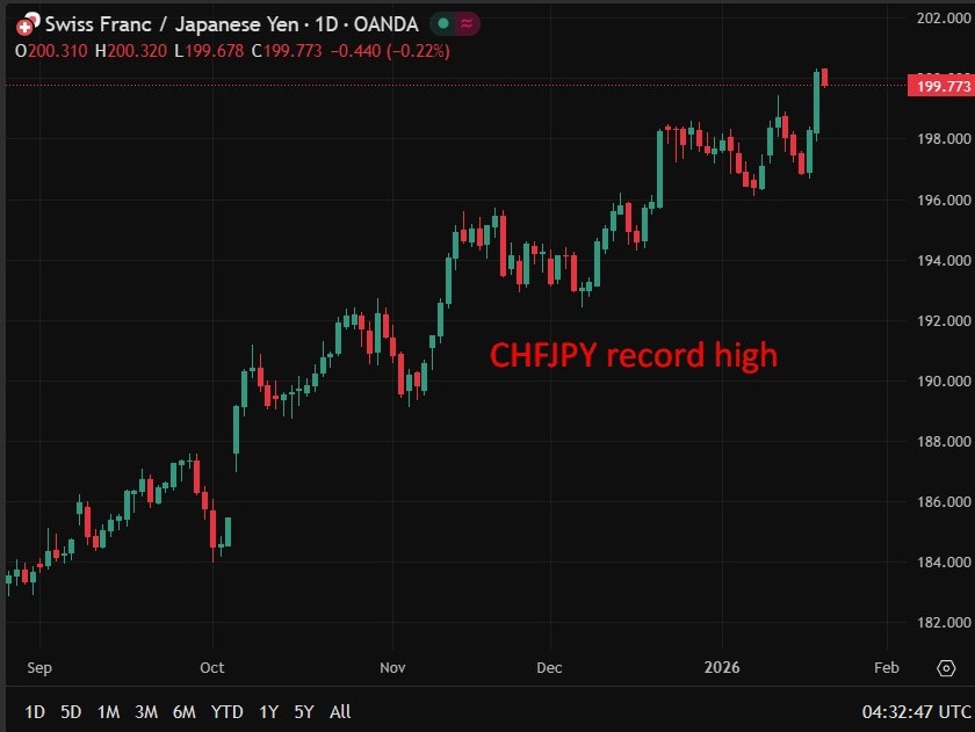
investingLive Asia-Pacific FX news wrap: CHF/JPY trades to a record high
Air Force 1 has had to return to the US soon after leaving due to a faultRisk-off Tuesday hit US assets, raising Trump Davos de-escalation probability (TACO, yum!)South Korea warns US chip tariffs would push up prices for US consumers (d’uh)PBOC sets firm yuan fix to slow gains despite weak dollar (leans against yuan rally)Japan opposition urges bond buybacks as JGB volatility intensifiesJGB sell-off jars global rates as election fiscal fears flare, but some respite today(ICYMI) China outlines 2026-30 plan to lift consumption, shift focus to servicesSouth Korea sees won strengthening as Lee flags FX limitsPBOC sets USD/ CNY mid-point today at 7.0014 (vs. estimate at 6.9578)Barclays warns Greenland tensions pose greater risk to euro than dollarNew Zealand’s prime minister Luxon said elections will be held on Saturday November 7Berkshire signals potential exit from Kraft Heinz stake after write-downs(ICYMI)Goldman forecasts 11% global equity returns as bull market broadens, Earnings driveGuggenheim warns US asset returns to soften in 2026: US bonds, equities face lower returnsFed seen on hold in January, then cutting twice this year. USD to dip before H2 rebound.US to cut NATO command roles as alliance tensions intensifyNetflix flags margin pressure despite Q4 beat as content spending risesinvestingLive Americas market news wrap: US stock markets battered, yields riseAt a glance:Asia trade was subdued after Tuesday’s US volatility, with little fresh direction.Regional equities tracked Wall Street lower, but selling pressure eased.Japanese government bonds recovered modestly, helping stabilise sentiment.News flow was light, with policy signals largely incremental rather than market-moving.FX moves were contained, though CHF/JPY pushed to a fresh record high above 200.After a volatile US session on Tuesday, markets across the Asia-Pacific region experienced relatively quiet and directionless trade, with limited fresh catalysts to drive price action. Regional equities opened under pressure in response to Wall Street’s sharp sell-off, but the mood stabilised as the session progressed.A key calming factor was a modest recovery in Japanese Government Bonds. After heavy selling earlier in the week pushed long-end yields sharply higher, JGBs managed to claw back some lost ground, helping to ease fears of further spillovers into global rates markets. The pullback in yields was viewed as a stabilising influence for regional assets, particularly given Japan’s outsized role in global capital flows and carry trade dynamics.News flow was thin and largely non-market-moving. In the US, Donald Trump signed an executive order outlining steps to limit large institutional investors from buying single-family homes. The order sets out a consultation process, with the Treasury tasked with defining key terms within a month and federal agencies to explore possible restrictions within 60 days. The move had been telegraphed previously and drew little immediate market reaction.In New Zealand, Christopher Luxon formally called a national election for 7 November, framing the contest around securing a second term and accelerating economic growth. The announcement provided political certainty but had no discernible impact on markets.In China, the People’s Bank of China again leaned against rapid yuan appreciation, setting the daily reference rate at 7.0014 per dollar despite broad US dollar softness. The fixing, well weaker (for CNY) than market estimates, reinforced the view that authorities are managing the pace of gains rather than attempting to reverse the trend.South Korea’s president also reiterated that FX markets are driven by supply and demand, noting limited scope for direct stabilisation measures and flagging expectations for the won to strengthen toward the 1,400 level in coming months.Elsewhere, attention briefly turned to news that Air Force One, carrying Trump to Davos, returned to Joint Base Andrews due to a minor electrical issue, with the White House saying travel would continue on a replacement aircraft.In FX, CHF/JPY extended its relentless climb, printing a fresh record above 200, a reminder that structural safe-haven flows remain a dominant theme beneath an otherwise quiet session.Gold continued to shine, above US$4860 and also to a record high. Asia-Pac stocks:Japan (Nikkei 225) -0.64%Hong Kong (Hang Seng) -0.15% Shanghai Composite +0.16%Australia (S&P/ASX 200) -0.39%Trump is scheduled to deliver a special address at the World Economic Forum in Davos on January 21, 2026, from 13:30–14:15 GMT. This article was written by Eamonn Sheridan at investinglive.com. 🔗 Source

Trump back en route to Davos after "minor electrical issue" with Air Force One
From earlier: Air Force 1 has had to return to the US soon after leaving due to a faultPlane issues and air safety incidents involving the US president is quite rare. And the White House is chalking this one up to a “minor electrical issue”. That caused Air Force One to turn back with the plane landing safely at Joint Base Andrews near Washington.Trump and his entourage has now changed planes a smaller Boeing 757 that departed just after midnight local time (0500 GMT).He is expected to land in Davos later with a series of meetings scheduled until tomorrow. His main speech at the event will be later today at 1330 GMT. So, be sure to at least mark that down in your calendars. This article was written by Justin Low at investinglive.com. 🔗 Source
Japan's Rengo says the environment for wage talks this year is not so bad
Tomoko Yoshino is the chair of Japan’s largest trade union group, Rengo, and she’s offering up some remarks on the situation ahead of the spring wage negotiations this year. Much like Takaichi, she is also the first female chief in the organisation’s history.For some context, Rengo’s estimated wage hikes are typically a bellwether for how the overall shuntō is going to play out in March. It was reported previously that they are aiming for wage hikes of at least 5% or more for the fiscal year 2026. They demanded 6% for the current fiscal year 2025 but in the end, that figure was watered down to 5.25%. That said, it was still the biggest hike in 34 years.Yoshino comments that the environment for this year’s wage talks has “not been so bad”. Adding that the trade union group is also closely monitoring the Japanese yen exchange rate. For the moment, she believes that a weaker yen is accelerating inflation but expects the government to steer economic policies to stabilise prices, forex.Circling back to Rengo’s demand for this year, the 5% ask includes more than 3% of base pay hikes – a key barometer of wage strength as they determine wage curves that provide the basis of bonuses, severance and pensions. There is a separate target for smaller firms, which typically sees higher wages, with that ask at 6% to narrow the income gap with workers at large firms.Given the balance between the two and how negotiations tend to water down the initial estimate, the average wage hike could fall somewhere between 4.50% to 4.80%; that is if things do even go well.With inflation being more persistent in recent years, Japan’s real wage growth remains in mostly negative territory and that is at least providing an impetus for Rengo to push for more sustained and broader wage increases. This article was written by Justin Low at investinglive.com. 🔗 Source 💡 DMK Insight Wage negotiations in Japan are heating up, and here’s why that matters for traders: rising wages could signal inflationary pressures, impacting monetary policy and currency strength. As Rengo’s chair, Tomoko Yoshino’s comments on wage hikes will be closely watched, especially as Japan grapples with its long-standing deflationary environment. If wage increases are substantial, it could lead to a shift in the Bank of Japan’s (BoJ) stance on interest rates, which have been ultra-low for years. Traders should keep an eye on the USD/JPY pair, as any hints of tightening could strengthen the yen against the dollar. Additionally, sectors sensitive to consumer spending, like retail and services, might react positively to higher wages, making them potential plays in this scenario. On the flip side, if negotiations fall flat or wage increases are minimal, it could reinforce the BoJ’s accommodative policies, leading to further yen weakness. Watch for any announcements from Rengo and the BoJ in the coming weeks, as they could set the tone for market sentiment and trading strategies. 📮 Takeaway Monitor Rengo’s wage negotiations closely; significant hikes could strengthen the yen and impact USD/JPY trading strategies.
Japanese bond yields come off the boil for the time being
In case you missed out on this, it’s not just all about Trump and his shenanigans this week:Japan bond yields continue to surge higher on the weekThis is the scariest chart I’ve seen in yearsJGB sell-off jars global rates as election fiscal fears flare, but some respite todayJapan opposition urges bond buybacks as JGB volatility intensifiesOne of the most important developments right now is what is happening with the Japanese bond market. The Takaichi fallout continues as Japan bond yields surged with a steepening of the curve. 40-year yields hit the 4% mark for the first time ever and 30-year yields were not too far away from crossing that line yesterday.The selloff this week has been rather intense. If you wind back the clock, to think about a 40 bps range for Japanese yields might be something that could be fit into a yearly range or longer. In the present case, it’s what we’re seeing with a weekly range instead. Wild.Now, the bond rout this week is finding a bit of respite today. 30-year yields are down some 20 bps to 3.71% currently. And while that seems like a sizable move, yields in that tenure are still up 22 bps this week alone after accounting for today’s slide.Policymakers in Tokyo will have to try and figure out what to do soon, as markets don’t appear to be letting up in the big picture. The relief today doesn’t hint at one that might be sustainable, that especially since the fundamentals driving the move have not changed whatsoever in the past 24 hours.The Takaichi trade is still very much alive with market players anticipating her to consolidate power after calling for a snap election for 8 February. From before:The dam that has been holding back the risks involving Japan’s ballooning fiscal and debt position is breaking. And alongside the dollar falling out of favour, this is another key reason pushing traders and investors to lean towards the likes of gold in such a time. This article was written by Justin Low at investinglive.com. 🔗 Source 💡 DMK Insight Japan’s bond yields are spiking, and here’s why that matters: rising yields can trigger global market volatility. The surge in Japanese Government Bond (JGB) yields reflects growing concerns over fiscal policy and potential election outcomes. As yields rise, borrowing costs increase, which could lead to tighter financial conditions globally. Traders should keep an eye on how this impacts other markets, particularly U.S. Treasuries and equities, as correlations often tighten during such shifts. If JGB yields continue to rise, we might see a sell-off in risk assets, especially if investors start to reassess their risk appetite. It’s also worth noting that the market’s reaction to these yields could be exaggerated by the current geopolitical climate, including Trump’s ongoing influence. Watch for key levels in the U.S. 10-year yield; a break above recent highs could signal a broader shift in sentiment. Keep an eye on economic indicators from Japan and the U.S. that could further influence these trends. 📮 Takeaway Monitor JGB yields closely; a sustained rise could lead to increased volatility in U.S. Treasuries and equities, especially if they break key resistance levels.
UK December CPI +3.4% vs +3.3% y/y expected
Prior +3.2%Core CPI +3.2% vs +3.3% y/y expectedPrior +3.2%Stubborn, stubborn inflation. Headline annual inflation nudged higher in December, driven partly by higher tobacco prices. That comes after the recently-introduced excise duty increases on that front. But adding to that, airfares also saw prices rising more than a year ago – which is largely due to the Christmas holiday period.But overall, prices in general remain sticky and stubborn and that is even more evident in the core estimates.Core annual inflation remains unchanged to end the year at 3.2%. The breakdown even shows a marginal increase in both goods inflation (up to 2.2% from 2.1% previously) and services inflation (up to 4.5% from 4.4% previously). The latter of course remains the most troubling spot and is something the BOE won’t be able to take much comfort in.As things stand, it doesn’t look like were anywhere near the next rate cut. A softening labour market picture will add to potential stagflation risks this year but for now at least, the overall economic picture is still relatively resilient. This article was written by Justin Low at investinglive.com. 🔗 Source 💡 DMK Insight Inflation’s stubborn persistence is raising eyebrows, and here’s why it matters for traders right now: With Core CPI holding steady at 3.2%, just shy of the 3.3% forecast, traders should brace for potential volatility in both forex and crypto markets. This inflation data suggests that the Fed might maintain its hawkish stance longer than anticipated, which could impact interest rates and, consequently, the USD’s strength. If inflation continues to defy expectations, we could see a stronger dollar, which typically pressures crypto prices. Keep an eye on correlated assets like Bitcoin, which often reacts to shifts in macroeconomic indicators. The immediate focus should be on how these inflation figures influence the Fed’s next moves, especially as we approach key meetings in the coming months. Watch for any breakout or breakdown around significant technical levels in the crypto space, particularly if Bitcoin approaches its recent highs or lows. Here’s the thing: while some may argue that inflation is peaking, the consistent rise in prices like airfares indicates underlying pressures that could keep the Fed on high alert. Traders should monitor the market’s reaction closely, especially around the next CPI release, as it could set the tone for the rest of the quarter. 📮 Takeaway Watch for how inflation data impacts the Fed’s decisions; a stronger dollar could pressure crypto prices, especially if Bitcoin tests key support levels.
FX option expiries for 21 January 10am New York cut
There are just a couple to take note of on the day, as highlighted in bold below.That being for USD/JPY at around the 158.00 and 158.50 levels. The pair continues to seem to be content to weave in and out around the 158.00 mark, that as traders continue to flirt with further upside potential while being wary of intervention risks from Tokyo.As such, I wouldn’t attach too much significance to the expiries as trading sentiment revolves more around the look and feel of headline risks (verbal intervention and what not) for the most part.For the time being, it seems like Tokyo officials have done enough to limit the damage. However, the fact that the Japanese yen can’t get off the floor despite a faltering dollar and negative risk mood says a lot about the currency’s plight at the moment.The expiries at the figure level could still play a part in holding price action on the day. But as mentioned above, it’s all about watching for any talk from government officials and weighing that up against the market mood as well as parabolic surge in Japan government bond yields – which are seen cooling slightly today.That is the more important detail for USD/JPY at this point in time, alongside dollar sentiment in general. The focus on that shifts towards Trump’s appearance and meetings in Davos next.For more information on how to use this data, you may refer to this post here.Head on over to investingLive (formerly ForexLive) to get in on the know! This article was written by Justin Low at investinglive.com. 🔗 Source 💡 DMK Insight USD/JPY is hovering around 158.00, and here’s why that matters right now: This level is crucial as it reflects traders’ indecision in a volatile environment. With the pair oscillating around 158.00 and 158.50, it indicates a potential consolidation phase. If we see a breakout above 158.50, that could trigger bullish momentum, possibly targeting the next resistance level. Conversely, a drop below 158.00 might signal a bearish reversal, leading to increased selling pressure. Traders should keep an eye on the daily chart for any signs of a breakout or breakdown, as these levels could set the tone for the next few sessions. Also, consider how this impacts correlated markets, like the Japanese yen against other currencies. If USD/JPY breaks out, it could strengthen the dollar across the board, affecting pairs like EUR/USD and GBP/USD. Watch for any economic data releases or geopolitical events that could influence market sentiment, as these could lead to sudden volatility around these key levels. 📮 Takeaway Watch USD/JPY closely; a breakout above 158.50 could signal bullish momentum, while a drop below 158.00 may lead to bearish pressure.
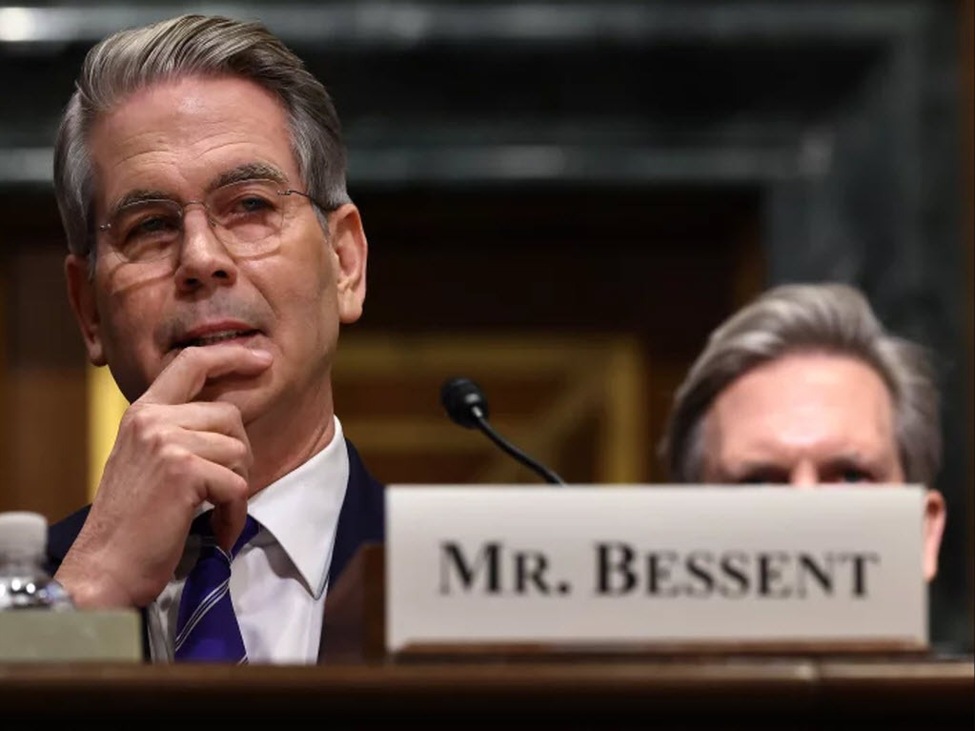
Bessent says not concerned at all about any Treasuries selloff over Greenland
US is the premier destination for global capitalUS trade deficit is narrowing with an unprecedented paceFree trade should be fair trade, rebalancing must continueFrustrated with the Fed for refusing to do an internal investigationAsking European allies to understand that Greenland needs to be part of the US”Why don’t European countries sit down and wait for president Trump to address them”His comments cover a range of topics here but as we know, it’s from the perspective of a Trump loyalist. The headline remark should be one directed in response to the Danish pension fund selling off roughly $100 million in Treasuries. It is one that the fund itself claims to be not related to the Greenland situation and more so because of “poor US government finances”.It’s a bit of a warning signal perhaps. $100 million is a drop in the bucket for a fund that holds a total of $25.7 billion in assets. So for now, it isn’t going to be that impactful on market sentiment.In any case, there are many reasons for countries to diversify their current financial positions. And to be fair, it’s not just isolated to it being a step away from US assets alone. The de-dollarisation and currency debasement push is what is keeping precious metals the preferred choice for investors right now.In any case, Trump will be about three hours late to Davos today after an issue with Air Force One earlier. That forced the US president to switch planes to make the trip, where he is expected to deliver his special address at 1330 GMT later today. So, definitely be on the lookout for that one.But in the coming two days, any meetings with European leaders and his usual Truth Social posts will be pivotal in trying to get a feel of the whole Greenland situation. And of course, the tariffs threat that is being pushed on European countries. This article was written by Justin Low at investinglive.com. 🔗 Source 💡 DMK Insight The US trade deficit is narrowing rapidly, and here’s why that matters: a stronger trade balance can boost the dollar’s value, impacting forex and crypto markets. As the US positions itself as a premier destination for global capital, traders should keep an eye on how this affects dollar-denominated assets. A narrowing deficit could lead to a stronger dollar, which typically puts downward pressure on commodities and cryptocurrencies priced in USD. But there’s more to consider—frustration with the Fed’s lack of internal investigation could signal a shift in monetary policy, which might lead to increased volatility in both forex and crypto markets. If the Fed reacts to these pressures, we could see significant moves in the dollar and related assets. Traders should monitor key levels in the dollar index and watch for any shifts in sentiment around the Fed’s next moves. In the coming weeks, keep an eye on the trade balance reports and any Fed commentary, as these could provide actionable insights for positioning in both forex and crypto markets. 📮 Takeaway Watch the US trade balance reports closely; a stronger dollar could impact crypto and forex positions significantly.