
 Bitcoin
  Ethereum
  Tether
  BNB
BNB  XRP
XRP  USDC
USDC  Solana
  TRON
TRON  Lido Staked Ether
  Figure Heloc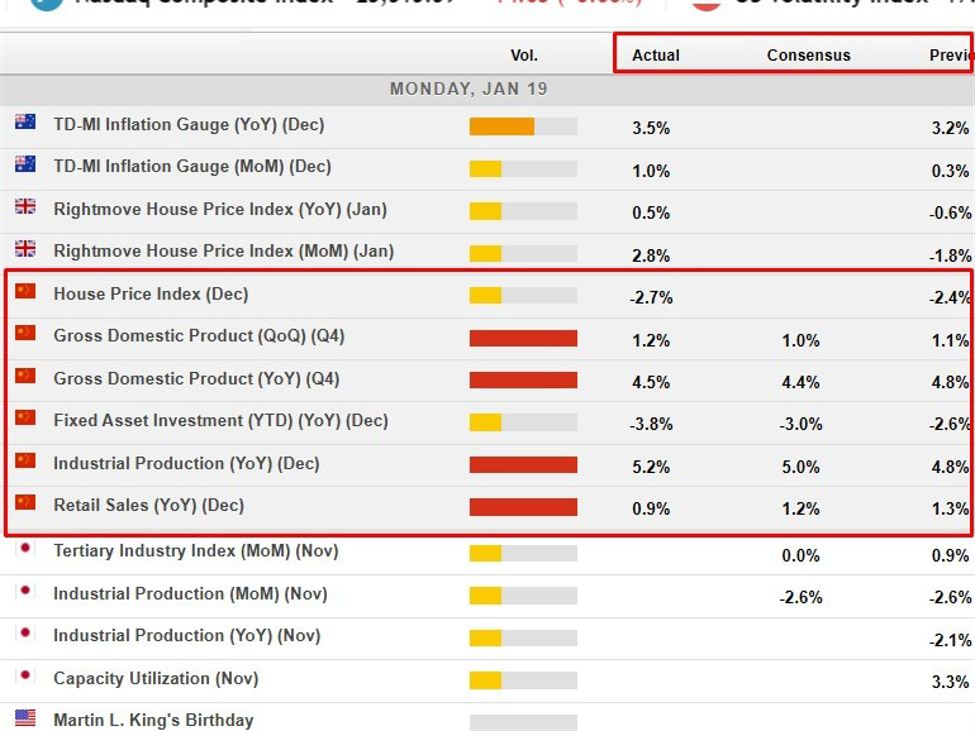
I popped up the data earlier:China data: Q4 GDP 4.5% y/y (expected 4.4%), Dec retail sales +0.9% y/y (expected 1.2%)See the screenshot above for the short summary of the main headline data points. Follow up on the GDP data is here:China Q4 GDP slows to three-year low despite hitting 2025 growth targetTurning to the December data, it showed factory strength masking weak consumption and investment, highlighting an uneven recovery heading into 2026.Summary:Industrial output accelerates, retail sales disappointInvestment contracts for first time in decadesProperty downturn continues to weigh on confidenceEmployment steady despite weak demandPolicy support ramps up amid global risksChina’s latest activity data highlight an increasingly unbalanced recovery, with industrial output gaining momentum in December while consumer spending and investment continue to underperform, underscoring the challenges facing policymakers in 2026.Official figures from the National Bureau of Statistics showed industrial production rose 5.2% year-on-year in December, accelerating from 4.8% in November as manufacturing activity benefited from resilient export demand. In contrast, retail sales grew just 0.9%, slowing from 1.3% the previous month and undershooting market expectations, pointing to persistent weakness in household spending.The investment picture remains even more fragile. Fixed asset investment fell 3.8% in 2025, marking its first annual contraction since 1998, while property investment slumped 17.2%, reflecting the prolonged downturn in the real estate sector. Falling home prices have continued to erode household wealth, compounding the drag on consumption and confidence.Despite subdued demand, labour market conditions have remained relatively stable. The nationwide urban survey-based unemployment rate held steady at 5.1% in December, unchanged from November, suggesting that weakness in spending has yet to translate into broad-based job losses.Looking ahead, the outlook is complicated by rising global trade protectionism and uncertainty around U.S. policy. President Donald Trump has threatened to impose 25% tariffs on countries trading with Iran, adding to external risks for China’s export sector.Policymakers have moved to provide early support. The People’s Bank of China last week cut sector-specific lending rates and signalled scope for further reductions in banks’ reserve requirements and broader policy rates. Fiscal policy is also set to play a larger role, with Chinese leaders pledging a “proactive” stance this year and analysts expecting Beijing to target growth of around 5% again.Structural challenges remain unresolved. Household consumption accounts for less than 40% of GDP, well below global norms. Institutions such as the World Bank and the International Monetary Fund have long urged China to rebalance toward consumption-led growth, warning that reliance on investment and exports poses longer-term risks unless income growth and social safety nets are strengthened. This article was written by Eamonn Sheridan at investinglive.com. 🔗 Source 💡 DMK Insight China’s Q4 GDP growth at 4.5% might seem like a win, but the devil’s in the details: retail sales missed expectations, signaling potential consumer weakness. For traders, this divergence could impact commodities and currencies tied to Chinese demand. A slowdown in consumer spending, reflected in the 0.9% retail sales growth versus the expected 1.2%, raises concerns about the sustainability of China’s recovery. If this trend continues, we could see pressure on the Chinese yuan and commodities like copper, which are sensitive to Chinese economic health. Watch for how these figures influence market sentiment in the coming weeks, especially as we approach key economic indicators like the upcoming PBOC policy meeting. If the yuan weakens further, it could create ripple effects across global markets, particularly in emerging markets that rely on Chinese trade. Traders should keep an eye on the 4.5% GDP growth as a potential resistance level for the yuan, while also monitoring retail sales data for signs of consumer recovery or further decline. 📮 Takeaway Watch for the yuan’s reaction to China’s GDP and retail sales data; a sustained weakness could signal broader market implications, especially for commodities and emerging markets.

South Korea banks signal modest credit easing as debt curbs persist
South Korean banks are edging toward easier credit in early 2026, but tight household debt controls keep the shift cautious.Summary:Banks’ lending sentiment turns positive for first time in a yearMortgage and corporate lending conditions ease modestlyHousehold debt controls remain firmly in placePotential support for KOSPI financials and cyclicalsWon impact likely secondary to global factorsSouth Korean banks are signalling a tentative shift toward easier lending conditions in early 2026, even as authorities continue to clamp down on household borrowing, according to a central bank survey released Monday.A quarterly survey by the Bank of Korea showed the index tracking banks’ lending attitudes rose sharply to 8 for the January–March period, from -21 in the final quarter of 2025. A positive reading indicates that more lenders plan to ease credit standards rather than tighten them, marking the first time sentiment has turned positive since early 2025.The improvement was broad-based. Banks’ appetite for home mortgage lending rebounded, with the index rising to 6 from -44, while lending sentiment toward large corporates and small- and mid-sized enterprises stood at 6 and 11, respectively. Bank officials expect housing-related loan demand to edge higher, supported by home purchases and demand for lease financing, while credit conditions for businesses remain generally accommodative despite lingering risks among smaller firms.The cautious easing comes against a backdrop of continued regulatory pressure. The government has rolled out targeted restrictions on home purchases and borrowing in the greater Seoul area as part of efforts to cool an overheated property market and contain household debt levels. Those measures are expected to limit the pace of credit expansion even as banks grow marginally more willing to lend.From a market perspective, the shift has mixed implications. A gradual easing of credit conditions could support domestic growth expectations and provide a modest tailwind for South Korean equities, particularly financials and cyclically exposed stocks within the KOSPI. Improved loan growth prospects may help stabilise bank earnings after a period of regulatory-driven caution.For the won, the impact is more nuanced. Easier domestic credit could underpin growth-sensitive sentiment, but ongoing efforts to restrain household leverage and a still-cautious policy stance from the central bank suggest limited downside pressure. Currency moves are likely to remain driven primarily by global risk appetite, U.S. rate expectations and regional capital flows rather than domestic credit dynamics alone.Overall, the survey points to a carefully calibrated shift rather than a full pivot, with policymakers and banks alike seeking to balance growth support against financial stability risks. This article was written by Eamonn Sheridan at investinglive.com. 🔗 Source 💡 DMK Insight South Korean banks are finally showing signs of easing credit, but here’s why traders should tread carefully: The shift in lending sentiment is a positive development, marking the first time in a year that banks are loosening their grip on credit. This could provide a much-needed boost to the KOSPI, particularly for financials and cyclical sectors that thrive on increased borrowing. However, the ongoing tight household debt controls suggest that this easing won’t be a free-for-all. Traders should keep an eye on how these controls impact consumer spending and corporate investments, as they could limit the overall effectiveness of the credit easing. Moreover, the South Korean won may experience volatility as market participants react to these changes. If the won strengthens, it could dampen export competitiveness, which is crucial for the economy. Watch for key indicators like mortgage rates and corporate borrowing levels in the coming months, as they will provide insight into the sustainability of this credit easing. The real story is whether this cautious optimism translates into tangible growth or if it’s just a temporary blip. 📮 Takeaway Monitor mortgage rates and corporate borrowing levels closely; any significant shifts could impact KOSPI performance and the won’s strength in early 2026.
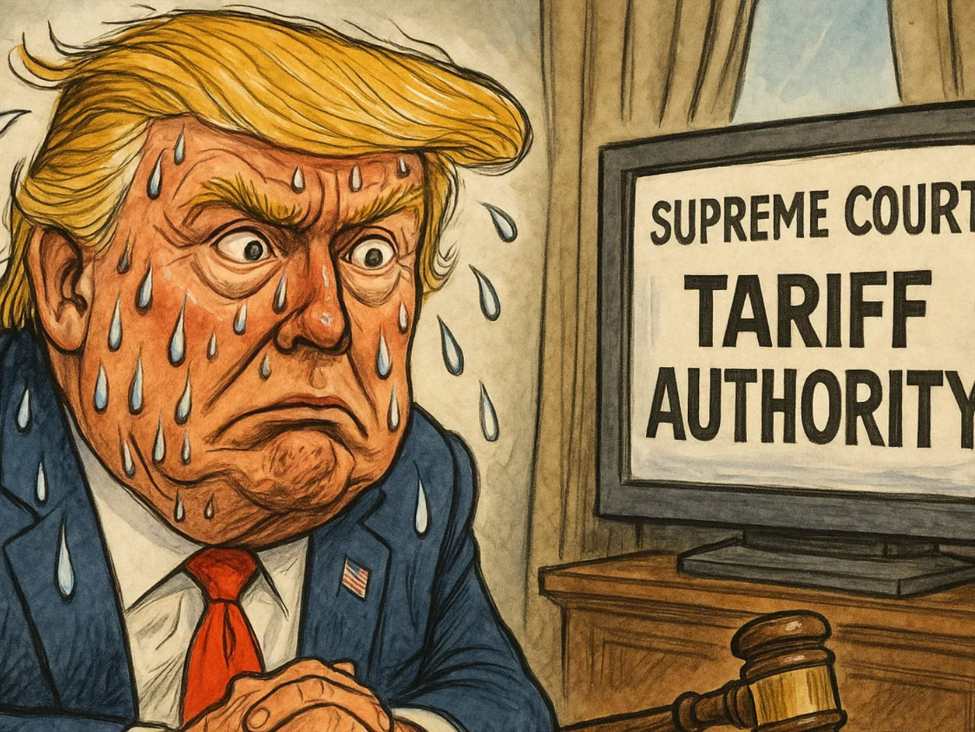
Trump on Greenland, the bluster continues: says "now is the time, it will be done"
The latest post from Trump on his social media app:NATO has been telling Denmark, for 20 years, that “you have to get the Russian threat away from Greenland.” Unfortunately, Denmark has been unable to do anything about it. Now it is time, and it will be done!!! President Donald J. Trump The threats and bluster continue. Greenland, Denmark, the EU, indeed the rest of the world are against Trump’s invasion plans.Earlier:Monday open indicative forex prices, 19 Jan 2026. ‘Risk’ lower on Trump’s latest trade warEU calls emergency summit as Trump escalates Greenland tariff threat. Euro a little lower.US stock markets have fallen after Trump’s extra tariffs announcement over the weekendGold has hit a record high after Trump’s extra tariff plan announced over the weekendAs posted earlier, ICYMI:The European Union is moving toward an emergency leaders’ summit as U.S. President Donald Trump escalates trade pressure on European allies over Greenland, threatening a new wave of tariffs unless Washington is allowed to purchase the territory.European Council President Antonio Costa said he would convene an extraordinary EU summit in the coming days, following consultations that showed strong unity among member states in support of Denmark and Greenland. An EU official said the meeting is likely to take place in person on Thursday, January 22.In a statement, Costa said EU leaders were prepared to defend the bloc against “any form of coercion” while continuing to engage constructively with the United States. The move underlines growing concern in Brussels that the dispute risks morphing into a broader transatlantic trade confrontation.The escalation comes after Trump announced that Denmark, Norway, Sweden, France, Germany, the United Kingdom, the Netherlands and Finland would face a 10% tariff from February 1, rising to 25% from June 1, unless the U.S. is permitted to buy Greenland. The tariffs are framed by Washington as a response to security and strategic interests in the Arctic.Separately, an EU diplomat told Reuters that a suspended package of retaliatory tariffs worth €93 billion on U.S. goods will automatically come back into force on February 6 if no agreement is reached. The measures were shelved last August for six months after Brussels and Washington struck a temporary trade deal, but that accord is now in jeopardy.The political pushback has widened beyond the EU. UK Prime Minister Keir Starmer told Trump that imposing tariffs on allies over Greenland was “wrong,” arguing that security in the High North is a shared priority for NATO allies. Starmer held calls with Danish Prime Minister Mette Frederiksen, European Commission President Ursula von der Leyen, and NATO Secretary General Mark Rutte before speaking with the U.S. president.The dispute places fresh strain on transatlantic relations, with markets now watching whether the EU summit can de-escalate the confrontation before automatic tariffs on both sides come into force in early February.The Greenland dispute injects fresh geopolitical risk into EU–U.S. relations, raising the probability of near-term tariff escalation and adding downside risk to European trade sentiment into February. This article was written by Eamonn Sheridan at investinglive.com. 🔗 Source 💡 DMK Insight Trump’s recent comments about NATO and Denmark signal potential geopolitical tensions that could ripple through markets. When a former president makes bold statements regarding international relations, it raises concerns about stability in regions like Greenland, which is strategically important due to its resources and location. Traders should be aware that heightened tensions can lead to volatility in related assets, particularly in energy markets, as geopolitical risks often drive oil and gas prices. If Denmark feels pressured to act, we could see shifts in trade dynamics, impacting currencies tied to these economies. On the flip side, mainstream coverage might overlook how these comments could affect investor sentiment towards defense stocks or commodities. Keep an eye on the USD/DKK exchange rate for signs of market reaction, especially if Denmark’s government responds to Trump’s statements. Watch for any announcements or actions in the coming weeks that could escalate or de-escalate the situation, as these will likely influence market movements significantly. 📮 Takeaway Monitor the USD/DKK exchange rate and energy market reactions as geopolitical tensions rise from Trump’s comments on NATO and Denmark.
investingLive Asia-Pacific FX news wrap: Trump threatens tariffs on EU & UK over Greenland
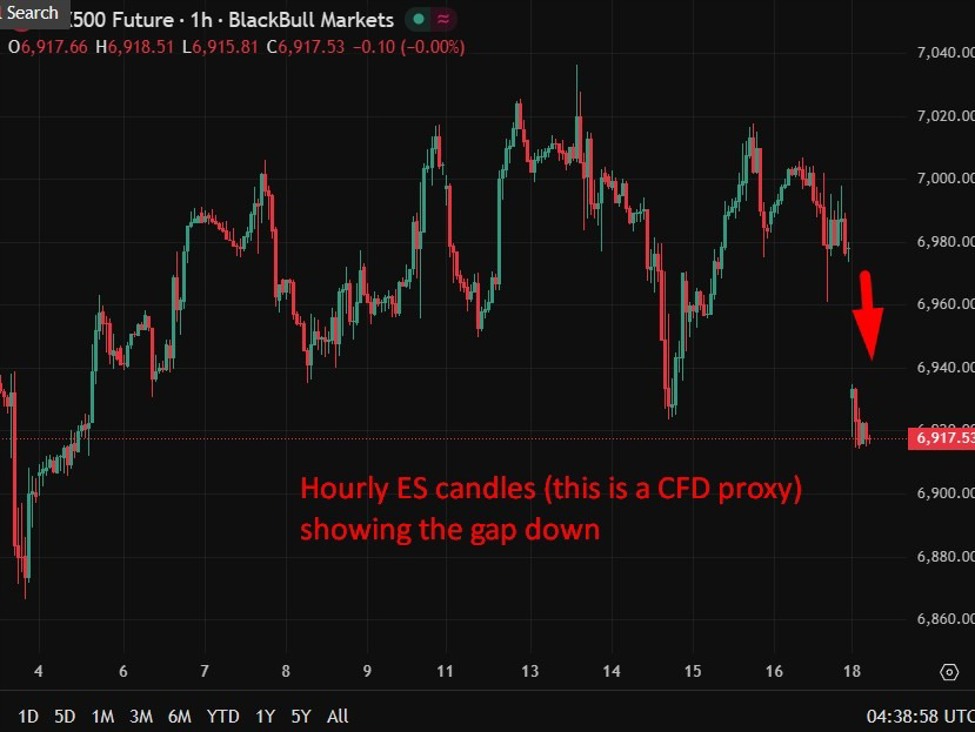
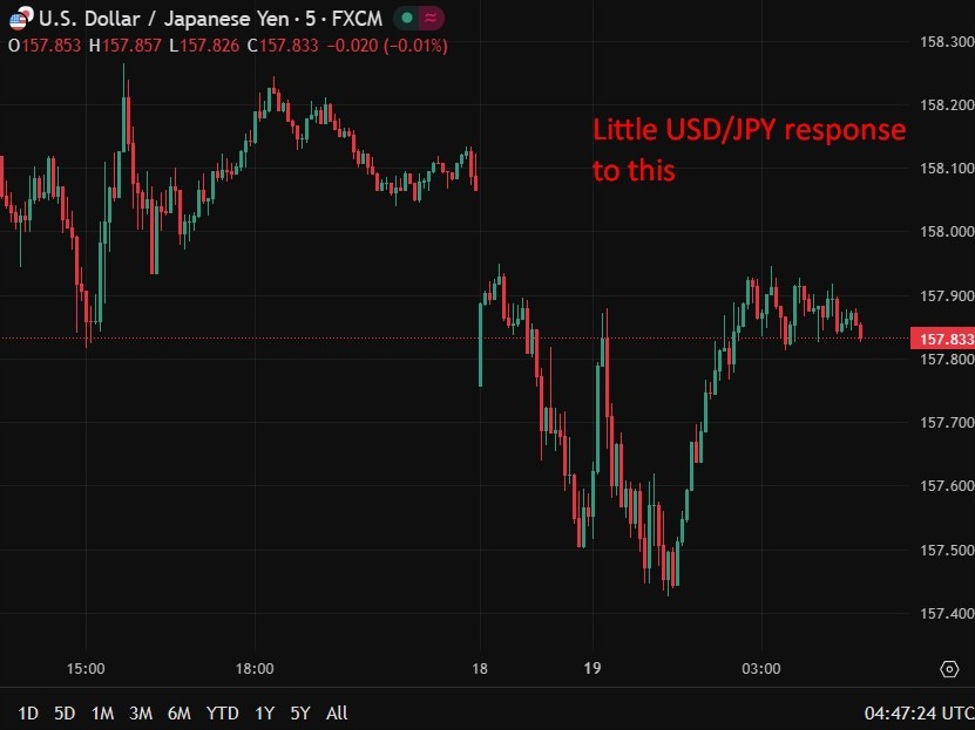
Trump on Greenland, the bluster continues: says “now is the time, it will be done”South Korea banks signal modest credit easing as debt curbs persistChina factory output accelerates as retail sales and investment lag – recapChina Q4 GDP slows to three-year low despite hitting 2025 growth targetChina home prices fall again in December as property downturn persistsChina data: Q4 GDP 4.5% y/y (expected 4.4%), Dec retail sales +0.9% y/y (expected 1.2%)JPY traders heads up, Japan PM Takaichi press conference from 0900GMTChina new home price continued to drop in December 2025.Japan election raises odds of sales tax cut, bond yields jumpPBOC sets USD/ CNY reference rate for today at 7.0051 (vs. estimate at 6.9689)Bitcoin has been slammed lower, back under US$93KUK house asking prices post record seasonal jump, Rightmove saysJapan data: Machine Orders for November: -11.0% m/m (vs. expected -5.1%)Gold has hit a record high after Trump’s extra tariff plan announced over the weekendUS stock markets have fallen after Trump’s extra tariffs announcement over the weekendReminder: US markets closed for holiday today, Martin Luther King Jr. Day January 19 2026Spain – At least 10 people died in high speed train crashEU calls emergency summit as Trump escalates Greenland tariff threat. Euro a little lower.Monday open indicative forex prices, 19 Jan 2026. ‘Risk’ lower on Trump’s latest trade warinvestingLive Americas market news wrap: Trump hints Hassett won’t be Fed pickAt a glance:Trump threatens escalating tariffs on Europe and the UK over Greenland, triggering retaliation plansEarly FX saw USD bid, but EUR, GBP, AUD and NZD fully reversed initial lossesYen outperformed as JGB yields surged on election-linked tax cut speculationUS equity and Treasury futures gapped lower and remained under pressureChina data reinforced uneven growth, property weakness and demographic headwindsBitcoin sold off sharply amid thin and unconvincing narrativesOver the weekend Trump ‘tweeted’ his plan to impose extra tariffs, in his words: Starting on February 1st, 2026, all of the above mentioned countries (Denmark, Norway, Sweden, France, Germany, the United Kingdom, the Netherlands, and Finland) will be charged a 10% tariff on any and all goods sent to the United States. On June 1st, 2026, the tariff will be increased to 25%. This tariff will remain in place until a deal is reached for the complete and total purchase of Greenland.Europe and the UK responded with retaliatory tariff plans of their own, though both signalled a preference for negotiation first.In very early FX trade in the timezone, the USD gained ground against EUR, GBP, AUD, NZD, CAD and others. JPY was the exception, strengthening against the USD following its better performance late last week.The early gap lower in EUR/USD was quickly filled. The pair rebounded sharply from below 1.1580 to highs nudging above 1.1635, with similar V-shaped moves seen in GBP/USD, AUD/USD and NZD/USD. The yen again marched to its own beat, with USD/JPY dipping below 157.50 before rebounding above 157.90. I’ll have more to say on Japan further down.US equity index futures gapped lower on Globex and had not recovered as I post. US 10-year Treasury futures also traded lower. Gold and silver rocketed higher. JapanJapanese machinery orders fell 11% m/m in November, more than double the decline economists had expected.That data, however, was overshadowed by political developments. Japan’s looming election has sharply raised the likelihood of a temporary sales tax cut. Senior ruling party figures said scrapping the 8% food tax for two years is firmly on the table as politicians seek to cushion living costs ahead of a likely February vote.Bond markets reacted aggressively, with 10-year JGB yields hitting their highest levels since 1999 on concerns about fiscal slippage and increased issuance.Japan’s Nikkei fell for a third straight session, weighed down by the machinery orders shock, surging yields, Greenland-related geopolitical tension, and a firmer yen.ChinaChina set today’s USD/CNY fixing at 7.0051, the strongest since May 2023.December data reinforced ongoing stress in the property sector. New home prices fell again, while resale prices recorded their steepest decline in over a year. Developers remain under pressure, with debt talks and defaults continuing to surface.Growth data confirmed the imbalance. Q4 GDP slowed to 4.5% y/y, the weakest pace since the post-Covid reopening, even as full-year growth met the 5% target. Industrial output held up, but retail sales and investment disappointed, underlining weak domestic demand.CryptoBitcoin traded sharply lower. The move was blamed on a delayed US crypto bill, though that news broke mid last week. As ever, I’m more inclined to trust analysts who admit they don’t know the catalyst than those recycling thin narratives.Odds and endsETFs linked to China’s “national team” saw another day of record outflows, adding to signs authorities are trying to cap bubble risksUK productivity data showed tentative signs of improvement, based on alternative measuresIron ore fell for a fifth straight session as China confirmed a sharp drop in steel output and new African supply arrivedChina’s population continued to shrink in 2025, with births falling for a fourth consecutive year to the lowest level on record. The workforce is contracting as the population ages, intensifying long-term pressure on growth and the pension system. Despite subsidies and policy incentives, economists warn the demographic trend is unlikely to reverse. From a global perspective, India may increasingly pick up the slack. Asia-Pac stocks:Japan (Nikkei 225) -0.84%Hong Kong (Hang Seng) -0.99% Shanghai Composite +0.13%Australia (S&P/ASX 200) -0.34%Still to come:Japan PM press conference at 0900 GMT/ 0400 US Eastern timeUS holiday, markets closed Monday This article was written by Eamonn Sheridan at investinglive.com. 🔗 Source 💡 DMK Insight China’s slowing GDP and falling home prices are raising red flags for traders. With Q4 GDP hitting a three-year low, the implications for commodities and global markets are significant. Investors should be wary of how this slowdown could impact demand for raw materials, especially if China’s factory output is not translating into consumer spending. The modest credit easing from South Korean banks might provide some relief, but it’s a drop in the bucket compared to the broader economic concerns. Traders should keep an eye on correlated assets like
Japan household inflation expectations stay elevated despite slight easing
Japan household inflation expectations ease slightly but remain elevated, BOJ survey showsSummary:One-year inflation expectations ease but remain very highHouseholds expect prices to rise 11.6% on average over next yearLong-term inflation expectations remain elevatedSlight softening offers limited reassurance for BOJInflation psychology still deeply entrenchedJapanese households continue to expect prices to rise sharply over both the short and long term, even as inflation expectations edged slightly lower in the latest Bank of Japan quarterly survey, highlighting the persistence of inflation psychology despite recent moderation.The BOJ’s December survey showed that 86.0% of households expect prices to rise one year from now, down modestly from 88.0% in the previous poll. While the proportion eased, it remains historically elevated, underscoring how deeply inflation expectations have become embedded after several years of rising living costs.Households’ price forecasts remain strikingly high. Respondents expect prices to increase by an average of 11.6% over the next year, with a median expectation of 10.0%, pointing to continued anxiety around food, energy and everyday expenses. Such elevated expectations contrast sharply with official inflation measures but are closely watched by policymakers as a gauge of underlying price sentiment.Longer-term expectations also softened slightly but stayed firm. 83.0% of households expect prices to be higher five years from now, compared with 84.8% in the prior survey. On average, respondents expect prices to rise 9.8% over the next five years, while the median expectation stands at 5.0%, suggesting households see inflation moderating over time but remaining structurally higher than in the pre-pandemic era.The persistence of elevated inflation expectations is significant for the BOJ as it continues to normalise monetary policy after years of ultra-loose settings. Policymakers have repeatedly stressed the importance of stable, well-anchored inflation expectations around the 2% target, supported by sustained wage growth.With inflation having exceeded the BOJ’s target for several years, driven largely by food and import costs, households appear unconvinced that price pressures will fade quickly. That dynamic risks reinforcing wage demands and price-setting behaviour, complicating the central bank’s efforts to balance policy normalisation with economic stability. This article was written by Eamonn Sheridan at investinglive.com. 🔗 Source 💡 DMK Insight Japan’s household inflation expectations are easing slightly, but here’s why that matters: Despite a dip to 11.6% for one-year expectations, the long-term outlook remains high, indicating that inflation psychology is still firmly rooted. This could complicate the Bank of Japan’s (BOJ) monetary policy decisions moving forward. If households continue to expect elevated prices, it may pressure the BOJ to maintain or even tighten its accommodative stance, which could impact the yen and Japanese equities. Traders should keep an eye on the BOJ’s next moves, especially if inflation expectations don’t show significant improvement. The broader implications could ripple through global markets, particularly in forex, where the yen’s performance against the dollar and other currencies could be affected. If inflation expectations remain stubbornly high, it might lead to increased volatility in currency pairs involving the yen. Watch for any shifts in BOJ policy or comments from officials that could signal changes in their approach to managing inflation. 📮 Takeaway Monitor the BOJ’s response to Japan’s persistent inflation expectations, especially any policy shifts that could impact the yen and related forex pairs.
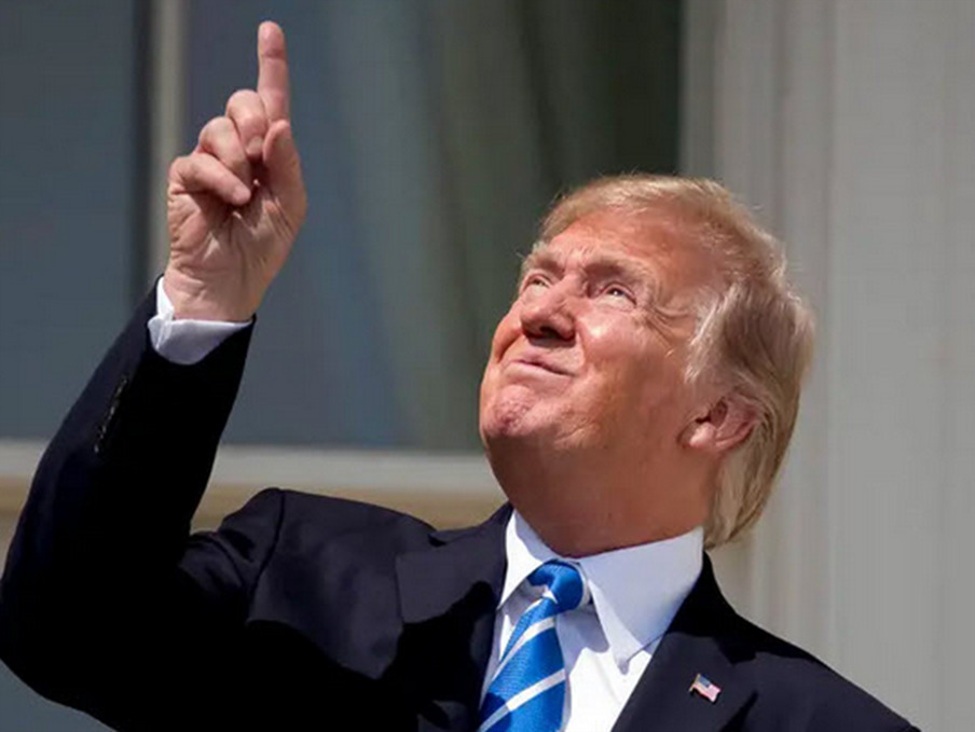
Another start to the week, another one with Trump making the headlines
The start of the 2026 has been all about US president Trump’s threats and actions so far. In the first week, it was the invasion of Venezuela. Last week, it was the attack on the Fed’s independence and escalating geopolitical tensions involving Iran. This week, tariffs are once again back in the picture as Trump wants the EU to give up Greenland.What a time to be alive, eh?The latest tariffs threat is causing a stir in markets to start the new week now with risk trades on the backfoot. Trump is threatening 10% tariffs on “any and all goods” starting from 1 February and that will jump up to 25% on 1 June after. That unless “a deal is reached for the complete and total purchase of Greenland”. 🤪Goldman Sachs estimates that the economic hit will be on exports worth roughly 1% to 1.5% of euro area GDP. The breakdown by country can be seen below:The EU has been swift to announce retaliation, with the big one being their €93 billion tariffs package on US goods. As a reminder, this package is one that was suspended last year after both sides came to a “trade deal” over the summer. It is said that these tariffs could be put into effect on 6 February, just days after Trump’s tariffs hit.For now, risk trades are taking a knock. US markets might be closed today for the long weekend but futures are pointing lower already. S&P 500 futures are down 0.8% and Nasdaq futures down 1.0%. Meanwhile, European stock futures are pointing to a gap lower by over 1% to start the week.Amid the geopolitical tensions and erratic US administrative policy, precious metals are once again catching fresh bids while the dollar is sitting lower across the board. The latter did see some slight gains early on but they have been quick to fade. Here’s a snapshot of dollar pairs at the moment:As for precious metals, they opened with a gap higher to start the week with gold now up 1.7% to $4,671 and silver up 3.7% to $93.49 currently. Hot, hot, hot. 🔥 This article was written by Justin Low at investinglive.com. 🔗 Source 💡 DMK Insight Trump’s aggressive foreign policy is shaking markets, and here’s why that matters: The renewed tariffs and military posturing are likely to heighten volatility across various asset classes, particularly in commodities and forex. Traders should keep an eye on how these geopolitical tensions influence the dollar’s strength, especially against currencies like the euro and yen. If tariffs escalate, we could see a flight to safety, pushing gold prices higher. Look for key resistance levels in gold around recent highs, as well as support levels in major currency pairs that could signal shifts in market sentiment. But here’s the flip side: while some traders may react with fear, this could create buying opportunities in sectors that benefit from increased military spending or commodities that are in demand due to supply chain disruptions. As we move through the month, monitoring the Fed’s response to these developments will be crucial. Pay attention to any shifts in interest rate expectations that could arise from these geopolitical tensions. 📮 Takeaway Watch for gold resistance levels and dollar strength as geopolitical tensions escalate; these could signal trading opportunities in the coming weeks.

What Is a Broker – A Beginner’s Guide
Introduction: What Is a Broker?A broker is a person or company that helps traders and investors connect with financial markets. They make it possible for you to buy and sell things like shares, currencies, commodities, or other financial products. Brokers act as intermediaries, helping individual traders access large financial markets and liquidity providers.Today, most brokers offer:Trading platforms: Special software like MetaTrader 4 (MT4) or MetaTrader 5 (MT5) that you can use to trade.Access to markets: This includes currencies, equity indices, gold, and shares.Customer support: Help for managing your account and transactions.Research and tools: Information and tools to help you analyze the market and make decisions.Some brokers also allow you to use leverage, which means you can control larger trades with a smaller amount of money. However, leverage can increase both your potential profits and your risks.Example: If you want to buy the currency pair EUR/USD, you can’t go straight to the bank market. Instead, your financial intermediary will handle the trade for you, either by matching your order with another client (market maker) or sending it to liquidity providers (ECN/STP model).Brokers are very important for individual investors. But if you choose the wrong broker, especially one that isn’t regulated, you might face unfair practices or even lose your money.How Do Brokers Work?Brokers help you access financial markets that you can’t reach on your own. They act as intermediaries by executing buying and selling orders and offering platforms to operate on. Here’s how they operate:Trade Execution: When you place a buy or sell order on a trading platform, your broker either:Sends your order to a liquidity provider or exchange (ECN/STP model).Fills your order within their own system (market maker model).Pricing and Spreads: Brokers provide bid and ask prices. The difference between these prices is called the spread, which is part of your trading cost. Some brokers may also charge extra commissions.Leverage and Margin: Many brokers let you use leverage, which allows you to control larger trades with less of your own money. This can increase your potential profits but also your risks.Platforms and Tools: Most brokers provide trading platforms like MT4 or MT5 where you can analyze charts, place trades, and manage your accounts.Broker Revenue: Brokers make money in different ways:Spreads: The difference between the buying and selling prices.Commissions: A fixed fee per trade, which is common with ECN accounts.Additional Fees: Such as fees for overnight positions, inactivity, or withdrawals.Example: If you buy 1 lot of EUR/USD, your broker might charge a spread of 1 pip (which is about $10). For an ECN account, you might pay a raw spread of 0.1 pips plus a $7 commission.Tip for beginners: Always compare all trading costs, including spreads, commissions, and any additional fees, before choosing a broker.Types of BrokersBrokers operate differently. Understanding the types can help you find one that fits your trading style:Market Maker Brokers:How they work: They create their own market and act as the other side of your trade.Pros: They usually have fixed spreads and simpler pricing.Cons: There can be a conflict of interest since the broker profits when clients lose.ECN (Electronic Communication Network) Brokers:How they work: They connect you directly to liquidity providers like banks and funds.Pros: They offer very tight spreads and faster trade execution.Cons: They charge commissions, and spreads can widen during volatile times.STP (Straight Through Processing) Brokers:How they work: They send your orders directly to liquidity providers without any manual handling.Pros: They provide fair execution and variable spreads.Cons: Costs can vary based on market liquidity.Discount Brokers:How they work: They offer basic services with low fees but little support or research.Pros: They are cost-effective for self-directed traders.Cons: They offer limited educational resources and customer support.Full-Service Brokers:How they work: They provide personalized advice, research, and portfolio management along with trade execution.Pros: They offer comprehensive services for long-term investors.Cons: They tend to have higher fees compared to online brokers.Example: A beginner might find a market maker broker easier to use, while an experienced trader might prefer an ECN broker for better pricing and direct market access.Why Do Traders Need Brokers?Brokers are essential because they provide retail traders and investors access to markets that would otherwise be unavailable. Here’s why they are important:Market Access: Individuals cannot trade directly with large exchanges or interbank markets. Brokers connect you to these markets so you can buy and sell assets like currencies, stocks, and commodities.Trading Platforms: Brokers provide the software you need to analyze the market, execute transactions, and manage your positions in real time.Leverage and Margin: Brokers allow you to use leverage, which means you can control larger trades than what your own funds would allow. This can make market activity more flexible, but it also increases risks.Liquidity and Execution: Brokers have networks of liquidity providers that help ensure your orders are executed quickly and often at competitive prices.Risk Management Tools: Most brokers provide tools like stop-loss and take-profit orders to help you manage risk.Education and Support: Many brokers provide training, tutorials, webinars, and customer support to help beginners learn about investing.Example: Without a broker, a retail trader wouldn’t be able to buy or sell EUR/USD, gold, or the S&P 500 index. A broker makes that possible and provides the necessary tools for buying and selling safely and efficiently.Key Features of a Good BrokerChoosing the right broker is one of the most important decisions you will make as a trader. A reliable broker should offer:Regulation and Safety: The broker should be licensed by a well-known regulatory body (like FCA, ASIC, or CySEC) to ensure they follow rules and protect your funds.Transparent Pricing: You should have clear information about spreads, commissions, and fees. There should be no hidden charges.Trading Platforms: Access to trusted platforms like MT4 or MT5, which have good charting tools and execute trades smoothly.Competitive Spreads and Fees: Low transaction costs are important, especially if you engage in frequent market activity. Look for brokers with tight spreads and fair commissions.Reliable Execution: Fast order execution with minimal slippage is essential, supported by strong liquidity providers.Risk Management Tools: Features like stop-loss, take-profit,

FX option expiries for 19 January 10am New York cut
There aren’t any major expiries to take note of on the day, with the full list seen below.There are some large ones but nothing that should be too impactful, given how the state of play is developing in the major currencies space.The Japanese yen remains in focus amid intervention risks as traders continue to keep the pressure on the currency. Fiscal risks remain the main issue with Japan prime minister Takaichi set to officially call for a snap election in her announcement later today. She is scheduled to make an appearance at 0900 GMT and dissolve the lower house of parliament at the ordinary Diet session later this week.But with Trump stirring up geopolitical tensions in Greenland, the dollar is also under scrutiny to start the week. The greenback was up a little in the early stages but quickly settled lower. The erratic nature of the US administration continues to pile on the currency debasement theme with precious metals surging higher instead.For now, the dollar is sitting a little lower ahead of European trading with not much to really shout about in relation to the expiries above.As a reminder as well, it is a US market holiday and long weekend today. As such, there isn’t much appetite on the expiries board with traders keeping more focus on the ones that will run off tomorrow and later in the week.Taking that into consideration, it might be a bit of a quieter one to start the week although the negative risk mood might well translate to some extension flows in the major currencies space later on. For now though, the Swiss franc is already taking charge with USD/CHF down 0.5% to 0.7987 and EUR/CHF down 0.3% to 0.9286 on the day.For more information on how to use this data, you may refer to this post here.Head on over to investingLive (formerly ForexLive) to get in on the know! This article was written by Justin Low at investinglive.com. 🔗 Source 💡 DMK Insight With no major expiries today, traders should focus on the yen’s intervention risks. The absence of significant expirations suggests a quieter trading environment, but the Japanese yen’s volatility could shake things up. Recent comments from Japanese officials hint at potential interventions to stabilize the currency, especially if it continues to weaken against the dollar. This could lead to sharp movements, particularly for USD/JPY, which traders should monitor closely. If the yen breaks key support levels, it could trigger a wave of selling or buying, depending on the intervention’s timing and scale. Here’s the thing: while the lack of expiries might imply a calm day, the underlying tension with the yen could create opportunities for day traders looking to capitalize on sudden price swings. Keep an eye on any news from the Bank of Japan or government officials, as these could serve as catalysts for movement. Watch for USD/JPY levels around 150, as a breach could signal a stronger intervention response. 📮 Takeaway Monitor USD/JPY closely for intervention signals, especially around the 150 level, as this could lead to significant volatility today.
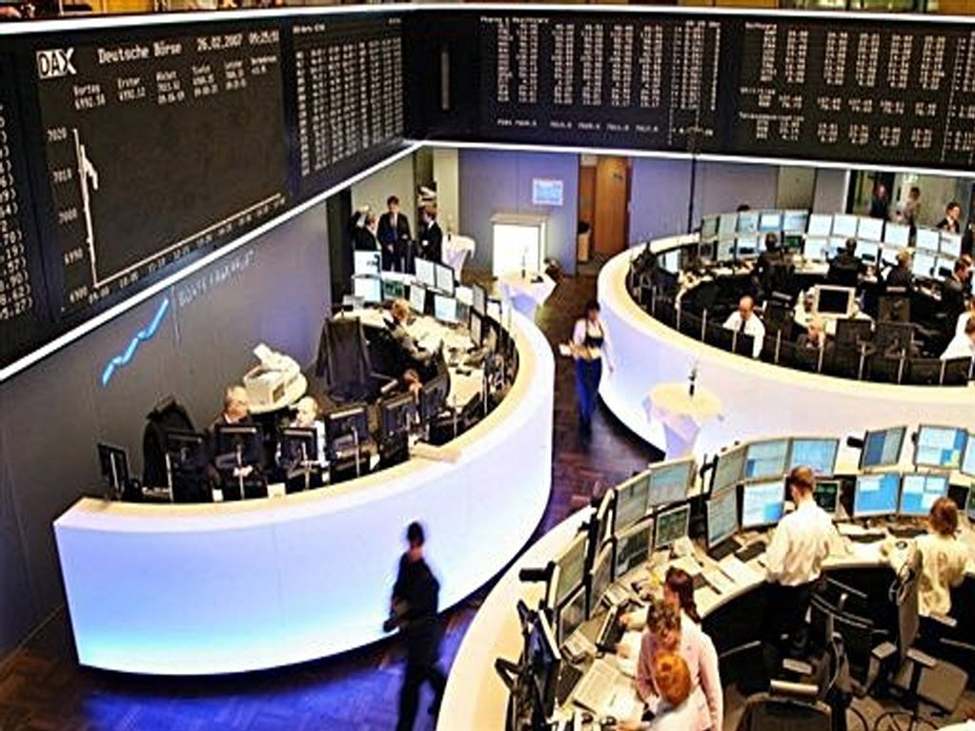
European stock futures lower as Trump's Greenland tariffs bite at risk sentiment
It’s looking rough out there as geopolitical tensions now spill over to economic risks. As Trump raises the stakes on Greenland, he is threatening the EU with fresh 10% tariffs that will be enacted on 1 February. And if things keep this way, he will raise them further to 25% starting 1 June. That is unless “a deal is reached for the complete and total purchase of Greenland”.In turn, the EU is preparing to take their previously shelved tariffs retaliation package worth €93 billion and use that to respond to Trump. Yup, tariffs war is back with a bang. 💥As mentioned earlier here, Goldman Sachs estimates that the tariffs will at least apply a hit on exports of around 1% to 1.5% of euro area GDP. Most analysts are seeing it as a hit between 0.4% to 1.8% of the economy. So, just keep that number floating for a bit when taking into consideration the impact of tariffs on market sentiment.For now, equities are not liking any of it with European stock futures pointing lower across the board:Eurostoxx -1.6%Germany DAX -1.3%France CAC 40 -2.0%UK FTSE -0.5%Similarly, US futures are also down as risk sentiment in general takes a knock:S&P 500 futures -0.9%Nasdaq futures -1.2%Dow futures -0.8%As a reminder though, US markets will be closed today. So, that will spare Wall Street of any “official” pain in the meantime. The thing with geopolitical tensions is that they tend to be faded rather quickly in due time. But when it does spill over to economic conflict, that’s a tougher one to filter out.We’ll now have to see how serious Trump is about sticking to his tariff guns and how far is he willing to use this threat to push the Greenland agenda. And on the EU side of things, it’s about how willing are they to fight tit-for-tat against the US administration on tariffs if things really do progress down this road. This article was written by Justin Low at investinglive.com. 🔗 Source 💡 DMK Insight Geopolitical tensions are heating up, and here’s why that matters for traders: fresh tariffs could shake markets. Trump’s threat of 10% tariffs on the EU, effective February 1, is a significant move that could trigger volatility across multiple asset classes. Tariffs often lead to inflationary pressures, which can impact currency valuations and commodities. Traders should keep an eye on the EUR/USD pair, as a stronger dollar could emerge if the EU economy takes a hit. Additionally, commodities like oil and gold might react to these tensions, especially if investors seek safe havens. But there’s a flip side: if the tariffs are perceived as a negotiating tactic rather than a long-term strategy, markets might stabilize quickly. Watch for market reactions around February 1, as that date could be pivotal in determining the next moves from both the U.S. and EU. Keep your charts ready for any breakout patterns in the forex market, particularly around key support and resistance levels in the EUR/USD pair. 📮 Takeaway Monitor the EUR/USD pair closely as February 1 approaches; tariffs could trigger significant volatility in both currencies and commodities.
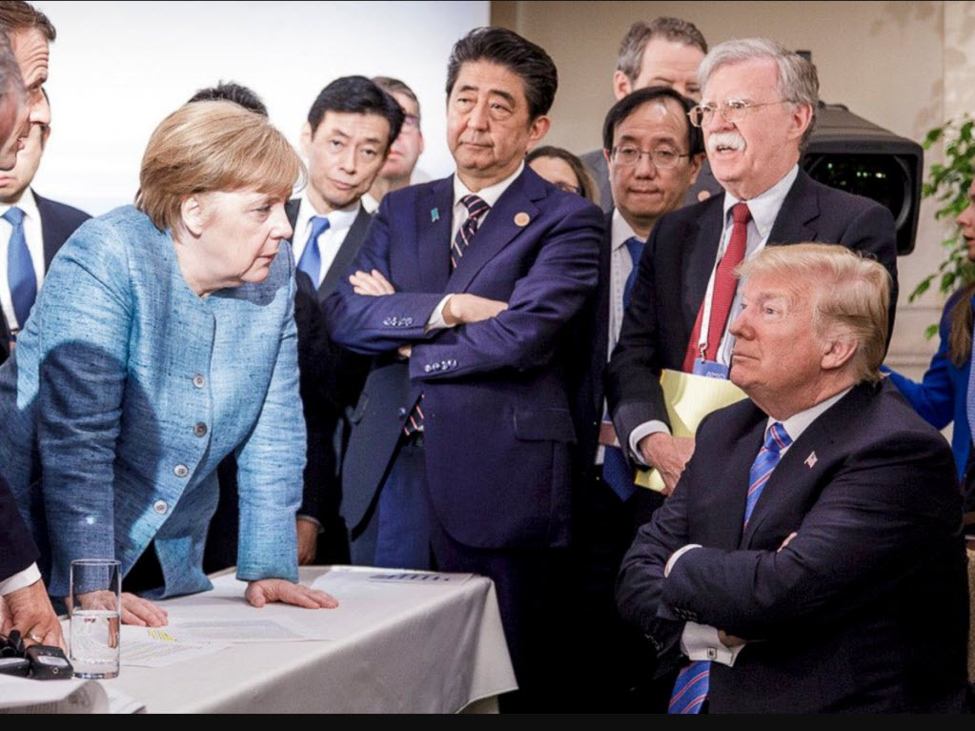
One last chance to preserve the old world order?
We may not see the same people in the classic photo above, but the situation speaks to the same kind of mood as we approach perhaps the biggest WEF event ever. Yes, it is that time of the year again. Global politics will take center stage and all eyes are on Davos as US president Trump is set to make a live appearance after having done so virtually last year.Make no mistake about it. Trump loves Davos. It’s his one chance a year to act like the mafia boss among global leaders and make a show of his power by flaunting the US agenda.This time will be no different. And he’s already setting the stage up for it with the announcements over the weekend.Trump has already launched an attack on the EU, threatening tariffs unless he gets his way with Greenland. Now, that will surely make for a bewildering yet awkward meet in Davos in the coming days.The theme that the forum will carry this year is ‘A Spirit of Dialogue’. It is meant to emphasise on communication among global players when geopolitical tensions are pushing everything to the edge.And while there will surely be plenty of talking moments and conversations on the sidelines, the Trump approach has always been to use this kind of opportunity to hard sell his ideals and convictions.So, is the Davos agenda basically dead on arrival? Perhaps.EU leaders will definitely want to find ways to speak to Trump about Greenland but don’t expect him to entertain offers here. Besides the Greenland issue, Trump will also have to deal with other global influences including the likes of Canada, Ukraine, and China. So, expect the big man to want to show that he holds all the cards on the table.Either way, it’s worth tuning in and keeping an eye out for key headlines during the event. Here are some of the main speakers on the agenda on the week:20/1 0950 GMT – European Commission president Ursula von der Leyen delivers her special address**20/1 1020 GMT – China vice premier He Lifeng delivers his special address*20/1 1300 GMT – French president Emmanuel Macron delivers his special address*20/1 1330 GMT – US Treasury secretary Bessent participates in a speaking session*20/1 1530 GMT – Canada prime minister Mark Carney delivers his special address*21/1 1030 GMT – Nvidia CEO Jensen Huang participates in a speaking session*21/1 1200 GMT – JP Morgan CEO Jamie Dimon participates in a speaking session*21/1 1330 GMT – US president Donald Trump delivers his special address***22/1 1030 GMT – Germany chancellor Friedrich Merz delivers his special address*The full programme can be found here. This article was written by Justin Low at investinglive.com. 🔗 Source