
 Bitcoin
  Ethereum
  Tether
  BNB
BNB  XRP
XRP  USDC
USDC  Solana
  TRON
TRON  Lido Staked Ether
  Figure Heloc
The expanded prohibition on stablecoin yield in the CLARITY Act makes the US dollar less competitive than the digital yuan, Scaramucci said. 🔗 Source 💡 DMK Insight The CLARITY Act’s stablecoin yield restrictions could shift competitive dynamics in the currency market. With the US dollar facing limitations, traders should keep an eye on how this affects demand for the digital yuan. If institutional players start favoring the yuan for yield opportunities, we might see a significant shift in forex trading strategies. This could lead to increased volatility in USD pairs, particularly if the yuan gains traction as a preferred stablecoin alternative. Watch for key levels in USD/CNY; a break below recent support could signal a broader trend. Also, monitor any regulatory responses from US lawmakers, as they could impact market sentiment and trading volumes in the coming weeks. 📮 Takeaway Watch USD/CNY closely; a break below support levels could indicate a shift towards the digital yuan as a competitive stablecoin.

The CLARITY Act stalling is positive for the crypto industry: Analyst
Overregulation of the crypto industry would negatively impact markets and gut decentralized finance (DeFi), according to Michaël van de Poppe. 🔗 Source 💡 DMK Insight Overregulation could be a game-changer for crypto markets, and here’s why: Michaël van de Poppe’s warning about the adverse effects of heavy regulation on decentralized finance (DeFi) isn’t just noise—it’s a signal for traders. If regulators clamp down, we could see a sharp decline in liquidity and innovation in the DeFi space, which has been a major driver of crypto’s recent growth. This could lead to a sell-off in major cryptocurrencies, especially those closely tied to DeFi projects. Look at the broader economic context: as traditional markets face tightening monetary policies, crypto’s appeal as an alternative investment could diminish if regulatory fears take hold. Traders should keep an eye on key levels in Bitcoin and Ethereum, as a dip below recent support could trigger panic selling. Watch for institutional reactions, too; if they start pulling back, it could signal a broader market retreat. In the coming weeks, monitor regulatory announcements closely. They could either stabilize or destabilize the market, depending on their nature and timing. 📮 Takeaway Watch Bitcoin and Ethereum closely; a drop below recent support levels could trigger significant selling pressure amid regulatory fears.

US Senate panel wants developer safeguards out of crypto bill
The Republican and Democratic Senate Judiciary leaders have called for changes to the market structure bill, arguing it would “weaken” the ability to police money transmitters. 🔗 Source 💡 DMK Insight Senate leaders are pushing back on the market structure bill, and here’s why that matters: This call for changes signals a potential shift in regulatory sentiment that could impact crypto and forex markets. If the bill weakens oversight of money transmitters, it might lead to increased volatility as traders react to the uncertainty surrounding regulatory frameworks. A lack of clear regulation can attract speculative trading, which often results in erratic price movements. Moreover, this could ripple through related markets, particularly affecting stablecoins and other assets reliant on money transmission. Traders should keep an eye on how this develops, especially in the context of upcoming economic indicators and market sentiment. If the bill faces significant amendments, it could create a short-term trading opportunity as participants adjust their positions based on perceived risk and regulatory clarity. Watch for any statements from key financial regulators or further developments in Congress that could provide more insight into the bill’s trajectory. 📮 Takeaway Monitor developments on the market structure bill closely; any significant changes could create volatility in crypto and forex markets, particularly around money transmitters.

Kazakhstan limits crypto trading to central bank-approved coins
Kazakhstan’s President Kassym-Jomart Tokayev signed new laws creating licensed crypto exchanges and giving the central bank authority to approve tradable coins. 🔗 Source 💡 DMK Insight Kazakhstan’s move to regulate crypto exchanges could shift regional trading dynamics significantly. With ADA currently at $0.37, this development opens up new avenues for liquidity and trading opportunities in Central Asia. Licensed exchanges mean more institutional participation, which could stabilize prices and attract foreign investment. Traders should keep an eye on how this regulatory framework evolves, especially regarding which coins get approved for trading. If ADA gains traction in this new environment, we might see a bullish trend, particularly if it breaks above key resistance levels. However, there’s a flip side: increased regulation can also lead to tighter controls and potential restrictions on trading practices. If the central bank’s approval process is slow or overly stringent, it could dampen enthusiasm. Watch for any announcements from Kazakhstan’s central bank regarding tradable coins, as these could impact ADA’s performance in the coming weeks. 📮 Takeaway Monitor Kazakhstan’s regulatory developments closely; any approved coins could influence ADA’s price action, especially if it breaks above $0.40.

Hong Kong industry group pushes to soften CARF rules
The Hong Kong Securities & Futures Professionals Association is backing the OECD’s CARF and tougher tax transparency, but wants lighter treatment and more flexible recordkeeping. 🔗 Source 💡 DMK Insight Hong Kong’s push for a balance between tax transparency and flexible recordkeeping is crucial for traders navigating regulatory waters. The OECD’s CARF initiative aims to enhance global tax compliance, which could impact trading strategies, especially for those operating in or with exposure to Hong Kong. If the region adopts stricter measures without accommodating flexibility, it could deter foreign investment and affect liquidity in local markets. Traders should keep an eye on how these regulatory changes unfold, as they could lead to shifts in market sentiment and trading volumes. Moreover, the ripple effects could extend to related markets, particularly in Asia, where compliance standards are evolving. Here’s the thing: while transparency is essential, excessive regulation could stifle innovation and trading activity. Watch for any announcements regarding specific compliance deadlines or changes in recordkeeping requirements, as these will be key indicators of how the market will react in the short term. 📮 Takeaway Monitor developments in Hong Kong’s tax transparency regulations, especially any announcements on compliance deadlines that could impact trading strategies.
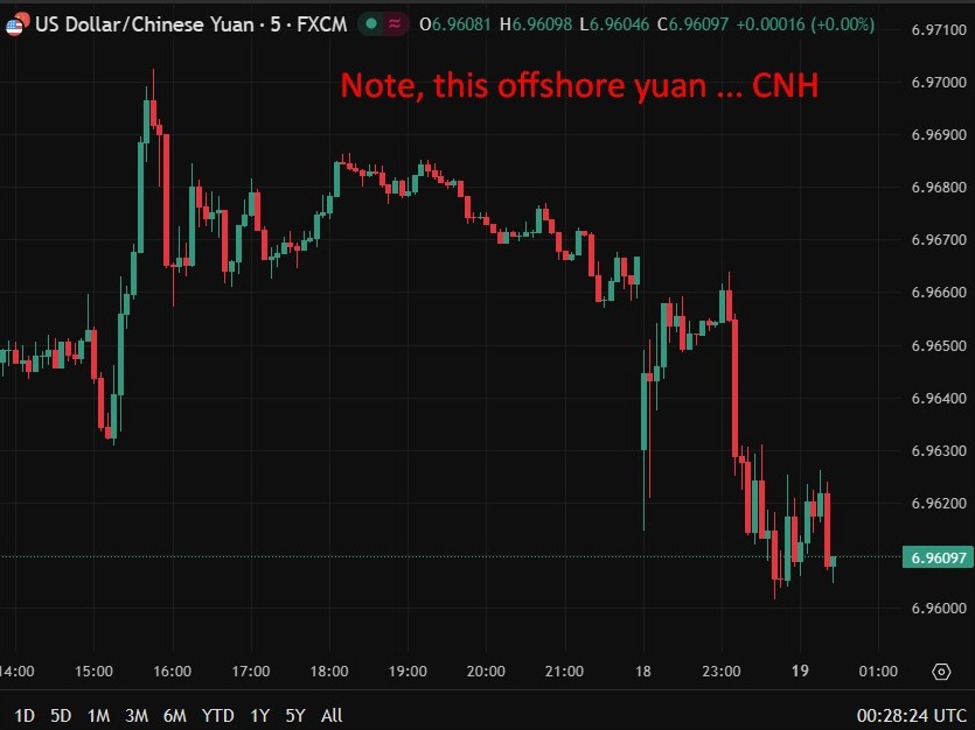
China new home price continued to drop in December 2025.
China December 2025 new home prices -0.4% m/m prior -0.4%-2.7% y/yprior -2.4%China December 2025 used home prices -0.7% m/mprior -0.7%The falls continue. It’s a vicious circle for home prices in China, why buy now when prices are expected to keep falling. —The main data from China is still to comeI wrote a preview earlier ICYMI:Q4 GDP seen at 4.5% y/y, weakest in three yearsFull-year 2025 growth likely meets ~5% target, but nominal growth lagsRetail sales and investment remain key drags on activityIndustrial production supported by resilient exportsPolicy stance cautious, with limited appetite for major stimulusChina is expected to have ended 2025 with its weakest quarterly growth in three years, highlighting an increasingly uneven recovery driven by exports rather than domestic demand as the economy heads into 2026.Data are forecast to show that while overseas demand has remained resilient, consumption and investment continue to drag on growth. Economists expect gross domestic product to have expanded 4.5% y/y in Q4, the slowest pace since the post-pandemic reopening, even as full-year growth reaches around 5%, in line with Beijing’s official target.The composition of growth remains the key concern. A historic contraction in investment and faltering household demand are expected to offset momentum from exports, which have been boosted by record shipments outside the United States despite renewed trade tensions under U.S. President Donald Trump.Retail sales growth is forecast to ease to a fresh three-year low in December, reflecting weak income growth, soft labour conditions and ongoing pressure from falling home prices. Fixed asset investment is expected to post its first annual contraction since official records began three decades ago, underscoring the depth of the property downturn and the saturation of infrastructure spending.By contrast, industrial production is likely to have accelerated in December to its fastest pace since September, supported by strong external demand. That divergence reinforces expectations that China’s two-speed growth model will persist into 2026, with exports carrying the load as domestic demand remains subdued.Deflation continues to complicate the outlook. While real GDP growth may meet the government’s target, nominal expansion is expected to be significantly weaker, weighing on corporate earnings, household wealth and fiscal revenues.Policymakers appear reluctant to respond with large-scale stimulus. President Xi Jinping has signalled greater tolerance for slower growth, while concerns around local government debt limit Beijing’s willingness to expand aggressively.China’s central bank has reinforced that message. The People’s Bank of China has leaned toward targeted easing, recently lowering the cost of structural lending tools while only cautiously flagging scope for broader rate cuts. Officials have increasingly acknowledged that monetary easing is losing effectiveness in an economy constrained by weak demand and structural imbalances. This article was written by Eamonn Sheridan at investinglive.com. 🔗 Source 💡 DMK Insight China’s new home prices dropping 0.4% month-over-month signals ongoing weakness in the real estate market, and here’s why that matters now: With used home prices also down 0.7%, we’re seeing a troubling trend that could deter buyers further. This persistent decline creates a vicious cycle—if prices are expected to keep falling, potential buyers might hold off, exacerbating the downturn. For traders, this could mean a ripple effect on commodities tied to construction and housing, like copper and steel. Keep an eye on these correlated assets as they might react to further data releases. Additionally, if the trend continues, it could influence broader economic indicators, impacting currency pairs involving the Chinese yuan. Watch for key support levels in related markets; if they break, it could signal deeper issues in the Chinese economy that might affect global markets. Traders should monitor upcoming economic data from China closely, especially any shifts in policy or stimulus measures that could alter this trajectory. 📮 Takeaway Watch for upcoming economic data from China; a continued decline in home prices could impact commodities and the yuan significantly.

JPY traders heads up, Japan PM Takaichi press conference from 0900GMT
This will be in relation to the snap election expected. Just noting this. Earlier:Japan election raises odds of sales tax cut, bond yields jump This article was written by Eamonn Sheridan at investinglive.com. 🔗 Source 💡 DMK Insight Japan’s snap election could shake up markets, especially with potential sales tax cuts on the table. If the ruling party leans towards fiscal stimulus, we might see a significant impact on the yen and Japanese bonds. Rising bond yields indicate that investors are pricing in these changes, which could lead to volatility in forex pairs like USD/JPY. Traders should keep an eye on the election date and any pre-election polls, as they could provide clues on market direction. A decisive win for pro-stimulus candidates could weaken the yen further, while a more conservative outcome might stabilize it. Watch for key levels around recent highs in USD/JPY; a break above could signal a stronger bullish trend. Also, keep an eye on related markets like Japanese equities, which could react positively to any fiscal easing measures announced post-election. 📮 Takeaway Monitor USD/JPY closely; a decisive election outcome could push it above recent highs, signaling a bullish trend.
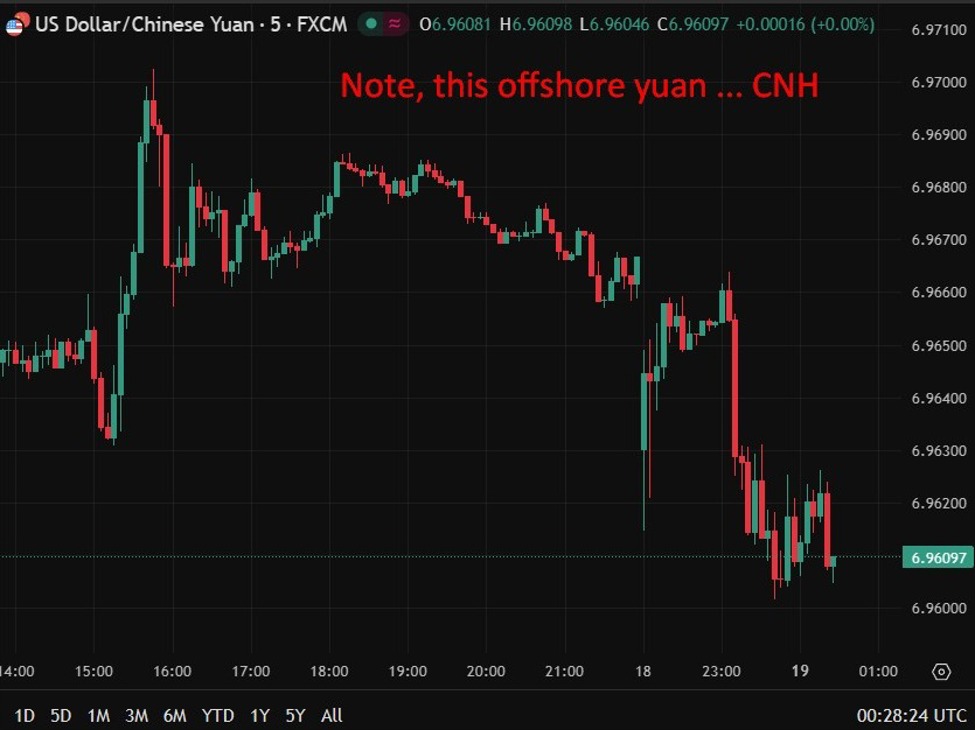
China data: Q4 GDP 4.5% y/y (expected 4.4%), Dec retail sales +0.9% y/y (expected 1.2%)
Added: China Q4 GDP slows to three-year low despite hitting 2025 growth targetChina factory output accelerates as retail sales and investment lag – recapGDP Q4 2025 4.5% y/y a beatexpected 4.4%, prior 4.8%1.2% q/qexpected 1.0%, prior 1.1%December 2025 data:Retail Sales 0.9% y/yexpected 1.2%, prior 1.3%Industrial Production 5.2% y/yexpected 5.0%, prior 4.8%Fixed Asset Investment -3.8% y/yexpected -3.0%, prior -2.6%January to December property investment -17.2% y/y This article was written by Eamonn Sheridan at investinglive.com. 🔗 Source 💡 DMK Insight China’s Q4 GDP hitting a three-year low is a wake-up call for traders: Despite beating growth expectations at 4.5% y/y, the slowdown in retail sales and investment signals underlying economic weakness. Retail sales only grew 0.9% y/y against an expected 1.2%, which could dampen consumer sentiment and affect sectors reliant on domestic spending. Industrial production, while slightly better at 5.2% y/y, still reflects a cautious outlook. This mixed data paints a complex picture for commodities and currencies tied to China’s economy, particularly the Australian dollar and industrial metals. Traders should keep an eye on the 4.5% GDP growth level as a psychological barrier. If subsequent data continues to disappoint, we might see further depreciation in the yuan and increased volatility in related markets. The ripple effects could impact global supply chains and commodity prices, especially if China’s recovery remains sluggish. Watch for any policy responses from the PBOC, as they could shift market sentiment quickly. Immediate focus should be on the upcoming economic indicators that could either reinforce or challenge this narrative. 📮 Takeaway Monitor China’s GDP growth at 4.5% and retail sales at 0.9% for potential impacts on the yuan and related commodities.
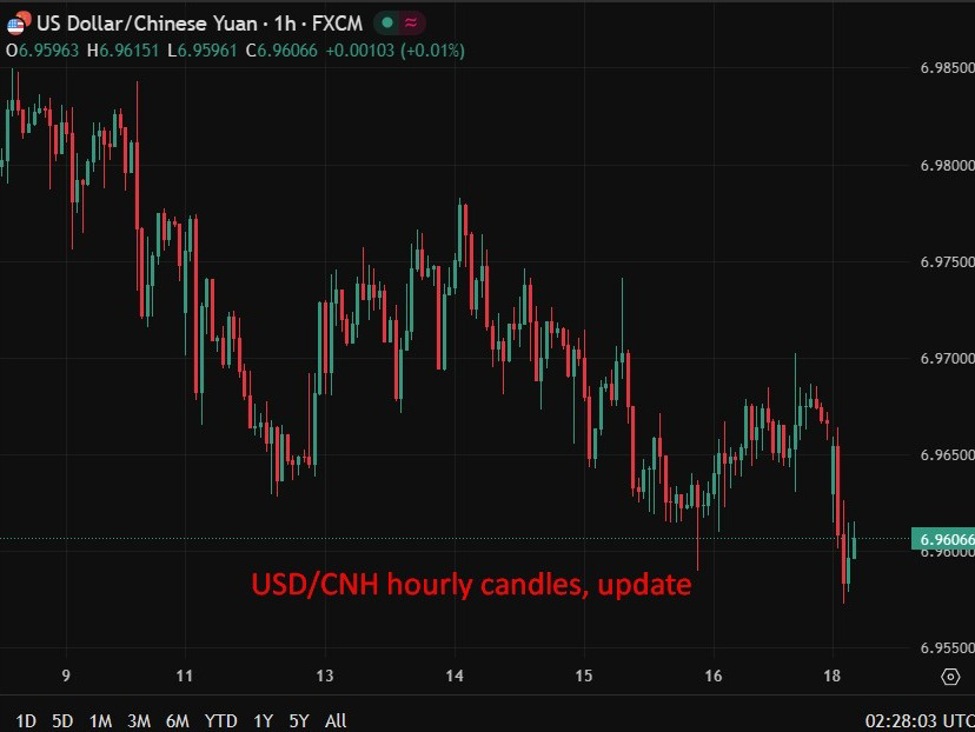
China home prices fall again in December as property downturn persists
Summary:New home prices fall 0.4% m/m, 2.7% y/y in DecemberAnnual decline fastest in five monthsMajority of cities continue to record price fallsSecondary market weakness persists across all tiersProperty investment and sales remain deeply negativeChina’s December housing data point to a stubborn property slump that continues to weigh on confidence despite policy support.China’s new home prices fell again in December, reinforcing signs that the country’s prolonged property downturn remains firmly entrenched despite repeated policy efforts to stabilise the sector, according to official data.Figures from the National Bureau of Statistics showed new home prices declined 0.4% month-on-month, matching November’s pace of contraction. On a year-on-year basis, prices were down 2.7%, accelerating from a 2.4% annual fall in November and marking the steepest decline in five months.The data underline the uneven and fragile nature of the recovery in China’s housing market, which remains a key drag on household confidence and broader economic momentum. Of the 70 cities tracked by the NBS, just six recorded price increases in December, while 58 cities posted declines, highlighting the breadth of the weakness.Conditions in the secondary, or resale, market also deteriorated further. Existing home prices fell faster from a year earlier across tier-one, tier-two and tier-three cities, signalling that price pressures are not confined to lower-tier regions and remain widespread across urban China.Economists say a sustained recovery in housing would be critical for lifting consumer sentiment, given the sector’s central role in household wealth. A stabilisation in prices could also help ease structural imbalances between supply and demand that continue to weigh on growth.Separate official data show the scale of the downturn. Property investment fell 17.2% in 2025, while home sales by floor area dropped 8.7%, reflecting weak buyer confidence and cautious developer activity.In a New Year article, Qiushi, the Communist Party’s flagship journal, described the sector as undergoing a “profound adjustment” but insisted property remains a pillar of the economy with scope for transformation. The piece called for “strong policy actions” to stabilise expectations.China’s property crisis began in mid-2021 following a crackdown on excessive leverage, pushing major developers such as Country Garden and Evergrande into financial distress. Regulators said last week they would promote the normal operation of programmes designed to accelerate financing for stalled residential projects, though markets remain sceptical that current measures are sufficient to reverse the slide. This article was written by Eamonn Sheridan at investinglive.com. 🔗 Source 💡 DMK Insight China’s December housing data shows a 0.4% monthly drop and a 2.7% annual decline, signaling deeper issues in the property market. This persistent slump isn’t just a local problem; it could ripple through global markets, especially commodities tied to construction and real estate. With most cities reporting falling prices, traders should keep an eye on related sectors like steel and cement, which may see reduced demand. The ongoing weakness in property investment and sales suggests that consumer confidence remains shaky, potentially impacting broader economic indicators. If this trend continues, we might see further declines in asset prices across the board, particularly in emerging markets that rely on Chinese demand. Watch for any policy responses from the Chinese government, as these could provide short-term volatility. Key levels to monitor include support zones in commodity prices and any shifts in investor sentiment that could lead to a broader market reaction in the coming weeks. 📮 Takeaway Keep an eye on China’s housing market; further declines could impact global commodities and investor confidence, especially if policy changes emerge.
China Q4 GDP slows to three-year low despite hitting 2025 growth target
Summary:Q4 GDP slows to 4.5% y/y, weakest in three yearsFull-year 2025 growth hits 5.0% targetExport strength offsets weak domestic demandProperty slump and deflation drag on confidenceStructural imbalances remain key riskChina met its 2025 growth target, but a sharp Q4 slowdown highlights rising dependence on exports amid weak domestic demand.China’s economic growth slowed to its weakest pace in three years in the final quarter of 2025, highlighting mounting strains from soft domestic demand even as strong exports allowed the economy to meet the government’s full-year growth target, Reuters reported.Data released Monday by the National Bureau of Statistics showed gross domestic product expanded 4.5% year-on-year in Q4, down from 4.8% in the previous quarter. The outcome was marginally above market expectations but marked the slowest quarterly pace since the post-pandemic reopening period.On a quarterly basis, output rose 1.2% in October–December, exceeding forecasts for a 1.0% increase and edging above the prior quarter’s 1.1% gain. Even so, economists say momentum remains fragile as consumer confidence and private investment continue to lag.For 2025 as a whole, China’s economy grew 5.0%, matching Beijing’s official target of “around 5%” and slightly outperforming market expectations. The result reflects resilience in the face of external headwinds, aided by exporters’ success in diversifying away from the United States and by tariff increases that proved less severe than initially feared.China’s manufacturing and export engine remained the key growth driver. The country last week reported a record trade surplus of nearly US$1.2 trillion in 2025, underpinned by robust shipments to emerging markets and Europe. That export strength enabled policymakers to limit stimulus to targeted measures rather than broad-based easing.However, the heavy reliance on external demand underscores persistent vulnerabilities. Domestic consumption and investment weakened further late last year, weighed down by a prolonged property downturn, falling home prices and entrenched deflationary pressures. Analysts warn that without a sustained recovery in household confidence, growth risks becoming increasingly unbalanced.Structural challenges remain a central concern for policymakers. While export-led resilience has bought time, economists caution that weak domestic demand, excess capacity and property sector stress pose longer-term risks to China’s growth trajectory heading into 2026. This article was written by Eamonn Sheridan at investinglive.com. 🔗 Source 💡 DMK Insight China’s Q4 GDP slowdown to 4.5% y/y is a wake-up call for traders: This marks the weakest growth in three years, raising concerns about the country’s reliance on exports to meet its growth targets. While the full-year growth of 5.0% is technically achieved, the underlying weakness in domestic demand and the ongoing property slump signal potential volatility ahead. Traders should be wary of how this could impact commodities and currencies tied to Chinese economic health, particularly the Australian dollar and various industrial metals. Look for key support levels in these correlated assets, as a continued decline in domestic consumption could lead to further weakness. The structural imbalances in China’s economy remain a significant risk, and any signs of escalating deflation could trigger broader market reactions. Keep an eye on export data and domestic consumption indicators in the coming weeks, as they will be crucial for gauging the sustainability of China’s recovery and its ripple effects on global markets. 📮 Takeaway Watch for how China’s export strength holds up against domestic demand; key levels to monitor are support in AUD/USD and industrial metals prices.