
 Bitcoin
  Ethereum
  Tether
  BNB
BNB  XRP
XRP  USDC
USDC  Solana
  TRON
TRON  Lido Staked Ether
  Figure Heloc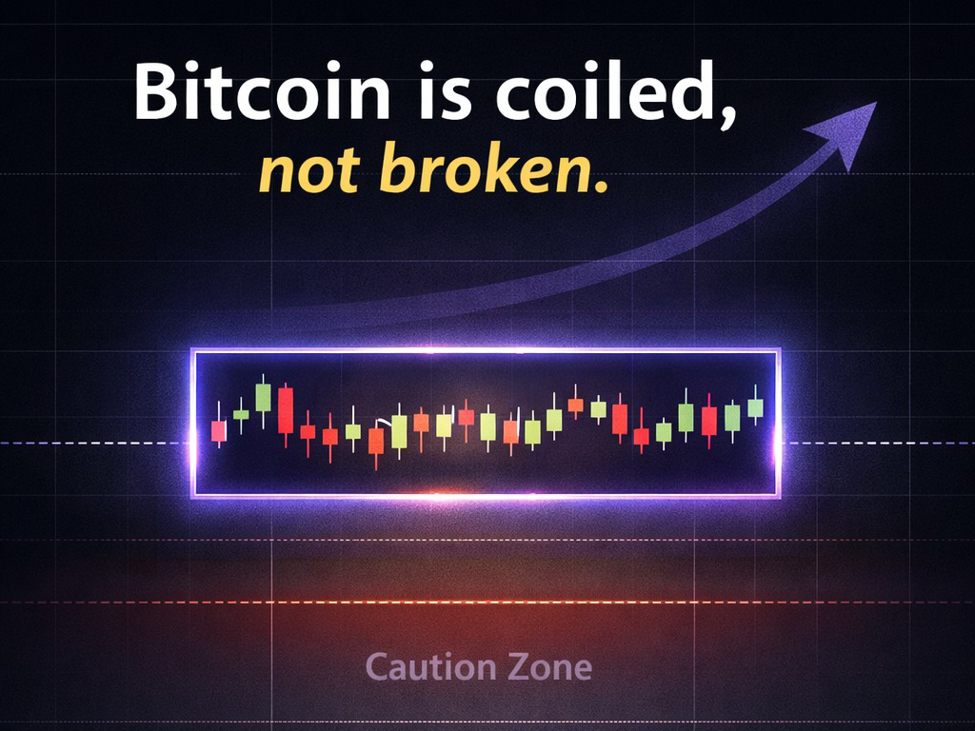
Bitcoin Futures Analysis Today: How orderFlow Intel Maps Key Levels After Breakout and ConsolidationWhile I’m still thinking back to my first bitcoin technical analysis of 2026, where I state my opinion that 100k is still open for the short term, I know that many of you crypto traders are looking at what will happen today. Bitcoin futures are entering a critical consolidation phase after reclaiming important value levels earlier this week. While standard charts may suggest indecision, deeper order flow-based analysis points to a market that is digesting gains rather than breaking down.At investingLive.com, we apply orderFlow Intel, a professional decision-support framework that studies how volume, participation, and price acceptance interact beneath the surface of the market. I mean, many of you can see that bitcoin is doing pretty good since Nov 21 (up almost 20% since then till today’s high, in Bitcoin futures), even hitting its highest in a couple of months. But for today, we look beyond the obvious and these order flow insights are typically not available to most retail traders, and the goal is to do the heavy analytical lifting and translate it into a clear, usable map.This update is not financial advice, but structured guidance to help traders and investors think more clearly about risk, context, and probabilities.The bigger picture: why structure still matters more than short-term noiseOn higher timeframes, Bitcoin futures continue to display a constructive structure:Price has reclaimed and held above prior value areas from early January.High-activity zones from previous sessions have gradually shifted higher.Downside attempts have so far lacked follow-through.From an order flow perspective, this behavior often signals acceptance at higher prices, rather than distribution. In healthier bullish phases, markets tend to rotate, consolidate, and rebuild participation instead of collapsing immediately after a rally.Educational reminder: Strong markets do not move in straight lines. Consolidation near prior resistance is often a sign of digestion, not weakness.Why Bitcoin feels “stuck” despite a bullish backdropOn shorter timeframes, Bitcoin futures are currently trading inside a balanced zone, with price oscillating around the session’s average.orderFlow Intel highlights several important dynamics:Two-sided trade near the mean, rather than one-sided dominance.Sellers appearing near resistance, but without aggressive continuation.Buyers stepping in on pullbacks, even if they are selective.In simple terms, the market is deciding whether to build value higher or briefly rotate lower to attract more participation.Educational tip: When price stalls near resistance without strong selling pressure, it often reflects a lack of urgency rather than a bearish signal.Key price levels Bitcoin traders should watchThese levels are not arbitrary. They are derived from where meaningful trading activity previously took place, which is why markets often react around them.Bullish continuation zone95,780–95,800Acceptance above this area would indicate that buyers are willing to transact at higher prices, increasing the probability of continuation toward:96,300–96,400, followed by higher resistance zones beyond.For this scenario to gain traction, price needs to hold above this area, not just briefly trade through it.Near-term balance and support95,500–95,520This zone represents the lower boundary of the current consolidation. Holding above it keeps the structure constructive and supports the idea of sideways digestion rather than trend failure.First downside reaction area94,580This is an important prior high-activity area from early January. If price pulls back here, traders should observe how price behaves:Stabilization or rejection would support the broader bullish case.Clean acceptance below would increase caution.Educational tip: High-volume areas often act as “decision points” where markets pause, react, or reverse temporarily.Structural risk threshold93,920Sustained acceptance below this level would weaken the bullish structure and suggest that Bitcoin futures may need more time to rebuild support.Why order flow adds value beyond standard chartsMost traders rely on candles, indicators, and moving averages. orderFlow Intel focuses on how much participation supports price movement and whether that movement is being accepted or rejected.Currently, order flow analysis suggests:No signs of panic or forced selling.No evidence of aggressive liquidation.Continued absorption during pullbacks.This helps explain why downside moves have been contained and why rallies, even when hesitant, have not failed decisively.Educational reminder: Price moves supported by participation tend to persist. Moves without acceptance often fade.Short-term caution, medium-term constructive biasThe current environment rewards discipline over aggression.Short-term traders should expect rotations, false starts, and tests of patience.Medium-term participants should focus on whether price holds key support during pullbacks or accepts above resistance during rallies.This is often the phase where markets attempt to shake out impatient positioning before revealing a clearer directional move.The investingLive decision compass for Bitcoin tradersThink of this analysis as a map, not a forecast:Above 95,800, the bullish case strengthens and higher levels become relevant.Below 95,500, patience is warranted as the market tests balance.Below 93,920, structural risk increases and bias should be reassessed.Professional traders rarely act on a single signal. They wait for price to interact with important levels and then evaluate the response.orderFlow Intel is designed to support better decision-making, not to predict outcomes. Markets are probabilistic, not certain, and all trading involves risk.This analysis reflects current conditions and will evolve as new data comes in.Stay patient, stay level-aware, and let price behavior confirm the next move. This article was written by Itai Levitan at investinglive.com. 🔗 Source 💡 DMK Insight Bitcoin’s recent breakout has traders buzzing, but here’s the real story: SOL at $144.55 could be a leading indicator. As Bitcoin approaches the psychological $100k mark, SOL’s price action is worth monitoring. SOL’s current level suggests strong support, and if it holds, it could signal bullish sentiment across the altcoin market. Traders should keep an eye on Bitcoin’s volatility, as any sharp moves could ripple through SOL and other altcoins. If SOL breaks above $150, it might attract more buying interest, while a drop below $140 could trigger stop-losses and further selling pressure. But don’t overlook the potential for a pullback. If Bitcoin fails to maintain momentum, SOL could follow suit, making it essential to watch for key levels. Keep an eye on the daily chart for any signs of reversal or continuation patterns that could inform your trading strategy. 📮 Takeaway Watch SOL closely; a break above $150 could signal bullish
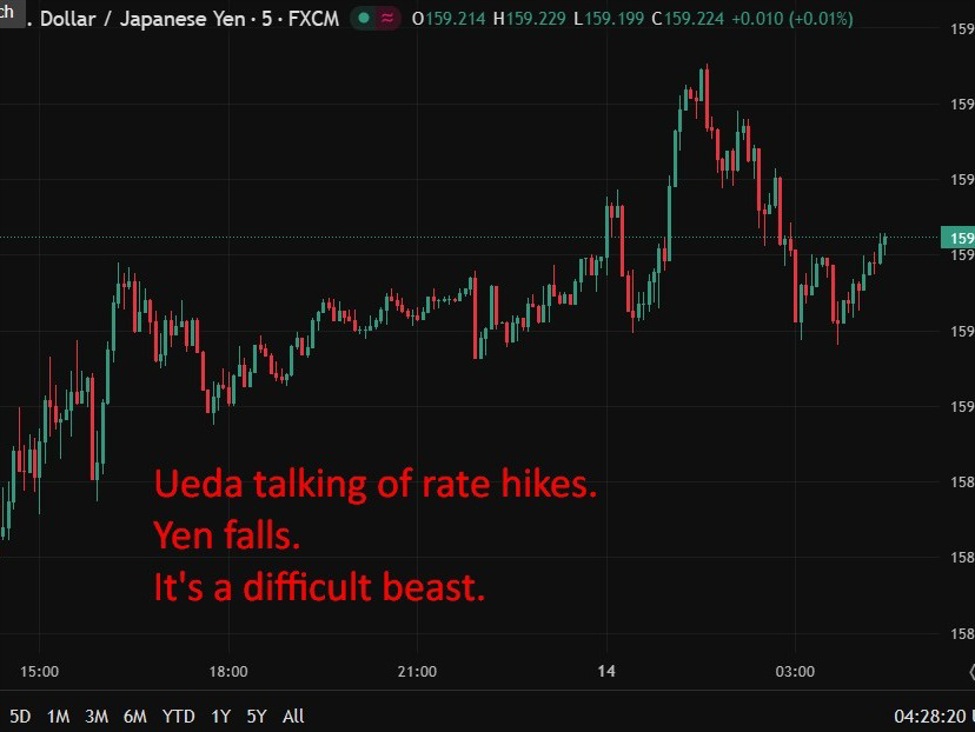
BOJ Ueda: Will continue to raise rates if economy, prices, wages develop in line
Bank of Japan Governor Ueda:Will continue to raise interest rates if economic, prices development in line with forecast, wages and prices rise moderatelyHeadline only, I’ll post more separately. This article was written by Eamonn Sheridan at investinglive.com. 🔗 Source 💡 DMK Insight The Bank of Japan’s commitment to raising interest rates could shake up the forex market significantly. With Governor Ueda signaling a willingness to adjust rates based on economic performance, traders should keep a close eye on the yen. If wages and prices rise as forecasted, we could see a stronger yen, impacting USD/JPY and other pairs. This is especially relevant given the current global economic climate, where central banks are tightening policies to combat inflation. A rate hike could lead to increased volatility in the forex markets, particularly for those holding long positions in the dollar against the yen. Watch for any economic data releases that might influence Ueda’s decisions, as they could provide critical signals for entry or exit points in your trades. The immediate focus should be on the next economic indicators, particularly wage growth and inflation metrics, which could dictate the timing of any rate changes. 📮 Takeaway Monitor upcoming economic data for Japan closely; a rate hike could strengthen the yen and impact USD/JPY trading strategies.
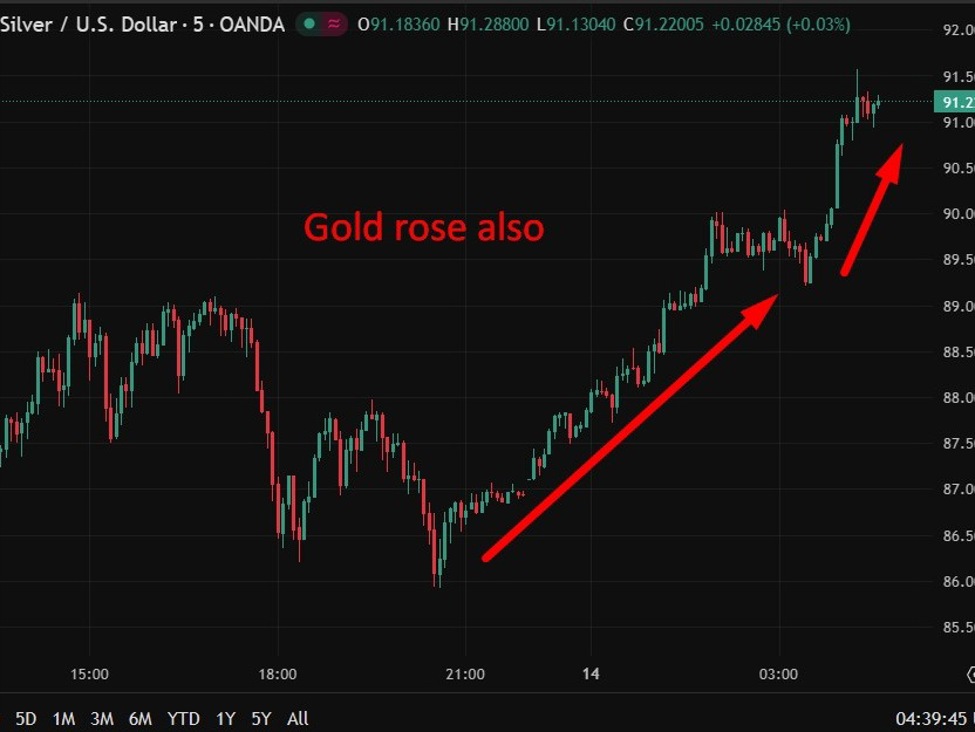
investingLive Asia-Pacific FX news wrap: Silver leaps higher. Again.
Bitcoin Technical Analysis Today as Bitcoin Feels “Stuck” Despite a Bullish BackdropJPM Dimon said the US economy is resilient but warned markets may be underpricing riskJapan 5-year JGB auction shows steady demand at higher yieldsChina trade beats forecasts as 2025 surplus hits massive recordBoJ sets out what will be discussed at a February 26 market operations meetingFull year trade data out from China, exports and imports both up y/yWorld Bank lifts global growth outlook but warns of weakest decade since 1960sPBOC sets USD/ CNY mid-point today at 7.0120 (vs. estimate at 6.9807)Japan stocks hit records as snap election (for February 8?) talk weakens yenNew Zealand data: ANZ commodity index falls as dairy slides, meat and wool hit recordsICYMI from Reuters: drone strikes hit Black Sea tankers as Kazakh output dropsMore from Fed’s Barkin, sees encouraging CPI, stresses policy flexibilityBitcoin has hit its highest against the USD in 2 monthsJapan Reuters Tankan shows manufacturers’ sentiment slips to six-month lowUS eases Nvidia H200 export rules to China under strict conditions, shares higherFed’s Barkin says inflation is easing gradually and labour market risks remain contained.Oil: Private survey of inventory shows a headline crude oil build larger than expectedNew Zealand Building Permits (November) +2.8% m/m (vs. prior –0.9%)US eases regulations on Nvidia H200 chip exports to ChinaNZ data adds to recovery signs, but FX reaction mutedOil shrugs off inventory builds amid geopolitical riskJapan equities hit records as yen slides on election betsFed’s Barkin signals patience, defends independenceChina trade hits record, tech and commodities drive importsNew Zealand data kicked things off on a firmer footing, with November 2025 building permits rising both month-on-month and year-on-year, adding to signs that activity is stabilising after a prolonged downturn. The improvement reinforces the recovery narrative building around the economy, though NZD/USD showed little enthusiasm, suggesting the good news is being overshadowed by offshore drivers.In commodities, early focus fell on energy markets. A private survey of U.S. oil inventories released ahead of the official government data pointed to larger-than-expected builds across crude, gasoline and distillates. Ordinarily a headwind for prices, the data was offset by ongoing geopolitical risk premia, with protests in Iran and renewed threats of U.S. intervention from Donald Trump continuing to underpin crude. As the session progressed gold and silver rose strongly.In Asia, sentiment was mixed. Japan’s latest Reuters Tankan showed business confidence easing at the start of the year, with manufacturers’ sentiment slipping to a six-month low as weak demand from major economies weighed on materials-heavy sectors. The survey reinforces a slower-growth signal for Japan’s export sector, potentially tempering expectations for near-term Bank of Japan tightening, even as domestic-facing activity remains comparatively resilient.U.S. central bank commentary followed. Richmond Fed President Tom Barkin pushed back against political pressure on the Federal Reserve, stressing the importance of institutional independence. On the economy, Barkin struck a measured tone, saying inflation remains above target but is not accelerating, while the uptick in unemployment does not appear disorderly. His remarks suggested comfort with current policy settings and reinforced the Fed’s patient, data-dependent stance.Japanese equities then took centre stage. Stocks surged to fresh record highs as speculation intensified that Prime Minister Sanae Takaichi may call a snap election, with February 8 floated as a possible date. Markets have embraced the so-called “Takaichi trade,” pricing in looser fiscal policy. The Nikkei 225 broke above 54,000, while the yen weakened to around 159.40 per dollar, its softest level since July 2024, not farfrom levels that previously prompted intervention, even as 10-year JGB yields sit near 27-year highs.In trade policy, the U.S. formally eased restrictions on advanced AI chip exports to China, publishing rules that allow conditional shipments of Nvidia’s H200 chips. The framework shifts from blanket denial to case-by-case licensing, subject to third-party testing, domestic supply safeguards and strict security requirements, keeping the reopening narrow and tightly controlled.Finally, China trade data underscored the economy’s ongoing reliance on external demand. 2025 total trade hit a record 45.47 trillion yuan, cementing China’s position as the world’s largest goods trader. Exports rose 6.1%, imports 0.5%, while tech-related imports surged, led by strong gains in computer parts and electronic components. Commodity volumes also remained firm, with crude oil and metal ore imports rising, highlighting resilient industrial demand even as global prices softened. Asia-Pac stocks:Japan (Nikkei 225) +1.55%Hong Kong (Hang Seng) +091% Shanghai Composite +1.2%Australia (S&P/ASX 200) 0%, flat This article was written by Eamonn Sheridan at investinglive.com. 🔗 Source 💡 DMK Insight Bitcoin’s current stagnation amidst a bullish backdrop raises questions about market sentiment and risk pricing. With JPMorgan’s Jamie Dimon highlighting the resilience of the US economy while cautioning about underpriced risks, traders should be wary. The juxtaposition of steady demand for Japan’s 5-year JGBs and China’s trade surplus exceeding forecasts suggests a complex global economic landscape. Bitcoin’s price action could be influenced by these macroeconomic indicators, especially if traders start to reassess their risk appetite. If Bitcoin remains below key resistance levels, it might trigger a wave of profit-taking or short positions, particularly if broader market volatility increases. Watch for Bitcoin to break above or below its recent range, as that could dictate the next move. Pay attention to the upcoming economic data releases, which could shift sentiment quickly, especially if they align with Dimon’s warnings about risk underpricing. 📮 Takeaway Monitor Bitcoin’s resistance levels closely; a breakout could signal a shift in sentiment, especially with looming economic data releases.
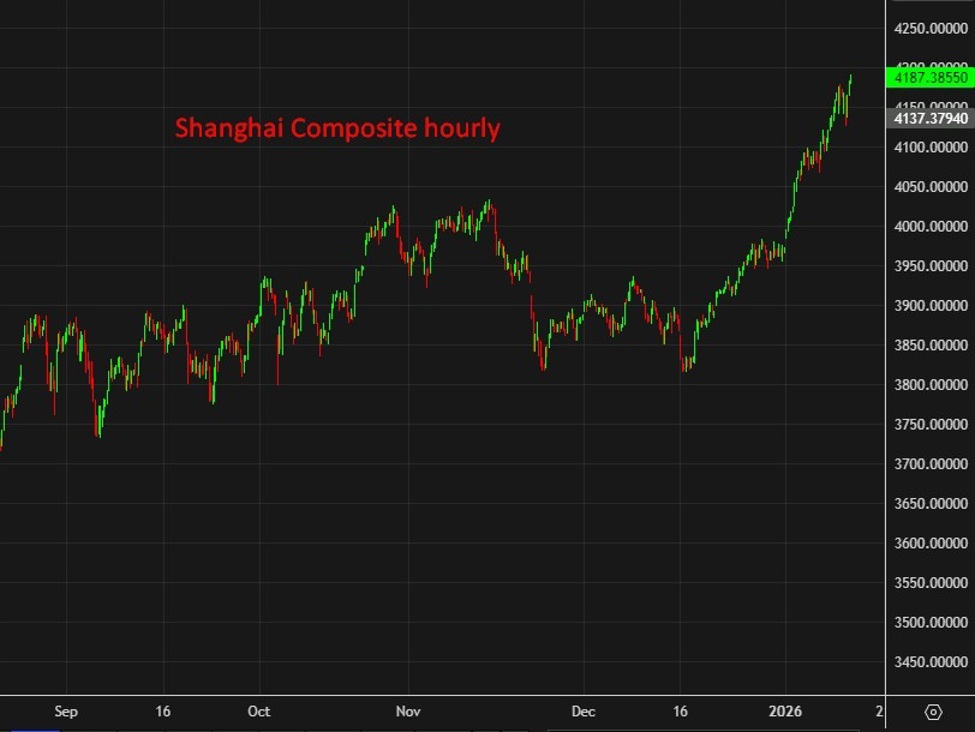
China stock exchanges raise margin rules as authorities rein in rising leverage
SummaryChina raises minimum margin requirement to 100% from 80%Reverses 2023 easing aimed at supporting marketsApplies only to new margin contractsAuthorities cite rising leverage and high liquidityMove signals pre-emptive financial stability focusChina’s stock exchanges have moved to curb rising leverage, announcing a sharp increase in minimum margin requirements for new stock purchases as authorities seek to cool speculative activity without destabilising existing positions.The Shanghai Stock Exchange, Shenzhen Stock Exchange and Beijing Stock Exchange said on January 14 that the minimum margin ratio for stock purchases will be raised to 100% from 80%, effectively reversing an easing measure introduced in 2023. The change was approved by the China Securities Regulatory Commission (CSRC).The exchanges framed the move as a “counter-cyclical adjustment,” pointing to a surge in financing activity and persistently high market liquidity. The decision signals growing official concern that leverage is building too quickly amid rising equity prices and improving risk appetite, particularly following recent policy support and stabilisation measures across China’s capital markets.Crucially, the tightening applies only to new margin contracts. Existing margin positions, and extensions of those positions, will remain governed by the previous rules. That carve-out appears designed to limit forced deleveraging and reduce the risk of abrupt market dislocation, while still slowing the pace of new leveraged inflows.The adjustment effectively requires investors entering new margin trades to fully fund stock purchases with their own capital, removing the ability to borrow against equity exposure under the margin system. While margin financing is not as dominant in China as in some developed markets, it remains a key channel for retail-driven momentum during periods of rising prices.The move fits a familiar policy pattern: authorities allowing market momentum to build, then stepping in pre-emptively to lean against excesses rather than reacting after volatility spikes. By tightening conditions at the margin — literally — regulators appear intent on extending the rally’s lifespan by preventing leverage-fuelled distortions.For markets, the near-term impact may be modest given the exemption for existing positions. However, the signal is clear: Beijing is increasingly alert to financial stability risks and is prepared to recalibrate support measures as sentiment improves, even as it continues to backstop broader market confidence. This article was written by Eamonn Sheridan at investinglive.com. 🔗 Source
Up, up, and away..
Precious metals are once again stealing the spotlight with silver surging above the $90 mark. However, there are still other key things taking place across markets too. With the rise in USD/JPY back above 159.00 overnight, the selloff in the Japanese yen currency and bond market continues to intensify.10-year Japanese government bond yields have now surged up to above 2.18%, its highest since February 1999.The rout is extending for a third straight month now, coinciding with Sanae Takaichi’s undertaking as prime minister. It’s very much a case of fiscal risks seeping in, as evident by the selloff in the currency as well. And market players are pricing in a higher premium in that regard in making up for the fact that the fiscal considerations are also accompanied by the government locking horns with the Bank of Japan (BOJ) on monetary policy setting.BOJ governor Ueda sneaked in a comment earlier here in making sure that markets are still aware of their intentions to stick to their guns. That despite the constant political pressure by Tokyo officials in wanting the central bank to shelve rate hikes for the time being.30-year yields in Japan have also risen to above 3.51% today, the highest on record. And amid the scuffle depicted above, the Japanese yen is also failing to find comfort as it already loses its preferred safe haven status and shelter for investors. USD/JPY is trading up 0.1% to 159.25 currently with watchful eyes on a push towards the key 160.00 level next.It feels like it is only a matter of time before the ministry of finance intervenes in the market. However, the question remains what exactly is their appetite to keep doing so when the fundamentals are not changing? It’s a tough ask. This article was written by Justin Low at investinglive.com. 🔗 Source 💡 DMK Insight Silver’s surge past $90 is a big deal, but the USD/JPY move is even more telling right now. The rise in USD/JPY above 159.00 signals a significant selloff in the Japanese yen, which could have broader implications for global markets. This trend often reflects investor sentiment leaning towards riskier assets, as a weaker yen typically boosts exports for Japan. Traders should keep an eye on how this affects correlated markets, especially commodities like gold and silver, which often react to currency fluctuations. If USD/JPY continues to climb, we might see further pressure on precious metals, despite silver’s recent rally. Watch for key resistance levels in USD/JPY around 160.00, as a break above could trigger more aggressive selling in the yen. Conversely, if silver fails to maintain its momentum, it could indicate a shift in risk appetite among investors. Keep an eye on the 10-year Japanese bond yields as well; rising yields could further weaken the yen and impact the overall market sentiment. 📮 Takeaway Monitor USD/JPY for a potential break above 160.00, which could signal further yen weakness and impact precious metals like silver.

Between the Monroe Doctrine and Attacks on the Fed
This year, Donald Trump seems determined to take on everyone. In geopolitics, he greenlit a special operation against Venezuela’s president and, after that apparent success, hinted at moves in Mexico, Colombia, Cuba, and even Greenland, while seizing oil tankers even in international waters.Domestically, Fed Chair Jerome Powell has accused the Trump administration of trying to politicize the Fed’s monetary policy decisions after being summoned to criminal court over his testimony about renovations to the Fed’s headquarters, though the dispute is really about his refusal to cut interest rates to appease the White House.Where could all this lead the markets?With geopolitical tensions rising and the U.S. retreating to a Monroe Doctrine-style approach, some investors may shy away from dollar-denominated assets. That would weigh on the dollar index while pushing gold spot prices higher, which is exactly what we are seeing now.As for the S&P 500 and Nasdaq, short, targeted actions like the one in Venezuela are unlikely to cause major disruption. Instead, the stock market’s main focus remains artificial intelligence: whether companies investing in the technology will ultimately reap higher returns, or whether billions will be wasted, as was the case with Meta’s bet on the metaverse.Regarding Trump’s plan to request a record $1.5 trillion defense budget for 2027, more than 50% higher than the current level, there are two key points. First, tariff revenues are far from enough to cover such a massive increase. Second, any defense budget requires Congress’s approval, and it’s unclear whether Trump could gather enough support, especially since the full 2026 budget hasn’t even been passed yet.Now, as for the Fed: if it loses its independence and starts making monetary policy decisions based on the president’s words — or anyone else’s — rather than economic data, confidence in the system could take a hit, likely weakening the U.S. dollar. For instance, last year, Trump’s attacks on Powell triggered market volatility, including a rise in U.S. Treasury yields. Fortunately, the Fed’s Board of Governors has confirmed all reserve bank members, limiting Trump and his allies’ ability to sway policy.In summary, the president’s current trajectory isn’t exactly favorable for the U.S. dollar, but it could boost gold and other precious metals. On the other hand, as happened last year, if markets grow nervous about some of Trump’s actions, he could backtrack. This article was written by IL Contributors at investinglive.com. 🔗 Source
Tariffs? What tariffs? China posts record-breaking trade surplus in 2025
Both exports and imports surged in December to wrap up the year, as shown by the data here. Ignoring the bit of window dressing, the full-year picture tells a much more compelling story to what is happening on the trade front. From the numbers, China recorded a staggering record $1.19 trillion full-year trade surplus in 2025. It is the first time that it broke the $1 trillion mark.So even with US tariffs, China’s trade appears unfazed as Beijing remains adamant that it will stand its ground on the trade front. So, how did China achieve this in 2025?Well, it wasn’t just a case of finding solutions to US tariffs. I mean, it was by some extension. However, it is the fact that China has already made preparations for this outcome long before Trump pulled the trigger in April last year:How China has been preparing itself ahead of this tariffs eventuality with the USHere’s why Trump’s deal with Vietnam is a win for ChinaAnd that has helped to cushion any blow from Trump’s tariffs backlash. There is no doubt that the escalation during April to May did bring about some nervous moments. But at the end of it all, things have worked out well for Beijing all things considered.So, what are the key details to note?For one, auto exports powered growth amid a surge in pure electric vehicle (EV) shipments. Vehicle exports as a whole jumped by over 19% last year and within that, EV exports surged by nearly 49%. As a reminder, China is the world’s top auto exporter for a third straight year running now.But perhaps the greater story is that even with this record trade surplus, exports to the US actually fell by 20% on the year. So, where did China shift their export momentum towards? Well, Beijing planned out a strategic focus to export more to Africa and South East Asia mostly. The former saw a near 26% rise in exports with the latter seeing an over 13% jump in exports last year. Meanwhile, exports to the EU saw an increase of a little over 6%.Trump’s tariffs will continue to have an impact on the global trade front for sure. But at least from the numbers, China is sending a signal that they won’t be shaken down by tariffs and that they can do well to ride things out until the end of Trump’s term. This article was written by Justin Low at investinglive.com. 🔗 Source 💡 DMK Insight China’s record $1.19 trillion in trade for the year is a game-changer for global markets. This surge in exports and imports signals strong demand and could influence commodity prices and currency pairs, particularly the yuan. Traders should note that such robust trade figures often lead to increased volatility in related assets, especially if they impact central bank policies. If the yuan strengthens, it could affect forex pairs like USD/CNY, making it crucial to watch for any shifts in sentiment around the Chinese economy. On the flip side, while the numbers are impressive, they might mask underlying issues such as supply chain disruptions or geopolitical tensions that could affect future trade. Keeping an eye on upcoming economic indicators and trade agreements will be essential for gauging the sustainability of this growth. Watch for any signs of policy changes from the People’s Bank of China, as they could have immediate effects on market dynamics. 📮 Takeaway Monitor USD/CNY closely; any strength in the yuan could signal shifts in forex and commodity markets.

China customs authorities say Nvidia's H200 chips are not permitted – report
Well, the US may have tried to ease the approval criteria for Nvidia H200 chip exports to China. But evidently, Beijing looks to be having none of that. Quite literally.The latest report here states that China customs authorities have told customs agents this week that Nvidia’s H200 artificial intelligence (AI) chips are not permitted to enter the country. One of the sources claimed that:”The wording from the officials is so severe that it is basically a ban for now, though this might change in the future should things evolve.”As a reminder, the H200 AI chip is quite the contentious issue involving US-China relations at this point in time as it it Nvidia’s second-most powerful AI chip.The report goes on to say that Chinese government officials have also called tech firms to a meeting where they were explicitly instructed not to purchase the H200 chips unless necessary.Another source added that so far, exemptions are only being discussed for R&D purposes and universities. Otherwise, this looks to be a blanket ban unless there are special circumstances involved.That’s a rough one and reaffirms the main risk to Nvidia’s outlook for this year, that being their ability to hang in the China market.And if anything, it continues to highlight the push by Beijing to want to break away from the stranglehold of US tech. The main issue for them is that they are still not able to compete with domestic firms still lagging behind in terms of developing a similar product to compete. This article was written by Justin Low at investinglive.com. 🔗 Source 💡 DMK Insight Nvidia’s H200 chip export situation is a critical flashpoint for traders, especially those in tech and AI sectors. China’s rejection of eased approval criteria signals a tightening grip on technology exports, which could lead to supply chain disruptions and affect Nvidia’s revenue forecasts. With AI demand surging, any delays in chip availability could push prices higher, impacting not just Nvidia but also companies reliant on these chips for their operations. Traders should keep an eye on Nvidia’s stock performance in the coming days, particularly around key support levels. If the stock breaks below its recent lows, it could trigger a wave of selling. Additionally, monitor the broader semiconductor sector, as this situation could ripple through related stocks like AMD and Intel. The real story is how geopolitical tensions are reshaping market dynamics, and this could lead to volatility in tech stocks. Watch for any further announcements from China or Nvidia that could shift market sentiment. 📮 Takeaway Keep an eye on Nvidia’s stock; a break below recent lows could signal further selling pressure as geopolitical tensions escalate.

FX option expiries for 14 January 10am New York cut
There is arguably just one to take note of on the board for the day, as highlighted in bold below.That being for EUR/USD at the 1.1625 level. It isn’t one that ties to any key technical levels, so I wouldn’t attach too much significance to the expiries above. At most, it might just hold any downside price moves in the event we get some extension to the daily range later in the day. As things stand, the pair is only holding at 13-pip range as we get into European morning trade currently.Perhaps the more interesting bit when looking at the board is that there aren’t many major expiries above the current spot price for USD/JPY. That includes for both today and tomorrow, and more importantly with no big ones layered at the 160.00 mark.The figure level is a pivotal one on the charts, acting as a key psychological barrier as well. And it is one that could be treated as the pain threshold for Tokyo officials before really thinking about intervening in the market. So, the lack of expiries in and around that suggests that there isn’t much to lock price action and the state of play now remains to go with the flow.For more information on how to use this data, you may refer to this post here.Head on over to investingLive (formerly ForexLive) to get in on the know! This article was written by Justin Low at investinglive.com. 🔗 Source 💡 DMK Insight EUR/USD is hovering around 1.1625, but don’t get too excited—there’s not much technical significance here. Traders should be cautious; while this level might attract some attention, it doesn’t align with any major support or resistance zones. The lack of key technical levels means that any price action could be more influenced by broader market sentiment or economic data releases rather than a specific technical trigger. Keep an eye on upcoming economic indicators from the Eurozone or the U.S. that could sway the pair, especially if they deviate from expectations. Also, watch for potential volatility spikes around these releases, as they could create trading opportunities. The flip side? If EUR/USD does break away from 1.1625, it could signal a shift in sentiment, but until then, it’s wise to stay grounded and not overreact to minor fluctuations. Monitor this level closely, but don’t let it dictate your trading strategy without further context. 📮 Takeaway Watch EUR/USD at 1.1625 for any signs of volatility, but don’t overcommit without key economic data to back it up.

Major indices in Europe keep the optimism flowing on the week
Wall Street and US futures might be looking a bit more cautious but major indices in Europe are not feeling much anxiety in another solid open today. With European indices not being as tech heavy in general, AI valuation concerns are not something that is bugging investors all too much. The Nikkei paved the way in Asia and we’re now seeing Europe continue to pick that up to start the day.Here’s a look at how regional indices are faring to kick things off:Eurostoxx +0.2%Germany DAX +0.1%France CAC 40 +0.5%UK FTSE +0.3%Spain IBEX +0.6%Italy FTSE MIB +0.2%The opening gains sees fresh record highs posted for major benchmark indices in France, Spain, and the UK. Solid stuff.Looking over to US futures, things are more tepid with S&P 500 futures down 0.2%, Nasdaq futures down 0.2%, and Dow futures also down by 0.2% on the day.The news involving China’s customs ban on Nvidia chips earlier here won’t help with the unsettling mood. That as the poster boy for the AI rally continues to run into a bit of trouble alongside the already lofty expectations to their outlook.Coming up later today, we’ll see more big bank earnings on the calendar in the US with BofA, Wells Fargo, and Citi all set to report. This article was written by Justin Low at investinglive.com. 🔗 Source 💡 DMK Insight European indices are shrugging off AI valuation fears, and here’s why that matters: While Wall Street shows signs of caution, European markets are holding steady, which could signal a divergence in investor sentiment. This difference is crucial for traders, especially those involved in tech stocks or ETFs that track major indices. If US indices start to falter due to tech concerns, it might create a ripple effect, pulling down correlated assets like tech-heavy ETFs or even cryptocurrencies that often follow broader market trends. Keep an eye on ETH and SOL, as their performance could be influenced by shifts in risk appetite across the Atlantic. The current ETH price at $3,306.45 and SOL at $144.51 could see volatility if US futures take a turn for the worse. Traders should monitor key support levels in these assets, especially if the broader market sentiment shifts. Watch for ETH to hold above $3,200 and SOL to stay above $140 to maintain bullish momentum. If those levels break, it could trigger a wave of selling, especially among retail traders looking to cut losses. 📮 Takeaway Watch ETH at $3,200 and SOL at $140; breaking these levels could signal increased volatility and selling pressure.