
 Bitcoin
  Ethereum
  Tether
  BNB
BNB  XRP
XRP  USDC
USDC  Solana
  TRON
TRON  Lido Staked Ether
  Figure Heloc
Summary:US convenes finance ministerial on critical mineralsFocus on rare earths and supply chain vulnerabilitiesAllies back diversification and resilience pushEmphasis on derisking rather than decouplingSignals coordinated policy and investment approachThe United States stepped up its push to secure global supplies of critical minerals on Monday, with U.S. Treasury Secretary Scott Bessent convening a high-level finance ministerial in Washington focused on strengthening and diversifying supply chains for strategically important resources, including rare earth elements.The meeting brought together finance ministers and senior economic officials from key U.S. allies and partners, reflecting growing concern over the concentration and vulnerability of critical minerals supply chains. Participants included representatives from Australia, Canada, the European Union, France, Germany, India, Italy, Japan, Mexico, South Korea and the United Kingdom, alongside senior U.S. officials and private-sector stakeholders.Treasury said discussions centred on identifying shared vulnerabilities and accelerating practical solutions to improve supply chain resilience. U.S. officials outlined steps already taken to boost domestic and allied production, as well as planned investments aimed at reducing exposure to supply disruptions and potential manipulation. The focus was on building diversified, reliable supply chains rather than pursuing wholesale decoupling from existing producers.Bessent stressed that critical minerals supply chains have become increasingly concentrated, leaving advanced economies exposed to geopolitical risk and economic coercion. He urged participants to prioritise resilience and coordination, arguing that greater collaboration among like-minded economies is essential to remedy longstanding deficiencies in the sector.A key theme of the talks was “derisking rather than decoupling,” with Bessent expressing optimism that countries recognise the need to manage strategic dependencies while maintaining open, rules-based trade. Officials signalled a willingness to move quickly from dialogue to action, sharing best practices and aligning policy tools to support investment across mining, processing and recycling.The meeting also featured contributions from the U.S. Trade Representative’s office, the Export-Import Bank of the United States, and private-sector representatives, highlighting the role of trade policy, finance and capital markets in scaling up alternative supply sources.The ministerial underscores Washington’s broader strategy to treat critical minerals as a core economic and national security issue, with implications spanning clean energy, defence, advanced manufacturing and technology supply chains. This article was written by Eamonn Sheridan at investinglive.com. 🔗 Source 💡 DMK Insight The U.S. is ramping up efforts to secure critical minerals, and here’s why that matters for traders: This push for rare earths highlights ongoing supply chain vulnerabilities, which could impact various sectors, especially tech and green energy. As the U.S. aligns with allies to diversify sources, traders should keep an eye on related stocks and ETFs in the materials sector. The focus on derisking rather than decoupling suggests a strategic approach that could stabilize prices in the long run, but it also raises questions about the volatility of these markets in the short term. If tensions escalate or supply issues arise, we could see significant price swings in commodities linked to these minerals. Watch for any announcements or policy changes that could affect supply chains, as they might create trading opportunities. On the flip side, while this coordinated effort is promising, it may also lead to increased competition among nations for these resources, potentially driving prices up. Traders should monitor key levels in related commodity markets and be prepared for potential volatility as this narrative unfolds. 📮 Takeaway Keep an eye on critical minerals stocks and ETFs; any supply chain announcements could trigger significant price movements in the short term.
Fed’s Williams sees no urgency to change rates, policy well placed
Summary:Federal Reserve Bank of New York President Williams says no urgency to change Fed ratesDescribes policy stance as “in a good place”Says calm markets reflect uncertainty, not complacencyEconomic conditions seen as quite favorableEmphasises continuity regardless of Fed leadershipEarlier:Fed’s Williams says policy near neutral, sees inflation back at 2% in 2027Fed’s Williams defends Powell, warns against eroding central bank independenceFed Williams continues to discover multiple ways to say no rate cut this month, clever boyI thought he’d finished. Nope. Williams said the central bank faces no near-term pressure to adjust interest rates, describing current monetary policy as being “in a good place” even as political tensions surrounding the Fed’s independence continue to simmer.Speaking to reporters on Monday, Williams said he does not feel the Federal Reserve is under strong pressure “one way or the other” to change the level of rates at present. His remarks reinforce recent messaging from senior policymakers that the Fed is comfortable maintaining its current stance as it balances easing inflation pressures against a still-resilient economy.Williams said the relatively calm reaction across financial markets amid heightened debate over the Fed’s independence reflects uncertainty over how the situation will ultimately unfold. He suggested investors are withholding judgment rather than dismissing the issue outright, noting that markets are weighing a wide range of possible outcomes rather than reacting to headlines alone.Despite the political backdrop, Williams struck an upbeat tone on the economic environment, describing current conditions as “quite favorable.” He said the policy setting is appropriate for managing risks and supporting continued economic stability, echoing his earlier assessment that monetary policy is now near a neutral stance.Williams also addressed questions about leadership at the central bank, saying he expects the next Federal Reserve chair to fully appreciate the gravity and responsibility of the role. “Everyone who comes to the Fed sees the stakes of the job,” he said, underscoring the institutional seriousness with which monetary policymaking is approached regardless of personnel changes.His comments add to a broader effort by Fed officials to project continuity and stability at a time when political scrutiny has intensified. While markets have so far avoided sharp reactions, Williams’ remarks signal that policymakers remain focused on fundamentals rather than external pressure, reinforcing expectations of a prolonged policy pause unless incoming data materially alter the outlook. This article was written by Eamonn Sheridan at investinglive.com. 🔗 Source

PBOC sets USD/ CNY central rate at 7.0103 (vs. estimate at 6.9734)
The PBOC follows a managed floating exchange rate system that allows the value of the yuan to fluctuate within a certain range, called a “band,” around a central reference rate, or “midpoint.” It’s currently at +/- 2%.The previous close was 6.9733more to come Injects 358.6bn yuan, 7-day RRs, @1.4% This article was written by Eamonn Sheridan at investinglive.com. 🔗 Source 💡 DMK Insight The PBOC’s recent injection of 358.6 billion yuan signals a proactive stance to stabilize the yuan, and here’s why that matters now: With the yuan currently hovering around 6.9733, traders should keep an eye on the +/- 2% band that defines its fluctuations. This move could indicate the central bank’s intent to counteract any depreciation pressures, especially in light of ongoing global economic uncertainties. If the yuan breaches the upper limit of this band, we might see a stronger dollar response, impacting forex pairs like USD/CNY. Additionally, the 1.4% rate on 7-day reverse repos suggests the PBOC is trying to inject liquidity into the market, which could have ripple effects on risk assets and commodities. Watch for how this liquidity impacts market sentiment in the coming days, particularly as we approach key economic data releases that could influence the yuan’s trajectory. Traders should monitor the yuan’s movement closely, especially if it approaches the 6.95 or 7.00 levels, as these could trigger significant market reactions. 📮 Takeaway Keep an eye on the yuan’s movement around 6.95 and 7.00; a breach could signal major shifts in forex pairs and risk assets.
Nikkei hits record as weak yen and election speculation fuel rally
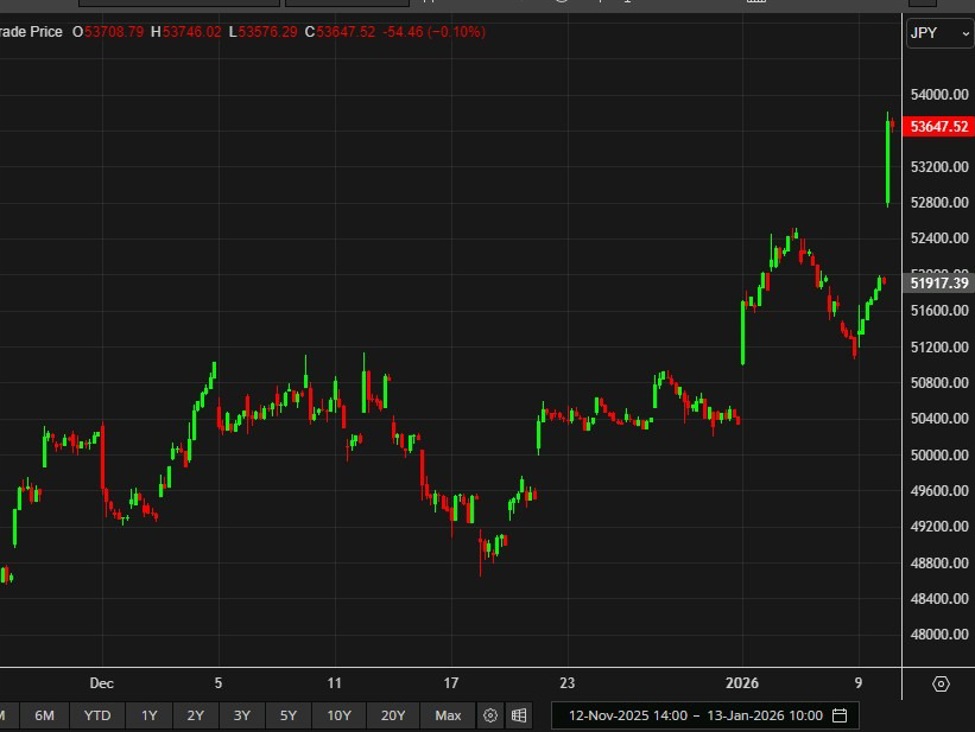
Summary:Nikkei and Topix surge to record highsMarkets play catch-up with Wall Street rallyEarly election speculation boosts fiscal hopesWeak yen lifts exporters; Katayama comments fadeGlobal risk appetite outweighs Fed concernsJapanese equities surged to record highs on Tuesday as markets played catch-up with Wall Street’s recent rally and investors leaned into a familiar combination of yen weakness, global risk appetite and rising expectations of fiscal stimulus.The Nikkei 225 jumped as much as 3.6% to a record 53,814, while the broader Topix climbed up to 2.4% to a fresh peak. The move followed a public holiday in Japan, with local investors reacting to new all-time highs in the S&P 500 and Dow Jones Industrial Average, where technology stocks led gains.Sentiment was also buoyed by speculation that Prime Minister Sanae Takaichi may call an early election in the coming weeks to strengthen her coalition’s parliamentary position. Local media reported discussions within the ruling bloc, and coalition partner Ishin said Takaichi had met party leaders last week. Markets widely interpret the prospect of an early election as a signal for more proactive fiscal spending.Currency dynamics reinforced the equity rally. The yen remained sharply weaker than at the previous Tokyo close, boosting the overseas earnings outlook for Japan’s export-heavy corporates. Earlier verbal intervention from Finance Minister Satsuki Katayama, who flagged concerns over one-sided currency moves, had little lasting impact on FX markets, leaving USD/JPY elevated and supportive for equities.Japanese stocks also appeared largely unfazed by political pressure on the U.S. Federal Reserve, with investors following global peers in brushing aside concerns over the Justice Department’s investigation into Fed Chair Jerome Powell.Overall, the session underscored how a weak yen continues to trump intervention rhetoric, amplifying global risk-on momentum and reinforcing Japan equities’ leadership at the start of the year.—USD/JPY rising still: This article was written by Eamonn Sheridan at investinglive.com. 🔗 Source 💡 DMK Insight Japanese equities are on fire, hitting record highs, and here’s why that matters: The Nikkei and Topix’s surge signals a strong bullish sentiment, largely driven by optimism surrounding early election speculation that could lead to favorable fiscal policies. This momentum is further fueled by a weak yen, which is boosting exporters’ profits. Traders should note that this rally is not just a local phenomenon; it’s a response to the broader risk-on sentiment seen in global markets, particularly following Wall Street’s gains. This could lead to increased capital inflows into Japanese stocks, making them a hot target for both day and swing traders. However, it’s worth considering the potential for a pullback. If the Fed’s stance shifts or if inflation concerns resurface, we could see volatility return. Keep an eye on key resistance levels in the Nikkei around previous highs, as a break could signal further upward movement. Watch for any shifts in U.S. economic data that might impact global sentiment, as these could ripple through to Japanese markets and affect trading strategies significantly. 📮 Takeaway Watch for the Nikkei’s resistance levels; a breakout could signal further gains, but be cautious of potential Fed-induced volatility.

Oil rises as geopolitics clash with new supply; Iran tensions vs. Venezuela exports
Summary:Oil settles at seven-week highs, extending mid-January rallyIran export risks support prices amid protest crackdownVenezuela supply return caps upsideRussia, Azerbaijan add background supply riskVolatility dominates despite surplus outlookOil climbed as Iran-related supply risks outweighed expectations of returning Venezuelan barrels, gains seen since mid-last week.Oil prices climbed to their highest levels in around seven weeks on Monday, extending gains that began in the middle of last week as markets weighed escalating geopolitical risks against the prospect of additional sanctioned supply returning to the market.Brent crude settled up 0.8% at $63.87 a barrel, its highest close since mid-November, while U.S. WTI rose 0.6% to $59.50, the strongest settlement since early December. The advance reflects growing concern that Iran’s oil exports could be disrupted as authorities crack down on nationwide anti-government protests.Tensions surrounding Iran intensified after President Donald Trump said Washington was weighing responses to the crackdown, including the possibility of talks with Iranian officials while also threatening military action. Although Tehran said it is keeping communication channels open, traders focused on the risk that sanctions enforcement or security concerns could curb shipments.Data from tanker-tracking firms show Iran currently holds a record volume of crude on the water, around 50 days of output, highlighting both export challenges and the vulnerability of flows should tensions escalate. Reduced Chinese buying due to sanctions has added to uncertainty around near-term supply.Offsetting those concerns are expectations that supply could rise from Venezuela, where oil exports are set to resume following the ouster of President Nicolás Maduro. The U.S. has signalled that up to 50 million barrels of sanctioned Venezuelan crude could be transferred, with trading houses already lining up vessels to restart shipments. The return of Venezuelan barrels has capped oil’s upside, even as geopolitical risk supports prices.Elsewhere, traders are monitoring potential disruptions from Russia amid attacks on energy infrastructure, alongside lower export volumes from Azerbaijan and policy signals from Norway reinforcing long-term oil and gas development. This article was written by Eamonn Sheridan at investinglive.com. 🔗 Source 💡 DMK Insight Oil’s rise to seven-week highs signals a complex interplay of geopolitical tensions and supply dynamics. The ongoing protests in Iran are creating significant export risks, which traders are clearly pricing in. This situation is exacerbated by the uncertainty surrounding Venezuela’s supply return, which, while potentially capping upside, hasn’t deterred bullish sentiment. Traders should be aware that volatility is likely to persist, especially as Russia and Azerbaijan add layers of supply risk to the mix. The market’s current focus on geopolitical factors over the anticipated surplus suggests that short-term trading strategies might benefit from monitoring these developments closely. Key resistance levels to watch are around recent highs, while support could be tested if Venezuelan barrels come back online sooner than expected. Keep an eye on the daily charts for breakout patterns, as these could signal further momentum in either direction. 📮 Takeaway Watch for oil prices to test recent highs; geopolitical tensions could drive volatility, while any news on Venezuelan supply could shift sentiment quickly.
Japan govmt spokesperson says ready to respond on sharp, one-sided yen weakness
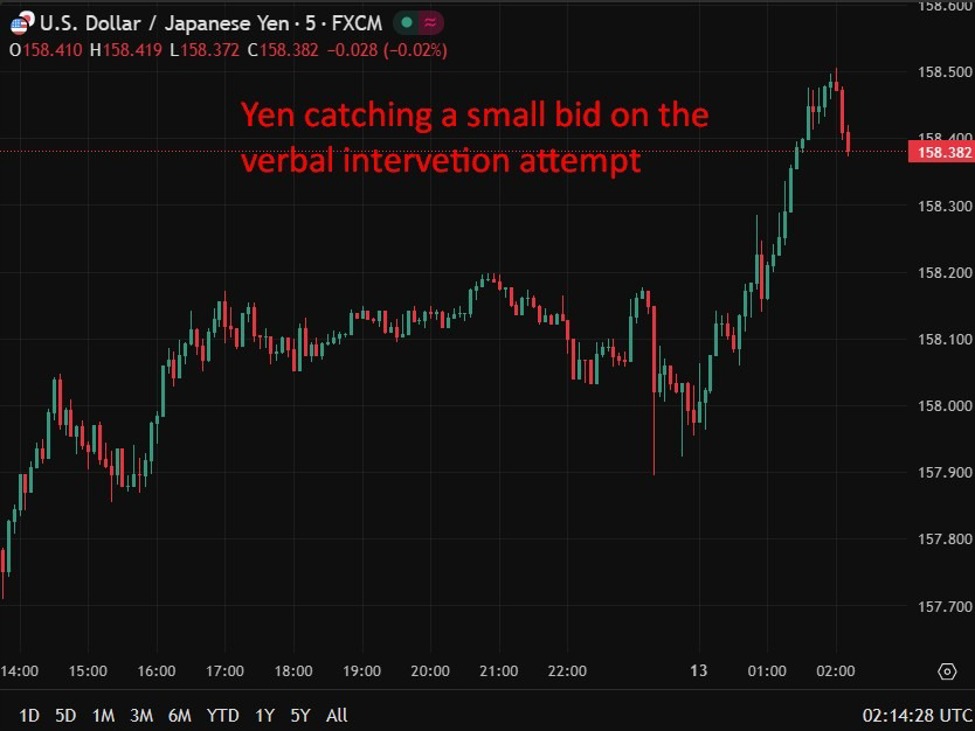
We had some earlier too:Japan’s Katayama warns on weak yen in talks with US Treasury, invokes Bessent’s nameI’ll come back with more detail on a separate post. This article was written by Eamonn Sheridan at investinglive.com. 🔗 Source 💡 DMK Insight Japan’s Katayama is sounding the alarm on the weak yen, and here’s why that matters: a depreciating yen can significantly impact global trade dynamics and investor sentiment. With the US Treasury involved, this isn’t just a local issue; it could ripple through forex markets and influence risk appetite across asset classes. Traders should keep an eye on the USD/JPY pair, especially if it tests key resistance levels. A weak yen often leads to increased costs for imports, which could stoke inflationary pressures in Japan. This scenario might prompt the Bank of Japan to reconsider its monetary policy stance, potentially leading to volatility in both the yen and equities. If the USD/JPY breaks above recent highs, we could see a surge in dollar strength, affecting commodities and other currencies. Conversely, if the yen finds support, it could signal a shift in market sentiment. Watch for any statements from the Bank of Japan or US Treasury that could provide clarity on their respective monetary policies. The next few days could be pivotal, especially if the USD/JPY approaches significant psychological levels. 📮 Takeaway Monitor the USD/JPY pair closely; a break above recent highs could signal further dollar strength, impacting global markets.
Japan steps up FX warnings, Tokyo jawboning returns, but yen reaction limited
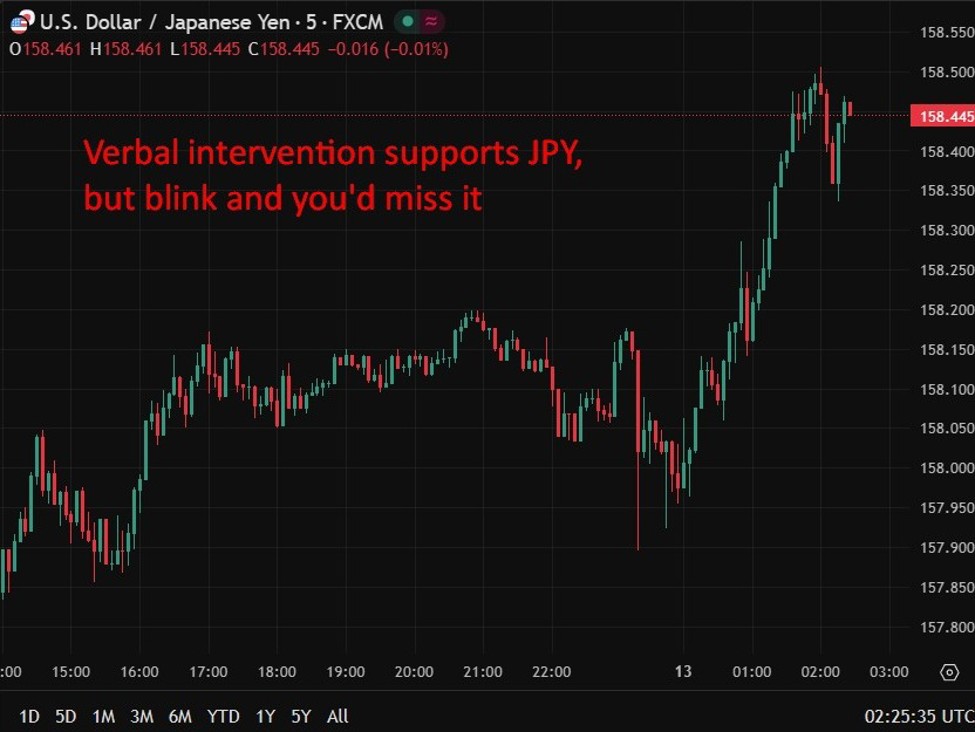
Summary:Japan spokesperson warns of “one-sided” sharp FX movesRepeats readiness to act against excessive volatilityFollows Katayama’s earlier Washington jawboningYen response limited; USD/JPY remains elevatedWeak yen still supports record-high NikkeiJapanese officials renewed verbal warnings over yen weakness late Monday (US time), but the market reaction was limited, with traders largely keeping USD/JPY elevated and risk sentiment anchored by a powerful equity rally that has taken the Nikkei 225 to record highs.Japan’s government spokesperson said authorities have observed “one-sided” and “sharp” foreign-exchange moves recently and stressed that currencies should move in a stable manner that reflects economic fundamentals. The spokesperson added that Japan stands ready to take “appropriate steps” to respond to excessive FX volatility, including speculative moves, reiterating the familiar language that Tokyo typically uses to lean against rapid yen depreciation.The comments followed earlier remarks from Finance Minister Satsuki Katayama, who said she had conveyed concerns about yen weakness and one-sided declines directly to U.S. Treasury Secretary Scott Bessent during meetings in Washington. Despite the stepped-up rhetoric across multiple officials, the near-term impact on FX pricing has so far been modest, with market participants treating the warnings as jawboning rather than a clear signal of imminent intervention.The muted FX response comes as Japanese equities continue to benefit from a weak yen, which boosts the value of overseas earnings for export-heavy corporates. The Nikkei’s record highs have reinforced the view that policymakers face a delicate balance: a softer currency supports equities and corporate profits, but also raises import costs and squeezes household purchasing power.The broader backdrop has also been supportive for USD/JPY, with interest-rate differentials still favouring the dollar, the prospect of renewed fiscal stimulus from the government, and traders reluctant to fade the move without a stronger signal from Tokyo. As a result, the latest comments have served mainly to reintroduce two-way risk at the margin, rather than forcing a meaningful reversal.For now, markets appear to be testing Japan’s tolerance for yen weakness. Unless officials escalate from rhetoric to action, or unless global rates and risk sentiment shift, verbal intervention alone may struggle to deliver sustained yen gains. This article was written by Eamonn Sheridan at investinglive.com. 🔗 Source 💡 DMK Insight Japan’s latest warnings about yen weakness aren’t shaking the market, and here’s why that matters: Despite officials’ concerns over ‘one-sided’ FX moves, USD/JPY remains elevated, indicating traders are skeptical about intervention effectiveness. The yen’s ongoing weakness is supporting Japan’s record-high Nikkei, which suggests that while officials are vocal, the market isn’t buying into the fear. This could lead to a divergence where the yen continues to weaken, potentially pushing USD/JPY higher. Traders should keep an eye on key resistance levels around 150, as a break could trigger further bullish sentiment in USD/JPY. On the flip side, if Japan does intervene, it could create volatility that traders need to prepare for. Watch for any sudden moves from the Bank of Japan, especially if USD/JPY approaches critical thresholds. In the broader context, this situation highlights the delicate balance between currency strength and equity market performance. If the yen continues to weaken without intervention, it could lead to increased inflationary pressures in Japan, complicating the economic outlook. So, keep your charts ready and monitor USD/JPY closely for any signs of intervention or shifts in sentiment. 📮 Takeaway Watch USD/JPY closely; a break above 150 could signal further bullish momentum, while any intervention from Japan could create volatility.
USD/JPY is surging still. Do we pencil in January 19 for Bank of Japan intervention?
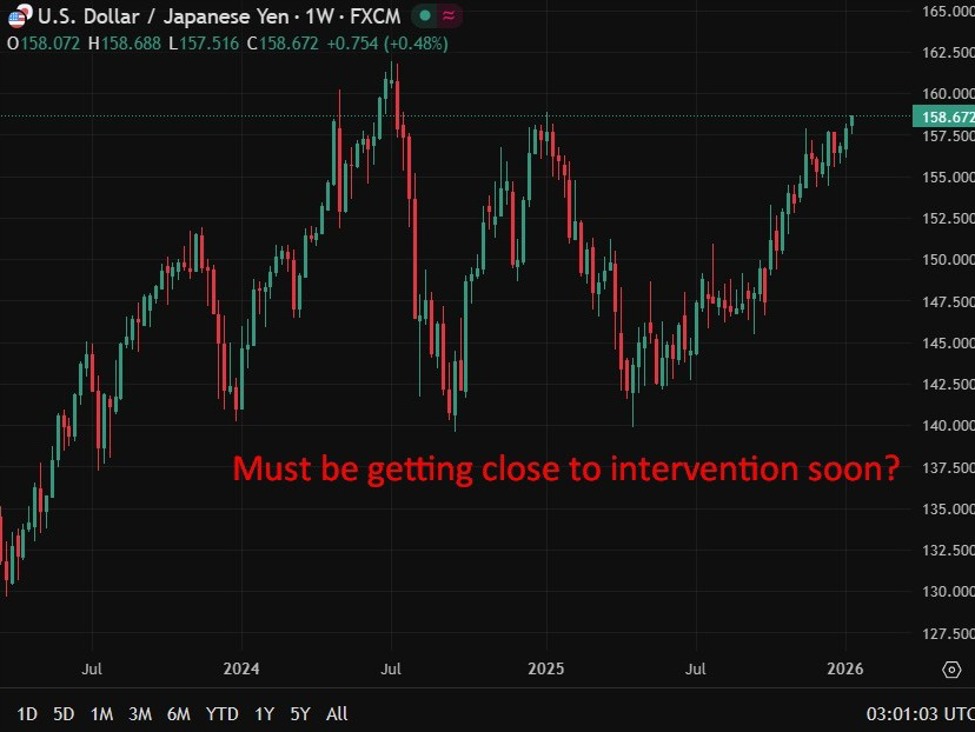
Summary:USD/JPY extends gains despite repeated jawboningKatayama and government warnings fail to shift FXRecord Nikkei boosts tolerance for weak yenIntervention risk tied to disorderly moves, not levelsThin-liquidity periods seen as risk windows … I’m eyeing January 19 for direct intervention riskThe continued surge in USD/JPY despite multiple rounds of official jawboning has refocused my attention on the risk of direct yen intervention, even as authorities show little urgency to escalate beyond rhetoric for now.Japanese officials have already stepped up verbal warnings, with Finance Minister Satsuki Katayama flagging concerns about one-sided yen weakness during talks in Washington, followed by reinforced language from the government spokesperson warning against sharp and speculative FX moves. Yet the impact on pricing has so far been limited, with USD/JPY continuing to grind higher.Markets appear to be interpreting the lack of follow-through as a signal that tolerance for yen weakness remains relatively high, particularly while Japanese equities benefit. The Nikkei 225 has pushed to record highs, underpinned by the weak currency’s boost to exporters’ overseas earnings, complicating the political calculus around intervention.That said, traders are increasingly alert to the conditions under which Tokyo has historically chosen to act. Japan has tended to intervene when FX moves become disorderly rather than merely directional, often during periods of thinner liquidity when impact per dollar spent is maximised. Against that backdrop, upcoming U.S. market holidays later this month have emerged as potential risk windows rather than base-case triggers. Specifically January 19, Martin Luther King, Jr. Day:Equity markets are closedUS bond markets are closedFX never fully closes but liquidity and interest will be much thinner than usual Importantly, officials have stopped short of defining explicit red lines. Rate differentials continue to favour the dollar, and without a shift in Bank of Japan policy, any intervention would still be leaning against fundamentals — a dynamic Tokyo is well aware tends to limit durability.For now, markets are testing Japan’s tolerance rather than pricing imminent action. But as USD/JPY pushes into fresh highs and verbal intervention loses traction, sensitivity to sharp or illiquid moves is rising. The longer yen weakness persists without consolidation, the greater the risk that authorities feel compelled to act — not on a schedule, but in response to market behaviour. This article was written by Eamonn Sheridan at investinglive.com. 🔗 Source
investingLive Asia-Pacific FX news wrap: Yen plunge continues
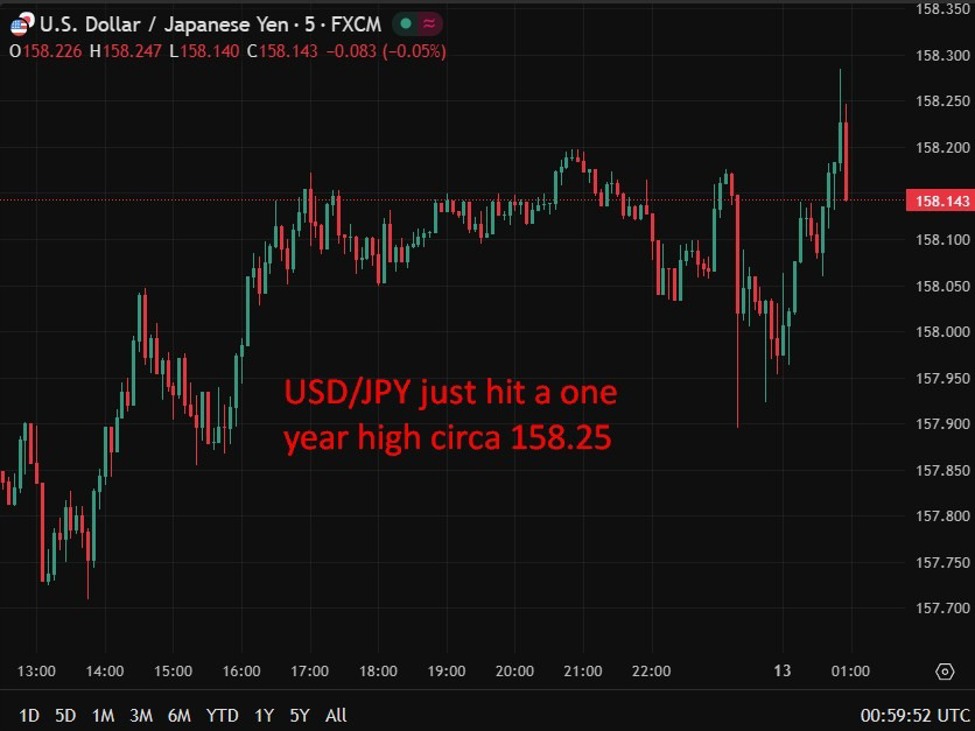
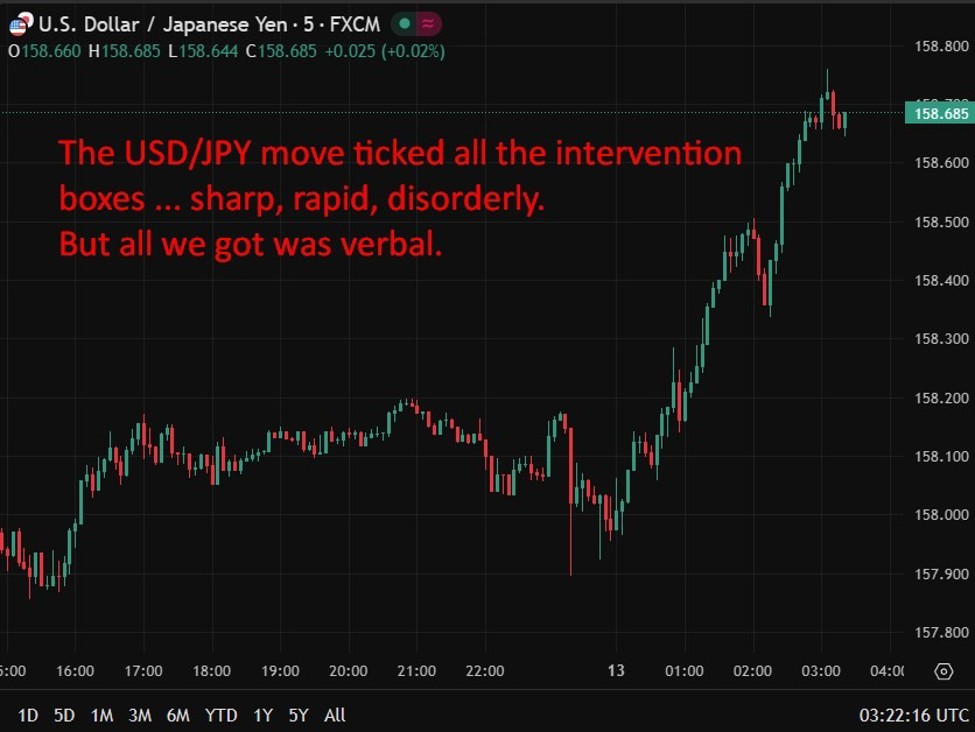
USD/JPY is surging still. Do we pencil in January 19 for Bank of Japan intervention?Japan steps up FX warnings, Tokyo jawboning returns, but yen reaction limitedJapan govmt spokesperson says ready to respond on sharp, one-sided yen weaknessOil rises as geopolitics clash with new supply; Iran tensions vs. Venezuela exportsNikkei hits record as weak yen and election speculation fuel rallyPBOC sets USD/ CNY central rate at 7.0103 (vs. estimate at 6.9734)Fed’s Williams sees no urgency to change rates, policy well placedUS convenes allies to strengthen critical minerals supply chainsBank of Korea seen holding rates as next cut delayed to 2027 (poll)UK consumer spending slumps in December as household caution deepensFed Williams continues to discover multiple ways to say no rate cut this month, clever boyAustralian consumer confidence slips, 92.9 (94.5 prior), as rate expectations turn higherJapan’s Katayama warns on weak yen in talks with US Treasury, invokes Bessent’s nameFed’s Williams defends Powell, warns against eroding central bank independenceFed’s Williams says policy near neutral, sees inflation back at 2% in 2027Trump threatens 25% tariff on countries doing business with Iran. No detail, just bluster.Fitch warns Fed independence is key pillar of U.S. sovereign credit ratinginvestingLive Americas FX news wrap: US equities shrug off Trump Fed independence attackTrump: Countries doing business with Iran to pay 25% US tariffS&P and Dow close at new record levelsNew Zealand business confidence surges to decade high as recovery gathers paceNew Zealand data: Q4 2025 business confidence 48% vs. +18% in the prior quarterSummary:NZ business confidence jumps to highest since 2014Fitch flags Fed independence as key US rating supportTrump tariff threat on Iran-linked trade adds uncertaintyWilliams signals Fed patience, defends policy frameworkYen resumes slide; crosses hit fresh record highsAsia opened to a mixed macro backdrop, with pockets of optimism offset by persistent FX stress and rising geopolitical uncertainty.In New Zealand, sentiment improved sharply after the New Zealand Institute of Economic Research reported business confidence at its highest level since 2014. The QSBO showed hiring and investment intentions lifting, activity stabilising and inflation pressures remaining contained, reinforcing expectations that the Reserve Bank of New Zealand is done cutting rates this cycle. NZD/USD ticked modestly higher on the release.In the US, institutional risk remained in focus. Fitch Ratings said Federal Reserve independence remains a key support for the US AA+ sovereign rating, warning it is monitoring governance and institutional checks closely following renewed political pressure on Chair Jerome Powell.Policy uncertainty was amplified after Donald Trump said the US would impose a 25% tariff on any country doing business with Iran, effective immediately. The White House provided no implementation detail, leaving markets to assess (guess?) the implications for global trade and Iran’s major partners. Market speculation if intensely focused on how, if?, this applies to China, one of Iran’s largest trading partners. Its hard not to see a TACO on this, at least as it applies to China. Fed messaging itself remained steady. New York Fed President John Williams said policy is near neutral and well positioned, with inflation expected to return to 2% in 2027 and no urgency to cut rates further. Williams defended Fed independence, the current rate-control framework, and reiterated that the dollar remains the world’s reserve currency.FX markets were dominated by renewed yen weakness. Japan Finance Minister Satsuki Katayama said she raised concerns about one-sided yen moves with US Treasury Secretary Scott Bessent, briefly lifting the currency. The bounce faded quickly. USD/JPY pushed on to a one-year high near 158.25, and then accelerated further. Cross-yen pairs marked a series of fresh extremes: GBP/JPY hit its highest level since 2008 near 213.20, EUR/JPY rose to a record 185.02, and CHF/JPY to a record 198.90. Japanese equities continued to thrive on the weak yen, with the Nikkei 225 surging to a historic high.In the UK, demand signals softened further. Barclays card data showed consumer spending fell 1.7% y/y in December, the sharpest drop since 2021, while British Retail Consortium data showed retail sales growth slowed for a fourth straight month as shoppers waited for post-Christmas discounts.Overall, the session highlighted a familiar pattern: resilient risk assets, firm USD support, and a yen under sustained pressure despite repeated official warnings. Asia-Pac stocks:Japan (Nikkei 225) +3.08%, loving yen weakness and the prospect of more government fiscal stimmyHong Kong (Hang Seng) +1.12% Shanghai Composite flat Australia (S&P/ASX 200) +0.94%Authorities watching JPY crosses: This article was written by Eamonn Sheridan at investinglive.com. 🔗 Source 💡 DMK Insight USD/JPY’s surge signals potential volatility ahead, especially with intervention chatter heating up. The Bank of Japan’s (BoJ) warnings about yen weakness are becoming more pronounced, and January 19 could be a pivotal date for intervention. Traders should keep a close eye on this as it could lead to sharp reversals. The current geopolitical tensions, particularly involving oil supply from Iran and Venezuela, are also adding layers of complexity to the market. If oil prices continue to rise, it could further pressure the yen, as Japan is heavily reliant on energy imports. On the technical side, watch for key levels in USD/JPY; a break above recent highs could trigger more aggressive buying, while a failure to sustain gains might prompt profit-taking. The Nikkei’s performance is also worth monitoring, as it often correlates with yen strength. Keep an eye on how institutional players react to these developments, as their moves could set the tone for the broader market. 📮 Takeaway Watch for USD/JPY around January 19 for potential intervention; key levels to monitor are recent highs and the Nikkei’s reaction.

USD/JPY tests one-year high as yen struggles drag on in the new year
Well, if something can’t go up on good news.. there’s bound to be trouble up ahead. And the Japanese yen is quickly finding that out already with another drop today that sends it to a one-year low against the US dollar. I warned about the situation yesterday already here: The dollar isn’t the only major currency having a bad dayThe latest drop in the yen currency now takes the pair up to 158.70 levels, its highest since January last year. The high earlier briefly clipped 157.91, which would mark the highest since July 2024. Pain.The 160.00 mark is the more obvious threshold to watch out for and a key psychological one at that.However, the rapid pace of decline in the yen is also something to take note of. We’re already seeing Tokyo officials come out to try and intervene verbally with some jawboning language. But evidently, that doesn’t look to be enough to deter yen shorts.In any case, the closer we are to the 160.00 threshold is definitely a signal that will invite Japan’s ministry of finance to potentially intervene to keep markets in check. As a reminder, the last time they did so was back in late April and during May 2024. Before that, they last intervened to buy the yen back in September to October 2022 – which was the first yen-buying intervention in 24 years.The issue with any intervention now is that the fundamentals aren’t going to change. The “Takaichi trade” is well and truly on and it dictates that the path of least resistance is still for a weaker currency. That amid pressure on the BOJ to not hike rates as Japan’s fiscal expansion continues to see its debt levels soar through the sky.On the bright side, there’s at least one good thing out of this I guess. And that is any yen carry trade implosion is pushed further away, for now. This article was written by Justin Low at investinglive.com. 🔗 Source 💡 DMK Insight The Japanese yen’s drop to a one-year low against the US dollar signals potential volatility ahead for forex traders. When a currency can’t rally on positive news, it raises red flags about underlying economic health. The yen’s weakness could be tied to Japan’s ongoing monetary easing policies, which contrast sharply with the Fed’s tightening stance. Traders should watch for further declines, especially if the USD continues to strengthen. This could lead to increased volatility in related markets, including commodities priced in dollars, like oil and gold. If the USD/JPY pair breaks below key support levels, it might trigger a cascade of selling, impacting risk sentiment across the board. Keep an eye on the 145 level as a potential pivot point for the yen, as a breach could lead to further losses. On the flip side, if the yen finds support and rebounds, it could create a buying opportunity for those looking to capitalize on a potential reversal. Watch for economic data releases from Japan that might influence this dynamic. 📮 Takeaway Monitor the USD/JPY pair closely; a break below 145 could signal further yen weakness and increased market volatility.