
 Bitcoin
  Ethereum
  Tether
  XRP
XRP  BNB
BNB  USDC
USDC  Solana
  TRON
TRON  Lido Staked Ether
  Figure Heloc
An updated Senate draft of the market structure bill prohibits yield “solely in connection with the holding of a payment stablecoin.” 🔗 Source

Nasdaq Technical Analysis: The compression points to big moves once we get a breakout
FUNDAMENTAL OVERVIEWThe Nasdaq continues to consolidate inside a rising wedge as traders await new catalysts and a breakout on either side. The market maintains a bullish bias amid strengthening US economy and the Fed’s dovish reaction function. Yesterday, we got a brief drop following the news of the US Department of Justice subpoenaing the Federal Reserve. The market saw the move as another attack against Fed independence amid Trump’s calls to lower interest rates faster. A potential loss of Fed independence increases the risk of uncontrolled inflation in the future and eventually stagflation. The probability of the loss of Fed independence though remains very low as the consequences would be too big not only for the US but the global economy as a whole. So, for now it’s just noise, but the market will keep an eye on that risk.Today, we have the US CPI report, and it could be a major market-moving release. A hot report will likely trigger some hawkish repricing in interest rate expectations and weigh on the market. On the other hand, soft data should keep the rate cuts on the table and support the upside with no more data risk. NASDAQ TECHNICAL ANALYSIS – DAILY TIMEFRAMEOn the daily chart, we can see that the Nasdaq has been compressing into a rising wedge. These types of patterns can resolve into a downside breakout taking the price to the base of the wedge or an upside breakout leading to a strong rally after the consolidation. In this case, a downside breakout could take us to the 24,900, while an upside breakout should lead to new all-time highs.NASDAQ TECHNICAL ANALYSIS – 4 HOUR TIMEFRAMEOn the 4 hour chart, we can see more clearly the choppy price action inside the wedge as traders await a breakout. The sellers will likely continue to step in around the top trendline to keep targeting the bottom trendline and eventually a breakout. The buyers, on the other hand, will want to see the price breaking higher to increase the bullish bets into new all-time highs. NASDAQ TECHNICAL ANALYSIS – 1 HOUR TIMEFRAMEOn the 1 hour chart, there’s not much we can add here as the sellers will continue to target the bottom trendline, while the buyers will look for an upside breakout or a pullback into the bottom trendline to position for new highs with a better risk to reward setup. The red lines define the average daily range for today.UPCOMING CATALYSTSToday we have the US CPI report. Tomorrow, we get the November US Retail Sales and US PPI reports, so it’s going to be old data. We also have a potential US Supreme Court decision on Trump’s tariffs tomorrow. On Thursday, we get the latest US Jobless Claims figures. This article was written by Giuseppe Dellamotta at investinglive.com. 🔗 Source 💡 DMK Insight The Nasdaq’s consolidation in a rising wedge suggests traders are on edge, waiting for a breakout. With SOL at $141.81, the bullish sentiment in the broader market could spill over into crypto, especially if the Nasdaq breaks upward. A dovish Fed typically favors risk assets, and SOL could see increased buying pressure if the tech sector rallies. However, keep an eye on the upper trendline of the wedge; a breakout above could trigger a significant move, while a failure to break could lead to a sharp pullback. Traders should monitor SOL’s price action closely, especially around key resistance levels. If SOL can hold above $140, it might attract more buyers, but a drop below could signal a bearish reversal. Watch for the Nasdaq’s next moves—if it breaks out, SOL could follow suit, but if it falters, expect volatility. 📮 Takeaway Watch SOL closely around $140; a breakout in the Nasdaq could push it higher, while a drop below could signal trouble.
US small business optimism rises to a 3-month high on expected better economic conditions
US NFIB 99.5 vs 99.2 expectedPrior 99.0Full report hereThe NFIB Small Business Optimism Index rose 0.5 points in December to 99.5 and remained above its 52-year average of 98, as reported by the agency. The Uncertainty Index fell 7 points from November to 84, the lowest reading since June 2024.NFIB Chief Economist Bill Dunkelberg said: “2025 ended with a further increase in small business optimism. While Main Street business owners remain concerned about taxes, they anticipate favorable economic conditions in 2026 due to waning cost pressures, easing labor challenges, and an increase in capital investments.”Small business optimism rose to the highest level since 2020 in December 2024 but tumbled in the first half of 2025 due to Trump’s trade war. As Trump folded on aggressive tariffs and started lowering them to more reasonable levels, small business optimism picked up and continues to do so helped by improving economic conditions and Fed’s rate cuts.What is the US NFIB Small Business Optimism Index?The NFIB Small Business Optimism Index is a monthly economic indicator that measures the health of the U.S. economy from the perspective of small business owners. It is produced by the National Federation of Independent Business (NFIB), the largest small-business advocacy group in the country.Because small businesses employ nearly 50% of the private workforce and contribute significantly to GDP, this index is considered a leading indicator. It can signal shifts in the economy before they show up in broader government data.While it is sometimes called a “tier-2” or “tier-3” indicator (meaning it moves the market less than the NFP or CPI), it offers unique insights that others miss:Hiring Predictor: The “Plans to Increase Employment” component is a highly accurate preview of the Non-Farm Payroll (NFP) report.Inflation Warning: The survey tracks how many owners are planning to raise prices, which often predicts future CPI spikes.The “Main Street” vs. “Wall Street” Gap: Sometimes the stock market is booming while small businesses are struggling with credit and costs; this index highlights that disconnect.Political Sensitivity: Small business owners are highly sensitive to changes in tax law and regulation, making the index a mirror for how the business community views current government policy. This article was written by Giuseppe Dellamotta at investinglive.com. 🔗 Source 💡 DMK Insight The NFIB Small Business Optimism Index hitting 99.5 is a positive signal for market sentiment, and here’s why that matters: For traders, this uptick suggests a potential increase in consumer spending and business investment, which could bolster Ethereum’s price momentum. With ETH currently at $3,130.91, a sustained rise in optimism could lead to increased demand for crypto as an alternative asset. The drop in the Uncertainty Index to 84 indicates that businesses are feeling more confident, which often translates to higher risk appetite among investors. If this optimism translates into broader economic growth, we might see ETH testing resistance levels above $3,200 in the coming weeks. But don’t overlook the flip side: if optimism doesn’t lead to actual economic improvements, we could see a quick reversal. Keep an eye on the correlation with traditional markets, especially tech stocks, as they often move in tandem with crypto. Watch for any shifts in the NFIB index in the next month, as a decline could signal a bearish turn for ETH and related assets. 📮 Takeaway Monitor the NFIB index closely; a sustained rise could push ETH above $3,200, while a decline may trigger bearish sentiment.

Ukraine blocks Polymarket, classifies prediction markets as gambling
The move adds Ukraine to a growing list of countries, including France, Germany, the UK, Italy, Poland, Thailand and Australia, where Polymarket is already restricted. 🔗 Source 💡 DMK Insight Polymarket’s restrictions in Ukraine signal a tightening grip on decentralized betting platforms, and here’s why that matters: As more countries join the list of those limiting access to platforms like Polymarket, traders need to consider the implications for market liquidity and sentiment. Restrictions can lead to reduced participation from retail traders, which might skew market dynamics and increase volatility. This could also affect correlated markets, such as crypto and forex, where sentiment often spills over from betting markets. If traders are anticipating a downturn in market engagement due to these restrictions, it might be wise to adjust positions accordingly, especially in high-volatility assets. On the flip side, this could create hidden opportunities for savvy traders who can navigate the shifting landscape. Keep an eye on how these restrictions impact trading volumes and sentiment in related markets. Watch for key price levels in crypto assets that often react to shifts in retail sentiment, particularly during high-impact news cycles. 📮 Takeaway Monitor how Polymarket’s restrictions affect trading volumes in crypto and forex; adjust positions if volatility spikes.

What is Brevis? Unlocking the Blockchain Black Box with Infinite ZK Compute
In the world of Blockchain, we often face a paradox: All data is public, yet Smart Contracts are “blind” to their own history. While Smart Contracts excel at managing the The post What is Brevis? Unlocking the Blockchain Black Box with Infinite ZK Compute appeared first on NFT Evening. 🔗 Source 💡 DMK Insight Smart Contracts are powerful, but their inability to access historical data is a significant limitation. This “blindness” can lead to inefficiencies and vulnerabilities, especially in volatile markets where historical context is crucial for decision-making. As traders, understanding the implications of this limitation is key. If a Smart Contract can’t reference its past, it might execute poorly under certain conditions, leading to unexpected losses. The introduction of solutions like Brevis, which aims to enhance Smart Contracts with Zero-Knowledge (ZK) technology, could change the game. By allowing contracts to access historical data without compromising privacy, it could improve decision-making and risk management. Traders should keep an eye on how this technology develops and its adoption rate, as it could lead to more robust trading strategies and potentially lower volatility in assets tied to these contracts. However, there’s a flip side: if the market doesn’t embrace these advancements, we might see a stagnation in Smart Contract utility, keeping traders exposed to the same risks. Watch for any partnerships or integrations that signal a shift towards this technology, as they could indicate a broader acceptance and impact on market dynamics. 📮 Takeaway Monitor developments around Brevis and ZK technology; their adoption could significantly enhance Smart Contract functionality and trading strategies.

Dubai free zone shifts crypto token vetting to licensed companies
DFSA’s new company-led suitability model and AML expectations may make it difficult for licensed entities to justify supporting privacy-focused assets. 🔗 Source 💡 DMK Insight DFSA’s new model could tighten the screws on privacy-focused assets, and here’s why that matters: As the Dubai Financial Services Authority (DFSA) rolls out its company-led suitability model alongside stricter AML expectations, licensed entities may find it increasingly challenging to back privacy-centric cryptocurrencies. This shift could lead to a significant reduction in liquidity for such assets, as firms may hesitate to engage with them due to compliance risks. Traders should be aware that this regulatory environment could create a ripple effect, impacting not just privacy coins but also broader market sentiment towards cryptocurrencies that prioritize anonymity. Look for potential volatility in privacy-focused assets as traders react to these developments. If major exchanges start delisting or limiting trading on these assets, it could push prices down sharply. Keep an eye on key levels of support and resistance for these coins, as they may break down under pressure. The real story here is how compliance burdens could reshape the crypto landscape, so watch for any announcements from exchanges regarding their stance on privacy assets in the coming weeks. 📮 Takeaway Monitor liquidity levels and regulatory announcements closely; privacy-focused assets could face significant pressure if exchanges tighten compliance measures.

Seventy economists urge EU to ‘let the public interest prevail’ on digital euro
Economists urge EU lawmakers to back a public digital euro, warning that private stablecoins and foreign payment companies threaten Europe’s monetary sovereignty. 🔗 Source 💡 DMK Insight The push for a public digital euro is gaining traction, and here’s why traders should care: Europe’s monetary sovereignty is at stake. With private stablecoins and foreign payment companies encroaching on the EU’s financial landscape, the introduction of a digital euro could reshape the market dynamics. If lawmakers back this initiative, we might see a shift in how transactions are processed, impacting everything from forex trading to crypto valuations. Traders should keep an eye on how this develops, as a digital euro could lead to increased regulatory scrutiny on existing stablecoins, potentially affecting their liquidity and market cap. The ripple effects could also extend to related assets, particularly those tied to the euro, as the market adjusts to this new digital framework. Watch for any announcements or legislative movements in the coming weeks that could signal a timeline for implementation, as this will be crucial for positioning trades effectively. 📮 Takeaway Monitor EU legislative developments on the digital euro closely; any backing could significantly impact stablecoins and euro-related assets in the near term.

Charles Hoskinson doubts CLARITY Act timeline, says Trump crypto czar should quit
Cardano founder Charles Hoskinson said the CLARITY Act may not pass this quarter, and criticized US crypto laws for favoring big banks over innovation. 🔗 Source 💡 DMK Insight Hoskinson’s comments on the CLARITY Act highlight a critical tension in crypto regulation: innovation versus institutional favoritism. If the Act doesn’t pass this quarter, it could prolong uncertainty in the market, impacting investor sentiment and potentially stalling projects reliant on clearer regulatory frameworks. Traders should be wary of how this might affect Cardano and similar altcoins, especially if institutional players continue to dominate the narrative. Watch for any shifts in trading volume or price action around key resistance levels, as hesitation in regulatory clarity could lead to increased volatility. On the flip side, if this news prompts a backlash against existing regulations, we might see a surge in grassroots innovation, which could benefit smaller projects. Keep an eye on the broader market context—if major players like Bitcoin and Ethereum remain stable, it could provide a buffer for altcoins like Cardano, but any significant downturn could amplify the effects of regulatory uncertainty. 📮 Takeaway Monitor Cardano’s price action closely; if it breaks below key support levels amid regulatory uncertainty, it could signal further downside risk.
SEC chair: ‘Remains to be seen’ whether US will seize Venezuela‘s reported Bitcoin
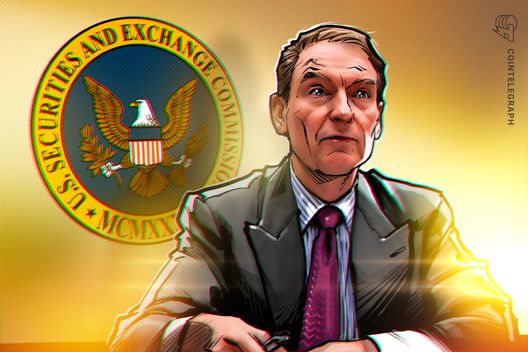
Several blockchain analysts said they were unable to verify whether the Latin American nation holds $60 billion in the cryptocurrency. 🔗 Source 💡 DMK Insight So, a $60 billion crypto claim and no verification? That’s a red flag for traders. When a nation claims to hold significant crypto assets, it can impact market sentiment and liquidity. If this claim turns out to be unsubstantiated, we could see ETH’s price react negatively, especially if traders start to question the credibility of such reports. With ETH currently at $3,129.18, watch for a potential drop if skepticism grows. On the flip side, if the claim is verified, it could lead to a bullish rally, pushing ETH higher. Keep an eye on trading volumes and sentiment indicators—these will signal how traders are digesting this news. For now, monitor the $3,000 support level closely. A breach below that could trigger further selling pressure, while a bounce could indicate renewed bullish interest. 📮 Takeaway Watch ETH closely around the $3,000 support level; a break could signal bearish momentum amid skepticism over the $60 billion claim.
Senators pitch bill to lock in protections for crypto developers
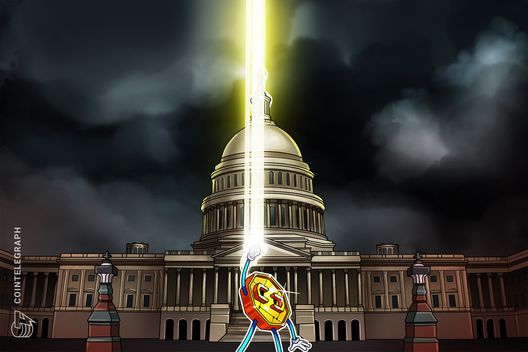
The Blockchain Regulatory Certainty Act aims to clarify that writing software and maintaining networks don’t trigger federal or state money-transfer requirements. 🔗 Source 💡 DMK Insight The Blockchain Regulatory Certainty Act could reshape how developers and networks operate, and here’s why that’s crucial for traders: By clarifying that writing software and maintaining networks won’t trigger money-transfer regulations, this legislation reduces compliance risks for blockchain projects. For traders, this means a more stable environment for crypto assets, potentially increasing institutional interest. If major players feel secure in their operations, we could see a surge in investment and innovation, driving prices higher. Keep an eye on related assets like Ethereum and Bitcoin, as any positive sentiment could lead to upward momentum. However, it’s worth noting that while this act provides clarity, it doesn’t eliminate all regulatory risks. Traders should monitor how different states react and whether any additional regulations emerge. The next few weeks will be critical as the market digests this news, so watch for price movements around key levels, particularly if Bitcoin approaches its recent highs. A breakout could signal a broader rally across the crypto market. 📮 Takeaway Watch for Bitcoin’s price action around recent highs; a breakout could signal increased institutional interest and drive broader market momentum.