
 Bitcoin
  Ethereum
  Tether
  XRP
XRP  BNB
BNB  USDC
USDC  Solana
  TRON
TRON  Lido Staked Ether
  Figure Heloc
Introduction: What Is CFD Trading?CFD stands for Contract for Difference, which is a financial agreement that allows you to speculate on the price movements of various assets. It is a method that allows you to make predictions about the price changes of financial assets like stocks, currencies (forex), market indices, commodities, or cryptocurrencies without actually owning them.When you trade CFDs, you do not buy or sell the actual asset. Instead, you enter into a contract with a broker. This contract is based on the difference in the asset’s price from when you start the trade to when you finish it.Example: For example, if you enter a contract to trade gold at $2,000 per ounce and later sell it at $2,050, you would make a profit of $50. Conversely, if the price drops to $1,950, you would lose $50 (not including any fees).This method is popular as it allows participants to buy (go long) or sell (go short), trade with borrowed funds (margin), and access many global markets all through a single platform. However, trading CFDs can be risky because using leverage can increase both your profits and your losses. Beginners should learn about how CFDs work and the risks involved before they start trading.How Does CFD Trading Work?This method enables speculation on an asset’s price without actually owning it. You agree with your broker to exchange the difference between the asset’s opening price and its closing price.Key Features of CFD TradingGoing Long (Buy): You open a buy position if you think the price will increase. If the price goes up, you make a profit from the difference.Going Short (Sell): You open a sell position if you believe the price will decrease. If the market falls, you profit from that decline.Costs and FeesWhen trading CFDs, you usually need to pay:Spread: This is the difference between the price at which you can buy (ask price) and the price at which you can sell (bid price).Overnight Financing: This is a small daily fee charged for holding leveraged positions overnight.Commissions: Some brokers may charge a small fee for trading certain assets (like shares).Example Trade: You decide to buy 100 shares of Tesla at $200 using 10:1 leverage. This means you only need to deposit $2,000, which is 10% of the total trade value of $20,000, allowing you to control a larger position.If Tesla’s price rises to $210, your profit would be $1,000 (100 shares × $10 increase), minus any fees.If Tesla’s price falls to $190, you would lose $1,000.Tip for beginners: Always use stop-loss orders to help limit your losses and protect your capital when trading with leveraged products like CFDs.Types of CFD MarketsOne of the main benefits of CFD trading is that it gives you access to various global markets through a single trading account. Here are the main types of markets you can trade:Stock CFDs: You can speculate on the price changes of individual company shares without actually owning the stocks. Examples include Apple (AAPL), Amazon (AMZN), and Tesla (TSLA).Index CFDs: You can trade entire market indexes, which represent a collection of leading companies. This gives you exposure to an entire economy or sector. Examples include the S&P 500, NASDAQ 100, FTSE 100, and DAX 40.Forex (Currency Pair) CFDs: These CFDs are used for trading currency pairs, similar to traditional forex trading, allowing you to speculate on how one currency performs against another. Examples are EUR/USD, GBP/JPY, and USD/CHF.Commodity CFDs: You can trade raw materials like metals, energy sources, or agricultural products without needing to store the physical goods. Examples include Gold, Silver, Crude Oil, and Natural Gas.Cryptocurrency CFDs: You can speculate on the price of digital currencies without needing a crypto wallet. Examples include Bitcoin (BTC), Ethereum (ETH), and Ripple (XRP).Beginner Tip: It’s a good idea to start with one or two markets you are familiar with, like major stock indices or forex pairs, before trying more volatile assets like cryptocurrencies or commodities.Why Trade CFDs? (Advantages)This method has gained popularity for several reasons, providing unique benefits for both short-term traders and long-term investors. Here are the main advantages:Trade Rising and Falling Markets: With CFDs, you can buy if you think prices will rise or sell if you expect prices to fall. This flexibility allows you to make profits in both bullish (rising) and bearish (falling) markets.Leverage and Lower Capital Requirements: This method is traded on margin, meaning you only need a small portion of the total trade value to open a position. Leverage allows you to control larger trades while requiring a smaller initial investment. For instance, with 10:1 leverage, a $1,000 deposit allows you to control a $10,000 trade.Access to Global Markets: You can trade a wide variety of assets—stocks, indices, commodities, forex, and cryptocurrencies—all from one platform, without needing multiple accounts or exchanges.No Ownership of the Asset: Since you don’t own the underlying asset, you can trade in markets that might be difficult to access otherwise (like commodities or cryptocurrencies) and avoid costs like taxes or storage fees.Liquidity and Fast Execution: Well-known CFD markets, such as major forex pairs or large-cap stocks, usually have high liquidity. This means your trades can be executed quickly, often with narrow spreads.Important: While leverage and market access can be attractive, they also increase risk. Always combine these benefits with careful risk management.Risks of CFD TradingWhile Contracts for difference offer flexibility and access to global markets, but they come with significant risks that beginners should be aware of:Leverage Risk: Using leverage can amplify both profits and losses. Even a small unfavorable movement in the market can result in losses that exceed your initial deposit. For example, with 10:1 leverage, a 5% price movement against you might wipe out 50% of your margin.Market Volatility: Prices of CFDs can change rapidly due to news, economic reports, or political events. Sudden price swings can lead to quick losses if you don’t use stop-loss orders.Overnight Financing Costs: If you hold leveraged positions overnight, you will incur financing fees, which can accumulate and diminish your profits over time.Counterparty
Fed rate cut calls get pushed back after the US jobs report on Friday
The December payrolls number was on the softer side but the unemployment rate dropped back a little to 4.4% (unrounded 4.375%). The latter seems to be enough to convince some market analysts that the labour market is at least holding up as we get into the new year, with the Fed likely not too much in a hurry to cut rates again next.You can check out the full non-farm payrolls report here in case you missed it.Barclays has now pushed back their Fed rate cut forecast from March and June previously to June and December instead. The firm expects the Fed to deliver a 25 bps rate cut in each of those two months.Meanwhile, Morgan Stanley also pushes back their forecast for rate cuts from January and April to June and September now. And JP Morgan, who had previously penciled in a 25 bps rate cut for January, now no longer expects the Fed to cut rates at all in 2026. They have even gone so far to put in an argument for a 25 bps rate hike come Q3 2027.So, that offers some glimpse of how the narrative might be slowly shifting or might shift when we get to the final quarter of this year. For now, rate cuts might still be needed as the Fed has to strike a balance between a softening labour market and inflation developments.However, how long more until before rate hikes start coming back into the picture again? And how will Trump’s new mould of the Fed fit into all of this? Will politics outweigh independent thinking? There are plenty of questions that will need answering but for now, it seems that markets are convinced the Fed need not be rushing for the next rate cut again. This article was written by Justin Low at investinglive.com. 🔗 Source 💡 DMK Insight The drop in the unemployment rate to 4.4% is a mixed signal for traders: it suggests resilience in the labor market, but the softer payrolls number raises concerns about economic momentum. For day traders and swing traders, this could mean increased volatility in the forex market, particularly for USD pairs. If the labor market appears stable, the Fed may feel less pressure to adjust interest rates aggressively, which could keep the dollar steady. However, if the trend of softer payrolls continues, it might lead to a reevaluation of growth expectations, impacting risk sentiment across equities and commodities. Watch for key levels in USD pairs, especially if they approach recent highs or lows, as traders react to these labor market indicators. The next few weeks will be crucial as we assess whether this is a blip or a trend, so keep an eye on upcoming economic releases for further clarity. 📮 Takeaway Monitor USD pairs closely as the labor market signals could lead to volatility; watch for key levels around recent highs and lows in the coming weeks.

What are the main events for today?
EUROPEAN SESSIONIn the European session, we don’t have much on the agenda other than a couple of low tier releases like the Eurozone Sentix index and the German Current Account balance. None of the data is going to change anything for the ECB or the market, so the reaction will likely be muted. The overnight news of the US Department of Justice subpoenaing the Federal Reserve is the main highlight of the day which caused the US Dollar to weaken across the board and gold to jump to new record highs. The lack of other catalysts might see the current moves extending throughout the day.AMERICAN SESSIONIn the American session, we don’t have anything on the calendar other than the 10 year note auction. The focus has now turned to the US CPI report tomorrow. A Fed rate cut in January is now out of the question following the good US NFP report on Friday where the unemployment rate dropped to 4.4% vs 4.6% prior. The market continues to bet on two rate cuts this year with the first one expected in June. CENTRAL BANK SPEAKERS08:50 GMT/03:50 ET – ECB’s de Guindos (neutral – voter)17:00 GMT/12:00 ET – ECB’s Villeroy (dovish – voter)17:30 GMT/12:30 ET – Fed’s Bostic (hawkish – non voter)17:45 GMT/12:45 ET – Fed’s Barkin (hawkish – non voter) This article was written by Giuseppe Dellamotta at investinglive.com. 🔗 Source 💡 DMK Insight With minimal data on the agenda, traders should brace for a quiet European session. The Eurozone Sentix index and German Current Account balance are unlikely to stir significant market movement, which means any volatility might stem from external factors or trader sentiment rather than economic indicators. This lack of impactful news could lead to a consolidation phase in the euro, especially if it hovers around key technical levels. Traders should keep an eye on the EUR/USD pair, particularly if it approaches support or resistance levels that could signal a breakout or reversal. Watch for any unexpected geopolitical news or shifts in U.S. market sentiment that could ripple through the forex markets, especially as we head into the U.S. session later today. The real story here is the potential for low liquidity to amplify price swings, so stay alert for any sudden moves despite the quiet calendar. 📮 Takeaway Monitor the EUR/USD pair closely for potential breakouts around key support or resistance levels, especially given the low-impact data today.

Dollar stays on the backfoot amid unease over Fed independence
Again, in case you missed the headlines from earlier in the day:NYT: Federal prosecutors open probe into Fed chair Powell amid renovation scrutinyFed Chair Powell calls out Trump on his witch hunt, part of ongoing threats against central bankIt’s another start of the week filled with more drama involving US president Trump’s actions. A lively beginning to the 2026 year no doubt.In an unprecedented move, the probe on Fed chair Powell further raises threats to the central bank’s independence. Now, this isn’t anything new. However, it comes at a sensitive period with it being the transition to a new Fed chair in just a couple of months’ time. As a reminder, Powell’s term as Fed chair is due to end after May this year. And he is expected to step down from any other capacity at the central bank after.So with just a couple of months left, what’s the goal here from Trump?It feels like this is mostly about sending a message. The next Fed chair is already likely going to be a Trump plant but this is a broader attack on the central bank and to any policymakers who try to get in the way of what Trump wants done; that being lower interest rates.As fiscal risks continue to grow in the US, this is one spot that Trump wants to micro manage to not look bad. The thing is, at what cost?The dollar is finding that out the hard way with the currency already losing much confidence last year. And the new year looks to be starting off in similar fashion, if this is anything but a reminder.The greenback is now lower across the board today with slight losses seen against the other major currencies. USD/CHF is down 0.5% to 0.7966 while EUR/USD is starting to see buyers wrestle back some near-term momentum on the day. The latter is up 0.3% to 1.1677 with price nudging back above its 100-hour moving average (red line):The pair has been on the descend since a rejection of 1.1800 but this feels like the first time that buyers are looking to make a play to win back some near-term control. Keep below the 100-hour moving average and the near-term bias stays more bearish. But break above, and the near-term bias turns more neutral instead.Elsewhere, USD/CAD is also down 0.3% to 1.3878 and AUD/USD up 0.3% to reclaim the 0.6700 mark once again.The big winners though? Precious metals once again. Gold is now up 1.7% to $4,585 after the strong jump on Friday with silver up another 5% to $84.11 currently. Fire. 🔥 This article was written by Justin Low at investinglive.com. 🔗 Source 💡 DMK Insight The scrutiny on Fed Chair Powell could shake market confidence, and here’s why that matters: With federal prosecutors probing Powell amid renovation allegations, traders should brace for potential volatility. The Fed’s credibility is crucial, especially as we approach key economic indicators like inflation reports and employment data. If Powell’s position comes under fire, it could lead to shifts in monetary policy expectations, impacting everything from interest rates to asset valuations. Watch for how this plays out in the upcoming FOMC meetings, as any hint of instability could trigger a sell-off in equities and a flight to safety in bonds or gold. On the flip side, if Powell manages to navigate this scrutiny effectively, it could reinforce his position and stabilize market sentiment. But right now, the uncertainty is palpable, and traders need to keep an eye on related assets, particularly the US dollar and Treasury yields, which often react sharply to Fed news. Watch for any significant price movements around these assets as the situation develops. 📮 Takeaway Monitor the US dollar and Treasury yields closely; any instability around Powell could trigger significant market shifts.

Market outlook for the week of 12th – 16th January
This week starts quietly, with no significant scheduled economic events for the FX market on Monday. On Tuesday, Australia will release the Westpac consumer sentiment index. Inflation data will be the main highlight in the U.S., together with the ADP employment and new home sales figures. Wednesday will also bring several key U.S. releases, including PPI m/m, retail sales m/m, and existing home sales. The U.K. will publish its GDP m/m figures Thursday, while the U.S. will release data on unemployment claims, the Empire State manufacturing index and the Philly Fed manufacturing index. The week will conclude with the U.S. industrial production m/m print on Friday. Several FOMC members are expected to deliver remarks throughout the week. In the U.S., the consensus for core CPI is 0.3% m/m compared to 0.2% prior, while headline CPI is expected to rise 0.3% m/m, unchanged from the prior month. The year-over-year CPI rate is forecast to remain steady at 2.7%. Some analysts note that November inflation data were disrupted by the government shutdown, and this week’s release is expected to show firmer monthly gains as data collection normalizes. Despite this, annual inflation is still likely to trend lower overall. Core goods prices may face some upside pressure, largely because an unusually high share of holiday discounting was likely captured in the November data. At the same time, shelter inflation is expected to move back in line with its pre-shutdown pattern, with a meaningful pickup unlikely until spring, according to Wells Fargo analysts. October new home sales in the U.S. are forecast at 715K, with the September figures also scheduled for release at the same time. August data showed an unusually sharp rise in sales, driven largely by strength in the South, although the size of the increase is difficult to reconcile with mortgage rates that were still above 6%. While builders have been using incentives such as price reductions and mortgage rate buy-downs to offset affordability pressures, the growing reliance on these measures highlights ongoing demand challenges. As a result, analysts expect new home sales to have eased in October, falling back toward levels more consistent with the pace seen earlier in the summer. The consensus for retail sales m/m is 0.4% vs. 0.0% previously, while core retail sales m/m are also expected at 0.4% compared to 0.4% prior. The rebound is likely to be driven by a pickup in auto sales, which fell sharply in the previous month, while sales excluding autos are expected to rise by around 0.3%. Consumer spending has held up well over the past year, and high-frequency data suggest this resilience continued into November. However, the core measure of retail activity, which excludes autos, gasoline, food services, and building materials, is likely to have moderated following a strong gain in October. Affordability pressures and a cooling labor market remain key headwinds, although holiday spending is still expected to have met forecasts of roughly 3.5–4.0% y/y growth. Looking ahead, middle- to upper-middle-income households may see some relief from higher after-tax income and larger tax refunds, which could provide a modest boost to discretionary spending in early 2026, according to analysts at Wells Fargo. In the U.K., the consensus for GDP m/m is 0.0% compared with -0.1% previously. A modest improvement is expected in this week’s data, driven by a mild pickup in services activity. Industrial output is likely to be flat following a solid gain in October that was supported by a recovery in auto production. The broader outlook remains unconvincing as momentum is expected to slow down. Business surveys suggest the economy has largely lost steam, with renewed weakness in services and only modest improvement in manufacturing. That said, analysts note this may reflect a recurring pattern in which growth appears stronger in the first half of the year than later on, raising the possibility that some of the late-year softness is due to seasonal adjustment issues rather than a clear deterioration in underlying economic conditions. From a monetary policy perspective, the Bank of England is expected to continue cutting rates as inflation shows further signs of cooling and economic activity remains soft. This article was written by Gina Constantin at investinglive.com. 🔗 Source 💡 DMK Insight With ETH hovering around $3,105.29, traders should be cautious as the week unfolds without major FX events. The upcoming U.S. inflation data and employment figures could create volatility, especially if they deviate from expectations. A spike in inflation could lead to a stronger dollar, impacting ETH’s price negatively. Conversely, if inflation remains subdued, it might bolster risk assets like crypto. Keep an eye on the consumer sentiment index from Australia on Tuesday; a positive reading could signal increased risk appetite globally. The real story here is how these economic indicators could ripple through the crypto market, particularly if they influence institutional buying or selling behavior. Watch for ETH to test key support around $3,000; a break below could trigger further selling pressure, while a bounce could signal a bullish reversal. The next few days are crucial for positioning ahead of these data releases. 📮 Takeaway Monitor ETH closely around $3,000 for support; upcoming U.S. inflation data could drive significant volatility this week.

Gold jumps to a new all-time high as the DOJ seeks a pretext to fire Fed Chair Powell
KEY POINTS:US Department of Justice subpoenaed the Federal Reserve in relation to the headquarters renovation disputeThe DOJ move is actually a political pretext to try to fire Fed Chair Powell “for cause” given his reluctance to cut interest rates quicklyRisk of loss of Fed independence is a tailwind for gold given the repercussions on inflation and the US DollarGold jumped to a new all-time high following the newsFUNDAMENTAL OVERVIEWGold jumped into a new all-time high today following the news of the US Department of Justice subpoenaing the Federal Reserve in an unprecedented move that escalates the ongoing conflict between President Trump and Fed Chair Powell for not lowering interest rates faster. The official reason is that the DOJ is focusing on the Federal Reserve headquarters renovation to see whether Powell made misleading or false statements to the Senate Banking Committee regarding the scale, costs and luxury features of the project. In reality, everybody knows that this is just a political pretext to intimidate the Fed Chair and force him to cut interest rates faster. We have already seen this kind of intimidation with Fed Governor Cook last year when Trump tried to fire her for cause without success as we continue to await the US Supreme Court decision on that case.Gold rallied on the news because a potential loss of Fed independence increases the risk of higher inflation in the future and a much weaker US Dollar. The probability of the loss of Fed independence remains very low as the consequences would be too big not only for the US but the global economy as a whole.Tomorrow, the focus will turn to the US CPI report. We got a good NFP report on Friday, with the unemployment rate falling to 4.4%. A January Fed rate cut is now out of the question, but the market still sees two rate cuts by the end of the year with the first one expected in June. A hot inflation report might trigger a bit of a hawkish repricing and weigh on gold in the short term. On the other hand, soft data should keep on supporting the upside.In the bigger picture, gold should remain in an uptrend as real yields will likely continue to fall amid the Fed’s dovish reaction function. But in the short term, a hawkish repricing in interest rate expectations could weigh on the market.GOLD TECHNICAL ANALYSIS – DAILY TIMEFRAMEOn the daily chart, we can see that gold rallied into a new all-time high today following the news of the DOJ subpoenaing the Federal Reserve. The price is now trading at the top trendline of a potential rising wedge. This is where we can expect the sellers to step in with a defined risk above the high to position for a drop into the bottom trendline. The buyers, on the other hand, will look for a break higher to increase the bullish bets into new record highs.GOLD TECHNICAL ANALYSIS – 4 HOUR TIMEFRAMEOn the 4 hour chart, we can see more clearly the recent price action. Gold eventually bounced on the 4400 support zone and extended the rally into the 4600 level. From a risk management perspective, the buyers will have a better risk to reward setup around the minor upward trendline and the 4500 support. The sellers, on the other hand, will want to see the price breaking below the trendline to increase the bearish bets into the major bottom trendline.GOLD TECHNICAL ANALYSIS – 1 HOUR TIMEFRAMEOn the 1 hour chart, we can see that the price has already extended into the upper bound of the average daily range for today. In such instances, we can generally see some consolidation or a pullback. A break below the 4561 low will likely see the sellers piling in with more conviction to target a pullback to the 4500 support. UPCOMING CATALYSTSTomorrow we have the US CPI report. On Wednesday, we get the November US Retail Sales and US PPI reports, so it’s going to be old data. We also have a potential US Supreme Court decision on Trump’s tariffs. On Thursday, we get the latest US Jobless Claims figures. This article was written by Giuseppe Dellamotta at investinglive.com. 🔗 Source 💡 DMK Insight The DOJ’s subpoena of the Fed is more than just a legal maneuver—it’s a potential game changer for interest rates and market sentiment. Traders should be paying close attention to how this political pressure could influence Fed Chair Powell’s decisions. If the Fed’s independence is compromised, we might see a shift in monetary policy that could lead to rate cuts sooner than expected, which would typically boost risk assets like equities and crypto. However, the uncertainty could also drive investors towards safe havens like gold, which has already been gaining traction. With ETH currently at $3,105.29, any signs of dovish sentiment from the Fed could push crypto prices higher, but volatility is likely as traders react to news. Keep an eye on the upcoming Fed meetings and any statements from Powell. If the narrative shifts towards more aggressive rate cuts, ETH could break through key resistance levels, but if the Fed maintains a hawkish stance, we might see a pullback. Watch for ETH to hold above $3,000 as a critical support level in this scenario. 📮 Takeaway Monitor Fed statements closely; if dovish signals emerge, ETH could rally past $3,200, but watch for support at $3,000.
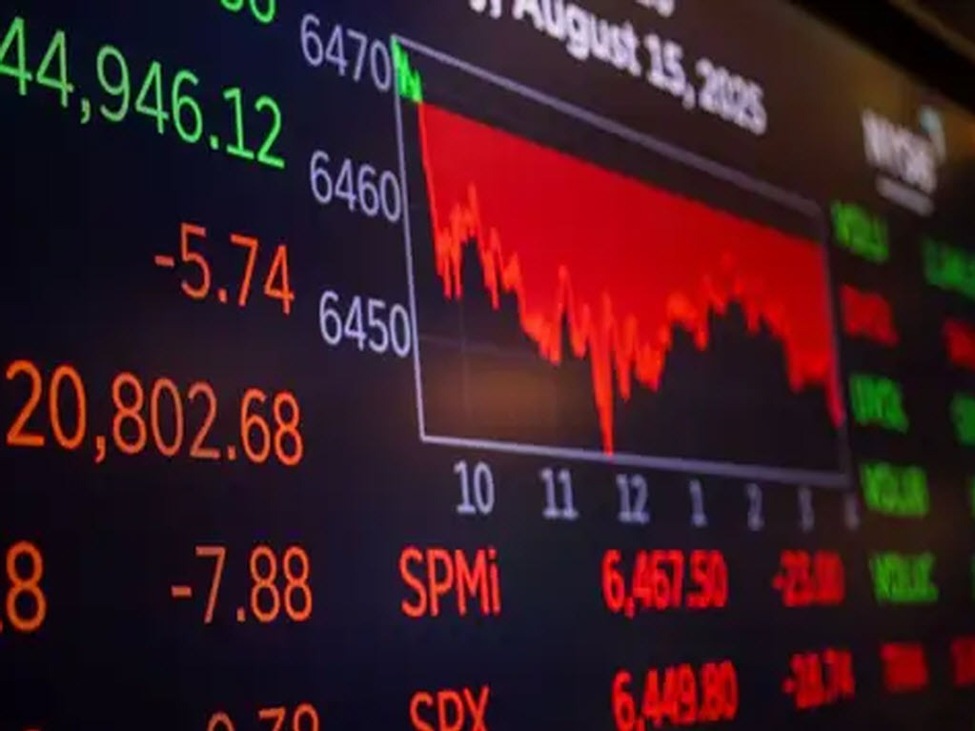
European stocks pushed lower at the open, US futures a drag on threats to the Fed
Here’s a look at the major indices in Europe after the opening tussle:Eurostoxx -0.3%Germany DAX flatFrance CAC 40 -0.5%UK FTSE -0.1%Spain IBEX -1.0%Italy FTSE MIB -0.7%And here’s how US futures are shaping up as we get things going on the session:S&P 500 futures -0.7%Nasdaq futures -1.0%Dow futures -0.5%The big news so far today is Trump’s DOJ being reported to have opened a criminal investigation probe against Fed chair Powell. All this as part of a pretext to gain political influence over the central bank in order to lower interest rates. It’s an unprecedented move which renews concerns on Fed independence moving forward.Trump has already attacked Fed policymaker Lisa Cook with a lawsuit and with this latest move on Powell, there are big question marks on how this is all going to play out for the Fed. And I’m not talking about now or with the cases to Cook and Powell. But what about Fed independence in the future?If central bankers can be so easily hung for their views, is there really any one that would risk doing their job to their best abilities? Or more importantly, to really have an opinion that challenges the administration?What’s worrying about all of this is the kind of precedence that Trump might set with regards to how the White House can control the Fed. It’s a dangerous game to be playing as it opens up a can of worms on the directional path that Fed independence will take next.Markets are right to be worried. If Powell and Cook really do end up being unfairly indignified, there’s going to be very serious concerns about the kind of policy motivations that the Fed will be adopting in the next few years. This article was written by Justin Low at investinglive.com. 🔗 Source 💡 DMK Insight European indices are showing early weakness, and here’s why that matters for traders: The Eurostoxx is down 0.3%, with the DAX flat and the CAC 40 slipping 0.5%. This lack of momentum could signal broader market hesitance, especially as US futures indicate a rough start with the S&P 500 futures down 0.7% and Nasdaq futures down 1.0%. Traders should be cautious, as these declines could reflect underlying economic concerns or profit-taking ahead of key earnings reports. Watch for potential support levels on the S&P 500 around recent lows, as a breach could trigger further selling pressure. Additionally, keep an eye on correlated assets like commodities and currencies, which might react to this bearish sentiment. If the indices continue to slide, it could lead to a risk-off environment, impacting not just equities but also the forex market, particularly safe-haven currencies like the USD and JPY. In the short term, volatility is likely to increase, so traders should monitor the daily charts for any reversal patterns or breakout signals that could provide entry points for short positions. 📮 Takeaway Watch the S&P 500 for support around recent lows; a break could lead to increased selling pressure across markets.

The market is telling Trump to stop interfering with Federal Reserve independence
The main news of the day today is the US Department of Justice subpoenaing the Federal Reserve in an unprecedented move that escalates the ongoing conflict between President Trump and Fed Chair Powell for not lowering interest rates faster.The official reason is that the DOJ is focusing on the renovation to see whether Powell made misleading or false statements to the Senate Banking Committee regarding the scale, costs and luxury features of the project.In reality, everybody knows that this is just a political pretext to intimidate the Fed Chair and force him to cut interest rates faster. We have already seen this kind of intimidation with Fed Governor Cook last year when Trump tried to fire her for cause without success as we continue to await the US Supreme Court decision on that case.The market reaction to the news was pretty straightforward and a taste of what it could be if the Fed lost independence (I touched on the consequences here).A potential loss of Fed independence raises the risk of uncontrolled inflation and eventually stagflation. Gold, and precious metals in general, would be the best beneficiaries from such an event, while the US Dollar would be the obvious loser. The stock market would likely go into a bear market on growth fears, while long-term interest rates would increase (the opposite of what Trump wants).The negative consequences though would stretch to the global economy as a whole. The Federal Reserve is the anchor of the global financial system. The U.S. Treasuries are considered the benchmark “risk-free rate” and almost all global debt is priced as US Treasury rate + risk spread. If long term rates were to increase in the US, they would also influence long-term interest rates of other major economies. The initial reaction would highly likely be chaos and uncertainty in the global financial markets.The good news is that even if the DOJ were to officially indict Powell for “misleading Congress” or “misuse of funds”, and Trump were to fire Powell “for cause”, the Fed Chair has already signalled that he would fight any removal in court, much like what happened with Fed’s Cook. The ultimate decision would likely rest with the US Supreme Court.Nevertheless, the initial reaction to the DOJ indictment would be similar to the one we saw today, but bigger in magnitude. This article was written by Giuseppe Dellamotta at investinglive.com. 🔗 Source 💡 DMK Insight The DOJ’s subpoena of the Fed is a game changer for market sentiment and interest rate expectations. This unprecedented action could signal heightened scrutiny of monetary policy, which might lead to increased volatility in both the forex and crypto markets. Traders should keep an eye on how this affects the dollar’s strength against major currencies, especially if it leads to speculation about future rate cuts or hikes. If the Fed feels pressured to adjust its stance, we could see significant shifts in asset prices, particularly in interest-sensitive sectors. Watch for key levels in USD pairs, as a stronger dollar could impact commodities and crypto prices negatively. The ripple effects could also extend to equities, especially those heavily reliant on low borrowing costs. On the flip side, if this leads to a more dovish Fed, we might see a bullish trend in risk assets, including cryptocurrencies. So, it’s crucial to monitor upcoming Fed communications and economic indicators closely for any signs of policy shifts. 📮 Takeaway Watch for how the DOJ’s actions influence Fed policy; key USD levels could shift dramatically, impacting forex and crypto markets.

Eurozone investor morale clocks in better than expected to kick start the new year
Eurozone January Sentix investor confidence -1.8 vs -4.9 expectedPrior -6.2That marks the highest reading since July last year with a modest improvement seen especially in Germany. Sentiment towards Europe’s largest economy nudged up by 6.3 points to -16.4, with the expectations component in particular sending a positive signal with an increase of 6.8 points.A quick summary infographic by Sentix:The commentary noted that private investors had been much more skeptical about the euro area economy even as professional investors were noticeably more positive. But the latest report now shows that private investors are now also coming on board, as the optimism continues at the start of the year.Inflation concerns were less pressing with investors expecting prices to ease slightly, thereby reducing the pressure on the bond market.Looking into detail, Germany showed a significant improvement in economic sentiment. However, the current situation index remains strongly recessive at -36.0 points. That indicates some doubt on whether the investment blockade will be lifted and Germany will regain its footing in 2026.As for the outlook of the US economy, investors remain calm. The overall index for the US rose from 9.7 to 13.2 points – the highest since February last year. That underscores the robustness of the US economy despite many political distractions. This article was written by Justin Low at investinglive.com. 🔗 Source 💡 DMK Insight Eurozone investor confidence just hit its highest since July, and here’s why that matters: The January Sentix reading of -1.8, beating expectations of -4.9, indicates a potential shift in sentiment that traders should watch closely. Particularly, the 6.3-point rise in German sentiment to -16.4 suggests that the largest economy in Europe is showing signs of resilience. This could lead to a more favorable outlook for the Euro, especially if this trend continues into the coming months. Traders should keep an eye on the EUR/USD pair, as a sustained improvement in confidence could push the Euro higher against the dollar. But don’t overlook the flip side—while this uptick is encouraging, it’s still in negative territory. If geopolitical tensions or inflation concerns resurface, we could see a quick reversal. Watch for key resistance levels around 1.10 in EUR/USD; a break above could signal a stronger bullish trend. For now, monitor economic indicators closely, especially from Germany, as they could provide further clues on market direction. 📮 Takeaway Keep an eye on EUR/USD around the 1.10 level; sustained confidence could push the Euro higher, but risks remain.

EURUSD back near 1.17 as renewed worries on Fed independence weigh on the US Dollar
FUNDAMENTAL OVERVIEWUSD:The greenback weakened across the board today following the news of the US Department of Justice subpoenaing the Federal Reserve in an unprecedented move that escalates the ongoing conflict between President Trump and Fed Chair Powell for not lowering interest rates faster. The official reason is that the DOJ is focusing on the Federal Reserve headquarters renovation to see whether Powell made misleading or false statements to the Senate Banking Committee regarding the scale, costs and luxury features of the project. In reality, everybody knows that this is just a political pretext to intimidate the Fed Chair and force him to cut interest rates faster. We have already seen this kind of intimidation with Fed Governor Cook last year when Trump tried to fire her for cause without success as we continue to await the US Supreme Court decision on that case.The US Dollar sold off on the news because a potential loss of Fed independence increases the risk of uncontrolled inflation in the future leading to a debasement. The probability of the loss of Fed independence remains very low though as the consequences would be too big not only for the US but the global economy as a whole.Tomorrow, we have the US CPI report and that could be a major market-moving release. A hot report will likely trigger some hawkish repricing in interest rate expectations and support the US Dollar. On the other hand, soft data should keep the market on expecting at least two rate cuts by the end of the year potentially weighing on the greenback further. The outlook for the USD remains neutral to bearish.EUR:On the EUR side, the ECB remains in a neutral stance reaffirming its data-dependent and meeting-by-meeting approach to policy decisions. ECB members have repeatedly said that the current policy is appropriate, and they won’t respond to small or short-term deviations from their 2% target. Moreover, they added that the next moves could be either a cut or a hike. The data has been supporting the central bank’s neutral stance, with inflation data last week surprising to the downside. The outlook for the euro remains neutral.EURUSD TECHNICAL ANALYSIS – DAILY TIMEFRAMEOn the daily chart, we can see that EURUSD jumped today following the news of the US DOJ subpoenaing the Federal Reserve in relation to the Fed’s headquarters renovation. The price is approaching the key resistance around the 1.17 handle where we can also find the downward trendline for confluence. That’s where we can expect the sellers to step in with a defined risk above the trendline to position for a drop into new lows. The buyers, on the other hand, will want to see the price breaking higher to increase the bullish bets into the 1.18 handle next.EURUSD TECHNICAL ANALYSIS – 4 HOUR TIMEFRAMEOn the 4 hour chart, we can see more clearly the reaction to the DOJ news with a strong rally that erased most of last week’s dollar gains. There’s not much else we can glean from this timeframe as the sellers will have a better risk to reward setup around these levels to keep targeting new lows, while the buyers will need a breakout to open the door for new highs.EURUSD TECHNICAL ANALYSIS – 1 HOUR TIMEFRAMEOn the 1 hour chart, we can see that the price is trading at the upper bound of the average daily range for today. In such instances, we can generally see some consolidation or a pullback before the next move. UPCOMING CATALYSTSTomorrow we have the US CPI report. On Wednesday, we get the November US Retail Sales and US PPI reports, so it’s going to be old data. We also have a potential US Supreme Court decision on Trump’s tariffs. On Thursday, we get the latest US Jobless Claims figures. This article was written by Giuseppe Dellamotta at investinglive.com. 🔗 Source 💡 DMK Insight The DOJ’s subpoena of the Fed is a game-changer for USD traders. This unprecedented move signals rising tensions between the government and the central bank, which could lead to increased volatility in the forex market. Traders should be on high alert as this situation unfolds, especially with the potential for shifts in interest rate policy. If the Fed feels pressured to act more aggressively, we could see the USD react sharply, impacting pairs like EUR/USD and USD/JPY. Watch for key support and resistance levels around recent highs and lows, as these could provide trading opportunities. On the flip side, if the Fed maintains its current stance, the dollar might stabilize, but the uncertainty could keep traders on edge. Keep an eye on economic indicators and Fed communications in the coming days, as they will be crucial in shaping market sentiment and direction. 📮 Takeaway Monitor the USD closely for volatility as the DOJ’s actions could pressure the Fed into a policy shift, impacting key currency pairs.