
 Bitcoin
  Ethereum
  Tether
  XRP
XRP  BNB
BNB  USDC
USDC  Solana
  TRON
TRON  Lido Staked Ether
  Figure Heloc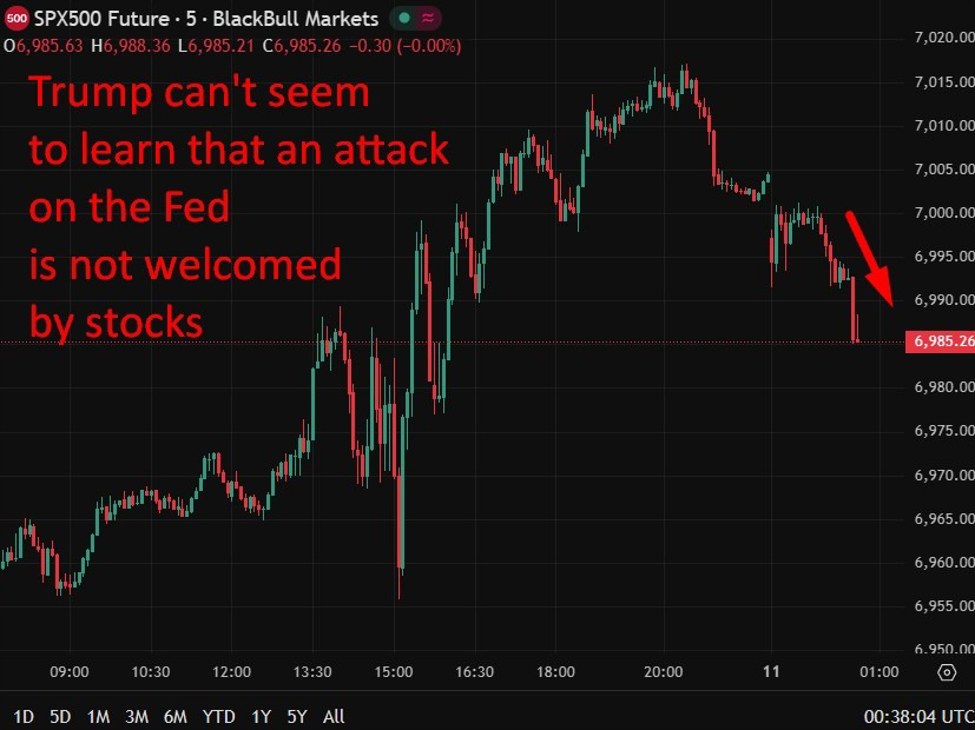
Summary:Powell says DOJ threatened criminal indictmentGrand jury subpoenas served on FridayIssue linked to Senate testimony on Fed renovationPowell calls move unprecedented and politicalRaises concerns over Fed independencePowell responding to Trump’s latest slimy attack:NYT: Federal prosecutors open probe into Fed chair Powell amid renovation scrutinyPowell says Justice Department threatened indictment in unprecedented challenge to Fed independenceFederal Reserve Chair Jerome Powell said the US Justice Department has threatened criminal charges against him in connection with his Senate testimony last year, describing the move as unprecedented and a direct challenge to the Federal Reserve’s independence.In a statement released Friday, Powell said grand jury subpoenas were served earlier in the day and confirmed that the matter relates to his June testimony concerning the multiyear renovation of the Fed’s historic Washington headquarters. However, Powell stressed that the latest threat was “not about my testimony or the renovation project itself,” calling it a pretext rather than a substantive legal dispute.Powell framed the episode as part of broader political pressure on the central bank, arguing that the threat of criminal charges stems from the Fed’s refusal to set interest rates in line with the president’s preferences. “The broader issue,” Powell said, “is whether the Federal Reserve will continue to set interest rates based on evidence and economics, or be directed by political pressure and intimidation.”The Fed chair said he holds deep respect for the rule of law but warned the action should be viewed in the context of what he described as ongoing threats by the administration against the central bank. Powell added that he has carried out his duties “without political fear or favor” and intends to continue doing so.The remarks mark a sharp escalation in tensions between the Fed and the executive branch, following months of criticism over the pace of rate cuts and scrutiny of the Fed’s costly headquarters renovation. Powell previously asked the Fed’s inspector general to review the project amid political attacks, seeking to demonstrate transparency as criticism intensified.Any formal criminal case involving a sitting Fed chair would be without modern precedent and risks amplifying concerns about institutional independence at a sensitive point in the policy cycle. Powell’s term as Fed chair runs until mid-2026, making the episode especially significant as markets assess leadership continuity, credibility, and the Fed’s ability to operate free from political interference. This article was written by Eamonn Sheridan at investinglive.com. 🔗 Source 💡 DMK Insight Powell’s indictment threat is shaking the markets, and here’s why you should care: The recent grand jury subpoenas related to Powell’s Senate testimony could create significant volatility, especially in financial sectors sensitive to regulatory news. Traders should be on high alert as this situation unfolds, particularly with the Fed’s independence now under scrutiny. If Powell’s position is weakened, we could see a ripple effect across equities and bonds, as market participants reassess risk and monetary policy expectations. Keep an eye on the S&P 500 and Treasury yields; any signs of instability could trigger a broader sell-off. On the flip side, this could create buying opportunities in sectors that thrive on uncertainty, like gold or defensive stocks. If the market overreacts, consider positioning for a rebound in those areas. Watch for key price levels in the S&P 500 around recent support zones, and monitor any shifts in sentiment as more information comes to light. 📮 Takeaway Monitor the S&P 500 and Treasury yields closely; any signs of instability could trigger a broader market sell-off, creating potential buying opportunities in gold and defensive stocks.
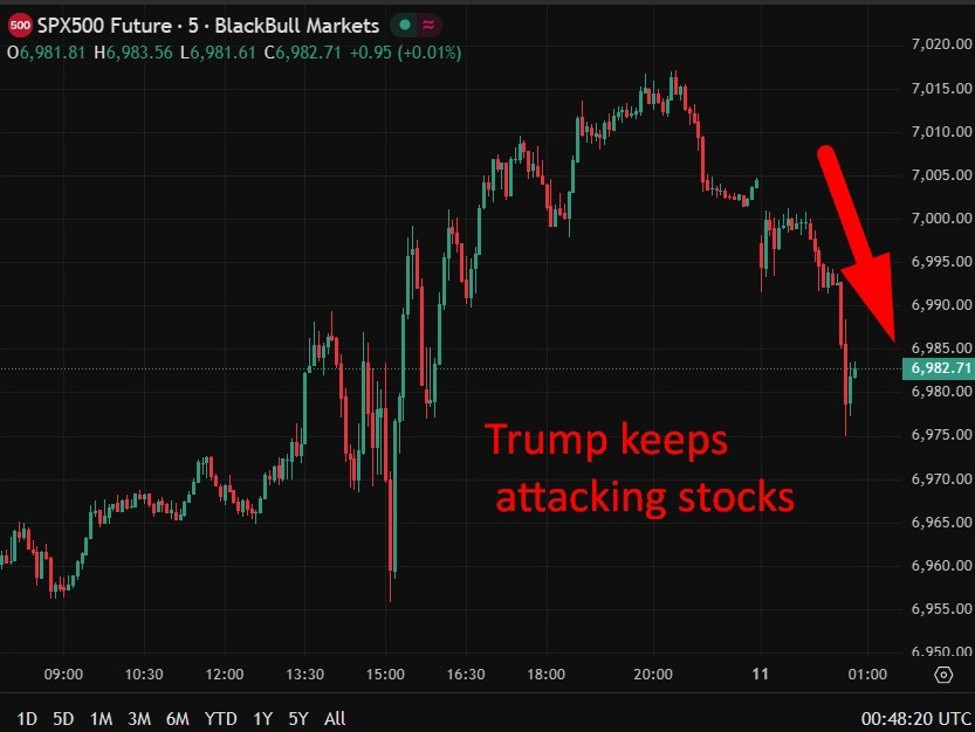
Gold and silver surge, stocks & USD slammed on news of Trump's ongoing attacks on the Fed
The news broke that Trump is escalating his underhanded attacks on the Federal Reserve:NYT: Federal prosecutors open probe into Fed chair Powell amid renovation scrutinySummary:NYT reports federal prosecutors have opened a probe involving Fed Chair PowellSpecific allegations and scope are unclear from the headline aloneContext includes intense political attacks over Fed HQ renovation costsPowell previously requested an inspector general review of the projectAny escalation could raise Fed-independence risk premia into the 2026 chair transitionFed Chair Powell Fed Chair Powell calls out Trump on his witch hunt, part of ongoing threats against BankSummaryPowell says DOJ threatened criminal indictmentGrand jury subpoenas served on FridayIssue linked to Senate testimony on Fed renovationPowell calls move unprecedented and politicalRaises concerns over Fed independenceFederal Reserve Chair Jerome Powell says Trump’s Department of Justice has subpoenaed the central bank. In a statement: “No one, certainly not the chair of the Federal Reserve,is above the law,” Powell said. “But this unprecedented action should be seen in the broader context of the administration’s threats and ongoing pressure.”In the back half of last week Trump ramped up the populist policy setting ina a bid to ramp stocks higher in this election year:ordering “his representatives” to buy mortgage bonds to push borrowing costs lower, banning institutional investors from buying single-family homes.Trump floats one-year 10% credit-card rate cap, offers zero enforcement detail, just talkHis latest baloney attacking the Fed threatens to undo the gains, Trump cannot seem to undestand that attacks on Fed independence do not play well with those managing stock market funds. Running to gold and silver instead. EURO, too, is higher. The USD is lower across the majors board. Australian dollar, UK GBP, New Zealand dollar, Swissy … even the hapless yen is gaining!!! This article was written by Eamonn Sheridan at investinglive.com. 🔗 Source 💡 DMK Insight Trump’s renewed attacks on the Fed could shake market confidence and volatility. Political instability often leads to market uncertainty, and with federal prosecutors now probing Fed Chair Powell, traders should brace for potential fallout. This scrutiny could impact interest rate expectations, especially if it raises doubts about the Fed’s independence. If Powell’s credibility takes a hit, we might see a shift in market sentiment, particularly in sectors sensitive to interest rates like tech and real estate. Watch for any shifts in the 10-year Treasury yield as a barometer for investor sentiment. On the flip side, this could present a buying opportunity if markets overreact. Historically, political noise has led to short-term volatility but not always long-term damage. Keep an eye on key support levels in major indices; if they hold, it might signal a buying opportunity amid the chaos. Traders should monitor news closely for updates on the investigation and any Fed responses, as these could dictate market direction in the coming weeks. 📮 Takeaway Watch the 10-year Treasury yield closely; any significant movement could signal shifts in market sentiment due to the Fed probe.
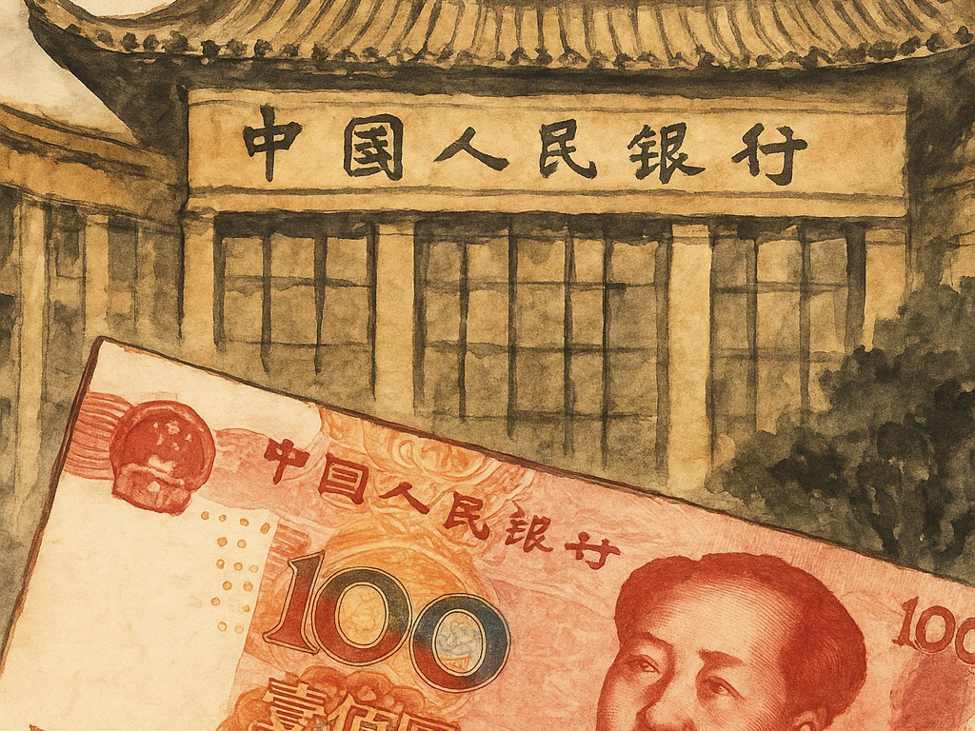
PBOC sets USD/ CNY reference rate for today at 7.0108 (vs. estimate at 6.9849)
The PBOC follows a managed floating exchange rate system that allows the value of the yuan to fluctuate within a certain range, called a “band,” around a central reference rate, or “midpoint.” It’s currently at +/- 2%. The previous close was 6.9784.Injects 86.1bn yuan, 7-day RRS, 1.4% This article was written by Eamonn Sheridan at investinglive.com. 🔗 Source 💡 DMK Insight The PBOC’s recent actions signal a tightening grip on the yuan’s value, and here’s why that matters: With the yuan currently hovering around 6.9784 and a managed floating exchange rate allowing fluctuations of +/- 2%, traders should be alert to potential volatility. The injection of 86.1 billion yuan into the market, combined with a 1.4% 7-day RRR, indicates the central bank’s intent to influence liquidity and stabilize the currency. This could lead to short-term trading opportunities, especially for those focused on forex pairs involving the yuan. Keep an eye on the 7-day RRR as it could affect liquidity conditions and, consequently, the yuan’s strength against major currencies like the USD. But there’s a flip side: if the yuan strengthens too much, it could impact China’s export competitiveness, which might prompt further intervention from the PBOC. Traders should monitor the midpoint reference rate closely, as any adjustments could signal shifts in monetary policy. Watch for key levels around 6.95 and 7.00 for potential breakout or reversal points in the yuan’s trading range. 📮 Takeaway Watch the yuan closely around the 6.95 and 7.00 levels; PBOC actions could create volatility and trading opportunities in the forex market.
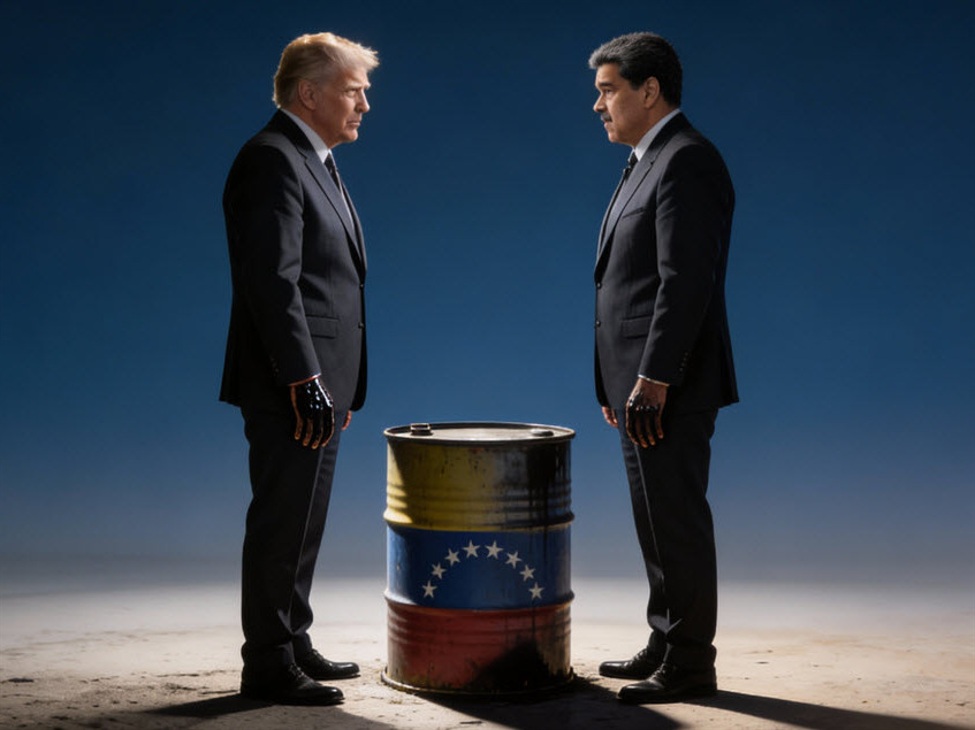
Trump threatens to block Exxon from Venezuela after CEO calls country uninvestable
Summary:Trump says he may block Exxon from investing in VenezuelaCEO Darren Woods called the country “uninvestable”Exxon cited past asset seizures and weak legal protectionsTensions complicate US efforts to revive Venezuela’s oil sectorHighlights gap between political goals and commercial risk-Trump threatens to block Exxon from Venezuela after CEO brands country ‘uninvestable’US President Donald Trump signalled a potential rift with America’s largest oil producer after saying he may prevent Exxon Mobil from investing in Venezuela, following blunt comments by the company’s chief executive questioning the country’s investment viability.Speaking to reporters aboard Air Force One on Sunday, Trump said he was unhappy with Exxon’s stance after CEO Darren Woods described Venezuela as “uninvestable” during a White House meeting last week. Trump said Exxon was “playing too cute” and suggested he would be inclined to exclude the company from any future reopening of Venezuela’s oil sector to US firms.The comments represent a setback for Trump’s broader push to persuade American energy companies to commit billions of dollars to revitalise Venezuela’s oil industry following years of sanctions, underinvestment and operational decline. Washington has been exploring ways to leverage US corporate involvement to stabilise output while exerting political influence over Caracas.Woods’ remarks reflected long-standing industry concerns. Exxon has twice had assets expropriated in Venezuela, most notably during the nationalisations under former president Hugo Chávez. Woods told Trump that re-entering the country a third time would require “significant changes,” including durable legal protections for foreign investors and reforms to Venezuela’s hydrocarbons law.“If you look at the legal and commercial frameworks in place today, it’s uninvestable,” Woods said, arguing that without structural reform, capital deployment would expose shareholders to unacceptable political and legal risk.Trump’s reaction underscores the tension between political objectives and commercial realities. While the administration is eager to draw US firms back into Venezuela as part of a broader reset in relations, major oil companies remain wary of regulatory instability, contract sanctity and the risk of renewed state intervention.Exxon did not immediately respond to Trump’s remarks. For markets, the episode highlights the limits of US policy leverage over corporate investment decisions and reinforces scepticism that Venezuela can rapidly attract large-scale foreign capital without deep legal and institutional reform. This article was written by Eamonn Sheridan at investinglive.com. 🔗 Source 💡 DMK Insight Trump’s threat to block Exxon from Venezuela is a big deal for oil traders right now. Exxon’s CEO calling Venezuela ‘uninvestable’ highlights the growing risks in the oil sector, especially with political tensions complicating the landscape. For traders, this could mean increased volatility in oil prices, particularly if sanctions or restrictions are implemented. Keep an eye on crude oil futures, as any significant news could trigger sharp movements. If Exxon’s investments are stifled, it might push oil prices higher due to supply constraints, especially if the U.S. aims to revive Venezuela’s oil sector without direct investment from major players. On the flip side, if Trump’s threats are seen as bluster, it could lead to a short-term dip in oil prices as traders reassess the geopolitical risk. Watch for key resistance levels in crude oil; a break above recent highs could signal a bullish trend. Pay attention to any announcements from the U.S. government regarding sanctions or policy changes, as they could have immediate impacts on market sentiment and trading strategies. 📮 Takeaway Monitor crude oil futures closely; any escalation in U.S. sanctions could push prices higher, while a lack of action may lead to short-term dips.
UK hiring weakens again as wage growth stays firm, complicating BoE outlook
Summary:UK hiring fell for a 39th straight month in DecemberPermanent placements declined at the fastest pace in four monthsStarting salaries rose at the strongest rate since MayPayroll tax rises continue to weigh on recruitmentBoE faces tension between weaker jobs data and wage pressuresBritain’s labour market showed further signs of cooling at the end of 2025, even as wage pressures remained elevated, reinforcing the policy dilemma facing the Bank of England as it weighs the timing and pace of future interest-rate cuts.A closely watched survey from the Recruitment and Employment Confederation and KPMG showed hiring activity weakened again in December, marking the 39th consecutive monthly decline in permanent staff placements. The downturn was the steepest in four months, underscoring persistent caution among employers amid higher costs and an uncertain economic outlook.Businesses have increasingly pointed to the payroll tax increase introduced in Chancellor Rachel Reeves’ 2024 budget as a key factor restraining recruitment. Combined with elevated borrowing costs and subdued growth, firms continue to limit headcount expansion and rely more heavily on temporary staff to retain flexibility.Despite the slowdown in hiring, pay growth showed renewed momentum. Starting salaries for permanent roles rose at the fastest pace since May, reflecting ongoing competition for workers with in-demand skills. Even so, wage growth remained below its long-run average, suggesting some easing from the peaks seen earlier in the inflation cycle.Survey respondents noted a modest rise in candidate availability alongside falling vacancies, a pattern consistent with a gradual loosening of labour market conditions. Temporary hiring also declined, weighed down by weak business confidence and cost concerns.—The BoE cut interest rates by 25 basis points to 3.75% in December, but policymakers remain divided between those focused on sticky wage-driven inflation and others warning of a more pronounced labour market slowdown.Financial markets currently expect one or two additional quarter-point rate cuts in 2026. However, the persistence of pay growth, even as hiring weakens, complicates the outlook and suggests the BoE is likely to proceed cautiously as it assesses whether easing inflation pressures are sufficiently entrenched. This article was written by Eamonn Sheridan at investinglive.com. 🔗 Source 💡 DMK Insight UK hiring’s 39-month decline signals a troubling trend for the economy. With permanent placements dropping sharply, traders should be wary of how this affects consumer spending and overall economic growth. The Bank of England (BoE) is caught in a bind; while weak job data suggests a slowing economy, rising starting salaries indicate inflationary pressures. This could lead to a more cautious approach in monetary policy, impacting GBP pairs. Watch for potential volatility in the forex market as traders react to these mixed signals. Key levels to monitor include any shifts in GBP/USD around recent support and resistance zones, as well as upcoming BoE announcements that could clarify their stance on interest rates. If hiring continues to falter while wages rise, we might see a shift in market sentiment, leading to increased volatility across related assets like UK equities and bonds. 📮 Takeaway Keep an eye on GBP/USD for potential volatility as the BoE navigates weak hiring and rising wages—watch key support and resistance levels closely.

US hosts G7 talks on rare earths to counter China’s supply dominance
Summary:US hosting G7 ministerial talks on rare earthsAim is to reduce dependence on China-dominated supply chainsTreasury Secretary Bessent to lead discussionsJapan pushing issue amid China export curbsFocus on defence, tech and clean-energy mineralsUS to host G7 talks on rare earths as allies seek alternatives to ChinaThe United States will host a meeting of Group of Seven ministers this week focused on rare earths and other critical minerals, as Washington and its allies intensify efforts to reduce reliance on China’s dominant position across global supply chains.The discussions, scheduled to take place in Washington, will be led by US Treasury Secretary Scott Bessent and are expected to centre on developing alternative sources of supply, boosting processing capacity outside China, and coordinating investment frameworks among allied economies. Canadian Finance Minister François-Philippe Champagne is set to meet counterparts on Sunday and Monday, with officials from Australia, South Korea, India, Mexico and the European Union also expected to attend.Rare earth elements and other critical minerals are essential inputs for defence systems, electric vehicles, renewable energy technologies and advanced semiconductors. While mining is geographically dispersed, China controls a commanding share of global refining and processing capacity, giving Beijing significant leverage during periods of geopolitical tension.Japan has emerged as a vocal advocate for coordinated action following recent Chinese export restrictions affecting strategic materials. Tokyo has been engaging G7 partners on the issue, with concerns sharpened after comments by Prime Minister Takaichi Sanae on Taiwan heightened sensitivities around supply security in East Asia.Japanese Finance Minister Katayama is expected to raise the importance of securing stable access to minerals critical for both military hardware and high-technology manufacturing during her visit to the United States. Japanese officials have long warned that supply disruptions could quickly ripple through global production chains, particularly in electronics and automotive sectors.The G7 talks reflect a broader shift among advanced economies toward “friend-shoring” and diversification of strategic supply chains. However, building alternative capacity will take years, requiring substantial investment, environmental approvals and policy coordination. In the near term, officials are likely to focus on shared stockpiling strategies, financing mechanisms and diplomatic engagement with resource-rich emerging markets. This article was written by Eamonn Sheridan at investinglive.com. 🔗 Source
Yuan’s rally lacks fundamental support despite 2025 gains, former SAFE regulator says
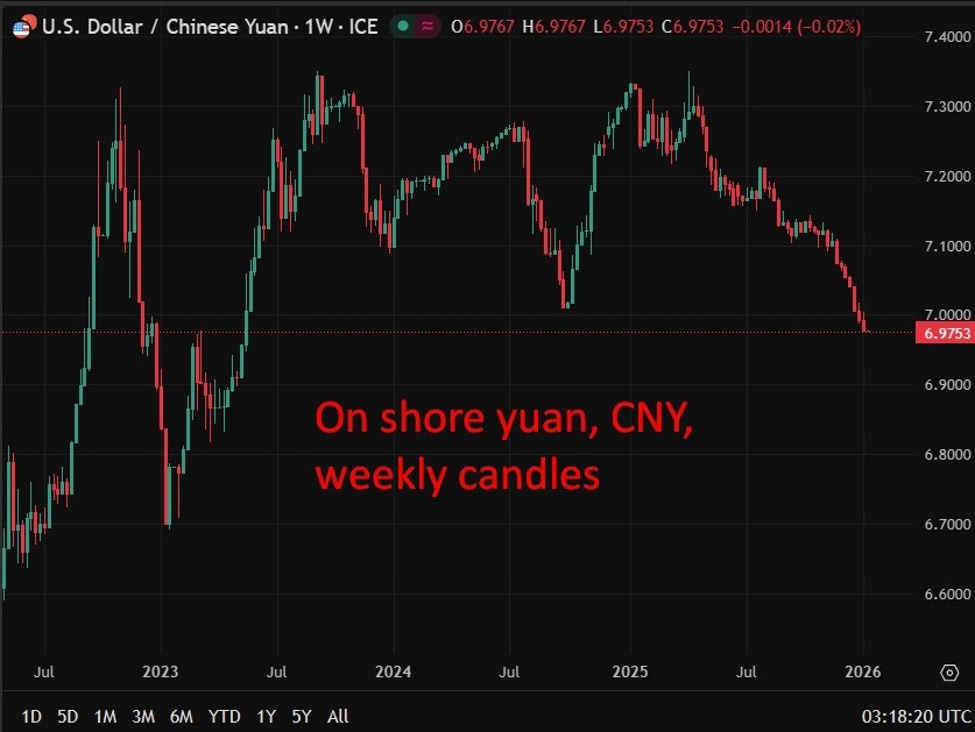
Summary:Yuan rose 4.5% in 2025, its best year since 2020Former SAFE official says gains lack fundamental backingStrength driven by weaker dollar demand, not inflowsFalling REER does not imply undervaluationDisinflation and output gap argue against stronger yuanYuan’s rebound lacks fundamental backing despite 2025 gains, former FX regulator warns. Info via Reuters report. The Chinese yuan’s appreciation against the US dollar over the past year does not signal a broader revaluation of the currency or Chinese assets, and lacks support from underlying economic fundamentals, according to Guan Tao, a former senior official at China’s foreign-exchange regulator.The yuan rose about 4.5% against the dollar in 2025, snapping three consecutive years of decline and marking its strongest annual performance since 2020. The rebound has fuelled market speculation that the currency may be structurally undervalued and poised for further gains.However, Guan, now global chief economist at Bank of China International Securities and formerly with the State Administration of Foreign Exchange, cautioned against drawing such conclusions. Writing on his official WeChat account, Guan said claims of yuan undervaluation “lack support from data, facts or theory.”He argued that recent improvements in China’s foreign-exchange conditions have been driven mainly by weaker demand for US dollars rather than stronger confidence in converting foreign currency into yuan. In other words, reduced capital outflows — not rising inflows — have underpinned the currency’s gains.Some investors have pointed to China’s falling real effective exchange rate (REER) and its sizeable goods trade surplus as evidence that the yuan is undervalued. But Guan warned that REER depreciation does not automatically imply mispricing or an inevitable appreciation cycle. According to Bank for International Settlements, China’s REER has fallen nearly 17% since peaking in March 2022.Domestically, Guan said persistent disinflationary pressures argue against a stronger currency. China’s price levels remain subdued, nominal growth continues to lag real growth, and the economy is operating with a negative output gap — conditions that traditionally point to downward pressure on the exchange rate. Producer prices have been falling for more than three years, while full-year consumer inflation in 2025 was the weakest in 16 years, despite a late-year pickup.Guan also challenged the assumption that a stronger yuan would automatically attract foreign capital. While appreciation can lift returns on existing investments, it raises the entry cost for new inflows. Whether capital ultimately increases, he said, depends on the balance between these opposing forces. —State Administration of Foreign Exchange (SAFE) is China’s foreign-exchange regulator, responsible for managing the country’s FX reserves, overseeing cross-border capital flows, and enforcing currency and balance-of-payments rules. This article was written by Eamonn Sheridan at investinglive.com. 🔗 Source 💡 DMK Insight Yuan’s 4.5% rise in 2025 might seem impressive, but here’s the catch: it’s not backed by solid fundamentals. The gains are primarily driven by a weaker dollar rather than any significant inflows into the Chinese economy. A former SAFE official pointed out that the falling Real Effective Exchange Rate (REER) suggests the yuan isn’t necessarily undervalued, which could mean this rally is more of a temporary reaction than a sustainable trend. Traders should be cautious; the disinflationary environment and existing output gap in China indicate that a stronger yuan isn’t likely in the near term. This could lead to volatility if the dollar strengthens again or if economic indicators from China disappoint. Keep an eye on the yuan’s performance against the dollar, especially if it approaches key resistance levels. Watch for any shifts in dollar demand or economic data releases that could impact this fragile rebound. 📮 Takeaway Monitor the yuan’s resistance levels against the dollar; a stronger dollar could quickly reverse its recent gains.
investingLive Asia-Pacific FX news wrap: Trump attacks Fed, Powell attacks back
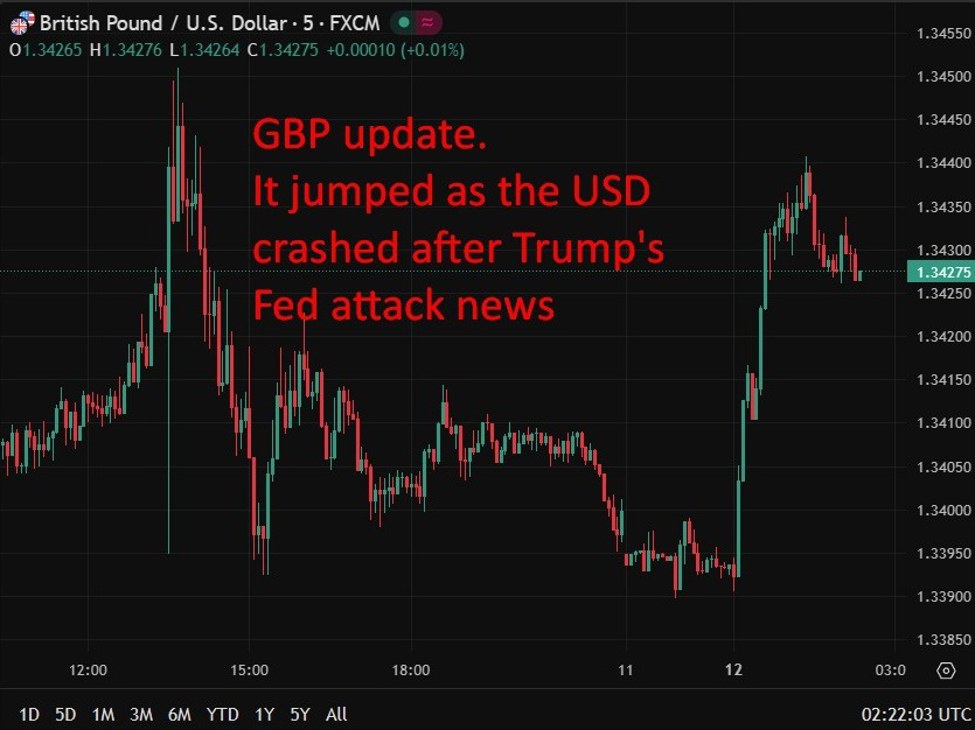
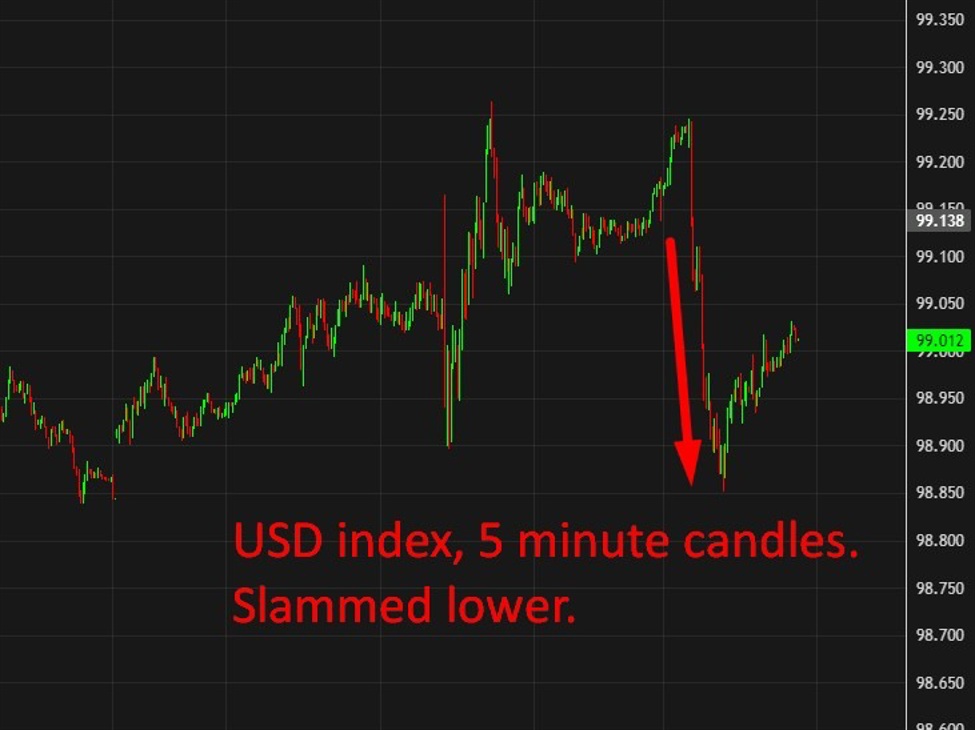
Yuan’s rally lacks fundamental support despite 2025 gains, former SAFE regulator saysUS hosts G7 talks on rare earths to counter China’s supply dominanceUK hiring weakens again as wage growth stays firm, complicating BoE outlookTrump threatens to block Exxon from Venezuela after CEO calls country uninvestablePBOC sets USD/ CNY reference rate for today at 7.0108 (vs. estimate at 6.9849)Gold and silver surge, stocks & USD slammed on news of Trump’s ongoing attacks on the FedFed Chair Powell calls out Trump on his witch hunt, part of ongoing threats against BankNYT: Federal prosecutors open probe into Fed chair Powell amid renovation scrutinyWall Street Journal: “U.S. Steps Up Planning for Possible Action in Iran”Globex trade is open for the week, US equity index futures with small gap downEUR wobbles – France budget at risk as confidence votes threaten government collapseICYMI: Japan’s PM Takaichi is considering calling a snap election for mid-FebruaryMonday open indicative forex prices, 12 January 2026Weekend:Europe moves to boost NATO Arctic presence to counter Trump’s Greenland rhetoric/threatTrump orders special forces to draft Greenland invasion plan – UK Sunday Daily Mail reportNewsquawk Week Ahead: US Earnings, US CPI, US Retail Sales, UK GDP, and China TradeTrump floats one-year 10% credit-card rate cap, offers zero enforcement detail, just talkSummary:USD slides on Fed independence fears: Dollar fell sharply after Powell said the Justice Department issued grand jury subpoenas, reviving concerns over political pressure on the Federal Reserve.Markets turn defensive: Gold and silver surged, US equity futures fell, and risk sentiment weakened as institutional risk re-entered pricing.Senate pushback escalates: Senator Thom Tillis said he will block confirmation of any Fed nominee until the investigation into Powell is resolved, raising leadership uncertainty.Oil supported by Iran risks: Crude prices rose on fears protests in Iran could disrupt up to 1.9 mbpd of exports, though gains were capped by Venezuela uncertainty.Trump–Exxon tensions resurface: Trump said he may block Exxon from investing in Venezuela after the company’s CEO called the country “uninvestable.”The US dollar suffered its sharpest setback in almost three weeks after Federal Reserve Chair Jerome Powell disclosed that the central bank had received grand jury subpoenas from the Justice Department. Powell characterised the move as a politically motivated attempt by the Trump administration to influence monetary policy, reviving long-standing concerns around Federal Reserve independence.The remarks rattled markets. The Bloomberg Dollar Spot Index fell around 0.2%, US equity index futures moved lower, and strategists warned that renewed institutional risk could undermine the greenback. The dollar weakened broadly against G10 peers, though it later clawed back ground against a notably weak yen, while gold and silver surged sharply as investors sought protection from political and policy uncertainty.Political fallout intensified when Republican Senator Thom Tillis, a senior member of the Senate Banking Committee, said he would block confirmation of any Federal Reserve nominee, including the next Fed chair, until the legal maters are resolved. Tillis said the episode removed any doubt that efforts were under way to erode Fed independence, adding that the credibility of the Justice Department itself was now at stake. Note that if a successor is not confirmed, Powell would remain in the role beyond the end of his current term.In commodities, oil prices extended gains as rising protests in Iran stoked concerns over potential supply disruptions from the OPEC producer. Analysts noted calls for oil workers to down tools, warning that as much as 1.9 million barrels per day of Iranian exports could be at risk if unrest escalates. President Donald Trump added to the geopolitical backdrop, saying the US has “strong options” to respond to any Iranian attack with overwhelming force.Trump said he may block Exxon Mobil from investing in the country after the company’s CEO described Venezuela as “uninvestable,” underscoring the political and legal risks that continue to complicate any rapid recovery in Venezuelan oil output. Note the weekend news above, plenty of Arctic geopolitics! Asia-Pac stocks:Japan (Nikkei 225) +1.6%Hong Kong (Hang Seng) +0.86% Shanghai Composite +0.75%Australia (S&P/ASX 200) +0.41%This is real, Trump on his ‘Truth’ app: This article was written by Eamonn Sheridan at investinglive.com. 🔗 Source 💡 DMK Insight The yuan’s recent rally seems more speculative than based on solid fundamentals, and here’s why that matters: Traders should be cautious as the former SAFE regulator’s comments highlight a potential disconnect between market sentiment and economic reality. The yuan’s strength may not be sustainable, especially with the PBOC’s reference rate setting indicating a controlled approach to currency valuation. If the yuan fails to hold its gains, it could trigger a sell-off, impacting not just the yuan but also commodities and emerging market currencies that are closely tied to China’s economic performance. Additionally, the G7’s focus on rare earths could signal a shift in supply chains, further complicating the yuan’s outlook. Watch for key levels around recent highs; a break below those could signal a shift in momentum. On the flip side, if the yuan maintains its strength, it could attract speculative inflows, but that would require a significant change in the underlying economic indicators. Keep an eye on the USD/CNY reference rate for immediate trading signals and monitor broader market reactions to geopolitical developments, especially regarding China’s supply chains. 📮 Takeaway Watch the USD/CNY reference rate closely; a break below recent highs could trigger a sell-off in the yuan and related assets.
Risk retreats as Powell investigation raises fears on Fed independence
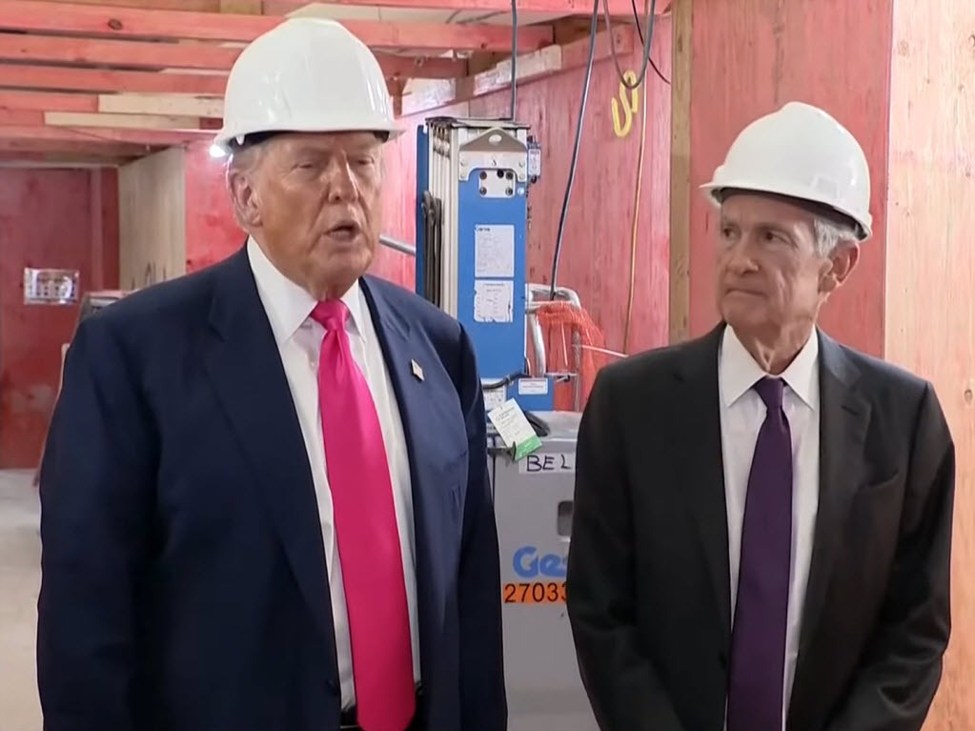
It’s no wonder why precious metals continue to stay so bullish. Trump is making the headlines again to start the new week and in case you missed it:NYT: Federal prosecutors open probe into Fed chair Powell amid renovation scrutinyFed Chair Powell calls out Trump on his witch hunt, part of ongoing threats against the central bankThis just continues the episode from last year as Trump continues to take aim at the Fed independence amid his disdain for Powell. While it isn’t new, it serves as a good reminder of how the situation is playing out. And markets are clearly responding with contempt as evident by the risk selling we’re seeing to start the week now.S&P 500 futures are down 0.6% with Nasdaq futures down 0.9% and Dow futures down 0.5% as we look towards European morning trade today.The Fed will surely continue to do their job regardless of this investigation. However, it’s just unnecessary drama for something that shouldn’t even be an issue. Politics and central bank don’t tend to mix in well together. Just take a look at what’s happening with Japan now as another example.But essentially, Trump’s continued attacks will just keep drawing flak and raises fears about credibility and independence at the Fed moving forward. And that is something that will keep chipping away at confidence in the central bank and the dollar in general.For now, risk trades are taking a step back amid the unprecedented attack on Powell. And it comes at a crucial time for US stocks as well. Earnings season is kicking off this week with the big banks set to report, but also keep an eye out on TSMC earnings. The latter is a bellwether for how chipmakers might fare and so that might be the biggest name to watch this week.Besides that, geopolitical risks are also still not completely out of the picture just yet. Trump continues to raise threats on Greenland and Iran, keeping a more nervous mood on the global stage after the situation in Venezuela. This article was written by Justin Low at investinglive.com. 🔗 Source 💡 DMK Insight Trump’s renewed scrutiny of Fed Chair Powell could shake up market sentiment significantly. As traders, we need to pay attention to how political narratives influence monetary policy perceptions. With Powell facing a federal probe, uncertainty around interest rates and inflation could spike, making precious metals like gold and silver attractive hedges. If traders start to see a correlation between political instability and economic policy shifts, we might see a surge in demand for these assets. Watch for gold prices to test resistance levels around recent highs, as any negative news could trigger a rush to safe havens. On the flip side, if Powell manages to maintain confidence, we could see a pullback in precious metals as traders shift back to riskier assets. Keep an eye on the upcoming economic indicators and Powell’s statements; they could provide critical insights into market direction. The next few weeks will be telling, especially if the political narrative intensifies. 📮 Takeaway Monitor gold prices closely; a break above recent highs could signal increased bullish momentum amid political uncertainty surrounding Powell.
FX option expiries for 12 January 10am New York cut
There are just a couple to take note of on the list for the day, as highlighted in bold below.The first ones are for EUR/USD, layered from 1.1650 through to 1.1700. The pair remains on a descending trend since the turn of the year and the expiries will add a layer to keep price action in check with that regard. The 100-hour moving average sits at 1.1675 currently and sellers are doing well to keep things below the key level since last week. So, the expiries layer will add to that with a secondary defense seen at 1.1700 – holding close by to the 200-hour moving average at 1.1705 at the moment.But amid Trump’s attack on the Fed independence again, that might draw renewed pressure on the dollar after the currency escaped from further scrutiny following the US jobs report on Friday. So, just keep that in mind as we also build towards the crucial US CPI report tomorrow.Besides that, there is also one for USD/JPY at the 158.00 level. It isn’t one that holds much technical significance but the expiries could just lock price action down a little amid a struggling dollar, raising questions about the potential breakout from Friday.The pair previously had held key resistance around 157.75-90 but pushed for a break at the end of last week, though falling short of closing above the 158.00 figure level. So, the expiries could yet keep things in check in European trading should the dollar keep under some slight pressure from the Trump vs Fed headlines.For more information on how to use this data, you may refer to this post here.Head on over to investingLive (formerly ForexLive) to get in on the know! This article was written by Justin Low at investinglive.com. 🔗 Source 💡 DMK Insight EUR/USD is facing critical resistance between 1.1650 and 1.1700, and here’s why that matters: The pair has been on a descending trend since the start of the year, indicating bearish sentiment among traders. With expiries in this range, we could see increased volatility as positions are adjusted. If the pair fails to break above 1.1700, it could reinforce the downtrend, leading to further selling pressure. Conversely, a breakout above this level might signal a shift in momentum, attracting buyers and potentially reversing the trend. Keep an eye on the daily chart for any signs of reversal patterns or volume spikes that could indicate a change in sentiment. Also, consider how this impacts correlated assets like the DXY index, which measures the dollar’s strength against a basket of currencies. A stronger dollar could further weigh on EUR/USD, making it crucial to monitor economic indicators from the U.S. and Eurozone that might influence these dynamics. Watch for any news or data releases that could drive price action in the coming days. 📮 Takeaway Watch the 1.1650-1.1700 resistance zone closely; a breakout could signal a trend reversal, while failure to breach may lead to further declines.