
 Bitcoin
  Ethereum
  Tether
  XRP
XRP  BNB
BNB  USDC
USDC  Solana
  TRON
TRON  Lido Staked Ether
  Figure Heloc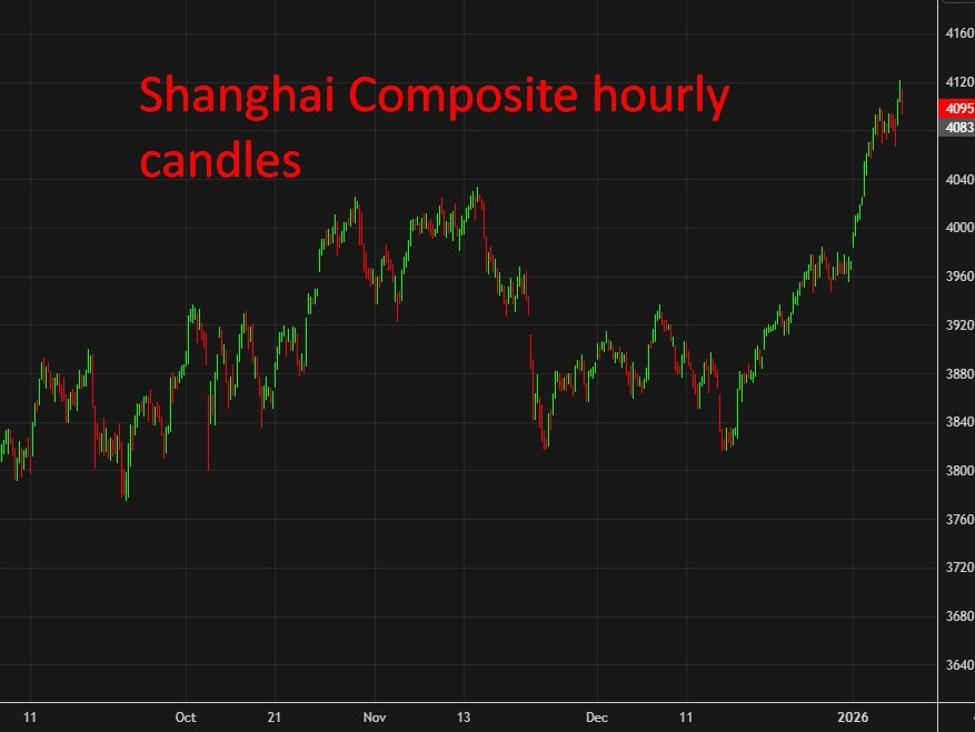
Summary:China CPI rose 0.8% y/y in December, a 34-month highFull-year CPI at 0.0%, avoiding outright deflationFood prices driving gains; pork drag easingCore inflation steady, property prices still deflationaryFurther monetary easing seen as likelyChina narrowly avoided outright deflation in 2025, with consumer inflation ending the year at its highest level in nearly three years, though, analysts at ING caution that price pressures remain subdued and well below levels seen in other major economies.China’s consumer price index (CPI) rose 0.8% year-on-year in December, the strongest reading since February 2023 and in line with market expectations. That brought full-year CPI inflation to 0.0%, allowing China to sidestep an annual deflation print, following several years of near-zero inflation.The pickup in headline inflation continues to be driven largely by food prices, which rose 1.1% year-on-year, a 14-month high. Fresh vegetable and fruit prices recorded the sharpest gains, while pork prices — still deeply negative — have become less of a drag, with the year-on-year decline narrowing for a third consecutive month. Analysts expect the pork cycle to turn later this year, potentially adding modest upward pressure to food inflation.By contrast, non-food inflation remained unchanged at 0.8%, reflecting a mixed underlying picture. Household appliance prices rose sharply as the effects of earlier trade-in incentives fed through, while services inflation — particularly tourism and healthcare — continued to outpace goods prices. However, deflation persisted in housing-related categories, with rents and residence costs still falling amid ongoing property-sector weakness.Core inflation, which strips out food and energy, was steady at 1.2% for a third straight month, suggesting underlying price momentum remains limited.At the producer level, PPI deflation eased to –1.9% year-on-year, marking a 16-month high but extending a deflationary streak now approaching three and a half years. The ING note argues that while the worst of China’s deflationary pressure may be behind it, any recovery in inflation is likely to be gradual.Looking ahead, analysts forecast CPI inflation of around 0.9% in 2026, a modest improvement but still low by global standards. With inflation contained, they see scope for further monetary easing, including the possibility of a 10-basis-point rate cut in the first half of 2026. This article was written by Eamonn Sheridan at investinglive.com. 🔗 Source 💡 DMK Insight China’s CPI hitting a 34-month high is a game changer for traders: This uptick to 0.8% year-over-year signals a potential shift in consumer sentiment and spending, which could influence global markets. With full-year CPI at 0.0%, the risk of deflation has been averted, but the underlying dynamics are crucial. Food prices, particularly pork, have been a significant driver, and while core inflation remains steady, the property market is still facing deflationary pressures. Traders should keep an eye on how these factors might prompt further monetary easing from the People’s Bank of China, which could lead to increased liquidity and impact asset prices across the board. The broader implications for commodities, especially agricultural products, could be significant. If food prices continue to rise, we might see a ripple effect on related markets. Watch for key levels in the commodity space, particularly in pork and grains, as they could indicate broader inflationary trends. The immediate focus should be on how this CPI data influences the yuan and related forex pairs, especially if the PBOC takes action. Keep an eye on the 0.8% CPI level as a potential pivot point for market sentiment. 📮 Takeaway Watch for PBOC’s response to the 0.8% CPI; it could impact yuan and commodity prices significantly.
investingLive Asia-Pacific FX news wrap: Awaiting the US NFP data
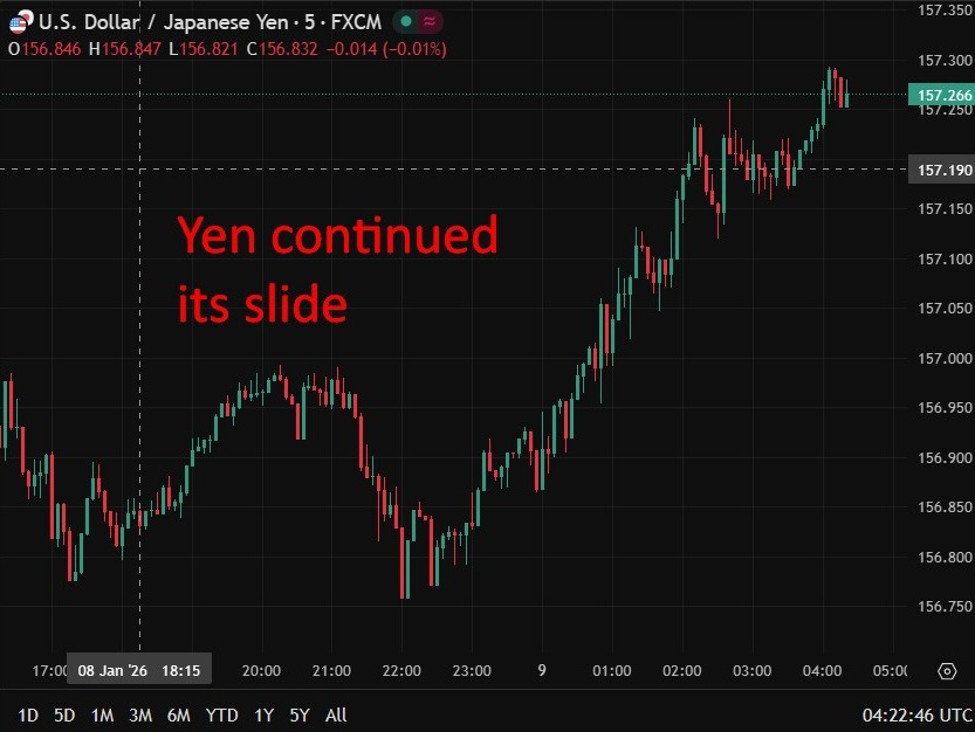
China avoids deflation in 2025 as inflation edges higher, easing still likelyECB vice-presidential hopeful Centeno flags “structural uncertainty” facing EuropeGoldman says NFP unlikely to shift April Fed cut unless data sharply surprisesChina curbs rare-earth exports to Japan, Tokyo raises concerns with G7 and USChina inflation hits near three-year high, but producer deflation signals weak demandChina December 2025 CPI +0.8% y/y (vs. 0.9% expected, prior of 0.7%)PBOC sets USD/ CNY reference rate for today at 7.0128 (vs. estimate at 6.9832)Sterling gains look premature as banks warn on UK-EU reset and weak UK growthGoldman sees lower but attractive 2026 equity returns: AI shift to adoption, credit cappedJapan household spending rebounds while real wages still lag, complicates BOJ outlookDATA: Japan Household Spending November 2025: +2.9% y/y (vs expected -0.9%, prior -3.0%)Musk says China to dominate AI compute as Beijing plays down chips, touts power advantageGoldman survey shows investors turn sharply bearish on oil as supply glut buildsHSBC lifts long-term gold forecasts but trims 2026 average, sees $5,000 upside riskinvestingLive Americas market wrap: Big US trade balance surprise boosts GDP estimatesTrump proposes $200bn mortgage-bond buying plan to cut US home loan ratesUS equity close: Energy leads the way while memory chip names give back the big rallyAt a glance:Trump floated direct MBS purchases, blurring fiscal and monetary linesUSD firm near-term, USD/JPY pushed above 157.25Japan data strong on spending but real wages still fallingChina CPI improved, but deflation risks persistMarkets cautious ahead of US NFP and tariff rulingLate in the US afternoon, Donald Trump delivered a headline-grabbing moment, announcing he had instructed representatives to buy $200bn in mortgage-backed securities, effectively proposing a form of QE-by-presidential directive. Trump framed the move as an effort to narrow mortgage spreads and reduce borrowing costs in order to restore housing affordability.While labelled as “QE” in market shorthand, buying MBS via government channels is more accurately fiscal policy, and the announcement reinforces expectations that policy will skew increasingly populist as the US moves deeper into the 2026 election cycle. With Trump’s approval ratings under pressure, further fiscally expansive initiatives look likely in coming months, a dynamic that should ultimately weigh on the US dollar.But not today.The USD remained firm, particularly against the yen, with USD/JPY pushing above 157.25. That move came despite stronger Japanese data showing household spending rose 2.9% y/y in November, far exceeding expectations, and surged 6.2% m/m. The data points to near-term resilience in consumption, though the broader picture remains fragile, with real wages still falling 2.8% y/y, continuing to erode purchasing power.What appeared to weigh more heavily on the yen was renewed concern over China’s restriction of rare-earth and magnet exports to Japan, escalating a dispute linked to Taiwan-related comments. Japanese officials voiced strong concern and said the issue would be raised with G7 partners and US counterparts, adding a geopolitical risk premium to JPY trading.Elsewhere, major FX pairs were relatively subdued as markets positioned cautiously ahead of US non-farm payrolls, due Friday at 13:30 GMT / 08:30 ET.In China, inflation data showed CPI rose 0.8% y/y in December, the fastest pace since early 2023, lifting full-year (2025) inflation to 0.0% and allowing Beijing to avoid outright deflation. However, PPI fell 1.9% y/y, extending factory-gate deflation and reinforcing the view that underlying domestic demand remains weak, keeping expectations for further policy support alive.On geopolitics, Trump told the New York Times that Taiwan is “up to” Xi Jinping, while adding he would be “very unhappy” if Beijing moved against the island, comments unlikely to calm regional nerves.Asia-Pacific equities are mostly higher, though gains are capped as investors await US payrolls data and a looming US Supreme Court ruling on tariffs. Asia-Pac stocks:Japan (Nikkei 225) +1.3%Hong Kong (Hang Seng) +0.03% Shanghai Composite +0.3%Australia (S&P/ASX 200) -0.13% This article was written by Eamonn Sheridan at investinglive.com. 🔗 Source 💡 DMK Insight China’s inflation hitting a near three-year high is a game changer for global markets. This uptick signals potential shifts in monetary policy, not just in China but also in the U.S. and Europe. Traders should be on high alert as inflationary pressures could lead to tighter monetary conditions, affecting everything from forex pairs to commodities. If China continues to see rising prices, it could prompt the PBOC to adjust its easing measures, which would ripple through global markets, particularly impacting currencies like the yuan and related commodities like rare earths. Watch for how the ECB and Fed respond; any signs of a coordinated tightening could send shockwaves through risk assets. On the flip side, if inflation proves transitory, we might see a continuation of the current easing stance, which could support equities in the short term. Keep an eye on key inflation reports and central bank communications in the coming weeks, as they will be crucial for positioning ahead of potential market volatility. 📮 Takeaway Monitor China’s inflation data closely; a sustained rise could trigger shifts in global monetary policy, impacting forex and commodity markets significantly.

It's the first NFP day for the year 2026
The inflation story might have stolen the spotlight for quite a while in the past two years but come what may, there’s nothing quite like the US non-farm payrolls data. And now with the focus on the Fed outlook shifting back to the labour market, the report today will once again draw plenty of eyes and attention from markets across the globe.The November report was marred by data quality concerns following the longest US government shutdown in history. And it also came after the final FOMC meeting for 2025, so market players could easily brush that aside.But today, this will be the first “normal” jobs report after the whole shutdown debacle. As such, expect there to be heavier scrutiny as market players will look to dissect the numbers to tie that to the Fed’s next move.As a reminder, the next FOMC meeting will take place on 28 January. As things stand, traders are pricing in ~86% odds of there being no change to the Fed funds rate. The next full 25 bps rate cut is only pried in for June currently.Circling back to the labour market report today, the Reuters estimate points to a 60k print for the headline non-farm payrolls. The unemployment rate is expected to marginally ease to 4.5% while average hourly earnings is estimated to be up 0.3% month-on-month.So, those are some of the more important numbers to watch out for.That being said, just be mindful that there could still be some distortions to the report. I highlighted the potential for that yesterday here and I’ll put up more previews in the session ahead as we gear towards the main event for the day.Earlier today, Eamonn posted this one from Goldman Sachs. So, you can just take a read first as we settle into European morning trade.Besides the non-farm payrolls, there’s also the US Supreme Court ruling on tariffs potentially coming up later in the day. The court is expected to issue rulings on Friday but, as is customary, has not said what case or cases will be acted upon. However, Trump’s tariffs will be one thing to watch in case it does draw mention. This article was written by Justin Low at investinglive.com. 🔗 Source 💡 DMK Insight The upcoming US non-farm payrolls data is crucial for traders, especially as the Fed’s focus shifts back to labor market indicators. This report could significantly influence interest rate expectations, which have been a driving force in both forex and crypto markets. If the payroll numbers come in stronger than expected, it could bolster the dollar and lead to a sell-off in risk assets like cryptocurrencies. Conversely, weaker numbers might prompt a dovish shift from the Fed, potentially boosting crypto prices as investors seek higher returns in riskier assets. Traders should keep an eye on the consensus estimates and the market’s reaction post-release. A strong print could push the dollar index above key resistance levels, while a weak report could see it retreat. Watch for volatility in related markets, particularly in pairs like EUR/USD and crypto assets like Bitcoin, which often react sharply to shifts in sentiment around US economic data. The immediate impact will be felt on the day of the release, but the longer-term implications could shape trading strategies for weeks to come. 📮 Takeaway Watch the non-farm payrolls data closely; stronger numbers could strengthen the dollar and pressure crypto prices, while weaker results might boost risk assets.

AMD Technical Analysis – Bear Flag Breakdown Signals Bearish Control and 20% Downside Risk
Key Takeaways for AMD Stock Investors (watch my video)Advanced Micro Devices (AMD) is trading below a broken multi-month channel, keeping the medium-term technical bias bearish.A confirmed bear flag breakdown from December remains active after a clean retest failure.AMD is showing relative weakness versus major indices, despite occasional short-term bounces.With earnings approaching in early February, event risk is elevated and price reaction will be critical. Oh, and, of course, investors, traders and some algos have stops just below the $200 round psychological number, and the current price $204.68 (close of 08 Jan, 2026) is getting close…Bear Flag Breakdown and Retest: Why the Signal MattersAfter the December breakdown, AMD formed a classic bear flag pattern. These patterns often resolve lower after a temporary consolidation, especially when they occur after an extended uptrend.In early January, AMD delivered a near-textbook retest of the former channel and bear flag resistance. Sellers defended that area convincingly, and price rolled over again. This failed retest is a critical confirmation signal. If buyers were regaining control, AMD would likely have reclaimed the channel quickly or avoided the sharp pullback that followed.Instead, the stock declined roughly 13% from that retest area, a meaningful move for a large-cap semiconductor name, particularly while broader equity indices held up relatively better.Regression Channel Analysis: Mapping the Current AMD TrendA regression channel using three standard deviations further reinforces the bearish technical structure. Price remains encapsulated within a downward-sloping regression path, with the mid-channel acting as dynamic resistance.Short-term scenarios still exist. AMD could see tactical bounces toward the mid-regression line or attempt another touch of the smaller declining channel overhead. However, unless price can sustain acceptance above those levels, such moves are best viewed as corrective rather than the start of a new bullish trend.Key AMD Stock Price Support and Resistance Levels Investors Should WatchFrom a technical investor perspective, several levels stand out:$218 area: A reclaim and sustained hold above this zone would help stabilize the structure and prevent further technical deterioration.$240 and above the November 20 high: This zone marks the threshold required to invalidate the broader bearish thesis and re-enter the prior rising channel.$165 zone: This level corresponds to the base of a sharp upside spike driven by AI-related news. A full retracement of that move would imply an additional ~20% downside from current levels. While bearish in the short term, this area could later become a high-interest zone for longer-term investors, pending confirmation.AMD Stock Earnings Risk: Why Price Reaction Matters More Than HeadlinesAMD’s upcoming earnings report in early February adds an important layer of uncertainty. Revenue, EPS, AI exposure, and forward guidance will matter, but the market’s reaction to those results matters more than the numbers themselves.Strong earnings followed by weak price action would reinforce the bearish technical message. Conversely, a sustained reclaim of major resistance levels after earnings would be the first meaningful signal that sentiment and structure are shifting.AMD Stock Technical Outlook Summary for Stock InvestorsAs long as AMD remains below the broken channel, bear flag resistance, and key reclaim levels, the technical outlook remains more bearish than bullish on a medium-term basis. Short-term rallies may occur, but without structural follow-through, they do not alter the broader risk profile.This analysis represents one technical perspective, not a prediction. Markets are dynamic, and investors should combine technical signals with fundamental research, earnings context, and disciplined risk management when evaluating AMD stock. This article was written by Itai Levitan at investinglive.com. 🔗 Source 💡 DMK Insight AMD’s bearish trend is solidified by its failure to reclaim a broken channel, and here’s why that matters: The stock’s recent performance indicates a confirmed bear flag breakdown, which suggests further downside risk. With AMD trading below this broken multi-month channel, traders should be cautious, especially as the stock has shown relative weakness compared to major indices. This divergence can signal that institutional investors might be favoring other tech stocks, leaving AMD vulnerable to further selling pressure. If you’re looking to trade AMD, keep an eye on the $70 level; a sustained move below this could trigger more aggressive short positions. Conversely, any rally back above this level might offer a short-term bounce opportunity, but the overall sentiment remains bearish. It’s also worth noting that upcoming earnings could act as a catalyst for volatility. If the results disappoint, we could see a sharp decline, while a positive surprise might only provide a temporary reprieve. Watch for the earnings date and be prepared for potential price swings in either direction. 📮 Takeaway Monitor AMD closely around the $70 level; a break below could signal further downside, especially with earnings approaching.

FX option expiries for 9 January 10am New York cut
There aren’t any major expiries to take note of on the day, with the full list seen below.As such, that will keep market players focused on the main event later today. That being the US labour market report. It’s the first one for the new year and one that will be watched carefully as this is supposed to be a report that is more “normal” after the November one was hampered by the longest US government shutdown in history.From earlier: It’s the first NFP day for the year 2026But as mentioned, it’s not the only game in town though. The US Supreme Court ruling on tariffs could also be on the cards, so there’s that. The court is expected to issue rulings on Friday but, as is customary, has not said what case or cases will be acted upon. However, Trump’s tariffs will be one thing to watch in case it does come up.For more information on how to use this data, you may refer to this post here.Head on over to investingLive (formerly ForexLive) to get in on the know! This article was written by Justin Low at investinglive.com. 🔗 Source 💡 DMK Insight The upcoming US labor market report is a big deal for traders, and here’s why: it sets the tone for economic sentiment and potential Fed policy shifts. With no major expiries today, all eyes are on this report. A strong jobs number could fuel expectations for tighter monetary policy, impacting everything from equities to forex pairs like USD/JPY. Conversely, a weaker report might lead to a risk-off sentiment, pushing traders to safe havens like gold or the US dollar. Watch for key levels in the S&P 500 and major currency pairs as they react to the data. If the report surprises, we could see volatility spike, so be prepared for quick moves in your positions. Keep an eye on the 50-day moving average for potential support or resistance levels in the indices as well. 📮 Takeaway Watch the US labor market report closely today; a strong number could push USD higher and impact risk assets significantly.

Germany November industrial production +0.8% vs -0.4% m/m expected
Prior +1.8%; revised to +2.0%At the same time, we also have German trade balance data for November out as per below:Trade balance €13.1 billion vs €16.5 billion expectedPrior €16.9 billionThat’s a solid beat for German industrial output, largely owing to a positive development to growth in the automotive industry (+7.8%). Increases in mechanical engineering (+3.2%) and in machine maintenance and assembly (+10.5%) also had a positive impact on the overall result. Conversely, the decline in energy production (-7.8%) had a negative effect.If excluding energy, industrial production was even stronger as it rose by 2.1% on the month. That as the production of capital goods rose by 4.9%. Meanwhile, the production of intermediate goods (-0.8%) and consumer goods (-0.3%) both exhibited declines during the month.As for declining trade surplus in November, that comes as exports were down 2.5% while imports were up 0.8% on the month after accounting for seasonal adjustments. Exports to the Eurozone countries amounted to €50.8 billion, which was down 3.9% in November.In terms of foreign trade, most German exports in November went to the US once again. That totaled to €10.8 billion and down 4.2% compared to October. Meanwhile, exports to China grew by 3.4% on the month to €6.5 billion. This article was written by Justin Low at investinglive.com. 🔗 Source 💡 DMK Insight SOL’s recent price action at $138.58 reflects broader economic indicators, especially the German trade balance data. The trade balance came in at €13.1 billion, significantly below the expected €16.5 billion, which could signal a slowdown in European demand. This is crucial for traders, as a weaker Eurozone economy often leads to reduced risk appetite, impacting crypto assets like SOL. The positive growth in the automotive sector (+7.8%) may provide some cushion, but the overall sentiment remains cautious. Traders should keep an eye on SOL’s support levels around $130, as a breach could trigger further selling pressure. Conversely, if SOL can hold above this level, it might attract buyers looking for a rebound, especially if broader market conditions stabilize. Watch for any shifts in the Eurozone economic outlook, as this could ripple through to crypto markets. If the trade balance continues to disappoint, we might see SOL and other cryptos facing headwinds in the coming weeks. 📮 Takeaway Monitor SOL’s support at $130; a break could lead to further declines, while holding above may attract buyers amid Eurozone economic shifts.

4 Surprising Reasons the Canadian Dollar Could Rally in 2026
Key Takeaways for New Traders and InvestorsHeadlines around trade and housing look negative, but markets often move before headlines change.Canada’s economy has shown unexpected resilience, especially consumer spending.Political and institutional stability matters more than most people realize for currencies.A single U.S. Supreme Court ruling could quietly reshape global capital flows in 2026.This article is based on insights from Chief Currency Analyst at investingLive.com, Adam Button as recently interviews on BNN Bloomberg TV (watch below), and is designed to help newer market participants understand what actually drives currencies beyond daily news noise. We go a bit further to break it down for the non experts as well.Introduction: Why Currency Headlines Can Be MisleadingIf you only follow headlines, 2026 looks uncomfortable for Canada.Trade tensions with the U.S., concerns about the housing market, and constant political drama dominate the news flow. For many beginners, that automatically translates to: “The Canadian dollar must be weak.”But markets do not price emotions. They price probabilities, capital flows, and relative stability.When we step back and look at the bigger picture, several underappreciated forces suggest the Canadian dollar (CAD) may be stronger than expected over the year ahead.1. U.S.-Canada Trade Tension: Loud Headlines, Limited Economic DamageFor new investors, it is important to understand this rule: Markets care more about outcomes than about threats.Yes, Donald Trump continues to use aggressive trade rhetoric. But behind the scenes, policy actions matter far more than public statements.According to Adam Button, U.S. officials have signaled a desire to remain within the USMCA framework. Even the most criticized trade issues, such as dairy access, are not large enough to destabilize Canada’s overall economy.Why this matters for CADBusinesses delay investments when rules are unclear.Once trade rules are confirmed, delayed capital often floods in quickly.This creates what Button describes as a “dam of investment capital” waiting for clarity.For traders, this means uncertainty can suppress a currency temporarily, but resolution often leads to sharp, fast revaluations.2. The Canadian Consumer Did Not Collapse With Housing PricesMany beginners assume:Falling house prices automatically cause economic crashes.Canada challenged that assumption in 2025.Despite housing price declines of 10% to 20% in some regions, consumer spending stayed strong. Shoppers did not suddenly stop spending, traveling, or living normally.Why this is importantIt suggests households were not overleveraged in day-to-day spending.Consumer resilience reduces recession risk.Banks remain healthier than feared.This confidence showed up in markets when Canadian bank stocks rallied strongly in the second half of 2025, signaling that investors do not expect a U.S.-style housing collapse.For long-term investors, this supports the idea that Canada’s economy is slowing, not breaking.3. Canada’s “Boring” Politics Are a Hidden AdvantageThis is one of the most overlooked concepts for newer traders.Currencies are not just about interest rates. They are about trust.In a world filled with political shocks, Canada offers something increasingly rare:Predictable electionsStable institutionsPolicy continuity regardless of which party winsButton notes that while the U.S. and U.K. face deep political uncertainty, Canada’s outlook is relatively straightforward.Why stability strengthens a currencyLong-term investors prefer countries where rules do not suddenly change.Capital-intensive projects like oil, mining, and infrastructure need decades, not quarters.Stability lowers risk premiums demanded by investors.This type of stability often supports a currency quietly and gradually, which is why it is frequently underpriced.4. A U.S. Supreme Court Decision Could Reshape Global MarketsThis is the biggest wildcard of 2026.A pending decision by the Supreme Court of the United States will determine how much power a U.S. president has to impose tariffs without congressional approval.Two very different outcomesScenario 1: Tariff powers are limitedConfirms institutional checks and balances.Restores confidence in U.S. governance.Reduces panic-driven capital flows into gold and defensive assets.Stabilizes global currencies, including CAD.Scenario 2: Tariff powers are upheldRaises concerns about institutional erosion.Increases global uncertainty.Supports further strength in gold and alternative assets.Encourages diversification away from U.S.-centric exposure.Either way, this decision will likely set the tone for capital flows across 2026, indirectly affecting the Canadian dollar.Conclusion: Learning to Look Past the NoiseFor new traders and investors, this is the key lesson: Markets reward those who look ahead, not those who react to headlines.Canada enters 2026 with:A resilient consumerStable political institutionsManageable trade risksA global environment where stability is increasingly valuableAs Adam Button noted, after a roughly 5% gain in the Canadian dollar last year, a similar move in 2026 is entirely plausible. This article was written by Itai Levitan at investinglive.com. 🔗 Source 💡 DMK Insight With ADA sitting at $0.39, the market’s reaction to economic headlines is crucial right now. Despite negative narratives around trade and housing, Canada’s economy is surprisingly resilient, particularly in consumer spending. This resilience could bolster the Canadian dollar and affect crypto assets like ADA, especially if traders see a correlation between consumer confidence and crypto investments. Political stability is another factor; if Canada maintains its economic footing, it could lead to increased institutional interest in cryptocurrencies. However, the looming U.S. Supreme Court ruling could shift capital flows significantly, impacting both forex and crypto markets. Traders should be wary of volatility spikes around this event. Watch for ADA to hold above $0.38 for bullish sentiment, but a drop below could signal a bearish trend. Keep an eye on consumer spending reports and political developments in Canada as they could provide actionable insights for trading strategies. 📮 Takeaway Monitor ADA’s support at $0.38 and watch for the U.S. Supreme Court ruling’s impact on capital flows for potential volatility.

Here's why the rest of the world has to keep an eye on China's deflation story
China and economic data numbers. It always just tends to play out nicely for Beijing’s narrative and this is one of those times. Say what you want about the December CPI report earlier in the day but it kept the 2025 full-year CPI at 0%. As such, lawmakers and policymakers can attest to the claim that China is “not in deflation territory”. How convenient.As much as they can chalk this up as a win, deflationary pressures are going to be a mainstay problem for China in 2026. So, let’s look past what the numbers today said and look at the real story instead.It all starts with the real estate sector crash and property market slump in China since 2021. Households feel the pinch of the property market slump and have to tighten the purse strings and opt to save more, instead of spending.Then you have the push by Beijing to prioritise investment in key future industries, all as part of the green transition. That allows for factories to ramp up production at a pace that outweighs domestic demand, which has been hampered by the above development.And in turn, that has led to the “involution” problem in China in the past year or so. Overcapacity in production, particularly in electric vehicles and solar panels, leading to price wars among firms to aggressively clear out excess inventory.It has gotten to a point where Beijing has even stepped in to pledge “anti-involution” policies for this year in trying to steer China’s socioeconomic issues back into a healthier place. However, it will take time and some things are just hard to really force. You can’t just turn on domestic demand with a snap of a finger.The depressing price trend is clearly felt when viewing China’s producer price index, which has been in negative territory for 38 straight months now. The latest report shows a 1.9% year-on-year decline and while easing, it still reflects negative price developments as a whole.So when Chinese companies cannot sell out their goods at home, what happens next? They turn to the international audience. And this is where the rest of the world needs to step up and take notice.As Chinese firms look to stay competitive in bringing up their bottom line, they have to export their goods to outside of China. And besides just exporting finished goods, they are also exporting things like battery cells and power electronics at deflated prices. And this puts a deflationary anchor into the supply chains of other countries.Adding to that is a weaker Chinese yuan currency, which makes these goods even cheaper and more attractive for foreign buyers. Thus, amplifying the impact of the deflationary anchor. The yuan might have performed well in 2025 but is still more than 10% weaker than where it was back in 2022.For the better part of three years now, the focus of major economies has been on tackling stubborn inflation pressures. And to some extent, most have gotten that somewhat under control now with the potential for central banks to shift gears back towards rate hikes either later this year or perhaps next year.However, China exporting deflation to the rest of the world is perhaps a key risk factor that should not be overlooked as it could really strike deep and get embedded into other countries’ economies without much notice. And even more so, when it hits at economies which are starting to soften.The hope now is that Beijing’s “anti-involution” policies will come good and curb any disorderly price competition among manufacturers. But the key push by lawmakers and policymakers is to try and pivot towards a consumption-led model. However, I would argue that it isn’t so simple and it is the type of shift that could take years or even a decade.So, yeah. This may not be talked about all too much as the risk of the situation remains low. But the narrative of China exporting deflation is arguably one that could be a key macro risk for markets come what may this year (or next). This article was written by Justin Low at investinglive.com. 🔗 Source 💡 DMK Insight China’s economic data is often viewed through a lens of skepticism, and the recent December CPI report is no exception. With the full-year CPI for 2025 projected at 0%, this raises eyebrows about the accuracy and reliability of these figures. Traders should be cautious, as such low inflation could signal underlying economic weakness, potentially impacting demand for commodities and currencies tied to China’s growth. This situation could affect forex pairs like USD/CNY, especially if traders start to question the sustainability of China’s economic recovery. If inflation remains stagnant, it could lead to further easing of monetary policy, which might weaken the yuan. Keep an eye on key levels around 7.00 for USD/CNY; a break above could indicate a bearish trend for the yuan. Additionally, watch for any shifts in sentiment from institutional investors, as they may react to these economic indicators by adjusting their positions in related markets, such as commodities or emerging market equities. 📮 Takeaway Monitor USD/CNY around the 7.00 level; a break could signal further yuan weakness amid stagnant inflation.

Swiss unemployment rate keeps steady in December but the trend remains clear
Switzerland December seasonally adjusted unemployment rate 3.0% vs 3.0% expectedPrior 3.0%The reading meets estimates, so there’s nothing all too much to talk about. The number of registered unemployed persons did see a slight rise though to 147,275 people. And that is up from the 138,860 unemployed persons seen in November 2025. As for job vacancies, December saw a figure of 35,940 reported and that is also seen up from 32,670 in November.But as the year draws to a close, perhaps it is better to look at how the Swiss jobless rate fared as a whole for the period during 2025.The unemployment rate ends the year at 3.0% and that is up from 2.6% seen back in December 2024. Meanwhile, the number of registered unemployed persons have also increased to 147,275 from 130,293 back in December 2024. As for job vacancies, the figure back at the end of 2024 was 30,422.Overall, the trend is rather clear. There is some slack coming back into the labour market and that’s seeing conditions soften further during the course of last year. And that is expected to carry on to the new year as well, with the jobless rate now currently hovering at the highest since July 2021. This article was written by Justin Low at investinglive.com. 🔗 Source 💡 DMK Insight Switzerland’s unemployment rate holding steady at 3.0% might seem uneventful, but there’s more beneath the surface. The increase in registered unemployed persons to 147,275 from 138,860 in November signals a potential shift in labor market dynamics. While the rate met expectations, the uptick in actual unemployment could indicate underlying economic pressures that traders should monitor closely. This could affect the Swiss franc, especially if the trend continues, as it may prompt the Swiss National Bank to reconsider its monetary policy stance. Look for any shifts in economic sentiment or consumer spending data that could correlate with these unemployment figures. If the unemployment rate begins to rise significantly, it could lead to a weakening of the franc against major currencies, impacting forex positions. Keep an eye on the upcoming economic indicators, particularly any GDP growth figures or inflation data, as these could provide further context to the labor market situation. A sustained increase in unemployment could also lead to broader market implications, affecting equities and commodities tied to Swiss economic performance. 📮 Takeaway Watch for any further increases in unemployment figures; a sustained rise could weaken the Swiss franc and impact forex trading strategies.

Key catalysts to watch for gold traders today: US NFP and US Supreme Court in focus
FUNDAMENTAL OVERVIEWWe got a small pullback in gold in the final part of the week following a couple of good US data. Overall, the market pricing didn’t change much but the chances for a cut in January fell further. The bullish momentum remains intact for now, but the US NFP report today could challenge that.In fact, if we get strong data, we will likely see a bigger pullback in gold as traders pare back their rate cut expectations. On the other hand, a soft report should give the market a boost as rate cut bets could increase. Moreover, the US Supreme Court could rule on Trump’s tariffs today and that might also bring volatility in case of a surprising decision. In case tariffs get struck down, gold will likely fall amid easing stagflation risks. On the other hand, if tariffs are kept in place, it shouldn’t change much although it would keep the upside intact.In the bigger picture, gold should remain in an uptrend as real yields will likely continue to fall amid the Fed’s dovish reaction function. But in the short term, a hawkish repricing in interest rate expectations could weigh on the market.GOLD TECHNICAL ANALYSIS – DAILY TIMEFRAMEOn the daily chart, we can see that gold continues to edge higher amid lack of bearish catalysts. From a risk management perspective, the buyers will have a better risk to reward setup around the trendline to position for a rally into a new all-time high. The sellers, on the other hand, will want to see the price breaking lower to pile in for a drop into the 3887 level next.GOLD TECHNICAL ANALYSIS – 4 HOUR TIMEFRAMEOn the 4 hour chart, we can see that we eventually got the pullback into the minor support zone around the 4400 level where the buyers stepped in with a defined risk below the trendline to position for a rally into new all-time highs. If we get another pullback into the trendline, we can expect the buyers to lean on it to keep pushing into new highs. The sellers, on the other hand, will want to see the price breaking below the support to pile in for a drop into the major trendline around the 4275 level.GOLD TECHNICAL ANALYSIS – 1 HOUR TIMEFRAMEOn the 1 hour chart, there’s not much we can add here as we don’t have clear levels where to lean on except the trendline. A break above the recent high at 4500 though could increase the bullish momentum as more buyers will likely pile in, especially on a soft NFP report. The red lines define the average daily range for today but they will be less reliable given the NFP report and the potential US Supreme Court decision on Trump’s tariffs. UPCOMING CATALYSTSToday we conclude the week with the US NFP report and potential US Supreme Court decision on Trump’s tariffs. This article was written by Giuseppe Dellamotta at investinglive.com. 🔗 Source 💡 DMK Insight Gold’s recent pullback signals a critical moment for traders: the bullish trend isn’t broken, but caution is warranted. With strong US data reducing the likelihood of a January rate cut, traders should keep an eye on how this affects gold’s safe-haven appeal. If the bullish momentum holds, a key resistance level to watch is the recent highs, which could trigger further buying. However, if the NFP data surprises to the upside, we might see a more pronounced correction. It’s worth noting that while the market’s pricing hasn’t shifted dramatically, sentiment can change quickly, especially with upcoming economic indicators. Traders should monitor the next NFP release closely, as it could provide clarity on the Fed’s trajectory and impact gold’s price action significantly. 📮 Takeaway Watch for the next NFP data; a strong report could challenge gold’s bullish trend and test key resistance levels.