
 Bitcoin
  Ethereum
  Tether
  XRP
XRP  BNB
BNB  USDC
USDC  Solana
  TRON
TRON  Lido Staked Ether
  Figure Heloc
The ruling confirms that Bitcoin in South Korean exchange accounts is an “object of seizure” under criminal law, aligning Seoul with US and EU enforcement practices. 🔗 Source 💡 DMK Insight South Korea’s ruling on Bitcoin as a seizure object is a game-changer for crypto traders. This aligns with stricter enforcement seen in the US and EU, raising concerns about regulatory risks. Traders need to consider how this might impact liquidity and market sentiment, especially if exchanges face increased scrutiny. If South Korea ramps up enforcement, we could see a ripple effect across Asia, potentially affecting Bitcoin’s price stability. Watch for any immediate reactions in trading volumes and price movements, particularly if Bitcoin approaches key support levels. Keep an eye on how institutional players might adjust their strategies in response to these developments, as they could lead to increased volatility in the short term. 📮 Takeaway Monitor Bitcoin’s price action closely; a breach below key support levels could trigger significant sell-offs amid heightened regulatory scrutiny.

FCA sets September 2026 start for UK crypto licensing applications
UK crypto businesses must secure FCA authorization well before the crypto regime starts in October 2027 or face transitional restrictions on new services. 🔗 Source 💡 DMK Insight The FCA’s deadline for UK crypto businesses is looming, and here’s why that matters: With the October 2027 deadline for FCA authorization, firms need to act fast to avoid transitional restrictions. This could lead to a wave of consolidation as smaller players struggle to meet compliance, potentially creating opportunities for larger firms to acquire distressed assets. Traders should keep an eye on how this regulatory pressure impacts liquidity and trading volumes in the UK crypto market. If firms delay or fail to secure authorization, we might see increased volatility in tokens associated with these businesses, particularly those that are heavily reliant on UK operations. On the flip side, this could also lead to a more robust market structure in the long run, as compliant firms may gain a competitive edge. Watch for any announcements from the FCA regarding interim measures or guidance, as these could signal shifts in market sentiment. The next few months will be crucial for assessing which firms are likely to thrive under these new regulations. 📮 Takeaway Monitor FCA announcements closely; firms failing to secure authorization by October 2027 could trigger volatility in UK crypto assets sooner than expected.
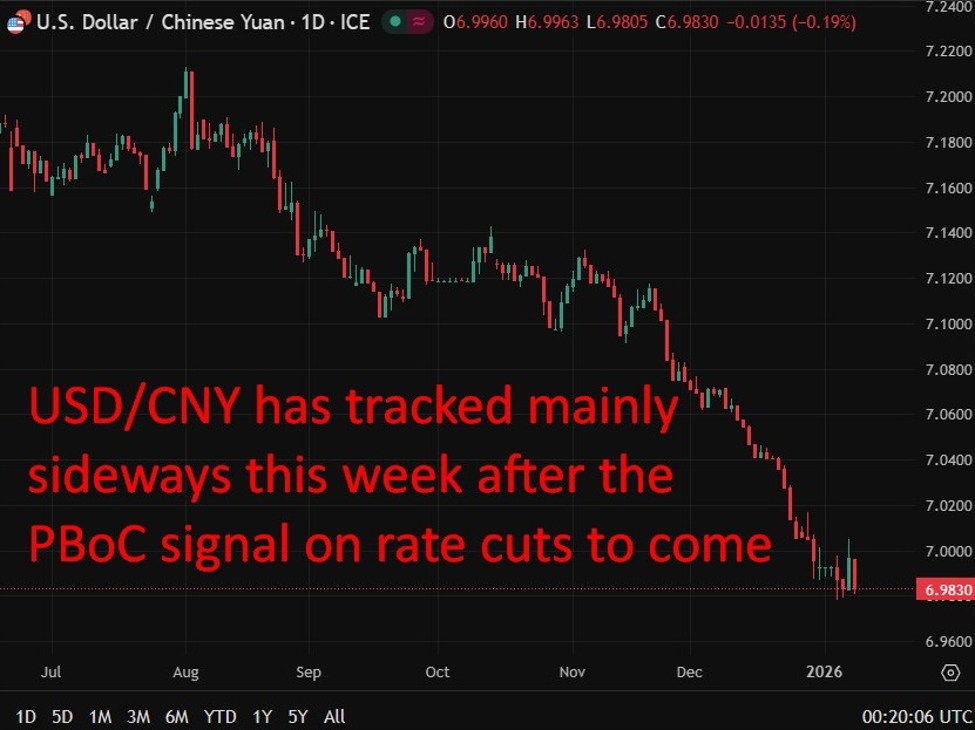
PBOC is expected to set the USD/CNY reference rate at 6.9832 – Reuters estimate
The People’s Bank of China is due to set the daily USD/CNY reference rate at around 0115 GMT (2115 US Eastern time), a fixing that remains one of the most closely watched signals in Asian foreign exchange markets. China operates a managed floating exchange rate system, under which the renminbi (yuan) is allowed to trade within a prescribed band around a central reference rate, or midpoint, set each trading day by the PBOC. The current trading band permits the currency to move plus or minus 2% from the official midpoint during onshore trading hours. Each morning, the PBOC determines the midpoint based on a range of inputs. These include the previous day’s closing price, movements in major currencies, particularly the US dollar, broader international FX conditions, and domestic economic considerations such as capital flows, growth momentum and financial stability objectives. The midpoint is not a purely mechanical calculation, allowing policymakers discretion to guide market expectations. Once the midpoint is announced, onshore USD/CNY is free to trade within the allowable band. If market pressures push the yuan toward either edge of that range, the central bank may step in to smooth volatility. Intervention can take the form of direct buying or selling of yuan, adjustments to liquidity conditions, or guidance through state-owned banks. As a result, the daily fixing is often interpreted as a policy signal rather than just a technical reference point. A stronger-than-expected CNY midpoint is typically read as a sign the PBOC is leaning against depreciation pressure, while a weaker fixing for the CNY can indicate tolerance for a softer currency, often in response to dollar strength or domestic economic headwinds.In periods of heightened global volatility, such as shifts in US rate expectations, trade tensions or capital flow pressures, the fixing takes on added significance. For investors, it provides insight into Beijing’s currency priorities, balancing competitiveness, capital stability and financial market confidence. This article was written by Eamonn Sheridan at investinglive.com. 🔗 Source 💡 DMK Insight The upcoming USD/CNY reference rate setting is crucial for traders, especially given the current volatility in global markets. As the People’s Bank of China manages the renminbi’s value, any unexpected adjustments could trigger significant moves in the forex market. Traders should be aware that this fixing often influences not just the yuan but also related currencies and commodities, particularly if it deviates from market expectations. With the USD/CNY pair often acting as a barometer for broader economic sentiment, a stronger yuan could signal confidence in China’s economy, while a weaker yuan might raise concerns about growth. Look for potential resistance around previous highs if the yuan strengthens, or support levels if it weakens. Monitoring this fixing closely could provide actionable insights, especially for day traders looking to capitalize on short-term fluctuations. Keep an eye on the 0115 GMT fixing time for immediate market reactions and adjust your positions accordingly. 📮 Takeaway Watch the USD/CNY reference rate set at 0115 GMT for potential volatility; deviations could impact trading strategies significantly.
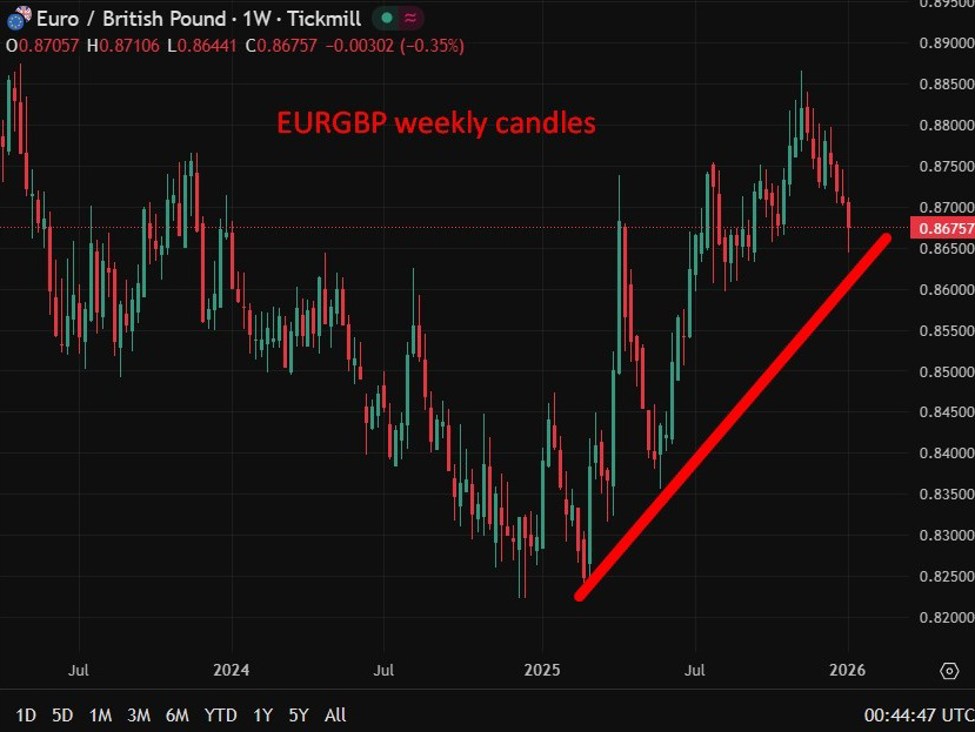
Sterling gains look premature as banks warn on UK-EU reset and weak UK growth
At a glance:Commerzbank says UK-EU rapprochement optimism is prematureSingle-market access would require slow, conditional concessionsDanske Bank sees sterling’s recent gains as overdoneWeak UK growth may prompt further BoE easingRelative UK-eurozone outlook favours EUR over GBPSterling’s recent gains may be running ahead of fundamentals, with analysts warning that optimism around both UK-EU relations and the domestic macro outlook is likely premature.Commerzbank cautioned that investors should avoid being too quick to price in an improvement in relations between the UK and the European Union. While a rapprochement could ultimately be supportive for the pound, the bank argued that any move toward improved access to the EU single market would be slow, conditional and politically costly, requiring concessions from the UK.Commerzbank noted that some of the UK’s core economic challenges, including weak productivity growth, predate Brexit, limiting the extent to which improved EU ties alone could transform the outlook. Although sterling would likely benefit if access to the single market were meaningfully enhanced, the bank said it is “simply too early” for markets to factor in such positive outcomes. The UK government’s preparation of legislation to align parts of domestic law with EU standards was described as a step toward engagement rather than a guarantee of economic gains.Meanwhile, Danske Bank said sterling’s recent strengthening looks overdone, driven largely by improved global risk sentiment and easing concerns over UK fiscal credibility. Danske argued that the UK economy remains on a weak footing, increasing the likelihood of further policy easing from the Bank of England.Danske highlighted domestic headwinds, including subdued growth and tighter fiscal policy, which contrast with the eurozone’s more supportive fiscal stance. The bank added that relative growth dynamics between the UK and the euro area remain a negative for sterling, reinforcing the case for a weaker pound versus the euro.Taken together, the two views suggest sterling faces structural and cyclical headwinds, with near-term optimism vulnerable to reversal unless there is tangible progress on growth, productivity and policy support. This article was written by Eamonn Sheridan at investinglive.com. 🔗 Source 💡 DMK Insight Sterling’s recent rally might be a classic case of over-optimism, and here’s why that matters: Commerzbank’s caution about the UK-EU relationship suggests that any potential concessions will be slow and conditional, which could dampen the current bullish sentiment. Danske Bank’s assessment that the pound’s gains are overdone aligns with the broader economic context, where weak UK growth could lead to further easing from the Bank of England. This creates a precarious situation for GBP traders, especially if the market starts to price in a more dovish stance from the BoE. If the pound fails to hold its recent gains, we could see a pullback towards key support levels, particularly if it breaks below recent lows against the euro. Traders should keep an eye on economic indicators, especially UK GDP growth figures, as they could trigger volatility in GBP pairs. The flip side is that if any unexpected positive news regarding UK-EU negotiations surfaces, it could provide a short-term boost. But for now, the fundamentals suggest caution. Watch for GBP/EUR levels closely; a break below 1.15 could signal a shift in sentiment. 📮 Takeaway Monitor GBP/EUR closely; a break below 1.15 could indicate a shift in market sentiment as UK fundamentals weaken.
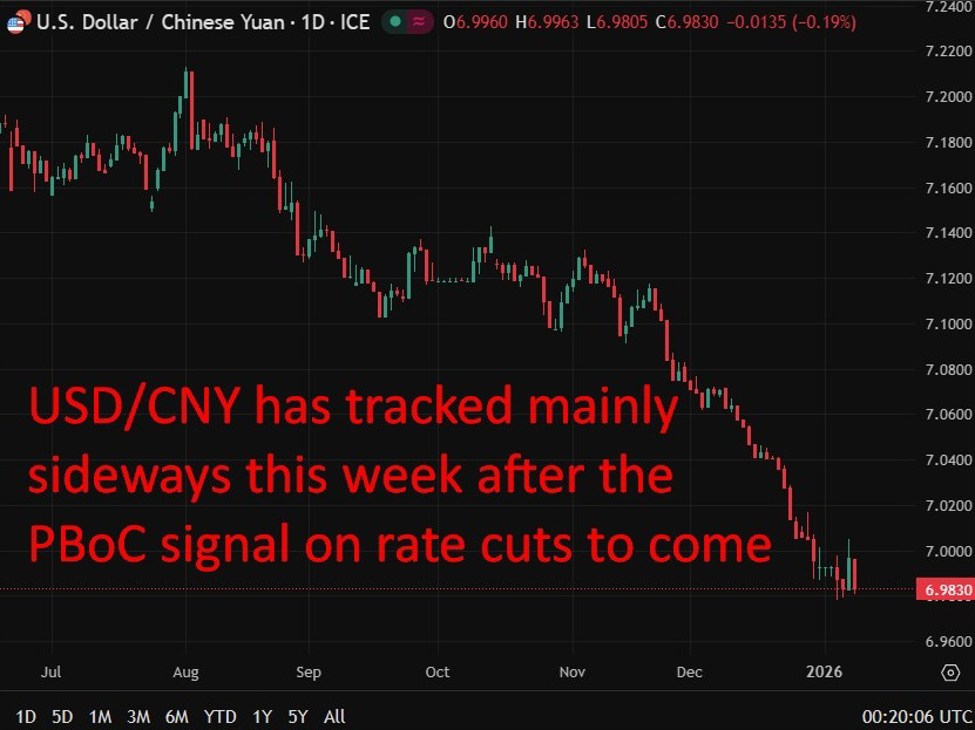
PBOC sets USD/ CNY reference rate for today at 7.0128 (vs. estimate at 6.9832)
The People’s Bank of China (PBOC), China’s central bank, is responsible for setting the daily midpoint of the yuan (also known as renminbi or RMB). The PBOC follows a managed floating exchange rate system that allows the value of the yuan to fluctuate within a certain range, called a “band,” around a central reference rate, or “midpoint.” It’s currently at +/- 2%.The previous close was 6.9835PBOC injects 34bn yuan through 7-day reverse repos at an unchanged rate of 1.4%. Over the course of this week the People’s Bank of China has drained 1.655tln yuan via OMOs. That’s the largest weekly cash withdrawal in two years. Earlier:PBOC is expected to set the USD/CNY reference rate at 6.9832 – Reuters estimateAnd, as a reminder/heads up, there is inflation data from China in just a few minutes time, bottom of the hour: 0130 GMT, 2030 US Eastern time As I posted earlier:The backdrop entering today’s release is one of persistently low inflation but slight upward momentum in consumer prices. November’s CPI logged a 0.7% y/y rise, its fastest pace in nearly two years, driven largely by rebounding food prices (especially fresh produce) and modest gains in other categories, while core inflation held around 1.2%. Meanwhile, PPI has remained deeply negative, reflecting ongoing factory-gate deflation as industrial prices continue to lag, although some stabilization was seen on a m/m basis late in 2025.Market participants will parse today’s figures for evidence that domestic demand is firming and whether price pressures are broadening beyond volatile food items. The data will also feed into assessments of China’s growth trajectory and implications for global reflation narratives in early 2026. A firm tipping a lower than consensus forecast, Zhe Shang Securities at 0.7% y/y, seeing no change from the November result. Zhe Shang expect 0% m/m, i.e. no change. You’ll note in the scrfeenshot below there is no consensus forecast for the m/m.The firm’s PPI forecast has it remaining in negative territory at around -1.9% y/y, ‘up’ from November but still deeply negative. This article was written by Eamonn Sheridan at investinglive.com. 🔗 Source 💡 DMK Insight The PBOC’s control over the yuan’s midpoint is crucial for traders navigating forex markets right now. With the yuan’s value fluctuating within a managed band, any shifts in the midpoint can signal broader economic trends or policy changes. Traders should keep an eye on how the PBOC adjusts this midpoint, as it can impact not just the yuan but also related currencies and commodities. For instance, a weaker yuan could lead to increased demand for gold as a hedge, while also affecting trade balances with major partners. Watch for any announcements or economic indicators that might prompt the PBOC to adjust its strategy, especially in the context of ongoing global economic pressures. The real story is how these adjustments could ripple through other markets, so stay alert for any unexpected moves from the central bank that could shake up your trading strategies. 📮 Takeaway Monitor the PBOC’s midpoint adjustments closely; any significant changes could impact the yuan and related forex pairs in the coming weeks.
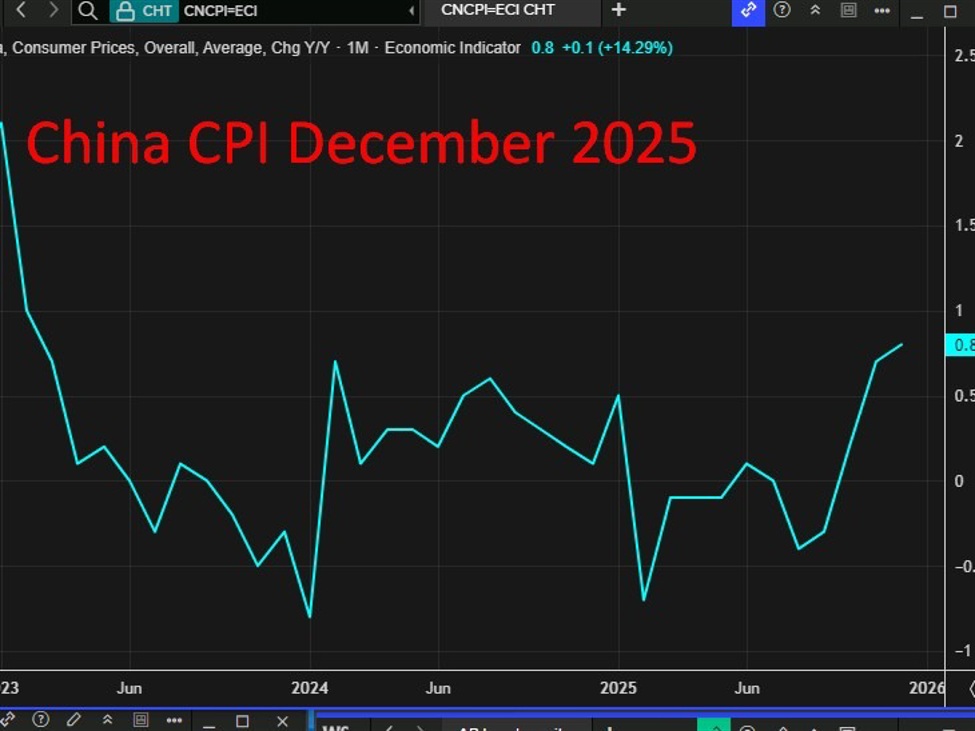
China December 2025 CPI +0.8% y/y (vs. 0.9% expected, prior of 0.7%)
Just a post noting this data release.I’ll be back with detail in a separate post. Link here (added).China December 2025:CPI 0.8% y/y, close to a 3-year highexpected 0.9%, prior 0.7%+0.2% m/m vs. expected 0%, prior -0.1%PPI -1.9% y/yexpected -2.0%, prior -2.2%+0.2% m/m vs. expected +0.1%, prior 0.1% This article was written by Eamonn Sheridan at investinglive.com. 🔗 Source 💡 DMK Insight China’s CPI hitting a three-year high is a big deal for traders: The December figures show a 0.8% year-over-year increase, just shy of expectations, but still significant. This uptick in consumer prices could signal a shift in monetary policy, especially if inflation continues to rise. Traders should keep an eye on how this affects the yuan and commodities, as higher inflation could lead to tighter monetary conditions. The PPI decline at -1.9% year-over-year, while better than expected, still points to underlying deflationary pressures in production, which could complicate the economic outlook. For forex traders, this data could lead to volatility in the USD/CNY pair, particularly if the market reacts to potential shifts in the People’s Bank of China’s stance. Watch for key resistance levels around recent highs in the yuan, as a strong CPI could push the PBOC to reconsider its current policies. The real story here is how these inflation metrics could ripple through global markets, especially commodities and emerging market currencies, as they adjust to potential changes in China’s economic strategy. 📮 Takeaway Monitor the USD/CNY pair closely; a strong CPI could shift PBOC policy, impacting forex and commodities significantly.
China inflation hits near three-year high, but producer deflation signals weak demand
Summary:China CPI rose 0.8% y/y, fastest since Feb 2023Monthly CPI beat expectations at +0.2%PPI fell 1.9% y/y, easing but still deflationaryCore inflation steady at 1.2%Weak demand and property stress remain key dragsChina’s consumer inflation accelerated in December to its fastest pace in nearly three years, while factory-gate prices remained in deflation, underscoring the persistent imbalance between improving headline prices and still-weak underlying demand.Data from the National Bureau of Statistics showed consumer prices rose 0.8% year-on-year, the strongest increase since February 2023 and slightly faster than November’s 0.7% gain. The result matched market expectations. On a month-on-month basis, CPI rose 0.2%, beating forecasts for a 0.1% increase and marking a clear rebound from November’s monthly decline.Core inflation, which strips out food and energy, rose 1.2% year-on-year, unchanged from the prior month, suggesting that underlying price pressures remain modest despite the pickup in headline inflation. Food prices rose 1.1% from a year earlier, while non-food prices increased 0.8%.By contrast, producer prices fell 1.9% year-on-year, slightly better than the expected 2.0% decline and easing from November’s 2.2% fall. The data extend China’s factory-gate deflationary streak beyond three years, highlighting continued excess capacity and weak pricing power across the industrial sector. More via CNBC round up:Economists say the data point to fragile domestic demand, even as growth remains broadly on track. Macquarie expects China’s consumer inflation to remain flat through 2025, while producer-price deflation is forecast to deepen, potentially marking the longest deflationary stretch on record. The bank warns that additional policy easing, including lower mortgage rates and relaxed home-purchase rules, may still fall short of reversing the property downturn.Meanwhile, Bank of America Global Research estimates China’s GDP growth softened to around 4.5% in the fourth quarter, from 4.8% previously, with fixed-asset investment contracting further even as industrial production benefited from a year-end manufacturing pickup.Despite a recent rebound in factory activity, policymakers face mounting pressure to support consumption and stabilise the property sector, as falling corporate profits and renewed price competition continue to weigh on confidence. This article was written by Eamonn Sheridan at investinglive.com. 🔗 Source 💡 DMK Insight China’s CPI surge to 0.8% y/y is a wake-up call for traders: inflation’s back on the radar. The monthly CPI beating expectations at +0.2% signals a potential shift in consumer behavior, which could impact demand for commodities and currencies tied to Chinese economic health. However, the PPI’s decline of 1.9% y/y indicates persistent deflationary pressures in production, suggesting that while consumers might be spending more, producers are still struggling. This duality creates a complex trading environment. Traders should keep an eye on how these inflation metrics influence the yuan and related forex pairs, especially if the People’s Bank of China reacts to these figures. Watch for key levels in the USD/CNY pair; a break above recent resistance could indicate a stronger dollar as market sentiment shifts. Also, consider the ripple effects on commodities like copper and oil, which are sensitive to Chinese demand. The real story is how these inflation dynamics could lead to volatility in global markets, especially if investors start pricing in a more aggressive monetary policy from China. Keep an eye on the upcoming economic data releases for further clarity. 📮 Takeaway Monitor the USD/CNY pair closely; a break above resistance could signal a stronger dollar as inflation dynamics shift.
China curbs rare-earth exports to Japan, Tokyo raises concerns with G7 and US
Summary:China restricts rare-earth and magnet exports to JapanMove linked to Japan PM’s Taiwan-related remarksRestrictions extend beyond defence sectorNomura estimates $17bn potential annual impactJapan raises issue with G7, Washington meetings plannedFlagged this earlier in the weeKChina escalated tensions with Japan, bans exports of goods with potential military usesUpdating now. China tightens rare-earth exports to JapanChina has begun restricting exports of rare earths and rare-earth magnets to Japan, escalating a diplomatic and economic dispute and again demonstrating its willingness to use critical minerals as geopolitical leverage, according to reporting by the Wall Street Journal (gated).The measures are expected to weigh on Japanese firms supplying components to global chipmakers, automakers and defence contractors. The restrictions target so-called “heavy” rare earths and the high-performance magnets that contain them — materials that are scarce, costly and difficult to substitute.The Journal reported that the move is retaliation for remarks made late last year by Japanese Prime Minister Sanae Takaichi, who suggested Japan could become involved in a potential conflict over Taiwan. Beijing has repeatedly pledged to bring Taiwan under its control, by force if necessary.According to people familiar with the matter, China has effectively halted the review of export licence applications to Japan, with the restrictions extending across multiple industries rather than being limited to defence-related firms. Earlier this week, Beijing also announced a broader ban on exports of “dual-use” goods with potential military applications to Japan.If maintained, the rare-earth curbs could inflict around $17 billion in economic losses over a year, according to estimates from the Nomura Research Institute. The action follows a similar move against US companies last year, underscoring China’s dominance in critical minerals and its readiness to weaponise supply chains in response to geopolitical disputes.Japan responds, seeks coordinationJapanese officials responded by urging China to ensure smooth trade flows and signalling that the issue will be raised with international partners. Finance Minister Minoru Katayama said Tokyo is “very concerned” about China’s export controls and plans to explain Japan’s position during meetings in Washington next week.Katayama said G7 finance ministers have been sharing strong concerns about China’s practices around rare earths and confirmed he will discuss supply-chain resilience with counterparts during talks scheduled for January 11–14. He declined to comment on the full details of the meetings, noting the host has yet to announce participating countries. This article was written by Eamonn Sheridan at investinglive.com. 🔗 Source 💡 DMK Insight China’s export restrictions on rare-earth materials to Japan could shake up global supply chains. With Japan’s PM making comments about Taiwan, this move isn’t just about trade—it’s a geopolitical chess game. Rare-earth elements are crucial for various industries, including tech and defense, and Nomura’s $17 billion estimate of potential annual impact highlights the stakes. Traders should keep an eye on related assets like rare-earth ETFs and Japanese equities, as these could react sharply to further developments. If tensions escalate, we might see volatility in the commodities market, particularly for materials used in electronics and renewable energy. But here’s the flip side: while this could hurt Japan’s manufacturing sector, it might also push them to seek alternative suppliers or invest in domestic production, which could create new opportunities. Watch for any announcements from Japan regarding G7 discussions, as these could influence market sentiment and lead to strategic shifts in supply chains. 📮 Takeaway Monitor rare-earth ETFs and Japanese stocks closely; any escalation in tensions could lead to significant volatility in these markets.
Goldman says NFP unlikely to shift April Fed cut unless data sharply surprises
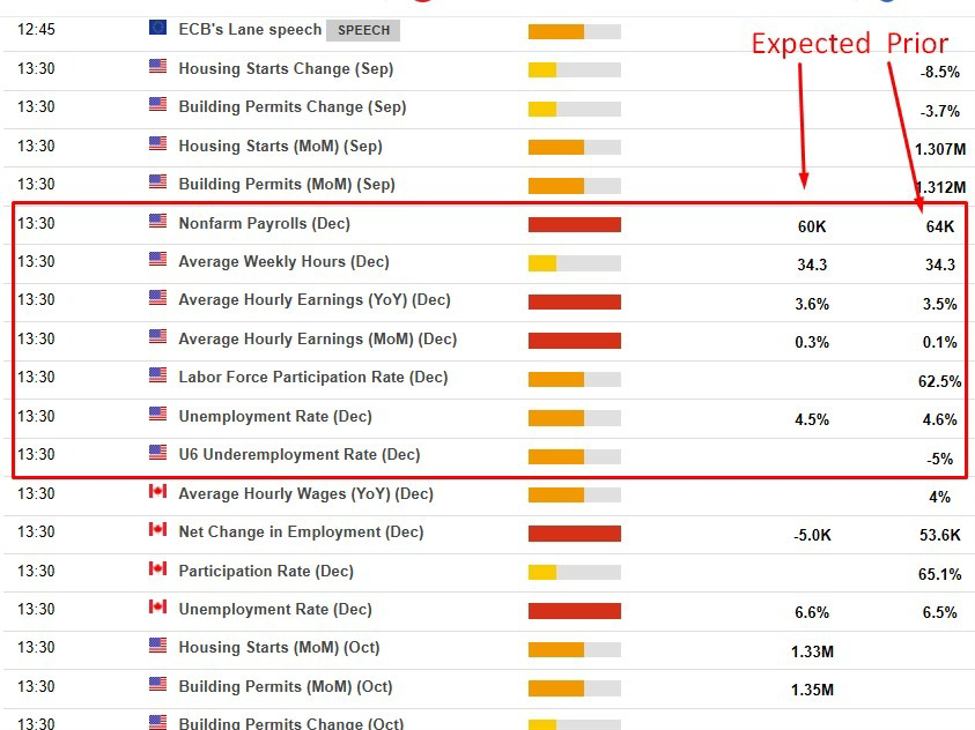
At a glance:Goldman expects ~70k payrolls, in line with consensusTwo Fed cuts priced; first expected around late April70k–100k seen as equity-friendly outcomeSub-50k risks growth scare; >125k may delay easingVolatility expectations remain subduedGoldman Sachs said the upcoming US non-farm payrolls (NFP) report is unlikely to materially shift market expectations for Federal Reserve policy unless the data delivers a significant surprise, with current pricing already well anchored around a mid-year easing path.In a note to clients, Goldman said it expects headline payroll growth of around 70,000 jobs, broadly in line with prevailing consensus. While informal market “whispers” point to a modest upside risk, the bank argued that an outcome close to expectations would reinforce the existing macro narrative rather than disrupt it.Markets are currently pricing two full Fed rate cuts this year, with the first 25 basis-point reduction expected around late April. Goldman said it would take a “somewhat dramatic” upside or downside surprise in the labour data to meaningfully pull that timing forward or push it back.From a market perspective, Goldman described a payrolls print in the 70,000–100,000 range as the most constructive outcome for equities, consistent with continued economic expansion without reigniting inflation concerns or threatening the easing cycle. Such a result would support the view that the US economy is slowing gradually rather than stalling abruptly.By contrast, a sub-50,000 payrolls print would be interpreted as falling below the economy’s estimated break-even employment growth rate, potentially unsettling investors by raising concerns over a sharper growth slowdown. At the other extreme, Goldman said a result above 125,000 jobs could prompt markets to reassess the timing of the first Fed cut, pushing expectations back toward June.Overall, the bank said it does not expect “fireworks” from the release, with positioning and volatility pricing suggesting limited appetite for large moves. Reflecting this, Goldman noted that the S&P 500 is implying a move of roughly 68 basis points through the session, pointing to relatively muted expectations around the data. This article was written by Eamonn Sheridan at investinglive.com. 🔗 Source 💡 DMK Insight Goldman’s prediction of around 70k payrolls is a pivotal moment for traders: This aligns with consensus and suggests stability in the labor market, which could keep the Fed on its current path. If the actual NFP comes in below 50k, we might see a growth scare that could trigger a flight to safety, impacting equities and potentially leading to a spike in gold prices. Conversely, a reading above 125k could delay anticipated rate cuts, creating volatility in both the forex and equity markets. Traders should keep an eye on how these numbers play out, especially as they could influence the timing of the Fed’s next move. Watch for the immediate market reaction post-release, particularly in sectors sensitive to interest rates. If volatility remains subdued as Goldman suggests, it might present a unique opportunity for swing traders to capitalize on minor price movements without the usual market noise. 📮 Takeaway Monitor the upcoming NFP report closely; a reading below 50k could trigger a growth scare, while above 125k may delay Fed cuts.
ECB vice-presidential hopeful Centeno flags “structural uncertainty” facing Europe
Summary:Centeno highlights Europe’s structural uncertaintyECB seen as stabilising institutional anchorRisks shifting outside traditional banking systemEmphasis on discipline, independence and consensusInterview avoids near-term policy guidanceMario Centeno, governor of Banco de Portugal (the country’s central bank) said Europe has entered a period of “structural uncertainty” marked by trade tensions, elevated sovereign debt and rapid economic change, arguing that the European Central Bank must act as a stabilising institutional anchor as these pressures intensify.In an interview (may be gated) following his nomination to succeed ECB Vice President Luis de Guindos, whose term ends in May 2026, Centeno avoided commenting on current monetary policy but outlined a framework that carries implications for markets. He pointed to abrupt shifts in labour markets, competing fiscal demands and geopolitical fragmentation as sources of uncertainty that require discipline, independence and decisiveness from Europe’s institutions.Centeno said the ECB leadership must combine political judgement with consensus-building, particularly as risks in the financial system evolve. He highlighted growing valuation pressures, rising asset-class concentration and the migration of risk outside the traditional banking sector, dynamics that investors increasingly see as sources of latent volatility rather than immediate stress.While the selection process will be decided by the European Council following consultations with the European Parliament and the ECB, Centeno said broad consensus would benefit Europe. He noted that feedback from euro-area counterparts has been encouraging, citing his experience as a former finance minister, central bank governor and Eurogroup president who helped steer Europe through the euro-area crisis, the pandemic and the Ukraine shock.Centeno also addressed questions about regional balance within the ECB’s Executive Board, arguing that while representation should not be framed as an issue of fairness, a balanced view of Europe is important for institutional credibility. Portugal, he noted, is currently absent from the executive leadership of Europe’s major financial institutions.For markets, Centeno’s remarks reinforce a narrative of institutional continuity rather than policy pivot, emphasising resilience, risk anticipation and coordination at a time when macro uncertainty, rather than inflation alone, is shaping the European outlook. This article was written by Eamonn Sheridan at investinglive.com. 🔗 Source