
 Bitcoin
  Ethereum
  Tether
  XRP
XRP  BNB
BNB  USDC
USDC  Solana
  TRON
TRON  Lido Staked Ether
  Figure Heloc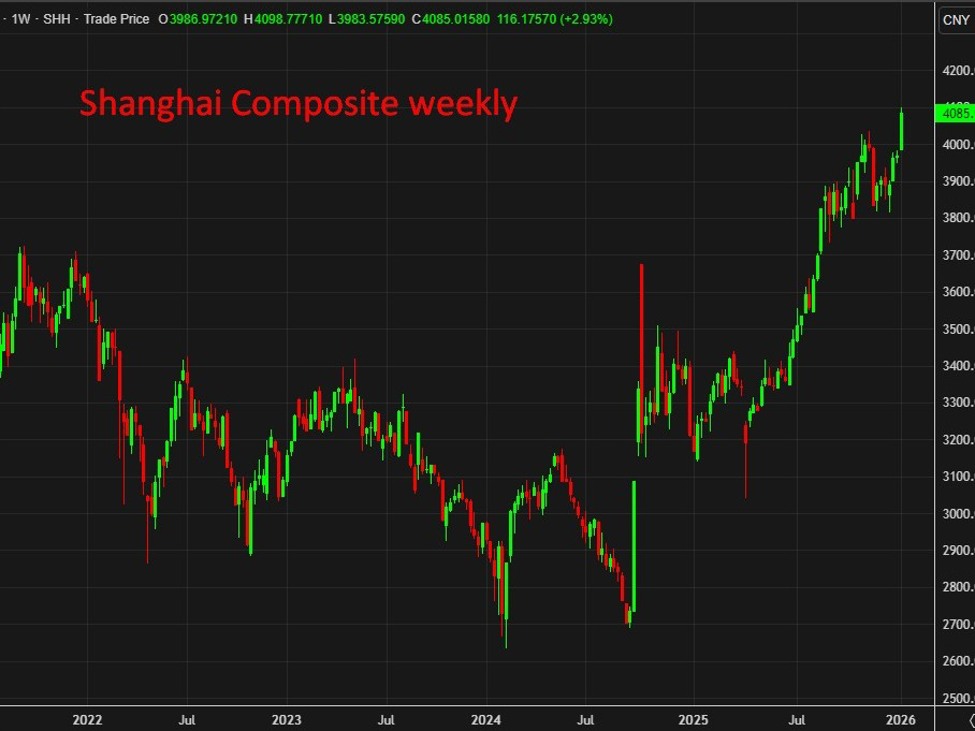
Summary:Goldman sees Chinese equities rising further in 2026MSCI China +20%, CSI 300 +12% targetedReturns expected to be earnings-drivenAI, exports and policy support key pillarsValuations seen as reasonable, flows supportiveGoldman Sachs expects Chinese equities to continue rising through 2026, supported by artificial intelligence adoption, policy support and improving earnings momentum, though returns are likely to moderate from the exceptional gains seen in 2025. I posted on this yesterday, adding more detail now, below. In a report published this week, Goldman strategists led by Liu Jingjin forecast the MSCI China Index to rise a further 20% from end-2025 to end-2026, while the CSI 300 Index is projected to gain around 12% to roughly 5,200. Early-year performance has already been strong, with both indices rising more than 3% since the first trading day of 2026 and outperforming the S&P 500.Goldman argues that 2026 returns will be predominantly earnings-driven, marking a shift away from valuation-led rebounds. Corporate profit growth is expected to be underpinned by artificial intelligence deployment, China’s “going global” export strategy, and policy efforts to curb destructive over-competition across industries.The bank identifies five major capital flow channels that could underpin equities: record southbound inflows of up to USD 200bn; domestic asset reallocation potentially channelling RMB 3tn into stocks; dividends and buybacks approaching RMB 4tn; global active funds moving from underweight to overweight China exposure; and IPO financing exceeding USD 100bn, signalling renewed market vitality.At the macro level, Goldman economists have lifted their 2026 GDP growth forecast above consensus, citing resilient exports and improving export diversification. While consumption and property investment remain weak, strategists argue their drag on growth is gradually diminishing. Policy conditions are also seen as supportive, with the launch of the 15th Five-Year Plan expected to maintain a pro-market window via monetary easing, fiscal expansion and improved treatment of private enterprises.Valuations are no longer distressed but remain reasonable. Forward P/E ratios stand at around 12.4x for MSCI China and 14.5x for CSI 300 — broadly in line with long-term averages.Sector-wise, Goldman is most bullish on TMT, forecasting around 20% earnings growth driven by AI-related revenue and capex. The bank also remains overweight technology hardware, media and entertainment, internet retail, materials and insurance.Goldman highlighted a group of ten “China champions” / “Prominent 10”:including Tencent, Alibaba, CATL, Xiaomi, BYD, Meituan, NetEase, Midea, Hengrui Pharma and Trip.com which together account for roughly 40% of MSCI China’s weight and are expected to deliver mid-teens earnings growth.Risks flagged include a potential global recession, persistent geopolitical tensions and the possibility of an AI-related valuation correction, though Goldman argues China’s lower valuations and broader AI exposure offer relative insulation. This article was written by Eamonn Sheridan at investinglive.com. 🔗 Source 💡 DMK Insight Goldman Sachs’ bullish outlook on Chinese equities signals a potential shift in market sentiment. With MSCI China projected to rise 20% and the CSI 300 by 12% through 2026, traders should consider positioning themselves in sectors benefiting from AI and export growth. The emphasis on earnings-driven gains suggests that companies with strong fundamentals will likely outperform. However, it’s crucial to monitor how policy changes in China could impact market dynamics. If the government ramps up support, we could see accelerated inflows into these equities, which might also ripple into related markets like commodities or tech stocks. Keep an eye on key earnings reports and economic indicators that could validate or challenge Goldman’s projections. Watch for the CSI 300 to hold above recent support levels, as any failure to do so could signal a reversal in sentiment, especially if broader market conditions shift unexpectedly. 📮 Takeaway Traders should watch the CSI 300 for support levels while considering positions in AI and export-driven sectors as Goldman forecasts a 20% rise in Chinese equities by 2026.
Barclays urges selective approach to Chinese tech stocks in 2026
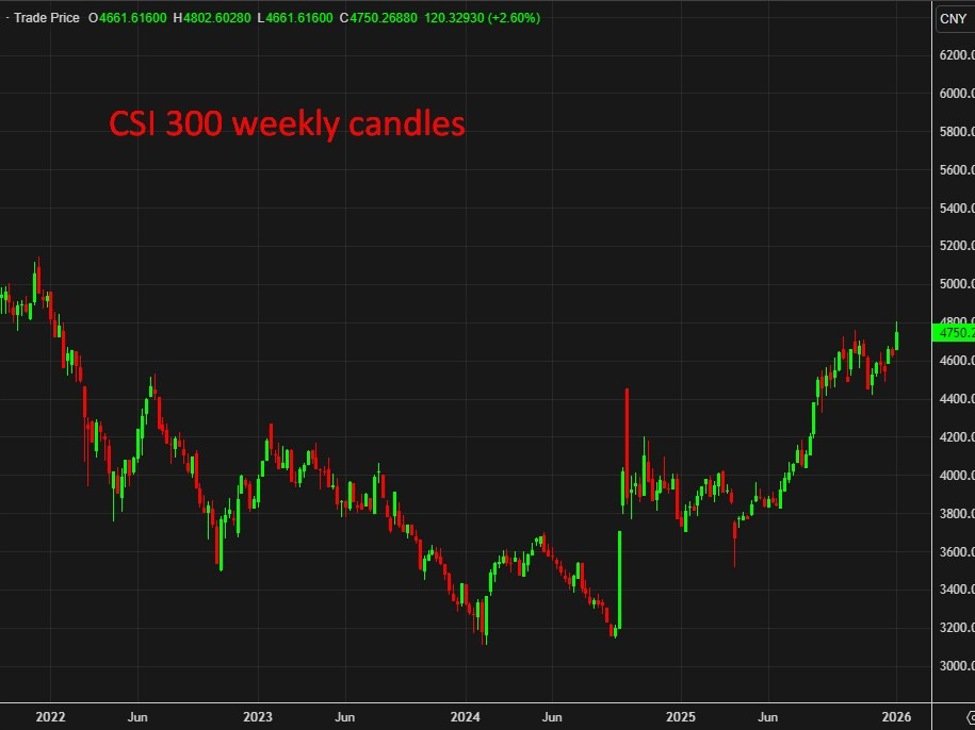
Summary:Barclays urges selectivity in Chinese tech for 2026Broad stimulus-driven gains seen in 2025 unlikely to repeatEV sector faces rising headwinds as tax incentives fadePreference for resilient revenue and AI-linked namesTencent, Trip.com and Alibaba cited as selective playsBarclays is urging investors to adopt a more selective approach to Chinese technology stocks in 2026, warning that the broad-based rally seen last year is unlikely to be repeated as policy tailwinds fade and sector-level headwinds emerge.In a recent note, Barclays analysts argued that the government stimulus impulse that supported widespread gains in 2025 has largely run its course, reducing the likelihood of another year of uniform outperformance across China’s tech complex. Instead, the bank expects greater dispersion in returns, with stock selection becoming increasingly important.The analysts highlighted particular challenges for China’s electric-vehicle sector, where profit margins are already under pressure from intense competition. Beijing’s move to scale back sales tax incentives for EV purchases is expected to weigh further on demand growth, making it harder for manufacturers to sustain earnings momentum. As a result, Barclays cautioned against assuming that past sector-wide gains can continue uninterrupted.Against this backdrop, Barclays prefers companies with defensive or resilient revenue models, as well as those with a clear and credible artificial intelligence strategy. Firms with diversified income streams, strong platforms and pricing power are seen as better positioned to navigate a slower-growth, less stimulus-driven environment.Among its preferred names, Barclays highlighted Tencent and Trip.com, citing their relatively stable cash flows and exposure to structural growth trends rather than policy-dependent demand. Tencent’s broad ecosystem and recurring revenues are viewed as offering resilience, while Trip.com is seen benefiting from ongoing recovery in travel and services consumption.The bank also pointed to Alibaba as a selective opportunity, not on macro stimulus grounds, but due to its positioning in cloud computing and artificial intelligence, where monetisation potential could drive differentiated earnings growth.Overall, Barclays’ message contrasts with more optimistic calls on China equities (Goldman Sachs sees further China equities upside on AI and earnings growth: “Prominent 10”). While acknowledging selective upside, the bank argues that 2026 is shaping up as a stock-picker’s market, where earnings durability and business quality matter more than broad policy support. This article was written by Eamonn Sheridan at investinglive.com. 🔗 Source 💡 DMK Insight Barclays is sounding the alarm on Chinese tech stocks, and here’s why that’s crucial: The firm believes that the broad stimulus-driven gains of 2025 won’t be repeated in 2026, which means traders need to be picky about their picks. With the EV sector facing headwinds as tax incentives fade, stocks like Tencent, Trip.com, and Alibaba are being highlighted as resilient plays. This selective approach is essential as it reflects a shift in market dynamics where only companies with strong revenue streams and AI integration will thrive. Traders should keep an eye on these names, especially as we approach the end of the year, when earnings reports will provide clarity on their performance. But here’s the flip side: while these stocks may seem like safe bets, the overall sentiment in the Chinese market is still shaky. Regulatory pressures and economic uncertainties could lead to volatility. So, watch for key support levels in these stocks—if they break down, it could signal a broader sell-off. The real story is about being nimble and ready to pivot based on market reactions, especially as we head into 2026. 📮 Takeaway Focus on Tencent, Trip.com, and Alibaba for potential resilience, but monitor their support levels closely as market conditions evolve.
Trump wants strategic control of Venezuela oil industry to reshape markets, send oil to 50
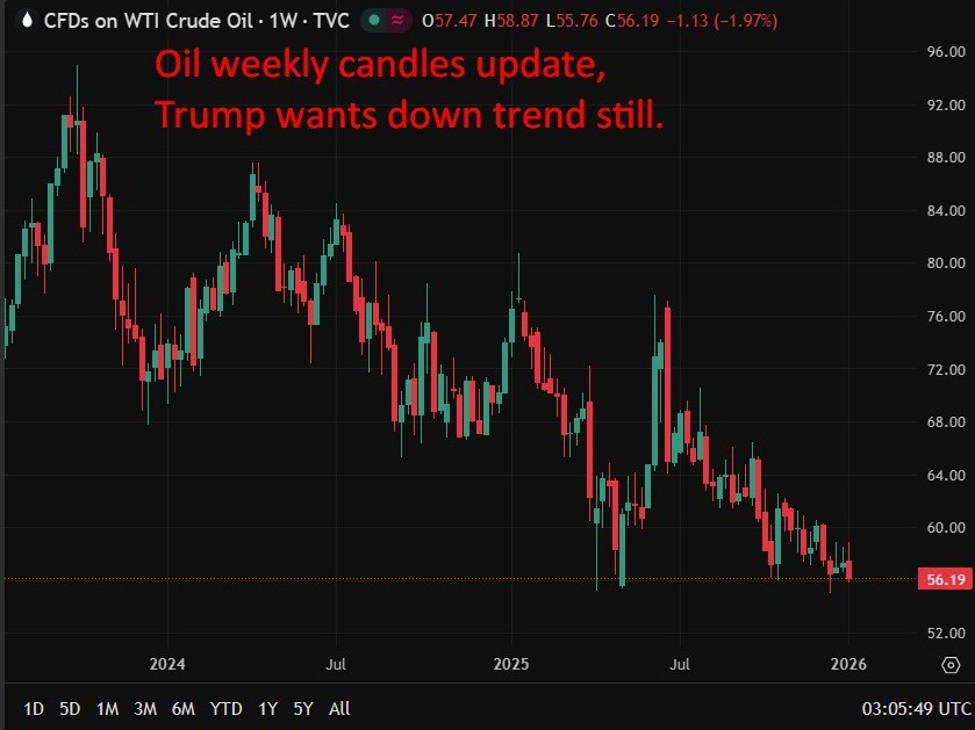
Summary:U.S. considering plan to control Venezuelan state oil output and sales. Aim to influence global oil prices and curb Russia/China leverage.Strategy includes partnerships with majors like Chevron. Substantial investment needed to revive decayed oil infrastructure.Plan faces domestic political pushback and geopolitical risk. The U.S. administration under President Donald Trump is reportedly exploring an ambitious plan to exert significant control over Petróleos de Venezuela SA (PdVSA), the state-owned oil company of Venezuela — part of a broader effort to reshape global energy markets and advance strategic objectives in Latin America. The plan, detailed in a Wall Street Journal report, envisions the U.S. acquiring and marketing a large share of Venezuela’s crude production, effectively placing the country’s vast oil reserves under U.S. stewardship. If implemented, the strategy could give the United States control over a substantial portion of proven oil reserves in the Western Hemisphere — factoring in holdings and influence in Mexico, the U.S. and other allied producers. White House officials view this as a lever to limit Russian and Chinese influence in Venezuela and to pressure global energy prices down toward Trump’s political target of around USD 50 per barrel, though Brent and WTI prices have recently traded above that level.The initiative has multiple components, including selectively lifting U.S. sanctions on Venezuelan crude to facilitate acquisitions and resales, and leveraging existing or future joint ventures with major energy companies such as Chevron. The U.S. would potentially sell Venezuelan oil on international markets while controlling revenues through U.S.-held accounts, with proceeds earmarked to support reconstruction and stabilization efforts — and to benefit Venezuelans. The approach reflects a blend of energy policy and geopolitical strategy: securing a cheap and reliable supply of heavy crude for U.S. refiners, weakening adversary access to Venezuelan resources, and realigning Caracas’s political and economic orientation in Washington’s favour.However, major hurdles remain. Venezuela’s oil infrastructure has suffered decades of underinvestment, and reviving production would require significant capital — a challenge compounded by international legal and political risks. Some U.S. oil companies have expressed caution about deepening involvement without strong protections, and domestic shale producers warn that prolonged sub-$60 oil could undermine their economics. Moreover, the plan has drawn sharp criticism from political opponents in Washington, who describe it as overreach and warn of the risks of prolonged U.S. entanglement in Venezuelan affairs. Nonetheless, the proposal underscores how energy security and great-power competition continue to shape U.S. foreign policy in 2026. This article was written by Eamonn Sheridan at investinglive.com. 🔗 Source 💡 DMK Insight The U.S. plan to control Venezuelan oil output could shake up global oil markets significantly. By targeting Venezuelan state oil sales, the U.S. aims to manipulate supply dynamics, potentially driving prices higher. This move could also weaken Russia and China’s influence in the region, which is a strategic goal. However, the plan’s success hinges on overcoming domestic political resistance and the substantial investments required to revitalize Venezuela’s oil infrastructure. Traders should keep an eye on oil futures, especially if prices start reacting to news about U.S. partnerships with companies like Chevron. If the plan gains traction, we might see a shift in oil supply that could impact related assets, including energy stocks and currencies tied to oil exports. Watch for key resistance levels in crude oil prices; a breakout could signal a bullish trend. On the flip side, if domestic opposition stalls these efforts, we might see a quick reversal in market sentiment. The uncertainty surrounding this geopolitical maneuvering adds a layer of volatility that traders should be prepared for. 📮 Takeaway Monitor crude oil prices closely; any significant moves above resistance levels could indicate a bullish trend driven by U.S. actions in Venezuela.
Japan 30-year JGB auction weakens as bid-to-cover drops and tail widens
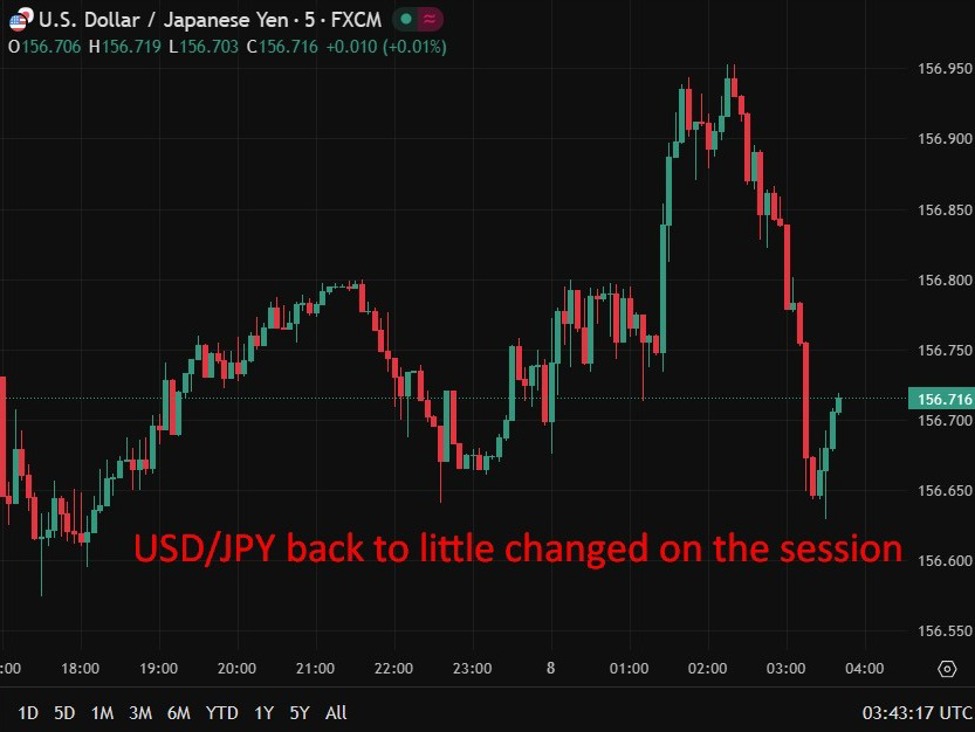
Summary:30-year auction demand softened: bid-to-cover 3.14 vs 4.04Tail widened 0.15 vs 0.09, needing more concessionHighest yield 3.457%, reflecting elevated long-end ratesReinforces super-long supply/demand concernsKeeps curve-steepening and term-premium risk in focusJapan’s latest 30-year JGB auction showed a clear softening in demand, reinforcing the message that the market is still uneasy about taking on ultra-long duration at current yield levels.The bid-to-cover ratio fell to 3.14 from 4.04 at the previous sale, signalling fewer bids per unit of supply and a less comfortable demand backdrop. At the same time, the auction “tail”, the gap between the average accepted yield and the lowest accepted yield, widened to 0.15 from 0.09, a classic sign that investors demanded more concession to absorb the bonds. The auction’s highest accepted yield printed at 3.4570%, with the lowest accepted price at 99.1500 on a 3.40% coupon.Why it matters: In Japan, super-long auctions are a key stress barometer because natural buyers (life insurers, pensions) are more sensitive to valuation swings and balance-sheet constraints. When bid-to-cover drops and tails widen, it often tells you that investors either (1) want more yield to compensate for volatility and uncertainty, or (2) are stepping back because they already own plenty of duration and risk limits are binding.Context has been challenging. Super-long yields have recently been pushing record highs, steepening the curve and testing demand as investors weigh a higher-rate BOJ era, fiscal supply concerns, and the reality that Japan’s buyer base is not infinite. Reuters reporting ahead of this week’s sale noted super-long yields hitting record territory as the market fretted about demand into auctions.Implications:Rates/curve: A weaker 30-year auction typically keeps upward pressure on the long end and can steepen the curve if 10-year is better supported than 30-year.BOJ signalling: Poor long-end demand doesn’t automatically change BOJ policy, but it complicates “orderly normalisation” by tightening financial conditions via higher term premia.JPY/financials: Higher long yields can be JPY-supportive on rate differentials at the margin, but if the move is seen as “fiscal/market stress” rather than growth-positive, it can weigh on risk sentiment and support defensive positioning.Bottom line: the auction suggests investors are still insisting on meaningful yield compensation to own 30-year Japan risk — and that super-long supply/demand remains a live market theme. This article was written by Eamonn Sheridan at investinglive.com. 🔗 Source 💡 DMK Insight The recent 30-year JGB auction results reveal a worrying trend for long-term bonds: demand is waning. With a bid-to-cover ratio of 3.14 compared to 4.04 previously, it’s clear that investors are becoming more cautious. The highest yield of 3.457% indicates that long-end rates are still elevated, which could pressure bond prices further. This softening demand not only raises concerns about Japan’s fiscal health but also keeps the focus on curve-steepening and term-premium risks. Traders should be wary of potential cascading effects across global bond markets, especially as this could signal a shift in sentiment that might impact related assets like U.S. Treasuries. Look for key levels around the 3.45% yield mark; a sustained break above could trigger further selling pressure. Additionally, keep an eye on upcoming economic indicators that could influence interest rate expectations, as these will be crucial for positioning in both the bond and equity markets moving forward. 📮 Takeaway Watch the 3.45% yield level closely; a break could lead to increased selling pressure in long-term bonds.
China warns battery makers on overcapacity risks in EV and energy storage sectors
Summary:China warns battery sector of rising overcapacity risksIndustry ministry urges capacity optimisation and supervisionEV and energy storage batteries under closer scrutinyData-centre buildout has boosted demand but fuelled oversupplySolar sector cited as cautionary exampleChina’s industry ministry has issued a fresh warning to battery manufacturers, urging firms to rein in capacity expansion and address rising risks of overcapacity across the electric vehicle and energy storage sectors, a signal that policymakers are becoming increasingly concerned about disorderly competition and margin erosion.In a statement released Thursday following a meeting earlier in the week, Ministry of Industry and Information Technology said it had called on battery makers to optimise industry capacity, regulate competitive behaviour and strengthen oversight across the EV and energy storage battery supply chain. The comments were published via the ministry’s official WeChat account.The warning comes at a time when demand for energy storage batteries has surged, driven in part by the rapid global buildout of data centres and power-hungry digital infrastructure. However, the ministry cautioned that manufacturers have responded by blindly expanding production capacity, creating conditions that could lead to oversupply, falling prices and industry-wide losses.Officials explicitly drew parallels with China’s solar sector, where years of aggressive capacity expansion ultimately triggered severe price declines, collapsing margins and financial stress across the industry. That episode has become a policy touchstone for regulators seeking to prevent similar outcomes in other strategic manufacturing sectors.The message underscores a broader shift in Beijing’s industrial policy framework. While China continues to prioritise advanced manufacturing, green technology and energy transition sectors, authorities are increasingly focused on quality, profitability and sustainability, rather than headline output growth alone. Regulators have in recent months stepped up rhetoric around curbing “excessive competition” and discouraging redundant investment.For battery makers, the guidance suggests tighter scrutiny of new projects, heightened regulatory oversight and potential constraints on expansion plans, particularly for smaller or less competitive players. Larger, better-capitalised firms may ultimately benefit if policy action accelerates consolidation and restores pricing discipline.Market implications are nuanced. In the near term, the warning may weigh on sentiment toward battery and EV supply-chain stocks, especially those heavily exposed to capacity growth assumptions. Over the medium term, however, a clampdown on overcapacity could stabilise margins, support healthier industry economics and reduce the risk of a solar-style price collapse.The ministry’s intervention highlights Beijing’s intent to balance strategic ambition with financial stability as China’s battery industry enters a more mature phase. This article was written by Eamonn Sheridan at investinglive.com. 🔗 Source 💡 DMK Insight China’s warning on battery overcapacity could ripple through related markets, including solar and crypto. With SOL currently at $135.04, traders should pay attention to how this news impacts demand for energy storage solutions, particularly in the EV sector. The government’s push for capacity optimization suggests potential regulatory shifts that could affect production timelines and costs. If battery manufacturers scale back, we might see a tightening supply that could elevate prices in the energy storage market, subsequently influencing SOL’s performance. Moreover, the solar sector’s oversupply issues serve as a cautionary tale for crypto miners who rely heavily on energy sources. If energy costs rise due to battery production constraints, mining profitability could be impacted. Keep an eye on SOL’s support levels around $130, as a breach could signal bearish sentiment. Conversely, a strong response from the battery sector could lead to a bullish reversal if demand for energy storage solutions surges. Watch for any announcements from major battery manufacturers regarding production adjustments in the coming weeks. 📮 Takeaway Monitor SOL’s support at $130; any shifts in battery production could impact energy costs and SOL’s price trajectory.
investingLive Asia-Pacific FX news wrap: RBA push back, cutting cycle in the past
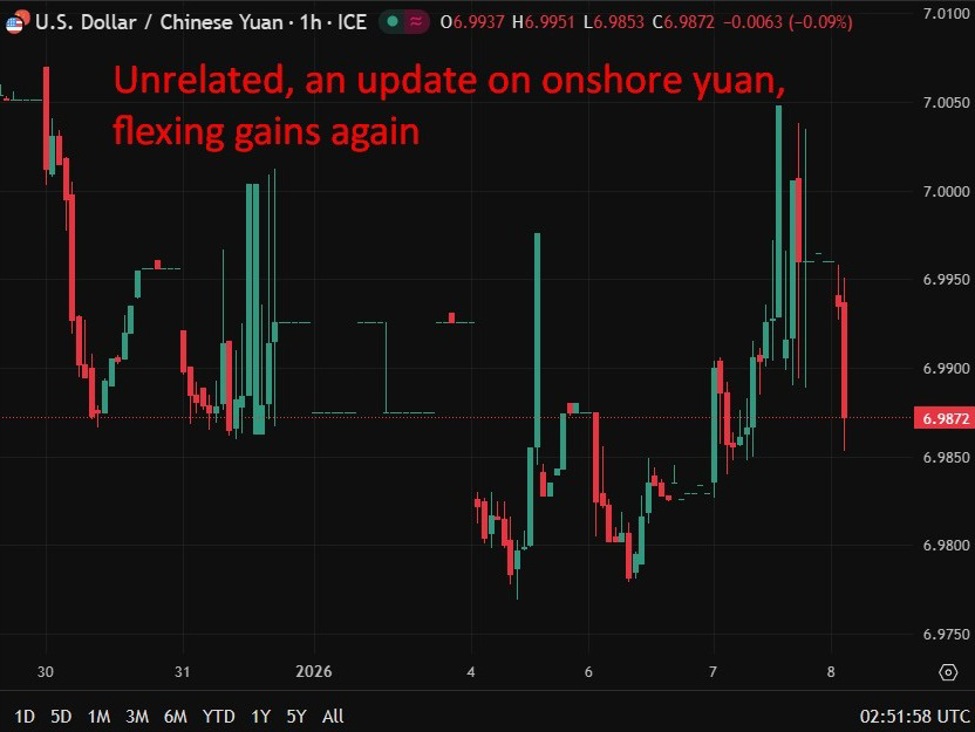
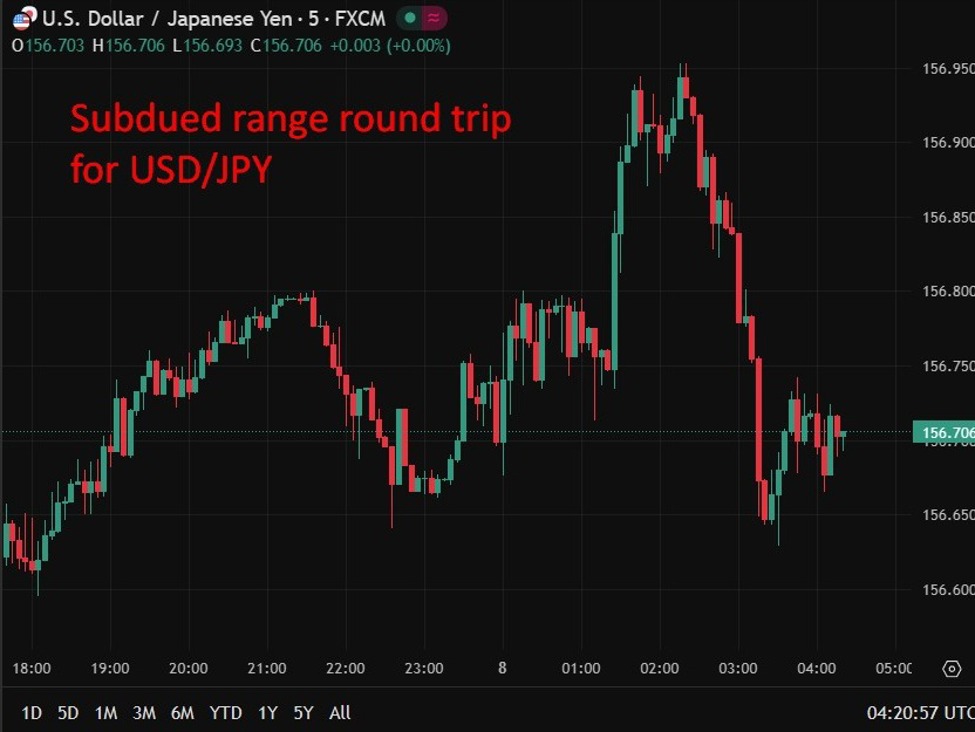
China warns battery makers on overcapacity risks in EV and energy storage sectorsJapan 30-year JGB auction weakens as bid-to-cover drops and tail widensTrump wants strategic control of Venezuela oil industry to reshape markets, send oil to 50Barclays urges selective approach to Chinese tech stocks in 2026Goldman Sachs sees further China equities upside on AI and earnings growth: “Prominent 10″RBA’s Hauser downplays CPI relief, says rate cuts unlikely anytime soonChina accused of hacking U.S. congressional staff emails in Salt Typhoon cyber campaignUS oil majors seek guarantees before investing in Venezuela as Trump pushes output revivalPBOC sets USD/ CNY reference rate for today at 7.0197 (vs. estimate at 6.9926)DATA: Australia November 2025 Trade Balance +2936mn AUD (expected +4900mn)South Korea warns on won volatility, signals swift action and equity-inflow measuresPBOC rolls CNY 1.1tn repos to keep liquidity ample as Q1 funding needs riseJapan real wages slide sharply in November, posing a key dilemma for the Bank of JapanDATA: Japan November 2025 real wages -2.8% y/yRubio to meet Danish officials amid rising tensions over Greenland and NATOGoldman Sachs warns extreme silver price volatility likely to persistChina FX reserves rise as record trade surplus revives yuan valuation debateinvestingLive Americas market news wrap: ISM services improves, JOLTS disappointAt a glance:FX ranges subdued despite heavy macro and geopolitical news flowJapan wages and JGB auction highlight long-end pressureRBA pushes back firmly on rate-cut expectationsSouth Korea and China policy signals aim to stabilise marketsGeopolitics add to risk premium, but not yet disorderlyMarket overview: Major FX pairs traded in narrow, subdued ranges despite a busy session for macro data and policy headlines across the Asia-Pacific region. Markets appeared content to absorb developments without chasing momentum, with positioning cautious ahead of upcoming global data and central-bank events.Japan: wages and bonds in focus:Japan’s real wages fell 2.8% y/y in November, the sharpest decline since January, as a plunge in bonus payments combined with still-elevated inflation continued to erode household purchasing power. The data underscore the ongoing challenge for the BOJ: tightening policy into an environment where real incomes remain under pressure. Bond markets echoed that tension. Japan’s 30-year JGB auction saw weaker demand, with the bid-to-cover ratio dropping to 3.14 from 4.04, while the tail widened to 0.15. The highest accepted yield printed at 3.457%, keeping pressure on the super-long end and reinforcing curve-steepening risks. Japanese equities extended losses, with the Nikkei sliding for a second day amid profit-taking in AI-related names. The index also fell below the 52,000 level as trade frictions with China resurfaced, including Beijing’s anti-dumping probe into Japan’s dichlorosilane imports — a key semiconductor input.Australia: trade data and firm RBA messaging: Australia’s goods trade surplus narrowed sharply in November, falling to A$2.94bn from A$4.35bn, well below expectations. Exports dropped 2.9%, led by a 9% fall in iron ore, while imports edged 0.2% higher. On policy, RBA Deputy Governor Andrew Hauser reinforced a firm stance, saying November CPI was “largely as expected” and that inflation above 3% remains too high. He reiterated that Australians have likely seen the last rate cut of this cycle, leaving February hike risk alive. The messaging supported front-end yields and helped limit downside pressure on the Australian dollar.Korea:South Korea’s finance ministry warned FX volatility is elevated, said won moves are disconnected from fundamentals, and pledged swift stabilisation measures if needed. Officials also flagged steps to encourage investment into local equities.China and geopolitics China-related risk sentiment remained mixed. Chinese markets were uneven, with Hong Kong pressured by tech weakness, while the mainland found support from a CNY 1.1tn PBoC reverse repo operation aimed at maintaining ample liquidity. Geopolitically, reports alleging Chinese cyber intrusions into U.S. congressional staff emails added another layer of U.S.–China tension, reinforcing uncertainty around tech controls, defence policy and capital flows. The impact on markets was contained for now, but the tone remains a drag on China-linked risk assets and Asia FX. Asia-Pac stocks:Japan (Nikkei 225) -1.2%Hong Kong (Hang Seng) -1.25% Shanghai Composite +0.1%Australia (S&P/ASX 200) +0.2% This article was written by Eamonn Sheridan at investinglive.com. 🔗 Source 💡 DMK Insight China’s warning on battery overcapacity could shake up EV stocks and commodities. With the EV market booming, concerns about overcapacity in battery production signal potential price corrections ahead. Traders should keep an eye on how this impacts lithium and cobalt prices, as these are critical components in battery manufacturing. If battery makers scale back production, it could lead to a ripple effect, affecting supply chains and related sectors. Additionally, Japan’s weak JGB auction could indicate rising interest rates, which might further pressure equity markets, particularly in tech and energy sectors. The broader implications of Trump’s strategic oil control ambitions could also lead to volatility in oil prices, potentially pushing them toward the $50 mark. Watch for key levels in EV stocks and commodities as these narratives unfold—monitoring the 50-day moving average could provide insights into potential trend reversals or continuations. 📮 Takeaway Keep an eye on battery-related stocks and commodities as China’s overcapacity warning could trigger price corrections; watch the 50-day moving average for signals.

Gold Technical Analysis Today: Bearish Breakdown Signals Further Downside Risk
Date: January 8, 2026 (23:23, Wednesday, 7 January 2026, Eastern Time (ET))By investingLive.com Head of Strategy and analyst, Itai Levitan, using orderFlow IntelMarket Focus: Gold Futures (GC), February 2026 ContractGold Technical Analysis Summary (Key Takeaways)Gold technical analysis confirms a trend day down after failure above key value levels.A clear look-above-and-fail near 4475 triggered renewed selling pressure.Order flow shows weak downside support, suggesting consolidation is corrective, not bullish.Gold price prediction bias remains bearish, with 4430 acting as the next downside magnet.Gold Technical Analysis: From Consolidation to Trend BreakdownToday’s gold technical analysis shows a decisive shift in market structure. What began as an attempt to stabilize has evolved into a confirmed bearish trend. Early session strength was aggressively sold, and once price lost the 4450 support zone, downside momentum accelerated.From a structural perspective, gold is no longer rotating within balance. Value is migrating lower, VWAP is acting as resistance, and order flow confirms sellers remain in control. Based on these factors, our OrderFlow Score stands at -8, signaling strong bearish conditions rather than a temporary dip.Gold Price Action Breakdown: The Look Above and Fail PatternUnderstanding the morning sequence is critical for gold price prediction today.Opening context: Gold opened near 4467 and pushed higher toward 4475-4476, aligning with yesterday’s Value Area High.Rejection: Sellers stepped in aggressively at 4475.2, preventing acceptance above value.Result: Once price failed above value, selling intensified and gold broke below 4450, confirming a bearish continuation pattern.This type of look-above-and-fail is a classic technical signal that often precedes range expansion to the downside.Order Flow Insight for Gold: Thin Support at the LowsGold is currently pausing between 4440 and 4448, which may appear constructive on higher timeframes. However, deeper order flow analysis paints a different picture.Weak Support StructurePassive buy orders below current price are limited and fragmented.There is no evidence of sustained institutional accumulation.This type of price behavior typically represents corrective consolidation, not a bottoming process. Sellers are pausing, not exiting.Value Area Migration Confirms Bearish BiasPrevious value: 4450 to 4465Developing value today: Centered closer to 4445When value shifts lower, it confirms that the market is accepting lower prices. In gold technical analysis, value migration is one of the strongest trend-confirmation signals.Gold Price Prediction: Bearish Bias Remains IntactOrderFlow Score: -8 (Strong Bearish)Market Condition: Trend continuationMajor supports including 4450 and VWAP have failed.Upside attempts lack volume expansion and delta confirmation.The pause at current lows appears tactical, not structural.Unless proven otherwise, the technical evidence favors additional downside.Key Gold Technical Levels to Watch for TodayResistance Zone: 4448 to 4454Former support at 4450 has flipped into resistance.Gold price prediction scenario: If price revisits this area with weak momentum or stalling volume, it reinforces bearish continuation setups.Downside Target: 4430This level represents unfinished auction activity and remains a liquidity magnet.A clean break below 4440 increases the probability of a fast move toward 4430.Bearish Invalidation Level: Above 4460To neutralize the bearish gold technical outlook, bulls must reclaim 4460 with strong volume and sustained acceptance above VWAP.Until that occurs, rallies are technically corrective.Educational Insight: Identifying Real Support in Gold Technical AnalysisA common challenge in gold technical analysis is distinguishing real support from perceived support.On higher timeframes, volume clusters can look like accumulation.On lower timeframes, those same areas may reveal thin, easily breakable bids.This is why professional gold price prediction relies on multi-timeframe confirmation. Today’s micro order flow confirms that current support lacks depth, increasing the odds of another downside leg.Gold Chart of the Day (so far… stay tuned for more at our Telegram Channel)Disclaimer: This gold technical analysis and gold price prediction are for educational purposes only and do not constitute financial advice. Futures trading involves substantial risk and may not be suitable for all traders.Join us on Telegram for free, at https://t.me/investingLiveStocks, where we dish out further updates, ideas, opinions, and gold gems.We had a short taken yesterday near the highs of today, and exited and took the last profit target just above 4430. Come on over to the Telegram Channel to see possible future trade ideas live (and we never promise they will succeed, we just promise to work hard and wisely). orderFlow Intel Update, 04:41 Thursday, 8 January 2026 Eastern Time (ET)Gold Futures (GC): Dip Buyers Step In, Breakout Still Needs ProofGold futures are showing an improving short-term structure, but the bigger picture remains unresolved. The latest 50-range order flow reveals a successful defense of the 4436 area, suggesting dip buyers are active again. At the same time, higher prices continue to face known selling pressure near 4445, keeping this market in a decision zone.What changedAfter a sell-off from the 4445 area, price pulled back in a controlled way. The retracement toward ~4436 occurred on light volume, followed by a clear positive response from buyers. Order flow showed a strong “at-the-low” reaction, confirming that buyers were waiting in that zone rather than chasing higher prices. This creates a higher low relative to the prior base near ~4428.Why this mattersA defended pullback with positive order flow often marks constructive consolidation. In simple terms, sellers failed to press the market lower, while buyers showed willingness to step in earlier than before. This raises the odds of another push higher, but it does not guarantee a breakout.Key levels to watch4436: Short-term floor. As long as price holds above this area, the bullish attempt stays alive.4442: Near-term trigger. Sustained trade above here increases pressure on shorts.4445: Major test. This level has already attracted sellers. Acceptance above it is required to confirm upside continuation.4450: Upside magnet if 4445 breaks and holds.4430: Bearish re-entry zone. A failure back below 4435 would likely reopen a move toward this area.Bias and guidancePrimary bias right now: Slightly bullish, tactical only.This is a buy-the-dip attempt, not a confirmed trend reversal.Bulls need follow-through and acceptance above 4445.Bears regain control if price loses 4435 with expanding negative pressure.Bottom line: The dip to 4436 was bought, and structure improved on the lower timeframe. However, Gold still needs to prove it can absorb sellers near 4445. Until that happens, expect two-sided trade and be disciplined with levels and risk. This article

BOJ maintains economic assessment for all 9 Japanese regions in latest quarterly report
It’s a rare report in which the Japanese central bank makes no changes to any of their economic assessment of the 9 Japanese regions covered. For the most part, they see regional economies as “recovering moderately” or “picking up moderately”. And that fits with their main messaging in their view towards the Japanese economy as a whole too.Here is the full assessment breakdown:Looking at the other details:Public investment is mixed with some regions seen “picking up” while others “has been at a high level”Business fixed investment are all seen as “increasing”Private consumption is also mixed, with an array of assessments from “picking up”, “recovering moderately”, “has been firm/resilient”, and “increasing moderately”Housing investment is mostly described as “relatively weak” across most regionsProduction is mostly seen as “more or less flat” as a trend with only Tohoku seen as “picking up”Employment and income is seen as “improving moderately” across the boardThis is one report that offers just a glimpse of what the BOJ is feeling about the economy and what makes up their view and general outlook. It’s not one that really offers too much excitement or significance in terms of market impact. So, carry on as you will. This article was written by Justin Low at investinglive.com. 🔗 Source 💡 DMK Insight The Bank of Japan’s unchanged economic assessment signals stability, but here’s why traders should pay attention: With the central bank seeing regional economies as ‘recovering moderately,’ it suggests a cautious optimism that could influence the yen’s performance. Traders should note that this stability might limit volatility in the forex market, particularly for USD/JPY. If the yen strengthens, it could impact export-driven stocks in Japan, creating ripple effects across Asian markets. Look for key technical levels around 145.00 for USD/JPY; a break below could signal a shift in sentiment. Additionally, keep an eye on upcoming economic indicators from Japan, as any signs of stronger growth could prompt the BOJ to reconsider its stance sooner than expected. On the flip side, the lack of changes might lead to complacency among investors, potentially missing out on emerging opportunities in other currencies or assets. Watch for any shifts in global risk sentiment that could affect the yen’s safe-haven status, especially in response to geopolitical events or economic data releases from the U.S. and Europe. 📮 Takeaway Monitor USD/JPY around the 145.00 level; a break below could indicate a stronger yen and shift in market dynamics.

An early test for gold and silver ahead of the main event tomorrow
There’s always that certain sense of danger when it comes to consensus trades. And this one here to start the new year is no different. Everyone’s talking about commodities as we get into 2026 trading with plenty of focus and attention on gold and silver, especially after the surging rally in December.And after a hot start to the week, both precious metals are sliding back lower now. The former is down nearly 2% from the highs while the latter is down over 8% from the highs this week. Volatility? Yes, please.The main event this week is the US labour market report tomorrow. That being said, it doesn’t mean that it is the only game in town though. There’s also the Supreme Court ruling on Trump’s tariffs as well. So, just keep that in mind.But before we get to that, we’re already seeing a testing moment amid the price drop today.Gold is falling back down to test the confluence of its 100 (red line) and 200-hour (blue line) moving averages once again. The key support region is seen at $4,422-28 currently, and a break below that will see the near-term bias switch back to being more bearish. Hold above and buyers will stay in with a shout in trying to build for another leg higher after the events tomorrow; if they play out accordingly that is.And it’s the same thing we’re seeing in the silver chart too:The precious metal is seeing price drop by nearly 3% so far today, dragging it back towards a test of its 200-hour moving average (blue line) at $75.59. Hold above that and buyers will still retain some semblance of near-term control. However, break below that and the near-term bias switches to being more bearish again.As mentioned above, the danger when it comes to consensus trades is always the neck breaking pace in which pullbacks and/or corrections can happen. The end direction tends to side with the consensus come what may but you can’t underestimate or discount the potential and the strength of any retracements.With there being such a heavy consensus for gold and silver to keep rising, that despite the surging pace of gains since August last year, it would be unwise to ignore the early warning signals from the charts. And that especially if there is a sequence of events that align with conditions for a pullback. So, this may just be an early test but it is one well worth being mindful about. This article was written by Justin Low at investinglive.com. 🔗 Source 💡 DMK Insight Consensus trades can be a double-edged sword, especially with commodities like gold and silver gaining traction. As we kick off 2026, the buzz around these metals is palpable, but it’s crucial to remember that when everyone is on the same side, the risk of a sharp reversal increases. Traders should keep an eye on key resistance levels for gold and silver, as a failure to break through could trigger profit-taking and a pullback. Look for gold to hold above its recent highs to maintain bullish sentiment, while silver needs to stay above its support levels. The broader context includes potential economic shifts, such as inflation concerns or geopolitical tensions, which could further influence these commodities. If the market sentiment shifts unexpectedly, those who are heavily invested in consensus trades may find themselves on the wrong side of a sudden downturn. Watch for any changes in trading volume or sentiment indicators that could signal a shift in momentum. 📮 Takeaway Monitor gold’s resistance levels and silver’s support as consensus trades could lead to volatility; be ready for potential reversals.

Nvidia to require full upfront payment from Chinese clients for H200 chips – report
The sources mentioned that Nvidia is requiring full upfront payment from Chinese customers who are seeking its H200 artificial intelligence chips, which is a rather unusual and stringent term compared to standard industry practice. This looks to be a move by Nvidia to hedge against the relative uncertainty of whether Beijing will approve of the shipments it would seem.Besides requiring full upfront payment, Nvidia is also imposing terms of having no options for clients to cancel, ask for refunds or change configurations after the orders are placed. And in special circumstances, Nvidia might allow for customers to provide commercial insurance or asset collateral as an alternative to cash payment.For some context, Chinese tech firms have reportedly placed over 2 million orders for H200 chips. That well exceeds the inventory of 700,000 of the chips. Despite Beijing wanting to force Chinese companies to rely more on homemade technology, it’s clear that China’s own developed AI processors are still lagging behind Nvidia especially for large-scale training of advanced AI models.Adding to the report above, Beijing is said to have asked some Chinese tech firms to temporarily pause their H200 chip orders as regulators are trying to decide how many domestically produced chips each customer will be required to buy alongside each H200 chip order. In other words, Beijing is trying to balance things out in some convoluted way to force these companies to still find use or make do with China-made chips.As for Nvidia itself, there’s good and bad to their decision here. On the one hand, they know that they have leverage to demand such terms. And the application helps to transfer the financial risk from Nvidia to its Chinese clients, in hopefully avoiding what happened with the incident involving H20 chips previously.However, it is very much a balancing act. With Chinese clients already forced out by Beijing to seek domestic alternatives, Nvidia’s steep financial terms could very well accelerate the transition. This article was written by Justin Low at investinglive.com. 🔗 Source 💡 DMK Insight Nvidia’s demand for full upfront payment from Chinese clients signals a shift in risk management strategies, and here’s why that matters: This move reflects Nvidia’s cautious stance amid geopolitical tensions and supply chain uncertainties. For traders, this could indicate a tightening in the semiconductor supply chain, which might ripple through tech stocks and related sectors. If Nvidia’s chips are crucial for AI developments, any disruption could impact companies relying on these technologies, potentially affecting their stock prices and market sentiment. Keep an eye on how this impacts Nvidia’s stock performance and the broader tech sector, especially if it leads to delays in product rollouts or increased costs for end-users. On the flip side, while some may see this as a negative for Nvidia’s sales, it could also position the company as a more resilient player in a volatile market. Traders should monitor Nvidia’s stock closely, particularly any movements around key technical levels, such as support at $450 or resistance at $500. Additionally, watch for how this affects Ethereum, given its ties to AI and tech adoption, especially with ETH currently at $3,124.05. 📮 Takeaway Watch Nvidia’s stock around $450 support and $500 resistance, as this could impact tech sentiment and related assets like Ethereum.