
 Bitcoin
  Ethereum
  Tether
  BNB
BNB  XRP
XRP  USDC
USDC  Solana
  TRON
TRON  Lido Staked Ether
  Figure Heloc
RAKBank’s in-principle nod from the Central Bank of the UAE to launch a dirham-backed stablecoin adds a homegrown bank to the UAE’s stablecoin race. 🔗 Source 💡 DMK Insight RAKBank’s approval for a dirham-backed stablecoin is a game changer for UAE’s crypto scene. This move not only signals growing institutional interest in digital assets but also enhances the competitive landscape among local banks. Traders should keep an eye on how this stablecoin could affect liquidity in the UAE market, especially if it gains traction among retail and institutional investors. The introduction of a stablecoin could lead to increased trading volumes and potentially stabilize the dirham against other currencies, influencing forex pairs like AED/USD. Watch for any announcements regarding partnerships or integrations with existing crypto platforms, as these could provide immediate trading opportunities. On the flip side, the market might react cautiously to regulatory implications or operational challenges that could arise from this launch. If RAKBank’s stablecoin faces delays or hurdles, it could dampen enthusiasm in the broader crypto market. Keep an eye on the next few weeks for any updates on launch timelines or pilot programs, as these will be crucial for gauging market sentiment. 📮 Takeaway Monitor RAKBank’s stablecoin developments closely; any delays could impact trader sentiment and liquidity in the UAE market.
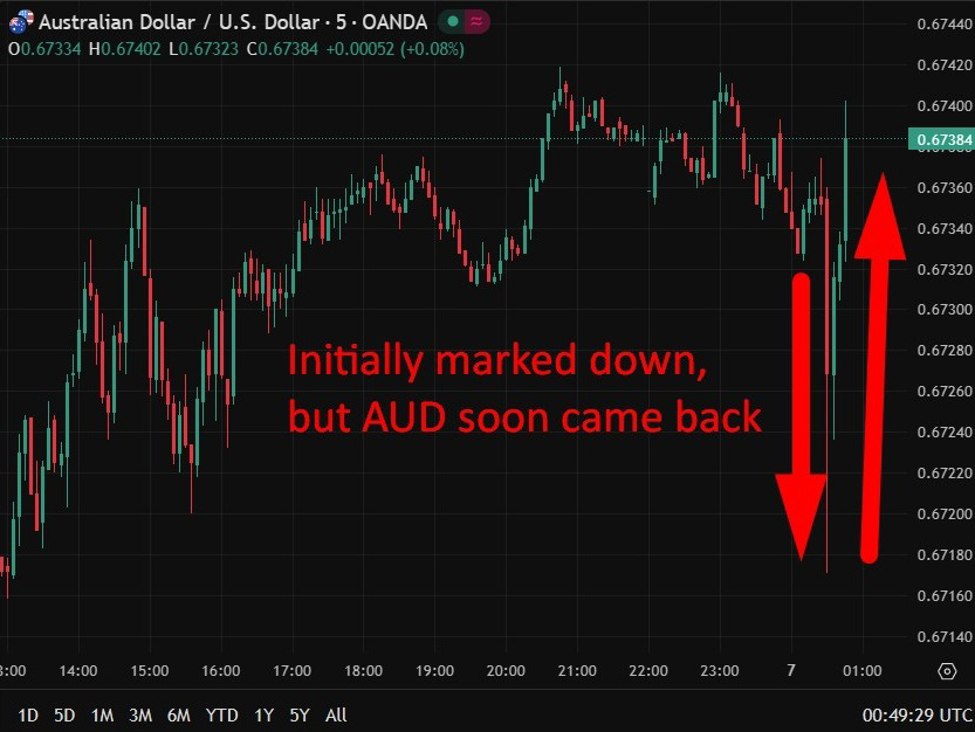
Australian CPI slows to 3.4% in November, core inflation still firmly above target
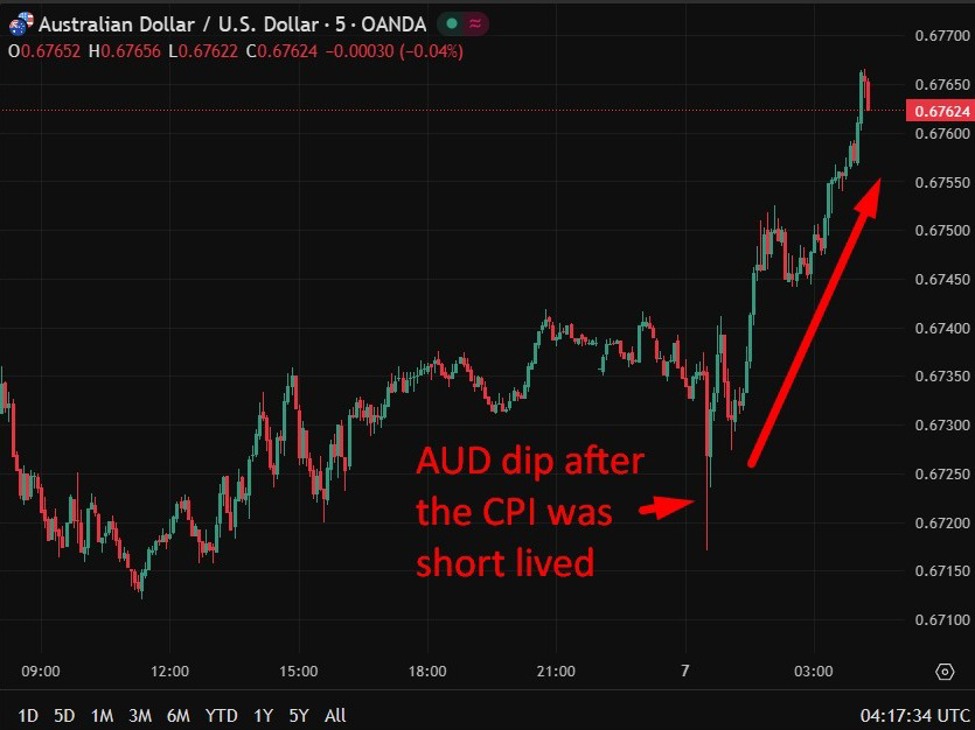
Summary:Headline CPI slowed to 3.4% y/y, below expectations (more data here)Monthly inflation flat at 0.0%Trimmed mean eased to 3.2% y/y, still above targetHousing, food and transport remain key inflation driversData supports RBA hold, not an imminent pivot to rate hikes (IMHO anyway)Australia’s inflation pulse softened in November, with headline price pressures easing more than expected, though underlying inflation remains uncomfortably firm for policymakers.Data from the Australian Bureau of Statistics showed the Consumer Price Index rose 3.4% year-on-year in November, down from 3.8% in October and below market expectations of 3.7%. On a monthly basis, headline CPI was flat (0.0%).Underlying measures also edged lower but remained elevated. The trimmed mean CPI, the Reserve Bank of Australia’s preferred gauge of core inflation, slowed to 3.2% y/y from 3.3%, broadly in line with expectations. On a monthly basis, trimmed mean inflation rose 0.3%, unchanged from October. The weighted median CPI also increased 0.3% m/m and stood at 3.4% y/y.Housing remained the largest driver of annual inflation, rising 5.2% over the past year, followed by food and non-alcoholic beverages (+3.3%) and transport (+2.7%). These components continue to reflect elevated rents, insurance costs and services-related price pressures, even as goods inflation cools.While November’s outcome marks a welcome step lower for headline inflation, the broader signal for policymakers is more nuanced. With two months of data now available, the trimmed mean for the December quarter still appears too firm to give the RBA immediate comfort that inflation is returning sustainably to the 2–3% target band. Services inflation and labour-linked costs remain sticky, limiting the scope for near-term policy easing.Market reaction was measured. The Australian dollar initially dipped on the softer-than-expected headline print but quickly recovered to trade little changed, reflecting the balance between improving headline momentum and persistent core inflation.Overall, November’s CPI supports the case for the RBA to hold rates steady for now, while reinforcing that policymakers will want clearer evidence of sustained easing in underlying inflation before shifting to an outright dovish stance. Separately we had building permits data for November, 15.2% m/mexpected 2.0%, prior -6.4% This article was written by Eamonn Sheridan at investinglive.com. 🔗 Source 💡 DMK Insight So, inflation’s cooling at 3.4% y/y, and here’s why that matters for traders: With ETH currently at $3,217.10, this CPI data suggests that the Reserve Bank of Australia (RBA) might hold off on rate hikes for now. A stable inflation rate can lead to a more favorable environment for risk assets like Ethereum, as it reduces the pressure on central banks to tighten monetary policy. Traders should keep an eye on how this impacts ETH’s price action, especially if we see a sustained break above key resistance levels around $3,250. But don’t overlook the flip side—if inflation remains stubbornly high in sectors like housing and food, it could still prompt a shift in sentiment. Watch for any signs of volatility in the crypto markets as traders react to upcoming economic data releases. The immediate focus should be on how ETH responds to this news, particularly in the next few days, as it could set the tone for the rest of the month. 📮 Takeaway Monitor ETH’s reaction around the $3,250 resistance level this week; a break could signal bullish momentum amid easing inflation concerns.
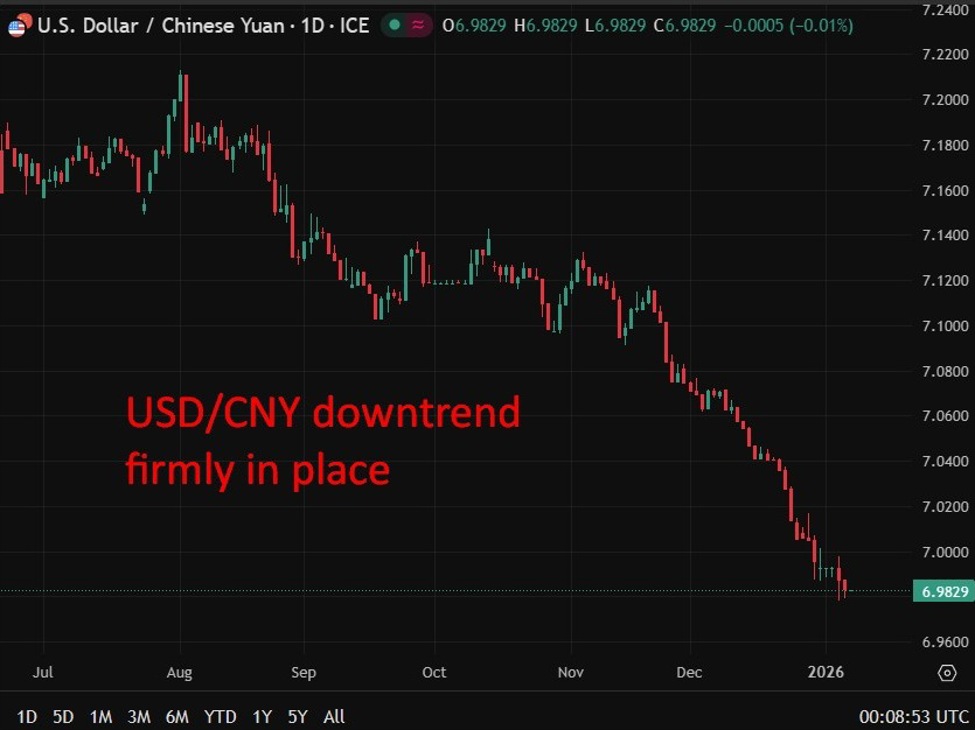
PBOC sets USD/ CNY mid-point today at 7.0187 (vs. estimate at 6.9896)
The People’s Bank of China (PBOC), China’s central bank, is responsible for setting the daily midpoint of the yuan (also known as renminbi or RMB). The PBOC follows a managed floating exchange rate system that allows the value of the yuan to fluctuate within a certain range, called a “band,” around a central reference rate, or “midpoint.” It’s currently at +/- 2%.The previous close was 6.9830PBOC injects 28.6bn yuan in open market operation reverse repos at an unchanged rate of 1.4%:after maturities today the PBoC has net drained 500.2 bn yuanIn other news from China earlier:China flags rate and RRR cuts in 2026 as PBoC leans dovishPBoC signals rate cuts and RRR reductions in 2026Monetary policy to remain “appropriately loose”Focus on boosting demand and stabilising growthDecember LPR left unchanged for seventh straight monthYuan stability remains a key policy constraintChina’s central bank said it will cut reserve requirements and interest rates in 2026 to keep liquidity ample, reaffirming an appropriately loose policy stance aimed at supporting growth, managing risks and keeping the yuan broadly stable.And:China is considering stricter reviews of rare-earth export licences to Japan, with the Commerce Ministry also saying it will prohibit all dual-use exports destined for Japanese military end-users. —Not related, but the focus for the session here earleir:Australian CPI slows to 3.4% in November, core inflation still firmly above targetData supports RBA hold, not an imminent pivot to rate hikes (IMHO anyway)Australia’s inflation pulse softened in November, with headline price pressures easing more than expected, though underlying inflation remains uncomfortably firm for policymakers.Data from the Australian Bureau of Statistics showed the Consumer Price Index rose 3.4% year-on-year in November, down from 3.8% in October and below market expectations of 3.7%. On a monthly basis, headline CPI was flat (0.0%).Underlying measures also edged lower but remained elevated. The trimmed mean CPI, the Reserve Bank of Australia’s preferred gauge of core inflation, slowed to 3.2% y/y from 3.3%, broadly in line with expectations. On a monthly basis, trimmed mean inflation rose 0.3%, unchanged from October. The weighted median CPI also increased 0.3% m/m and stood at 3.4% y/y. This article was written by Eamonn Sheridan at investinglive.com. 🔗 Source 💡 DMK Insight The PBOC’s management of the yuan’s midpoint is crucial for traders, especially in the context of ongoing global economic shifts. With the yuan’s value fluctuating within a set band, any adjustments made by the PBOC can signal broader economic strategies or responses to international pressures. For day traders and swing traders, monitoring these midpoint adjustments can provide insights into potential volatility in the forex market, particularly against the USD. Moreover, the yuan’s performance can have ripple effects on commodities and emerging market currencies. If the PBOC decides to tighten or loosen its band, it could lead to significant movements in related assets, such as gold or oil, as well as impact trade balances. Traders should keep an eye on the upcoming economic indicators from China, as these could influence the PBOC’s decisions. Watch for any changes in the midpoint that deviate from the expected range, as these could present both risks and opportunities in trading positions. 📮 Takeaway Keep an eye on the PBOC’s midpoint adjustments; any significant changes could impact the yuan’s volatility and related forex pairs.

Russia deploys submarine to escort tanker amid U.S. pursuit off Venezuela
Summary:Russia sent a submarine to escort a tanker the U.S. is trying to seize. Bella 1 reflagged itself with a Russian flag and renamed to Marinera amid pursuit. Moscow has formally protested U.S. pursuit and called for it to stop. U.S. blockade is part of sanctions enforcement on Venezuelan and other sanctioned oil flows. The move raises risks of naval confrontation and complicates sanctions regimes.Russia has deployed a submarine and other naval assets to escort an oil tanker that the United States has been trying to seize in a maritime flashpoint tied to sanctions enforcement and geopolitical tensions, according to a report in the Wall Street Journal (gated). The vessel, formerly known as the Bella 1, has been at the centre of a prolonged cat-and-mouse pursuit by the U.S. Coast Guard and has now drawn Moscow directly into the dispute.The Bella 1, a rusting, sanctioned tanker linked by U.S. authorities to illicit oil transport, failed to load cargo in Venezuela and has been attempting to avoid a U.S. blockade imposed as part of sanctions targeting the Maduro regime’s oil exports. U.S. forces chased the vessel into the Atlantic after its crew repelled a U.S. boarding attempt in December and refused to comply with orders in Caribbean waters. In a dramatic gambit to deter further U.S. interception, crew members painted a Russian flag on the hull, renamed the ship Marinera and registered it under Russian registry without standard verification, a move legal experts say does not automatically confer genuine nationality but complicates enforcement. Moscow’s decision to provide a submarine escort marks a significant escalation in maritime tensions with Washington and underscores Russia’s concern about U.S. actions aimed at cutting off revenue from oil tied to Venezuela and, in some instances, Iran. Russian officials have formally protested U.S. pursuit and called on Washington to cease chasing the vessel, a diplomatic note that reflects broader friction over enforcement of sanctions regimes and interpretations of international maritime law.The stand-off comes amid a heightened U.S. naval and aerial presence in the Caribbean, driven by a broader campaign to intercept sanctioned tankers under “Operation Southern Spear” and choke the flow of crude exports that may be funding hostile actors or bolstering adversary states. Analysts warn that Russia’s willingness to protect reflagged tankers with military assets could further complicate U.S. enforcement efforts, raise the risk of direct military confrontations at sea, and deepen geopolitical rivalry over access to energy resources. The incident also highlights emerging strategies by sanctioned ship operators, such as reflagging vessels to shield them from interdiction, that are testing the limits of sanctions enforcement and maritime legal frameworks. Meanwhile:OIL – Trump says tens of millions of Venezuelan barrels to flow to U.S. markets This article was written by Eamonn Sheridan at investinglive.com. 🔗 Source 💡 DMK Insight Russia’s military maneuvering around U.S. sanctions is a game changer for oil markets. The reflagging of the Bella 1 to Marinera underlines the escalating tensions between the U.S. and Russia, particularly regarding Venezuelan oil. This situation could lead to increased volatility in oil prices, especially if Russia continues to assert its naval presence in the region. Traders should keep an eye on crude oil futures, as any disruption in supply chains could trigger price spikes. Additionally, the geopolitical risk might spill over into broader markets, affecting currencies tied to oil exports, like the Russian ruble or even the Venezuelan bolívar. On the flip side, if the U.S. manages to enforce its sanctions effectively, we could see a short-term dip in oil prices as Venezuelan supply is further constrained. Watch for key resistance levels in crude oil around recent highs, and monitor any statements from both U.S. and Russian officials for immediate market reactions. 📮 Takeaway Keep an eye on crude oil futures and geopolitical developments; any escalation could push prices above recent highs, while effective U.S. sanctions might lead to short-term dips.
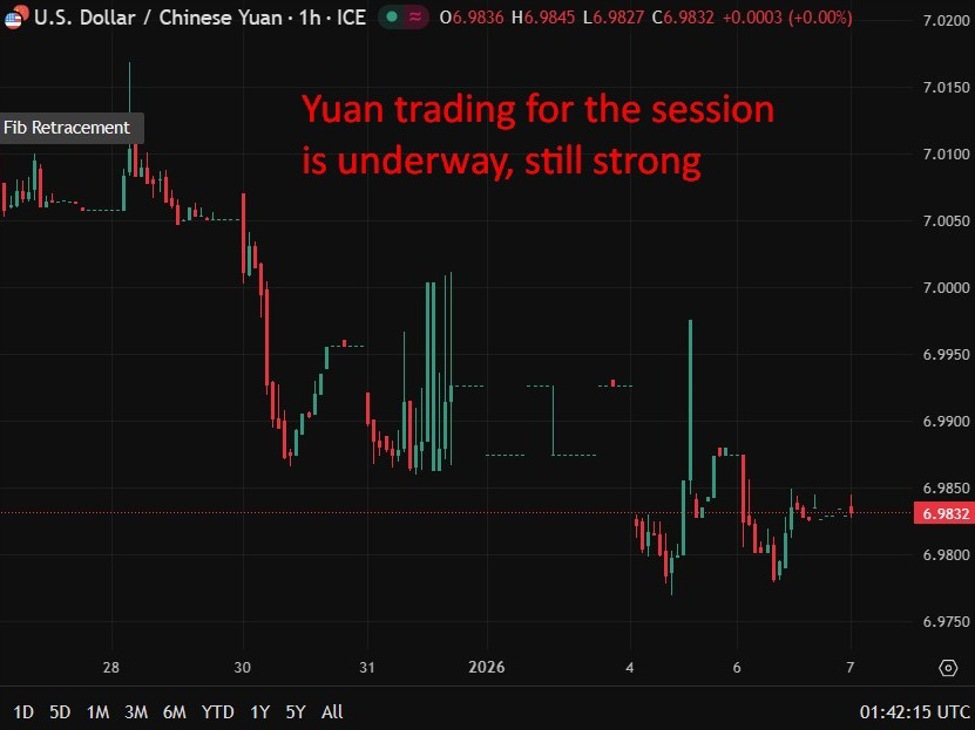
China gives banks more leeway to sell bad personal loans, as defaults mount
Summary:China extends policy allowing disposal of bad personal loansAim is to support banks amid rising defaults and weak marginsTransfers of bad personal loans surged sharply last yearCredit card loan stress remains a key concernRegulators prioritising balance-sheet stabilityChina’s financial regulators have moved to extend a key policy allowing banks and asset management firms to dispose of non-performing personal loans, signalling a renewed push to stabilise balance sheets as credit stress builds and profitability comes under pressure.According to sources familiar with the matter, report Bloomberg (gated), the National Financial Regulatory Administration (NFRA) issued guidance last week extending rules that permit the transfer and sale of soured personal loans and non-performing single-borrower corporate loans beyond their original end-2025 deadline. The policy, first introduced in early 2021, had been due to expire next year.The extension highlights regulators’ growing concern over deteriorating asset quality, particularly in consumer finance. Rising defaults on credit cards and other personal loans have become a notable strain for banks, even as broader economic conditions remain uneven and household confidence fragile. By allowing greater flexibility in offloading bad assets, authorities are seeking to prevent further pressure on capital ratios and preserve financial stability.Chinese lenders have already stepped up efforts to clean up their balance sheets. Transfers and write-offs of distressed assets have accelerated sharply as net interest margins have fallen to record lows, squeezing profitability and reducing banks’ capacity to absorb losses organically. Official data cited by local media show transfers of bad personal loans reached 37 billion yuan in the first quarter of last year, more than eight times higher than the same period a year earlier.Within that total, transfers of non-performing credit card loans rose to 5.19 billion yuan, underlining stress in unsecured consumer lending. The surge in activity points to a more proactive approach by banks to managing problem assets, though transparency has become more limited after the official credit asset transfer centre suspended regular disclosure of detailed figures.For policymakers, the extension of the disposal framework reflects a balancing act. Regulators want banks to recognise and resolve bad loans more quickly, but without triggering a sharp tightening in credit conditions or undermining confidence in the financial system. Allowing continued asset transfers to specialised management firms provides a pressure valve at a time when economic recovery remains patchy.Overall, the move reinforces Beijing’s message that financial stability remains a priority, even as rising defaults and weak margins underscore the challenges facing China’s banking sector in the current cycle. This article was written by Eamonn Sheridan at investinglive.com. 🔗 Source 💡 DMK Insight China’s extension of bad loan disposal policies is a big deal for traders watching the banking sector. With rising defaults and weak margins, this move aims to stabilize banks’ balance sheets, which could influence lending practices and consumer confidence. Traders should keep an eye on how this affects credit card loan stress, as it remains a significant concern. If banks start to tighten lending further, it could impact consumer spending and, by extension, economic growth. Watch for any shifts in bank stock prices, particularly in the Asian markets, as they react to these regulatory changes. The real story here is whether this policy will actually lead to improved financial health for banks or just mask deeper issues. If you’re trading in this space, monitor key financial indicators from major banks and be ready for volatility as market participants digest this news. 📮 Takeaway Keep an eye on bank stock reactions in Asia; any tightening in lending could signal broader economic impacts.
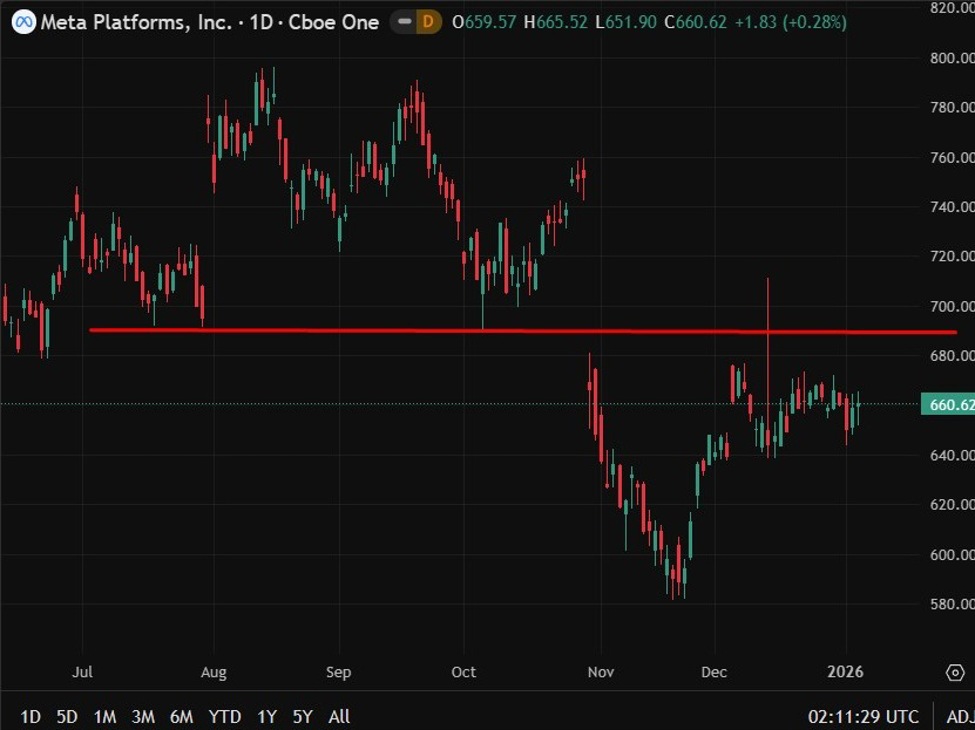
China reviews Meta’s $2bn AI deal over export control concerns
Summary:China reviewing Meta’s $2bn acquisition of AI firm ManusFocus on whether technology transfer required export licenceReview is preliminary, not yet a formal investigationManus gained attention for autonomous AI agent technologyCase highlights rising geopolitical risk around AI dealsChinese authorities are reviewing Meta’s roughly $2 billion acquisition of AI start-up Manus for potential violations of China’s technology export control rules, raising fresh uncertainty around one of the year’s most high-profile artificial intelligence deals.According to people familiar with the matter, officials at China’s Ministry of Commerce of China have begun assessing whether the relocation of Manus’s staff and core technology to Singapore, ahead of its sale to Meta, should have required an export licence under Chinese law. While the review is still at an early stage and may not evolve into a formal investigation, the licence question alone could give Beijing leverage over the transaction.Manus, which is now based in Singapore, attracted widespread attention earlier this year after releasing what it described as the world’s first general AI agent, software capable of autonomously making decisions and executing tasks with minimal prompting, setting it apart from traditional chatbots. The product’s viral reception underscored growing interest in agent-based AI systems and their potential commercial and strategic value.Meta completed the acquisition last month, with sources indicating the deal valued Manus at between $2 billion and $3 billion. Neither Meta nor Manus has commented publicly on the regulatory review, and Reuters said it could not independently verify the Financial Times (gated) report.For Beijing, the case highlights increasing sensitivity around advanced AI capabilities and the movement of high-value technology overseas. China has steadily tightened its export control framework in recent years, particularly for technologies deemed strategically important, including advanced semiconductors, AI models and data-intensive systems.While officials have not accused the companies of wrongdoing, analysts note that an export-licence requirement could, in an extreme scenario, allow regulators to delay, condition or even pressure parties to unwind the transaction. More broadly, the review underscores the growing regulatory and geopolitical risks facing cross-border AI deals, especially those involving Chinese-origin technology and major U.S. tech firms. This article was written by Eamonn Sheridan at investinglive.com. 🔗 Source 💡 DMK Insight China’s review of Meta’s $2 billion acquisition is a big deal for tech investors and traders alike. The scrutiny reflects increasing geopolitical tensions and could signal a tightening regulatory environment for foreign tech investments in China. For traders, this could impact not just Meta’s stock but also the broader tech sector, especially companies involved in AI and autonomous technologies. If the deal faces hurdles, it might lead to a sell-off in related stocks, including those in the AI space. Keep an eye on how this unfolds, as it could influence market sentiment and trading strategies. Watch for any updates on the review process, as they could create volatility in both Meta and its competitors. The implications could ripple through the crypto market too, particularly if AI technologies begin to influence blockchain applications or decentralized finance. So, as this situation develops, monitor Meta’s stock price closely, especially around key support and resistance levels, and be prepared for potential market reactions from institutional investors who might adjust their positions based on the outcome. 📮 Takeaway Watch Meta’s stock closely for volatility as China’s review unfolds, especially around key support and resistance levels.

China escalated tensions with Japan, bans exports of goods with potential military uses
Summary:China bans exports of dual-use goods to Japan Move follows Taiwan-related remarks by Japan’s prime ministerRestrictions take effect immediatelyRare earths, electronics and machine tools among potential targetsHighlights China’s use of trade as geopolitical leverage Japan’s Chief Cabinet Secretary Minoru Kihara said China’s export curbs aimed solely at Japan were regrettable, adding that Tokyo will examine the details and consider an appropriate response.China has sharply escalated its dispute with Japan by banning exports of goods with potential military applications, a move that takes effect immediately and signals Beijing’s willingness to deploy economic pressure in response to political disagreements over Taiwan.In a statement on Tuesday, China’s Ministry of Commerce of China said it would prohibit exports to Japan of so-called dual-use items — products that can be used for both civilian and military purposes. The decision marks a clear intensification of retaliation against comments made by Japanese Prime Minister Sanae Takaichi, who has spoken publicly about Taiwan, a topic Beijing treats as a core sovereignty issue.While Chinese authorities did not specify which goods are covered by the ban, analysts warn the move could disrupt key supply chains underpinning Japan’s manufacturing sector. Dual-use categories typically include certain rare earth elements, advanced machine tools, electronic components, sensors, lasers and other inputs widely used in industrial production. The lack of detail makes it difficult to quantify the immediate economic impact, but the breadth of the category raises the risk of meaningful supply bottlenecks.The action underscores how China is increasingly willing to use trade and export controls as a geopolitical lever. Beijing considers Taiwan a breakaway province and has repeatedly warned foreign governments against actions or statements it views as supporting Taiwanese independence. The latest step also serves as a broader signal to other countries of the economic costs that can follow criticism of China’s stance on Taiwan.China’s leader Xi Jinping has previously demonstrated this playbook. During last year’s trade confrontation with the United States, Beijing tightened controls on exports of critical minerals and magnets used in everything from semiconductors to defence systems, highlighting its dominance in key supply chains.For Japan, the ban adds a new layer of geopolitical risk at a time when firms are already grappling with fragile global supply networks. Analysts warn that prolonged restrictions could weigh on industrial output, investment decisions and corporate margins if alternative sources prove costly or slow to secure.Overall, the move deepens tensions between Asia’s two largest economies and reinforces concerns among global investors that trade policy, national security and geopolitics are becoming increasingly intertwined — particularly where China’s strategic interests are involved. This article was written by Eamonn Sheridan at investinglive.com. 🔗 Source 💡 DMK Insight China’s export ban on dual-use goods to Japan is a significant geopolitical move that could ripple through markets, including crypto and forex. With SOL currently at $137.55, traders should be aware that heightened tensions between major economies often lead to increased volatility. This situation could affect risk appetite, pushing traders toward safer assets or even alternative cryptocurrencies as a hedge. Watch for how this impacts related sectors, especially in technology and rare earths, which could see price fluctuations. If tensions escalate, we might see SOL testing support levels around $130, making it crucial to monitor trading volumes and sentiment in the coming days. Keep an eye on broader market reactions, as institutional players may adjust their positions based on geopolitical developments. 📮 Takeaway Watch SOL closely; if it dips below $130, it could signal a shift in market sentiment amid rising geopolitical tensions.
Bitcoin, solana ETFs planned as Wall Street leans into crypto, Morgan Stanley joins race
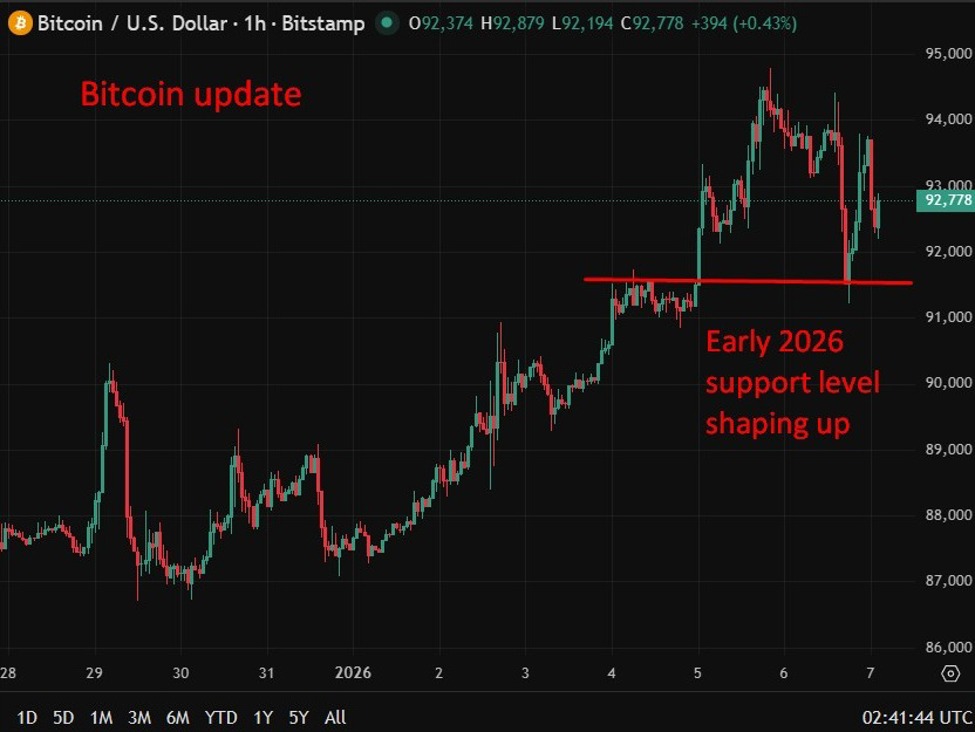
Summary:Morgan Stanley files for bitcoin and solana ETFsApplications submitted to the U.S. SECBitcoin ETFs now manage over $120bn in assetsNon-bitcoin crypto ETFs have seen weaker inflowsMove highlights growing institutional adoptionEarlier:MSCI delays crypto treasury index shake-up , supportive for BTC and other cryptoBitcoin rises as PwC leans into crypto on US regulatory shiftMorgan Stanley is preparing to deepen its push into digital assets, filing applications to launch exchange-traded funds that would hold Bitcoin and Solana, underscoring the continued integration of cryptocurrencies into mainstream finance.Info, ICYMI, via the Wall Street Journal (gated). Regulatory filings submitted to the U.S. Securities and Exchange Commission show the investment bank plans to offer separate ETFs providing direct exposure to the two digital tokens. If approved, the products would place Morgan Stanley alongside a growing list of major financial institutions seeking to capitalise on investor demand for regulated crypto investment vehicles.The move follows the rapid expansion of U.S.-listed bitcoin ETFs since their launch in 2024. A group of 11 spot bitcoin ETFs, including products from BlackRock and Fidelity Investments, has attracted substantial inflows, with combined assets under management now exceeding $120 billion, according to data cited by JPMorgan. The success of these funds has helped cement bitcoin’s status as the dominant institutional entry point into the crypto market.Momentum outside bitcoin has been more uneven. Asset managers have also rolled out ETFs and exchange-traded products tracking other cryptocurrencies such as ether and solana, but these offerings have generally seen more modest inflows. That divergence reflects investors’ continued preference for bitcoin as a perceived store of value, compared with alternative tokens that are often viewed as higher risk and more sensitive to shifts in market sentiment.Market pricing reflects that volatility. Bitcoin was trading near $92,000 on Tuesday after rebounding from recent lows, but remains roughly 27% below its early-October peak above $126,000. Solana hovered around $137, well off its record high of about $294, highlighting the sharper drawdowns seen across the broader crypto complex.A Morgan Stanley spokesperson declined to comment beyond the details disclosed in the filings. Still, the applications signal growing confidence among large financial institutions that regulatory pathways for crypto ETFs are becoming clearer, even as price volatility and uneven investor appetite persist. This article was written by Eamonn Sheridan at investinglive.com. 🔗 Source 💡 DMK Insight Morgan Stanley’s ETF applications for Bitcoin and Solana signal a pivotal moment for institutional adoption in crypto. With Bitcoin currently at $91,962, the momentum is palpable, especially as Bitcoin ETFs now manage over $120 billion in assets. This move could attract more institutional capital, potentially pushing BTC higher in the short term. However, the weaker inflows into non-Bitcoin crypto ETFs suggest that while Bitcoin is gaining traction, altcoins like Solana at $137.56 may not see the same level of interest immediately. Traders should note that this divergence could create opportunities for swing trades in altcoins if Bitcoin’s rally continues. The recent MSCI delay on the crypto treasury index also supports Bitcoin’s position, indicating a cautious but positive outlook from major financial institutions. Watch for Bitcoin to test key resistance levels above $92,000, as a breakout could lead to further bullish sentiment. Keep an eye on Solana’s performance as well; if Bitcoin rallies, it might lift SOL, but be wary of potential profit-taking in altcoins as traders shift focus back to Bitcoin. 📮 Takeaway Watch for Bitcoin to break above $92,000; a sustained rally could boost Solana and other altcoins, but be prepared for volatility.
Goldman Sachs sees China equities rising up to 20% by end-2026, earnings-led
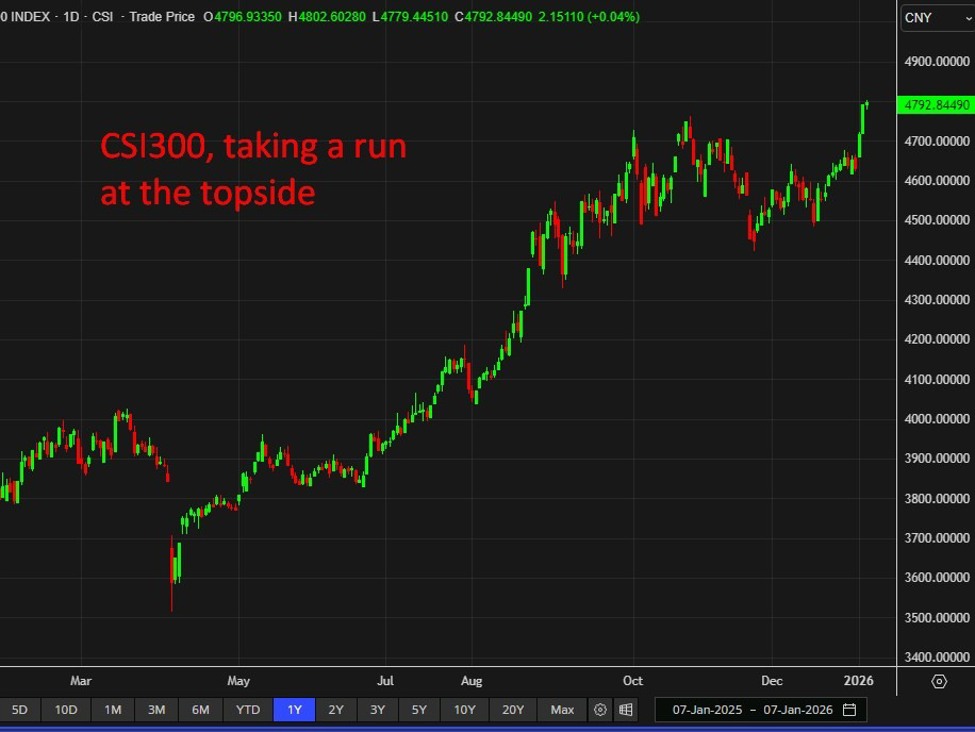
Summary:Goldman targets MSCI China 100 and CSI 300 5,200 by end-2026 Upside case hinges on earnings acceleration aided by AI and policy Profit growth seen improving sharply versus 2025 pace 2026 starts strong after solid 2025 gains Key risks: demand, property, geopolitics/trade shocksGoldman Sachs is forecasting further gains for Chinese equities in 2026, arguing the next leg higher should be driven more by earnings delivery than pure sentiment as AI investment and policy support feed through into profits. Strategists expect the MSCI China Index to rise about 20% to 100 by end-2026, while the CSI 300 is seen climbing roughly 12% to 5,200, according to reporting on the call. The constructive view rests on a step-up in profit momentum. Goldman’s strategists see earnings growth accelerating to around 14% in 2026–2027, a notable improvement from an estimated ~4% in 2025, with the lift supported by a mix of AI-related productivity gains and policy measures aimed at improving the operating backdrop for corporates. Chinese equities have started 2026 on the front foot, adding to a strong 2025 performance that surprised many global allocators. The CSI 300 and MSCI China were already higher early in the year after logging double-digit advances in 2025, reinforcing the idea that a “slow bull” dynamic may be taking hold if earnings expectations keep firming. Goldman’s broader framing is that valuations still leave room for upside if profits deliver and policy credibility holds, but the bank’s central message is that sustained returns will likely require real profit growth, not just multiple expansion. In that sense, AI adoption becomes a key swing factor: if it lifts margins and supports top-line growth across major index sectors, the earnings cycle could look meaningfully better than recent years.Goldman Sachs note that risks remain. A weaker-than-expected domestic demand recovery, renewed property-sector stress, or a flare-up in geopolitical or trade tensions could undermine confidence and cap the valuation re-rating. Still, Goldman’s targets suggest the bank believes the base case is improving: a more earnings-driven market, supported by technology diffusion and a still-helpful policy mix, can keep China equities climbing into 2026. This article was written by Eamonn Sheridan at investinglive.com. 🔗 Source 💡 DMK Insight Goldman’s bullish outlook on MSCI China 100 and CSI 300 signals potential for traders focused on Chinese equities. With targets set at 5,200 by the end of 2026, the emphasis on AI-driven earnings growth is crucial. This suggests that sectors leveraging technology could outperform, making stocks in tech and consumer discretionary particularly interesting. However, the risks highlighted—demand fluctuations, property market instability, and geopolitical tensions—could create volatility. Traders should keep an eye on these factors, especially as we approach key earnings reports in 2025 that could set the tone for 2026. If the market reacts positively to earnings acceleration, it could trigger a rally, but any negative news could lead to sharp corrections. Watch for the CSI 300’s performance around 5,200; a break above this level could confirm bullish sentiment, while failure to maintain momentum could signal a reversal. Keeping tabs on macroeconomic indicators and policy changes in China will also be vital for positioning in this market. 📮 Takeaway Monitor the CSI 300 around the 5,200 level; a breakout could signal a strong bullish trend, while geopolitical risks remain a key watchpoint.
Westpac: softer November CPI reassures RBA, lowers risk of further rate hikes
Summary:November CPI flat m/m, softer than Westpac expectedAnnual CPI eased to 3.4%, below forecastsDownside risk to December-quarter inflation outlookEnergy rebates again distorted electricity pricesWestpac sees RBA holding rates in FebruaryAustralia’s inflation pulse cooled more sharply than expected in November, a result that Westpac says should provide reassurance to the Reserve Bank of Australia that further policy tightening is not required in the near term.The latest Australian Bureau of Statistics data showed headline CPI was flat in the month, significantly weaker than Westpac’s near-term forecast for a 0.4% rise. On an annual basis, the new Complete Monthly CPI eased to 3.4% year-on-year in November, well below Westpac’s 3.8% estimate and softer than market expectations.Westpac said the weaker-than-expected outcome introduces downside risk to its current December-quarter inflation forecasts, which sit at 0.6% quarter-on-quarter for headline CPI and 0.8% for the trimmed mean. If confirmed following a full review of the monthly detail, the bank believes the data should be sufficient to comfort the RBA ahead of its February meeting, reducing the likelihood of a rate hike.The softer print was driven by a combination of weaker electricity prices and declines across several discretionary categories. Electricity prices rose far less than anticipated in the month, while household contents and services, clothing and footwear, and health all fell more sharply than Westpac had expected. Transport prices also rose more modestly. These declines were partly offset by firmer increases in food prices, rents, new dwellings and communications.Energy rebates continued to play a significant role in shaping the inflation profile. Electricity prices were up 19.7% over the year to November, but Westpac noted this reflected the dampening impact of state and federal rebate schemes. Excluding those rebates, the ABS estimates electricity prices rose 4.6% year-on-year, slightly slower than in October and consistent with annual price resets by energy retailers in mid-2025.Underlying inflation also edged lower. The trimmed mean rose 3.2% year-on-year in November, easing from 3.3% previously, while the monthly increase held steady at 0.3% — a pace Westpac notes has been consistent for several months.Looking ahead, Westpac expects the inflation pulse to continue moderating through 2026, outside of volatile items, administered prices and known supply shocks, reinforcing the case for the RBA to remain on hold in coming months. The Australian dollar has added to recent gains after the data, trading above 0.6760.—Reserve Bank of Australia meeting dates for the year ahead: This article was written by Eamonn Sheridan at investinglive.com. 🔗 Source 💡 DMK Insight Australia’s November CPI data just dropped, and it’s a game changer for traders: With the annual CPI easing to 3.4%, below forecasts, this signals a cooling inflation trend that could influence the RBA’s monetary policy. If the RBA holds rates in February, as Westpac suggests, it could lead to a stronger AUD against other currencies, especially if global inflation remains sticky. Traders should keep an eye on the energy sector, as rebates are distorting electricity prices, potentially masking underlying inflation pressures. This CPI report could also ripple through the forex market, impacting pairs like AUD/USD. If the AUD strengthens, it might create short-term opportunities for day traders looking to capitalize on volatility. Watch for key resistance levels around recent highs, and consider how this data might influence broader market sentiment. The real story here is how the RBA’s decisions will shape the landscape for the next quarter, so keep your charts updated and monitor the economic calendar closely for any shifts in sentiment. 📮 Takeaway Watch for the RBA’s February rate decision; a hold could strengthen the AUD, impacting pairs like AUD/USD.