
 Bitcoin
  Ethereum
  Tether
  XRP
XRP  BNB
BNB  USDC
USDC  Solana
  TRON
TRON  Lido Staked Ether
  Figure Heloc
KEY POINTS:Gold rallied overnight on geopolitical news US NFP report on Friday a key risk eventBig picture trend remains skewed to the upsideTrendline around the 4230 level could act as strong supportFUNDAMENTAL OVERVIEWGold has been supported recently by the soft US NFP and CPI reports before the Christmas holidays. That helped to push the precious metals into new all-time highs before a quick selloff brought prices back to the original levels. Today, gold saw some upside overnight on geopolitical news . In fact, the US President Trump escalated rhetoric across Latin America, reinforcing Washington’s assertion of control over post-Maduro Venezuela while openly signalling that Colombia and Mexico could also face US action as part of a widening campaign against criminal networks and regional instability.This week we have the December NFP report coming up, and while the previous report might have been taken with a pinch of salt due to shutdown related issues, this one should give us a clearer picture. Strong data might lead to a correction, while soft figures should keep on supporting the upside.In the bigger picture, gold should remain in an uptrend as real yields will likely continue to fall amid the Fed’s dovish reaction function. But in the short term, a hawkish repricing in interest rate expectations could weigh on the market. GOLD TECHNICAL ANALYSIS – DAILY TIMEFRAMEOn the daily chart, we can see that gold pushed into a new all-time high during the Christmas week but eventually erased all the gains. From a risk management perspective, the buyers will have a better risk to reward setup around the trendline to position for a rally into a new all-time high. The sellers, on the other hand, will want to see the price breaking lower to pile in for a drop into the 3887 level next.GOLD TECHNICAL ANALYSIS – 4 HOUR TIMEFRAMEOn the 4 hour chart, we can see that we have a minor resistance zone around the 4440 level. This is where we can expect the sellers to step in with a defined risk above the resistance to position for a drop into the major trendline. The buyers, on the other hand, will look for a break higher to increase the bullish bets into new all-time highs.GOLD TECHNICAL ANALYSIS – 1 HOUR TIMEFRAMEOn the 1 hour chart, we can see that we have the upper bound of the average daily range for today standing right around the resistance. This suggests that it’s unlikely that we will see a sustained breakout today, so there’s a good chance that we either consolidate here or pull back into the minor trendline. We will likely find dip-buyers around the minor trendline targeting a break above the resistance, while the sellers will look for a break below the trendline to increase the bearish bets into the major trendline.UPCOMING CATALYSTSToday we get the US ISM Manufacturing PMI. On Wednesday, we have the US ADP, the US ISM Services PMI and the US Job Openings data. On Thursday, we get the latest US Jobless Claims figures. On Friday, we conclude the week with the US NFP report.VIDEO This article was written by Giuseppe Dellamotta at investinglive.com. 🔗 Source 💡 DMK Insight Gold’s recent rally is more than just a reaction to geopolitical tensions—it’s a signal of underlying economic shifts. The soft US NFP and CPI reports have set the stage for a bullish trend in gold, especially with the upcoming NFP report on Friday looming as a potential market mover. Traders should keep an eye on the 4230 trendline, which could provide strong support if tested. If gold holds above this level, it could attract more buying interest, pushing prices higher. Conversely, a break below could trigger a wave of selling, especially among retail traders looking to cut losses. It’s worth noting that while gold is gaining traction, the broader market sentiment remains cautious. If the NFP report surprises to the upside, we could see a quick reversal in gold’s fortunes as traders reassess their positions. Watch for volatility around this key event, as it could influence not just gold but also related assets like silver and even the broader commodities market. 📮 Takeaway Monitor the 4230 trendline for gold; a hold above could signal further upside, while a break below may trigger selling ahead of Friday’s NFP report.

The 1st Gold Technical Analysis of 2026: Buyers Defend Value Area as Bulls Eye 4,450–4,489
The trading week of January 5, 2026, has begun with significant market movements driven by escalating geopolitical tensions and shifting regulatory landscapes. A primary driver of volatility is the situation in Venezuela, where China has issued a sharp rebuke regarding the reported US seizure of President Maduro, urging his immediate release and condemning the move as a violation of international law. The uncertainty surrounding this conflict has spurred a flight to safety in global markets: precious metals have rallied, with gold surging 2.1% to $4,420 and silver rising 3.7% to $75.46. Similarly, the US dollar is holding firmer against major currencies like the Euro and Yen, defying expectations of a long-term softening as investors seek stability.In the digital asset space, Bitcoin is seeing gains fueled by positive institutional and regulatory developments rather than geopolitical strife. Professional services giant PwC has signaled a major strategic pivot toward crypto services, citing the newfound regulatory clarity provided by the “GENIUS Act” and the pro-crypto stance of the Trump administration. This move is viewed as a significant validation of the sector, reinforcing the narrative of institutionalization and driving Bitcoin higher as the new year gets underway.The 1st Gold Technical Analysis of Year 2026 Shows Bulls are BackVideo analysis date: January 5, 2026 | Timeframe: 1-hour chart | Analyst: Itai LevitanKey Takeaways from the Gold Futures Analysis VideoGold futures opened the week with a sharp push higher (~+102.5 points / +2.37%) after bouncing precisely off the Value Area Low (VAL) from Friday’s anchored volume profile.A “triple-support” structure formed at VAL, and the sequence of higher lows hinted that buyers were stepping in early (no patience for a perfect tag).Price reclaimed the Value Area High (VAH) and broke above prior highs, shifting the narrative toward acceptance back above value rather than a sell-the-rally setup.The next upside “decision zone” sits around 4,440, then the 4,450–4,454 area (semi-round number + pitchfork top), where partial profit-taking could spark a pullback.If a pullback reaches the VAH near ~4,385, that area becomes a potential “bulls prove it” retest zone; failure there would weaken the immediate bullish thesis.What I’m Watching on the Gold Futures 1-Hour ChartComing into the first full week of 2026, I’m focused on how gold reacted to value—specifically an anchored volume profile drawn across the prior range (Friday). In this framework:The blue line marks the Value Area Low (VAL) (support edge of value).The Value Area High (VAH) is the upper boundary of that value zone.The red line is the Point of Control (POC)—the price level with the highest traded volume in that range.The key detail from the video: gold didn’t just “bounce somewhere.” It found support exactly at VAL, and then the market opened above the POC and retraced cleanly into that area—effectively “tying the dots together” between support, value, and acceptance.That’s the difference between generic chart-watching and professional-level contextual analysis: the market is telling a story about where participants are comfortable doing business.The Golden Bounce Matters: Triple Support + Higher LowsAfter the initial rejection into VAL, the chart built what I’d call a triple-support area around the Value Area Low. Even better for the bulls, the lows began to ratchet higher:Each subsequent dip stopped above the prior low.That’s often a sign of buyer urgency—participants are willing to pay up rather than wait for the “perfect” touch.In practical terms, that “higher lows” structure can be an early clue that the move off VAL isn’t just a dead-cat bounce—it’s potentially a transition from liquidation to accumulation, especially when paired with a reclaim of value.Gold is Reclaiming Value and Breaking Highs: Why This Isn’t a Clean ShortOnce price cleared back above the VAH (blue line) and pushed through prior swing highs, the tone changed. A common trap in this sequence is the “breakout… then dump back into range” move that traps late bulls (a classic fakeout / bull trap).But in the video’s read, the market produced a cleaner breakout attempt afterward—making aggressive shorting here look more like fading strength into rising acceptance, rather than selling into clear failure.Put differently: when price reclaims value, holds it, and starts building above it, the market is often signaling mean reversion back into higher value rather than immediate collapse.Key Levels on the Radar for Gold Futures TodayThe video outlines several volume-profile-derived levels that matter as price pushes higher. Here’s how I’d organize them for execution planning:Why 4,450–4,454 is a likely reaction zoneEven in bullish conditions, risk management becomes the driver after a big up-move. In professional settings, a desk (or risk team) often won’t allow a trader to sit on a large scaled position without taking partial profits into a pre-defined level.So, around 4,450-ish—especially with confluence near 4,454—a pullback wouldn’t be a surprise. It may simply be profit-taking, not a bearish reversal.The Technical Scenarios for Gold Futures TodayThis is not about prediction—it’s about if/then structure.Bullish continuation scenarioIf price holds above reclaimed value and continues to accept above the VAH,then the market can keep pressing into 4,440, followed by the 4,450–4,454 zone.If bulls can absorb selling there and regain traction,then the path opens toward 4,473.5 and potentially 4,489.Constructive pullback scenario (the “present”)If price retraces and tags the VAH near ~4,385 and buyers defend it,then that’s the type of retest that can offer a cleaner long thesis (joining strength after support proves itself).Bearish invalidation riskIf the market loses the VAH and can’t reclaim it (failed acceptance),then the bullish narrative weakens and the move risks sliding back into the prior range.A deeper failure would be signaled if price returns to (and breaks) the Value Area Low region that launched the move.What I Want to See From Order Flow NextThe video mentions that this analysis will be paired with order flow hints—the kind of “under the candles” evidence that helps distinguish conviction vs. non-conviction.In plain terms, into levels like 4,450–4,454, I’m watching for:Aggressive buying that actually moves price (real demand), vs. buying that stalls (absorption).Whether pullbacks are sharp and impulsive (risk-off liquidation) or orderly (structured profit-taking).Whether breakouts hold above the level (acceptance) or immediately snap back (failed auction).Return

Switzerland December manufacturing PMI 45.8 vs 49.7 prior
Swiss manufacturing activity slumped hard towards the end of last year, with both output and new orders struggling and dipping further. A point to note as well is that employment conditions also declined further, so that will leave a negative mark on overall sentiment even if services is the bigger contributor to the country’s economy. Procure notes that:”This marks the lowest value since the announcement of US tariffs. The PMI reflects ongoing strain in the manufacturing sector, though headwinds from protectionism continued to ease in December.”The full breakdown of the sub-indices can be seen below:This won’t do much to change the outlook for the SNB though. The Swiss central bank will continue to have to deal with deflationary pressures as we get into the new year. And their main task will be to balance that out and trying not to overcommit on monetary policy easing.As things stand, they are actively trying to avoid dipping into negative interest rates. Or at least not be forced into a position to utilise that again too soon. It’s all about retaining that bit of flexibility at the end of the day. This article was written by Justin Low at investinglive.com. 🔗 Source 💡 DMK Insight Swiss manufacturing’s sharp decline is a red flag for traders: here’s why. The slump in manufacturing activity, marked by falling output and new orders, signals potential weakness in the Swiss economy. This is crucial for forex traders, especially those focused on the Swiss Franc (CHF). A deteriorating manufacturing sector often leads to a bearish outlook for the currency, as it may prompt the Swiss National Bank to reconsider its monetary policy stance. Employment conditions worsening adds another layer of concern, suggesting that consumer spending could take a hit, further impacting economic growth. Traders should keep an eye on related assets, particularly EUR/CHF, as shifts in sentiment could lead to increased volatility. If the trend continues, we might see a test of key support levels in the CHF. Watch for any upcoming economic indicators or central bank comments that could provide insight into future monetary policy adjustments. The immediate focus should be on how these manufacturing figures influence market sentiment in the coming weeks, especially as we approach any scheduled economic reports from Switzerland. 📮 Takeaway Monitor the EUR/CHF pair closely; a sustained decline in Swiss manufacturing could lead to significant CHF weakness in the coming weeks.
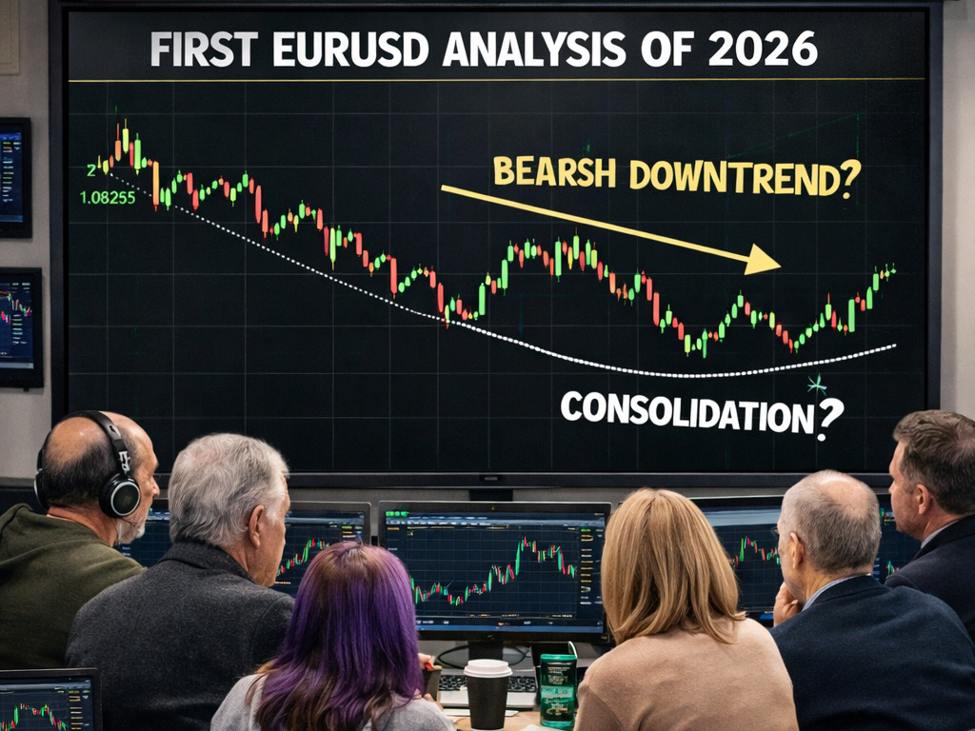
The 1st EURUSD Analysis of 2026: Bears continue to be in control
EURUSD Technical Analysis: Euro Weakens Below 1.18 as Bearish Momentum Isn’t FadingEURUSD futures | 4-hour chart | Analyst: Itai Levitan | investingLive.comAnd it shows that bears continue to be in control. This comes at no surprise to many of us, especially those that got the heads up last week at our Telegram Channel.The EUR/USD pair is currently exhibiting persistent selling pressure near the 1.18 level, driven by order flow dynamics that suggested last week, as I showed in my analysis, distribution rather than accumulation. While price action may appear orderly on the surface, deeper analysis reveals that buying activity is inefficient and value is migrating lower, with positive delta bursts failing to sustain higher prices. Key technical levels to watch include 1.18135 (yesterday’s VWAP) and 1.1806 (today’s VWAP), which act as resistance; as long as the price remains below these markers, the bearish bias remains intact. A clean break below the psychologically significant 1.18 handle would further strengthen the case for a bearish continuation, while sustained acceptance above VWAP levels is required to challenge seller control.And what aboute this week in Euro FX Futures? We see immediate selling pressure on the Euro marks a sharp reversal from the broader trends observed over the last twelve months, as the US dollar holds firmer to officially get the new year underway. While the current environment favors the greenback due to safe-haven flows, it stands in contrast to the previous year where the Euro was the big winner in foreign exchange, having rallied 13.3% against the dollar in 2025 driven by pragmatic policy shifts and a “less bad” economic outlook. Looking elsewhere in North America, the Canadian Dollar outlook for 2026 suggests further upside; despite fears regarding US trade policy, analysts believe tariff risks are overblown and that the “Loonie” could gain another 5% this year, supported by commodity strength and political stability under the Carney government.EURUSD technical analysis highlightsEURUSD rejected strongly from the 1.18 resistance zone, reinforcing a bearish bias for the Euro.The EURUSD 4-hour chart shows a clear loss of bullish structure after a pitchfork breakdown.EURUSD futures are now trading below an anchored VWAP, pressing into lower standard deviation territory.The bearish EURUSD scenario remains active unless price closes a 4-hour candle above 1.17425.Why 1.18 remains a critical EURUSD resistanceIn last week’s EURUSD technical analysis, the 1.18 level was highlighted as a major resistance zone for the Euro. That area represented more than a psychological round number, it aligned with prior volume acceptance and structural resistance visible on the EURUSD futures chart.Price reacted precisely as anticipated. EURUSD failed at 1.18, confirming that sellers were active at that level. The short-side thesis was activated, and partial profits were already taken, as shared earlier through the investingLive Stocks Telegram channel.Since that rejection, the EURUSD trend structure has weakened further, shifting the focus toward downside continuation rather than consolidation.EURUSD 4-hour chart: structure breakdown and VWAP pressure (see video above)On the 4-hour EURUSD futures chart, the Euro is currently down about 0.36%, with two key technical developments shaping the outlook:1. Pitchfork failure on EURUSDThe upward pitchfork that had previously guided EURUSD higher has now been decisively lost. When EURUSD breaks below a well-respected pitchfork, it often signals that bullish momentum has faded and that the market is transitioning into a bearish phase.2. EURUSD trading below anchored VWAPThe current VWAP is anchored from the December 9, 2025 pivot low, a key reference point for institutional positioning. EURUSD is now trading near the 1st lower standard deviation of that VWAP, around 1.17205.Historically, when EURUSD accepts below VWAP deviations after losing structure, the market tends to extend lower before attempting any meaningful rebound.EURUSD downside levels to monitorFrom a volume profile and EURUSD technical perspective, downside continuation remains the favored scenario.Today’s low: approximately 1.1710 A clean break below this level would signal further bearish acceptance.Next EURUSD support target: 1.16945 This level is derived from prior EURUSD volume profile analysis and represents the next potential reaction zone.At this stage, EURUSD does not show reversal characteristics. Price behavior remains consistent with trend continuation rather than seller exhaustion.Bearish EURUSD invalidation levelClear invalidation is essential in any EURUSD trading plan.The bearish EURUSD scenario would be invalidated or seriously questioned if:EURUSD closes a full 4-hour candle above 1.17425, which corresponds to the open of the current EURUSD futures session candle.A sustained close above that level would suggest a loss of downside control and open the door to a rotation back toward value.EURUSD trading context and risk noteAt present, EURUSD is not a long setup. The broader EURUSD trend, VWAP positioning, and volume profile structure all argue against attempting to pick a bottom.As always:Trade at your own risk.Use defined invalidation levels.Adjust position sizing to volatility conditions.For more EURUSD analysis, additional order flow perspectives, and multi-asset coverage, return to investingLive.com, where this EURUSD video analysis is embedded alongside broader market context. This article was written by Itai Levitan at investinglive.com. 🔗 Source 💡 DMK Insight EURUSD’s drop below 1.18 signals a strong bearish trend, and here’s why that matters: The continued bearish momentum indicates that sellers are firmly in control, which could lead to further declines. Traders should keep an eye on the 1.1750 level as a potential support point; a break below this could trigger more selling pressure. This situation is compounded by broader economic indicators, including potential shifts in interest rates and inflation data from the Eurozone, which could further influence the euro’s strength. If you’re trading this pair, consider short positions, especially if the price retests 1.18 and fails to hold. On the flip side, if the euro shows signs of recovery, watch for resistance around 1.1850. However, given the current sentiment, that seems less likely in the near term. Pay attention to upcoming economic releases that could impact the euro, as they might provide volatility opportunities for day traders. 📮 Takeaway Watch for EURUSD to test 1.1750; a break below could accelerate bearish momentum, while resistance at 1.1850 is key for potential reversals.

Oil prices fall as US captures Maduro, Trump orders companies to restore Venezuela's oil
KEY POINTS:Oil prices fell following the capture of Venezuelan President Maduro by US forcesVenezuelan interim President offers to collaborate with the US following threats of further strikesWhite House told US companies they must rebuild Venezuela’s crude-pumping infrastructureOPEC+ keeps output steady through Q1 2026Bearish positioning very stretched, what could flip the outlook?FUNDAMENTAL OVERVIEWCrude oil has been trading on the weaker side today following the regime change in Venezuela after the US captured President Maduro. Trump also stated that the US will run Venezuela in the meantime and the interim President offered to collaborate with the US following the threats of further strikes. Moreover, according to Politico, the White House has told companies they must rebuild Venezuela’s crude-pumping infrastructure if they want compensation for assets seized by Caracas. This adds bearish pressure on oil prices in the medium to long term with higher supply expected in the next years. We had also the OPEC+ meeting over the weekend, but that went as expected with the cartel maintaining output steady throughout Q1 2026. We might see them cutting output in case prices fall sustainably below the 55.00 level. On the demand side, despite global monetary easing and improving economic conditions, the oil market remained weak, potentially due to output hikes from OPEC+. The bearish positioning is very stretched, so we might see some life in the market this year if economic activity strengthens further and OPEC+ keeps output steady. CRUDE OIL TECHNICAL ANALYSIS – DAILY TIMEFRAMEOn the daily chart, we can see that crude oil has been slowly trending lower in the second half of last year. Prices fell to a new multi-year low in December before recovering into 2026. We can see that we have a major downward trendline defining the bearish momentum. If we get a pullback into the trendline, we can expect the sellers to lean on it with a defined risk above it to position for a drop into new cycle lows. The buyers, on the other hand, will want to see the price breaking higher to pile in for a rally into the 62.00 level next.CRUDE OIL TECHNICAL ANALYSIS – 4 HOUR TIMEFRAMEOn the 4 hour chart, we can see that we have a minor downward trendline defining the recent bearish momentum. The sellers will likely continue to lean on the trendline with a defined risk above it to keep pushing into new lows, while the buyers will look for a break higher to pile in for a rally into the major trendline around the 59.00 level.CRUDE OIL TECHNICAL ANALYSIS – 1 HOUR TIMEFRAMEOn the 1 hour chart, we can see more clearly the recent price action with the weakness today caused by the regime change in Venezuela after the US captured Maduro. From a risk management perspective, the sellers will have a better risk to reward setup around the trendline to position for a drop into new lows, while the buyers will need the price to break higher to open the door for a move into the next major trendline. The red lines define the average daily range for today.UPCOMING CATALYSTSToday we get the US ISM Manufacturing PMI. On Wednesday, we have the US ADP, the US ISM Services PMI and the US Job Openings data. On Thursday, we get the latest US Jobless Claims figures. On Friday, we conclude the week with the US NFP report. This article was written by Giuseppe Dellamotta at investinglive.com. 🔗 Source 💡 DMK Insight Oil prices are reacting to geopolitical shifts, and here’s why that matters right now: The capture of Venezuelan President Maduro by US forces has sent shockwaves through the oil market. With the interim President’s offer to collaborate with the US, there’s potential for a significant shift in Venezuela’s oil production capabilities. The White House’s directive for US companies to rebuild Venezuela’s crude infrastructure could lead to increased supply, which might weigh on prices in the short term. However, OPEC+ maintaining steady output through Q1 2026 suggests they’re not ready to flood the market just yet. Traders should be cautious; the current bearish positioning is stretched, which means any positive news could trigger a sharp reversal. Keep an eye on key resistance levels around recent highs, as a breakout could signal a bullish trend. Watch for developments in US-Venezuela relations and any announcements from OPEC+, as these could have immediate impacts on price action. The next few weeks will be crucial for gauging market sentiment and potential volatility. 📮 Takeaway Monitor oil price resistance levels closely; any positive news from Venezuela could trigger a sharp reversal in bearish positioning.

UK net mortgage approvals fell slightly in November
Mortgage approvals 64,530 vs 65,010 priorNet consumer credit £2.08 billion vs £1.71 billion priorOverall, net borrowing of mortgage debt by individuals increased to £4.5 billion in November, following a decrease of £1.0 billion to £4.2 billion in the month of October. Meanwhile, the annual growth rate for net mortgage lending increased slightly to 3.3% in November – the highest since January 2023.Net borrowing of consumer credit by individuals also increased to £2.08 billion with the breakdown showing £1.0 billion for net borrowing through credit cards and £1.1 billion in net borrowing through other forms of consumer credit.Looking at the annual growth rate for all consumer credit, that picked up to 8.1% in November as compared to 7.5% in October last year.All of this continues to point to the notion that UK credit conditions are still holding up somewhat as lenders are cautiously increasing household credit availability with easing affordability checks. This is one area that won’t be too much of a bother for the BOE for the moment at least.As such, the central bank will be afforded scope to keep their focus on the inflation front as well as trying to balance things out amid the ever deepening cost of living crisis that is sweeping across the UK. So, that will once again be the key theme in looking out for the UK economy again in 2026. This article was written by Justin Low at investinglive.com. 🔗 Source 💡 DMK Insight Mortgage approvals dipped slightly, but here’s why that matters: the increase in net borrowing signals a potential shift in consumer confidence. With approvals at 64,530, just below the previous 65,010, it suggests a cautious approach from lenders and borrowers alike. However, the rise in net mortgage debt to £4.5 billion from £4.2 billion indicates that while new approvals are slowing, existing borrowers are still leveraging their equity. This could impact the housing market and related assets, especially if rates remain high. Traders should keep an eye on the broader economic indicators, as a sustained increase in borrowing could lead to inflationary pressures, influencing central bank policies. Watch for how these trends play out in the coming months, particularly in the housing sector and its ripple effects on financial stocks. The flip side? If consumer credit continues to rise, it might signal over-leverage, which could lead to a correction in housing prices. Keep an eye on the £4.5 billion borrowing level as a potential pivot point for market sentiment. 📮 Takeaway Monitor the £4.5 billion net mortgage debt level closely; it could signal shifts in housing market dynamics and impact related financial assets.

What Is Stock Trading – A Beginner’s Guide
Introduction: What Is Stock Trading?Stock trading involves buying and selling shares, which are small ownership pieces of companies listed on the stock market. The main goal is to make money by taking advantage of price changes. When you purchase a share, you own a small portion of that company, and the value of your investment fluctuates based on changes in the company’s equity price.Unlike foreign exchange or cryptocurrency markets that operate 24/7, stock trading occurs during specific hours. For instance, the New York Stock Exchange (NYSE) is open from Monday to Friday, 9:30 AM to 4:00 PM Eastern Time. Some brokers also allow trading before and after these hours.Example: For instance, if Apple stock (AAPL) is priced at $180 and you believe it will increase, you can buy shares at that price. If the price then rises to $200 and you sell, you make a profit of $20 for each share (minus any fees).Equity trading has been a significant method of investment for many years. Thanks to the internet and mobile apps, it is now easier for beginners to get involved in global markets with just a few clicks.How Does Stock Trading Work?Trading involves buying and selling shares of companies through an exchange or an online platform, aiming to generate profit. Here’s how it works, step by step:Stock Exchanges and BrokersStock Exchanges: These are places where shares are listed and traded. Examples include the New York Stock Exchange (NYSE) and NASDAQ in the U.S., and the London Stock Exchange (LSE) in the UK.Brokers: To start trading stocks, you need to create an account with an online broker or trading platform that facilitates stock transactions. The broker helps you buy and sell shares.Trading DirectionsThere are two primary methods for trading shares:Go long (buy): If you believe the price will rise, you buy shares and plan to sell them later at a higher price for profit.Go short (sell): If you think the price will fall, you can borrow shares to sell at the current price and then buy them back later at a lower price. This method is usually available only on certain platforms and is better suited for experienced traders.Price QuotesEquity prices are updated in real-time and can fluctuate throughout the day depending on the demand from buyers and sellers. Each price quote includes:Bid price: The highest price that a buyer is willing to pay.Ask price: The lowest price that a seller is willing to accept.Spread: The small difference between the bid and ask prices.Example: If Apple (AAPL) has a bid price of $179.90 and an ask price of $180.10, and you buy at $180.10 and later sell at $185, your profit per share would be $4.90 (after subtracting any fees).Stock trading can be affected by many factors, including how well a company is performing, its earnings reports, economic data, and general market feelings.Types of StocksNot all stocks are the same. Knowing the different types can help you choose shares that suit your goals and how much risk you want to take.Common StocksThese are the most commonly traded equities. When you buy common stock, you own part of the company and usually have voting rights at shareholder meetings. Your returns come from the stock price going up and sometimes from dividends (a share of the company’s profits).Examples: Apple (AAPL), Amazon (AMZN), Microsoft (MSFT)Preferred StocksPreferred shares provide a fixed dividend and have priority over common shares in the event of company liquidation. However, they usually don’t offer voting rights. They are a mix of stocks and bonds, making them appealing to those looking for more steady income.Examples: Preferred shares of major banks or utility companies.Growth StocksGrowth stocks are shares of companies expected to grow at a faster rate than the overall market. These equities typically do not provide substantial dividends, as companies tend to reinvest their earnings for growth. They can provide strong returns over time but may be more volatile.Examples: Tesla (TSLA), Nvidia (NVDA)Value StocksThese represent shares of established companies that are valued lower than their true worth based on earnings or book value. They can offer steady dividends and are generally less volatile.Examples: Johnson & Johnson (JNJ), Coca-Cola (KO)Dividend StocksThese companies regularly pay out part of their profits as dividends, making them popular for investors who want a steady income.Examples: Procter & Gamble (PG), AT&T (T)Tip for beginners: Many new traders start with common or large-cap growth stocks because they are easier to buy and sell, have a lot of research available, and are generally more stable than smaller or niche companies.Why Trade Stocks? (Advantages)Trading shares has been a fundamental approach to wealth building for many years. Here’s why millions of people around the world trade stocks every day:Potential for Long-Term GrowthHistorically, the stock market has provided strong long-term returns compared to many other types of investments. Investing in stocks, especially in well-performing companies, allows you to benefit from their growth over time.LiquidityMajor equity markets like the NYSE and NASDAQ are highly liquid, allowing you to quickly buy or sell shares during trading hours without causing significant price changes.AccessibilityWith online brokers and trading apps, you can start trading with relatively small amounts of money and often with low or no commission fees.DividendsSome shares pay regular dividends, providing investors with a steady income alongside any price increases.DiversificationThe equity market features thousands of companies across various industries, enabling investors to diversify their investments and mitigate risk across different sectors and market sizes.These benefits make equity trading one of the most accessible and flexible ways to participate in global financial markets. However, it’s important to understand the risks before you start trading.Who Trades Stocks?The stock market is a global platform that attracts many different types of participants, from everyday people to large institutions.Retail InvestorsThese are individual traders and investors who buy and sell stocks through online brokers or trading apps. The number of retail investors has increased in recent years due to low-cost platforms and easy access to market information.Institutional InvestorsThese include organizations like mutual funds, hedge funds, pension funds, and insurance

USDINR Technical Analysis: Trump threatens more tariffs, key 90.40 level in focus
KEY POINTS:US dollar recovers the Christmas week lossesThe market is still betting on at least two rate cuts in 2026 from the FedOn Friday, we have the US NFP reportIndian Rupee erased half of its gains since the RBI’s interventionTrump threatens more tariffs on India if they don’t help with Russian oil issueKey 90.40 level in focus as a break above it should open the door for new record highsFUNDAMENTAL OVERVIEWUSD:The greenback weakened across the board during the Christmas week but eventually recovered most of the losses. The price action during Christmas holidays is generally just noise, so it’s not surprising that most markets returned to original levels.In terms of macro, nothing has changed in these two weeks. The latest NFP and CPI reports came both on the softer side and the market is still pricing 63 bps of easing by year-end. The data in December was taken with a pinch of salt given the shutdown related issues, but the next releases will give us a clearer picture. The market expects the Fed to cut in March at the earliest, so we will need very soft data this month to force them to act sooner. Nonetheless, if the data continues to come in on the softer side, the market will likely increase the total easing for 2026 and that should weigh on the US dollar.On the other hand, if the data shows strength, traders will likely pare back their rate cut bets and that will likely offer the greenback some support.INR:The Indian Rupee enjoyed a relief rally after the RBI intervened on December 17. Unfortunately, the big picture trend remains skewed to the downside for the Rupee, and we are already seeing the gains evaporating with the USD/INR pair approaching the key 90.40 level.Moreover, Trump threatened more tariffs on India today “if they don’t help on Russian oil issue”. Trump wants India to stop importing Russian oil and force Moscow to accept a peace deal with Ukraine. USDINR TECHNICAL ANALYSIS – DAILY TIMEFRAMEOn the daily chart, we can see that USDINR fell all the way back to the lower bound of the rising channel following the RBI’s intervention on December 17. The dip-buyers started to pile in around the bottom trendline and after breaking above the key 89.70 level, increased the bullish bets into the 90.40 resistance. A break above the 90.40 level should open the door for a rally into a new record high.USDINR TECHNICAL ANALYSIS – 4 HOUR TIMEFRAMEOn the 4 hour chart, we can see that we have a strong resistance around the 90.40 level. The sellers will likely step in there with a defined risk above the resistance to position for a drop into the 89.60 level. The buyers, on the other hand, will look for a break higher to increase the bullish bets into a new all-time high.USDINR TECHNICAL ANALYSIS – 1 HOUR TIMEFRAMEOn the 1 hour chart, there’s not much else we can add here as the sellers will likely step in around the resistance to target new lows, while the buyers will look for a break higher to position for a rally into a new record high.UPCOMING CATALYSTSToday we get the US ISM Manufacturing PMI. On Wednesday, we have the US ADP, the US ISM Services PMI and the US Job Openings data. On Thursday, we get the latest US Jobless Claims figures. On Friday, we conclude the week with the US NFP report. This article was written by Giuseppe Dellamotta at investinglive.com. 🔗 Source 💡 DMK Insight The US dollar’s recovery from Christmas week losses signals potential volatility ahead, especially with the NFP report looming. Traders should keep an eye on the market’s expectation of two Fed rate cuts in 2026, as this could influence dollar strength and impact forex pairs like USD/INR. The Indian Rupee’s recent retreat, losing half of its gains post-RBI intervention, suggests that geopolitical tensions—like Trump’s tariff threats—could further destabilize the currency. If the NFP report shows stronger job growth, it might bolster the dollar, while weaker data could reignite rate cut speculations, affecting both the dollar and emerging market currencies. Here’s the thing: while the mainstream narrative focuses on rate cuts, the immediate market reaction to the NFP could overshadow that, leading to sharp moves. Watch the USD/INR closely; if it breaks above recent resistance levels, it could signal a stronger dollar trend in the short term. 📮 Takeaway Monitor the upcoming NFP report closely; stronger data could push the dollar higher, impacting USD/INR and related forex pairs.

The 1st Bitcoin Technical Analysis of Year 2026 and Bulls are Back.
Bitcoin Futures Technical Analysis: Bulls Defend Breakout as 100,000 Comes Back Into FocusTimeframe: 4-hour chart | investingLive.com | January 2026Bitcoin technical analysis highlightsBitcoin futures are up about 3.3% from Friday’s close, starting 2026 with bullish momentum.BTC has broken above a multi-touch resistance zone dating back to November 2025.A clean breakout and retest confirms higher acceptance on the 4-hour Bitcoin chart.The Value Area High near 89,600 is holding as key bullish support.As long as Bitcoin holds above the Point of Control near 88,000, the bullish Bitcoin trend remains intact.Bitcoin futures breakout: why this level mattersThis Bitcoin technical analysis focuses on a structurally important resistance level that capped BTC price action for months. On the 4-hour Bitcoin futures chart, that resistance originated from:A pivot high on October 6, 2025A second major test on October 28A near-touch on October 27A closely aligned additional test shortly afterwardWhether traders count this as three or four touches is secondary. What matters is that Bitcoin repeatedly failed at this level in the past, making the eventual breakout technically meaningful.Last Friday, Bitcoin futures broke decisively above this resistance, signaling a shift in market control from sellers to buyers.Breakout, retest, and acceptance in Bitcoin priceBitcoin is pushing higher as PwC’s deeper move into crypto highlights growing institutional confidence, with improving US regulatory clarity lowering adoption barriers for banks, corporates, and payment providers. A breakout alone is not enough. What followed strengthens the bullish case.Friday’s low produced a textbook retest of the previously broken Bitcoin resistance, confirming it as new support.When Bitcoin futures reopened roughly 11–12 hours later, price gapped higher, reinforcing buyer confidence.At the same time, the Value Area High at approximately 89,600 is being actively defended. In Bitcoin technical analysis terms, this suggests that the market is accepting higher value, rather than rotating back into the prior range.This area now acts as a clear line in the sand between bulls and bears.Key Bitcoin support levels to watchWhile further pullbacks are always possible, the structure defines where bullish control should remain intact.89,600 (Value Area High): First key support that should continue to hold.88,000 (Point of Control): A critical Bitcoin futures level. Acceptance below this zone would weaken the breakout structure.87,000 (round number): Located just below the Value Area Low, this is a broader bearish threshold.As long as Bitcoin price stays above 88,000, the breakout thesis remains valid.Bitcoin pitchfork structure and tactical pullbacksA rising pitchfork channel is currently guiding BTC price action. For trend continuation, bulls will want to see Bitcoin remain within this channel.A retracement toward ~90,650 would still be constructive rather than bearish. This level aligns with:Highs from December 17The swing high from December 22This confluence creates a technically logical area where speculative Bitcoin longs may expect additional buyers to step in.What would turn Bitcoin bearishFor now, this remains a secondary scenario, but it is clearly defined.If Bitcoin futures were to print two consecutive 4-hour candles closing decisively lower, especially with acceptance back below value, that would indicate bearish re-engagement. Until then, Bitcoin bulls remain firmly in control of the medium-term structure.Bitcoin outlook into early 2026Bitcoin and the broader crypto market are starting 2026 on a bullish technical footing. If current support levels continue to hold, market participants and media narratives are likely to shift attention back toward the 100,000 round number, a major psychological reference in Bitcoin price analysis.As always, this is scenario-based Bitcoin technical analysis, not a prediction. Trade at your own risk, manage exposure carefully, and return to investingLive.com later this week for updated Bitcoin levels and follow-up perspectives as price action evolvesBitcoin Market Update: The “Invisible Hand” Supporting the RallyBy The Order Flow Desk | investinglive.com Date: Monday, January 5, 2026Bitcoin futures kicked off the week with a decisive gap higher, creating a stir among retail and institutional traders alike. While the headline price action is undeniably bullish, the real story lies “under the hood” in the order flow.At InvestingLive, our proprietary volumetric systems have been tracking a significant shift in market participant behavior since late last week. We are seeing classic signs of institutional absorption—where “Smart Money” passively buys into weakness, setting the stage for the kind of squeezes we are witnessing now.Here is what our advanced flow analysis is signaling for the sessions ahead.The Setup at Bitcoin Futures at the End of Last Week: Anatomy of a Bear TrapTo understand today’s rally, we have to look at how last week ended. On Friday afternoon, Bitcoin appeared heavy, drifting below key average prices. Sentiment was bearish, and sellers were aggressive.However, our systems flagged a critical anomaly late in the session. As price poked new lows, we detected a massive spike in aggressive selling that failed to push the price down. In institutional analysis, we call this a “Passive Reversal.”Essentially, large limit buyers stepped in and absorbed every sell order the market threw at them. This created a “Bear Trap”—shorts were caught at the lows with nowhere to go but out. That trapped liquidity became the fuel for today’s gap up.The “Inventory Squeeze” in Bitcoin Today So FarToday’s open saw Bitcoin gap well above Friday’s value area (above the 90,670 level). What is fascinating is the quality of the move.During the initial rally, our flow trackers showed that aggressive buying was actually quite low. In fact, for several hours, the net order flow was negative even as prices rose. This is a classic “Inventory Squeeze.” It suggests that retail traders or algorithms were trying to fade the gap (shorting into the rally), but institutional players were simply holding their bids higher, forcing price up without needing to aggressively chase it.The market has been climbing a “Wall of Worry”—and that is often the healthiest way to sustain a trend.The “Guardian” at the VWAP for Bitcoin Futures TodayAfter hitting a session high near 93,970, we saw a healthy retracement. This is where the rubber meets the road. In a weak market, retracements turn into reversals. In a strong market, they are bought.Here is what our volume scanners just detected:The Flush: We saw a sharp dip

Playing out to the letter
S&P 500 and Nasdaq did indeed see much selling Friday, prior pump nothwithstand – just fueling interest to capture those capital gains in the New Year as the higher the price, the greater the incentive to take advantage of it as Wednesday‘s last two hours‘ slide was vicious. 🔗 Source 💡 DMK Insight Friday’s sell-off in the S&P 500 and Nasdaq signals a critical moment for traders: profit-taking is in full swing. As we head into the New Year, the recent price spikes have created a ripe environment for capital gains realization. The vicious slide in the last two hours on Wednesday indicates that market sentiment is shifting, and traders are likely reassessing their positions. This could lead to increased volatility in the coming days, especially if we see further declines. Watch for key support levels; if the S&P 500 breaks below its recent lows, it could trigger more selling pressure. Conversely, a bounce back could present buying opportunities for those looking to capitalize on dips. Keep an eye on the Nasdaq as well, as its performance often influences tech stocks and broader market sentiment. The real story here is how traders react to these fluctuations—are they going to hold their positions or cash out? That’ll dictate the next moves in the market. 📮 Takeaway Monitor the S&P 500 for support levels; a break below recent lows could trigger further selling, while a bounce may offer buying opportunities.