
 Bitcoin
  Ethereum
  Tether
  XRP
XRP  BNB
BNB  USDC
USDC  Solana
  TRON
TRON  Lido Staked Ether
  Figure Heloc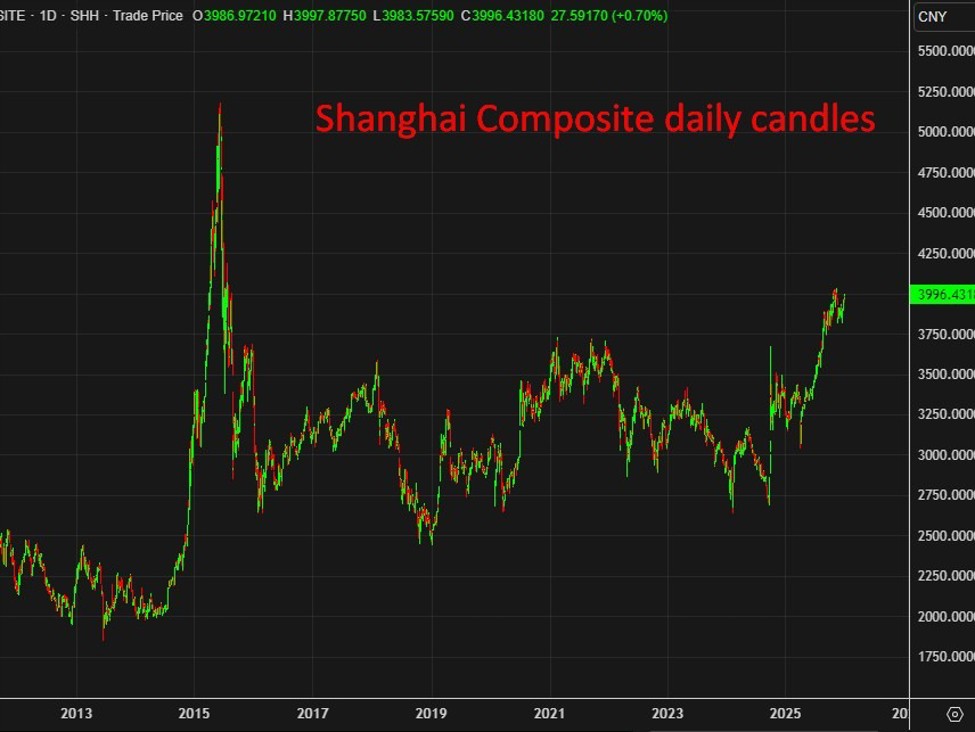
Summary:China unveiled an early batch of 2026 infrastructure projects worth ~295 bn yuanFunds target transport, water, energy and security-related projectsSpending aims to front-load investment ahead of the 15th Five-Year PlanEcological protection and carbon reduction also receive fundingInfrastructure remains central to China’s growth-stabilisation strategyICYMI: China has moved to front-load infrastructure spending for 2026, unveiling an early batch of major national projects and a central budget investment plan worth roughly 295 billion yuan (about US$42 billion), in a bid to accelerate investment momentum and support economic growth amid ongoing headwinds.The country’s top economic planner, the National Development and Reform Commission, said the early approvals are designed to speed up the deployment and use of funds while laying the groundwork for a smooth start to China’s 15th Five-Year Plan period, which runs from 2026 to 2030. Officials framed the move as an effort to ensure projects are ready to break ground early in the new planning cycle, rather than being delayed by administrative bottlenecks.According to the NDRC, around 220 billion yuan of the total allocation has been earmarked for 281 projects linked to major national strategies and security-related priorities. These include infrastructure such as underground pipeline networks and other projects viewed as critical to long-term economic resilience and national security. A further 75 billion yuan has been allocated to support 673 projects focused on areas such as ecological protection, energy efficiency and carbon-reduction initiatives.The early-batch approvals span a wide range of sectors. In transport, key projects include the construction of a new airport in Guangzhou and the Zhanjiang–Haikou cross-sea ferry and associated route works, aimed at improving regional connectivity. Water conservancy projects include large-scale water allocation schemes in Liaoning Province and the Nanguaping Reservoir in Yunnan, supporting both flood control and long-term resource management.Energy infrastructure also features prominently. Projects approved include an ultra-high-voltage alternating-current ring grid in Zhejiang Province and a hydropower station in Sichuan, underscoring Beijing’s continued emphasis on grid resilience, energy security and low-carbon generation.The move builds on China’s heavy infrastructure push in recent years. In 2025 alone, the central government allocated around 800 billion yuan to its so-called “Two Major” programmes, which focus on large national projects and key security-related capacity building. Together, the new approvals signal Beijing’s intention to keep public investment as a key stabiliser for the economy, even as private demand and the property sector remain under pressure. This article was written by Eamonn Sheridan at investinglive.com. 🔗 Source 💡 DMK Insight China’s announcement of 295 billion yuan in infrastructure projects is a significant move for traders to watch. This early investment signals a proactive approach to economic stabilization ahead of the 15th Five-Year Plan. With a focus on transport, energy, and ecological protection, this spending could boost related sectors, particularly commodities and construction stocks. Traders should keep an eye on how this impacts the yuan and commodities like copper and steel, which often react to infrastructure spending. If these projects gain momentum, we could see upward pressure on these assets, especially in the coming months as the projects roll out. On the flip side, while this spending is intended to stimulate growth, it’s worth questioning whether it will be enough to counteract existing economic headwinds. If the broader economic indicators remain weak, the impact of this spending might be muted. Watch for any shifts in economic data releases and how they correlate with the performance of these sectors. 📮 Takeaway Monitor the yuan and commodity prices closely; significant infrastructure spending could lead to bullish trends in related markets over the next few months.
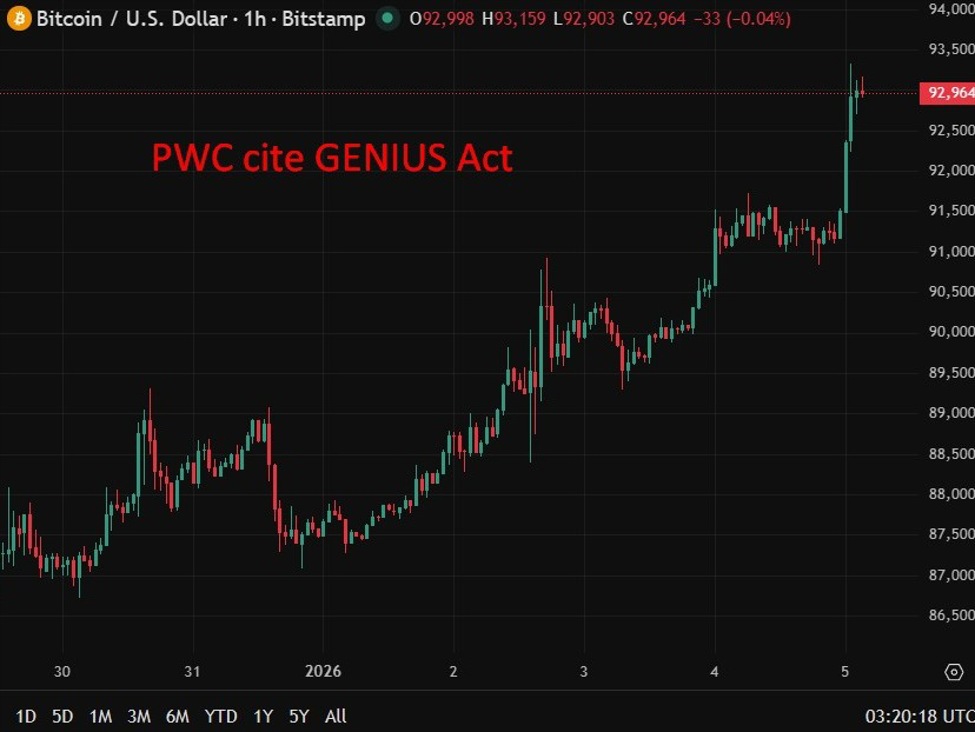
Bitcoin rises as PwC leans into crypto on US regulatory shift
Summary:Bitcoin rose as institutional crypto sentiment improvedPwC signalled a strategic shift toward crypto servicesUS regulatory clarity seen as key catalystGENIUS Act boosted confidence in stablecoins and tokenisationBig-firm engagement reinforces long-term adoption narrativeBitcoin extended gains today as signs of deepening institutional engagement in digital assets reinforced confidence that the US regulatory backdrop has shifted decisively in favour of crypto adoption. Adding to the constructive tone, professional services giant PwC signalled a strategic pivot toward the sector, underscoring how regulatory clarity is reshaping risk perceptions across blue-chip institutions.PwC’s US senior partner and chief executive Paul Griggs said the firm will “lean in” to crypto-related work after years of caution, citing recent US legislative and regulatory developments, particularly around stablecoins, as a turning point. Griggs argued that the passage of comprehensive digital-asset rules has increased conviction in crypto as an investable and operational asset class, prompting PwC to expand its auditing, advisory and consulting services for crypto-native firms and traditional corporates alike.Central to the shift is the GENIUS Act, signed into law last year, which established the first clear federal framework for stablecoins pegged to assets such as the US dollar. The legislation set out custody, reserve and disclosure standards and opened the door for banks and large financial institutions to issue their own digital tokens. PwC executives said the move has removed years of regulatory ambiguity that previously kept major firms on the sidelines.The firm also highlighted growing interest among clients in using stablecoins to improve payment efficiency and liquidity management, while pointing to tokenisation as a structural trend that will continue to reshape capital markets. PwC’s decision to be “hyper-engaged” in the crypto ecosystem reflects a broader recalibration underway across professional services, banking and asset management.The regulatory shift has been reinforced by the Trump administration’s pro-crypto stance, including the appointment of digital-asset-friendly regulators and a move away from enforcement-led oversight toward formal rulemaking. Under President Donald Trump, the policy environment has become markedly more supportive, encouraging large institutions to reassess earlier concerns around compliance risk, custody and reputational exposure.For Bitcoin, the signal matters. Institutional validation from a Big Four firm like PwC strengthens the narrative that crypto is transitioning from a fringe asset into core financial infrastructure. As regulatory clarity draws in auditors, consultants and payment providers, investors increasingly view Bitcoin as a beneficiary of a maturing ecosystem, a dynamic that helped underpin price. This article was written by Eamonn Sheridan at investinglive.com. 🔗 Source 💡 DMK Insight Bitcoin’s recent rise is more than just a price bump—it’s a signal of shifting institutional sentiment. With PwC’s strategic pivot towards crypto services and the GENIUS Act bolstering confidence in stablecoins, we’re seeing a clearer regulatory landscape that could attract more institutional players. This shift is crucial; institutions often bring liquidity and stability, which can lead to sustained price increases. Traders should keep an eye on Bitcoin’s performance around key resistance levels, as a sustained break above these could trigger further bullish momentum. Additionally, watch for how related assets like Ethereum respond to this institutional interest, as they often move in tandem with Bitcoin. However, there’s a flip side: while institutional engagement is promising, it can also lead to increased volatility as these players adjust their positions. Be prepared for potential pullbacks, especially if regulatory news shifts unexpectedly. The next few weeks will be telling, so monitor Bitcoin’s price action closely, particularly around any major announcements or developments in the regulatory space. 📮 Takeaway Watch Bitcoin’s resistance levels closely; a sustained break could signal further bullish momentum, especially with institutional interest rising.
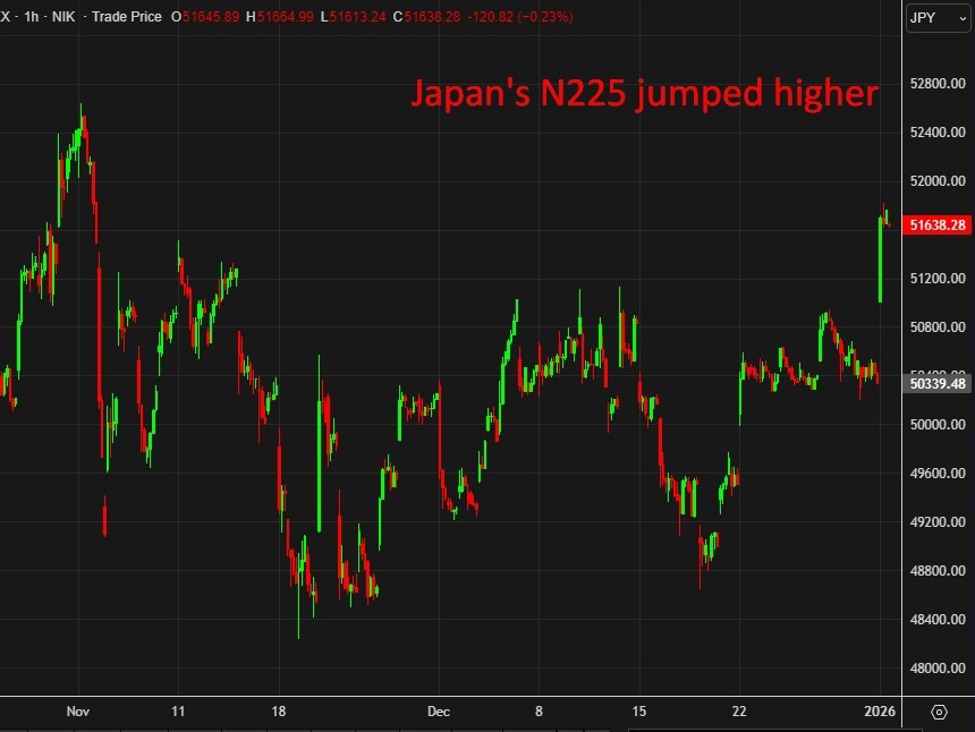
Recap: BOJ’s Ueda signals more rate hikes as wage–price cycle strengthens
Summary:BOJ signals further rate hikes are likely this yearUeda confident wage–price cycle is taking holdPolicy rate already at a 30-year highSpring wage talks seen as key catalystYen weakness and inflation under close watchThe Bank of Japan is increasingly signalling that further interest-rate hikes are likely this year, as confidence builds that Japan has finally entered a durable phase in which wages and prices rise together. Governor Kazuo Ueda has reinforced that message in recent remarks, making clear that the central bank stands ready to continue normalising policy if economic and inflation trends evolve broadly in line with its projections.Earlier post:BOJ’s Ueda signals further rate hikes as wage–price cycle strengthensMore now (and recap):The BOJ raised its policy rate to a 30-year high of 0.75% late last year, following a staged exit from ultra-loose policy that began with the end of negative rates in March 2024. Despite that move, real borrowing costs in Japan remain deeply negative, as consumer inflation has stayed above the BOJ’s 2% target for nearly four years. That backdrop has given policymakers room to continue tightening without, in their view, undermining the recovery.Ueda has repeatedly emphasised that Japan is moving closer to the long-sought “virtuous cycle” of moderate wage growth feeding through to sustained price increases. He said wages and prices are “highly likely” to rise together, and argued that adjusting the degree of monetary accommodation will help entrench long-term growth while ensuring inflation stabilises around target. The framing signals that further rate hikes are now seen as supportive rather than restrictive policy adjustments.Attention is turning to this year’s spring shunto wage negotiations, which are expected to play a pivotal role in shaping the BOJ’s next steps. Sources familiar with the matter say the central bank could begin full-fledged internal discussions on another hike if pay settlements confirm that wage momentum remains solid. Strong outcomes would reinforce the BOJ’s confidence that inflation is being driven by domestic demand rather than temporary cost shocks.Markets are also watching the BOJ’s upcoming quarterly outlook report, due at its January policy meeting, for clues on how officials assess the inflationary impact of recent yen weakness. The softer currency has pushed up import prices and broader inflation, prompting some board members to argue for steady, incremental rate increases. Rising expectations of further tightening have already driven benchmark Japanese government bond yields to multi-decade highs and kept the yen under close scrutiny.Taken together, the signals suggest the BOJ is firmly on a gradual but persistent normalisation path, with Ueda positioning further hikes as conditional, data-dependent, and central to Japan’s transition away from decades of deflation. This article was written by Eamonn Sheridan at investinglive.com. 🔗 Source 💡 DMK Insight The BOJ’s hints at more rate hikes could shake up the forex market significantly. With the policy rate already at a 30-year high, traders need to pay close attention to the upcoming spring wage talks. If wages rise, it could solidify the BOJ’s stance on tightening, which would likely strengthen the yen against other currencies. Right now, the yen is under pressure, and any signs of inflation or wage growth could trigger a sharp reversal. Look for key resistance levels around recent highs; a break could signal a bullish trend for the yen. On the flip side, if wage talks disappoint, we might see the yen weaken further, impacting related assets like Japanese equities. Keep an eye on the USD/JPY pair, especially if it approaches significant support levels. The market’s reaction to these developments could set the tone for the rest of the year, so stay alert for any shifts in sentiment or economic data releases that could influence the BOJ’s decisions. 📮 Takeaway Watch the USD/JPY pair closely; any signs of wage growth could trigger a bullish reversal for the yen, especially if it breaks key resistance levels.
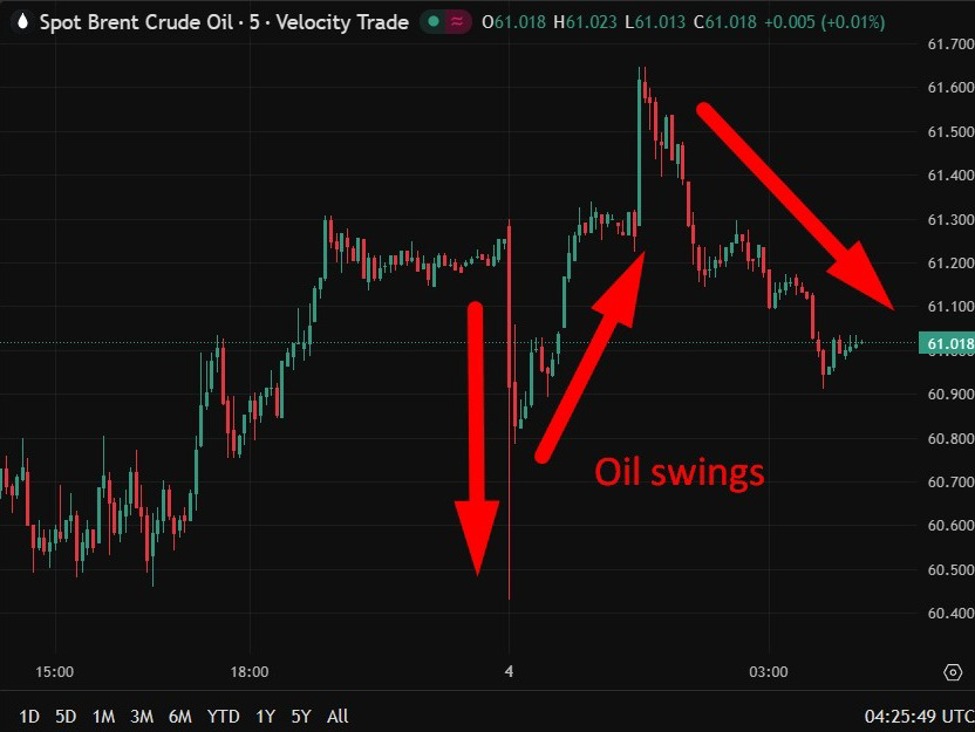
investingLive Asia-Pacific FX news wrap:Oil swings net lower after Trump raid on Venezuela
Recap: BOJ’s Ueda signals more rate hikes as wage–price cycle strengthensBitcoin rises as PwC leans into crypto on US regulatory shiftICYMI: China front-loads 2026 growth with US$42bn infrastructure project rolloutNomura warns China EV demand to cool as subsidy policy tightensBOJ’s Ueda signals further rate hikes as wage–price cycle strengthensEconomists warn sticky inflation may force RBA back into rate hikes in 2026China Rating Dog December 2025 Services PMI 52.0 (expected 52.0, prior 52.1)Gold and silver on fire in Asia trade, Monday, January 5, 2026PBOC sets USD/ CNY reference rate for today at 7.0230 (vs. estimate at 6..9952)Trump claims control of Venezuela, warns Colombia and Mexico could be nextJapan’s Final December manufacturing PMI 50.0 (vs. preliminary 49.7, prior 48.7)PBOC is expected to set the USD/CNY reference rate at 6.9952 – Reuters estimateYen doing what it does best … ****ing the bed again. USD/JPY back above 157.00.Venezuela – Goldman sees 2026 Brent at $56 & WTI at $52, flags longer-term downside risksGlobex is open. Oil prices down following Trump’s kidnapping of Maduro.Fed’s Paulson signals patience on rate cuts amid economic reassessmentOPEC+ holds output steady as geopolitical tensions riseHappy New Year, especially to Venezuelans! Monday early FX rates guideNewsquawk Week Ahead: US and Canada jobs, ISM PMIs, EZ Inflation, and Fed Chair pick (TBC)US attacks Venezuela, captures President MaduroSummary:Oil volatile: Crude swung sharply as ample global supply offset rising geopolitical risk; early losses reversed before prices drifted back to finish modestly lower.Venezuela escalation: Trump threatened further action, claimed US control of Venezuela, pushed for US oil company access and floated potential moves against Colombia, Iran and India.OPEC+ steady: Output held unchanged, reinforcing the view that markets remain well supplied despite political risk.Asia data mixed: Japan’s manufacturing PMI returned to neutral as output stabilised, while China’s services PMI slowed for a fourth month amid weak exports and job cuts.Central bank signal: BOJ Governor Ueda reaffirmed the likelihood of further rate hikes as confidence grows in a sustained wage–price cycle.Equities higher: China’s Shanghai Composite topped 4,000, while Japanese stocks jumped nearly 3% led by heavy industry and semiconductors.FX and havens: The US dollar strengthened broadly; gold and silver surged on safe-haven demand.Crypto bid: Bitcoin rose as PwC signalled deeper engagement in crypto, citing clearer US regulation under the GENIUS Act.It was a volatile session for oil markets, with prices swinging sharply as traders weighed ample global supply against a fast-moving geopolitical backdrop.Crude initially dropped lower in Sunday evening Globex trade, with Brent slipping toward $60 a barrel and WTI easing below $57. The market largely took the US seizure of Venezuelan President Nicolás Maduro in stride after officials confirmed there had been no disruption to production or refining at state oil company PDVSA. Sentiment was further weighed by OPEC+ holding output steady, with analysts noting that plentiful global supply leaves the market well insulated against any near-term interruption to Venezuelan exports.That early dip was short-lived. Prices rebounded above opening levels as geopolitical headlines gathered pace, only to fade again later in the session. As I post, oil has drifted back to trade modestly lower on the day.Political risk continued to build. Speaking aboard Air Force One, US President Donald Trump escalated rhetoric, threatening further attacks on Venezuela and asserting that the US now has “total access” to the country’s resources, saying “we’re in charge” and that Washington intends to “run everything.” Trump said he wants US oil companies allowed into Venezuela, signalled openness to deploying US troops on the ground, hinted at possible military action against Colombia, threatened strikes on Iran, and warned he could raise tariffs on India if it does not cooperate on restricting Russian oil flows.Away from geopolitics, fresh data from Asia showed mixed momentum. Japan’s manufacturing PMI rose to 50.0 in December, ending a five-month contraction as new orders fell more slowly and output stabilised. Employment improved, though input costs surged at the fastest pace since April, partly reflecting yen weakness. China’s services PMI eased to 52.0, marking the fourth straight monthly slowdown, with softer export demand and continued job cuts offset by improving business confidence into 2026.On the policy front, Governor Ueda said the Bank of Japan is likely to keep raising interest rates if growth and inflation evolve as forecast, citing confidence in a sustained wage–price cycle as Japan exits its deflationary era.Equities were active across the region. China’s Shanghai Composite Index pushed above 4,000, rising to its highest level since November, while Japanese stocks jumped nearly 3%, led by heavy industry and semiconductor names.FX markets reflected a firmer US dollar, with the euro, sterling, Canadian dollar, Swiss franc and yen all weaker. Gold and silver surged on safe-haven demand as geopolitical risks intensified. Bitcoin also moved higher, supported by PwC signalling it will lean into crypto activity amid clearer US regulation under the GENIUS Act, reinforcing institutional confidence in digital assets. Asia-Pac stocks:Japan (Nikkei 225) +2.75%Hong Kong (Hang Seng) -0.08% Shanghai Composite +1.07%Australia (S&P/ASX 200) +0.08% DXY is the USD index, higher here today: This article was written by Eamonn Sheridan at investinglive.com. 🔗 Source 💡 DMK Insight The BOJ’s Ueda hinting at more rate hikes is a game changer for traders right now. With the wage-price cycle gaining momentum, this could lead to a stronger yen, impacting forex pairs like USD/JPY. Traders should watch for volatility in the Japanese markets and related assets, especially if the BOJ’s actions diverge from expectations. The ripple effect could also influence commodities and equities, particularly in sectors sensitive to interest rates. On the crypto front, Bitcoin’s rise amid PwC’s crypto endorsement suggests a growing institutional interest, but traders should remain cautious of regulatory shifts that could impact market sentiment. Keep an eye on the daily chart for Bitcoin; a break above recent resistance could signal further upside, while any negative news from the BOJ could trigger a sell-off in risk assets. Watch for key economic data releases from Japan and the US that could further influence market dynamics, especially around the next BOJ meeting. 📮 Takeaway Monitor USD/JPY for potential volatility

Dollar holds firmer as we officially get the new year underway
As we transitioned into the new year, the narrative for 2026 is that the dollar will continue to soften amid the myriad of same factors that played out in 2025. But for the time being, geopolitical tensions are taking center stage with the situation in Venezuela in particular. And that seems to be helping the dollar somewhat as we get things going this week.It’s still early on of course but the early flows are dollar positive with EUR/USD slipping back under 1.1700 and USD/JPY nudging up above the 157.00 mark currently.The latter will continue to be one of the more interesting ones with Japan continuing to have to tussle between a prime minister that wants to push a more expansionary fiscal agenda and a central bank that is trying to raise interest rates. At the balance, the path of least resistance still seems to be for the Japanese yen to weaken – at least for now.Going back to EUR/USD, the drop continues with a rejection of 1.1800 from the later stages of December trading. The 100-day moving average at 1.1663 will be a key support point to be mindful of this week, as the near-term bias holds more bearish currently.Looking at the macro picture though, the dollar will continue to face sustained headwinds in the first half of this year. The backdrop of de-dollarisation flows, fiscal concerns, policy incoherence, Fed rate cuts, and eventually political risks ahead of the midterm elections will be key drivers in impacting the greenback during the course of the year.As such, any positive flows from geopolitical tensions – which are at best temporary – will remain questionable in terms of arguing for a stronger standing for the currency. So, just keep that in mind.However, that is not to say that other major currencies are without their own struggles.The euro has to contend with a flailing economy and stagflation pressures, particularly in Germany, as well as France’s political dissonance. Meanwhile, the UK has a deepening cost of living crisis as well as fiscal concerns to deal with too. The latter might be put off slightly after the autumn budget but it definitely won’t be going away any time soon.Then, you have Japan which is suffering from fiscal/debt issues as well alongside a battle between the government and the BOJ on the interest rate path.So, this year looks to be one that will be a case of who has the cleanest shirt among the dirty laundry. This article was written by Justin Low at investinglive.com. 🔗 Source 💡 DMK Insight Geopolitical tensions, especially in Venezuela, could impact the dollar’s strength in 2026. Traders should keep an eye on how these tensions evolve, as they often lead to volatility in forex markets. If the situation escalates, we might see a flight to safety, pushing investors toward assets like gold or the Swiss franc. This could further weaken the dollar, which has already been on a downward trend. Monitoring key economic indicators, such as U.S. inflation rates and interest rate decisions from the Fed, will be crucial. These factors will dictate how aggressively the dollar might soften in the coming months. On the flip side, if geopolitical tensions ease, we could see a rebound in the dollar as risk appetite returns. So, watch for any news from Venezuela and how it correlates with U.S. economic data. Keeping an eye on the DXY index could provide insights into dollar strength against a basket of currencies, particularly if it approaches significant support or resistance levels. 📮 Takeaway Watch the DXY index closely; geopolitical developments in Venezuela could signal further dollar weakness or a potential rebound based on market sentiment.

FX option expiries for 5 January 10am New York cut
There aren’t any major expiries to take note of for the day but things will slowly pick up as we officially going on the first trading week of the new year. The full list can be seen below.As mentioned last week, start of the year positioning flows will matter more when looking at price action for major currencies. But so far today, the dollar is holding firmer with geopolitical tensions in play. On the week itself, don’t forget that we will have the first US non-farm payrolls data release to deal with too. So, that will be a big one to watch as we ease into the new year.For now, the expiries board is a little bit on the thinner side. As such, don’t expect too much impact with the larger ones today being quite far away from the prevailing spot price. Carry on as you will.For more information on how to use this data, you may refer to this post here.Head on over to investingLive (formerly ForexLive) to get in on the know! This article was written by Justin Low at investinglive.com. 🔗 Source 💡 DMK Insight The first trading week of the year is crucial for positioning flows, and here’s why: With no major expiries today, traders should focus on how the market reacts to early-year sentiment. Historically, the first week can set the tone for the month, especially as institutions begin reallocating assets. Look for shifts in volume and volatility as traders adjust their positions. If you see increased buying or selling pressure, it could indicate broader trends for the upcoming weeks. Keep an eye on correlated markets, like equities, as they often influence crypto and forex movements. A strong performance in stocks could lead to bullish sentiment across the board, while weakness might trigger risk-off behavior. Watch for key technical levels in major pairs and crypto assets; they could provide insights into market direction. For instance, if Bitcoin breaks above a certain resistance level, it might attract more buyers, while a failure to hold support could lead to a sell-off. The real story is how traders position themselves now—those flows could dictate market dynamics for the rest of January. 📮 Takeaway Monitor early-year positioning flows closely; they could set the tone for market trends in January, especially in correlated assets like equities.

Precious metals stay underpinned to start the week
It’s all playing out well for precious metals to start the new year thus far. Gold and silver are once again in the spotlight today with the former posting gains of 2.1% to $4,420 and the latter up 3.7% to $75.46 respectively. This follows from a strong rally early on Friday but one that fizzled out quite a bit towards the end of last week.In the case of gold, the selling hit after price action tested the 100-hour moving average. Sellers held firm in keeping a more bearish near-term bias on Friday. However, the tables have now turned as buyers are the ones exerting dominance to flip the script today. The jump to start the week sees the near-term bias turn more bullish on a push above both the 100 and 200-hour moving averages:The technical story is also the same for silver after dropping off on Friday on a test of its own 100-hour moving average. And price action there also sees a push above both the key hourly moving averages today as buyers look to officially kick start the new year in style.The early focus on geopolitical tensions is one key reason that reinforces a more bullish outlook for precious metals in general.It’s still early in the year but January tends to be a good month for the likes of gold from a seasonal perspective. I talked more about here at the end of last week: Precious metals continue to hog the spotlight to start the new year This article was written by Justin Low at investinglive.com. 🔗 Source 💡 DMK Insight Gold’s 2.1% jump to $4,420 and silver’s 3.7% rise to $75.46 signal a bullish trend worth noting. These gains reflect a broader market sentiment favoring safe-haven assets amid ongoing economic uncertainties. With inflation concerns still looming and geopolitical tensions persisting, traders are likely reallocating funds into precious metals. This trend could lead to further upside, especially if gold breaks above key resistance levels. Watch for $4,500 as a psychological barrier for gold; a sustained move above could trigger more buying from both retail and institutional investors. However, it’s essential to consider potential pullbacks. If the U.S. dollar strengthens or economic data surprises positively, we might see a reversal. Keep an eye on the upcoming economic reports, particularly inflation data, as they could influence market sentiment significantly. Silver’s performance is also notable; if it can hold above $75, it could attract more speculative interest, especially from day traders looking for volatility. 📮 Takeaway Watch for gold to break above $4,500 and silver to hold above $75 for potential bullish momentum.

How probability-based trading tools are leveling the playing field for retail traders
For years, retail traders have faced a fundamental disadvantage that had nothing to do with skill, discipline, or market knowledge.It came down to data.Institutional traders have long operated with dedicated quant teams, proprietary algorithms, and access to historical analysis that most retail traders could only dream of. while hedge funds made decisions backed by decades of probability data, the average retail trader was left with chart patterns, YouTube indicators, and gut instinct.The result has been predictable: most retail traders struggle with consistency, not because they’re incapable, but because they’ve been forced to compete without the tools institutions use to gain an edge.But that dynamic is starting to shift.The data gap that’s defined retail tradingThe frustrating reality is that the data retail traders needed always existed. Historical patterns could be analyzed. Probabilities could be calculated. The information was there, but all of it had to be done by hand.For decades, getting institutional-quality trading data meant one of two things: paying thousands of dollars monthly for professional data feeds, or learning to code and building custom analysis systems from scratch.Neither option works long term for the average trader. Most don’t have unlimited amounts of resources, and most aren’t quant-level programmers getting paid to spend all day building algos or strategies.So retail traders continued making decisions based on incomplete information, trading setups without knowing the actual historical probabilities behind them, and wondering why consistency felt impossible.The rise of probability-based trading platformsA new category of fintech tools is emerging to close this gap.These platforms aggregate massive amounts of historical market data and translate it into probability-based insights that don’t require coding skills or expensive subscriptions to access. The concept is straightforward: instead of guessing whether a setup might work, traders can see how similar setups have actually performed over defined time periods.Edgeful is one platform leading this shift. built specifically for retail traders, it analyzes thousands of data points across futures, stocks, and other instruments, then presents the findings through intuitive probability reports.The approach represents a fundamental change in how retail traders can operate: decisions backed by historical data rather than emotion or intuition.What probability-based analysis looks like in practiceTo understand why this matters, consider a common trading setup: gap fills.A gap occurs when price opens above or below the previous session’s close. many traders look to “fade” these gaps, betting that price will retrace back to fill the opening gap. It’s a reasonable strategy in theory.But the data reveals something most traders don’t realize: the probability of a gap filling can vary dramatically depending on factors like the day of the week.For example, historical analysis might show that gaps up on a particular index fill 86% of the time on Tuesdays, but only 65% of the time on Fridays. Same ticker, same setup, completely different probabilities.Here’s Friday’s data for ES over the last 6 months: Without this data, a trader treats both scenarios identically. Which means they’re trading setups the exact same way not knowing the actual data says you should be trading them completely differently.With it, they can make significantly more informed decisions about which setups actually offer favorable odds.This is the kind of edge that was previously reserved for institutional desks with dedicated research teams. Probability-based platforms are now making it accessible to individual traders.Past performance is not indicative of future results. All trading involves risk, and historical probabilities do not guarantee future outcomes.What this shift means for retail tradersIt’s important to be clear about what probability-based tools can and can’t do.They don’t guarantee profits. they don’t eliminate risk. Anyone claiming otherwise is selling false promises.What they do offer is something retail traders have historically lacked: the ability to make decisions grounded in actual data rather than speculation.When traders know the historical probability behind a setup, they’re no longer just guessing. they can build strategies around quantifiable edges and, perhaps more importantly, maintain discipline because their approach is built on something tangible.The gap between retail and institutional traders will likely never fully close. institutions will always have advantages in execution speed, capital, and resources.But the data advantage that once separated them is narrowing. Retail traders now have access to probability-based analysis that simply wasn’t available to them five years ago.For an industry where information has always meant edge, that’s a meaningful shift. This article was written by IL Contributors at investinglive.com. 🔗 Source 💡 DMK Insight Retail traders are at a significant disadvantage due to unequal access to data compared to institutional players. This disparity isn’t just about resources; it affects trading strategies, market timing, and ultimately, profitability. Institutional traders leverage advanced algorithms and historical data to make informed decisions, while retail traders often rely on limited information and intuition. This gap can lead to increased volatility in the markets, as retail traders react to news or trends without the comprehensive analysis that institutions perform. For those looking to level the playing field, focusing on data-driven strategies and utilizing available tools can help. Monitoring key indicators like trading volume and price action can provide insights into institutional behavior. As we move forward, retail traders should keep an eye on how institutional moves impact market trends, especially during high-impact news events or earnings reports. The real story here is that while retail traders may feel outmatched, there’s an opportunity to adapt and use technology to their advantage. By staying informed and utilizing data analytics tools, traders can improve their decision-making processes and potentially enhance their trading outcomes. 📮 Takeaway Watch for institutional trading patterns and consider using data analytics tools to enhance your trading strategy, especially around major market events.

China responds to Venezuela situation, urges for immediate release of Maduro
Expresses grave concern over US seizing MaduroUS actions violate international lawCalls on US to immediately release MaduroChina is closely following the security situation in VenezuelaChina has always maintained positive communication with Venezuelan governmentOn oil exports, China believes its interest in Venezuela will be protected by lawIf situation in Venezuela changes, China’s willingness to deepen cooperation will not changeThe oil exports part is arguably the most interesting in all of this. For some context, Venezuela has seen its production and export capabilities crippled amid political instability and sanctions. That led to the country only pumping around 900k barrels per day in 2025. To put that in perspective, it only accounts for less than 1% of global oil supply.In terms of crude exports, it’s lesser in the range of 768k bpd last year. And more than half of that goes to China.As the US now takes over the situation in Venezuela, this will be one thing that will see a notable impact. Trump had previously suggested that China will continue to receive some Venezuelan oil, but the amount is likely to be limited.Amid sanctions previously, independent refineries who were willing to take the risk didn’t have too many options besides China to work with. But if the sanctions are now lifted, it’s pretty much a free game and open market for Venezuelan crude exports.And guess who stands to benefit the most from that? The US of course, naturally for geographical reasons.In any case, Beijing also adds that it holds a “no interference policy” in all of this. And that however the situation changes, China will remain “good friends” with Latin American countries. This article was written by Justin Low at investinglive.com. 🔗 Source 💡 DMK Insight The escalating tensions surrounding Venezuela’s political situation could have significant implications for oil markets, especially as China positions itself as a key player in the region. If the U.S. continues its aggressive stance against Maduro, we might see disruptions in Venezuelan oil exports, which could tighten global supply. This is crucial for traders to monitor, as any significant change in Venezuela’s output could lead to price spikes in crude oil. Moreover, China’s commitment to protecting its interests in Venezuela suggests that any sanctions or interventions could provoke a geopolitical response, potentially impacting not just oil but also broader market sentiment. Keep an eye on oil futures and related ETFs, as they could react sharply to developments here. On the flip side, if the situation stabilizes, we might see a rebound in Venezuelan oil production, which could ease prices. The key levels to watch are the current oil price benchmarks and any announcements from OPEC regarding production adjustments in response to these geopolitical shifts. 📮 Takeaway Watch for developments in Venezuela’s political situation; any disruption in oil exports could lead to significant price movements in crude oil markets.

Market outlook for the week of 5th-9th January
Monday starts quietly in terms of economic events for the FX market. In the U.S., the focus will be on the ISM manufacturing PMI. On Tuesday, the services PMI data will be released for the eurozone, the U.K., and the U.S. while Wednesday brings inflation data from Australia and the eurozone. In the U.S., attention will be on the ADP nonfarm employment change, the ISM services PMI, and JOLTS job openings. On Thursday, Switzerland will release its CPI data, while the U.S. will publish weekly unemployment claims. Friday is packed with key labor market data. Canada will report employment change and the unemployment rate, while the U.S. will release average hourly earnings m/m, nonfarm payrolls, the unemployment rate, preliminary University of Michigan consumer sentiment, and inflation expectations. In Australia, the consensus for CPI m/m is 0.1% versus 0.0% previously. CPI y/y is expected at 3.7%, down from 3.8%, while the trimmed mean CPI m/m is forecast at 0.2% versus 1.0% previously. As a note, the release this week covers CPI data for November, with December figures expected later this month. October’s monthly CPI printed in line with expectations, though it was slightly firmer than the market had anticipated. While the expanded monthly CPI dataset provides a clearer view of price developments across the Australian economy, its relatively short history means that some of the detail will take time to interpret with confidence. For this week’s release, a modest monthly increase is expected, with the annual rate likely to remain steady near 3.8%. Westpac analysts note that a sharp 16% rise in electricity prices is the main driver behind the stronger monthly outcome. In Switzerland, the consensus for CPI m/m is 0.0% vs. -0.2% prior. The SNB forecasts that inflation will remain in the 0-2% target range for some time, with Chairman Schlegel previously noting that the softer inflation does not necessarily increase the likelihood of a return to negative rates. This week’s jobs data will be important for the Bank of Canada’s January policy meeting. After a run of firmer labour market results through the fall and an unusually sharp drop in the unemployment rate in November, December’s figures are expected to show some giveback. Employment is forecast to decline modestly, reversing part of November’s outsized gain, while the unemployment rate is projected to edge higher. Analysts at RBC argue this is more likely a correction following November’s volatility than evidence of renewed deterioration in labour market conditions. Recent jobs data have been choppy, with gains skewed toward part-time roles and younger workers, alongside softer participation. However, more stable indicators, such as core-age unemployment and wage growth, have held up, pointing to underlying resilience. Trade-sensitive sectors remain a weak spot, but there is limited evidence of broader spillovers across the economy. Hiring demand appears to be stabilizing, and slower population growth should help ease labour supply pressures. From a monetary policy perspective, the BoC is not expected to cut rates again in the near term. In the U.S., the consensus for average hourly earnings is 0.3% m/m, compared with 0.1% previously. Nonfarm payrolls are expected to rise by 57K, down from 64K, while the unemployment rate is forecast to edge lower from 4.6% to 4.5%. In recent months, payroll growth has been minimal, with employment essentially flat on a three-month basis and well below the pace seen earlier in the year. While part of this weakness reflects temporary factors, such as federal workers exiting payrolls under deferred resignation programs, hiring in the private sector has also slowed noticeably, outside of a few resilient areas such as healthcare. More concerning is the steady rise in the unemployment rate, which has moved above the Fed’s estimate of its longer-run neutral level. Data quality issues related to the government shutdown add some uncertainty, but the broader message is consistent with other indicators pointing to a gradual cooling in labour market conditions, including lower quit rates and higher continuing claims. December’s jobs report should provide a clearer picture as standard data collection resumes. Hiring is expected to remain subdued relative to historical norms, though Wells Fargo analysts don’t foresee further deterioration happening in the labor market. Wage growth is likely to remain soft, helping to contain labour-driven inflation pressures as the job market remains sluggish rather than outright weak. This article was written by Gina Constantin at investinglive.com. 🔗 Source 💡 DMK Insight With key PMI data dropping this week, traders need to brace for volatility. The ISM manufacturing PMI on Monday could set the tone for the week, especially if it deviates from expectations. A stronger-than-expected reading might bolster the U.S. dollar, while a weaker figure could trigger a sell-off. Following that, the services PMI for the eurozone, U.K., and U.S. on Tuesday will be crucial for gauging economic health across major economies. Given the interconnectedness of these markets, any surprises could ripple through forex pairs like EUR/USD and GBP/USD, impacting trading strategies. Inflation data from Australia on Wednesday adds another layer of complexity, particularly for AUD traders. Here’s the thing: while the mainstream narrative often focuses on the immediate impact of these releases, the real story is how they shape trader sentiment and expectations for future central bank actions. Keep an eye on the 1.10 level for EUR/USD; a break below could signal bearish momentum, while a bounce could indicate strength. Watch for how institutional players react to these data points, as their moves often set the stage for retail traders. 📮 Takeaway Monitor the ISM manufacturing PMI on Monday and the services PMI on Tuesday; significant deviations could shift market sentiment and impact key forex pairs.