
 Bitcoin
  Ethereum
  Tether
  XRP
XRP  BNB
BNB  USDC
USDC  Solana
  TRON
TRON  Lido Staked Ether
  Figure Heloc
Ethereum, XRP, and Solana funds posted massive growth in 2025 while Bitcoin flows dropped, signaling a major rotation in investor appetite. 🔗 Source 💡 DMK Insight Ethereum, XRP, and Solana’s surge in 2025 is a clear signal that traders are shifting their focus away from Bitcoin. This rotation suggests a growing confidence in altcoins, particularly as Ethereum’s recent price of $3,178.56 indicates strong support levels. XRP at $2.13 and Solana at $135.60 also reflect robust investor interest, potentially driven by their unique use cases and scalability. Traders should watch for any resistance levels that might emerge, especially if Bitcoin’s flows continue to decline. If this trend persists, it could lead to increased volatility in the altcoin market, creating both opportunities and risks. However, it’s worth noting that this shift might be short-lived if Bitcoin regains momentum. Keep an eye on Bitcoin’s price action as it could influence the broader market sentiment. For now, focus on key support levels in Ethereum and Solana, and consider adjusting positions based on their performance relative to Bitcoin. 📮 Takeaway Watch Ethereum at $3,178.56 and Solana at $135.60 for potential breakout levels as investor interest shifts from Bitcoin.

USD/JPY pares gains, turns lower on the day with bigger range still in play
At the balance, the dollar is still trading higher on the day in the major currencies space. But against the Japanese yen, the greenback is now trading lower with USD/JPY sliding back from a high of 157.30 earlier in the day to 156.55 currently. The situation is Venezuela prompted some safety flows into the dollar but market players should be realising now that this is one of those geopolitical moves that will eventually be faded.For one, equities are not showing any worries about it all with US futures pointing higher and European indices also posting modest gains today. On the latter, the DAX even briefly touched a fresh record high in the opening hour earlier. So, it’s a new year but same old story for risk trades.Circling back to USD/JPY, the price action we’re seeing is a bit more complicated. The dollar had a weak 2025 showing with the outlook not seemingly much better as we get into the new year. However, the same can be said for the yen.The Japanese currency has its own set of problems, not least needing to deal with increasing fiscal risks and rising debt levels. Meanwhile, prime minister Takaichi’s expansionary fiscal policies are running up against the BOJ’s appetite of wanting to raise interest rates further.All of that put together is also hurting the yen as much as it does the dollar, as well as its own status as a safe haven asset. So, it’s a case of tit-for-tat it would seem.Since October, the path of least resistance is still for USD/JPY to trend higher and I would argue that hasn’t changed since December. There is a bit of a consolidation around 155.00 to 157.90 currently, so we’re very much stuck in a bit of a range for the pair.For this week, the near-term chart will be in focus with the pair now running down to test its key hourly moving averages. The confluence of the 100 (red line) and 200-hour (blue line) moving averages at 156.51-55 will be a focal point. Keep above that and the near-term bias holds more bullish but break below and the bias turns more bearish instead.But as mentioned above, the pair has much room to roam at the moment between 155.00 to 157.90 as a whole. That defines the opening range to start the year for USD/JPY. This article was written by Justin Low at investinglive.com. 🔗 Source 💡 DMK Insight The dollar’s recent pullback against the yen signals potential volatility ahead for USD/JPY traders. After hitting a high of 157.30, the drop to 156.55 could indicate a short-term correction or profit-taking, especially with the broader dollar strength still intact against other major currencies. This divergence suggests that traders should keep an eye on key support levels around 156.00, which, if broken, could trigger further selling pressure. Additionally, the geopolitical situation in Venezuela might be influencing market sentiment, adding another layer of complexity. If tensions escalate, we could see a flight to safety that favors the yen, further impacting USD/JPY. For those trading this pair, monitoring the 156.00 level will be crucial. A bounce could present a buying opportunity, while a break could lead to a deeper retracement. Keep an eye on upcoming economic data releases that might sway dollar sentiment, particularly any news that could affect risk appetite in the markets. 📮 Takeaway Watch the 156.00 support level on USD/JPY; a break could signal further downside, while a bounce might offer a buying opportunity.

DAX Technical Analysis: The German stock market touches a new all-time high, breakout eyed
KEY POINTS:DAX touches a new all-time highBreakout of the 2025 range in focus Positive risk sentiment is providing support amid Fed’s easing, neutral ECBFUNDAMENTAL OVERVIEWThe German DAX touched a new all-time high today but couldn’t sustain the breakout of the 2025 range. There was strong optimism in the first half of 2025 due to the German fiscal stimulus, but the enthusiasm eventually faded and the index remained stuck in a big range. The German economy is expected to gradually pick up in 2026 according to the German central bank, but the real risk this year is going to be the ECB. In fact, despite the expectations of the European Central Bank to keep interest rates steady throughout 2026, there is a risk flagged by ECB’s Schnabel that we could see rate hikes earlier than expected, although this might be a risk for the second half of the year.As long as the ECB keeps its neutral stance and the Fed maintains its dovish reaction function, the positive risk sentiment should continue to support the upside for the stock market. DAX TECHNICAL ANALYSIS – DAILY TIMEFRAMEOn the daily chart, we can see that the DAX (CFD contract) probed above the upper bound of the range reaching a new all-time high but eventually gave back the gains as the buyers couldn’t sustained the breakout. The sellers will likely step in here with a defined risk above the resistance to position for a drop back into the lower bound of the range. The buyers, on the other hand, will look for a break higher to increase the bullish bets into new all-time highs.DAX TECHNICAL ANALYSIS – 4 HOUR TIMEFRAMEOn the 4 hour chart, we can see that we have an upward trendline defining the bullish momentum. If we get a pullback into the trendline, we can expect the buyers to lean on it with a defined risk below it to position for a rally into new all-time highs with a better risk to reward setup. The sellers, on the other hand, will look for a break lower to increase the bearish bets into the lower bound of the range around the 23000 level.DAX TECHNICAL ANALYSIS – 1 HOUR TIMEFRAMEOn the 1 hour chart, we can see that we have another minor trendline defining the bullish momentum on this timeframe. The buyers might split their orders in half in case the minor trendline gets breached and the price drops to the major one. The sellers, on the other hand, will keep on piling in at every break lower to target the lower bound of the range. The red lines define the average daily range for today.UPCOMING CATALYSTSToday we get the US ISM Manufacturing PMI. Tomorrow, we get the inflation reports for the major European economies. On Wednesday, we have the Eurozone Flash CPI, the US ADP, the US ISM Services PMI and the US Job Openings data. On Thursday, we get the latest US Jobless Claims figures. On Friday, we conclude the week with the US NFP report. This article was written by Giuseppe Dellamotta at investinglive.com. 🔗 Source 💡 DMK Insight The DAX hitting a new all-time high is a big deal, but here’s the catch: it couldn’t hold above the 2025 range. This failure to sustain the breakout suggests that while positive risk sentiment is buoying the index, traders should be cautious. The backdrop of the Fed’s easing and a neutral ECB is supportive, but it also raises questions about the sustainability of this rally. If the DAX can’t reclaim and hold above 2025, we might see a pullback that could impact correlated assets like European equities or even the euro itself. Watch for key support levels around 2000; a drop below that could trigger selling pressure. On the flip side, if the DAX can regain momentum and close above 2025, it could attract more buyers, pushing it further into uncharted territory. Keep an eye on market sentiment and any economic data releases that could sway investor confidence in the near term. 📮 Takeaway Watch the DAX closely; a sustained close above 2025 could signal further upside, while a drop below 2000 may trigger a sell-off.

Crypto rich threaten to leave California after new tax: Is it a bluff?
Crypto billionaires in California are threatening to leave the state, but are they ready to make good on their promise, or is an impending wealth exodus more of a paper tiger? 🔗 Source 💡 DMK Insight Crypto billionaires threatening to leave California could shake up local markets and regulations. If these high-profile figures actually follow through, it might signal a broader trend of wealth migration that could impact investment in tech and crypto startups. California’s regulatory environment has been a sticking point for many, and if these billionaires move to more crypto-friendly states, it could lead to a significant shift in venture capital flows. Traders should keep an eye on how this potential exodus influences local asset prices, especially in tech stocks and real estate. But here’s the flip side: talk is cheap. Until we see actual moves or policy changes, this could just be a bluff to push for more favorable regulations. Watch for any legislative changes in California that might emerge as a response to these threats, as they could create trading opportunities in both crypto and related sectors. 📮 Takeaway Monitor California’s regulatory landscape closely; any significant changes could impact tech and crypto investments in the coming weeks.

PwC expanded crypto business after US regulatory shift, CEO says
PwC’s CEO says clearer US crypto rules and stablecoin legislation pushed the firm to expand its digital asset services. 🔗 Source 💡 DMK Insight PwC’s expansion into digital assets signals a growing institutional confidence in the crypto space, driven by clearer regulations. The CEO’s comments highlight a pivotal moment for crypto traders. As the U.S. moves towards more defined rules, especially around stablecoins, it could lead to increased institutional participation. This is crucial for day traders and swing traders who thrive on volatility and liquidity. The potential for stablecoin legislation could also impact related markets, such as DeFi and altcoins, which often rely on stablecoins for trading pairs. Keep an eye on how this regulatory clarity might influence trading volumes and price movements in the coming weeks. However, it’s worth questioning whether this optimism is fully priced in. If regulations take longer than expected, or if they impose stricter controls than anticipated, we could see a pullback. Watch for key price levels in major cryptocurrencies that could signal shifts in sentiment as these developments unfold. 📮 Takeaway Monitor the impact of U.S. regulatory clarity on crypto prices, especially around stablecoins, as it could drive significant market movements in the next few weeks.
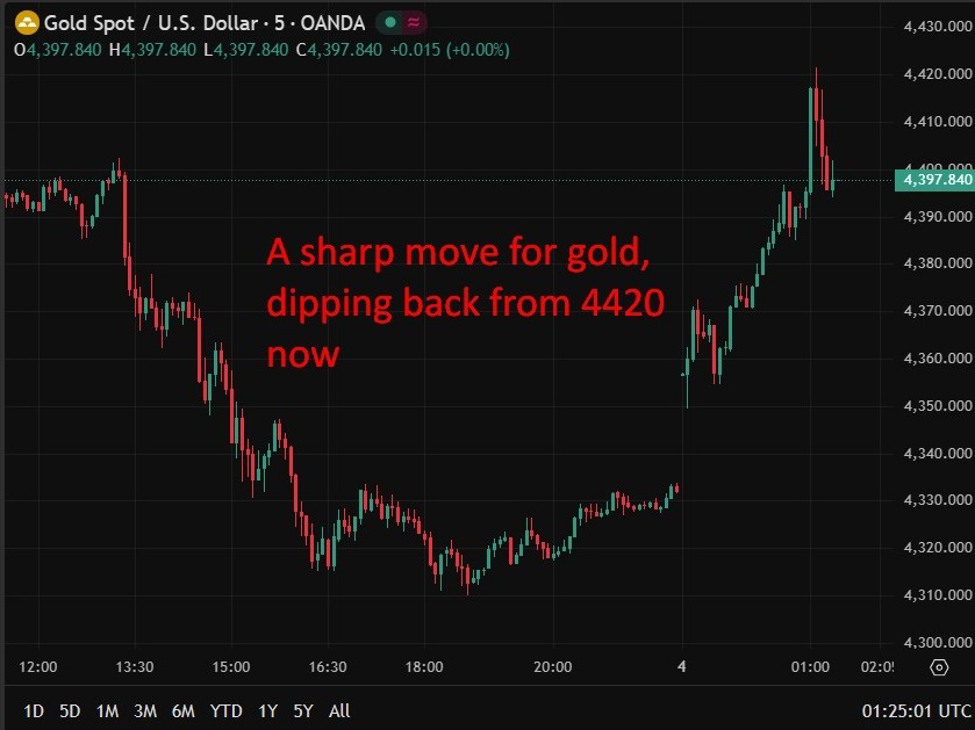
Gold and silver on fire in Asia trade, Monday, January 5, 2026
ICYMI:US attacks Venezuela, captures President MaduroHappy New Year, especially to Venezuelans! Monday early FX rates guideVenezuela – Goldman sees 2026 Brent at $56 & WTI at $52, flags longer-term downside risksAnd Trump later spoke:Trump claims control of Venezuela, warns Colombia and Mexico could be next-Gold and silver pushed sharply higher today as a cluster of macro, geopolitical and positioning forces aligned in favour of precious metals, reinforcing the broader bullish narrative that has been building into the new year. None of this is new (well, Venezuela is, but we’ve covered it extensively already). Markets continue to reassess the trajectory of US monetary policy. While the Federal Reserve continues to signal caution on the timing of further rate cuts, investors remain priced for easing later this year. That expectation, combined with softer inflation momentum and signs of labour-market cooling, has kept pressure on real yields, a key tailwind for non-yielding assets such as gold and silver.At the same time, geopolitical risk has escalated materially, providing a classic safe-haven bid. The US intervention in Venezuela, combined with President Trump’s increasingly confrontational rhetoric toward Colombia and Mexico, has raised concerns about regional instability in Latin America. These developments have come on top of already elevated global tensions, encouraging portfolio hedging and defensive positioning in precious metals.Central-bank demand remains another powerful structural support, particularly for gold. Ongoing diversification away from the US dollar by several reserve managers continues to underpin prices, reinforcing gold’s role as a neutral reserve asset at a time when geopolitical fragmentation and sanctions risk remain high.Silver, meanwhile, has been outperforming on a dual demand narrative. Alongside its safe-haven appeal, silver is benefiting from expectations of resilient industrial demand, particularly linked to electrification, solar energy and advanced manufacturing. As growth fears ease slightly and the outlook stabilises, silver tends to gain leverage to both macro reflation and risk hedging — a dynamic clearly on display today.Finally, technical and positioning factors amplified the move. Thin liquidity early in the year, combined with momentum-based buying and short-covering after recent consolidations, helped accelerate gains once key resistance levels were breached.Taken together, the rally reflects a market that is increasingly comfortable holding precious metals as both a hedge against geopolitical shock and a medium-term play on easier financial conditions, weaker real yields and structural demand growth, conditions that remain firmly in place. —The gold chart above is the appetizer, silver looks like the mains: This article was written by Eamonn Sheridan at investinglive.com. 🔗 Source 💡 DMK Insight The U.S. attack on Venezuela is shaking up the markets, and here’s why you should care: With geopolitical tensions escalating, particularly in oil-rich regions, traders need to keep an eye on crude prices. Goldman Sachs’ forecast of $56 for Brent and $52 for WTI in 2026 indicates a bearish outlook, but immediate volatility could spike as markets react to the news. Gold and silver’s sharp rise suggests that investors are flocking to safe havens, which could signal a broader risk-off sentiment. If oil prices react negatively, expect correlated assets like energy stocks and ETFs to follow suit. But here’s the flip side: if the geopolitical situation stabilizes quickly, we might see a rebound in risk assets. Watch for key resistance levels in gold around recent highs, and keep an eye on oil futures for any signs of a breakout or breakdown. The next few days will be crucial for positioning, especially for day traders looking to capitalize on volatility. 📮 Takeaway Monitor oil prices closely; a breakout above recent highs could signal a shift in risk sentiment, impacting related markets significantly.
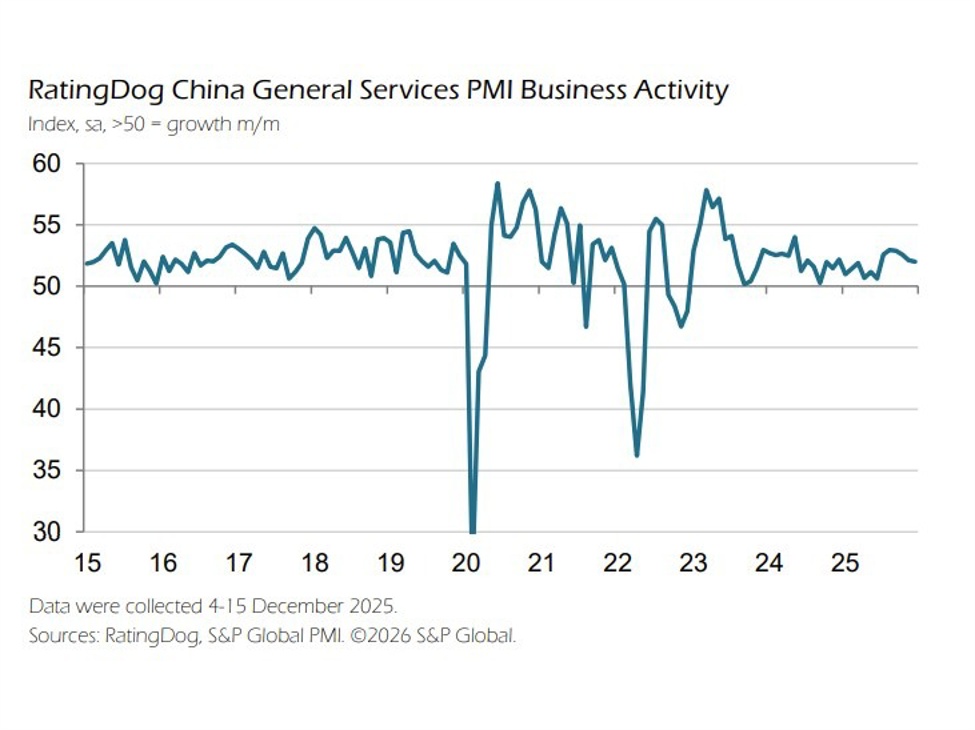
China Rating Dog December 2025 Services PMI 52.0 (expected 52.0, prior 52.1)
Summary:China services PMI remained in expansion but slowed further in DecemberNew orders grew at the weakest pace in six monthsExport services demand slipped back into contractionJob shedding continued for a fifth straight monthBusiness confidence rose to a nine-month highChina’s services sector continued to expand in December, but the pace of growth slowed to its weakest level in six months, reinforcing signs that the post-pandemic recovery remains uneven and fragile despite improving sentiment toward 2026.The latest PMI data showed the RatingDog China General Services PMI easing slightly to 52.0 from 52.1 in November. While the index remained comfortably above the 50.0 threshold that separates expansion from contraction, the reading marked a fourth consecutive monthly deceleration in growth and highlighted ongoing demand and employment challenges.Business activity and new orders both continued to rise, supported by promotional activity and improved domestic customer interest. However, the rate of expansion in sales slowed to its weakest since June, as new export business slipped back into contraction. Companies cited reduced tourist inflows, particularly from Japan, as a key drag on overseas demand, underscoring continued volatility in external services activity.Labour-market conditions remained a notable weak spot. Services firms cut staffing levels for a fifth straight month, with the pace of job shedding the sharpest since September. Respondents pointed to cost pressures and ongoing restructuring efforts as reasons for workforce reductions, affecting both full-time and part-time employment. Reduced capacity contributed to a modest accumulation of backlogs, even as overall demand growth softened.Pricing dynamics continued to reflect deflationary pressures at the consumer-facing level. Input costs rose for a tenth consecutive month, driven by higher raw material and labour expenses, with inflation running at one of its faster rates of 2025. Despite this, intense competition limited pricing power, prompting service providers to cut output charges for the second time in three months in an effort to support sales.At the broader economy level, the China Composite PMI edged higher to 51.3 in December (prior 51.2), marking a seventh straight month of expansion. The increase was supported by both services growth and a renewed rise in factory output, although total new business expanded at the slowest pace in six months due to weaker export demand. Job shedding persisted at the composite level, while overall selling prices continued to fall despite rising costs.Encouragingly, business confidence improved markedly. Expectations for future activity climbed to a nine-month high, with firms increasingly optimistic that stronger market conditions, expansion plans, and policy momentum will support growth in 2026. Even so, ongoing employment contraction and external demand uncertainty remain key constraints on the near-term outlook. This article was written by Eamonn Sheridan at investinglive.com. 🔗 Source 💡 DMK Insight China’s services PMI slowing down is a red flag for traders: it signals potential economic headwinds. While the services sector is still expanding, the weak growth in new orders and a dip in export services demand could indicate a cooling economy. This is particularly relevant for forex traders focusing on the yuan, as any further contraction could lead to increased volatility. The fact that job shedding has continued for five months raises concerns about consumer spending, which is crucial for sustaining growth. On the flip side, rising business confidence could suggest that some sectors are still optimistic, but traders should be cautious. Watch for key levels in the yuan against major currencies; if it breaks below recent support levels, it could trigger further selling pressure. Keep an eye on the upcoming economic indicators from China, as they could provide more clarity on the trajectory of the services sector and its impact on global markets. 📮 Takeaway Monitor the yuan closely; a break below key support levels could signal increased volatility amid slowing services growth.
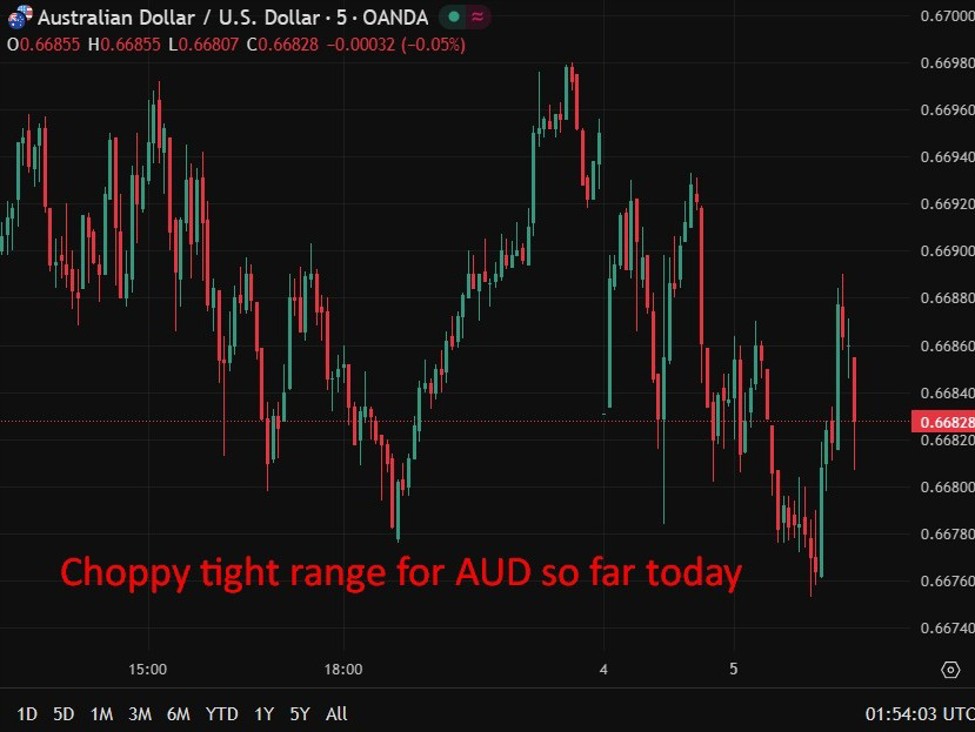
Economists warn sticky inflation may force RBA back into rate hikes in 2026
Summary:Economists see inflation remaining sticky through 2026Growing risk of RBA rate hikes, possibly from FebruaryLate-2025 inflation rebound shifted policy expectationsHousing, services and labour-market tightness key driversForecasts now split between hikes, holds and cutsInflation is expected to remain uncomfortably persistent over the year ahead, increasing the likelihood that the Reserve Bank of Australia will be forced back into rate hikes, according to a survey of leading economists conducted by the Australian Financial Review (gated). A growing minority of forecasters now expect the RBA to raise interest rates as early as its first policy meeting of the year in February. Seven of the 38 economists surveyed, including teams at major lenders such as Commonwealth Bank of Australia, Citi and National Australia Bank, see a near-term hike as increasingly likely, citing signs that inflation pressures have re-emerged rather than faded.While the RBA cut the cash rate three times last year, in February, May and August, taking it to 3.6%, economists now argue that those moves may have been premature. Inflation, which had appeared to be easing, unexpectedly picked up late in the year, with headline CPI rising to 3.8% in October and core inflation accelerating to 3.3%, well above the RBA’s 2–3% target band.RBA Governor Michele Bullock added to the shift in expectations in December, warning that further tightening could not be ruled out if price pressures proved difficult to contain. Since then, financial markets have swung sharply, moving from pricing rate cuts to partially pricing hikes. Traders are now assigning a meaningful probability to a February increase and are fully pricing a hike by mid-year.Economists point to a combination of structural and cyclical pressures keeping inflation elevated. Housing and services costs remain firm amid chronic undersupply, rapid population growth, rising wages and higher energy costs. At the same time, unemployment remains near historic lows, supported by strong public-sector hiring, particularly across healthcare and the NDIS, and widespread labour hoarding by firms reluctant to shed staff after years of skills shortages.While views remain divided, the balance of risks has clearly shifted. A growing number of economists now expect at least two rate hikes this year, with some warning that if inflation fails to moderate convincingly, even further tightening may be required into 2026. This article was written by Eamonn Sheridan at investinglive.com. 🔗 Source 💡 DMK Insight Inflation’s stubbornness is a game changer for traders, especially with potential RBA rate hikes looming. The expectation that inflation will remain elevated through 2026 suggests that the Reserve Bank of Australia (RBA) may need to act sooner than anticipated, possibly starting in February. This could lead to a volatile environment for AUD pairs, particularly if traders start pricing in these hikes. The split forecasts between hikes, holds, and cuts indicate uncertainty, which could create trading opportunities for those who can read the market’s sentiment shifts. Keep an eye on housing, services, and labor market data as these are pivotal in shaping inflation trends. If inflation data comes in hotter than expected, it could trigger a swift reaction in the forex market, especially for the AUD/USD pair. On the flip side, if inflation shows signs of cooling, it could lead to a reassessment of rate hike expectations, providing a potential buying opportunity for risk assets. Watch for key inflation reports and RBA statements in the coming months; they’ll be crucial in determining market direction. 📮 Takeaway Monitor upcoming inflation reports and RBA communications closely; a February rate hike could significantly impact AUD trading strategies.
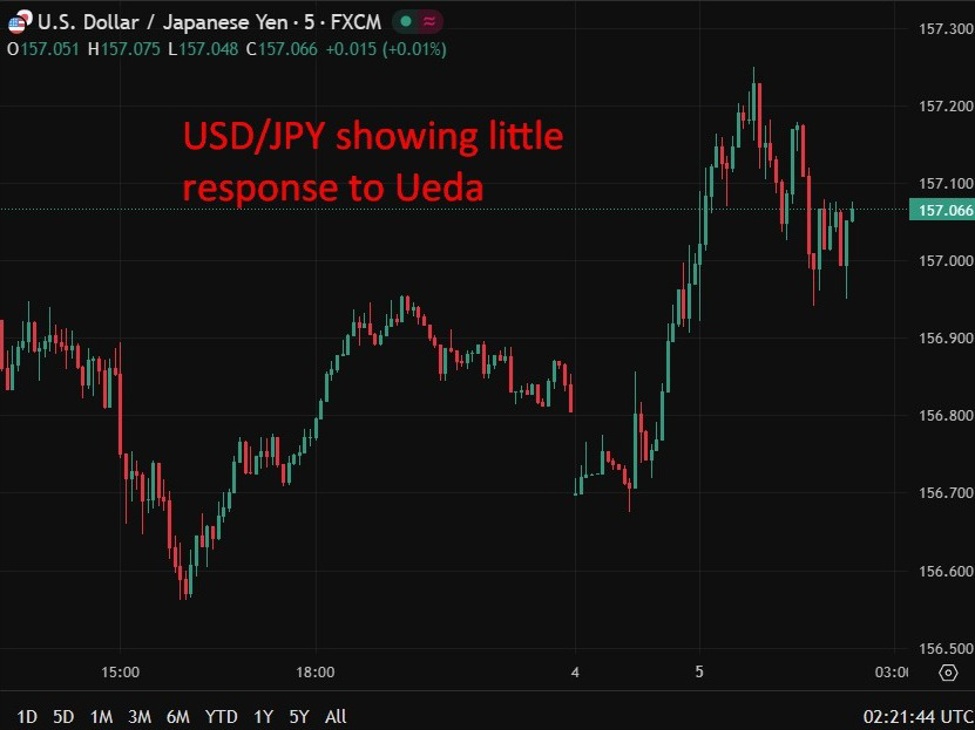
BOJ’s Ueda signals further rate hikes as wage–price cycle strengthens
SummaryBOJ’s Ueda signalled readiness to continue raising ratesFurther tightening depends on growth and inflation tracking forecastsWage–price cycle seen as increasingly sustainableMonetary adjustment framed as supportive of long-term growthSignals reinforce Japan’s exit from deflation-era policyBank of Japan Governor Kazuo Ueda reinforced expectations of further policy normalisation, signalling that the central bank is prepared to continue raising interest rates provided economic and inflation conditions evolve broadly in line with its forecasts. His comments underline growing confidence within the BOJ that Japan is finally exiting its long deflationary era and transitioning toward a more durable, growth-driven model.Ueda said the BOJ expects to keep adjusting the degree of monetary support as the outlook for growth and prices improves. He stressed that gradual reductions in accommodation would help entrench sustainable economic expansion, rather than undermine it — a clear rebuttal to lingering concerns that tightening could choke off momentum.Crucially, Ueda said he expects Japan’s economy to maintain a virtuous cycle in which wages and prices rise moderately together. This wage–price dynamic has long been the BOJ’s missing link, and Ueda’s confidence suggests policymakers believe recent wage gains are no longer transitory but increasingly structural. Labour market tightness, demographic constraints and shifting corporate behaviour are now seen as reinforcing forces behind steady wage growth.The remarks align with comments earlier in the session from Finance Minister Taro Katayama, who described Japan as being at a “critical stage” in its shift away from deflation toward a growth-led economy. While Katayama focused on the broader economic transition, Ueda’s comments provided the clearest signal yet that monetary policy will continue to move in a less accommodative direction if conditions allow.Markets have been watching closely for confirmation that the BOJ’s December move marked the start of a sustained normalisation cycle rather than a one-off adjustment. Ueda’s language strongly suggests the former. By explicitly linking future rate hikes to forecast-consistent growth and inflation outcomes, the governor reaffirmed the BOJ’s data-dependent but forward-leaning stance.Taken together, the comments reinforce expectations that Japan’s ultra-loose monetary era is drawing to a close. While Ueda continues to emphasise gradualism and caution, his confidence in the wage–price cycle indicates the threshold for further tightening is lower than in previous years. For markets, the message is clear: as long as the economy behaves as the BOJ expects, policy rates are likely to keep moving higher, albeit at a measured pace. This article was written by Eamonn Sheridan at investinglive.com. 🔗 Source 💡 DMK Insight BOJ’s Ueda is hinting at more rate hikes, and here’s why that matters: Japan’s shift from deflationary policies could impact global markets. With Ueda framing monetary adjustments as supportive of long-term growth, traders should keep an eye on how this affects the yen and related assets. If the BOJ continues to raise rates, we might see increased volatility in forex pairs like USD/JPY. This could also ripple through equities, particularly in export-driven sectors that rely on a weaker yen. Watch for inflation and growth data to gauge the timing of these hikes; any surprises could lead to sharp market reactions. On the flip side, while the mainstream narrative focuses on the potential for a stronger yen, there’s a risk that aggressive tightening could stifle economic growth, leading to a market correction. So, keep your charts handy and monitor key levels around 145 in USD/JPY for potential breakout or reversal signals. 📮 Takeaway Watch for inflation and growth data as potential rate hikes from the BOJ could impact USD/JPY, especially around the 145 level.

Nomura warns China EV demand to cool as subsidy policy tightens
Summary:Nomura expects China EV demand to cool further in 2026New subsidy policy signals tighter support for auto sectorMass-market models seen most vulnerable to demand slowdownEV makers likely to prioritise upgrades over price cutsTechnology leaders expected to outperformChina’s electric-vehicle market is likely to face further demand cooling this year as policy support is gradually tightened, according to Nomura, adding to pressure on manufacturers already grappling with slowing growth and intense competition.Nomura analysts said a newly released auto subsidy framework at the end of 2025 points to a less accommodative policy stance toward the sector, marking a shift away from the aggressive support that helped drive rapid EV adoption in recent years. The changes are expected to weigh most heavily on near-term domestic demand, particularly for mass-market and entry-level models that have relied heavily on price incentives to sustain sales momentum.As subsidies become more selective, Nomura expects Chinese EV makers to adjust strategy, pivoting away from widespread price cuts toward accelerated product upgrades and technology differentiation. The bank argued that further discounting would risk eroding margins without delivering meaningful volume gains in a more policy-constrained environment.The outlook underscores a broader transition in China’s auto sector, where growth is increasingly driven by innovation rather than price competition. Nomura expects manufacturers with strong capabilities in battery efficiency, software integration and advanced driver-assistance systems to outperform peers, even as overall market growth moderates.Policy tightening comes at a time when China’s EV market is already showing signs of saturation in major urban centres, while demand in lower-tier cities remains more sensitive to affordability and incentives. As a result, the bank sees downside risks to unit sales in the near term, especially for brands positioned primarily on cost rather than technology.Nomura maintained a cautious stance on the broader auto sector, noting that the shift in policy signals a desire by authorities to encourage higher-quality growth and reduce reliance on subsidies. While this may support the industry’s long-term health, it raises the bar for manufacturers in the short run.Taken together, the analysts said the combination of policy tightening, slowing demand growth and intense competition suggests a more challenging environment for China’s EV makers in 2026. Companies that can successfully execute technology upgrades and differentiate their product offerings are expected to emerge as relative winners, while those reliant on price-led strategies face mounting pressure. This article was written by Eamonn Sheridan at investinglive.com. 🔗 Source 💡 DMK Insight China’s EV market is bracing for a demand dip, and here’s why that matters: Nomura’s forecast of cooling demand in 2026, coupled with new subsidy policies, signals a tightening grip on the auto sector. Traders should note that mass-market EV models could be the most affected, as consumers may shift towards higher-end offerings. This shift could lead to increased competition among manufacturers, pushing them to prioritize technological upgrades rather than price cuts. If you’re trading EV stocks, keep an eye on how these dynamics play out, especially with tech leaders likely to outperform their mass-market counterparts. Watch for key indicators like sales figures and policy announcements that could impact stock prices. If demand continues to wane, we might see a ripple effect across related sectors, including battery manufacturers and raw material suppliers. The real story is how companies adapt to this changing landscape—those that innovate may thrive, while others could struggle. Monitor the upcoming quarterly earnings reports for insights into how these trends are affecting profitability. 📮 Takeaway Keep an eye on mass-market EV sales and tech upgrades; they could signal shifts in stock performance as demand cools.