
 Bitcoin
  Ethereum
  Tether
  XRP
XRP  BNB
BNB  USDC
USDC  Solana
  TRON
TRON  Lido Staked Ether
  Figure Heloc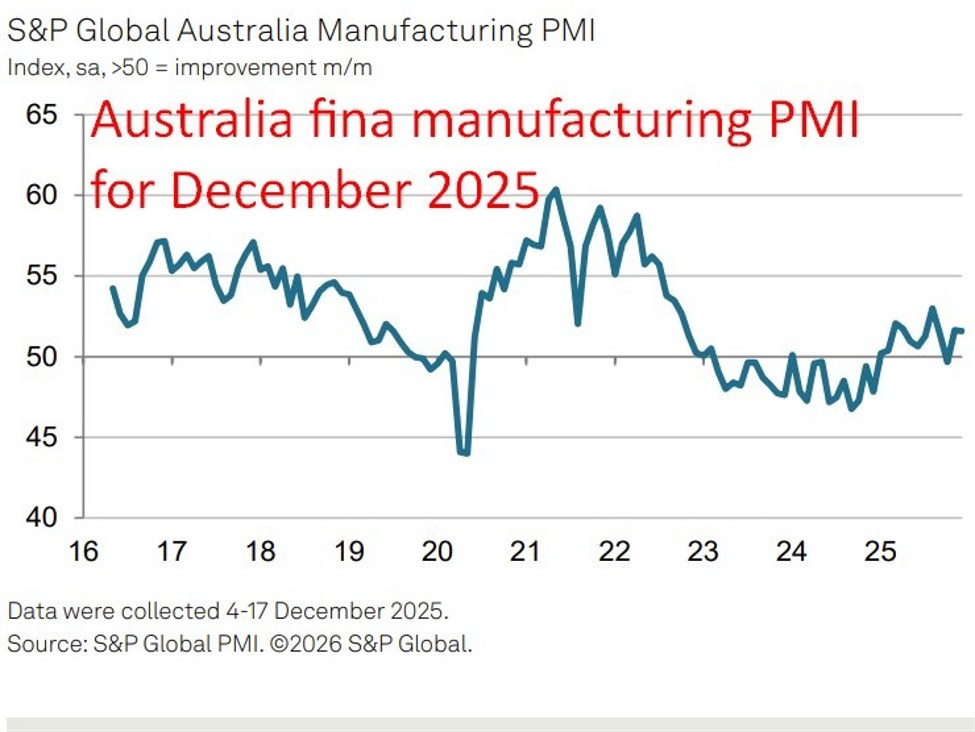
Summary: Australia’s manufacturing sector remained in expansion in December, with the PMI holding at 51.6 for a second straight month. New orders and output continued to grow, though momentum eased amid softer foreign demand and tighter competition. Employment rose at the fastest pace in nine months, supported by better candidate availability and rising workloads. Supply conditions deteriorated sharply, with delivery times lengthening at the fastest pace since late 2024. Input cost inflation accelerated, driven by higher material and shipping expenses, with output prices also rising. Business confidence improved to a four-month high, supported by expansion plans and new product launches.Australia’s manufacturing sector ended 2025 on a modestly positive footing, with activity continuing to expand in December despite signs of easing momentum. According to PMI data from S&P Global, growth in new orders and output was sustained, hiring strengthened, and business confidence improved, even as supply constraints and cost pressures intensified.The seasonally adjusted Manufacturing Purchasing Managers’ Index held steady at 51.6 in December, unchanged from November and comfortably above the 50.0 threshold that separates expansion from contraction. The reading marked a second consecutive month of modest improvement in operating conditions across the sector. Down from the flash reading: Australia preliminary December PMI: Manufacturing 52.2 (prior 51.6) services 51.0 (52.8)Production rose for the second month running, supported by higher inflows of new work. However, both output and new order growth slowed relative to earlier in the quarter. Firms reported that while domestic demand conditions were improving, softer market sentiment, heightened competition and weaker overseas demand limited overall growth. New export orders declined marginally for a fourth straight month, reflecting ongoing budget constraints among foreign clients.Despite the moderation in demand growth, manufacturers increased hiring at the fastest pace in nine months. Improved labour availability supported workforce expansion, helping firms further reduce outstanding workloads. Purchasing activity also increased in response to higher production needs, though overall inventories continued to edge lower for a third consecutive month.Supply-side pressures intensified notably in December. Delivery times lengthened at the sharpest pace in over a year due to material shortages and logistical delays, contributing to an acceleration in input cost inflation. Higher raw material and shipping expenses pushed costs up at a faster rate than in November, though inflation remained below long-term survey averages.Manufacturers passed some of these cost increases on to customers, lifting output prices again in December. Encouragingly, business sentiment strengthened to its highest level in four months, with firms citing new product launches and expansion plans as key drivers of expected growth over the coming year. —Earlier, not a positive for AUD sentimentICYMI: China slaps 55% tariff on excess beef imports under new three-year safeguard regime This article was written by Eamonn Sheridan at investinglive.com. 🔗 Source 💡 DMK Insight Australia’s manufacturing PMI holding at 51.6 is a mixed bag for traders right now. While the sector’s expansion indicates resilience, the easing momentum due to softer foreign demand raises red flags. For day traders, this could mean a cautious approach to Australian dollar pairs, especially against currencies like the USD or JPY. If the PMI starts to trend downward, it could signal a broader economic slowdown, impacting commodity prices and related markets. Keep an eye on employment figures as well; a rise in employment can support consumer spending, but if foreign demand continues to weaken, that could offset gains. Watch for key levels around 0.65 for AUD/USD—if it breaks below, it might trigger further selling pressure. The real story here is how these dynamics play out in the next few weeks, especially with upcoming economic reports that could shift sentiment significantly. 📮 Takeaway Monitor the AUD/USD around 0.65; a break below could signal increased selling pressure amid weakening foreign demand.

Trump TACO now with pasta – backtracks on Italian pasta tariffs after industry pushback
Summary:The U.S. Commerce Department has sharply reduced proposed antidumping duties on Italian pasta imports, stepping back from levels that risked forcing producers out of the U.S. market.Initial duties of up to 92% were revised down to 2.3% for La Molisana and 13.9% for Garofalo, with most other producers facing a 9.1% tariff.Italian pasta exporters remain subject to a separate 15% U.S. tariff on EU imports, limiting the overall relief.The decision follows weeks of lobbying by Italy’s government and industry groups.A final determination in the antidumping review is due by 11 March, leaving some residual uncertainty.The outcome helps protect roughly US$770 million in annual Italian pasta exports to the U.S.Info via a Wall Street Journal report (gated).Trump has stepped back from imposing trade-killing antidumping duties on Italian pasta makers, significantly reducing proposed tariffs and easing fears that major brands would be forced to withdraw from the U.S. market. The revised decision by the U.S. Commerce Department lowers duties dramatically from preliminary levels that had alarmed Italian producers and policymakers alike.Under the revised measures, leading exporters La Molisana and Garofalo will face antidumping duties of 2.3% and 13.9%, respectively, down from an initial proposal of as much as 92%. Eleven other Italian pasta makers will be subject to a 9.1% tariff. While these duties still add to costs, the reductions are widely seen as allowing Italian pasta to remain commercially viable in U.S. stores.The earlier proposal, issued in September, had stunned the Italian pasta industry, which exports around US$770 million worth of product annually to the United States. Producers warned that tariffs at those levels would have effectively shut them out of the market. In response, Italy’s government and industry leaders mounted an intense lobbying effort, framing the issue not just as a trade dispute but as a matter of national economic and cultural significance.Defending pasta exports became a high-profile priority for the government of Prime Minister Giorgia Meloni, which has sought to position Italy as a close European partner of the Trump administration. Some Italian officials and executives privately questioned whether broader U.S. protectionist policies influenced the severity of the preliminary ruling, though U.S. officials rejected that view, insisting the decision was based on technical criteria.Commerce said its updated analysis showed Italian producers had addressed many concerns raised earlier and reaffirmed its commitment to a fair and transparent process. However, uncertainty remains. The antidumping review is still ongoing, with a final report due by March 11. Moreover, Italian pasta exporters continue to face a separate 15% U.S. tariff on European Union imports, meaning overall trade conditions remain restrictive despite the relief. This article was written by Eamonn Sheridan at investinglive.com. 🔗 Source 💡 DMK Insight The drastic cut in antidumping duties on Italian pasta is a game changer for importers and consumers alike. By slashing proposed duties from as high as 92% to just 2.3% and 13.9%, the U.S. Commerce Department is effectively opening the floodgates for Italian pasta imports. This could lead to increased competition in the U.S. market, potentially driving prices down for consumers while benefiting retailers looking to diversify their offerings. For traders, this news could impact related sectors, particularly food commodities and retail stocks that rely on pasta sales. Keep an eye on how this affects the broader food supply chain, as lower prices could ripple through to other imported goods. However, there’s a flip side to consider: if domestic producers feel threatened, we might see pushback or lobbying for protective measures. Watch for any political developments that could alter this landscape. In the immediate term, monitor pasta-related stocks and any shifts in consumer purchasing patterns, especially as we head into the holiday season when pasta sales typically spike. 📮 Takeaway Traders should watch for price movements in pasta-related stocks and monitor consumer trends as lower import duties could reshape the market dynamics.
Bank of Korea (BOK) warns weak won risks inflation as USD/KRW diverges from fundamentals
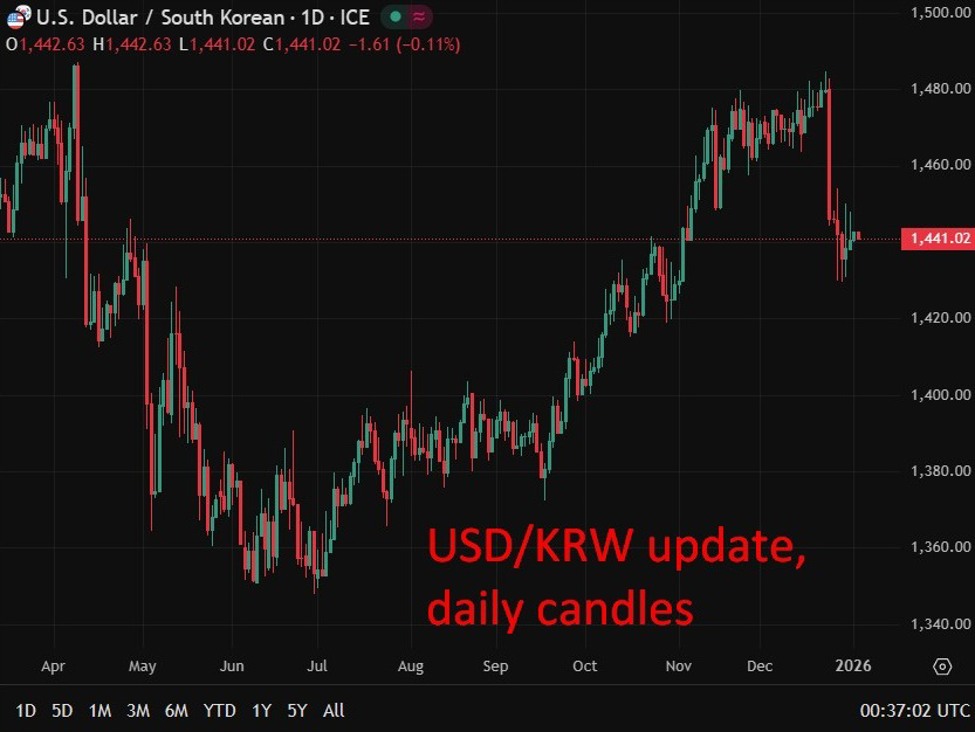
Summary:Bank of Korea Governor Rhee Chang-yong said the central bank will review its forward guidance framework on the future path of interest rates.Rhee warned that excessive won weakness could harm domestic businesses and add to inflation pressures.He said USD/KRW levels above 1,400 appear disconnected from Korea’s economic fundamentals.The BOK will not support U.S.-bound investment decisions that could undermine foreign-exchange stability.Authorities are considering expanding special lending programmes for small businesses.Rhee also called for a comprehensive review of pension funds’ overseas investments, citing FX implications.-The Bank of Korea has signalled growing unease over foreign-exchange volatility, with Governor Rhee Chang-yong warning that the current level of won weakness appears increasingly misaligned with South Korea’s economic fundamentals and risks feeding domestic inflation pressures.Rhee said the central bank will review its forward guidance approach on the future path of interest rates, an indication that policymakers are reassessing how monetary policy signals are being interpreted by markets. While he stopped short of committing to a policy shift, the comments suggest heightened sensitivity to financial conditions, particularly currency moves.Rhee highlighted concerns that a persistently weak won could do more harm than good for the domestic economy. He warned that depreciation may weigh on Korean businesses by raising import costs and squeezing margins, while also amplifying inflationary pressures at a time when price stability remains a key policy focus. The governor added that the USD/KRW exchange rate trading above the 1,400 level seems far from the Korean economy’s fundamentals, reinforcing the message that current FX levels may not be justified by underlying conditions.The BOK chief also drew a clear line on cross-border investment decisions, stating that authorities would not agree to U.S.-bound investments if they threaten foreign-exchange stability. The remarks underscore official concern that large-scale capital outflows — particularly by institutional investors, could exacerbate currency volatility.In that context, Rhee said policymakers see a need for a comprehensive review of pension funds’ overseas investment strategies. South Korea’s large pension funds have steadily increased foreign asset exposure in recent years, a trend that can create structural FX selling pressure during periods of market stress.Beyond FX issues, Rhee said the central bank will review the scope for expanding special lending facilities aimed at supporting small businesses, signalling a desire to balance financial stability concerns with targeted economic support.Taken together, the comments point to a more holistic policy stance from the BOK, with FX stability, capital flows and financial conditions now playing a more prominent role alongside traditional inflation and growth considerations.-Earlier from South Korea, in brief:South Korea’s manufacturing sector returned to expansion in December after two months of contraction, helped by a rebound in export demand.The manufacturing PMI rose to 50.1, back above the expansion threshold after holding at 49.4 in the prior two months.New orders grew for the first time in three months, posting the strongest increase since November 2024, with export orders also recovering.Output remained in contraction, though the pace of decline eased compared with November.Input buying picked up sharply, while inventories of finished goods fell at the fastest pace since May 2025.Business optimism jumped to a 3½-year high, driven by expectations of expansion and new product launches, notably in autos and semiconductors.Input cost inflation accelerated, hitting its fastest pace since mid-2022 due to currency weakness, pushing output prices to a nine-month high. This article was written by Eamonn Sheridan at investinglive.com. 🔗 Source 💡 DMK Insight The Bank of Korea’s potential shift in interest rate guidance is a big deal for traders right now. Rhee Chang-yong’s comments about the won’s weakness and its impact on inflation signal that the BOK is closely monitoring the USD/KRW exchange rate, especially with levels above 1,400. This could lead to a recalibration of monetary policy if the won continues to weaken, which would affect not just forex traders but also those in equities and commodities linked to the Korean economy. If the BOK decides to intervene or adjust rates, expect volatility in the KRW and related assets. Traders should keep an eye on the USD/KRW pair for any signs of reversal or further weakness, particularly as we approach key economic data releases that could influence market sentiment. Here’s the flip side: if the BOK maintains its current stance without action, it could lead to a prolonged period of won weakness, which might be seen as a buying opportunity for those looking to capitalize on a rebound. Watch for any statements from the BOK in the coming weeks that could provide clarity on their strategy and potential interventions. 📮 Takeaway Monitor the USD/KRW closely; levels above 1,400 could trigger BOK action, impacting forex and related markets.
investingLive Asia-Pacific FX news wrap: Asia previewed the rest of 2026 in trade today
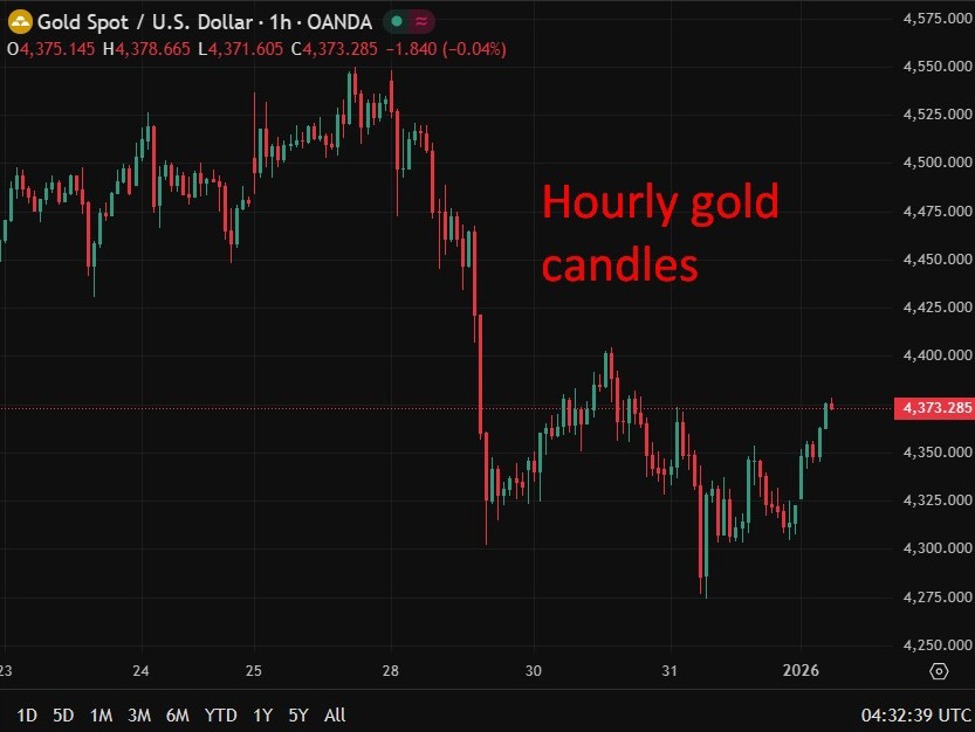
Bank of Korea (BOK) warns weak won risks inflation as USD/KRW diverges from fundamentalsTrump TACO now with pasta – backtracks on Italian pasta tariffs after industry pushbackAustralia manufacturing PMI holds 51.6 in December. Hiring accelerates & inflation firms.ICYMI: China slaps 55% tariff on excess beef imports under new three-year safeguard regimeCanadian dollar outlook 2026: Tariff risks are overblownSummary:Asia-Pacific trade was thin but directional as markets remained in holiday mode ahead of a full return on January 5.The U.S. dollar weakened, while precious metals surged sharply, led by gold and silver.Gold broke above US$4,370, with silver, platinum and palladium all posting strong gains.Australian manufacturing remained in expansion, while South Korea’s factory sector returned to growth in December.FX moves were notable, albeit not in large ranges, with EUR, AUD, GBP and SGD all strengthening against the USD.Professional market participants largely remained in holiday mode, a full return will happen on Monday, 5 January. Liquidity across the Asia-Pacific region was thin, but price action was nonetheless revealing, with clear directional moves emerging in FX and commodities.The U.S. dollar lost ground nearly across the board, while precious metals extended their rally. Gold surged through US$4,370, silver rose close to 3%, and both platinum and palladium gained +3%. The strength in metals was mirrored by gains in the euro, Australian dollar and sterling. Yen traded its way, USD/JPY rose. While volumes were light, the moves had the feel of a broader macro narrative re-asserting itself rather than random holiday noise.Looking ahead to 2026, the dollar appears vulnerable. With U.S. mid-term elections approaching, fiscal policy is likely to turn increasingly expansionary as politicians seek to support growth and equity markets. At the same time, pressure from the White House on the Federal Reserve to cut rates aggressively is expected to intensify even further. The prospect of a White House-appointed Fed chair later this year only reinforces expectations of a more accommodative policy stance. Against that backdrop, confidence in the dollar could erode further, creating a supportive environment for non-USD assets, particularly precious metals.On the data front, mainland Chinese and New Zealand markets were closed for holidays. In Australia, December manufacturing PMI held steady at 51.6, remaining in expansion territory and confirming modest resilience in the sector.In South Korea, Bank of Korea Governor Rhee Chang-yong warned that excessive won weakness could harm domestic businesses and add to inflation pressures. Separately, manufacturing PMI data showed the sector returning to expansion in December, rising to 50.1 after two months below the 50 threshold separating expansion from contraction, helped by a rebound in export demand.Meanwhile, the Singapore dollar strengthened after data showed 2025 GDP growth of a robust 4.8%. Analysts cited a resilient global economy, strong export demand, some front-loading ahead of tariff pressures, and broad-based gains across key sectors for the blockbuster result and have revised forecasts upwards now. This article was written by Eamonn Sheridan at investinglive.com. 🔗 Source 💡 DMK Insight The Bank of Korea’s warning about a weak won highlights a critical inflation risk that traders need to monitor closely. With USD/KRW diverging from fundamentals, this could signal a potential shift in monetary policy or intervention from the BOK. Traders should keep an eye on the 1,300 level for USD/KRW, as a sustained break above could exacerbate inflationary pressures and impact local equities and bonds. Additionally, the recent PMI data from Australia suggests a resilient manufacturing sector, but inflationary trends could complicate the Reserve Bank of Australia’s future rate decisions. This interplay between currencies and inflation metrics is crucial for forex traders, as it could lead to volatility in both the won and Australian dollar. Watch for any statements from the BOK or RBA that could signal shifts in policy, especially as inflation expectations rise globally. 📮 Takeaway Monitor the 1,300 level in USD/KRW; a break could trigger inflation concerns and impact trading strategies in related currencies.

STARTRADER Starts the Year with A New Look and Feel
Global broker STARTRADER is unveiling a refreshed look and feel as part of its brand repositioning. Since its establishment, the company has been focused on strengthening the trust it has built with clients, partners, and institutional businesses.The repositioning will be reflected in the brand’s visual identity. To align with the newly introduced tagline, “Built on Trust. Driven by Growth,” the update introduces a more minimal and refined design direction. With calmer colour palettes and cleaner compositions, the identity now reflects the broker’s commitment to a more confident, composed, and client-centric experience.The mission and vision now also place greater emphasis on people and long-term relationships. Accessibility, transparency, and empowerment are the words that reinforce the trust the brand is rooted in. Of course, the brand image and the product offerings are closely aligned, as it reflects the continuous improvement of STARTRADER’s offerings, an ongoing effort already in motion and one that will continue, ensuring that growth remains grounded in client needs, confidence, and consistency.Internally, the repositioning now empowers teams to deliver consistent and more thoughtful experiences in every interaction. STARTRADER’s people play a central role in bringing the new brand to life through their shared efforts across different departments.As the year unfolds, the evolution of the brand will be witnessed across STARTRADER’s touchpoints, from digital platforms and communications to client and partner engagement and sponsorships with other brands. The positioning highlights the broker’s focus on reinforcing reliability while continuing to expand its global footprint, product offering, and institutional capabilities.About STARTRADERSTARTRADER https://www.startrader.com/ is a global CFD brokerage that provides its clients with opportunities to trade financial instruments online. STARTRADER services both Partners and Retail Clients, who can trade using the MetaTrader Platform, the STAR-APP, and using STAR-COPY. As a global broker, STARTRADER holds a client-first approach as our core principle. Regulated in 5 jurisdictions (ASIC, FSA, FSC, FSCA, and SCA), STARTRADER upholds strong governance alongside sustainable growth. STARTRADER’s team comprises dedicated professionals working collaboratively to deliver quality service to its Partners and Clients. This article was written by IL Contributors at investinglive.com. 🔗 Source 💡 DMK Insight So STARTRADER’s rebranding is more than just a facelift—it’s a strategic move to bolster client trust. In a market where broker reliability is paramount, especially amid regulatory scrutiny, this repositioning could attract both retail and institutional clients looking for stability. Look, the forex and crypto markets are notoriously volatile, and brokers that can project a strong, trustworthy image often see increased trading volumes. This could lead to a ripple effect, where enhanced client confidence translates into higher liquidity and tighter spreads. Traders should keep an eye on how this rebranding impacts STARTRADER’s market share and client retention metrics over the next quarter. If they manage to capture a significant portion of the market, it could set a precedent for other brokers to follow suit. Watch for any changes in trading volumes or client feedback in the coming weeks, as these metrics will be crucial in assessing the effectiveness of this rebranding effort. 📮 Takeaway Monitor STARTRADER’s trading volumes and client feedback over the next quarter to gauge the impact of their rebranding on market share.

FX option expiries for 2 January 10am New York cut
Happy New Year, everyone! I hope you’re all still enjoying the holiday break as markets are still more or less sidelined until next week. That is when activity and liquidity will slowly pick back up after the rest period from Christmas to the new year. As such, there aren’t any major expiries to take note of today with a lack of interest and appetite with many market players still away. The full list can be seen below.Things will slowly pick up in the week ahead, so don’t expect all too much on the expiries board and the relevant impact. Positioning flows to start the year will also be a key consideration for major currencies, so that will be the more pertinent thing to watch out for.But in looking to the early days, a lot of focus will stay on precious metals with gold and silver starting to rally again today. The former is up 1.5% to $4,378 with the latter up 3.9% to around $74.05 currently. So, that will continue to captivate the market’s attention for the most part as we look to get things underway in 2026.For more information on how to use this data, you may refer to this post here.Head on over to investingLive (formerly ForexLive) to get in on the know! This article was written by Justin Low at investinglive.com. 🔗 Source 💡 DMK Insight With markets largely sidelined during the holiday break, traders should prepare for a potential surge in activity next week. As liquidity returns, volatility could spike, especially in crypto and forex markets where traders are eager to capitalize on fresh trends. Historically, the first week of January sees increased trading volumes as participants react to year-end positioning and new economic data releases. It’s worth noting that many traders might be caught off guard by sudden price movements, so keeping an eye on key technical levels is crucial. For instance, if Bitcoin breaks above its recent resistance levels, it could trigger a wave of buying, while a failure to hold support might lead to a quick sell-off. Watch for any economic indicators or geopolitical news that could influence market sentiment as well. The real story is that while many are still in holiday mode, the smart money is already positioning for the new year. Traders should monitor the first few days of January closely for signs of momentum, as this could set the tone for the month ahead. 📮 Takeaway Prepare for increased volatility next week as liquidity returns; watch key resistance levels in crypto and forex for potential breakout opportunities.

UK December Nationwide house prices -0.4% vs +0.1% m/m expected
Prior +0.3%House prices +0.6% vs +1.2% y/y expectedPrior +1.8%It’s a soft end to the year with the average house price ending at £271,068 for December. But overall, UK housing market activity has remained resilient all through 2025. One has to remember that household and consumer sentiment in the UK has been relatively subdued for much of the year and that is not to mention that mortgage rates are also still holding well above the Covid pandemic lows.Nationwide notes that:”House prices evolved broadly in line with our expectations. Annual price growth slowed steadily from 4.7% at the end of 2024 to 2.1% in the middle of 2025 and then to 1.8% in November. As a result, prices were close to the all-time high recorded in the summer of 2022 as the year drew to a close.”Looking to next year, they see house prices strengthening a little further with expectation that “annual house price growth is to remain broadly in the 2 to 4% range”. The reasoning for that being:”The changes to property taxes announced in the Budget are unlikely to have a significant impact on the market. The high value council tax surcharge is not being introduced until April 2028 and will apply to less than 1% of properties in England and around 3% in London. The increase in taxes on income from properties may dampen buy-to-let activity further and hold down the supply of new rental properties coming onto the market, which could in turn maintain some upward pressure on private rental growth.” This article was written by Justin Low at investinglive.com. 🔗 Source 💡 DMK Insight UK house prices are showing signs of softening, and here’s why that matters: With average house prices at £271,068 for December, the +0.6% increase is below the +1.2% expected, signaling potential headwinds for the housing market. This could impact consumer sentiment and spending, which are crucial for economic growth. If household confidence wanes, we might see a ripple effect on related sectors like retail and construction. Traders should keep an eye on how this affects the broader economic indicators, especially as we head into 2026. If prices continue to stagnate or decline, it could lead to a shift in monetary policy expectations, influencing forex markets, particularly GBP pairs. Watch for key support levels in the housing sector and any shifts in Bank of England policy that could arise from these trends. On the flip side, if the market rebounds, it could signal renewed consumer confidence, leading to a bullish sentiment across various asset classes. Keep an eye on the upcoming economic reports for more clarity on this situation. 📮 Takeaway Monitor UK housing market trends closely; a sustained decline could influence GBP pairs and broader economic sentiment in 2026.

The bond market will add to the more interesting start to the new year
The Fed might be headed for a more dovish shift in 2026 but Treasury yields may stay underpinned regardless. And that’s not a good recipe for risk trades, even if the early positioning flows today might point to a more optimistic picture for equities to start the year. As much as stocks are hoping for another rip higher, the bond market is one to keep an eye out for just in case.So far today, 10-year yields are shooting higher to around 4.18% currently. The high earlier touched 4.195% and that comes close to testing the crucial 4.20% mark – one that has limited the bond selling since September at least.However, 30-year yields in the US have now jumped up to 4.87% today. And that is the highest since early September last year. So, why are the bond vigilantes going back at it again if interest rates are supposed to be coming down?I would argue that a strong reasoning for that is it’s all tied to US debt and fiscal considerations. With Trump’s administration pushing for a record amount of debt issuance, it continues to flood the market with more bonds. And for one, that brings us to a simple supply versus demand argument in why prices are falling and yields are rising.But amid fiscal worries and the fact that the US is going to keep seeing a high budget deficit, the risk and term premium for holding US debt is going to keep seeing upwards pressure. And that’s quite a reasonable argument to imagine given that yields are continuing to push up despite cooling economic data, in particular as reflected in labour market conditions.With 30-year yields potentially slowly creeping back towards the 5% mark, that is one that could start to rile up risk trades once again as we look to start the year. So, don’t just think that market sentiment is looking rather easy-going with S&P 500 futures up 0.4% and Asia being off to a decent start to the new year today. This article was written by Justin Low at investinglive.com. 🔗 Source 💡 DMK Insight The Fed’s potential dovish shift in 2026 could create a tricky environment for risk assets. While early positioning suggests optimism for equities, the underlying support for Treasury yields indicates that traders should be cautious. If yields remain elevated, it could stifle the momentum in risk trades, especially for sectors sensitive to interest rates. This scenario could lead to a divergence where equities rally on sentiment but struggle to maintain gains as borrowing costs weigh on growth prospects. Watch for key resistance levels in major indices; if they fail to break through, it could signal a reversal. Keep an eye on Treasury yields as well—if they push higher, it might trigger a sell-off in equities despite positive sentiment. The real story here is how traders balance optimism against the reality of rising yields, which could create volatility in the coming months. 📮 Takeaway Monitor Treasury yields closely; if they rise, be prepared for potential equity sell-offs despite current optimism.

Spain December manufacturing PMI 49.6 vs 51.0 expected
Prior 51.5Spain’s manufacturing sector slid back into contraction territory for the first time since April amid falls in both output and new orders. Softer demand conditions are to blame but manufacturers also chose not to renew temporary labour contracts, resulting in the biggest monthly fall in employment for two years. HCOB notes that:“Spain’s manufacturing sector saw an unexpected setback in December. Both output and new orders slipped below the growth threshold for the first time since spring. This signifies a shift after a period of steady resilience, suggesting that underlying downward pressures may finally be catching up. Despite this pullback, the industry remains more resilient than its German or French counterparts, though the latest trend raises some concerns. “Whether Europe’s broader industrial malaise will spill over into Spain in a lasting way is still unclear. Our survey responses suggest that production cuts were driven by softer demand and inventory adjustments. Interestingly, business expectations for the months ahead improved despite the current weakness, hinting that December’s decline may be a temporary dip rather than the start of a prolonged downturn. “External demand is becoming a growing risk. Weakness among key European partners, rising fragmentation in global trade, and competitive pressure from China are weighing on export orders. Adding to the challenge is a relatively strong euro, frequently cited as another drag on demand. This combination of headwinds, coupled with a bunch of falling raw material prices in December, has eased input costs but also intensified pricing pressure. Many firms have been forced to cut selling prices to support volumes, an environment that continues to squeeze margins.” This article was written by Justin Low at investinglive.com. 🔗 Source 💡 DMK Insight Spain’s manufacturing sector just slipped into contraction, and here’s why that matters: This downturn signals a potential ripple effect across the Eurozone, especially as softer demand could lead to reduced exports. For traders, this could mean a bearish outlook for the euro against major currencies, particularly if the trend continues. Watch for key economic indicators from the Eurozone in the coming weeks; if they show similar weakness, it could trigger a broader sell-off in European assets. Additionally, the employment drop hints at underlying economic stress, which might prompt the ECB to reconsider its monetary policy stance. Keep an eye on the EUR/USD pair, especially around 1.05, as a break below could accelerate bearish sentiment. On the flip side, if the market overreacts, there could be a short-term buying opportunity for those looking to capitalize on a potential bounce-back in the euro. But be cautious—this contraction could lead to increased volatility, so monitor the employment data closely as it could influence market sentiment significantly. 📮 Takeaway Watch the EUR/USD pair closely; a break below 1.05 could signal further bearish momentum in response to Spain’s manufacturing contraction.

Italy December manufacturing PMI 47.9 vs 50.0 expected
Prior 50.6A fresh drop in output and new orders mark a setback for Italy’s manufacturing sector in December. The good news at least is that cost pressures were seen easing but employment conditions also suffered on the month. On the latter, manufacturers made further cutbacks to their workforce numbers, signalling a full quarter of job shedding. Tough. HCOB notes that:“The year concluded with Italian manufacturing sliding back into contraction, as the HCOB Manufacturing PMI fell to 47.9 in December, down sharply from November’s 50.6. The latest reading marks the steepest deterioration in operating conditions since March, abruptly ending the brief growth spurt seen in the previous month. The downturn was driven primarily by renewed declines in output and new orders, both of which contracted at the fastest pace in nine months. “Weakness was broad-based, with consumer goods producers reporting the sharpest fall, while challenges in steel and automotive sectors caused notable headwinds. Export orders also slipped, confirming November’s rebound as short-lived, though the pace of decline remained modest compared to earlier in the year. In response to subdued sales, firms scaled back production and continued to trim employment, marking a full quarter of job shedding. Firms also pared back purchasing and ran down input inventories to match weaker production needs. “On the cost front, softer demand helped ease inflationary pressures, with input price growth cooling from November’s threeyear high. This allowed manufacturers to offer slight discounts, although price cuts were only fractional. Despite the challenging backdrop, sentiment improved marginally, supported by plans for new product launches and market expansion in 2026. Overall, December’s data confirm ongoing challenges for Italy’s manufacturing economy, with subdued domestic and external demand likely to weigh on near-term performance, even as firms look ahead with cautious optimism.” This article was written by Justin Low at investinglive.com. 🔗 Source 💡 DMK Insight Italy’s manufacturing sector just hit a snag, and here’s why that’s crucial for traders: a drop in output and new orders could signal broader economic weakness. While easing cost pressures might seem positive, the cutbacks in workforce numbers indicate that manufacturers are bracing for tougher times ahead. This could impact the euro, especially if the trend continues, as traders might start pricing in a potential slowdown in economic growth. Keep an eye on related assets like EUR/USD; if it breaks below key support levels, it could trigger further selling. The market’s reaction could also ripple through commodities, particularly those tied to manufacturing inputs, like copper and aluminum. Watch for upcoming economic indicators from the Eurozone that could either confirm or refute this trend. If the manufacturing PMI continues to decline, it might be time to reassess positions in euro-denominated assets. 📮 Takeaway Monitor EUR/USD closely; a break below key support could signal further declines as manufacturing struggles persist.