
 Bitcoin
  Ethereum
  Tether
  BNB
BNB  XRP
XRP  USDC
USDC  Solana
  TRON
TRON  Lido Staked Ether
  Figure Heloc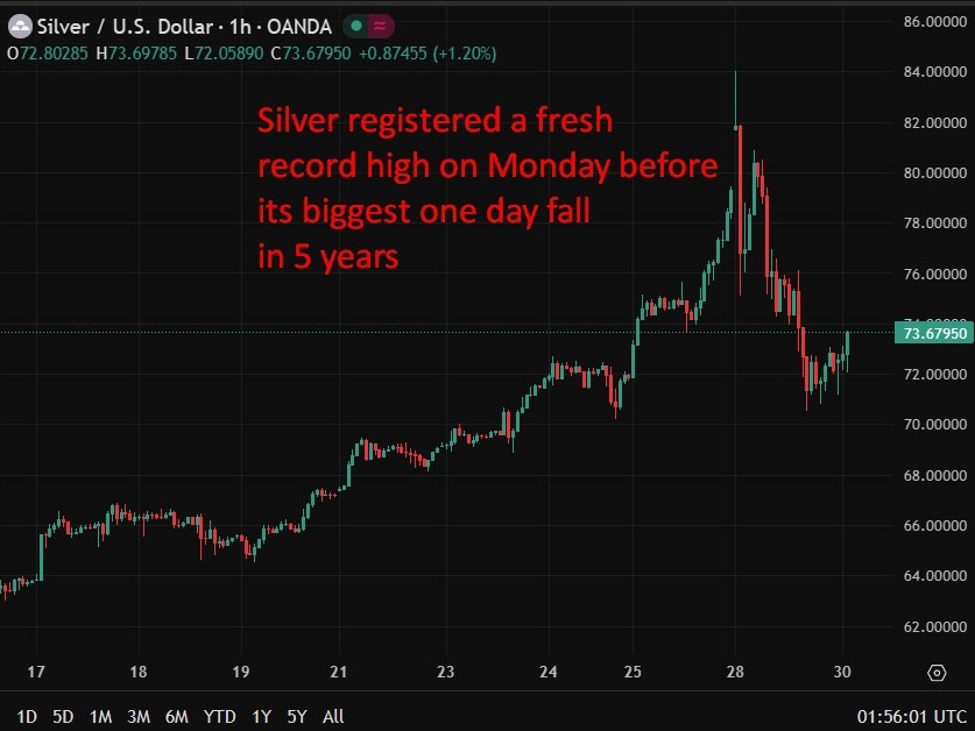
TL;DR summary:Silver steadied after a 9% one-day drop, the largest in over five years.Both gold and silver are on track for their best annual gains since 1979.Central-bank buying, ETF inflows and Fed rate cuts continue to underpin prices.Silver prices stabilised above $73 an ounce after suffering their steepest one-day decline in more than five years, as investors digested an aggressive bout of profit-taking following a powerful year-end rally. The 9% drop on Monday marked silver’s sharpest daily fall since 2019, briefly rattling sentiment across the precious metals complex.Gold prices were comparatively subdued, holding broadly flat after recording their largest two-month decline in years. While near-term momentum has softened, both metals remain on track to post their strongest annual gains since 1979, underlining the scale of the move seen across 2025.Structural support for precious metals remains firmly in place. Central-bank buying has continued at elevated levels, reinforcing gold’s role as a reserve asset amid geopolitical uncertainty and rising fiscal risks. At the same time, sustained inflows into exchange-traded funds have broadened investor participation, while three interest-rate cuts delivered this year by the Federal Reserve have eased the opportunity cost of holding non-yielding assets such as gold and silver.Silver’s rally, however, has been amplified by additional forces. Speculative demand in China surged in recent weeks, pushing premiums on the Shanghai Futures Exchange to record highs. These elevated premiums signalled acute local demand and contributed to tightness in global supply chains, echoing earlier inventory squeezes seen this year in both London and New York vaults.Those dislocations helped propel silver sharply higher into year-end, leaving the market vulnerable to a violent correction once momentum stalled. The latest pullback appears to reflect position unwinds rather than a fundamental shift in the outlook.Looking ahead, analysts expect volatility to remain elevated, particularly in silver, which tends to exaggerate moves in gold during periods of speculative excess. Still, with monetary easing underway, strong official-sector demand and lingering supply constraints, the broader backdrop for precious metals remains supportive as markets move into 2026. This article was written by Eamonn Sheridan at investinglive.com. 🔗 Source 💡 DMK Insight Silver’s recent 9% drop is alarming, but here’s why it matters for traders: After such a steep decline, silver’s stabilization above $73 an ounce could signal a potential rebound, especially with both gold and silver on track for their best annual gains since 1979. Central banks are ramping up their purchases, and ETF inflows are strong, which suggests that institutional interest remains robust. This backdrop is crucial for traders considering long positions, as the fundamentals support a recovery. However, the volatility from the recent drop could lead to further short-term fluctuations, so keeping an eye on the $73 level is key. If silver can hold above this mark, it may attract more buyers looking for a bargain after the sell-off. On the flip side, if prices break below $73, it could trigger stop-loss orders and further selling pressure. Traders should also monitor gold’s performance, as it often influences silver’s price action. Watch for any Fed announcements that could impact interest rates, as these will likely affect both metals. Immediate focus should be on the $73 support level and any shifts in central bank buying behavior. 📮 Takeaway Watch for silver to hold above $73; a break below could trigger more selling, while stability could lead to a rebound.
China defies easing calls as PBOC keeps rates steady and shifts focus to fiscal support
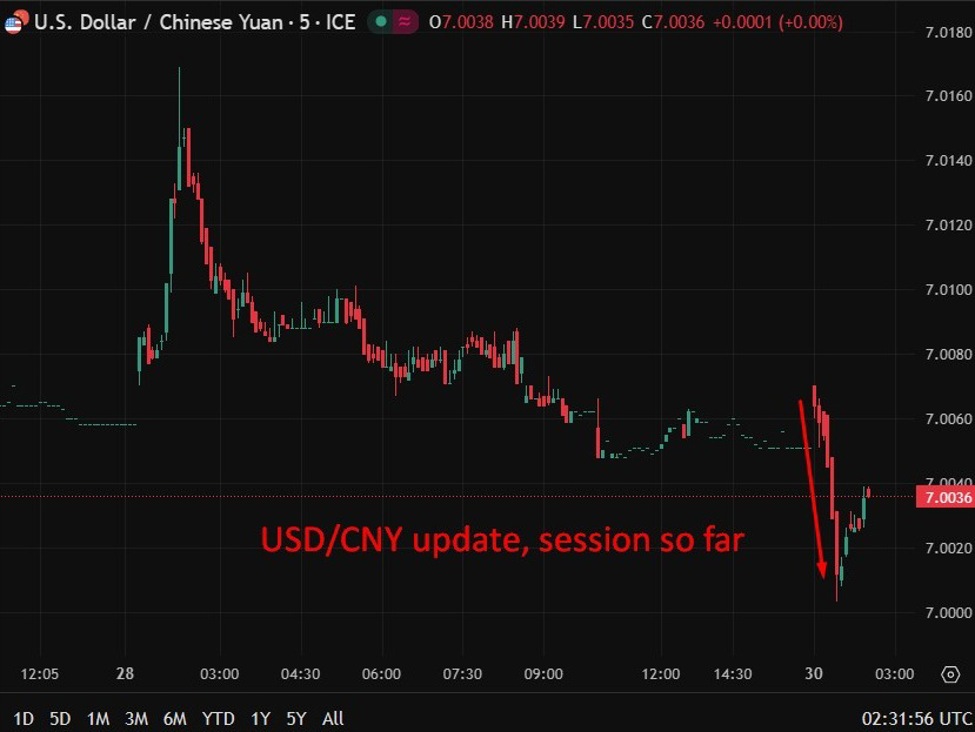
TL;DR summary:China delivered minimal rate cuts despite expectations for aggressive easing.The PBOC has prioritised financial stability and targeted liquidity tools.Fiscal stimulus is expected to carry the bulk of policy support into 2026.China’s central bank has taken a notably restrained approach to monetary easing, defying widespread expectations for aggressive rate cuts as the economy grapples with weak domestic demand, deflationary pressure and structural imbalances. Over the past year, the People’s Bank of China trimmed its policy rate only once, by 10 basis points, the smallest annual reduction since 2021, despite forecasts from major Wall Street banks calling for easing of up to 40 basis points. Info comes via a Bloomberg report, gated. The caution has surprised markets, particularly after Beijing signalled a shift to a “moderately loose” monetary stance for the first time in 14 years as it prepared for escalating trade tensions with the US. What economists underestimated was the resilience of China’s export sector, concerns over banking-system stability, and the impact of a strong equity-market rally, all of which reduced the urgency for sweeping rate cuts. Compared with global peers, China’s stance stands out. While advanced-economy central banks have cut policy rates by an average of 1.6 percentage points over the past two years, the PBOC has delivered only a fraction of that. Adjusted for inflation, Chinese interest rates have moved back into positive territory, underscoring Beijing’s reluctance to follow the ultra-loose playbook adopted by the Federal Reserve, European Central Bank and Bank of Japan during downturns. Instead, policymakers have leaned on targeted and less conventional tools. Liquidity injections through short- and medium-term operations, selective relending programs, support for equity markets and renewed government bond purchases have kept funding conditions loose without slashing benchmark rates. These measures have pushed interbank borrowing costs, such as the seven-day repo rate, to their lowest levels since early 2023. Officials see limited scope for further cuts, with the key policy rate, the 7-day reverse repo, at 1.4% and concerns that deeper reductions could compress bank margins, weaken credit growth and fuel “Japanification” fears. As a result, fiscal policy is set to play the dominant role in 2026, with monetary policy focused on maintaining liquidity and keeping government borrowing costs low rather than driving a demand-led rebound. — The 7-day reverse repo rate, now considered a key policy signal, was cut from 1.5% to 1.4% on May 9, 2025.The 1-year LPR was trimmed to 3.0% from 3.1%, and the 5-year LPR was lowered to 3.5% from 3.6% in May also.. This article was written by Eamonn Sheridan at investinglive.com. 🔗 Source 💡 DMK Insight China’s cautious rate cuts signal a shift in monetary policy focus, and here’s why that matters: The People’s Bank of China (PBOC) is prioritizing financial stability over aggressive easing, which could have significant implications for global markets. Traders should note that this restrained approach may lead to a stronger yuan in the short term, impacting forex pairs like USD/CNY. With fiscal stimulus expected to dominate policy support through 2026, sectors reliant on liquidity may face headwinds. This could also ripple through commodities, especially if demand from China slows due to tighter monetary conditions. Look for key technical levels in the yuan and related assets; if USD/CNY breaks above recent resistance, it could signal a broader risk-off sentiment. Conversely, if the yuan strengthens, commodities priced in USD might face downward pressure. Keep an eye on upcoming economic data releases from China, as they could further influence market sentiment and trading strategies. 📮 Takeaway Watch USD/CNY closely; a break above recent resistance could indicate a shift towards risk-off sentiment in global markets.
Oil traders note – Saudi airstrikes in Yemen expose escalating tensions with UAE
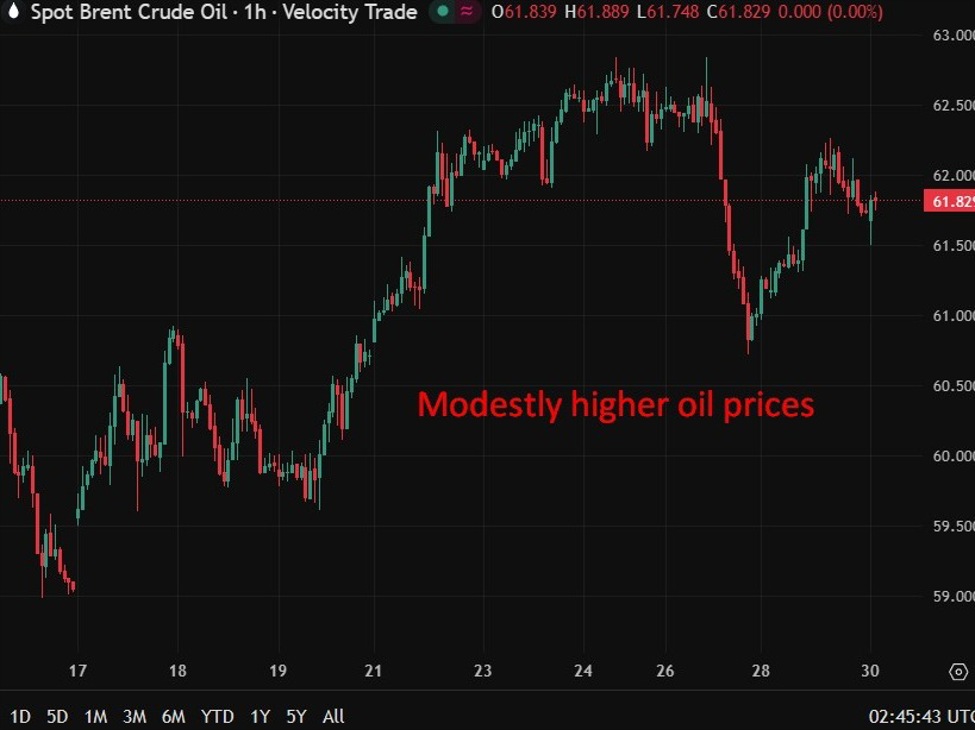
TL;DR summary:Saudi Arabia carried out airstrikes in southern Yemen, indirectly confronting the UAE.Riyadh accused UAE-linked channels of supplying weapons to southern separatists.The episode exposes a widening Saudi–UAE rift with potential oil-market implications.Quiet but long-simmering tensions between Saudi Arabia and the United Arab Emirates (UAE) moved into the open after Saudi airstrikes in southern Yemen, marking the first time Riyadh has directly opposed its former ally in the Yemen conflict.Saudi Arabia said it carried out strikes targeting weapons depots linked to the Southern Transitional Council (STC), a UAE-backed southern separatist faction seeking to restore an independent South Yemen along pre-1990 borders. According to Saudi officials, the weapons were delivered via two ships from Fujairah port in UAE, a claim that sharply escalates the political significance of the operation.The strikes reportedly hit the port of Mukalla in Yemen’s eastern Hadramout province, an area that has become increasingly sensitive as rival regional powers jockey for influence along key Red Sea and Gulf of Aden trade routes. While Riyadh has long viewed the STC’s separatist ambitions as a strategic red line, the latest action suggests Saudi Arabia is now willing to confront the UAE’s role more directly, albeit through proxy dynamics on Yemeni soil.Saudi–UAE friction has been building for years beneath the surface. Once aligned in Yemen against the Houthi movement, the two powers have diverged sharply over end-game objectives. The UAE has cultivated strong ties with southern militias and port infrastructure, while Saudi Arabia prioritises territorial integrity along its southern border and fears that Yemeni fragmentation could destabilise the region.The implications extend well beyond Yemen. Any visible rupture between Riyadh and Abu Dhabi introduces a new layer of uncertainty for energy markets. Both countries sit at the heart of global oil supply chains, and rising intra-Gulf tensions risk inflating geopolitical risk premiums, particularly if disputes spill into maritime chokepoints or shipping logistics.For now, the confrontation remains indirect. But the strikes underscore how Yemen is once again emerging as a flashpoint, not just for regional proxy wars, but for fractures among Gulf allies themselves. This article was written by Eamonn Sheridan at investinglive.com. 🔗 Source 💡 DMK Insight Saudi Arabia’s airstrikes in Yemen signal a serious rift with the UAE, and here’s why that matters for oil traders: The ongoing tensions could disrupt oil supply chains, especially if military actions escalate. With both nations being major players in OPEC, any instability in the region could lead to volatility in crude oil prices. Traders should keep an eye on Brent crude, which has been sensitive to geopolitical events. If tensions escalate further, we might see a breakout above key resistance levels, potentially pushing prices higher. Conversely, if the situation stabilizes, we could see a pullback. Watch for any statements from OPEC or related entities that could indicate a shift in production strategies as well. Here’s the flip side: while the immediate reaction might be bullish for oil, prolonged conflict could lead to economic sanctions or reduced output, which might ultimately stabilize prices in the long run. Keep an eye on the $90 per barrel mark for Brent as a critical level to gauge market sentiment moving forward. 📮 Takeaway Monitor Brent crude’s response around the $90 level as Saudi-UAE tensions could drive volatility in oil prices.
investingLive Asia-Pacific FX news wrap: Silver clawed back for a gain
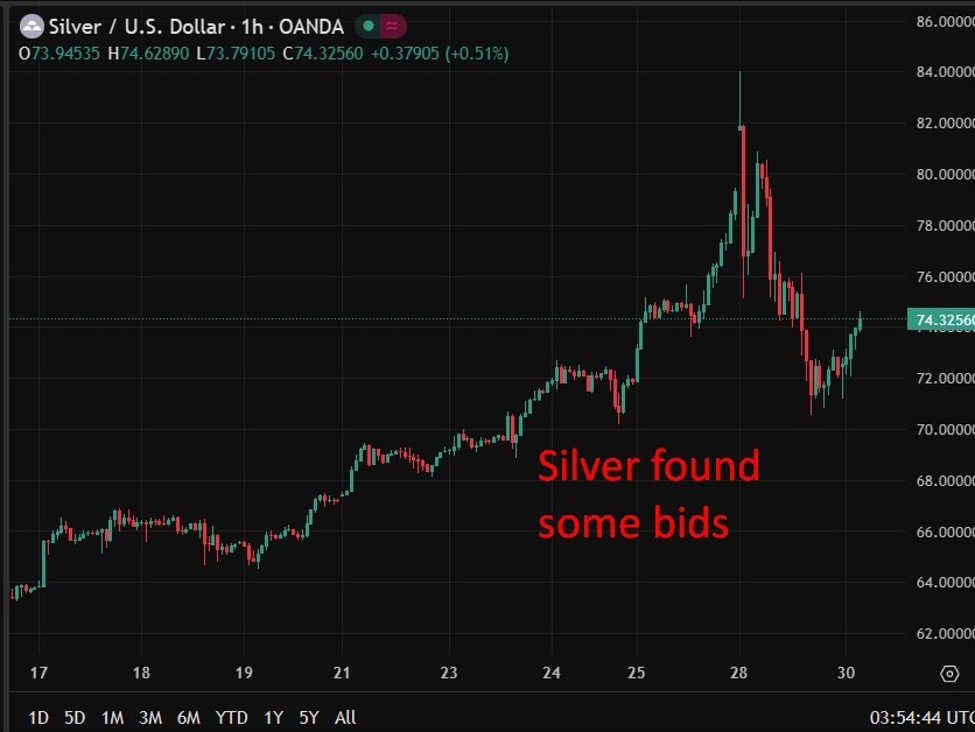
Oil traders note – Saudi airstrikes in Yemen expose escalating tensions with UAEChina defies easing calls as PBOC keeps rates steady and shifts focus to fiscal supportSilver steadies after sharpest sell-off in 5 years as metals head for best year since 1979PBOC sets USD/ CNY central rate at 7.0348 (vs. estimate at 7.0112)South Korea to unveil MSCI Developed Market inclusion roadmap early next yearTrump warns Iran of renewed strikes, keeps Middle East oil risk premium simmeringUS oil inventories surprise higher as geopolitics keeps crude supportedNvidia completes $5bn Intel investment as strategic partnership takes shapeApple China iPhone demand rebound bolsters US$300–$315 price target outlookFinancial markets across the region traded in subdued fashion as the countdown to 2026 continued and most professional participants remained in holiday mode. Major FX pairs were confined to narrow ranges, regional equities were quietly mixed, and Japanese government bond yields eased slightly. The data calendar was largely empty, keeping conviction low. In commodities, oil prices were steady to marginally higher, while silver clawed back some ground following its sharp recent correction.Geopolitics provided the main source of direction, though markets largely looked through the headlines. In Asia, China conducted a further 10 hours of live-fire drills around Taiwan on Tuesday, extending what Beijing has described as its largest-ever exercises around the island. The drills, spanning multiple zones in surrounding sea and airspace, were framed by China’s Eastern Theatre Command as a show of resolve against separatism. The manoeuvres follow a recent US announcement of a large arms package for Taiwan. Despite the scale of the exercises, broader market reaction remained muted.Elsewhere, Middle East risk continued to underpin energy markets. US President Donald Trump warned that Washington could support fresh strikes should Iran be found rebuilding weapons programs, while also urging Hamas to disarm. The comments revived regional risk considerations and reinforced a geopolitical premium in oil, even in the absence of immediate supply disruptions.Oil prices were also supported earlier by conflict-related headlines from Ukraine and Yemen. Saudi Arabia carried out airstrikes in southern Yemen targeting STC-linked positions and, for the first time, accused weapons supplies of arriving via UAE channels — a notable escalation that highlights a widening rift between Riyadh and Abu Dhabi. The episode adds a new layer of uncertainty to Middle East stability.Meanwhile, US inventory data showed crude stocks rising by 405,000 barrels last week against expectations for a draw, with gasoline inventories jumping nearly 3 million barrels. Ordinarily bearish, the figures were largely shrugged off as geopolitical concerns continued to dominate price action.Overall, thin liquidity and year-end positioning kept markets range-bound, with geopolitics shaping risk sentiment more than fundamentals for now. Asia-Pac stocks:Japan (Nikkei 225) -0.25%Hong Kong (Hang Seng) +0.45% Shanghai Composite -0.1%Australia (S&P/ASX 200) -0.1% This article was written by Eamonn Sheridan at investinglive.com. 🔗 Source 💡 DMK Insight Escalating tensions in the Middle East could disrupt oil supply, and here’s why that matters: Saudi airstrikes in Yemen signal a potential escalation in regional conflicts, which could lead to volatility in oil prices. Traders should keep an eye on how this might affect supply chains, especially with the ongoing geopolitical complexities involving the UAE. If tensions rise, we could see a spike in oil prices, impacting not just crude but also related commodities like natural gas and even metals, as energy costs ripple through the economy. Meanwhile, the PBOC’s decision to maintain steady rates at 7.0348 for USD/CNY indicates a cautious approach to economic stability in China. This could affect global trade dynamics, especially for commodities priced in USD. Traders should monitor the correlation between oil prices and the CNY, as a weaker yuan could make oil imports more expensive for China, potentially leading to reduced demand. Watch for key price levels in crude oil; a break above recent highs could trigger further bullish sentiment, while a drop below support levels might signal a bearish reversal. 📮 Takeaway Watch for oil price movements around geopolitical tensions; a break above recent highs could signal a bullish trend, while a drop below support levels may indicate a reversal.

Spain December preliminary CPI +2.9% vs +2.8% y/y expected
Prior +3.0%HICP +3.0% vs +3.0% y/y expectedPrior +3.2%Spanish headline inflation comes in slightly below the readings in November but more or less within estimates at least. The most important metric though is core annual inflation and that is still seen at 2.6%, similar to the previous month. As such, that continues to reflect stickier price pressures in the Spanish economy in general. But at least overall economic activity is among the better performers in the euro area, unlike *coughs* Germany *coughs*. This article was written by Justin Low at investinglive.com. 🔗 Source
A quick rundown on who's who at the Federal Reserve in 2026
Well, a brand new year will mark the changing of the guard so to speak in terms of voting members at the Fed. And we will get to that in a couple of days’ time, so it is important to understand the dynamics of the situation especially since we’re entering a rather delicate timeline for the central bank.The Fed managed to sneak in one final rate cut for the year earlier this month. However, markets are taking on the view that the next move will need a lot more convincing. As things stand, the next full 25 bps rate cut is only priced in for June 2026 with there being ~60 bps of rate cuts priced in for the year ahead.As we move closer to neutral, the push to cut rates will lessen but that is something that Trump doesn’t really want. So, the political pressure will be there even as inflation pressures might not ease as much in the first half of the year. But once Powell is gone and we get into the second half of 2026, it might be a different story on the inflation narrative.And if the labour market continues to soften, that will at least give the Fed some added flexibility to stick to the plot of cutting rates. Otherwise, stagflation risks are going to be a consideration instead. So, policymakers will be hoping that the backdrop doesn’t develop as such.In any case, the main cast of voting members will remain unchanged next year but the most important thing to note is that Fed chair Powell’s term will be ending on May 2026.Jerome Powell (Fed chair)Philip Jefferson (Fed vice chair)Michelle Bowman (Fed vice chair for supervision)Michael Barr (Fed governor)Christopher Waller (Fed governor)Lisa Cook (Fed governor)Stephen Miran (Fed governor)John Williams (NY Fed president)With Powell out of the equation, we’ll likely get a Trump puppet in place though the race is now between the two Kevins. Hassett is one that is more aligned with Trump’s views whereas Warsh is slightly more favoured by Wall Street to take over. But in any case, expect this to reflect a more dovish shift in terms of voting stance as compared to Powell – who is often a more neutral player.Then, there’s also the curious case of Miran who is expected to leave when his term expires at the end of January. So, he will at least be voting once again for the 28 January policy decision. He is a Trump puppet and has been pushing for a 50 bps rate cut since joining the fray, so don’t expect that to change next month.His replacement will likely be a permanent appointee by Trump, so don’t expect any less dovishness on this one to say the least. But until one is appointed, Miran will stay on in that position. So, it’s an indifferent motion really.Everyone else on the list above tends to lean more neutral to dovish as of late, so that sort of stance is expected to continue as we get into the new year.As for the rotating members, we are seeing a change up with the fresh names coming in being:Beth Hammack (Cleveland Fed)Anna Paulson (Philadelphia Fed)Lorie Logan (Dallas Fed)Neel Kashkari (Minneapolis Fed)And the ones rotating out will be:Susan Collins (Boston Fed)Austan Goolsbee (Chicago Fed)Alberto Musalem (St Louis Fed)Jeffrey Schmid (Kansas City Fed)I commented previously on the change as such:”Hammack and Logan should be like-for-like replacements to Goolsbee and Schmid on the central bank dove versus hawk scale. And if anything, they might even be more hawkish. So, it will be a tough task to want to change their minds in pushing for stronger conviction on rate cuts.”So, that sort of keeps things as they are to what we saw in the December meeting. That at least to start the year.But with Powell set to depart and the possible “inflation mirage” forming in the second half of 2026, it might be a case that we will see the Fed slowly turn more dovish as a whole in due time; all else being equal. A push for an earlier rate cut, perhaps in April, remains on the table as well. So, it’s not to say that we will have to wait out Powell before seeing that happen.Come what may, Trump might not get his wish of wanting rates to come down quicker. However, he will at least get a more dovish tilt out of the central bank unless we see a material shift in the economic trend for next year. This article was written by Justin Low at investinglive.com. 🔗 Source 💡 DMK Insight The upcoming change in voting members at the Fed could shift monetary policy expectations, and here’s why that matters: as we approach the new year, traders need to be aware of how these shifts might influence interest rates and market sentiment. With new members potentially bringing different perspectives, the Fed’s stance on inflation and economic growth could evolve, impacting everything from equities to forex pairs. Look at the broader context: if the new members lean towards a more hawkish approach, we could see a stronger dollar and downward pressure on commodities. Conversely, a dovish tilt might support risk assets, including cryptocurrencies. Traders should keep an eye on the Fed’s communications and any hints regarding future rate hikes or cuts, especially in the first quarter of the year. Key levels to watch include the current interest rate and any significant economic indicators released around the time of the voting changes. So, as we gear up for this transition, monitor the Fed’s upcoming statements closely; they could set the tone for market movements in early 2024. 📮 Takeaway Watch for the Fed’s new voting members’ stance on interest rates; their views could significantly impact the dollar and risk assets in early 2024.
China to require chipmakers to follow 50% domestic equipment rule – report
It is reported that China is to mandate chipmakers to use at least 50% of domestically made equipment for adding new capacity, as Beijing looks to keep up the push in building a self-sufficient semiconductor supply chain.The sources noted however that the rule is not one that will be publicly documented. But should chipmakers seek state approval to build or expand their plants, they are said to have been told to show proof in their procurement tenders that at least half their equipment are Chinese-made.The push here is quite a significant one by Beijing, who seem to be happy to double down and hunker down by stripping itself of any reliance on foreign technology. That especially after the US has continued to tighten technology export restrictions since 2023, having banned sales of advanced AI chips and semiconductor equipment to China.But with this new mandate, it even sees China look to alienate supply of foreign equipment from the likes of Japan, South Korea, and Europe in favour of domestic suppliers.That being said, the sources said that local authorities will grant flexibility depending on supply constraints. In particular, areas where domestically developed equipment is not yet fully available. However, applications which typically fail to meet the 50% threshold should be rejected.One of the sources mentioned that:”Authorities prefer if it is much higher than 50%. Eventually they are aiming for the plants to use 100% domestic equipment.”As Beijing continues down this path, the big winner seems to be China’s largest chip equipment group, Naura Technology. That’s one big name to keep an eye out for next year alongside its smaller rival, Advanced Micro-Fabrication Equipment (AMEC).Chinese firms will be looking to turn to these two names, especially in the area of chip etching during microfabrication – which is a crucial step in the manufacturing process. This article was written by Justin Low at investinglive.com. 🔗 Source 💡 DMK Insight China’s new mandate for chipmakers could shake up global supply chains and impact tech stocks. By requiring at least 50% domestic equipment for new semiconductor capacity, Beijing is doubling down on its self-sufficiency goals. This move not only affects Chinese manufacturers but also has ripple effects on global tech firms reliant on semiconductors. Traders should keep an eye on companies like TSMC and Intel, which may face increased competition or supply chain disruptions. The semiconductor sector is already volatile, and this regulation could exacerbate that, especially if it leads to delays in production or increased costs. On the flip side, this could present opportunities for domestic equipment manufacturers in China, potentially boosting their stock prices. For traders, monitoring the performance of semiconductor ETFs and related stocks will be crucial in the coming weeks. Watch for any announcements from major chipmakers regarding their compliance with this mandate, as it could trigger significant market movements. 📮 Takeaway Keep an eye on semiconductor stocks and ETFs; any compliance announcements could lead to volatility, especially in the next few weeks.

CoinGecko Ranks Crypto Narratives by ROI — Here’s Which Sector Delivered the Best Returns
RWA led 2025 crypto narratives with the highest average year-to-date return of 185.76%. Only three narratives posted positive returns: RWA, Layer 1 blockchains at 80.31%, … 🔗 Source 💡 DMK Insight RWA’s staggering 185.76% return this year is a game changer for crypto traders looking for momentum. With only a handful of narratives in the green, RWA stands out, suggesting a strong institutional interest and potential for further growth. Layer 1 blockchains also performed well, but RWA’s dominance indicates a shift in investor focus. Traders should consider how this narrative could influence related assets, especially if RWA continues to attract capital. Watch for any breakout above key resistance levels, as sustained momentum could lead to a broader rally across the crypto space. Keep an eye on market sentiment and news that could impact RWA’s trajectory, as volatility is likely to increase with such high returns. 📮 Takeaway Monitor RWA for potential breakouts; a sustained rally could influence broader crypto market trends.

Hyperliquid Unstaking Alert: 1.2M Tokens Move Before Jan 6 Sparks Tension
Hyperliquid unstaked 1.2 million HYPE tokens on Dec. 28 ahead of scheduled team distributions on Jan. 6. The move is part of a 24-month vesting … 🔗 Source 💡 DMK Insight Hyperliquid’s decision to unstake 1.2 million HYPE tokens is a significant move that traders need to watch closely. This action, occurring just ahead of team distributions, could signal potential volatility in the HYPE market as the tokens enter circulation. With a 24-month vesting period in place, the immediate influx of tokens might pressure prices, especially if market sentiment is already shaky. Traders should keep an eye on the upcoming distribution date of January 6, as it could trigger selling pressure if holders decide to liquidate their positions. On the flip side, if demand for HYPE remains strong, this could create a buying opportunity for savvy traders looking to capitalize on short-term dips. Monitoring trading volumes and price action around this date will be crucial. Watch for key support levels that could emerge as traders react to the new supply entering the market. 📮 Takeaway Keep an eye on HYPE’s price action around January 6; increased selling pressure could create buying opportunities if demand holds strong.
China CBDC Digital Yuan To Enter New Era on Jan. 1 — Here’s What’s Changing
Starting Jan. 1, 2026, China’s digital yuan will become interest-bearing, transitioning to a digital deposit model to drive adoption. The PBOC’s new action plan enhances … 🔗 Source 💡 DMK Insight China’s digital yuan going interest-bearing is a game changer for traders: here’s why. Starting January 1, 2026, the People’s Bank of China (PBOC) is shifting the digital yuan to an interest-bearing model, which could significantly boost its adoption. This move not only makes the digital yuan more attractive compared to traditional savings accounts but also positions it as a competitive alternative to other digital currencies. Traders should keep an eye on how this impacts the broader forex market, especially against the US dollar and other major currencies. If the digital yuan gains traction, we could see shifts in capital flows that might affect currency pairs like USD/CNY. But here’s the flip side: while this could enhance liquidity and usage, it also raises questions about the implications for monetary policy and inflation. If the digital yuan becomes widely adopted, it could challenge the dominance of the dollar in international trade. Traders should monitor key levels in USD/CNY, particularly any breakouts or reversals as we approach 2026. Watch for institutional reactions as they adjust their strategies in anticipation of this major shift. 📮 Takeaway Keep an eye on USD/CNY as China’s digital yuan becomes interest-bearing in 2026; watch for potential shifts in capital flows and market reactions.