
 Bitcoin
  Ethereum
  Tether
  XRP
XRP  BNB
BNB  USDC
USDC  Solana
  TRON
TRON  Lido Staked Ether
  Figure Heloc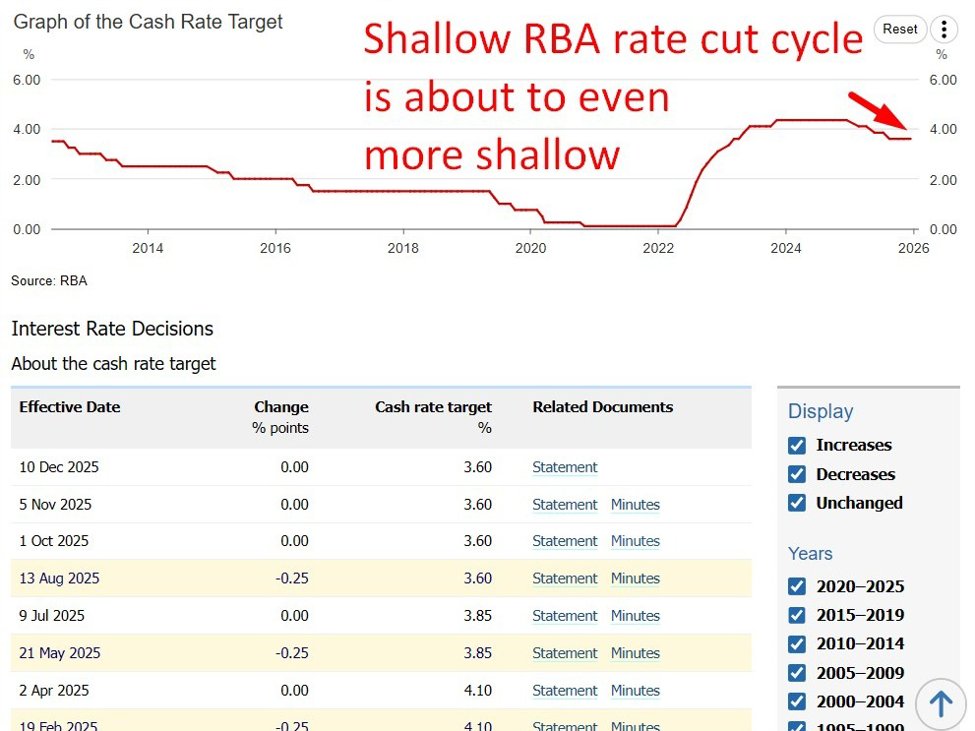
SummaryWestpac now expects the RBA to hold rates through all of 2026Inflation is easing, but not fast enough to change the RBA’s stanceRate cuts remain feasible in early 2027 under current forecastsLabour-market deterioration could shift timing earlierPrivate-sector recovery reducing downside growth risksWestpac Economics has revised its outlook for Australian monetary policy, now expecting the Reserve Bank of Australia to keep the cash rate on hold throughout 2026 as it remains wary of inflation risks despite signs of easing price pressures.In a research note, Westpac said the RBA has clearly taken signal from recent upside inflation surprises, even while acknowledging that some of those outcomes reflected temporary factors. Inflation is expected to moderate through 2026, but not quickly enough, in Westpac’s view, to persuade the central bank to soften its still-hawkish risk assessment.On current forecasts, Westpac continues to see scope for rate cuts, but only in 2027, with February and May identified as the most likely windows if inflation and labour-market dynamics evolve as expected. The bank argues the RBA will need clearer evidence that inflation is sustainably returning to target before easing policy.Westpac flagged risks on both sides of its base-case outlook. A material deterioration in labour-market conditions could reopen the possibility of rate cuts being pulled forward into 2026. However, the bank considers talk of further rate hikes premature, despite acknowledging that additional near-term inflation surprises could unsettle the RBA and prompt a tightening move.Should such a hike occur, Westpac said it would likely require a downward revision to forecasts for economic growth, medium-term inflation and labour-market outcomes, increasing the probability of a subsequent policy reversal in 2027.More broadly, Westpac argues the Australian economy is evolving largely in line with its expectations. Public-sector demand growth has slowed sharply and was negative in the first half of 2025, while private-sector demand has begun to recover. The labour market is gradually easing, and underlying growth in labour costs is moderating.Encouragingly, productivity growth is already running faster than the RBA’s conservative trend assumptions, according to Westpac. As a result, the bank sees 2026 as a year of continued recovery from a prolonged period of weak private-sector demand growth.Westpac added that concerns around a “shaky handover”, where private-sector activity fails to pick up as public-sector support fades, appear to have largely dissipated. This article was written by Eamonn Sheridan at investinglive.com. 🔗 Source 💡 DMK Insight Westpac’s forecast for the RBA to hold rates through 2026 is a big deal for traders: it signals stability in the Aussie dollar and impacts interest-sensitive assets. With inflation easing but not rapidly enough to prompt immediate cuts, traders should keep an eye on the Australian dollar (AUD) against major pairs like the USD and EUR. If the RBA maintains its current stance, we could see the AUD strengthen, especially if labor market conditions improve. However, the potential for rate cuts in early 2027 introduces uncertainty—traders need to watch for shifts in economic indicators that could accelerate this timeline. Key levels to monitor are the AUD/USD around 0.65 and 0.67, which could act as support and resistance, respectively. The broader context of global monetary policy will also play a role, particularly if other central banks adjust their rates. Here’s the thing: while the RBA’s hold might seem like a safe bet, any unexpected labor market shifts could flip the script. Keep an eye on employment data releases and inflation reports in the coming months for clues on potential rate changes. 📮 Takeaway Watch the AUD/USD levels around 0.65 and 0.67 as the RBA’s rate stance evolves; labor market data will be crucial for timing any shifts.
Apple readies AI glasses and smart AirPods in next wearable push
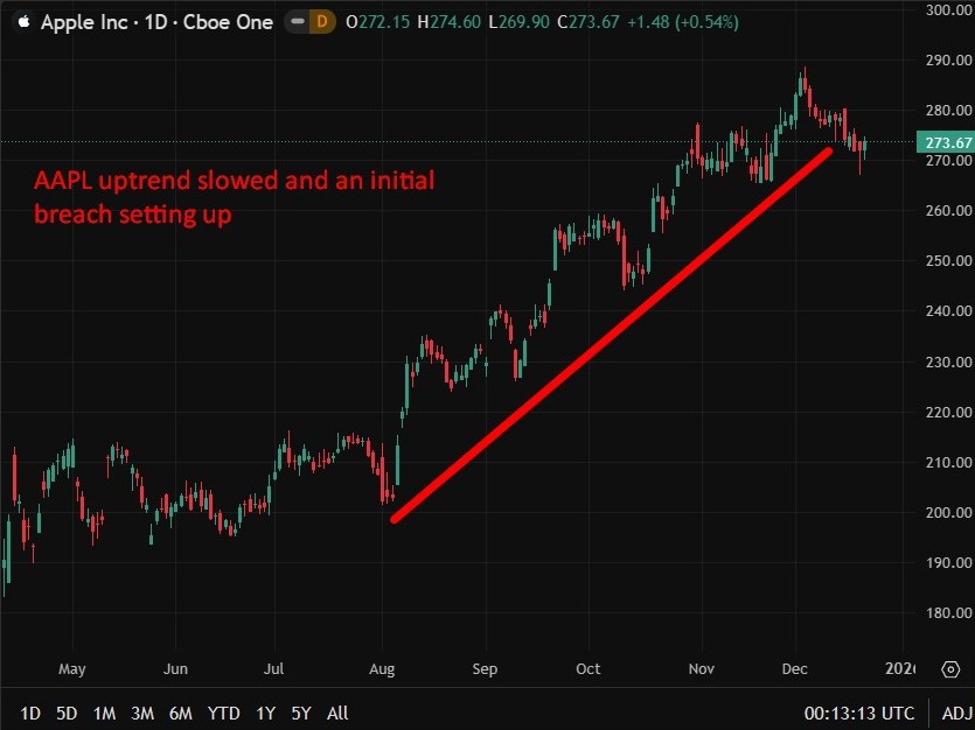
Summary:Apple plans AI glasses and AI-enhanced AirPods next yearTwo smart-glasses models planned, with and without displayDisplay-free glasses may launch first using voice-based AIAI AirPods to feature spatial recognition and gesture controlsTaiwan supply chain plays central role in productionApple is preparing to expand its artificial-intelligence hardware strategy with the launch of two new AI-enabled wearable devices next year, according to media reports citing supply-chain sources that I can dig up. The push is expected to include smart glasses and a new generation of AI-enhanced AirPods, marking Apple’s most ambitious move yet to embed generative AI into everyday consumer hardware.Reports says Apple is developing two variants of smart glasses. The first, known internally as the N50 model, will not include a display and is targeted for release as early as 2026. Instead, the device is expected to rely on voice-based AI interactions, positioning it as a lightweight, always-on assistant rather than a full augmented-reality product. A second version featuring an integrated display is reportedly further out, with a launch window seen in 2027 or 2028 as Apple continues to refine optics, battery life and on-device processing.In parallel, Apple is also planning to roll out AI-enhanced AirPods Pro next year. The updated earbuds are expected to incorporate an infrared lens capable of spatial recognition, enabling new gesture-based controls and more immersive contextual awareness. Such features would allow the AirPods to interact more closely with a user’s surroundings, laying the groundwork for deeper integration with Apple’s broader AI and spatial-computing ecosystem.Supply-chain involvement points to a heavy reliance on Apple’s long-standing Taiwan manufacturing partners. Foxconn is expected to handle assembly, while TSMC will supply key chips. Optical components are reportedly being sourced from Largan Precision, with hinges provided by Shin Zu Shing.Strategically, the wearables push underscores Apple’s intention to bring AI closer to the user, moving beyond cloud-centric services and smartphones. By embedding AI directly into personal devices, Apple aims to create a more seamless, ambient computing experience — one that could eventually serve as a bridge toward full augmented-reality hardware later in the decade. This article was written by Eamonn Sheridan at investinglive.com. 🔗 Source 💡 DMK Insight Apple’s move into AI glasses and enhanced AirPods could shake up tech markets significantly. The introduction of two smart-glass models, especially one without a display, indicates a shift towards voice-based AI, which could redefine user interaction with technology. This is particularly relevant as the tech sector is increasingly focused on integrating AI into everyday devices. Traders should watch how this impacts related stocks, especially in the semiconductor and supply chain sectors, given Taiwan’s central role in production. If Apple successfully captures market share in this niche, it could lead to increased demand for components, affecting companies like TSMC and other suppliers. However, there’s a flip side: the market’s reaction to new tech can be volatile. If initial sales disappoint or if competitors quickly catch up, we might see a downward adjustment in Apple’s stock. Keep an eye on the upcoming product launch timelines and any pre-orders, as these will be key indicators of market sentiment and potential price movements in the tech sector. 📮 Takeaway Watch for Apple’s product launch timelines next year; initial sales figures will be crucial for assessing market impact and related stock movements.
PBOC is expected to set the USD/CNY reference rate at 7.0407 – Reuters estimate
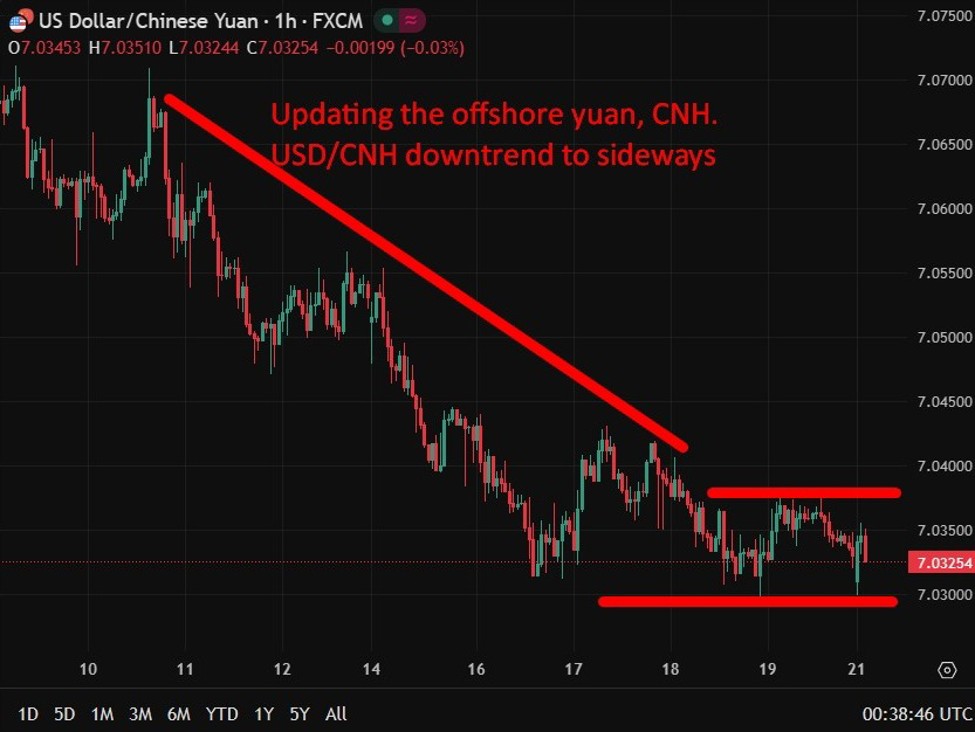
The People’s Bank of China is due to set the daily USD/CNY reference rate at around 0115 GMT (2115 US Eastern time), a fixing that remains one of the most closely watched signals in Asian foreign exchange markets. China operates a managed floating exchange rate system, under which the renminbi (yuan) is allowed to trade within a prescribed band around a central reference rate, or midpoint, set each trading day by the PBOC. The current trading band permits the currency to move plus or minus 2% from the official midpoint during onshore trading hours. Each morning, the PBOC determines the midpoint based on a range of inputs. These include the previous day’s closing price, movements in major currencies, particularly the US dollar, broader international FX conditions, and domestic economic considerations such as capital flows, growth momentum and financial stability objectives. The midpoint is not a purely mechanical calculation, allowing policymakers discretion to guide market expectations. Once the midpoint is announced, onshore USD/CNY is free to trade within the allowable band. If market pressures push the yuan toward either edge of that range, the central bank may step in to smooth volatility. Intervention can take the form of direct buying or selling of yuan, adjustments to liquidity conditions, or guidance through state-owned banks. As a result, the daily fixing is often interpreted as a policy signal rather than just a technical reference point. A stronger-than-expected CNY midpoint is typically read as a sign the PBOC is leaning against depreciation pressure, while a weaker fixing for the CNY can indicate tolerance for a softer currency, often in response to dollar strength or domestic economic headwinds.In periods of heightened global volatility, such as shifts in US rate expectations, trade tensions or capital flow pressures, the fixing takes on added significance. For investors, it provides insight into Beijing’s currency priorities, balancing competitiveness, capital stability and financial market confidence. This article was written by Eamonn Sheridan at investinglive.com. 🔗 Source 💡 DMK Insight The upcoming USD/CNY reference rate fixing is crucial for traders, especially with ongoing volatility in global markets. China’s managed floating exchange rate system means this rate can significantly influence not just the yuan but also broader forex sentiment. If the PBOC sets a weaker reference rate, it could trigger a sell-off in the yuan, impacting commodities and emerging market currencies tied to Chinese demand. Traders should keep an eye on the 7.00 level for USD/CNY, as a break above could signal further weakness in the yuan. Additionally, watch for reactions in related assets like copper and oil, which often correlate with Chinese economic health. Given the current market climate, this fixing could set the tone for trading strategies in the coming days, particularly for those focusing on short-term positions in the forex market. 📮 Takeaway Monitor the USD/CNY reference rate closely; a move above 7.00 could indicate yuan weakness and impact related commodities.
Oil prices support from tighter US sanctions enforcement and rising Middle East tensions.
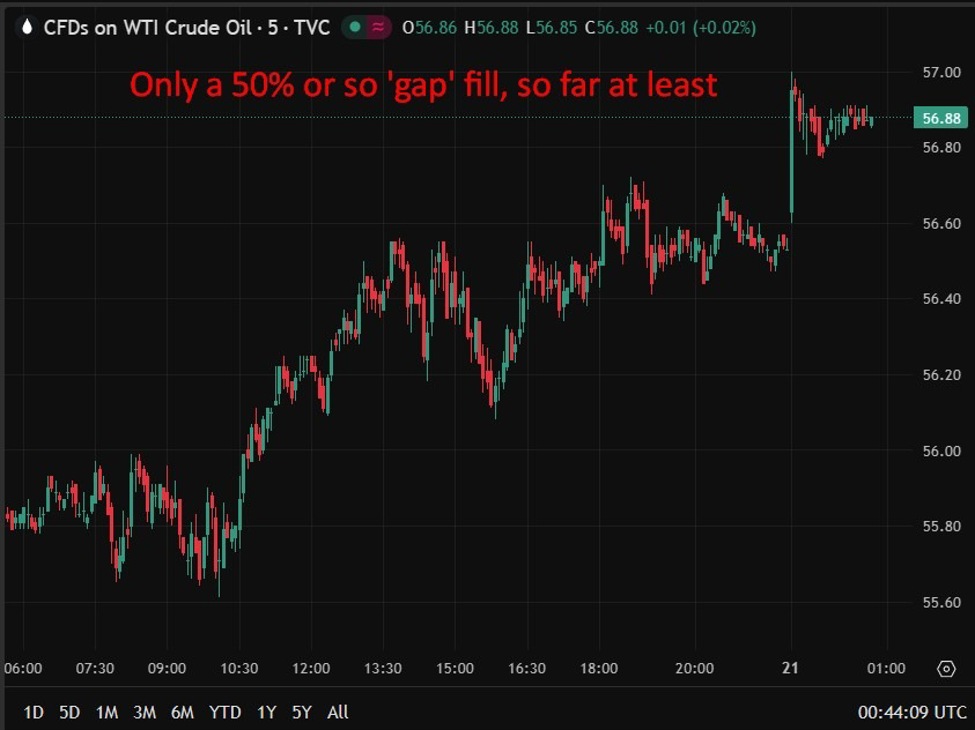
SummaryOil prices rose after the U.S. intercepted a Venezuelan oil tankerWashington is pursuing another tanker, tightening sanctions enforcementIsrael–Iran tensions add a separate geopolitical risk premiumMarkets wary of miscalculation triggering broader conflictSupply-side risks outweigh near-term demand concernsOil prices firmed in early Asian trading on Monday, supported by a renewed uptick in geopolitical risk after the United States intercepted a Venezuelan oil tanker over the weekend, while tensions between Israel and Iran remained elevated.U.S. officials told Reuters that Washington is also pursuing another Venezuelan tanker, which would mark the third such interception in less than two weeks if successful. The stepped-up enforcement highlights a tougher U.S. stance on sanctions evasion and adds uncertainty around crude supply flows from Venezuela at a time when markets are already sensitive to geopolitical disruptions.The tanker action comes against a backdrop of rising Middle East tensions after Israel warned the United States that recent missile exercises by Iran’s Revolutionary Guard could be misread as preparations for a strike. While U.S. intelligence does not currently see evidence of an imminent Iranian attack, Israeli officials have stressed that risk tolerance is far lower following the Oct. 7, 2023 Hamas assault, raising concerns about miscalculation and unintended escalation.Energy markets have responded by building in a higher geopolitical risk premium. Traders remain focused on the possibility that even a limited Israel–Iran confrontation, or defensive pre-emptive actions triggered by misinterpretation, could disrupt oil flows through the Strait of Hormuz, a critical chokepoint for global crude supply.At the same time, the Venezuelan tanker interceptions underscore Washington’s willingness to more actively police sanctions, potentially tightening effective supply from Latin America. While Venezuelan crude exports have continued despite sanctions via opaque shipping routes, repeated U.S. interdictions increase uncertainty around delivery reliability and insurance costs.Together, the Middle East risk backdrop and firmer U.S. enforcement action are providing support to oil prices, even as broader macro concerns, including global growth and monetary policy, continue to cap upside. For now, the market appears more focused on tail risks to supply than on near-term demand headwinds. This article was written by Eamonn Sheridan at investinglive.com. 🔗 Source 💡 DMK Insight Oil prices are climbing, and here’s why traders need to pay attention: geopolitical tensions and supply-side risks are mounting. The U.S. interception of a Venezuelan oil tanker signals a tightening of sanctions that could further restrict supply. With Israel and Iran’s escalating tensions, the market is pricing in a risk premium that could lead to significant volatility. Traders should note that while demand concerns linger, the supply-side dynamics are currently dominating market sentiment. If prices break above key resistance levels, we could see a sustained rally. Watch for how these geopolitical events unfold, as any miscalculation could trigger broader conflicts, impacting not just oil but related markets like energy stocks and commodities. Keep an eye on the daily chart for oil; a close above recent highs could signal a bullish trend. Conversely, if tensions ease or if there’s a significant demand drop, we might see a pullback. The real story is how these geopolitical factors will influence trading strategies in the coming weeks. 📮 Takeaway Monitor oil prices closely; a break above recent highs could signal a bullish trend, while geopolitical tensions remain a key risk factor.
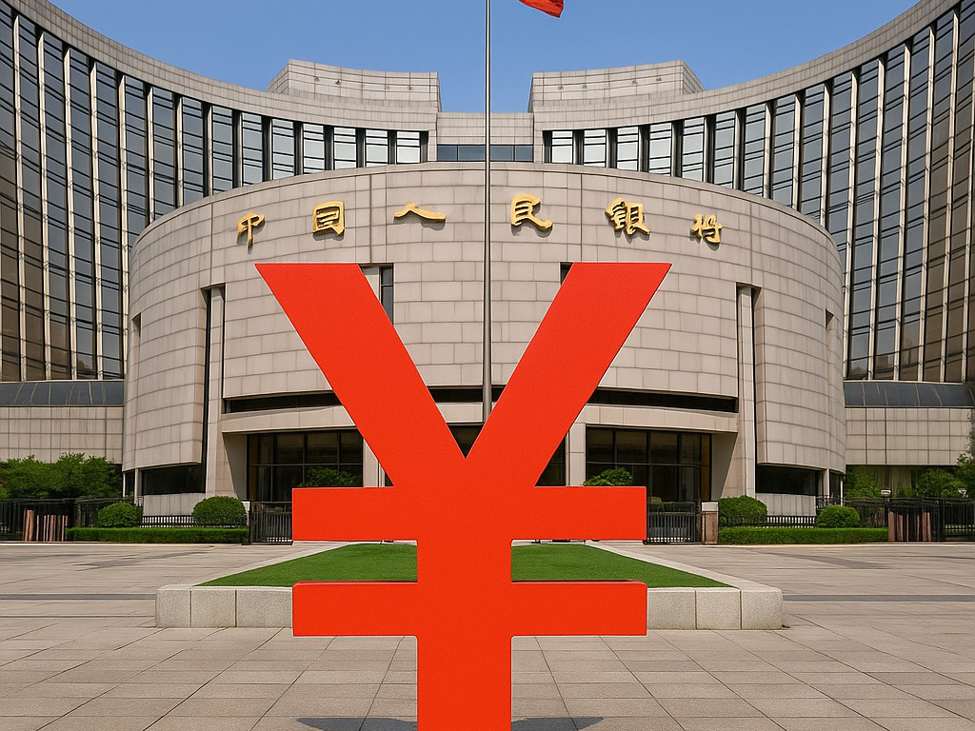
PBOC sets USD/ CNY reference rate at 7.0572 (vs. estimate 7.0407)
The People’s Bank of China (PBOC), China’s central bank, is responsible for setting the daily midpoint of the yuan (also known as renminbi or RMB). The PBOC follows a managed floating exchange rate system that allows the value of the yuan to fluctuate within a certain range, called a “band,” around a central reference rate, or “midpoint.” It’s currently at +/- 2%.Earlier:PBOC is expected to set the USD/CNY reference rate at 7.0407 – Reuters estimateThe daily fixing of this mid-rate is often interpreted as a policy signal rather than just a technical reference point. A higher-than-expected USD/CNY midpoint is typically read as a sign the PBOC is leaning against CNY appreciation pressure, like today.—In other news from the People’s Bank of China, China’s Loan Prime Rates remain unchanged again, marking the seventh consecutive month without a change.PBoC sets 5 year at 3.50% (vs. exp. 3.50% and prior 3.5%)1 year at 3.00% (vs.exp. 3.0% and prior 3.0%) A look at the past changes in the LPR, since early 2022:China’s main policy rate is now the reverse repo rate, currently at 1.4% for the 7-day.The 7-day rate serves as a key policy benchmark, influencing other lending rates like the Loan Prime Rates (LPRs). The PBOC uses these open market operations to inject or absorb funds, influencing interbank lending rates. This article was written by Eamonn Sheridan at investinglive.com. 🔗 Source 💡 DMK Insight The PBOC’s control over the yuan’s midpoint is crucial for traders navigating the forex market right now. With the yuan’s value fluctuating within a managed band, any adjustments by the PBOC can signal shifts in China’s economic policy or trade dynamics. Traders should watch for potential interventions, especially if the yuan approaches the edges of its band. This could impact not just USD/CNY pairs but also commodities priced in yuan, like gold or oil. If the PBOC decides to widen the band, it could lead to increased volatility in the forex market, prompting traders to reassess their positions. Keep an eye on the daily midpoint adjustments as they could provide insights into broader economic trends and potential trading opportunities. Also, consider how this might ripple through to other Asian currencies; a stronger yuan could bolster regional currencies, while a weaker yuan might create headwinds. The next few weeks will be critical as economic data releases could prompt the PBOC to act, so stay alert for any signs of policy shifts. 📮 Takeaway Monitor the PBOC’s daily midpoint adjustments closely; any significant changes could signal volatility in USD/CNY and related markets.
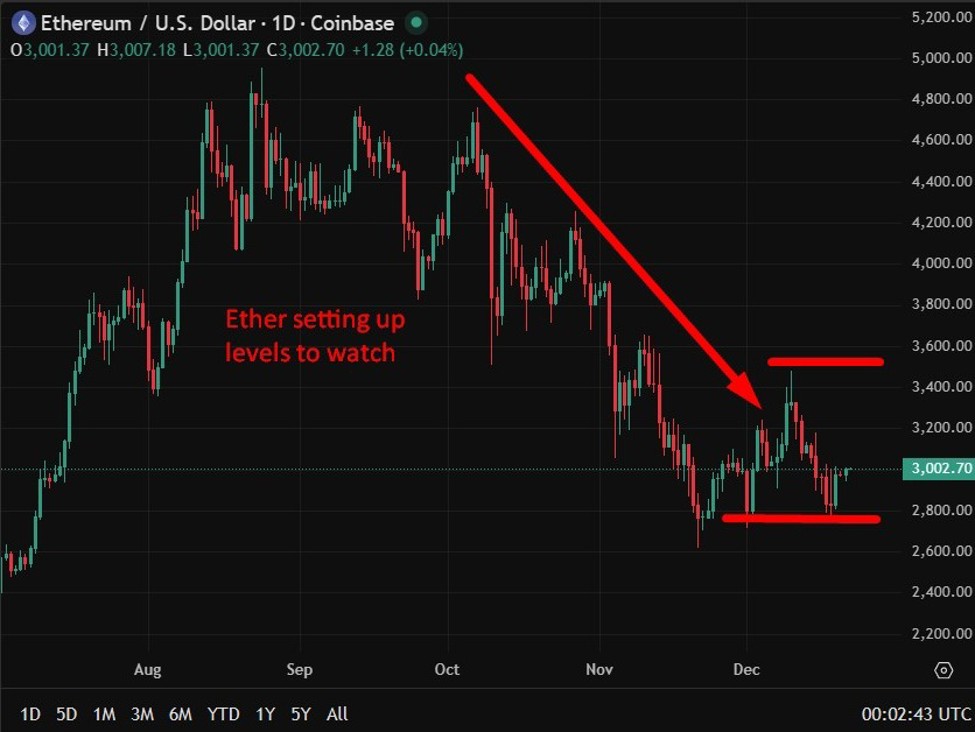
Ethereum puts security ahead of speed as zkEVMs move toward institutional readiness.
SummaryEthereum shifts zkEVM roadmap toward security-first standards128-bit provable security set as mandatory for mainnet useThree milestones introduced through end-2026New cryptographic tools make higher security achievableInstitutional adoption push continues alongside tighter standardsEthereum Foundation has set out a new technical roadmap for zero-knowledge Ethereum Virtual Machines, signalling a decisive shift away from speed-at-all-costs development toward provable security as the non-negotiable standard for mainnet deployment.The roadmap follows major performance breakthroughs across zkEVM teams, which have slashed proof-generation times from minutes to seconds while dramatically reducing costs. As a result, nearly all Ethereum blocks can now be proven in under 10 seconds on target hardware. However, the foundation warned that these gains have exposed a deeper vulnerability: many current zkEVM designs rely on cryptographic assumptions that remain unproven — and in some cases are being challenged by new research.The foundation described security as the “elephant in the room,” warning that a compromised proof system would undermine Ethereum entirely. A forged proof could enable attackers to mint tokens, rewrite blockchain state, or drain funds, making cryptographic soundness the system’s ultimate line of defence.To address this, the foundation has introduced a three-stage roadmap running through the end of 2026. The centrepiece is a mandatory move toward 128-bit provable security for any zkEVM intended for production use, bringing Ethereum in line with standards recommended by cryptographic authorities.The first milestone, due by early 2026, requires teams to integrate their proof systems with a new security-estimation framework designed to rigorously quantify cryptographic assumptions. A second checkpoint later in 2026 raises the bar further, requiring higher security guarantees alongside limits on proof size and clearer architectural transparency. The final milestone mandates full 128-bit security, tightly constrained proof sizes, and formal arguments validating recursive proof structures.Ethereum researchers argue the timing is deliberate. As zkEVM architectures begin to stabilise, formal verification and security proofs can be applied more effectively before system complexity locks in long-term risk. Recent advances in polynomial commitments, recursion design and proof compression have made these targets technically achievable.Alongside the tighter technical stance, Ethereum is accelerating its institutional strategy. Through its “Ethereum for Institutions” initiative, the foundation is positioning Ethereum as production-ready infrastructure for regulated finance, highlighting its validator base, network resilience and rapidly maturing privacy technologies.The foundation pointed to strong uptake in tokenised real-world assets, where Ethereum continues to dominate, with major financial firms already deploying live products on the network. More here. This article was written by Eamonn Sheridan at investinglive.com. 🔗 Source 💡 DMK Insight Ethereum’s new zkEVM roadmap is a game changer for security and institutional trust. By mandating 128-bit provable security for mainnet use, Ethereum is addressing long-standing concerns about scalability and security, which could attract more institutional investors. With three milestones set through the end of 2026, traders should keep an eye on how these developments impact ETH’s price action. If institutional adoption ramps up, we could see a bullish trend, especially if ETH holds above the $3,000 mark. However, this shift also raises questions about the speed of adoption and whether existing projects can adapt quickly enough to these new standards. The real story is how this affects related assets, particularly Layer 2 solutions that might struggle to keep pace with Ethereum’s evolving security requirements. Watch for any price movements around key resistance levels as these milestones approach, as they could signal broader market sentiment shifts. 📮 Takeaway Monitor ETH’s price action around $3,000 as institutional interest grows with the new zkEVM security roadmap.
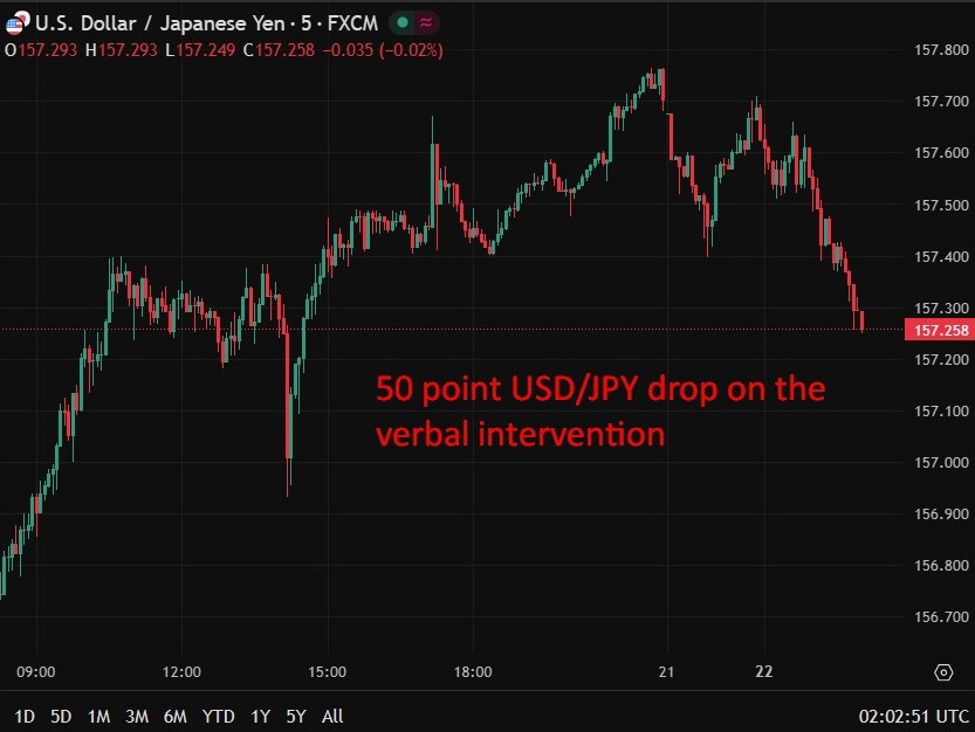
Japan intervention warning nudges yen stronger, USD/JPY retreats (higher AUD/JPY forecast)
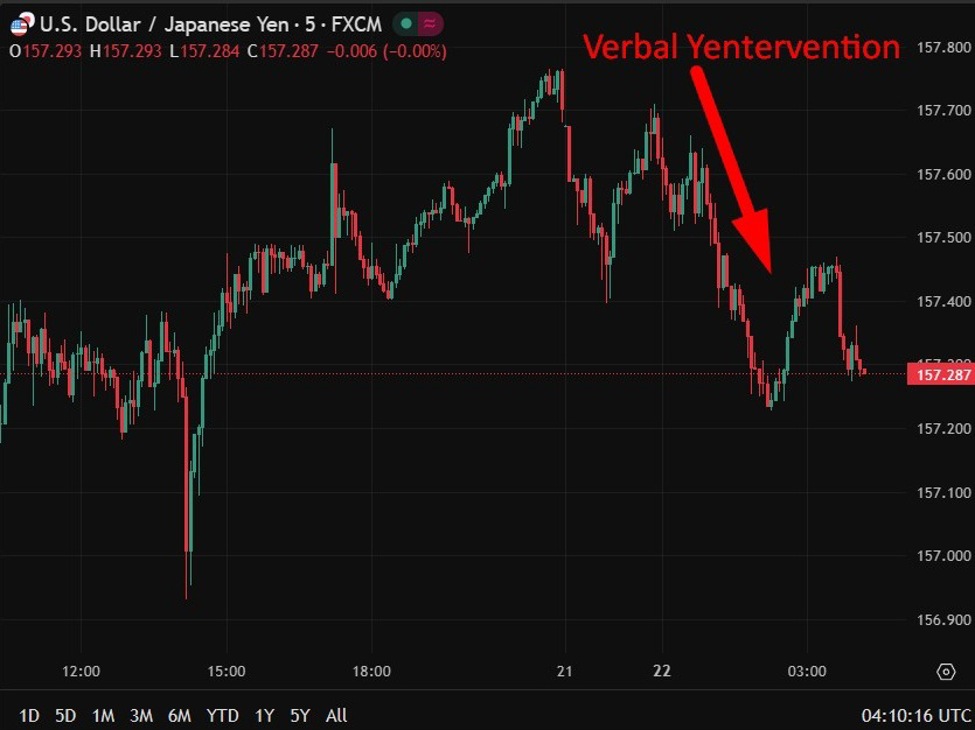
Summary: Japan’s intervention warning gave the yen a modest liftUSD/JPY slipped toward 157.25 from highs near 157.75Officials flagged concern over “one-sided and sharp” movesVerbal intervention slowing momentum, not reversing trendAUD/JPY still supported by yield differentials—A renewed warning from Japanese officials about the risk of currency intervention has given the yen a modest lift at the start of the week. The move followed comments from Japan’s top currency diplomat, Atsushi Mimura, which pushed USD/JPY about half a big figure lower from earlier highs near 157.75 as I update, to around 157.25.Mimura said on Monday that authorities are “concerned” about recent foreign-exchange moves, describing them as “one-sided and sharp,” and warned that officials would take “appropriate actions” against excessive volatility. The language was familiar, but the timing, coming so soon after last week’s central bank meeting, has been enough to nudge the market toward trimming short-yen positions.The remarks followed similar comments late last week from Finance Minister Satsuki Katayama, who also warned that Tokyo would respond appropriately to excessive and speculative yen moves. Together, the statements underline growing discomfort in Tokyo over the pace of yen weakness, particularly given the impact on import prices and household living costs.While the move in USD/JPY has so far been measured rather than dramatic, it reinforces the sense that official tolerance for renewed yen declines is limited, especially when moves appear disorderly. For now, verbal intervention appears to be doing just enough to slow momentum, even if it has not yet triggered a broader reversal.Elsewhere in FX, I note earlier commentary from Commonwealth Bank of Australia on AUD/JPY, which continues to find fundamental support from solid risk sentiment and, more importantly, widening interest-rate differentials between Australian and Japanese 10-year government bond yields. That yield gap remains a powerful structural driver for the cross.CBA’s forecast has AUD/JPY rising to 109 by March 2026, highlighting that while intervention risk may periodically cap yen weakness, broader yield dynamics continue to favour higher AUD/JPY levels over the medium term. —Atsushi Mimura is Japan’s vice finance minister for international affairs — the country’s top currency diplomat — and the official with day-to-day responsibility for overseeing foreign-exchange policy. In practice, Mimura is the key decision-maker on whether Japan intervenes in the FX market, acting under the authority of the finance minister and in coordination with the Bank of Japan, which executes intervention operations on his instruction. He monitors market conditions closely, assesses whether yen moves are excessive, disorderly or driven by speculation, and delivers the government’s verbal warnings that often precede action. When intervention is authorised, Mimura formally directs the BOJ to enter the market, typically through yen-buying operations aimed at stabilising sharp or one-sided moves rather than targeting specific exchange-rate levels. This article was written by Eamonn Sheridan at investinglive.com. 🔗 Source 💡 DMK Insight Japan’s intervention warning is a classic case of verbal intervention, and here’s why it matters right now: The USD/JPY pair’s slip from near 157.75 to around 157.25 reflects market sensitivity to these signals. Officials are clearly concerned about ‘one-sided and sharp’ moves, which suggests they’re ready to act if the yen continues to weaken. This verbal intervention can slow momentum but rarely reverses the broader trend, especially when yield differentials still favor the AUD/JPY. Traders should keep an eye on this pair, as any further comments from Japanese officials could lead to increased volatility. If USD/JPY breaks below 157.00, it could trigger more aggressive selling, while a bounce back above 157.75 might reignite bullish sentiment. But don’t overlook the AUD/JPY; its support from yield differentials could lead to a divergence in performance between these pairs. If the yen strengthens, it could impact risk sentiment across the board, affecting equities and commodities as well. Watch for any shifts in the Bank of Japan’s stance or U.S. economic data that could influence these dynamics. 📮 Takeaway Monitor USD/JPY closely; a break below 157.00 could signal further yen strength, while AUD/JPY remains supported by yield differentials.

Ackman pitches radical SPARC deal to Elon Musk to take SpaceX public (Tesla-linked route)
Summary:Ackman proposes taking SpaceX public via a SPARC mergerTesla shareholders would receive rights to invest in SpaceXStructure avoids IPO fees, dilution and market timing riskPershing Square commits $4bn at the same valuationPath created for a future xAI listingAckman is offering Musk a way to take SpaceX public without Wall Street banks, without IPO fees, and without favouring big institutions. By giving Tesla shareholders special rights to buy SpaceX shares first, he aims to reward loyalty, broaden access, and lock in a fixed valuation insulated from market swings — while positioning Pershing Square as a long-term strategic partner across Musk’s companies.—Hedge fund billionaire Bill Ackman has floated an unconventional proposal to Elon Musk that would take SpaceX public while bypassing the traditional IPO process and rewarding existing Tesla shareholders.In a detailed public message, Ackman suggested merging SpaceX with Pershing Square SPARC Holdings, a newly approved acquisition vehicle that operates differently from a conventional SPAC. Instead of raising capital upfront, SPARC distributes special purpose acquisition rights — known as SPARs — which give holders the option, but not the obligation, to invest in a future deal at a fixed price.Under Ackman’s proposal, SPARs would be distributed to Tesla shareholders, giving them priority access to the SpaceX IPO. Shareholders could either exercise those rights to buy SpaceX shares or sell the SPARs in the market for cash, effectively monetising the opportunity.Ackman argues this structure would “democratise” the IPO process by allowing everyday investors — not just institutions — to participate on equal terms. Pershing Square would commit $4 billion of its own capital at the same valuation, acting as a cornerstone investor and performing due diligence on behalf of SPAR holders.A key feature of the proposal is cost and dilution avoidance. Ackman says the transaction would involve no underwriting fees, no founder shares, no warrants and no sponsor promote, features that have drawn criticism in both traditional IPOs and SPAC deals. SpaceX would list with a pure common-stock structure and minimal transaction costs.Ackman also suggested a longer-term strategy. Investors who exercise SPARs in the SpaceX deal would receive rights in a second SPARC vehicle, which could later be used to take xAI public at Musk’s discretion.Valuation flexibility is central to the pitch. By adjusting the exercise price of SPARs, SpaceX could raise anywhere from roughly $40 billion to nearly $150 billion, while retaining control over how much capital comes from new shares versus existing ones.Ackman said a definitive agreement could be reached within 45 days, with the transaction announced as early as mid-February, pending regulatory approval. This article was written by Eamonn Sheridan at investinglive.com. 🔗 Source 💡 DMK Insight Ackman’s SPARC merger proposal for SpaceX could reshape the public offering landscape. By sidestepping traditional IPO routes, this move not only minimizes costs but also mitigates market timing risks, which is crucial in today’s volatile environment. For traders, this means a potential surge in Tesla shares as existing shareholders gain rights to invest in SpaceX, creating a ripple effect across both stocks. Watch for how this impacts Tesla’s price action, especially if it approaches key resistance levels. Additionally, the commitment of $4 billion at the same valuation suggests strong institutional backing, which could attract more retail interest. However, it’s worth questioning whether this structure can sustain long-term investor confidence, especially given the speculative nature of SpaceX’s future projects like xAI. Keep an eye on the broader tech sector as this unfolds, as it could influence sentiment across related stocks and sectors. Traders should monitor Tesla’s price movements closely, particularly if it tests support around recent lows, as this could signal broader market reactions to Ackman’s strategy. 📮 Takeaway Watch Tesla’s price action closely; a test of recent support levels could indicate broader market sentiment shifts following Ackman’s SpaceX proposal.
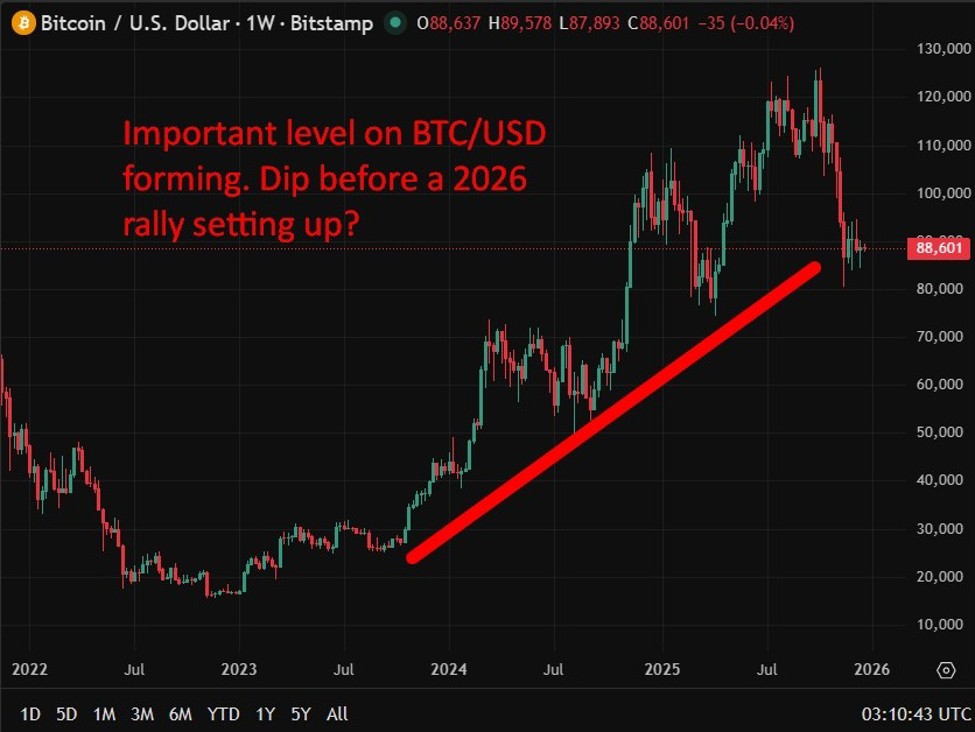
Bitcoin seen back in six figures in 2026 as ETF and tokenisation themes gather pace
Summary:Major banks see Bitcoin’s 2026 outlook shaped by ETF adoption, regulatory clarity and institutional tokenisation, with forecasts clustering firmly in six-figure territory.-Bitcoin’s long-term investment case is increasingly being framed around institutional adoption rather than retail speculation, with major global banks outlining scenarios that place the cryptocurrency well into six-figure territory by 2026.Recent media coverage citing Citi Research points to a central forecast that Bitcoin could climb toward $143,000 in 2026, supported by sustained exchange-traded fund inflows and clearer regulatory guardrails. Citi’s analysis incorporates both bullish and bearish scenarios but emphasises that the balance of risks has shifted materially since the launch of spot Bitcoin ETFs, which have lowered barriers to entry for traditional investors.ETF-driven demand is seen as a structural rather than cyclical tailwind. By enabling pension funds, asset managers and advisers to gain exposure within familiar frameworks, ETFs are viewed as transforming Bitcoin from a fringe allocation into a portfolio diversifier with increasing legitimacy. Citi also highlights regulatory progress in key jurisdictions as a catalyst that could reduce volatility premiums and encourage longer-term capital.Parallel developments in traditional finance are reinforcing this narrative. JPMorgan Chase has moved further into blockchain-based finance with the launch of a tokenised money-market fund, signalling growing confidence in distributed-ledger infrastructure. While not a direct Bitcoin product, the initiative underscores how large banks are embedding tokenisation into mainstream capital markets. JPM will be watching ETH developments keenly:Ethereum puts security ahead of speed as zkEVMs move toward institutional readiness.Secondary media reports referencing JPMorgan commentary suggest upside scenarios for Bitcoin extending toward $170,000 by 2026, reflecting expectations that tokenisation, regulated custody solutions and improved market plumbing will broaden institutional participation.Taken together, these forecasts frame 2026 as a potential inflection point for Bitcoin, one defined less by speculative cycles and more by integration into the global financial system. This article was written by Eamonn Sheridan at investinglive.com. 🔗 Source 💡 DMK Insight Bitcoin’s potential to hit six figures hinges on ETF approvals and institutional buy-in. With major banks aligning their forecasts around institutional adoption, traders should focus on how regulatory clarity might accelerate this trend. If ETFs gain traction, we could see a significant influx of capital, pushing Bitcoin’s price higher. This shift from retail to institutional interest suggests a more stable market environment, but it also raises questions about volatility as institutions may react differently than retail traders. Watch for key regulatory announcements in the coming months, as they could serve as catalysts for price movements. Additionally, keep an eye on Bitcoin’s correlation with traditional markets; any signs of decoupling could indicate a new phase for crypto assets. The real story is that while the long-term outlook is bullish, short-term fluctuations could still present trading opportunities. Traders should monitor Bitcoin’s price action closely, especially around key resistance levels, to gauge market sentiment and potential entry points. 📮 Takeaway Watch for regulatory developments on ETFs and institutional moves; they could drive Bitcoin towards six figures in the coming months.
investingLive Asia-Pacific FX news wrap: Yen recovered a little, silver new record high
Bitcoin seen back in six figures in 2026 as ETF and tokenisation themes gather paceAckman pitches radical SPARC deal to Elon Musk to take SpaceX public (Tesla-linked route)Japan intervention warning nudges yen stronger, USD/JPY retreats (higher AUD/JPY forecast)Ethereum puts security ahead of speed as zkEVMs move toward institutional readiness.PBOC sets USD/ CNY reference rate at 7.0572 (vs. estimate 7.0407)Oil prices support from tighter US sanctions enforcement and rising Middle East tensions.Apple readies AI glasses and smart AirPods in next wearable pushWestpac sees RBA holding firm through 2026 as inflation risks linger. Cuts seen in 2027.Israel warns US Iran missile drills could mask strike preparations (watch oil, folks!)India’s stock market enters deep freeze, record low volatility as options boom hits a wallFed’s Hammack pushes back on cuts, says inflation still too highMonday open indicative forex prices, 22 December 2025, and a look at what’s coming todayDisastrous day: The yen is a big problem for Japanese officialsJapanese markets were the main movers as the week got underway. The Nikkei 225 rose alongside other regional equities, benefiting in particular from the earlier slide in the yen, which boosted exporters by making Japanese stocks cheaper in foreign-currency terms. Japanese government bond yields also edged higher, often read as a sign of stability concerns, but the move was largely shrugged off by markets today.The yen later clawed back some ground, with USD/JPY retracing from early highs around 157.75 to lows near 157.25. JPY bids were helped by verbal intervention from Japan’s top currency diplomat, Atsushi Mimura. Mimura said that authorities are “concerned” about recent foreign-exchange moves, describing them as “one-sided and sharp,” and warned that officials would take “appropriate actions” against excessive volatility. The language was familiar, but the timing, so soon after last week’s central bank meeting, was enough to prompt some trimming of short-yen positions.Elsewhere in FX, major pairs traded in relatively narrow ranges. Both the AUD and NZD ground out modest gains against the USD.Oil prices found some early support after a renewed uptick in geopolitical risk. Over the weekend, the United States intercepted a Venezuelan oil tanker, while tensions between Israel and Iran remained elevated, the two news items together helping rebuild a modest risk premium in crude.In US policy news, the Wall Street Journal reported on an interview/podcast with Cleveland Fed President Beth Hammack, who pushed back against recent dovish expectations. Hammack said she favours holding rates steady for several months and remains more concerned about inflation than labour-market weakness, adding that November’s CPI likely understated true inflation pressures.Corporate chatter included an interesting social-media post from hedge fund manager Bill Ackman, who outlined a proposal for taking SpaceX public without Wall Street banks or IPO fees. The idea would give Tesla shareholders priority access to the deal, framing it as a more democratic alternative to a traditional IPO.In commodities, spot silver surged 3% to a fresh record high above US$69, while gold prices also rose, pushing back toward US$4,400 and also a record high. This article was written by Eamonn Sheridan at investinglive.com. 🔗 Source