
 Bitcoin
  Ethereum
  Tether
  BNB
BNB  XRP
XRP  USDC
USDC  Solana
  TRON
TRON  Lido Staked Ether
  Figure Heloc
Bitcoin approached $90,000 amid Santa Rally speculation, backed by bullish derivatives and chart patterns that target a BTC price above $100,000. 🔗 Source 💡 DMK Insight Bitcoin’s surge towards $90,000 isn’t just a holiday fluke—it’s fueled by solid bullish sentiment in derivatives and technical setups. With BTC currently at $90,015, traders are eyeing key resistance levels around $100,000. The Santa Rally narrative is gaining traction, but it’s essential to consider the broader market context. If BTC can maintain momentum above $90,000, it could trigger a wave of buying from both retail and institutional players, pushing prices higher. However, a failure to break through could lead to profit-taking and volatility, especially as we approach year-end. Keep an eye on the open interest in Bitcoin futures; a significant increase could indicate that traders are positioning for a breakout. Also, watch for any shifts in sentiment from major players—if whales start offloading, it could signal a reversal. The next few days are crucial, so monitor BTC’s price action closely as we head into the new year. 📮 Takeaway Watch for Bitcoin to hold above $90,000; a breakout above $100,000 could ignite further bullish momentum, but watch for profit-taking risks.
“Federal Reserve Considers ‘Skinny Master Account’ to Support Fintech and Crypto Innovation”
📰 DMK AI Summary The Federal Reserve is considering introducing a new “payment account” aimed at providing easier access to its systems for fintech and crypto firms. This account, described as a “skinny master account,” would offer limited access under a tailored approval process to support innovation while ensuring the safety of the payments system. The initiative comes in response to rapid developments in the payments industry and evolving business models. 💬 DMK Insight The Fed’s move to seek public input on the payment account signals a potential shift towards greater inclusion of crypto firms in the traditional banking system. If implemented, this could strengthen the connection between cryptocurrency and conventional banking services. However, concerns have been raised regarding the need for clear safeguards against money laundering and terrorist financing to mitigate risks associated with this integration. 📊 Market Content The involvement of crypto-focused firms in the Fed’s banking infrastructure could have broader implications for the industry, potentially fostering greater collaboration between digital assets and mainstream financial institutions. As the Fed explores new avenues to modernize the payment system, the proposed payment accounts may pave the way for increased integration of innovative payment technologies in the years to come.

Polish lower house approves revived crypto bill, heads to Senate
The legislation, which many have criticized for being overly restrictive on the digital asset market, was reintroduced with “not even a comma” changed, according to one lawmaker. 🔗 Source 💡 DMK Insight Legislation reintroduced without changes signals a tough regulatory stance on crypto, and here’s why that’s crucial for traders: The lack of amendments suggests lawmakers are doubling down on their restrictive approach, which could stifle innovation and liquidity in the digital asset market. Traders should be wary of how this might impact market sentiment, especially if institutions pull back due to increased regulatory scrutiny. This could lead to heightened volatility in major cryptocurrencies, particularly Bitcoin and Ethereum, which often react sharply to regulatory news. Keep an eye on key support and resistance levels; if Bitcoin breaks below a certain threshold, it could trigger further sell-offs. On the flip side, this rigidity might create opportunities for alternative assets or decentralized finance (DeFi) projects that can navigate around these regulations. Watch for shifts in trading volumes and sentiment as traders adjust their strategies in response to this news. The immediate impact could be felt in the next few trading sessions, so stay alert for any price action around significant levels. 📮 Takeaway Monitor Bitcoin’s support levels closely; a break below could signal increased selling pressure amid ongoing regulatory concerns.

Fed seeks input on account type attractive to crypto firms
The Federal Reserve is seeking public feedback on a new “payment account” that could give fintechs and crypto companies easier access to the central bank’s systems. 🔗 Source 💡 DMK Insight The Fed’s move to gather feedback on a new payment account could reshape access for fintechs and crypto firms. This initiative is crucial as it signals a potential shift in regulatory attitudes towards digital currencies. If implemented, it could lower barriers for these companies, enhancing liquidity and operational efficiency. Traders should watch how this affects the broader crypto market, especially assets like Bitcoin and Ethereum, which often react to regulatory news. A more favorable environment could lead to increased institutional investment, pushing prices higher. However, the flip side is that if the feedback process reveals significant concerns, it could lead to stricter regulations that might dampen market enthusiasm. Keep an eye on how major players in the fintech space respond to this initiative. Their reactions could provide insights into potential market movements. Also, monitor the upcoming Fed meetings for any hints on timelines or policy shifts that could impact trading strategies in the near term. 📮 Takeaway Watch for reactions from major fintech firms to the Fed’s feedback initiative, as their responses could signal significant shifts in market dynamics.

US lawmakers push to fix staking ‘double taxation’ before 2026
Lawmakers led by Republican Mike Carey argue that current IRS rules penalize stakers with an administrative burden and potentially over-tax unrealized gains. 🔗 Source 💡 DMK Insight The IRS’s stance on taxing unrealized gains for stakers could reshape crypto investment strategies. Lawmakers like Mike Carey are pushing back against regulations that complicate staking, which is crucial for many investors. If the IRS continues to enforce these rules, it could deter new capital from entering the staking space, impacting liquidity and potentially leading to lower prices for staked assets. Traders should keep an eye on how this legislative push unfolds, as any changes could create a more favorable environment for staking, encouraging more participants and possibly driving prices up. On the flip side, if these regulations remain unchanged, we might see a shift in how traders approach staking—potentially moving towards less tax-penalized strategies. Watch for updates in the coming weeks, as any legislative changes could have immediate effects on market sentiment and trading volumes. 📮 Takeaway Monitor developments in IRS regulations on staking, as changes could significantly impact liquidity and trading strategies in the crypto market.

Indonesia lists 29 licensed crypto platforms as global exchanges explore market
Indonesia’s OJK has identified 29 licensed digital asset and crypto trading platforms, just weeks after tightening digital asset rules. 🔗 Source 💡 DMK Insight Indonesia’s OJK recognizing 29 licensed crypto platforms is a game changer for traders in the region. This move comes on the heels of stricter regulations, signaling a more structured approach to digital assets. For traders, this means a clearer framework to operate within, potentially reducing the risks associated with unregulated exchanges. The establishment of licensed platforms could lead to increased investor confidence, which might drive trading volumes up. Keep an eye on how these platforms perform in the coming weeks, as their success could influence regulatory approaches in other Southeast Asian markets. However, there’s a flip side. While regulation can enhance safety, it might also stifle innovation and limit the number of assets available for trading. Traders should monitor the performance of these platforms closely, particularly any shifts in trading volume or user engagement. Watch for any announcements regarding additional platforms or further regulatory changes that could impact market dynamics. 📮 Takeaway Traders should watch the performance of Indonesia’s 29 licensed crypto platforms closely, as increased regulation could either boost confidence or limit asset availability.

Monday open indicative forex prices, 22 December 2025, and a look at what's coming today
As is usual for a Monday morning, market liquidity is very thin until it improves as more Asian centres come online … prices are liable to swing around, so take care out there.Do be aware that many wholesale market participants have closed now for the holiday period. This is partially because they have closed for the holiday period (d’uh) and partially because others have closed so liquidity and market tradability have diminished. If you are a retail trader it’ll pay to take extra care right through now until January 5, the absence of the other time frame (OTF) until then will make trading more choppy. If that’s your bag, great, but if not your time may be better spent and capital preserved for ammo for the new year. Coverage on investingLive will diminish until January 5. We’ll still be around, but not quite so much. After all that, early indications, not too much change from late Friday is showing. EUR/USD 1.1719USD/JPY 157.69 (check this out, spot on: Disastrous day: The yen is a big problem for Japanese officials)GBP/USD 1.3391USD/CHF 0.7947USD/CAD 1.3795AUD/USD 0.6611NZD/USD 0.5750As for the calendar, its nearly empty. Even that People’s Bank of China rate setting is a non-event, more on this below:China’s Loan Prime Rates (LPRs) were held steady in November 2025, , marking the sixth consecutive month without a changethe one-year LPR at 3.0%and the five-year LPR (for mortgages) at 3.5%Most lending in China is tied to the one-year LPR, while the five-year rate guides mortgage pricing. Both rates were last trimmed by 10 basis points in May. A look at the past changes in the LPR, since early 2022:China’s main policy rate is now the reverse repo rate, currently at 1.4% for the 7-day. The 7-day rate serves as a key policy benchmark, influencing other lending rates like the Loan Prime Rates (LPRs). The PBOC uses these open market operations to inject or absorb funds, influencing interbank lending rates. This article was written by Eamonn Sheridan at investinglive.com. 🔗 Source 💡 DMK Insight Monday mornings often bring thin liquidity, and here’s why that matters: traders need to be cautious. With many wholesale market participants out for the holiday, volatility can spike as prices swing. This is a classic setup for erratic movements, especially as Asian markets start to open. If you’re day trading, keep an eye on the bid-ask spreads; they could widen significantly. Look for key support and resistance levels from last week’s trading to gauge potential breakout points. If you see a sudden price shift, it might be a false signal due to low volume rather than a genuine trend. On the flip side, this could also present opportunities for swing traders looking to capitalize on short-term volatility. Just remember, with liquidity low, any positions you take could be riskier than usual. Watch for any news or economic indicators that could impact sentiment as the week progresses, especially as more market participants return from the holiday break. 📮 Takeaway Monitor bid-ask spreads closely today; low liquidity could lead to unexpected price swings, so be ready to react quickly.
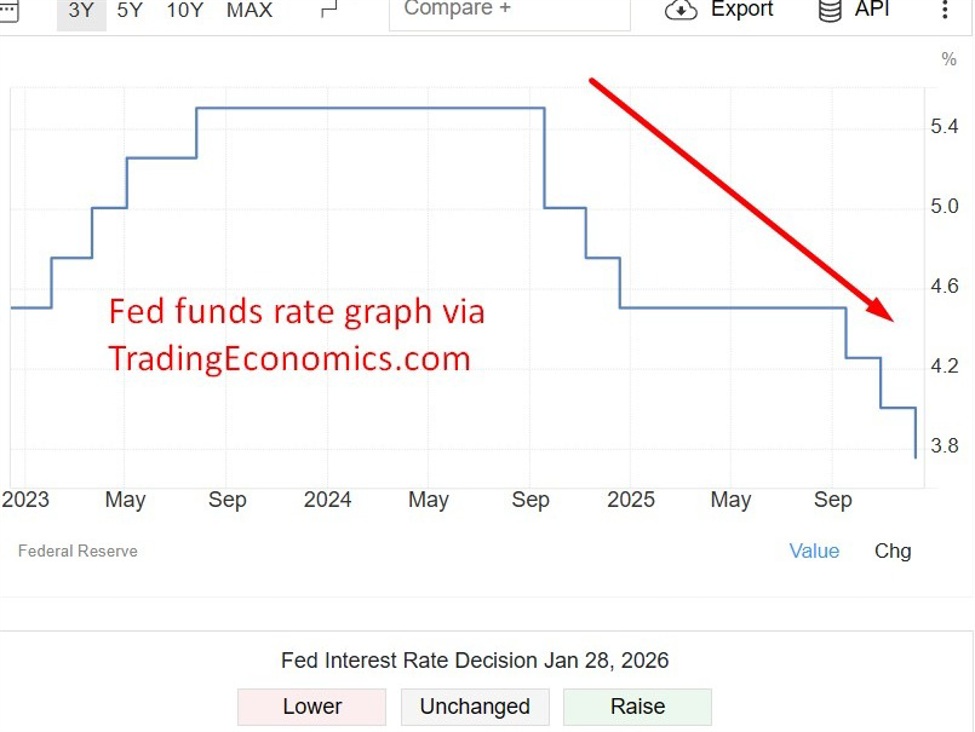
Fed’s Hammack pushes back on cuts, says inflation still too high
Summary:Cleveland Fed President Hammack favours holding rates steady for several monthsShe is more concerned about inflation than labour-market weaknessNovember CPI likely understated true inflation, she arguesNeutral rate seen higher, implying policy may already be stimulativeTariff-related cost pressures risk renewed price increases in Q1Beth Hammack signalled a clear preference for policy patience, arguing the Federal Reserve should hold interest rates steady for several months after delivering cuts at its past three meetings. Speaking in an interview with the Wall Street Journal (gated), Hammack said she remains more concerned about inflation risks than potential fragility in the labour market, pushing back against the easing cycle that has lowered rates by a cumulative 75 basis points.Although Hammack was not a voting member of the rate-setting committee this year, she will become a voter in 2026, making her views increasingly relevant for markets assessing the Fed’s policy direction. Her base case is for rates to remain unchanged until there is clearer evidence that inflation is returning convincingly toward target, or that employment conditions are deteriorating more meaningfully.Hammack also cast doubt on the strength of the latest inflation data. While November’s consumer-price index showed headline inflation at 2.7% year-on-year, she argued the reading likely understated true price pressures due to data-collection distortions linked to the October government shutdown. Adjusted estimates, she said, point closer to the 2.9%–3.0% range that most forecasters had expected, reinforcing her caution about declaring victory on inflation.A central pillar of Hammack’s stance is her belief that the neutral interest rate, the level that neither stimulates nor restrains economic activity, is higher than widely assumed. From her perspective, current policy settings may already be mildly stimulative after the recent rate cuts. With growth expected to remain solid into next year, she sees little urgency to provide further accommodation.Looking ahead, Hammack suggested the Fed could reassess policy around spring, once it becomes clearer whether goods-price inflation is easing as tariff-related costs work their way through supply chains. She noted that business leaders continue to flag rising input costs, including those linked to tariffs, which could prompt larger price increases early in the year.That prospect is troubling, she said, given inflation has remained stuck just below 3% for much of the past 18 months. Until that persistence breaks, Hammack argued, holding rates steady is the more prudent course. This article was written by Eamonn Sheridan at investinglive.com. 🔗 Source 💡 DMK Insight Cleveland Fed President Hammack’s stance on holding rates steady could impact crypto volatility significantly. With ETH currently at $3,039.97, her concerns about inflation suggest that the Fed might not pivot to rate cuts as quickly as some traders hope. This could lead to a stronger dollar, which typically pressures crypto assets. If inflation continues to rise, as she suggests, we might see renewed interest in safe-haven assets, potentially pulling liquidity away from riskier assets like ETH. Traders should watch for any shifts in sentiment around the November CPI report, as it could provide clues on the Fed’s next moves. If inflation data comes in hotter than expected, it could trigger a sell-off in crypto, especially if ETH breaks below key support levels. Conversely, if inflation appears to be under control, we might see a bullish reversal. Keep an eye on the $3,000 support level for ETH; a break below could signal further downside risk, while a bounce could offer a buying opportunity. 📮 Takeaway Watch ETH closely around the $3,000 support level; inflation data could trigger significant price movements in the coming weeks.
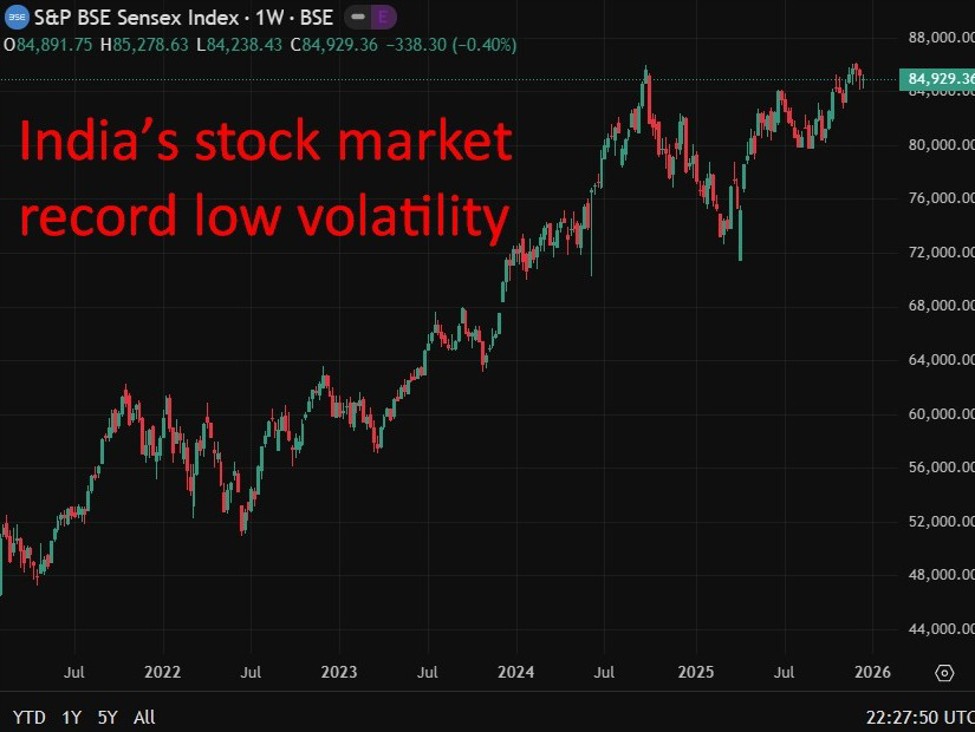
India’s stock market enters deep freeze, record low volatility as options boom hits a wall
SummaryIndian equities have entered an unusually low-volatility phaseRegulatory curbs have reduced derivatives activity and intraday swingsDomestic institutions now dominate ownership as foreign funds exitEquity returns lag global peers despite market stabilityOptions traders are being forced to rethink volatility-selling strategiesInfo via a Bloomberg (gated) piece. India’s equity market has entered an unusually tranquil phase, forcing traders in the country’s vast derivatives ecosystem to rethink long-standing strategies. Despite geopolitical flare-ups and bouts of global risk aversion, the NSE Nifty 50 Index has barely moved for months, weighed down by regulatory changes and reshaped capital flows that have drained volatility from the system.The calm is stark. India’s volatility gauge has dropped to record lows, underscoring how domestic institutional demand has overwhelmed foreign flows while tighter derivatives rules have choked off intraday swings. For participants in the world’s largest options market by volume, this matters deeply: volatility is the lifeblood of derivatives trading. When markets swing, hedging demand rises and option premiums expand. When prices barely move, returns shrink — particularly for strategies built around selling volatility.India’s regulator delivered a decisive turning point last year. The Securities and Exchange Board of India rolled out a broad crackdown aimed at curbing speculative retail trading after mounting losses among individual investors. Several popular weekly options contracts were scrapped, removing instruments that had amplified short-term price swings and sustained heavy intraday turnover.The impact has been material. Average daily notional derivatives turnover has fallen sharply this year, marking the first annual decline since records began in 2017. That slowdown has fed back into the cash market: the Nifty 50 has now traded within a 1.5% range for more than 150 consecutive sessions, while realised three-month volatility has slipped toward levels below those seen in any other major global equity market.At the same time, the investor base has shifted. Foreign investors have withdrawn roughly $17bn this year, pressured by trade frictions with the US and India’s limited exposure to the global artificial-intelligence boom. Local institutions, by contrast, have stepped in aggressively, investing more than $80bn since January and overtaking foreign investors as the market’s dominant owners for the first time in over a decade.That stability, however, has not translated into standout returns. The Nifty 50 is up less than 10% this year, lagging both the MSCI Emerging Markets Index and the MSCI All-Country World Index. Elevated valuations — with India trading well above broader emerging-market multiples — remain a key constraint. This article was written by Eamonn Sheridan at investinglive.com. 🔗 Source 💡 DMK Insight India’s equity market is in a low-volatility phase, and here’s why that matters: With ETH at $3,040.26 and ADA at $0.37, traders should note that the reduced derivatives activity is reshaping the landscape. Domestic institutions are stepping in as foreign funds pull back, which could lead to a more stable but less dynamic market. This shift might push traders to rethink their strategies, especially those relying on volatility. If you’re in options trading, the current environment could mean tighter spreads and less opportunity for profit from volatility-selling strategies. But here’s the flip side: while low volatility might seem dull, it can also create opportunities for those looking to capitalize on price stability. Watch for any signs of foreign fund re-entry or shifts in institutional sentiment, as these could signal a change in the current trend. Keep an eye on key levels in the equity market and related assets like ETH and ADA, as movements there could influence overall market sentiment and volatility expectations. 📮 Takeaway Monitor shifts in institutional ownership and foreign fund activity, as these could signal changes in market dynamics and impact volatility strategies.
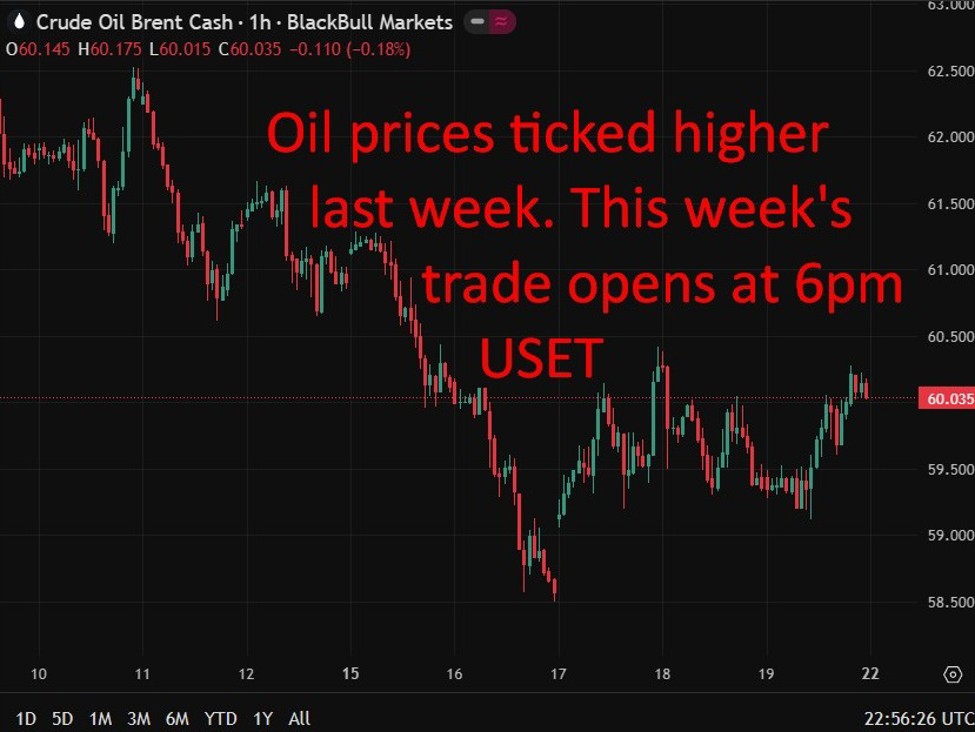
Israel warns US Iran missile drills could mask strike preparations (watch oil, folks!)
SummaryIsrael warned the Trump administration about Iranian missile exercisesIntelligence is inconclusive but Israel’s risk tolerance is lower post-Oct 7U.S. intelligence sees no imminent Iranian attackSenior Israeli and U.S. military officials coordinated defensive planningRisk of escalation seen as driven by miscalculation rather than intentIsrael has raised concerns with the Trump administration over recent Iranian missile activity, warning that an exercise by the Islamic Revolutionary Guard Corps could be masking preparations for a potential strike on Israel, according to Israeli and U.S. officials familiar with the matter. Axios (gated) reporting. Israeli sources stress that the intelligence does not conclusively show an imminent attack, but argue that Israel’s tolerance for uncertainty has fallen sharply since the Hamas-led surprise assault on October 7, 2023. While Iranian force movements can be consistent with routine drills, Israeli defence officials say the risk of misreading intentions has become too dangerous to ignore.One Israeli official said the probability of an Iranian strike remains below 50%, but cautioned that neither side is willing to assume benign intent given recent history. U.S. intelligence, by contrast, currently sees no clear indication of an imminent Iranian attack, according to an American source briefed on the issue.Israel’s military leadership has moved quickly to coordinate with Washington. Israeli Chief of Staff Eyal Zamir spoke directly with U.S. Central Command head Brad Cooper, warning that missile movements and operational activity by Iran could serve as cover for a surprise attack. Zamir urged closer coordination between Israeli and U.S. forces on defensive preparations.Cooper travelled to Tel Aviv over the weekend and met with senior officials from the Israel Defense Forces to review the situation. Neither the IDF nor CENTCOM publicly commented on the discussions.Israeli officials say the greatest danger is not a deliberate decision to go to war, but a miscalculation, with each side interpreting the other’s actions as preparatory steps for an attack and moving pre-emptively. Israeli intelligence raised similar alarms roughly six weeks ago after identifying missile movements inside Iran, though no escalation followed.Looking ahead, the issue is expected to feature prominently in talks between Benjamin Netanyahu and Donald Trump, who are due to meet later this month. Israeli officials say Netanyahu plans to discuss Iran’s efforts to rebuild its ballistic missile capabilities and the possibility of another Israeli strike in 2026.Israeli intelligence believes Iran is slowly rebuilding after suffering significant losses in the brief war earlier this year, but assessments from military intelligence and the Mossad suggest the pace does not yet justify immediate military action. However, officials warn the risk profile could change later in the year if rebuilding accelerates. This article was written by Eamonn Sheridan at investinglive.com. 🔗 Source 💡 DMK Insight Tensions in the Middle East are rising, and here’s why that matters for traders: geopolitical risks can lead to volatility in oil and currency markets. With Israel’s heightened alert over Iranian missile exercises, even if U.S. intelligence suggests no immediate threat, the potential for miscalculation could disrupt supply chains or trigger military responses. This could impact oil prices, which are already sensitive to geopolitical events. Traders should keep an eye on crude oil futures, especially if prices start to breach key resistance levels. The situation could also affect the forex market, particularly currencies tied to oil-exporting nations. If tensions escalate, we might see a flight to safety in the U.S. dollar and gold, while riskier assets could take a hit. Watch for any shifts in sentiment or military movements, as these could create trading opportunities. The next few weeks are crucial; any misstep could lead to significant market reactions, so stay alert for updates from both Israeli and U.S. officials. 📮 Takeaway Monitor crude oil prices closely; any escalation in Middle East tensions could push prices past key resistance levels, impacting related forex markets.