
 Bitcoin
  Ethereum
  Tether
  XRP
XRP  BNB
BNB  USDC
USDC  Solana
  TRON
TRON  Lido Staked Ether
  Figure Heloc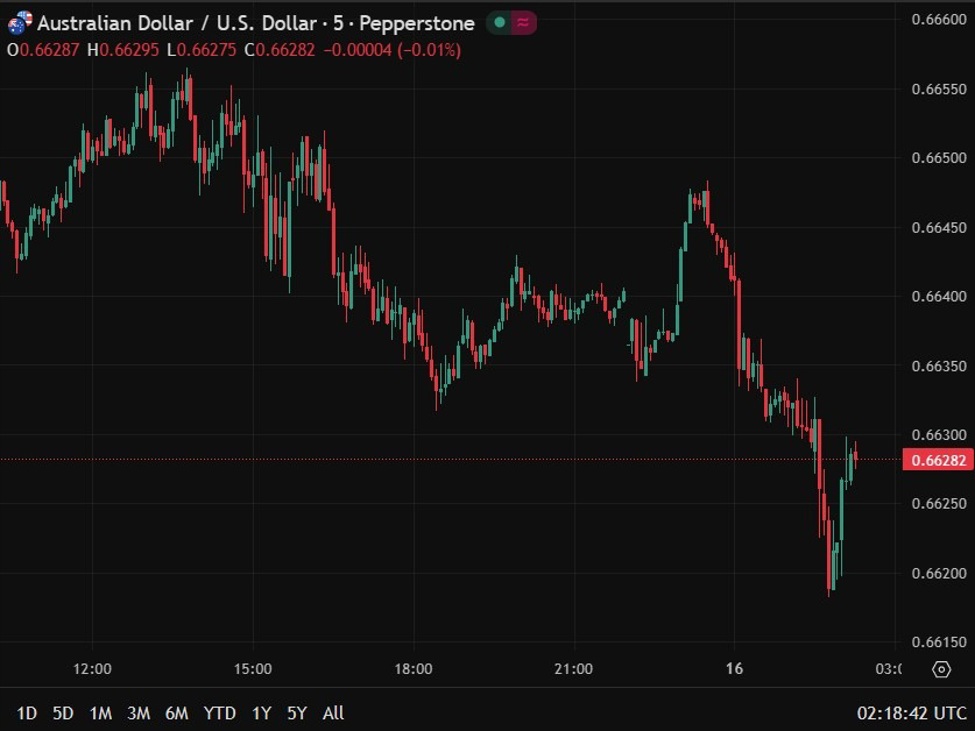
National Australia Bank has struck a more hawkish tone on the Reserve Bank of Australia’s outlook, forecasting two 25 basis point rate hikes in 2026, beginning in February and followed by a second increase in May, diverging sharply from current market pricing.Persistent inflation risks and resilience in parts of the domestic economy is seen as forcing the RBA to resume tightening, despite widespread expectations that policy has already peaked. NAB’s call echoes a similar view expressed by Citi earlier this week, which also warned that markets may be underestimating the risk of further RBA action if inflation proves sticky.Money markets, by contrast, remain sceptical. Current pricing implies a 74% probability that the RBA leaves rates unchanged at its February meeting, with a full 25bp hike not priced in until August. This disconnect highlights a growing divide between bank economists and market participants over the trajectory of Australian monetary policy.In favour of a hike are inflation dynamics that remain incompatible with an extended pause. While headline inflation has moderated, underlying price pressures, particularly across services, remain elevated, and the Bank has repeatedly emphasised that it will not tolerate a prolonged deviation from target. Its expected that that evidence of ongoing domestic cost pressures will prompt the RBA to act earlier than markets anticipate.The February timing is particularly notable, given the RBA’s preference to move only when confident inflation is tracking sustainably lower. NAB’s forecast suggests policymakers may judge that the balance of risks has shifted back toward inflation control rather than growth protection, especially if labour market conditions remain firm.A follow-up hike in May would represent a clear signal that the RBA views policy as still insufficiently restrictive. Such an outcome would force a rapid repricing across interest rate markets, particularly at the front end of the curve, where expectations remain anchored around a prolonged hold.Overall, NAB’s outlook reinforces the risk that markets are complacent on Australian rates, leaving investors exposed to upside surprises if inflation persistence challenges the prevailing consensus. —The news of the NAB switched to a hike view has lent a bid to the AUD. This article was written by Eamonn Sheridan at investinglive.com. 🔗 Source 💡 DMK Insight NAB’s hawkish outlook on RBA rate hikes could shake up the Aussie dollar and bond markets. With forecasts for two 25 basis point increases in 2026, traders should brace for potential volatility. This shift in sentiment reflects ongoing inflation concerns and economic resilience, which could lead to a stronger AUD against major pairs. If the RBA follows through, expect upward pressure on yields, impacting both equities and forex. Watch the 0.65 level on the AUD/USD; a break above could signal a bullish trend. Conversely, if the market dismisses these forecasts, we might see a pullback. Keep an eye on inflation data releases and RBA commentary for clues on the timing of these hikes, as they could influence market positioning significantly in the coming months. 📮 Takeaway Monitor the AUD/USD at the 0.65 level; a breakout could indicate a bullish trend driven by RBA’s hawkish stance.
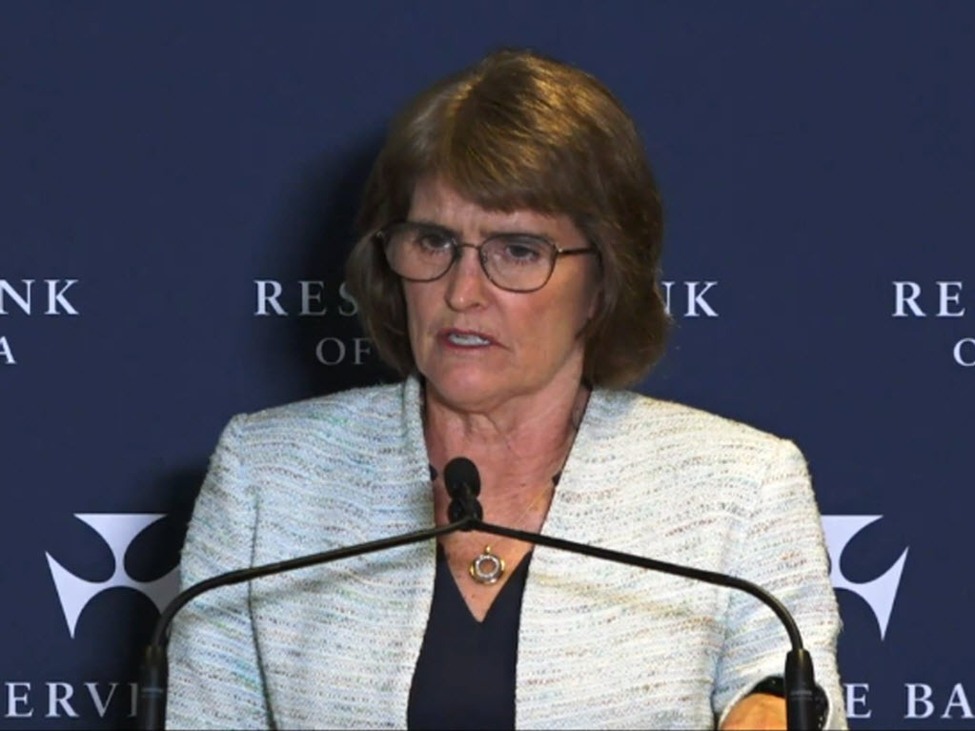
CBA sees February RBA rate hike as growth runs hot. Citi & NAB also expect February hike.
Australia’s economy is increasingly exhibiting conditions consistent with further monetary tightening, leading Commonwealth Bank economists to forecast a 25 basis point Reserve Bank of Australia rate hike in February, despite market scepticism around near-term action. I posted earlier on another two calls for a February rate hike:Citi forecasts 2 RBA rate hikes in 2026, February followed by May, as inflation risks riseNAB sees RBA hiking twice in 2026, clashing with market expectations for extended holdThe core of CBA’s argument is that economic momentum is proving stronger and more persistent than the RBA anticipated. Growth has rebounded faster than expected, with GDP accelerating through the second half of 2025 and activity now assessed as running around potential rather than below it. The pickup has been broad-based, led by household consumption as real disposable incomes recover and savings buffers are drawn down.Labour market conditions remain a key driver of the tightening call. Employment growth has stayed resilient, spare capacity indicators point to limited slack, and unemployment is forecast to remain low even as population growth eases. With wages growth still elevated relative to productivity, CBA argues that domestic cost pressures remain inconsistent with inflation returning smoothly to target without further policy restraint.Inflation dynamics are another critical factor. While headline inflation has moderated, underlying measures are proving sticky, with services inflation and trimmed-mean CPI easing only gradually. Inflation expectations have also edged higher across consumer and market-based measures, raising concerns that inflation persistence could become more entrenched if policy settings are not tightened further.CBA also points to evidence that financial conditions have loosened unintentionally. Equity markets have rallied, the Australian dollar has depreciated at times, and household spending has surprised to the upside, all of which risk undermining the disinflation process. Against this backdrop, holding rates steady for too long could allow demand to re-accelerate faster than supply, especially given ongoing capacity constraints.While acknowledging that timing is finely balanced, CBA believes the RBA will judge that acting earlier — rather than waiting for clearer inflation deterioration — is the lower-risk strategy. A February hike would reinforce the Bank’s inflation-fighting credibility and help ensure inflation returns sustainably to target, even if it means running policy more restrictive for longer. This article was written by Eamonn Sheridan at investinglive.com. 🔗 Source 💡 DMK Insight Australia’s potential rate hike could shake up forex markets, especially AUD pairs. With Commonwealth Bank and Citi both predicting a 25 basis point increase in February, traders should be on alert. This forecast suggests that the RBA is responding to inflationary pressures, which could strengthen the AUD against currencies like the USD and NZD. If the RBA follows through, we might see a bullish trend in AUD/USD, especially if it breaks above key resistance levels. But here’s the catch: market skepticism could lead to volatility. If the hike doesn’t materialize, expect a sharp pullback in the AUD. Keep an eye on the economic indicators leading up to February, particularly inflation and employment data, as they could sway the RBA’s decision. Also, watch for how institutional players react; if they start positioning for a rate hike, it could amplify price movements. The real story is whether the market can shake off its skepticism and price in this potential hike effectively. Be prepared for both scenarios as we approach February. 📮 Takeaway Monitor AUD/USD closely; a confirmed rate hike could push it above key resistance, while failure to hike might trigger a sharp sell-off.
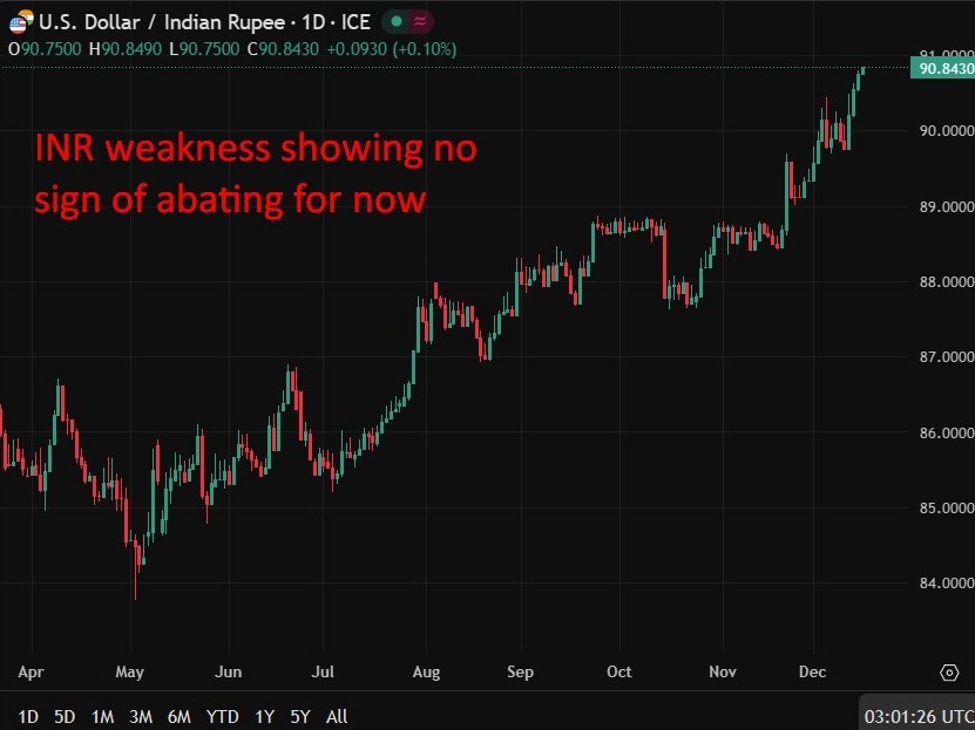
Indian rupee fresh record lows on flow pressure
The Indian rupee is set to open at fresh record lows, as a deteriorating global risk backdrop compounds persistent flow imbalances that continue to weigh heavily on the currency. Info via Reuters. One-month non-deliverable forward pricing suggests USD/INR will open in the 90.80–90.85 range, extending losses after the rupee closed at 90.73 on Monday. The currency slipped to a new all-time low of 90.7875 during the previous session, marking a third consecutive day of record weakness.Market participants say the latest leg lower is being driven less by panic and more by entrenched flow dynamics. Bankers point to a sustained mismatch between dollar demand and supply, with fixing-related dollar buying, potentially linked to NDF maturities and portfolio outflows, emerging as a recurring source of pressure. Additional demand from state-owned enterprises has further strained onshore liquidity.At the same time, importer hedging demand has remained consistently strong, reflecting concerns about further rupee depreciation. Exporter selling, by contrast, has been subdued, as many exporters remain reluctant to hedge at current levels, preferring to wait in anticipation of better rates. This imbalance has left the rupee exposed to even modest increases in dollar demand.Portfolio flows have also played a central role. Ongoing foreign outflows from local equity and debt markets have outweighed India’s longer-term structural positives, including solid growth prospects and improving macro fundamentals. In the near term, these strengths have offered limited protection against global risk aversion and a firm U.S. dollar.Crucially, traders note that the current phase of weakness appears orderly and flow-led rather than driven by speculative capitulation. Volatility remains contained, suggesting that while pressure is intense, markets are adjusting incrementally rather than disorderly repricing risk.Until there is a meaningful turnaround in portfolio flows, a shift in global risk sentiment, or a clear positive catalyst on the trade front, the rupee is likely to remain under pressure. In the absence of such triggers, fresh record lows cannot be ruled out in the near term. This article was written by Eamonn Sheridan at investinglive.com. 🔗 Source 💡 DMK Insight The Indian rupee’s plunge to record lows is a wake-up call for traders: As USD/INR is projected to open between 90.80 and 90.85, the currency’s weakness reflects broader global risk aversion and persistent flow imbalances. This isn’t just a local issue; it signals potential volatility across emerging markets. Traders should consider how this impacts their positions in Indian equities and commodities, especially those priced in rupees. If the rupee continues to weaken, we could see inflationary pressures rise, affecting the Reserve Bank of India’s monetary policy decisions. Look for key levels around 90.50 and 91.00 as psychological barriers. A breach of these could trigger further selling pressure, while a bounce back might indicate a short-term correction. Keep an eye on global risk sentiment and any geopolitical developments that could exacerbate this trend. The real story here is how this currency weakness could ripple through to other asset classes, particularly if institutional investors start reallocating their portfolios in response. 📮 Takeaway Watch for USD/INR levels around 90.50 and 91.00; a breach could signal further rupee weakness and impact related markets.

US suspends UK tech deal amid wider trade tensions (earlier Financial Times report)
The United States has suspended a recently agreed technology partnership with Britain, injecting fresh uncertainty into the transatlantic relationship as Washington presses London for broader trade concessions beyond the tech sector.According to reporting by the Financial Times, the U.S. administration halted progress on the so-called Tech Prosperity Deal last week, despite the agreement having been unveiled earlier this year as a flagship framework to deepen cooperation in artificial intelligence, quantum computing and civil nuclear energy. British officials have since confirmed the suspension, though neither government has formally commented. The Financial Times is gated, but Reuters summarised the report. The move appears to reflect growing frustration in Washington over what it views as the UK’s reluctance to address a range of non-tariff barriers, including regulatory and standards-based restrictions affecting food products and industrial goods. U.S. officials are said to be seeking concessions in these areas, signalling that the technology partnership has become entangled in wider trade negotiations.The suspension underscores the increasingly transactional nature of U.S. trade policy under President Donald Trump, with sector-specific agreements now more tightly linked to broader market-access objectives. While the tech deal was framed as a strategic collaboration aimed at strengthening Western leadership in advanced technologies, it has become leverage in talks over trade frictions unrelated to digital policy.The setback is notable given the scale of existing U.S.–UK economic ties. The United States is Britain’s largest trading partner, and major U.S. technology firms have already invested billions of dollars in UK operations across cloud computing, artificial intelligence research and data infrastructure. The UK has positioned itself as a key hub for emerging technologies, particularly as it seeks to differentiate its regulatory framework post-Brexit.Although the suspension does not amount to a cancellation, it raises questions over the durability of bilateral tech cooperation if progress on trade issues stalls. Analysts note that prolonged delays could complicate investment decisions and slow joint initiatives in strategically sensitive areas such as AI governance and quantum research.For now, the episode highlights how geopolitical considerations and trade disputes are increasingly intersecting with technology policy, turning once-standalone innovation partnerships into bargaining chips in broader economic negotiations. This article was written by Eamonn Sheridan at investinglive.com. 🔗 Source
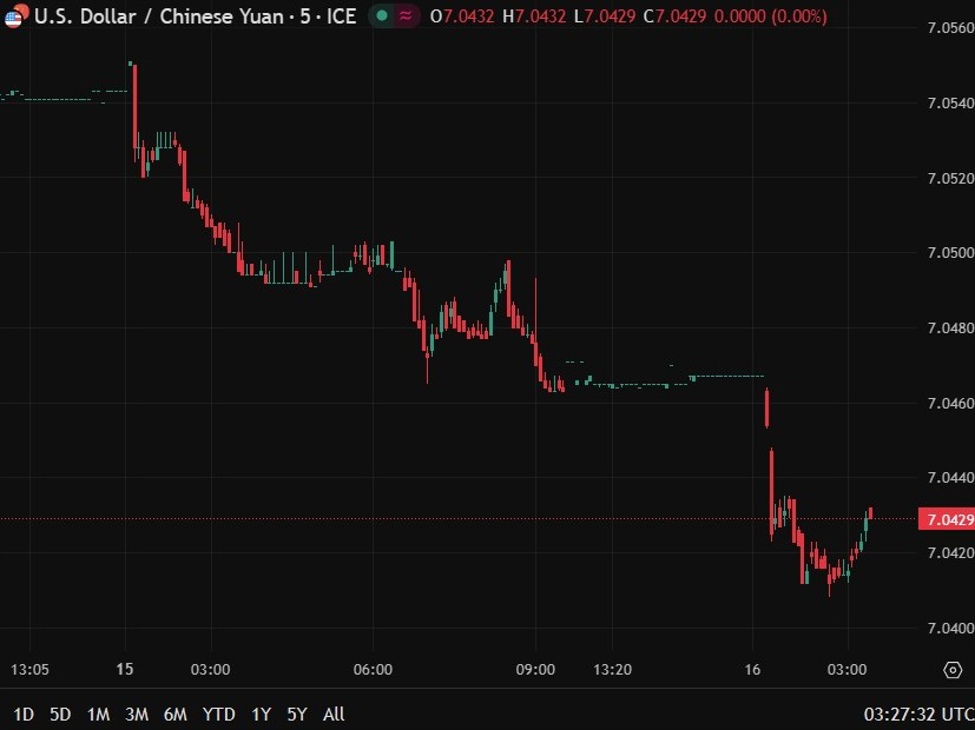
investingLive Asia-Pacific FX news wrap: Onshore yuan continues stronger
US suspends UK tech deal amid wider trade tensions (earlier Financial Times report)Indian rupee fresh record lows on flow pressureCBA sees February RBA rate hike as growth runs hot. Citi & NAB also expect February hike.NAB sees RBA hiking twice in 2026, clashing with market expectations for extended holdChina eyes pragmatic 2026 growth target near 5% (while onshore yuan surges higher!)ICYMI – Ford takes US$19.5bn EV charge as strategy pivots to hybridsNew Zealand fiscal outlook darkens as finance minister Willis sticks to disciplinePBOC sets USD/ CNY reference rate for today at 7.0602 (vs. estimate at 7.0444)Japan preliminary December PMI shows modest growth as services offset factory weaknessNew Zealand bonds – NZDMO cuts near-term bond issuance but lifts medium-term outlookAustralian consumer sentiment falls sharply in December: WestpacECB/NFP preview – Morgan Stanley sees euro gain if ECB avoids rate pushback, 1.30 longtermNasdaq moves toward 24/5 stock trading amid global demandGoldman Sachs raises its 2026 copper forecast as tariff odds easeAustralia preliminary December PMI: Manufacturing 52.2 (prior 51.6) services 51.0 (52.8)New Zealand data: November Food Price Index -0.4% m/m (prior -0.3%)Tech stocks slide as Broadcom tumbles amid market turbulenceWe saw a raft of lower-tier economic data released during the Asia session.New Zealand kicked things off with data showing food price inflation falling on the month while remaining elevated year on year. The monthly decline in the Food Price Index will be welcomed by the Reserve Bank of New Zealand, offering tentative evidence that one of the stickier components of inflation may be starting to ease. With food prices accounting for nearly a fifth of the CPI basket, even modest monthly declines can have a meaningful impact on headline inflation outcomes.Later from New Zealand, fresh fiscal projections showed no return to a budget surplus over the next five years, as weak growth and higher debt continue to delay fiscal repair. Net debt is now seen peaking at 46.9% of GDP, despite tentative signs of economic recovery. Separately, the New Zealand Debt Management Office trimmed its near-term bond issuance plans. The NZD was heavy for most of the session.The AUD also softened before recovering modestly. Australian data showed the headline S&P Global Flash Composite PMI eased to 51.1 in December from 52.6 in November — a seven-month low, but still comfortably above the 50 expansion threshold, extending the growth run to fifteen consecutive months.The moderation reflected slower momentum across both sectors. Services activity eased, with the Business Activity Index falling to 51.0 from 52.8 as heightened competition and softer export growth weighed. Manufacturing, by contrast, showed relative resilience, with the PMI rising to 52.2 from 51.6 on firmer goods demand and improved export orders.We also heard from Commonwealth Bank of Australia and National Australia Bank, with analysts at both now expecting a Reserve Bank of Australia cash rate hike at the 2–3 February 2026 meeting. NAB further expects an additional hike in May ’26. AUD/USD dipped to just below 0.6620 before rebounding modestly toward 0.6635, with NZD/USD also ticking higher.USD/JPY drifted lower, briefly testing below 154.75. Japan’s preliminary December PMI showed modest growth as services offset ongoing manufacturing weakness, with little else of note from the data.In China, the PBOC once again set USD/CNY above model estimates at the daily fixing, though the market pushed the pair lower regardless, with USD/CNY hitting levels last seen in late September 2024. Meanwhile, China Securities Times reported policymakers are debating whether to set next year’s growth target at around 5% or adopt a more flexible 4.5%–5.0% range, underscoring a pragmatic approach amid a tougher external backdrop. Asia-Pac stocks were heavy, following a weak Wall Street:Japan (Nikkei 225) -1.28%Hong Kong (Hang Seng) -1.88% Shanghai Composite -1.29%Australia (S&P/ASX 200) -0.41% This article was written by Eamonn Sheridan at investinglive.com. 🔗 Source 💡 DMK Insight The suspension of the UK tech deal signals rising trade tensions that could ripple through global markets. For traders, this development is crucial as it may impact currency pairs like GBP/USD and AUD/USD, especially with the Australian dollar facing pressure from anticipated RBA rate hikes. The Indian rupee hitting fresh record lows indicates significant flow pressure, which could lead to volatility in emerging market currencies. With CBA predicting a February rate hike from the RBA, traders should keep an eye on economic data releases leading up to that date. If growth remains robust, expect the AUD to strengthen, but any signs of weakness could lead to a sharp reversal. Watch for key levels around recent highs and lows in these pairs, as they could serve as critical support or resistance points. Additionally, the clash between NAB’s rate hike expectations and market sentiment could create trading opportunities as positions adjust to new information. 📮 Takeaway Monitor AUD/USD and GBP/USD closely; February RBA rate hike expectations could drive volatility, especially if growth data surprises.
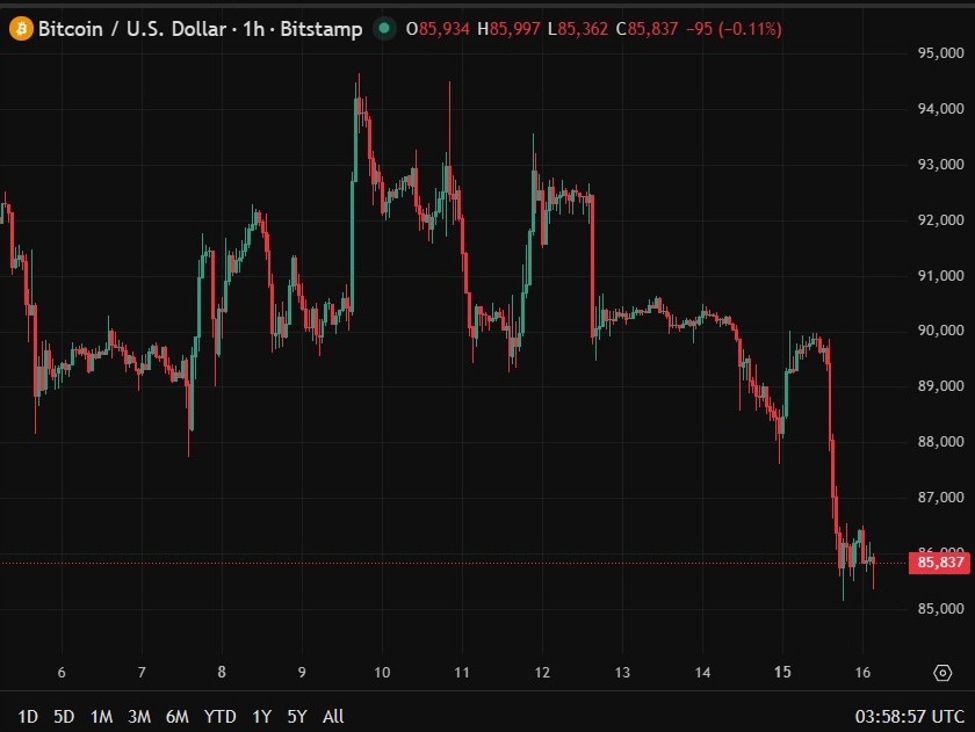
US Senate delays crypto market structure bill to 2026, as expected but still disappointing
U.S. lawmakers have delayed progress on a long-awaited crypto market structure bill, pushing any formal legislative action into next year and dealing a setback to an industry seeking clearer federal oversight.The Senate Banking Committee confirmed it will not hold a markup hearing on market structure legislation before the end of the year, deferring debate on how U.S. regulators should supervise digital asset markets. While the delay was widely anticipated, it extinguishes hopes that Congress could deliver even incremental momentum toward a comprehensive crypto framework before year-end.Committee officials said negotiations between Republicans and Democrats are ongoing, with bipartisan agreement remaining the stated objective. However, lawmakers now face a crowded legislative calendar in early 2026, including the need to address government funding before a January deadline and the looming constraints of the midterm election cycle, which historically compress the window for complex regulatory reforms.The proposed market structure bill aims to clarify the division of responsibility between the Securities and Exchange Commission and the Commodity Futures Trading Commission. Under current drafts, the CFTC would assume a primary role in regulating spot crypto markets, while securities laws would be more clearly delineated for digital assets that resemble traditional financial instruments. Both the Senate Banking Committee, which oversees the SEC, and the Senate Agriculture Committee, which oversees the CFTC, would need to advance legislation independently before a final bill could move forward.Democratic lawmakers have raised concerns around financial stability, market integrity and ethics, particularly in light of the expanding crypto-related business interests linked to President Donald Trump and his family. These issues have emerged as key sticking points in negotiations, complicating efforts to reach bipartisan consensus.Despite the legislative delay, regulatory momentum has continued outside Congress. The SEC has stepped up engagement with the industry through staff guidance and public roundtables exploring how existing securities laws apply to crypto activities. The CFTC has also taken a more accommodative stance, moving to permit licensed institutions to participate in spot crypto trading and granting limited regulatory relief to certain market operators.While these steps offer some near-term clarity, the absence of legislation leaves the industry reliant on regulator-by-regulator interpretation, reinforcing uncertainty around compliance, enforcement and long-term investment decisions. — The legislative delay is mildly negative for near-term crypto sentiment, as it extends regulatory uncertainty around market structure, custody and exchange oversight in the U.S. While recent steps by the SEC and CFTC provide incremental clarity, the absence of a statutory framework may limit institutional risk-taking and cap upside momentum for Bitcoin and major tokens. That said, the market impact is likely to be contained, with price action continuing to be driven more by macro liquidity conditions, ETF flows and U.S. rate expectations than by legislative timelines This article was written by Eamonn Sheridan at investinglive.com. 🔗 Source 💡 DMK Insight The delay in crypto market structure legislation is a significant blow to traders seeking clarity. With lawmakers pushing any formal action into next year, uncertainty looms over regulatory frameworks that could impact trading strategies. This stalling could lead to increased volatility as traders react to the lack of direction. Many were hoping for clearer guidelines that would stabilize the market, but now, we might see a continuation of the current environment where speculation reigns. Watch for potential price swings in major cryptocurrencies as traders adjust their positions in response to this news. Additionally, keep an eye on related assets like stocks of crypto exchanges, which may also feel the pressure from this legislative uncertainty. The real story is how this delay could affect institutional interest in crypto; without a clear regulatory path, big players might hold back, leading to a ripple effect across the market. For now, traders should monitor sentiment indicators and be prepared for potential breakouts or breakdowns in price action as the market digests this news. 📮 Takeaway Watch for increased volatility in crypto prices as the delay in legislation could lead to speculative trading; keep an eye on sentiment indicators for actionable signals.
Reminder: US jobs data will be due today
So, what’d I miss during the break? ;)There was no shortage of action in markets in the past week, not least with the Fed delivering one final 25 bps rate cut to wrap up the year. Now, the race for Fed chair is also reportedly heating up with Kevin Warsh pipped to be the favourite – ousting Hassett. A battle between the two Kevins is what’s left now.But for today, the drama will center on the release of the much delayed US labour market report. That’s right. The non-farm payrolls data for November was not released on the first week of December but instead pushed to today. And to make things more complicated, it will be combined with the October job numbers as well.If that is already not messy enough for you, the BLS also announced that there will be “higher-than-usual variances” in the jobs data for this month and following months as well.This comes as they implement statistical weighting changes to account for the missing October panel and also as November saw some data collection issues.All of this just means it won’t be easy and it might take some time – not necessarily this week or this month – to read into the numbers and make sense of the labour market outlook. The existing narrative is that we should continue to see signs of weakening in the landscape, and it will make more sense for market players to judge that in early next year and not on this mess of a release.Still, it doesn’t mean traders and investors will not react to the data and brush it aside. There will be volatility and reactions to it for sure. But if you’re expecting any firm conclusions from the numbers today, you might not want to hold your breath on that one.In any case, headline non-farm payrolls for November is estimated at 50k with the jobless rate at 4.4%. So, those will remain key benchmark figures to be mindful of ahead of the release later. This article was written by Justin Low at investinglive.com. 🔗 Source 💡 DMK Insight The Fed’s recent 25 bps rate cut could shift market dynamics significantly. This move signals a potential pivot in monetary policy that traders need to watch closely. With interest rates now lower, liquidity in the market may increase, impacting everything from equities to crypto. If the market reacts positively, we could see a rally in risk assets, particularly in tech stocks and cryptocurrencies, which often thrive in low-rate environments. However, keep an eye on the race for Fed chair; a shift in leadership could bring new policies that might reverse this trend. The uncertainty around this transition could lead to volatility, so traders should be prepared for potential swings. Watch for key levels in the S&P 500 and Bitcoin. If the S&P breaks above its recent highs, it could confirm bullish sentiment, while Bitcoin’s response to this rate cut will be crucial. A sustained move above $30,000 could signal renewed bullish momentum in crypto markets. Conversely, if the Fed chair race leads to uncertainty, we might see a pullback, so stay alert for any news developments. 📮 Takeaway Monitor the S&P 500 and Bitcoin closely; a break above $30,000 in Bitcoin could signal bullish momentum, while Fed chair developments may introduce volatility.
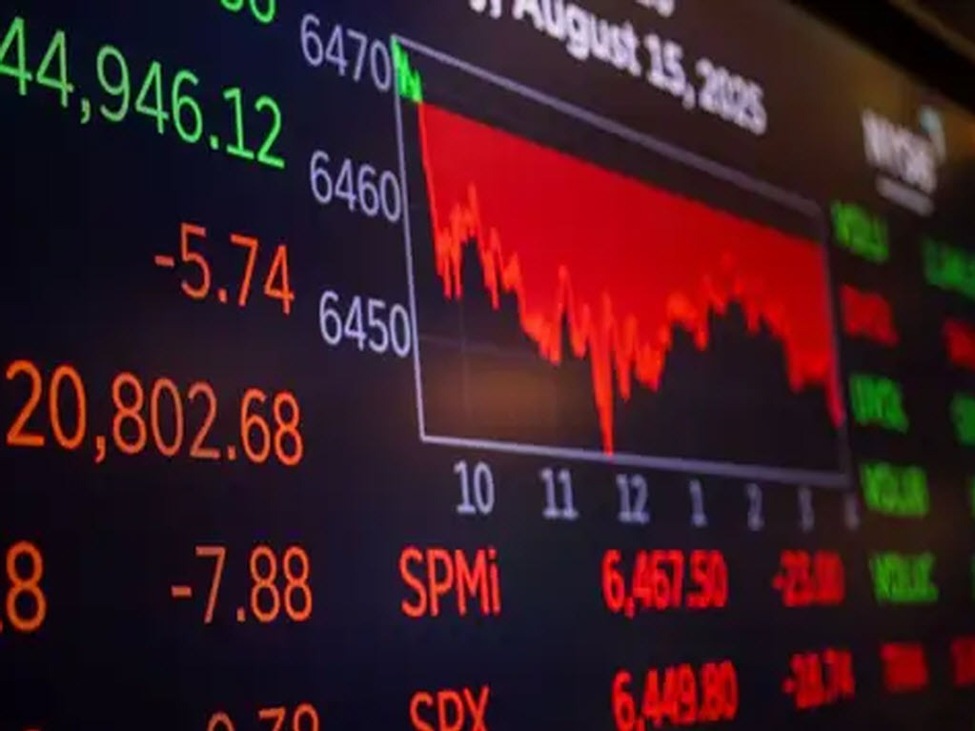
US futures keep lower at the tail end of Asia trading
We’re seeing a more cautious mood ahead of European trading, with Asian stocks and US futures holding lower today. The Nikkei is down 1.3% after a more sluggish showing by tech shares in Wall Street yesterday. Nvidia might’ve ended up 0.7% higher but AI stocks in general continue to wobble in the early stages this week.So far today, S&P 500 futures are down 0.5% after the 0.2% decline yesterday. It’s a bit of a setback after holding somewhat steadier last week, keeping on the verge of fresh record highs. However, a push to test that seems to be a step too far for now amid the caution up in the air on the AI bubble.For the day ahead, the big focus turns to US data. Not only will we be getting the non-farm payrolls report but retail sales data will also be on the cards later. So, that will keep market players interested in search of trading the headlines based on the latest update and snapshot that we will get on the US economy – one that is feeling long overdue, even if it might be a messy one. This article was written by Justin Low at investinglive.com. 🔗 Source 💡 DMK Insight Asian markets are feeling the heat, and here’s why traders should pay attention: The Nikkei’s 1.3% drop signals a broader risk-off sentiment that could spill over into European trading. With US futures also lower, it’s clear that yesterday’s tech struggles are weighing heavily on investor confidence. Nvidia’s slight uptick of 0.7% amidst a shaky AI sector suggests that while some stocks may find temporary support, the overall trend remains bearish. Traders should be cautious, especially if tech stocks continue to falter, as this could lead to a cascading effect across correlated assets like semiconductor stocks or broader indices. Keep an eye on key support levels in the Nikkei and US tech stocks; a break below these could trigger further selling pressure. On the flip side, if we see a rebound in tech or a shift in sentiment, that could provide a buying opportunity for those looking to capitalize on short-term volatility. Watch for any signs of stabilization in the Asian markets or a reversal in US futures, as these could indicate a potential turnaround. The next few trading sessions will be crucial for setting the tone for the rest of the week. 📮 Takeaway Monitor the Nikkei’s support levels closely; a break could signal further downside, while any rebound in tech stocks may present short-term buying opportunities.

FX option expiries for 16 December 10am New York cut
There is just one to take note of on the day, as highlighted in bold below.That being for EUR/USD at the 1.1750 level. The expiries do not tie to any technical significance but offers up the potential to act as a magnet for price action, at least before we get to key US data later in the day. Euro area PMI data might have a bit of a say in keeping things lively in European trading but barring any surprises, we’re likely to see more muted action in EUR/USD until we get to the US jobs report and retail sales data releases.For more information on how to use this data, you may refer to this post here.Head on over to investingLive (formerly ForexLive) to get in on the know! This article was written by Justin Low at investinglive.com. 🔗 Source 💡 DMK Insight EUR/USD is hovering around the 1.1750 level, and here’s why that matters: expiries at this point could create a magnet effect for traders. While this level doesn’t have strong technical significance, the concentration of expiries can lead to increased volatility as traders position themselves ahead of potential moves. If the pair approaches this level, watch for reactions—breakouts could lead to quick gains, while failure to hold might trigger stop-losses and further selling. Keep an eye on correlated assets like the DXY index, as shifts there could amplify movements in EUR/USD. Also, consider that market sentiment is currently cautious, so any unexpected news could lead to sharp swings. For now, monitor the 1.1750 level closely; it could dictate short-term strategies for both day and swing traders. 📮 Takeaway Watch the 1.1750 level in EUR/USD closely; expiries here could trigger significant price action in the short term.

UK October ILO unemployment rate 5.1% vs 5.1% expected
Prior 5.0%Employment change -16k vs -67k expectedPrior -22kAverage weekly earnings +4.7% vs +4.4% 3m/y expectedPrior +4.8%; revised to +4.9%Average weekly earnings (ex bonus) +4.6% vs +4.5% 3m/y expectedPrior +4.6%; revised to +4.7%November payrolls change -38kPrior -32k; revised to -22kThe jobless rate in the UK continues to tick higher, with payrolls change for November also declining once more. That continues to reinforce a softening labour market picture, though wages are holding up somewhat still. The BOE will have to be mindful with the unemployment rate creeping up to its highest since February 2021. Meanwhile, the UK employment rate is seen dropping further to 74.9% – down 0.3% on the quarter and keeping well below its pre-pandemic levels.Real wages (after accounting for CPI) is seen declining but just marginally, with total pay seen at 0.7% and regular pay 0.5% in real-terms in the three months to September.As for payrolls in general, we are seeing the number of payrolled employees continuing to fall further and now reach its lowest since September 2023.The data continues to underscore that the UK jobs market is softening and will keep the pressure on the BOE to cut rates down the road. A 25 bps rate cut for this week is very likely, even if the voting intentions might be marginally in favour of a rate cut. The market is pricing in ~92% odds of a move on Thursday. This article was written by Justin Low at investinglive.com. 🔗 Source 💡 DMK Insight UK’s job market is showing cracks, and here’s why that matters for traders: The recent employment data reveals a concerning trend with a payroll change of -38k, significantly worse than the expected -32k. This decline, coupled with a rising jobless rate, signals potential economic weakness that could impact consumer spending and overall market sentiment. For forex traders, this could mean increased volatility in GBP pairs, especially if the Bank of England reacts with dovish monetary policy. Keep an eye on the 1.25 level for GBP/USD; a break below could trigger further selling pressure. On the flip side, while the average weekly earnings rose to +4.7%, this may not be enough to offset the negative sentiment from rising unemployment. Traders should monitor the upcoming economic indicators closely, as any further deterioration could lead to a bearish outlook for the pound. Watch for the next employment report and any comments from the BoE, as these could provide critical insights into future market movements. 📮 Takeaway Watch the 1.25 level on GBP/USD; a break below could signal further downside as UK job data worsens.