
 Bitcoin
  Ethereum
  Tether
  XRP
XRP  BNB
BNB  USDC
USDC  Solana
  TRON
TRON  Lido Staked Ether
  Figure Heloc
Ripple is testing RLUSD on layer 2s Optimism, Base, Ink, and Unichain, after the token initially launched on the XRP Ledger and Ethereum in 2024. 🔗 Source 💡 DMK Insight Ripple’s expansion onto layer 2s is a game changer for XRP’s utility and price potential. With XRP currently at $1.91, this move could enhance transaction speeds and lower costs, making it more appealing for developers and users alike. Layer 2 solutions like Optimism and Base are gaining traction, and if Ripple can successfully integrate, it could lead to increased adoption and trading volume. Traders should keep an eye on the $2.00 resistance level; a breakout above this could signal a bullish trend. Conversely, if XRP fails to gain traction on these platforms, it might face downward pressure, especially if broader market sentiment shifts. Look for updates on transaction speeds and user adoption metrics as indicators of Ripple’s success on these layer 2s. The real story is how this could ripple through the crypto market, potentially impacting Ethereum and other layer 2 projects as competition heats up. 📮 Takeaway Watch for XRP to break above $2.00; successful integration on layer 2s could drive significant price momentum.

SEC has dismissed or paused most crypto enforcement cases under Trump: Report
The financial regulator dropped several cases against crypto companies in 2025, and is reportedly “no longer actively pursuing a single case against a firm with known Trump ties.” 🔗 Source 💡 DMK Insight The recent decision by the financial regulator to drop cases against crypto companies, especially those linked to Trump, is a game-changer for market sentiment. This could signal a shift in regulatory posture, potentially easing fears that have kept institutional money on the sidelines. With the crypto market still reeling from previous crackdowns, this news might encourage more aggressive buying, particularly among retail investors looking for a bottom. But here’s the kicker: while this could lead to a short-term rally, traders should be cautious. The market’s reaction could be volatile as participants weigh the implications of a more lenient regulatory environment against the backdrop of ongoing macroeconomic pressures. Watch for key resistance levels that could form as buying interest increases, particularly if Bitcoin and Ethereum break above their recent highs. Keep an eye on trading volumes; a surge could indicate genuine interest rather than a fleeting spike. In the coming weeks, monitor how major players react—if institutions start to accumulate, it could signal a longer-term trend reversal. Conversely, if this news leads to over-exuberance without solid fundamentals, we might see a sharp correction. 📮 Takeaway Watch for Bitcoin and Ethereum to break recent resistance levels; increased institutional buying could signal a longer-term trend reversal.

SEC commissioner says crypto is ‘helping to nudge reassessment’ on privacy
The SEC’s crypto task force held its sixth roundtable event, hosting representatives from digital asset advocacy groups and other organizations. 🔗 Source 💡 DMK Insight The SEC’s latest roundtable on crypto regulation signals a pivotal moment for traders. With advocacy groups pushing for clearer guidelines, the outcome could reshape market dynamics. Traders should be aware that regulatory clarity often leads to increased institutional participation, which can drive prices higher. If the SEC leans towards more favorable regulations, we might see a surge in buying pressure across major cryptocurrencies. Conversely, if the discussions lead to stricter regulations, expect volatility as traders react to potential restrictions. Keep an eye on Bitcoin and Ethereum, as they often set the tone for the broader market. Here’s the thing: while mainstream coverage may focus on the immediate outcomes, the real story is the long-term implications for market structure and investor confidence. Watch for any announcements or insights from this roundtable that could hint at future regulatory frameworks, especially as we approach the end of the year, a historically active period for crypto trading. 📮 Takeaway Monitor the SEC’s announcements from this roundtable closely; regulatory clarity could significantly impact Bitcoin and Ethereum prices in the coming weeks.

Trump to ‘look into’ recently convicted Samourai Wallet co-founder
Trump has already pardoned two crypto heavyweights, Binance founder Changpeng “CZ” Zhao in October and Silk Road founder Ross Ulbricht in January. 🔗 Source 💡 DMK Insight Trump’s pardons for crypto figures could signal a shift in regulatory sentiment. For traders, this development might suggest a more favorable environment for crypto operations, especially if it leads to reduced scrutiny from regulators. The pardons of Changpeng Zhao and Ross Ulbricht could embolden other crypto leaders and investors, potentially driving market sentiment positively. If this trend continues, we might see increased institutional interest in crypto assets, which could lead to price rallies. Traders should keep an eye on how this influences regulatory discussions in the coming weeks, particularly as we approach key market events like the next Federal Reserve meeting. The ripple effects could extend to related assets, such as altcoins and DeFi projects, which might benefit from a more relaxed regulatory landscape. However, it’s worth questioning whether these pardons will have lasting impacts or if they are merely short-term sentiment boosters. Traders should watch for any significant price movements in major cryptocurrencies, especially Bitcoin and Ethereum, as they often lead the market. Key levels to monitor are the support and resistance zones that could be affected by this news, particularly if bullish sentiment takes hold. 📮 Takeaway Watch for potential bullish momentum in Bitcoin and Ethereum as regulatory sentiment shifts; key levels to monitor are recent support and resistance zones.

US crypto market structure legislation delayed until early 2026
The Senate Banking Committee delayed crypto market structure hearings until 2026 amid ongoing bipartisan negotiations. 🔗 Source 💡 DMK Insight The Senate Banking Committee pushing hearings to 2026 is a big deal for crypto traders. This delay signals that regulatory clarity is still a long way off, which could keep volatility high in the crypto markets. Traders should brace for continued uncertainty, especially as institutions weigh their positions in light of this news. With major players likely holding back until they see how regulations shape up, we could see a slowdown in institutional inflows. This could affect not just Bitcoin and Ethereum, but also altcoins that thrive on speculative trading. Watch for how this impacts trading volumes and sentiment in the coming months. If you’re in the market, keep an eye on key support levels—if Bitcoin holds above recent lows, it could signal resilience despite the regulatory fog. But if it breaks down, expect a rush for the exits among retail traders. The real story is how long this uncertainty will linger and what that means for your positions. 📮 Takeaway Monitor Bitcoin’s support levels closely; a break below recent lows could trigger significant selling pressure amid ongoing regulatory uncertainty.

Crypto urges SEC to see the good in blockchain privacy tools
US Securities and Exchange Commission chair Paul Atkins says the agency must find how to allow people to use blockchain privacy tools “without immediately falling under suspicion.” 🔗 Source 💡 DMK Insight The SEC’s focus on blockchain privacy tools is a game-changer for crypto traders. Chair Paul Atkins’ comments highlight a growing tension between innovation and regulation. For traders, this could mean increased scrutiny on privacy coins and related assets, which might lead to volatility. If the SEC finds a way to allow these tools without suspicion, it could legitimize certain projects, potentially boosting their value. However, if they impose strict regulations, expect a sell-off in privacy-focused assets. Keep an eye on how major privacy coins react to this news, especially if they break key support or resistance levels. Also, monitor upcoming SEC announcements for clearer guidance on compliance, as this could set the tone for the market. In the short term, traders should watch for price movements in privacy coins like Monero or Zcash, especially if they approach significant technical levels. A breach below recent lows could trigger panic selling, while a bounce back could indicate resilience against regulatory fears. 📮 Takeaway Watch for price reactions in privacy coins like Monero and Zcash; key support levels could signal upcoming volatility based on SEC developments.

Winklevoss-led Gemini rolls out prediction markets in 50 US states
Gemini says its prediction markets are now live nationwide via affiliate Gemini Titan after it secured a CFTC Designated Contract Market license 🔗 Source 💡 DMK Insight Gemini’s launch of prediction markets is a game changer for traders looking to hedge or speculate. With the CFTC Designated Contract Market license, Gemini Titan opens up new avenues for trading strategies, particularly in volatile environments. This move could attract institutional players who are keen on diversifying their portfolios with innovative products. Prediction markets allow traders to bet on the outcomes of events, which can serve as a hedge against traditional market risks. Keep an eye on how this affects liquidity and trading volumes in related assets, especially in the crypto space where sentiment can shift rapidly. However, it’s worth noting that while this could enhance market depth, it also introduces new risks. Traders should monitor how these markets perform against established assets and be cautious of potential regulatory scrutiny that could arise as these products gain traction. Watch for any significant price movements in Gemini’s native assets or related cryptocurrencies as this new offering gains traction. 📮 Takeaway Monitor Gemini Titan’s prediction markets closely; they could impact liquidity and volatility in crypto assets, especially if institutional interest spikes.
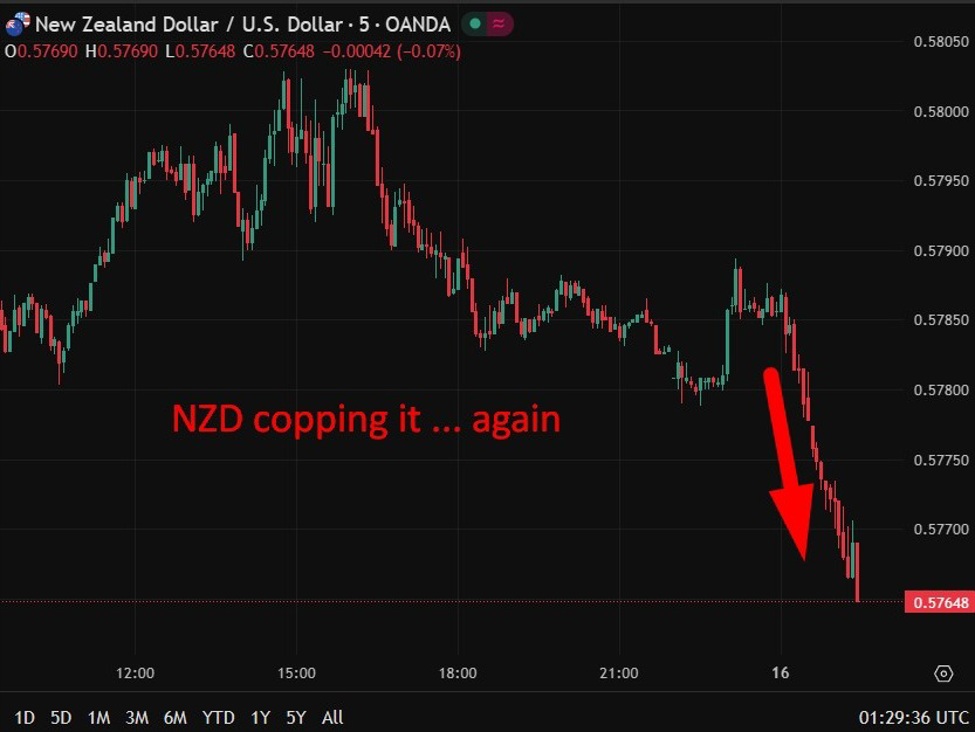
New Zealand fiscal outlook darkens as finance minister Willis sticks to discipline
New Zealand’s government has signalled a prolonged period of fiscal strain, with updated forecasts showing no return to a budget surplus over the next five years, as Finance Minister Nicola Willis doubled down on spending restraint while acknowledging the economy’s fragile recovery.Speaking alongside the release of the half-year economic and fiscal update, Willis struck a cautiously optimistic tone on growth while reinforcing the government’s commitment to tight fiscal discipline. She argued that recent data point to an economy beginning to stabilise after a prolonged downturn, even as the broader outlook remains clouded by weak domestic demand and external uncertainty. The updated forecasts follow earlier guidance on government funding plans (see earlier bond issuance update), reinforcing the picture of near-term restraint alongside elevated medium-term borrowing needs.The government now expects the economy to grow modestly in the third quarter, following contractions in three of the past five quarters. Treasury forecasts suggest momentum should gradually improve over the next 18 months, though the near-term recovery remains uneven and vulnerable to global risks, including shifting U.S. trade policy and softer international growth.Despite signs of stabilisation, the fiscal outlook has deteriorated. The government now expects a wider deficit in the current financial year than projected at the May Budget, and does not anticipate returning to surplus within the five-year forecast horizon once the costs of the national accident insurance scheme are included. While the deficit narrows significantly toward the end of the forecast period, the outlook underscores the challenge of restoring balance while supporting growth.Willis emphasised that restraint will remain central to fiscal strategy. Any new spending at the May Budget will be tightly targeted, with health, education, defence and law and order identified as priority areas. The government’s approach reflects a view that credibility and discipline are essential to rebuilding confidence, even as critics argue that spending cuts risk weighing further on activity.The updated forecasts also show a slightly weaker growth profile than previously assumed and a marginally higher inflation outlook over the next year, complicating the policy mix. Net government debt is now expected to peak at just under 47% of GDP later in the decade, modestly higher than earlier projections, reinforcing the case for ongoing fiscal restraint.Overall, the update highlights a government attempting to balance an emerging economic recovery with a determination to keep a firm grip on the public finances, even as the path back to surplus remains distant. —A weaker fiscal outlook combined with continued spending restraint reinforces a cautious growth backdrop, supporting expectations of limited upward pressure on yields and keeping focus on RBNZ policy settings. The fiscal update is broadly neutral to mildly negative for the New Zealand dollar (see attached screenshot). While improved near-term GDP expectations offer some support, the absence of a surplus over the forecast horizon and a higher projected debt peak reinforce perceptions of constrained policy flexibility. With fiscal settings tight and growth still fragile, NZD is likely to remain driven by global rate differentials and risk sentiment rather than domestic fiscal signals, leaving the currency sensitive to shifts in U.S. yields and broader risk appetite. This article was written by Eamonn Sheridan at investinglive.com. 🔗 Source 💡 DMK Insight New Zealand’s fiscal outlook just got a lot murkier, and here’s why that matters: With no expected return to budget surplus for five years, traders should brace for potential volatility in the NZD. The government’s commitment to spending restraint amid a fragile economic recovery signals a cautious approach that could impact consumer sentiment and investment flows. This could lead to a weaker New Zealand dollar, especially against stronger currencies like the USD or AUD. Keep an eye on key economic indicators, such as GDP growth and inflation rates, which could further influence the NZD’s trajectory. If the Reserve Bank of New Zealand decides to adjust interest rates in response to these fiscal pressures, it could create significant trading opportunities. On the flip side, if the government manages to stabilize the economy faster than expected, we might see a rally in the NZD. But for now, the focus should be on the downside risks. Watch for any shifts in economic data or central bank commentary that could signal a change in market sentiment. The next few months will be crucial for gauging how these fiscal policies play out in the currency markets. 📮 Takeaway Monitor NZD closely; a prolonged budget deficit could weaken the currency, especially against the USD and AUD, impacting trading strategies.
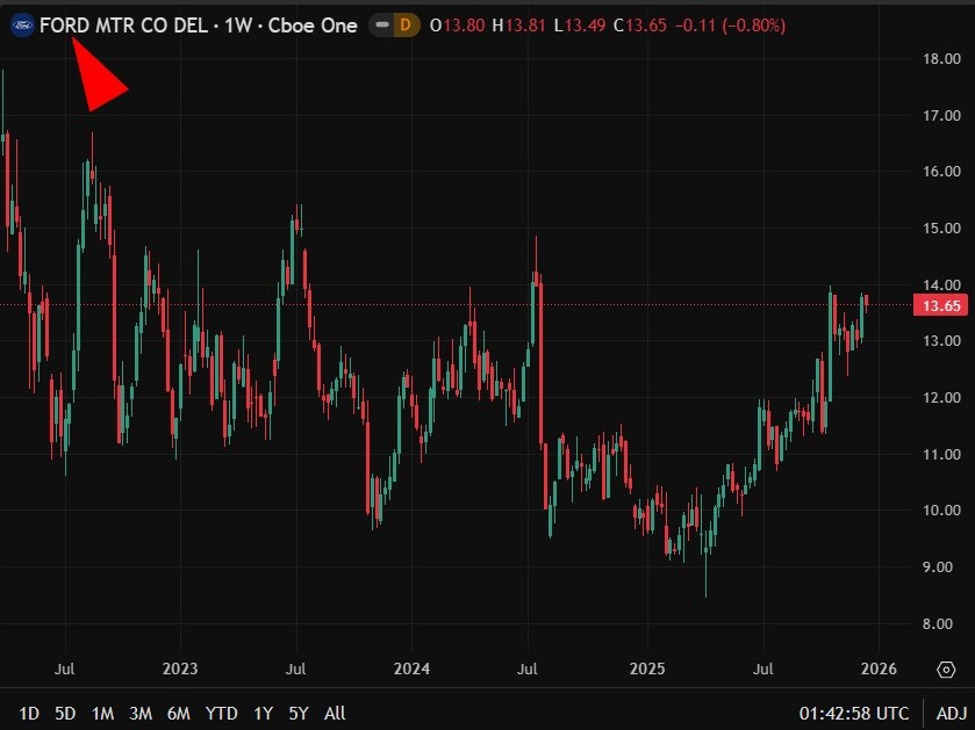
ICYMI – Ford takes US$19.5bn EV charge as strategy pivots to hybrids
Ford Motor is taking a major step back from its electric-vehicle ambitions, announcing roughly US$19.5 billion in charges largely tied to its loss-making EV operations, as the automaker pivots toward hybrids, extended-range vehicles and conventional gasoline models amid weakening EV demand. The Wall Street Journal with the info. In brief:The impairment is among the largest ever recorded by a U.S. industrial company and represents the clearest acknowledgment yet from Detroit that the transition to fully electric vehicles will take longer and be less profitable than previously expected. Ford has lost around US$13 billion on its EV business since 2023, underscoring the scale of the challenge.In response, the company said it will redeploy capital away from unprofitable EV assets and refocus investment on gas-powered vehicles, hybrids and extended-range electric models that combine battery power with onboard gasoline engines. These powertrains are seen as more commercially viable given current consumer preferences, infrastructure constraints and regulatory uncertainty.Ford’s revised strategy includes discontinuing the fully electric version of its F-150 Lightning pickup in favour of an extended-range variant, reflecting softer-than-expected demand for large EV trucks. While the company is pulling back from high-cost EV bets, it reiterated plans to launch a US$30,000 electric pickup by 2027, positioning low-cost EVs as the core of its future electric offering in the U.S.By 2030, Ford expects hybrids, extended-range vehicles and EVs to account for around 50% of its global sales volume, up from roughly 17% today, highlighting a shift toward a more gradual, diversified electrification path rather than a rapid transition to pure EVs.Beyond vehicles, Ford will repurpose its Kentucky EV battery facility into a battery-storage business, targeting customers such as utilities, renewable energy developers and data centres supporting artificial intelligence workloads. While the move will result in layoffs for about 1,600 workers at the site, the company said it plans to hire thousands of new employees across its broader U.S. operations.Overall, Ford’s retrenchment reflects a broader recalibration across the auto industry, as manufacturers confront the economic realities of EV adoption and seek profitability over speed in the energy transition. —Ford’s retrenchment is likely to reinforce investor rotation toward automakers with flexible powertrain strategies and nearer-term profitability. Legacy OEMs with strong hybrid line-ups and pricing power may be favoured over pure-play EV manufacturers facing margin pressure, subsidy risk and slower demand growth. The move also supports selective opportunities across auto suppliers tied to internal combustion, hybrid systems and battery-storage infrastructure, while tempering enthusiasm for capital-intensive EV capacity expansion. This article was written by Eamonn Sheridan at investinglive.com. 🔗 Source 💡 DMK Insight Ford’s $19.5 billion charge signals a significant shift in the EV landscape, and here’s why that matters: This move comes as EV demand wanes, which could ripple through related sectors, including battery manufacturers and raw material suppliers. For traders, this shift might affect stocks tied to the EV supply chain, like lithium producers or companies focused on battery technology. If Ford’s pivot leads to a broader industry trend, we could see volatility in EV-related stocks and commodities. Keep an eye on the technical levels of these stocks; if they break below key support levels, it could trigger further selling. On the flip side, this could create hidden opportunities in hybrid and traditional auto sectors, which may see renewed investment as Ford reallocates resources. Traders should monitor Ford’s stock price closely for any signs of recovery or further declines, especially as earnings reports come out in the next quarter. The immediate impact could be felt in the next few weeks, so stay alert for any market reactions to Ford’s strategic changes. 📮 Takeaway Watch for reactions in EV-related stocks and commodities; key support levels could indicate further selling if breached.
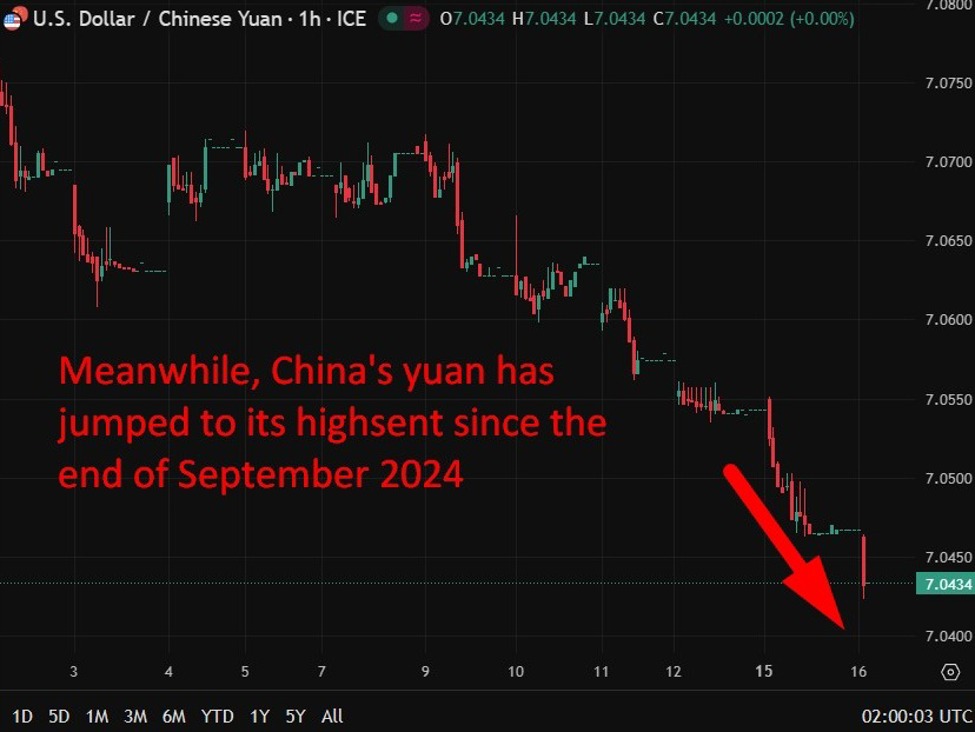
China eyes pragmatic 2026 growth target near 5% (while onshore yuan surges higher!)
China is likely to set a pragmatic and flexible GDP growth target for 2026, with policymakers seeking to balance stabilisation objectives against mounting external and domestic pressures, according to commentary and analyst assessments following the Central Economic Work Conference. This follows lacklustre data yesterday, but a still solid yuan:China yuan hits 14-month high even as weak consumer demand clouds economic growth outlookChina signals more policy support (same old?) as economy ‘stabilises’ in NovemberCommentary published by China Securities Times suggests policymakers are divided over whether to anchor next year’s growth target at around 5%, or adopt a slightly wider 4.5%–5.0% range that would allow greater policy leeway. Analysts argue that flexibility will be critical given a more challenging global backdrop, slowing external demand and persistent domestic supply-demand imbalances.The Central Economic Work Conference underscored this cautious tone, reaffirming the guiding principle of “seeking progress while maintaining stability.” Policymakers emphasised the need to stabilise employment, businesses, markets and expectations, while delivering “reasonable quantitative growth” alongside qualitative improvements as China embarks on the 15th Five-Year Plan. Importantly, the meeting reiterated continuity in macro policy, maintaining a more proactive fiscal stance and a moderately loose monetary policy, alongside stronger counter-cyclical and cross-cyclical adjustments.Most analysts expect the 2026 growth target to remain close to 5%, with policy support front-loaded to ensure a solid start to the year. Measures are likely to focus on expanding domestic demand, unlocking consumption potential, lifting effective investment and offsetting the drag from weaker exports, while continuing efforts to stabilise the property sector.Economists anticipate further monetary easing, with interest rate cuts of 10–20 basis points and reserve requirement ratio reductions of 50–100 basis points pencilled in for 2026. Some analysts expect the People’s Bank of China could move as early as January, ahead of the Lunar New Year, to shore up confidence and liquidity.On the fiscal side, projections point to a deficit ratio of around 4%, unchanged from 2025, alongside an expanded issuance of ultra-long-term special treasury bonds and steady or slightly higher quotas for local government special bonds. Authorities are also expected to deploy targeted tools, including relending facilities and subsidies, to support consumption, infrastructure, technological innovation and small businesses. —A pragmatic and flexible 2026 growth target reduces near-term downside risks for the yuan by signalling policy responsiveness rather than hard growth constraints. While further rate and RRR cuts may cap CNY upside, front-loaded stimulus and a clearer demand-support narrative should help limit depreciation pressure, keeping USD/CNY anchored within managed ranges rather than prompting a disorderly weakening. This article was written by Eamonn Sheridan at investinglive.com. 🔗 Source 💡 DMK Insight China’s flexible GDP growth target could impact global markets, including crypto and forex. With SOL currently at $128.43, traders should keep an eye on how China’s economic policies influence investor sentiment. A pragmatic approach to GDP growth may stabilize the yuan, which could lead to increased risk appetite among traders. If the yuan strengthens, we might see a corresponding uptick in demand for cryptocurrencies as investors look for alternative assets. However, if the growth target fails to inspire confidence, we could see a sell-off across risk assets, including SOL. Watch for key levels in SOL; a break below $125 could signal bearish momentum, while a push above $130 might attract bullish traders. Keep an eye on upcoming economic data from China, as it could provide further clues about market direction. 📮 Takeaway Monitor SOL closely; a break below $125 could trigger bearish sentiment, while a rise above $130 may attract buyers.