
 Bitcoin
  Ethereum
  Tether
  BNB
BNB  XRP
XRP  USDC
USDC  Solana
  TRON
TRON  Lido Staked Ether
  Figure Heloc
China’s October data underscored intensifying domestic strains, with new home prices sliding 0.45% month-on-month, the sharpest fall in a year, as the country’s property downturn deepens. Industrial production rose 4.9% year-on-year, missing expectations and slowing from September, while retail sales grew a softer 2.9%. Fixed-asset investment fell 1.7% in the year to date, a much weaker outcome than economists had forecast.National Bureau of Statistics spokesperson Fu Linghui said the economy is operating “relatively smoothly” and highlighted growth in emerging industries, but acknowledged mounting domestic and external headwinds that are forcing a structural shift. Economists said the housing market remains the biggest drag, pointing to weak investment, excess supply in the second-hand market and subdued consumer sentiment. Analysts, including Yuhan Zhang of the Conference Board, expect policymakers to continue funnelling capital into infrastructure, advanced manufacturing and industrial upgrading as Beijing tries to stabilise growth. This article was written by Eamonn Sheridan at investinglive.com. 🔗 Source 💡 DMK Insight China’s October data is a wake-up call for traders: the property market is in serious trouble. New home prices dropping 0.45% month-on-month is the sharpest decline in a year, signaling deepening issues in the real estate sector that could ripple through the economy. With industrial production growth slowing to 4.9% year-on-year and retail sales at a mere 2.9%, the overall economic momentum is faltering. This could lead to increased volatility in related markets, particularly commodities and currencies tied to China’s economic health. Traders should keep an eye on the Chinese yuan and commodities like copper, which often react to shifts in China’s industrial activity. On the flip side, while the data paints a grim picture, it could also present buying opportunities in undervalued sectors if the government steps in with stimulus measures. Watch for any announcements from Beijing that could shift market sentiment. Key levels to monitor include the yuan’s performance against the dollar, especially if it approaches recent lows, which could trigger further selling pressure. 📮 Takeaway Keep an eye on the Chinese yuan and commodities; any stimulus from Beijing could shift market sentiment significantly.
investingLive Asia-Pacific FX news wrap: GBP & BTC down. Oil, NZD, gold all higher.
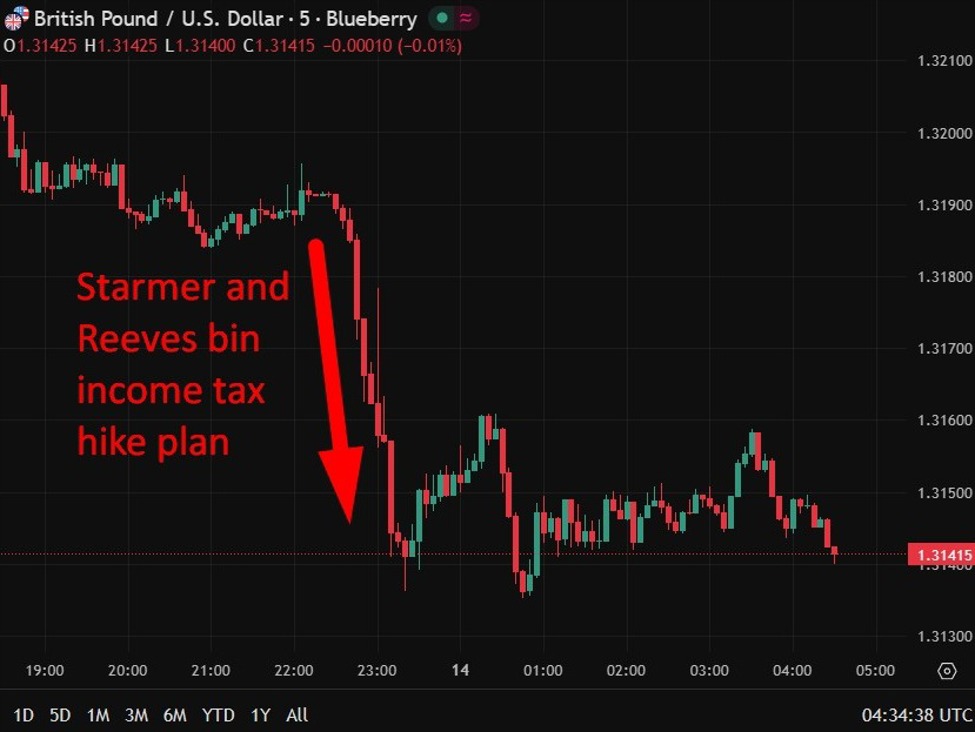
ICYMI: China home prices steepest fall in a year as industrial, investment data weakenFX intervention – Indian central bank likely selling U.S. dollars to support rupeeU.S. approves potential US$330m fighter-jet parts sale to TaiwanOil surges after drone strike hits Russian Novorossiysk terminal, heightening supply risksChina say stabilisation taking hold despite weak investment and industrial slowdown in OctAmazon, Microsoft back bill curbing Nvidia’s China chip exports to secure U.S. AI supplyChina Oct Retail Sale (YoY) 2.9% (exp 2.7%) & Industrial Production (YoY) 4.9% (exp 5.5%)US, South Korea unveil deal with major investments, tariff cuts and defence expansionIntervention: South Korea won-stabilising measures after currency sinks to seven-month lowChina October new house prices -2.2% y/y (prior -2.2% also)PBOC sets USD/ CNY reference rate for today at 7.0825 (vs. estimate at 7.0964)EUR/GBP above 0.8852, a 2.5 year high as UK ditches income tax rate hike plansJapan’s Takaichi backs away from minimum-wage target amid pushback from regional firmsUBS: China’s AI power build-out (5–6GW) is modest vs U.S. (40–45GW), signalling no bubble.China – Evergrande Property Services invites updated bids as liquidation process advancesJapan’s Economy Minister Kiuchi says a weak yen can push up CPI through import costsMore on UK drops income-tax hike plans ahead of November budgetGBP is taking a hit after the report that Starmer is going to drop plan to hike tax ratesUS media report Trump preparing to back down on some tariffs in order to lower food pricesUK PM Starmer and fin min Reeves drop plan to hike income tax ratesMUFG: Policy divergence supports AUD/NZD as RBA holds firm and RBNZ eyes more cutsCiti: September payrolls near, October data likely pushed to DecemberUS/Swiss talks very positive, tariff & barrier reductions expected pending Trump approvalinvestingLive Americas market news wrap: Rough day in stock marketsNew Zealand October 2025 Manufacturing PMI jumps to 51.4 (prior 50.1, revised from 49.9)Biggest daily decline for stock markets since October 10RBNZ’s Gai says global tensions, trade shifts cloud outlook. Needs clearer policy signals.GBPThere was important news out of the UK, with the Financial Times reporting that Prime Minister Keir Starmer and Chancellor Rachel Reeves have abandoned plans to raise UK income tax rates just weeks before the 26 November budget. The government faces a fiscal gap of roughly £30 billion and will now be scrambling for alternative revenue sources. The pound took a hit on the headlines, with EUR/GBP pushing to a 2½-year high.NZDThe New Zealand dollar outperformed during the session. The lift came partly from data showing the October Performance of Manufacturing Index jumped to 51.4 (from a revised 50.1 for September), but most of the attention centred on the RBNZ’s confirmation that it will ease mortgage loan-to-value restrictions on 1 December.For owner-occupiers, the share of new lending allowed with an LVR above 80% will rise to 25% (from 20%).For investors, the LVR limit at >70% will rise to 10% (from 5%).Oil Oil prices also surged more than 2% after a Ukrainian drone strike damaged an oil depot at Russia’s Novorossiysk port — a site handling around 2.2 million bpd of crude and condensate. Analysts said the strike underscored persistent supply risks tied to both Ukrainian attacks and tightening Western sanctions.Other items of interest:A senior U.S. official said trade talks with Switzerland were “very positive,” with Washington considering a deal to cut tariffs on Swiss imports pending President Trump’s approval.The New York Times reported that the Trump administration is preparing tariff exemptions aimed at reducing food prices, following earlier reports this week that the White House is looking to ease cost-of-living pressures.China’s property slump deepened, with new-home prices in 70 cities falling 0.45% m/m in October, the steepest drop in a year, and resale values sliding 0.66%, the fastest decline in 13 months. The four-year downturn continues to weigh heavily on household sentiment and consumption. Industrial output rose 4.9% YoY, missing forecasts, retail sales gained 2.9%, and fixed-asset investment fell 1.7% YTD. The unemployment rate slipped to 5.1%.The People’s Bank of China set the daily USD/CNY fix at its strongest since October 2024, a signal aimed at supporting consumption by making imports cheaper. The yuan briefly hit a one-year high on exporter dollar-selling before easing post-data.In geopolitics and markets, the United States and South Korea unveiled a sweeping economic and security agreement featuring major tariff reductions and hundreds of billions of dollars in Korean investment. Meanwhile, South Korea’s FX authorities vowed to stabilise the won after it fell to a seven-month low. Dealers suspect authorities have already intervened via dollar-selling.Separately, the Wall Street Journal reported that Amazon and Microsoft have publicly backed the proposed Gain AI Act — legislation that would restrict Nvidia’s ability to export advanced chips to China — marking a rare policy split between the tech giants and one of their largest suppliers. Crypto extended its losses. Asia-Pac stocks followed Wall Street lower:Japan (Nikkei 225) -1.81%Hong Kong (Hang Seng) -1.26% Shanghai Composite -0.16%Australia (S&P/ASX 200) -1.45% This article was written by Eamonn Sheridan at investinglive.com. 🔗 Source 💡 DMK Insight China’s home prices are experiencing their steepest decline in a year, and here’s why that matters: Weak industrial and investment data from China could signal broader economic troubles, impacting global markets. Traders should keep an eye on how this affects commodities like oil, especially as supply risks heighten due to geopolitical tensions, such as the recent drone strike on the Russian Novorossiysk terminal. If China’s economic slowdown continues, it could lead to reduced demand for oil, which might push prices down in the medium term. On the forex side, the Indian central bank’s intervention to support the rupee by selling U.S. dollars could create volatility in USD/INR pairs. This move indicates that the central bank is concerned about the rupee’s stability amidst global economic pressures. Traders should watch the USD/INR closely for any breakout or reversal patterns, particularly if it approaches key support or resistance levels. The interplay between these economic indicators and currency movements will be crucial in the coming weeks. 📮 Takeaway Watch the USD/INR for volatility as the Indian central bank intervenes,

Risk sentiment on the rocks after the heavy selling yesterday
It feels like a bit of déjà vu as we also had to deal with a similar setting last Friday. And here we are a week later talking about the same thing again, that being equities being pressured while Bitcoin is threatening a firm break under six figures. On the latter, the technical conditions are looking rather dicey for the cryptocurrency with price now running down to $97,593 – its lowest since May. The $100,000 mark has been a key level for quite some time now, so a break of that will also surely have reverberations to the broader risk mood in markets.After the heavy selling yesterday, we are seeing US futures keep somewhat calmer for now. S&P 500 futures are flat but there’s no doubt that there’s a sense of danger and caution up in the air. The sense of relief on the end of the US government shutdown was short-lived and investors now have to figure out what other dynamics they have to factor in going into year-end.But among other things, there are perhaps some subtle things that are shifting the market landscape. From earlier this month:Is this a precursor to the next big correction in the stock market?Here’s another reason why the AI trade might need a bit of rethinking This article was written by Justin Low at investinglive.com. 🔗 Source 💡 DMK Insight Equities are under pressure again, and Bitcoin’s struggle to hold above six figures is raising alarms for traders. This déjà vu scenario suggests a correlation between stock market volatility and crypto price movements, particularly for Bitcoin. If Bitcoin fails to maintain its position above six figures, we could see a cascade effect, dragging down altcoins and potentially leading to a broader market sell-off. Traders should keep an eye on key support levels, especially around the $100,000 mark, as a break below could trigger stop-loss orders and further panic selling. On the flip side, if Bitcoin manages to hold its ground, it might attract some buying interest, especially from institutional players looking for a dip. Watch for volume spikes and any news that could influence sentiment, as these could provide clues about the next move. The coming week will be crucial, so stay alert for any shifts in market dynamics that could impact your positions. 📮 Takeaway Monitor Bitcoin’s support at $100,000 closely; a break could lead to significant sell-offs across the crypto market.
UK in the spotlight as we look to the session ahead
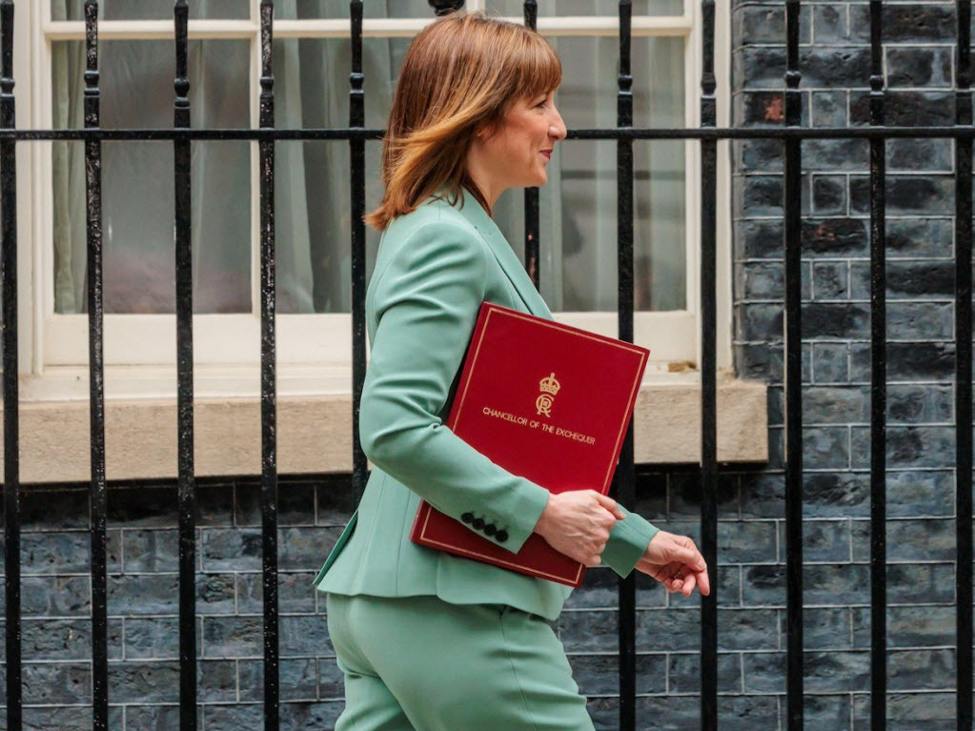
One of the biggest news in overnight trading was this report by the Financial Times stating that the UK might drop plans for income tax hikes in the upcoming budget announcement. Amid increasing political uncertainty, this seems to be a last-ditch effort by Starmer and Reeves to try and win back some support. However, it comes at a big cost in sacrificing the already concerning UK fiscal status.Make no mistake, this part of the Autumn Budget was supposed to be a given. So, it definitely marks a significant U-turn from what was pledged by the Labour party in their manifesto. That being said, lawmakers have been keeping rather tight-lipped about the whole thing for several weeks now and it seems to that they were preparing for this to happen.In any case, markets are now responding in kind to the news as borrowing concerns and fiscal credibility starts to weigh. Sterling is down on the day, with the nudge lower in GBP/USD being relatively measured. The pair is down 0.3% to 1.3149 currently but EUR/GBP is seen up 0.4% to 0.8855 in rising to its highest levels since April 2023. Pain.As we look to the European market open later, expect UK gilts to also come under pressure with yields set to jump much higher in the session ahead. And that could lead to extended pressure on the quid as we look towards the weekend.As a reminder, the Autumn Budget will only be announced on 26 November so there’s still about two weeks for Reeves to figure out the mess in all this. This article was written by Justin Low at investinglive.com. 🔗 Source 💡 DMK Insight The UK government’s potential reversal on income tax hikes could shift market sentiment significantly. For traders, this news matters because it reflects broader economic stability—or instability—in the UK. If the government opts against tax increases, it might bolster consumer spending and investor confidence, which could positively impact the GBP. This could lead to a short-term rally in GBP/USD and related pairs, especially if the market perceives this as a sign of political stability. Keep an eye on the upcoming budget announcement; any confirmation or denial could create volatility. On the flip side, if this is merely a temporary measure to placate voters without addressing underlying economic issues, the GBP could face downward pressure in the long run. Watch for key resistance levels around recent highs, as a failure to break through could signal a bearish reversal. Traders should also monitor related assets, like UK equities, which might react positively to this news but could also be vulnerable if the economic fundamentals don’t support the optimism. 📮 Takeaway Watch the upcoming budget announcement closely; a decision against tax hikes could lead to a GBP rally, especially if it signals political stability.

Gold futures technical analysis for today with tradeCompass (14 November 2025)
Gold futures are trading at 4,187 during this update, placing the metal directly in bearish territory according to today’s tradeCompass map. The bearish threshold sits at 4,194, while the bullish threshold begins higher at 4,207.7. Anything below 4,194 keeps the short bias active, and traders looking to begin trading gold today may watch for retracements into the 4,188 to 4,194 zone for potential entries.This analysis comes at the end of a volatile week highlighted by several pieces on investingLive.com. Justin Low described gold’s early week strength in “Gold getting ahead of the curve?”, noting the rally above 4,100 as risk assets firmed. That enthusiasm faded, as Adam Button reported in “Gold gives it all back and more”, with gold reversing sharply and dropping back into negative territory. Eamonn Sheridan warned in “Beware of the triple top in gold” that the technical picture was tightening and heavy.This background sets the stage for today’s gold technical analysis and directional map.Summary Map for Trading Gold TodayBearish below: 4,194 Bullish above: 4,207.7 Primary bias: Bearish unless price sustains above 4,207.7Main intraday targets for gold today: 4,178.8 4,168.3 4,162.9Bullish targets if threshold flips: 4,218.3 4,233.8 4,271.7Gold Market Context and Directional BiasGold begins the session with a bearish lean. Price is already beneath the 4,194 marker, and any push back into the 4,188 to 4,194 region can function as an orientation zone for short-side setups. Traders who prefer early confirmation might wait for price to show rejection inside this cluster.The upper boundary at 4,207.7 defines the line where bullish gold trading strategies can begin. The band between the thresholds also includes the widely watched 4,200 round number, a common magnet for liquidity. This level has been repeatedly mentioned across recent gold coverage because it has been acting as a tension point for buyers and sellers.Given this week’s volatility cycle documented on investingLive.com, today’s structure demands patience. Conditions may shift quickly, and gold can transition from calm to aggressive within minutes.Bearish Gold Technical Analysis and TargetsWhile gold remains under 4,194, the bearish roadmap contains layered downside profit levels:4,178.8 4,168.3 4,162.9These levels are typically used by intraday traders for partial profit taking. After the first target is hit, many gold traders close any unfilled entries and move their stop to the average entry to protect the trade.Extended bearish levels for traders holding longer:4,122.3 4,091.5Swing focused levels:4,035.8 4,010.2 3,978.0The presence of deeper swing targets continues the theme from recent newsroom coverage: gold has repeatedly faded after rallies, and the chart remains vulnerable. But whether price reaches deeper levels depends on session momentum and broader risk appetite.Bullish Gold Technical Analysis and Upside TargetsIf gold climbs above 4,207.7, the bullish script activates.Upside targets include:4,218.3 4,233.8 4,271.7 4,393.5 (long distance swing level)The earlier triple top warning flagged by Eamonn Sheridan is still relevant. A break above the bullish threshold must show sustained commitment and acceptance to avoid another fake push.Educational Corner for Gold TraderstradeCompass uses stacked partial profit targets because gold often reacts sharply to structural points like VWAP clusters, value area boundaries, and high volume nodes. These levels frequently behave like pressure valves, causing slowdown or acceleration.Taking partial profits at these points:Locks in gains during fast intraday rotationsReduces the emotional loadAllows a smaller position to stretch into larger trend movesThis helps traders avoid closing everything too early or holding everything too long.Trade Management Notes for Trading Gold TodayIf you are trading gold today, keep the following in mind:Focus on one directional idea at a timeMove stops to the entry once TP1 or TP2 is reachedIf price breaks the opposite directional threshold, the original trade idea loses validityFridays often deliver choppy behaviour, so prefer earlier targets unless volatility expandsThese are not rules, but they keep traders aligned with the day’s structure and improve consistency during fast conditions.Professional Disclaimer for Gold TradersThis gold futures technical analysis is intended as educational decision support, not financial advice. Trading gold, whether through futures, micros, or CFDs, involves substantial risk and may not be suitable for all traders. Leverage can amplify gains and losses. Always verify levels on your own charts, assess your risk tolerance, and consult a licensed professional if needed. You trade entirely at your own risk. This article was written by Itai Levitan at investinglive.com. 🔗 Source 💡 DMK Insight Gold futures are flirting with bearish territory, and here’s why that matters right now: Trading at 4,187, gold is just shy of the bearish threshold of 4,194. This level is crucial because a sustained move below it could trigger further selling pressure, reinforcing the short bias among traders. If you’re considering positions, keep an eye on this threshold; a break could lead to a cascade effect, pushing prices lower and potentially dragging related assets like silver down with it. Conversely, if gold can reclaim the bullish threshold at 4,207.7, it might signal a reversal, attracting buyers and shifting sentiment. The market’s current bearish stance suggests that traders should be cautious, especially in the short term, as volatility could spike if these levels are breached. Here’s the flip side: while the bearish outlook is clear, any unexpected geopolitical or economic news could quickly shift sentiment. So, watch for news that could impact demand for gold, as it often reacts to such events. For now, monitor the 4,194 level closely; it’s the line in the sand for short positions. 📮 Takeaway Watch the 4,194 level closely; a break below it could intensify selling pressure in gold futures.

FX option expiries for 14 November 10am New York cut
There are a couple to take note of on the day, as highlighted in bold below.The first one is for EUR/USD at the 1.1625 level. It isn’t one that ties to any technical significance, so the impact of the expiries should be more muted. The pair has been on the ascend since last week with the more immediate focus being on the 100-day moving average at 1.1662 currently. That’s the key line in the sand to watch for the pair instead.Then, there is one for USD/CAD at the 1.4025 level. If anything, the expiries could keep price action more locked in during European trading considering price action also sits in between the key hourly moving averages of 1.4016-56 currently. So, that defines the range in play for USD/CAD as buyers hold the line at 1.4000 during the course of the week thus far.For more information on how to use this data, you may refer to this post here.Head on over to investingLive (formerly ForexLive) to get in on the know! This article was written by Justin Low at investinglive.com. 🔗 Source 💡 DMK Insight EUR/USD is hovering around 1.1625, and here’s why that matters for traders right now: While this level lacks technical significance, the expiries could still influence short-term price action. Traders should keep an eye on the broader market sentiment, especially with recent volatility in the forex space. If EUR/USD breaks below 1.1600, it could trigger further selling pressure, while a bounce back above 1.1650 might attract buyers looking for a reversal. The lack of strong technical levels means that traders should be cautious and watch for any unexpected news that could sway sentiment. Additionally, correlations with other pairs, like GBP/USD, may provide insights into market direction, so monitoring those relationships could be beneficial. In the current environment, where economic indicators are fluctuating, staying alert to shifts in market sentiment is crucial. The real story is that even minor levels can lead to significant moves, especially if market participants react to expiries or news events. Keep an eye on the 1.1600 and 1.1650 levels for potential trading opportunities. 📮 Takeaway Watch for EUR/USD around 1.1600 and 1.1650; breaks could signal significant moves in either direction.

France October final CPI +0.9% vs +1.0% y/y prelim
Prior +1.2%HICP +0.8% vs +0.9% y/y prelimPrior +1.1%In some relief, core annual inflation is seen falling slightly from 1.3% in September to 1.2% in October. Again, the main problem for the ECB now is Germany as price pressures there are preventing them from really pursuing any further rate cuts. This article was written by Justin Low at investinglive.com. 🔗 Source

ECB's Kazaks: The current interest rate level is in line with inflation
We will adjust rates if the current situation changesThe ECB has fulfilled its inflation targetUS tariff policy not as bad as initially thoughtThese comments are in line with the ones we’ve been hearing from other ECB members. They’ve been repeating the same stuff over and over again: interest rates are at appropriate level and they won’t respond to small or short-term deviations from their 2% target. This article was written by Giuseppe Dellamotta at investinglive.com. 🔗 Source 💡 DMK Insight The ECB’s recent comments about adjusting rates signal a cautious approach to monetary policy, which could impact the euro’s strength against major currencies. With inflation targets met, traders should watch for how these statements influence market sentiment, especially in the forex space. If the ECB maintains a dovish stance, the euro might weaken, providing opportunities for short positions against the dollar or pound. Additionally, the mention of US tariff policies not being as detrimental as expected could bolster the dollar, creating a potential divergence in currency pairs. Keep an eye on key levels around 1.05 for EUR/USD; a break below could trigger further selling pressure. However, there’s a flip side: if the ECB surprises with a more hawkish tone, we could see a rapid euro rebound. So, monitor upcoming ECB meetings and economic data releases closely for any shifts in rhetoric or policy that could affect trading strategies. 📮 Takeaway Watch for EUR/USD around 1.05; a break below could signal a bearish trend, while a hawkish ECB surprise might lead to a euro rebound.

Spain October final CPI +3.1% vs +3.1% y/y prelim
Prior +3.0%HICP +3.2% vs +3.2% y/y prelimPrior +3.0%Core annual inflation is seen at 2.5% in October, slightly higher than the 2.4% reading in September. So alongside Germany, the price pressures here are still making a case for the ECB to stay on hold through to year-end. This article was written by Justin Low at investinglive.com. 🔗 Source 💡 DMK Insight Inflation data just came in, and it’s a mixed bag for traders: core inflation nudged up to 2.5%, which could keep the ECB on hold. With Germany’s HICP at 3.2%, the pressure is on for the ECB to maintain its current stance, especially as markets are already pricing in a cautious approach. This means traders should keep an eye on the euro, as any shifts in ECB policy could lead to volatility. If inflation continues to rise, we might see a shift in sentiment, especially if it breaks above key levels—watch for resistance around the 1.10 mark against the dollar. But here’s the flip side: if inflation stabilizes or declines, it could reinforce the ECB’s wait-and-see approach, potentially leading to a weaker euro. Traders should monitor upcoming economic indicators closely, as they could provide clues about future ECB decisions and market reactions. 📮 Takeaway Watch for euro resistance at 1.10; inflation trends could dictate ECB policy shifts and market volatility.

UK gilt yields surge higher at the open as fiscal concerns mount
10-year gilt yields are up over 10 bps to kick start the day, jumping up to 4.54% as traders weigh the situation from earlier here. That’s putting fresh pressure on the pound as well with EUR/GBP pushing up by 0.5% to 0.8860 now – its highest since April 2023 – while GBP/USD is also down 0.5% to 1.3125 currently.It’s all going wrong for Reeves and Starmer, in basically a damned if you do, damned if you don’t predicament. Amid mounting political pressures, they look to be abandoning one of their key manifesto pledges – that is to raise income taxes.And markets are making sure they know what that means as gilts come under heavy pressure towards the final stages this week. This article was written by Justin Low at investinglive.com. 🔗 Source 💡 DMK Insight Gilt yields rising over 10 bps to 4.54% is a big deal for traders right now. This uptick is putting pressure on the pound, with EUR/GBP climbing 0.5% to 0.8860, marking its highest point since April 2023. Higher gilt yields typically signal increased borrowing costs, which can dampen economic growth expectations. For traders, this could mean tightening monetary conditions ahead, especially if the Bank of England reacts to these rising yields. Keep an eye on the 4.50% level for gilt yields; a sustained move above could trigger further selling in the pound. Additionally, the correlation between gilt yields and GBP movements suggests that as yields rise, the pound may continue to weaken against the euro. On the flip side, if the pound finds support around 0.8800, it could present a buying opportunity for those looking to capitalize on potential reversals. Watch for any economic data releases or comments from the Bank of England that could influence market sentiment in the coming days. 📮 Takeaway Monitor the 4.50% level on gilt yields and the 0.8800 support on EUR/GBP for potential trading opportunities.